What to see
What to do in Nairobi in 2 days: sights, animals and practical tips

We may earn a commission when you book through links on this page, at no extra cost to you. We don't visit or try the places we cover: we summarize published sources. How we work
In short
- Two days work well when you group visits by area: day 1 Nairobi National Park and downtown, day 2 Karen (giraffes, baby elephants, museum).
- Go early for wildlife: mornings are best for sightings, and traffic is lighter. A half day is enough for a first look at the park.
- Traffic is one of the city's real challenges. Driving is tiring (heavy traffic, driving on the left), so a driver is often simpler.
- Avoid walking at night and keep valuables discreet. Use ride-hailing apps or taxis recommended by your lodging.
Nairobi is rarely the reason for a trip to Kenya, yet it is a capital that deserves more than a simple layover. Located at about 1,700 m (5,580 ft) above sea level, it has a fairly mild climate, a lively food scene and, rare in the world, a national park at its gates where you can see giraffes and lions with the downtown towers on the horizon.
Whether you spend one night before heading into the bush or have two full days ahead of you, this guide offers a realistic plan, grouped by area to limit the time lost in traffic jams, which are one of the city’s real challenges. To prepare the rest of your trip, see also our guide to a safari in Kenya for a first trip and our page on when to go to Kenya.
Organizing your two days in Nairobi
Nairobi is a sprawling city, where traffic can turn a short trip into a long wait, especially at the morning and late-afternoon rush hours. The golden rule is to group your visits by area rather than crossing the city several times.
Here is a simple split:
- Day 1: Nairobi National Park on a morning outing, then downtown and its museums in the second part of the day.
- Day 2: the Karen area (giraffes, baby elephants, house museum), which is easy to visit in one go, then a food break.
Morning is the best time for anything involving wildlife: animals are more active, the light is beautiful and the roads are quieter if you leave early. Keep the afternoon for cultural visits and rest, especially since altitude and jet lag can tire you more than you expect.
To get around, ride-hailing apps with drivers are common in Nairobi, and your lodging can also arrange rides with a trusted driver. Avoid walking after dark and keep your valuables discreet.
Flights to Nairobi
Compare offers for your dates and allow a margin before your safari.
Nairobi National Park, a safari at the city’s gates

Created in the 1940s, Nairobi National Park is Kenya’s first national park. It lies right on the edge of the capital, and the view of the downtown buildings behind the savanna makes it one of the most unusual settings in the country.
Giraffes, zebras, buffaloes, antelopes and hippos are regularly seen, lions with a bit of luck, and the park is known for its work on behalf of rhinos. Sightings are of course never guaranteed: these are free animals, not zoo residents.
The visit is done by vehicle, with a driver-guide or as part of an excursion. A half day is enough for a first look, while a full day lets you take more time, vary the tracks and stop for a picnic in the designated areas.
A few tips to get the most out of the outing:
- Leave early: the first hours of the morning are the richest for sightings.
- Bring binoculars: they make it much more comfortable to spot distant animals.
- Stay in the vehicle except in places where getting out is expressly allowed, and never feed the animals.
- Pack water, a hat and sun protection, even if the weather looks overcast.
Safari in Nairobi National Park
Half-day or full-day excursions with a driver-guide.
The Nairobi National Museum and downtown
For a first immersion in the country’s history and culture, the Nairobi National Museum is a worthwhile stop. Its collections include natural history, ethnography and paleontology sections: you discover the diversity of Kenya’s peoples, their traditions and the country’s importance in the study of human origins, as the Rift Valley has yielded many hominid fossils.
Allow about two hours for an unhurried visit. It is a good activity for early afternoon, when heat or a shower make outdoor outings less pleasant.
Downtown Nairobi is dense and busy. It is best explored by day, with the usual precautions in a big capital. For souvenirs, crafts are plentiful: wood carvings, colorful fabrics, beads and decorative objects. The craft market known as the “Maasai Market” is held in different places depending on the day of the week: ask locally where it takes place on the day of your visit. Bargaining is part of the custom, always with a smile.
The Giraffe Centre in Karen

Southwest of the center, the residential area of Karen is green, quiet and very popular with travelers. This is where the Giraffe Centre stands, a conservation education center for the Rothschild’s giraffe, a threatened subspecies.
The idea is simple and much loved by families: from a raised platform, you can feed the giraffes with pellets provided there and see them up close, at face level. A nature trail in the neighboring woodland completes the visit, which generally takes one to two hours.
It is a short activity, easy to fit in early in the morning, before moving on to another site in Karen. Children enjoy it right away, and adults often discover a more educational side than expected, with explanations on the conservation of the species.
The David Sheldrick Wildlife Trust elephant orphanage

Another essential stop in the area: the David Sheldrick Wildlife Trust elephant orphanage. This organization takes in orphaned baby elephants and rhinos, raises them, then prepares them to return to the wild in nearby parks.
Visitors are welcomed for a visit of about one hour at a set time of day: you watch the young elephants being fed and their mud bath, while the keepers tell the story of each resident. The atmosphere is moving and very instructive.
Since slots are limited and visiting arrangements can change, check the organization’s official website before planning your day and book ahead if possible. Plan to choose lodging in the area or arrange round-trip transport with a driver, because the visit time sets the rest of your morning.
Stays in Nairobi
From quiet Karen to the lively center, compare according to your plan.
The Karen Blixen Museum

A few minutes from these two stops, the Karen Blixen Museum occupies the house where the Danish writer lived, author of Out of Africa, adapted for the screen under the same title. The Karen neighborhood takes its name from her.
The guided tour lets you discover the furniture of the period, personal objects and the atmosphere of this former coffee farm, in a well-kept garden. It particularly appeals to fans of literature and colonial history, and gives a more nuanced view of the period. Allow about one hour.
If you prefer nature to culture, an alternative is the Karura urban forest, north of the city: it offers shaded walking trails, on foot or by bike, and a refreshing break away from traffic.
What to eat in Nairobi
Kenyan cooking is simple, generous and centered on staple ingredients. Dishes to try:
- Nyama choma: grilled meat, often goat or beef, shared among friends, usually with vegetables and local beers.
- Ugali: a thick cornmeal paste that goes with most dishes with sauce.
- Sukuma wiki: braised collard greens, an inexpensive and very common side dish.
- Mandazi: lightly sweet fried dough, perfect at breakfast.
- Chai: spiced milk tea, which sets the rhythm of the day.
Restaurants in the capital go well beyond local cooking: you find Indian, Ethiopian or international food, especially in the Westlands and Karen neighborhoods. To pick a place, check recent reviews rather than relying on an old reputation, and ask your lodging for advice.
Budget, safety and practical tips
The budget for a stay in Nairobi depends mostly on lodging and excursions. Entry to parks and conservation centers is paid and prices change: check them on the official websites before you go. The currency is the Kenyan shilling, and mobile payment is very widespread in the country.
A few simple habits:
- Safety: avoid walking alone at night, keep your phone and camera discreet and use reliable transport.
- Health: ask your doctor or a travel clinic, and see the official travel health pages (CDC in the US, TravelHealthPro in the UK). Bring protection against mosquitoes.
- Formalities: Kenya asks for an electronic travel authorization before arrival. Entry rules depend on your passport. Check the official travel advice of your government before you book: travel.state.gov (US), GOV.UK (UK), travel.gc.ca (Canada), Smartraveller (Australia), and the official Kenyan government site (checked November 2026).
- Car: driving in Nairobi is tiring (heavy traffic, driving on the left). For a two-day stay, a driver is often simpler.
- Clothing: pack layers, as evenings can be cool at this altitude.
Nairobi is not an easy city, but it rewards those who take the time to discover it: animals a few minutes from downtown, a lively cultural scene and a cuisine to explore. With a plan grouped by area and an early start, two days are enough to head back to the savanna feeling you have really seen the capital.
Frequently asked questions
How long do you need to visit Nairobi?
Two days are enough to see the essentials: half a day in Nairobi National Park, a morning around the animals (giraffes, baby elephants) and half a day of culture and strolling. If you are heading off on safari afterward, one night before departure already lets you recover from the flight.
Is Nairobi safe for tourists?
As in many big capitals, caution is needed: avoid walking at night, do not show valuables and use ride-hailing taxis or those recommended by your lodging. Check your government's travel advice before you go.
Can you do a safari in Nairobi without booking far ahead?
Yes, Nairobi National Park can be visited on a half-day or full-day basis, on an organized excursion or with a driver. Booking a few days ahead is still advised, especially in high season, so you can pick the morning slot, the best for wildlife viewing.
Which neighborhood should you choose to stay in Nairobi?
Karen, quiet and green, suits travelers who want to see the giraffes and baby elephants. Westlands and downtown offer more restaurants and activity, but traffic is heavy there. Choose according to your plan to limit travel time.
Do you need a visa to pass through Nairobi?
Entry rules depend on your passport and change over time. Kenya requires an electronic travel authorization before arrival, including for a short layover if you leave the airport. Check the official travel advice of your government and the official Kenyan government site before you book (checked November 2026).
More Kenya guides
Keep reading

Diani Beach: guide to Kenya's finest beach
Diani Beach in Kenya: access, best time, beaches, colobus monkeys, snorkeling, kitesurfing and excursions for a beach stay after safari.
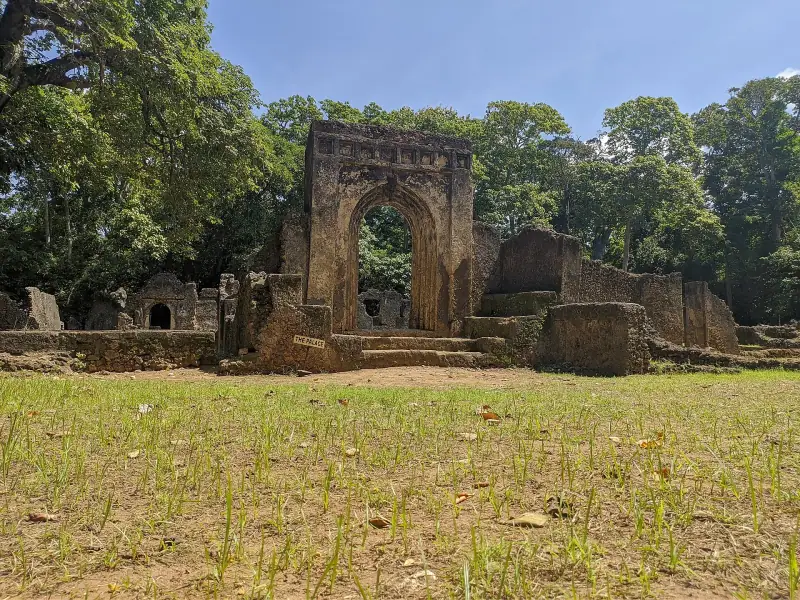
Gedi ruins near Watamu: prices, hours and a half-day visit
Gedi (Gede), a Swahili town listed by UNESCO in 2024: access from Watamu and Malindi, rates to confirm, visit length, monkeys and practical tips.

Amboseli: guide to the national park, elephants and Kilimanjaro
Visiting Amboseli in Kenya: elephants facing Kilimanjaro, best time, length of stay, where to stay and tips to prepare your safari.
Ready-made
Kenya itineraries

7 days
Kenya in 7 days: Naivasha, Nakuru and the Masai Mara without rushing
NairobiNaivashaMasai MaraNairobi
10 days
Kenya in 10 days: Nairobi, Amboseli, Masai Mara and Diani Beach
A day-by-day 10-day Kenya itinerary: Nairobi, Amboseli facing Kilimanjaro, a Masai Mara safari, then relaxing on Diani Beach. Budget and tips.