What to see
Amboseli: guide to the national park, elephants and Kilimanjaro
We may earn a commission when you book through links on this page, at no extra cost to you. We don't visit or try the places we cover: we summarize published sources. How we work
In short
- Amboseli is known for its large elephant herds and the view of Kilimanjaro (about 5,900 m / 19,360 ft), best seen early in the morning and late in the day.
- The park is one of the country's smallest savanna parks, easy to cover in one or two days; two nights there is a good minimum.
- The dry season from June to October is the most favorable; January and February are also good. The long rains (March to May) make some tracks difficult.
- Reach it by road from Nairobi (generally several hours) or by domestic flight to nearby airstrips; combine it with the Masai Mara, Tsavo or the coast.
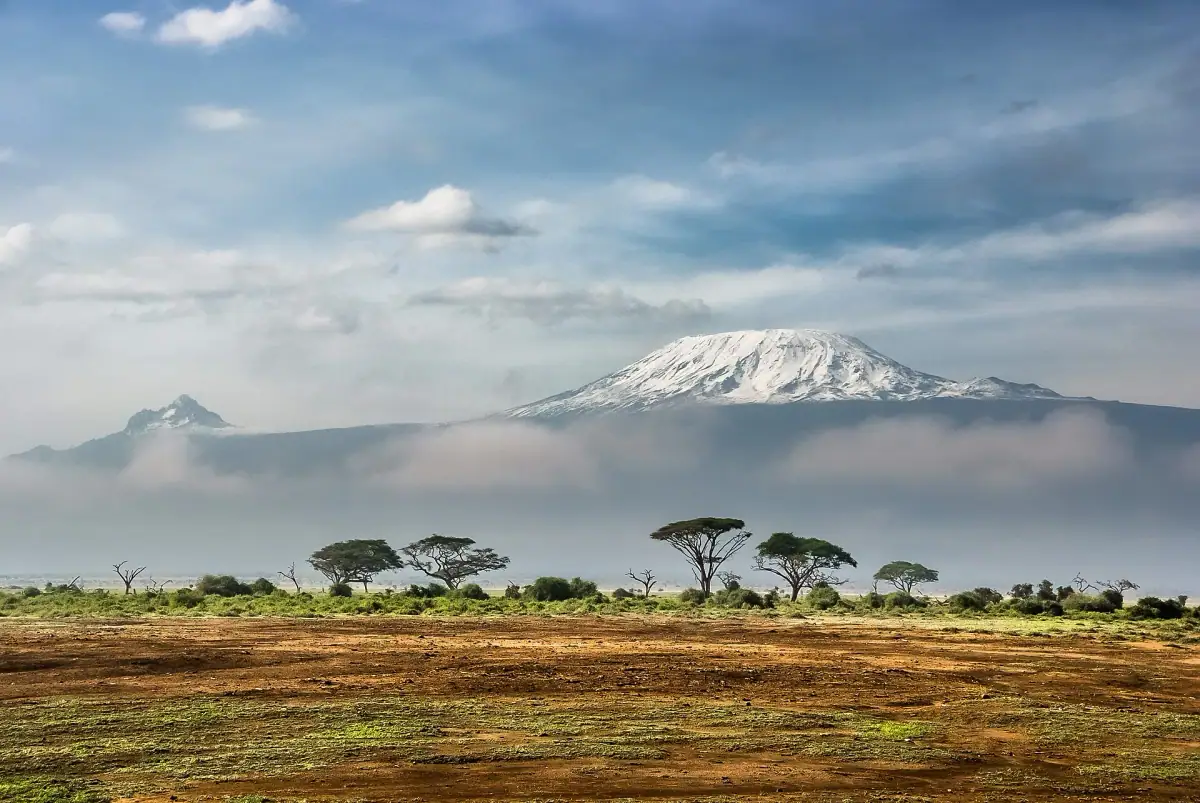
In southern Kenya, very near the Tanzanian border, Amboseli National Park offers one of East Africa’s most famous images: elephants advancing slowly across the plain, with the mass of Kilimanjaro as a backdrop. The summit belongs to Tanzania, but it is from Kenya that the view is best known.
This guide explains what makes Amboseli unique, when to go, how long to stay, how to get there and where to sleep. It complements our guide to a first safari in Kenya.
Amboseli at a glance
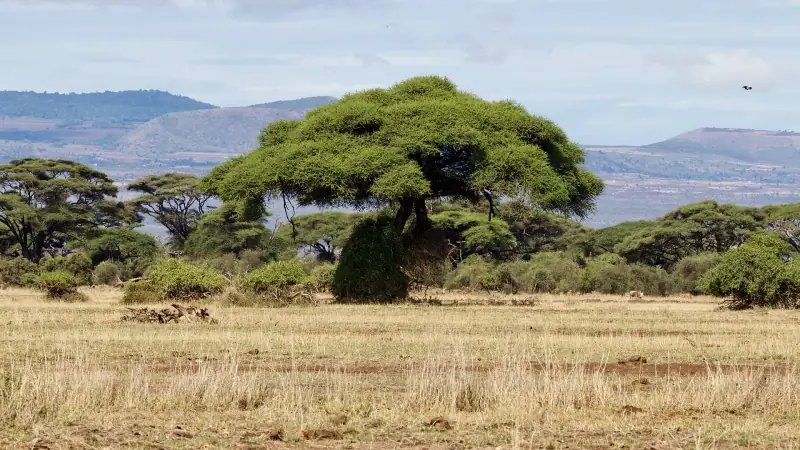
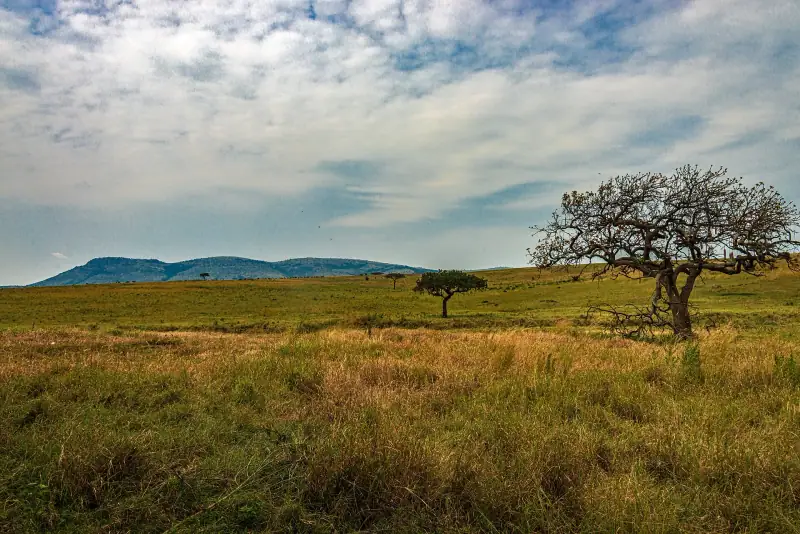
The park is one of the country’s smallest savanna parks, which makes it easy to cover in one or two days. The landscape is open: dusty plains, marshy areas, a few acacia groves and, in the distance, Kilimanjaro. People come mainly for three things:
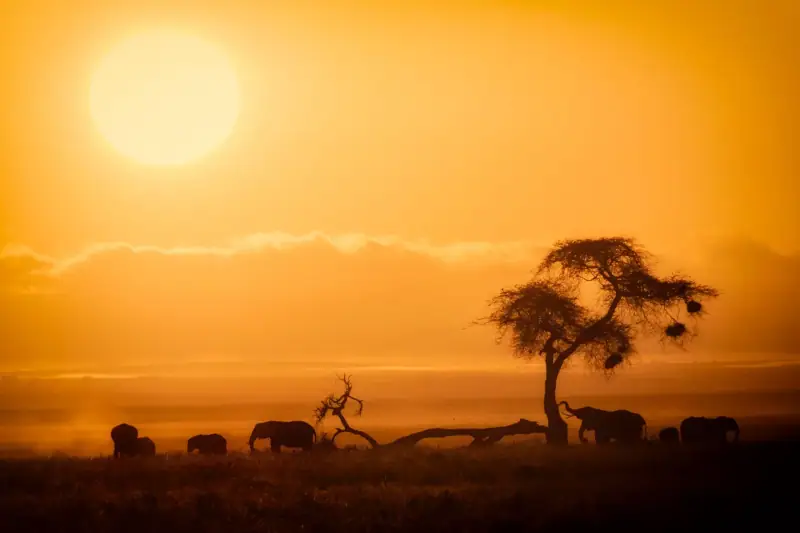
- The elephants, very present and known for being used to vehicles. A research program has followed Amboseli’s elephant families since the 1970s.
- The view of Kilimanjaro, most beautiful at dawn and dusk.
- The wetlands, which attract hippos, buffaloes and many birds.
The park is managed by the Kenya Wildlife Service, and it adjoins Maasai community lands where several camps and lodges are located.
The elephants of Amboseli
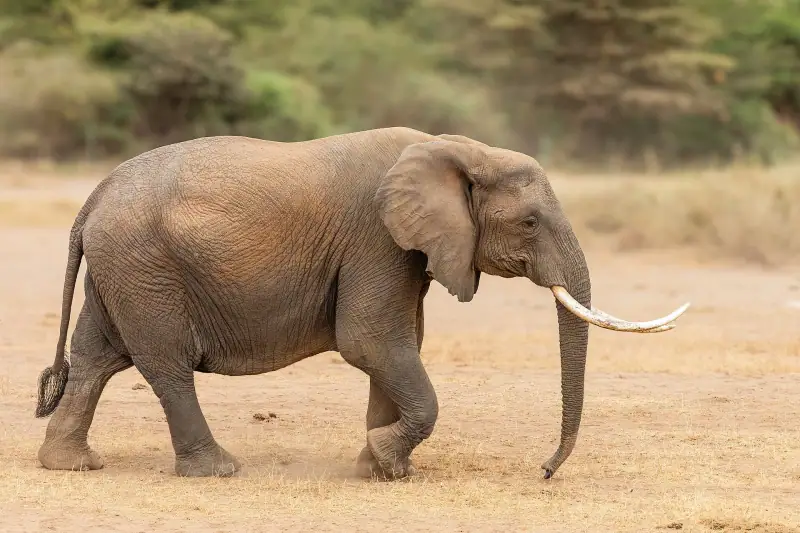
The elephants are Amboseli’s signature attraction. They are often seen in family herds, with young following the adult females, notably near the marshes where they come to drink and feed. The open landscapes let you see them from afar and approach without disturbing them.
A few habits for good viewing:
- Stay in the vehicle and follow your guide’s instructions.
- Keep quiet when a herd crosses the track: let it pass.
- Choose morning and late-day outings, when the light is soft and animals are more active.
Kilimanjaro seen from Amboseli
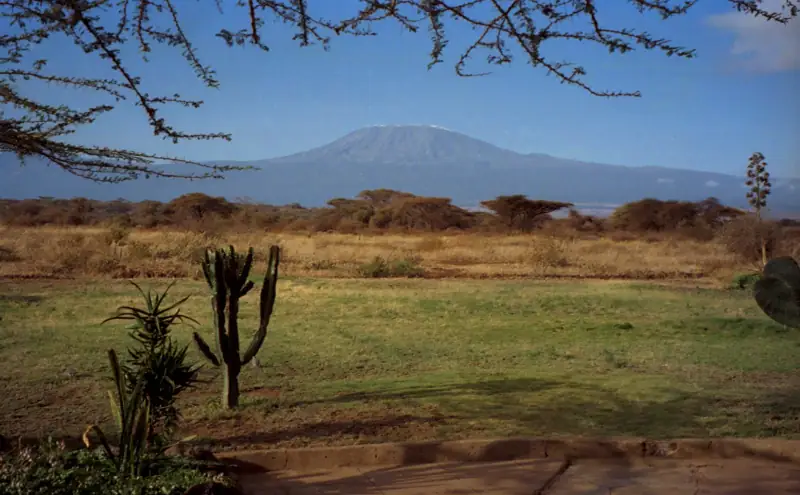
Kilimanjaro is Africa’s highest peak, at about 5,900 m (19,360 ft) above sea level. From Amboseli, it rises above the plain, often capped with clouds. It reveals itself most often early in the morning, before the heat raises the haze, then again late in the day.
Do not count on a single morning: plan at least two nights there to multiply your chances. And do not plan your whole day around the perfect photo: the elephants in the foreground are worth the trip already.
Flights to Nairobi
Compare offers for your dates before booking your Amboseli safari.
The marshes and wildlife
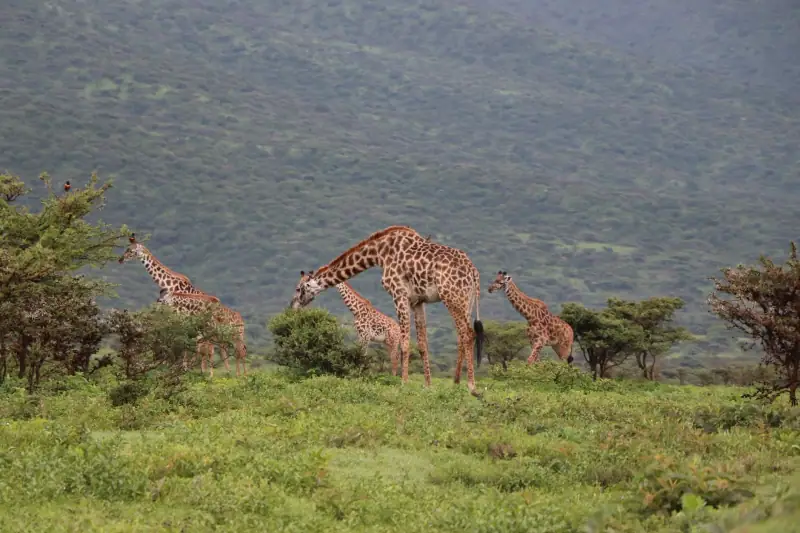
Amboseli’s marshes are fed by water coming down from the mountain underground. They form a green oasis in the middle of an arid plain, and attract wildlife all year. You come across hippos, buffaloes, zebras, wildebeest, giraffes and gazelles. Birdwatchers also find many waterbird species there.
Lions, cheetahs and hyenas are present but more discreet than in the Masai Mara. If big cats are your priority, combine Amboseli with another reserve rather than betting only on this park.
When to go to Amboseli
The dry season from June to October is the most favorable: vegetation is lower, animals concentrate around water points and roads are more passable. January and February also offer good conditions, with fewer people.
During the long rains (March to May), some tracks become difficult and camps close or lower their rates. Landscapes are then greener, but Kilimanjaro is more often hidden. For an overview of the seasons, see our guide when to go to Kenya.
How to get to Amboseli
From Nairobi, the park is to the south, toward the Tanzanian border. There are two main options:
- By road: in a safari vehicle or 4x4, generally several hours of travel from the capital. This is the most common solution, often included in an organized tour.
- By plane: domestic flights serve airstrips near the park, faster but more expensive.
The road is a good way to discover the landscapes between Nairobi and the border, but the duration depends on the condition of the tracks and traffic. Allow a margin in your schedule, especially on the day of your return flight.
Safaris from Nairobi
Excursions and safaris including Amboseli, with guide and transport.
Where to stay around Amboseli
Lodging is split between lodges, tented camps and simpler properties. Several are located in the park or on neighboring community lands. Some offer a direct view of Kilimanjaro from the room or terrace.
To choose:
- Look at the orientation: a clear view of the mountain is a big plus.
- Check what is included: meals, game drives, park entry fees.
- Book early in high season: the best properties fill up several months ahead between July and October.
Our guide to where to stay in Kenya details the types of safari lodging.
Lodges and camps near Amboseli
Compare lodging around the park to enjoy the sunrises over Kilimanjaro.
Combining Amboseli with other stops
Amboseli pairs well with other destinations:
- The Masai Mara, for big cats and the migration in season.
- Tsavo, next to Amboseli, for wilder, less visited landscapes.
- Nairobi, as a departure and arrival point.
- The Swahili coast, to finish the trip with a few beach days, for example at Diani Beach.
A circuit combining several parks takes road time: do not multiply stops if you have less than a week.
Practical tips for your visit
- Clothing: layers in neutral tones, a jacket for dawn, a hat and sunglasses. Dust is common.
- Photography: a telephoto lens is useful for animals, a wide angle for landscapes with Kilimanjaro.
- Health: ask your doctor or a travel clinic before departure, and see the official travel health pages (CDC in the US, TravelHealthPro in the UK).
- Formalities: check Kenya’s entry rules, notably the electronic travel authorization. Entry rules depend on your passport: see the official travel advice of your government, travel.state.gov (US), GOV.UK (UK), travel.gc.ca (Canada), Smartraveller (Australia) (checked November 2026).
- Respect: never leave the vehicle outside the designated areas and never feed the animals.
Is Amboseli worth the detour?
Yes, if you like elephants and big landscapes. Amboseli does not have the predator density of the Masai Mara, but the atmosphere there is unique, and Kilimanjaro offers a backdrop that is hard to find elsewhere. Two nights there, in the dry season, are the best compromise to enjoy the park without rushing.
Frequently asked questions
Why visit Amboseli?
Amboseli is known for its large herds of elephants and the view of Kilimanjaro, which towers over the plain from neighboring Tanzania. It is one of the places in Kenya where you can best photograph elephants with a mountain in the background.
How long should you stay in Amboseli?
Two nights there is a good minimum: they let you enjoy two sunrises, when Kilimanjaro is most often clear, and several game drives. A single night leaves little margin if the sky is overcast.
Can you see Kilimanjaro from Amboseli all year?
The summit is often hidden by clouds during the day. It clears more easily early in the morning and late in the day, especially in the dry season. Nothing is guaranteed: better to plan several mornings.
What is the best period for Amboseli?
The dry season, from June to October, is the most favorable: animals concentrate around the wetlands and visibility is good. January and February are also appreciated. During the long rains, tracks can be difficult.
Is Amboseli suitable for a first safari?
Yes. The park is relatively compact, the landscapes are open and animals are easy to spot. It combines well with the Masai Mara or Tsavo in a multi-day circuit.
How do you get to Amboseli from Nairobi?
By road, generally allow several hours of travel, in a 4x4 or safari vehicle. Domestic flights to nearby airstrips also exist. Ask your agency or lodge about current options.
More Kenya guides
Keep reading
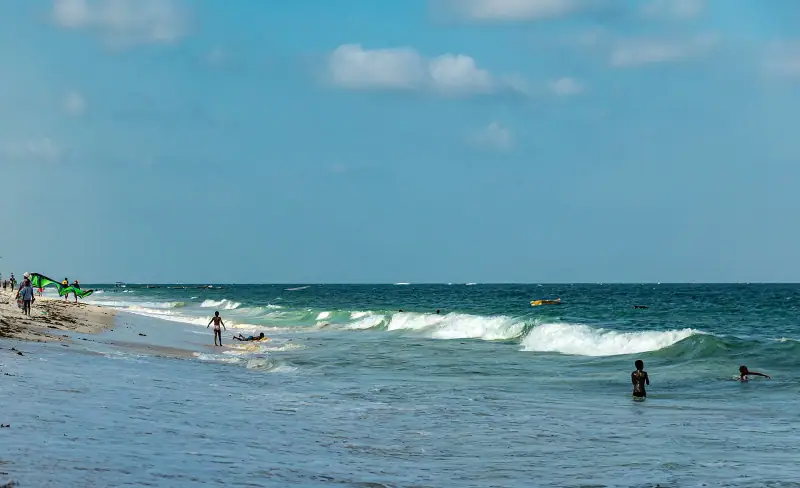
Diani Beach: guide to Kenya's finest beach
Diani Beach in Kenya: access, best time, beaches, colobus monkeys, snorkeling, kitesurfing and excursions for a beach stay after safari.
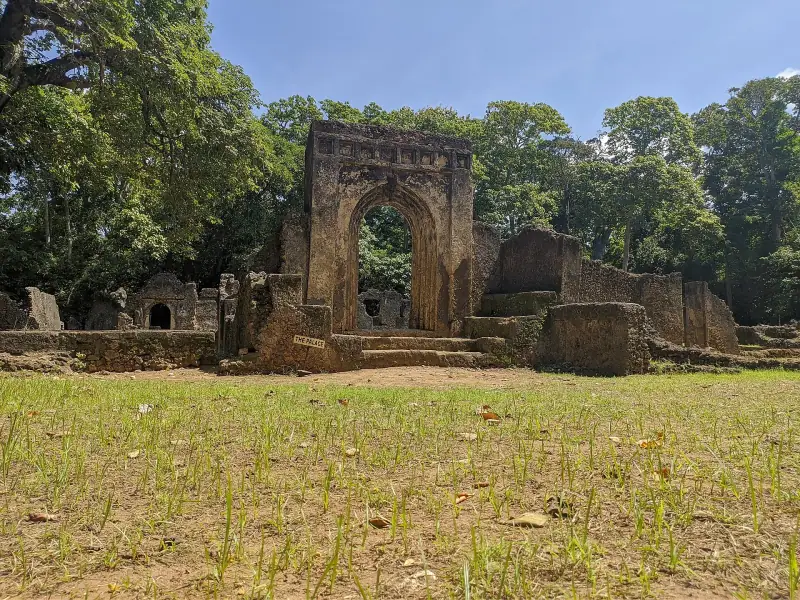
Gedi ruins near Watamu: prices, hours and a half-day visit
Gedi (Gede), a Swahili town listed by UNESCO in 2024: access from Watamu and Malindi, rates to confirm, visit length, monkeys and practical tips.
Complete guide to visiting Kenya: regions, safari, beaches and budget
Visiting Kenya: regions, cities, highlights, when to go, transport, lodging and budget. The pillar guide to plan a successful trip from A to Z.
Ready-made
Kenya itineraries
7 days
Kenya in 7 days: Naivasha, Nakuru and the Masai Mara without rushing
NairobiNaivashaMasai MaraNairobi
10 days
Kenya in 10 days: Nairobi, Amboseli, Masai Mara and Diani Beach
A day-by-day 10-day Kenya itinerary: Nairobi, Amboseli facing Kilimanjaro, a Masai Mara safari, then relaxing on Diani Beach. Budget and tips.