Plan your trip
When to go to Kenya: seasons, migration and weather month by month

We may earn a commission when you book through links on this page, at no extra cost to you. We don't visit or try the places we cover: we summarize published sources. How we work
In short
- June to October is the main dry season and high season, with the great migration in the Masai Mara; January and February are an excellent hotter, quieter alternative.
- Migration herds generally arrive in the Mara around July-August, river crossings most often come between August and September, and no date is guaranteed.
- The long rains (March to May) bring the lowest prices and quiet parks, but tracks can be difficult; short rains fall in November-December.
- Book Masai Mara lodges and camps several months ahead for July to October. The coast is pleasant from December to March.
Kenya is one of the few destinations where you can go almost all year, but not for the same reasons. Straddling the equator, the country does not have four seasons: it has an alternation of dry seasons and rainy seasons, shaped by altitude. Nairobi and the highlands are mild, the Indian Ocean coast is hot and humid, the north is drier.
Choosing your departure date therefore depends on what you want to experience: seeing the great migration, watching wildlife in the best conditions, enjoying the beaches, avoiding crowds or cutting the budget. This guide details the climate, the seasons, the weather month by month and the best periods for your plans.
Kenya’s climate in brief
Kenya divides into broad climate zones. Understanding this geography helps avoid many disappointments.
- The highlands and Nairobi: the capital is at about 1,700 m (5,580 ft) above sea level. The climate is mild all year, with pleasant days and cool nights, especially in June, July and August.
- The Rift Valley (Naivasha, Nakuru): a climate similar to the highlands, with cool mornings and sunny afternoons.
- The big savanna reserves (Masai Mara, Amboseli, Tsavo): hot by day, with large swings between morning and midday.
- The north (Samburu): drier and hotter, with rarer and irregular rainfall.
- The Swahili coast (Mombasa, Diani, Watamu, Lamu): hot and humid all year, cooled by the monsoon winds.
Tropical highland countries have a simple rule: the higher you go, the cooler it gets. Pack layers, whatever the season.
Seasons in Kenya: dry and rainy
The calendar splits into four main periods. Dates vary from year to year, so these are markers and not strict limits.
The main dry season (June to October)
This is the high tourist season. Rain is rare, skies are clear, vegetation thins and animals concentrate near rivers and water points. Viewing is easier and tracks are passable. It is also the period of the great migration in the Masai Mara. In return, prices are higher and the busiest parks have more vehicles.
The short rains (November to December)
The rains are generally shorter, often as showers late in the day. The landscape turns green again, which makes it photogenic, and migratory birds are present. Rates are lower, except around the year-end holidays.
The short dry season (January to February)
Hot and dry, it offers excellent safari conditions with fewer people than in summer. It is a very good option for combining safari and beach, or for travelers who want to avoid the July-August crowds.
The long rains (March to May)
This is the wettest season. Showers can be intense, some tracks become difficult, and a few camps scale back or close. In exchange, prices are at their lowest and the parks are very quiet. Plan a trip in this period with flexibility: allow spare time in your itinerary.
Masai Mara: when to see the great migration
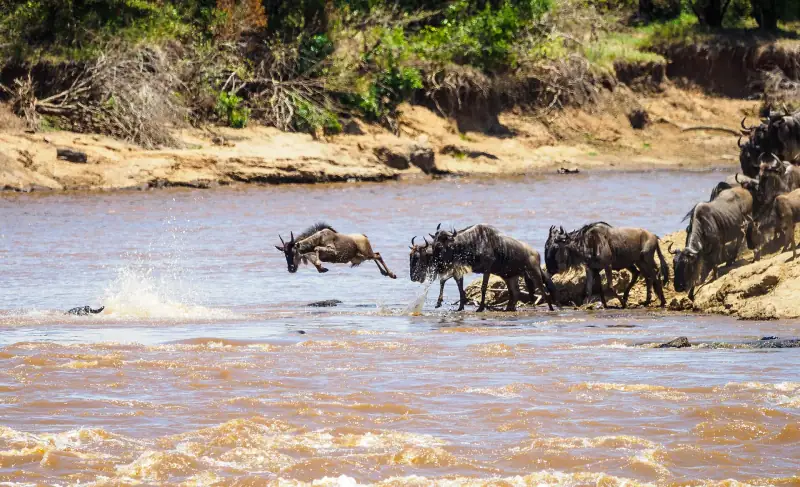
The Masai Mara is the country’s most famous park. It is part of the same ecosystem as the Serengeti in Tanzania, of which it is the northern extension. Every year, large herds of wildebeest, accompanied by zebras and gazelles, move between these two territories following the rains and the grazing.
Markers to remember:
- The first herds generally arrive in the Masai Mara around July-August.
- The spectacular Mara River crossings most often happen between August and September.
- The herds head back south from about October.
The migration is a natural phenomenon: there is no guaranteed date. The exact timing depends on rain, the state of the grazing and the behavior of the herds. To maximize your chances, stay at least three nights there and do not concentrate your whole trip on a single crossing day.
Even outside the migration, the Masai Mara remains excellent: big cats, elephants, giraffes and hippos are present all year. It is a good destination whatever the date of your trip.
Masai Mara safaris
Excursions and guided safaris, from Nairobi or from your lodge.
Amboseli, Tsavo and Samburu: the best time for each park
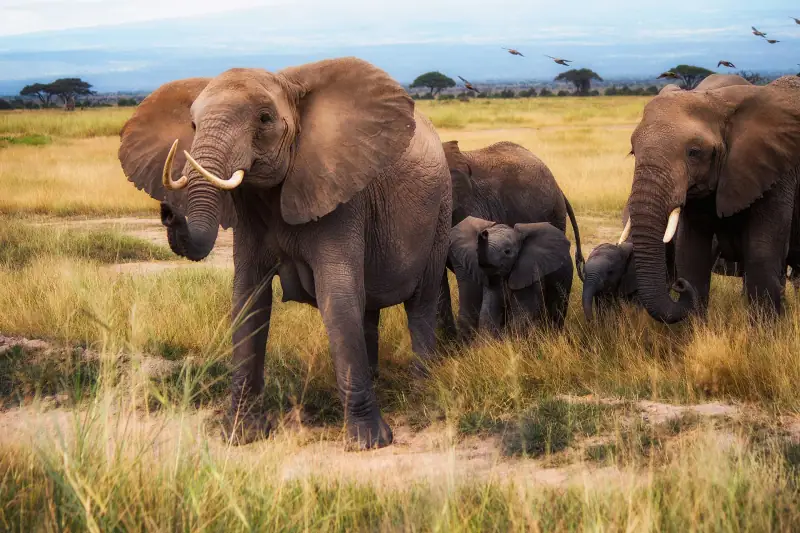
Each park has its own features and its best period.
Amboseli and Kilimanjaro
Amboseli is known for its large herds of elephants with, in the background, Kilimanjaro, across the Tanzanian border. The mountain is mostly visible early in the morning and late in the day. The dry seasons generally offer the clearest sky: a clear, cloudless morning is the ideal moment for photography. During the rains, clouds often hide the summit.
Tsavo
Tsavo is one of the country’s largest protected areas, divided into two parks, Tsavo East and Tsavo West. The dry season, from June to October then January to February, is the most favorable: vegetation is more open and animals gather around water points. During the long rains, heat and humidity are more marked and the tracks can be damaged.
Samburu
Farther north, Samburu has a drier climate and distinctive wildlife, with species that are harder to see in the south. The dry seasons are the most comfortable for safaris there. The river attracts animals, which gather more easily when the rest of the landscape is dry.
Nairobi, Naivasha and the Rift Valley
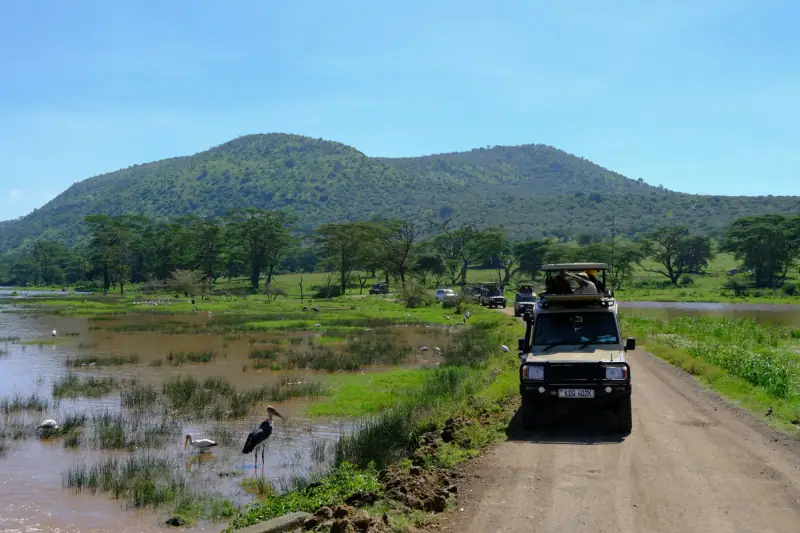
Nairobi is the gateway to most trips. Thanks to its altitude, the city stays mild all year. The most pleasant periods are January-February and June-September, with little rain. Nights from June to August can be cool: pack a sweater or jacket.
Lake Naivasha and the Rift Valley are good to visit all year. Activities such as a boat ride on the lake, hiking or bike outings are more pleasant in the dry season, when tracks are stable. Mornings are often the clearest, with clouds forming later in the day.
Where to stay in Nairobi?
Hotels and guesthouses for a first night or a stop before safari.
The Kenyan coast: Diani, Watamu and Lamu

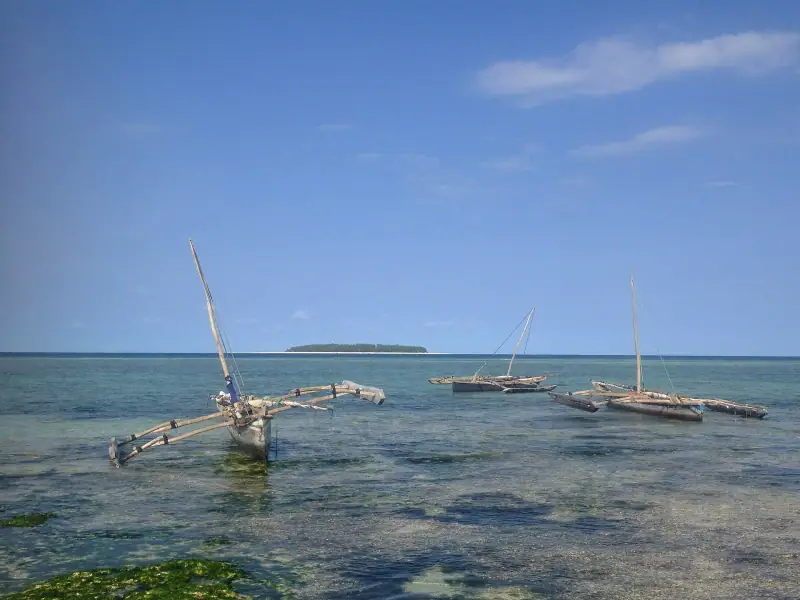
The Indian Ocean coast is hot all year, with higher humidity than inland. The climate is set by the monsoon winds, which cool the air at certain times.
- December to March: hot and sunny, the period most favored by travelers who want to combine safari and lounging.
- April to May: this is the long-rains period, with high humidity and showers. Many businesses scale back.
- July to October: slightly cooler temperatures, often pleasant weather, seas sometimes rougher depending on the winds.
For diving and snorkeling, visibility is generally better outside the periods of heavy rain. In some sections of the coast, humpback whales can be seen in season, generally between July and October, but their presence is never guaranteed.
Lamu, a UNESCO-listed island, is a year-round destination, with hot days. Drier periods make getting around and strolling in the old town easier.
Hotels in Diani Beach
Beachfront hotels, resorts and rentals to compare by season.
Weather month by month
Here is a general summary. Conditions vary with the year and the altitude.
| Month | General feel | Who is it for? |
|---|---|---|
| January | Hot and dry | Safari + beach, fewer people |
| February | Hot and dry | Safari, wildlife viewing, coast |
| March | Start of the long rains | Flexible travelers, small budgets |
| April | Frequent rain | Very quiet, several lodges scale back |
| May | Frequent rain | Green landscapes, few visitors |
| June | Dry weather returns | Start of high season |
| July | Dry, cool nights at altitude | Migration, safari |
| August | Dry | River crossings, high season |
| September | Dry | Migration, excellent safari |
| October | Dry then first showers | End of migration, fewer people |
| November | Short rains | Green landscapes, lower rates |
| December | Short showers, holidays | Coast, year-end vacation |
Which period to choose for your plans?
For a first safari
Choose June to October or January-February. Conditions are the simplest: little rain, passable tracks and easier viewing. This is the period agencies most often recommend for a first time.
For the great migration
Aim for August and September. Keep some flexibility and plan several nights in the Masai Mara to improve your chances of seeing river crossings.
For a family trip
School holidays fall in periods of high demand. July-August is very popular for the migration, while Christmas and the February holidays suit combining safari and beach well. Book early.
For a controlled budget
March to May and November are generally the most affordable months. You get fewer crowds and green landscapes, at the price of a higher risk of rain and harder tracks.
To combine safari and beach
January-February is an excellent combination: dry season for safari and pleasant sea on the coast. From June to October, a stay on the coast is still possible, with cooler weather and stronger winds.
For climbing Mount Kenya or hiking
The best windows are generally the dry periods, namely January-February and August-September. At altitude, the weather changes fast: always pack warm and waterproof clothing.
Practical tips to prepare your departure
- Book early for high season: from July to October, camps and lodges in the Masai Mara are full months ahead.
- Check the formalities: Kenya asks for an electronic travel authorization before arrival. Entry rules depend on your passport. Check the official travel advice of your government before you book: travel.state.gov (US), GOV.UK (UK), travel.gc.ca (Canada), Smartraveller (Australia), and the official Kenyan government site (checked November 2026).
- Pack layers: cool mornings, hot days, nights sometimes cold at altitude.
- Bring sun protection: the equator and altitude increase the intensity of the sun, even in cloudy weather.
- Think about health: ask your doctor or a travel clinic, and see the official travel health pages (CDC in the US, TravelHealthPro in the UK).
- Take out travel insurance covering medical costs and repatriation.
- Keep a margin in your plan if you travel during the rains: a damaged track can lengthen a trip.
The choice of the best period depends above all on your priorities. If you want the maximum chance of wildlife sightings, go in the dry season. If you prefer green landscapes, fewer people and gentler rates, the rainy seasons have their advantages too. In every case, Kenya remains a rich destination, to be experienced at your own pace.
Frequently asked questions
What is the best time to go to Kenya?
June to October is the most sought-after: it is the dry season, vegetation is lower, animals gather around water points and the great wildebeest migration is in full swing in the Masai Mara. January and February are an excellent alternative, hotter, with fewer people and very good viewing conditions.
When can you see the great migration in the Masai Mara?
Herds of wildebeest and zebras generally arrive in the Masai Mara between July and August, and stay until about October. Mara River crossings most often happen between August and September, but they depend on rain and herd movement: no date is guaranteed.
Should you avoid the rainy season?
Not necessarily. The long rains (March to May) complicate travel and some lodges close or lower their rates, but the landscapes are green and the parks very quiet. The short rains (November-December) are often less marked, with afternoon showers. The main risk is the condition of the tracks, not being unable to see animals.
What is the best time for the beach on the Kenyan coast?
The coast (Diani, Watamu, Lamu) is pleasant from December to March, with hot weather and more bearable humidity, then from July to October with cooler winds. April and May, in the middle of the long rains, are the wettest months and many beach businesses slow down.
Is it cold in Kenya?
Nairobi and the highlands are at altitude: days are mild but nights can be cool, especially from June to August. On safari, dawn departures are often in the open air and a warm jacket is useful. On the coast, it is hot all year.
How far ahead should you book?
For July to October, book several months ahead: lodges and camps in the Masai Mara fill up quickly. In low season, booking a few weeks before departure is generally enough. Also check the entry rules (electronic travel authorization) on the official sites before you go, as they depend on your passport.
More Kenya guides
Keep reading
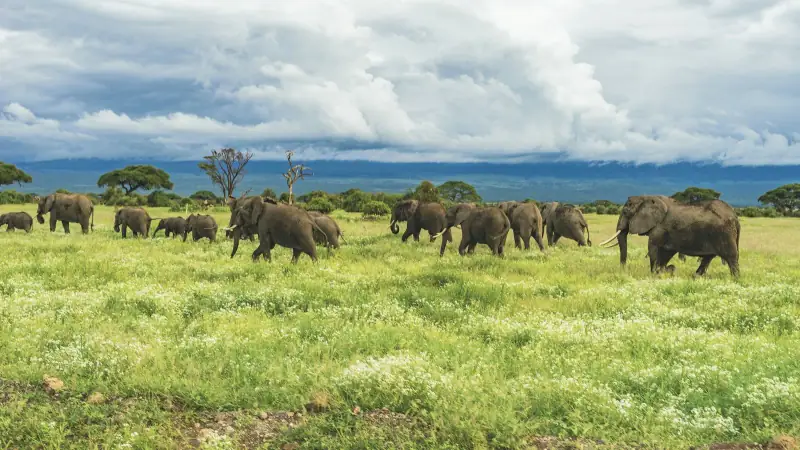
Kenya trip budget: real costs and 3 priced profiles
How much does a Kenya trip cost in 2026? Costs by item (safari, lodging, transport, meals), three sample budgets and tips to spend less.

Late arrival in Nairobi (JKIA): where to sleep the first night before a safari
Landing in Nairobi at night with a safari the next day? Hotel near JKIA or in Karen: transfer, late check-in, travel time and tips to choose well.
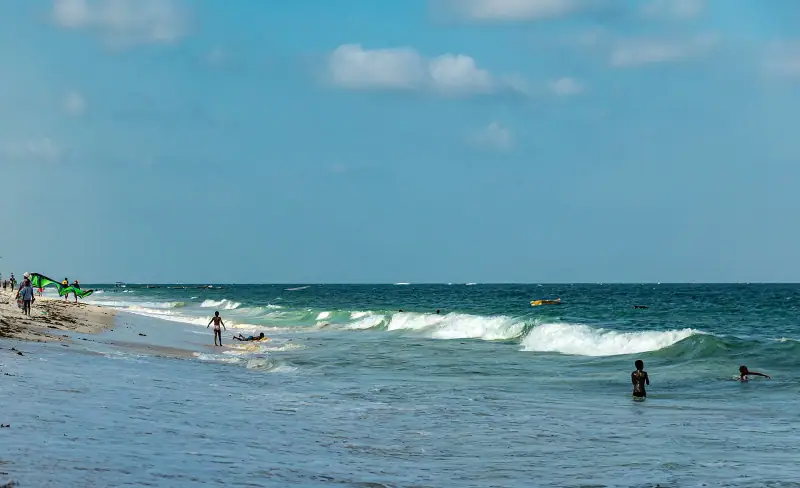
Diani Beach: guide to Kenya's finest beach
Diani Beach in Kenya: access, best time, beaches, colobus monkeys, snorkeling, kitesurfing and excursions for a beach stay after safari.
Ready-made
Kenya itineraries
7 days
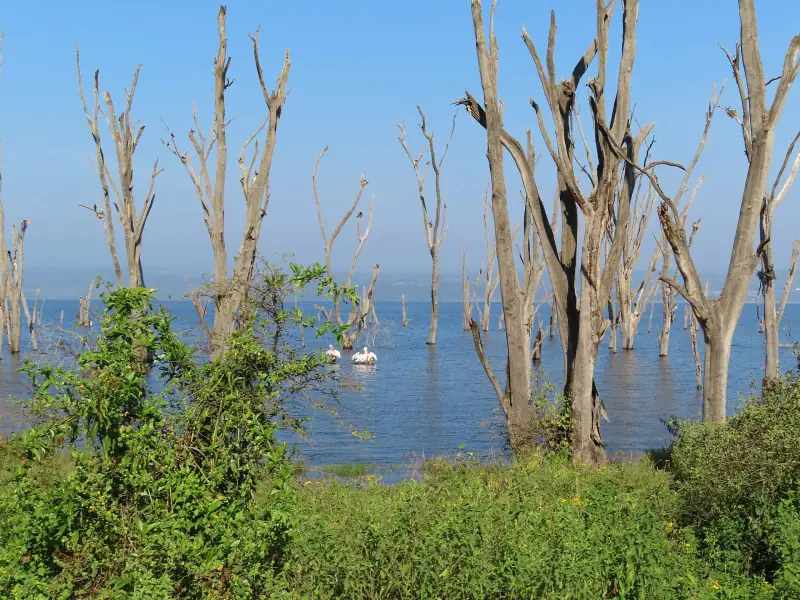
Kenya in 7 days: Naivasha, Nakuru and the Masai Mara without rushing
NairobiNaivashaMasai MaraNairobi
10 days
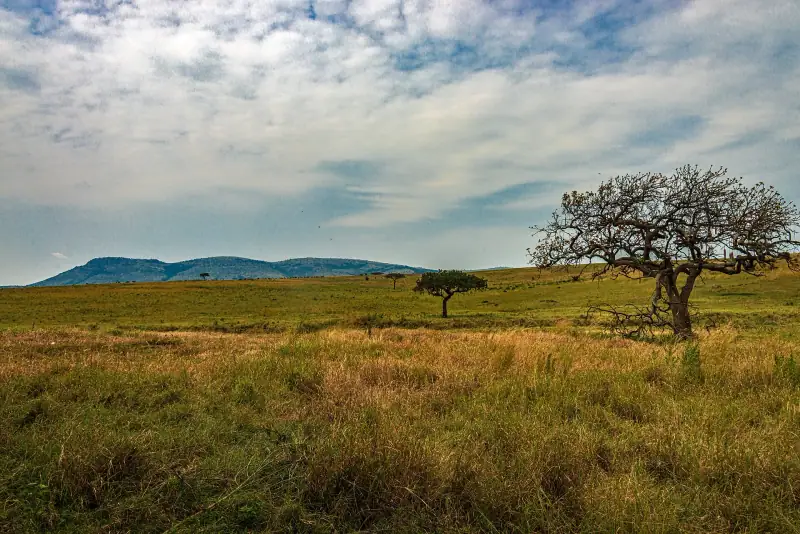
Kenya in 10 days: Nairobi, Amboseli, Masai Mara and Diani Beach
A day-by-day 10-day Kenya itinerary: Nairobi, Amboseli facing Kilimanjaro, a Masai Mara safari, then relaxing on Diani Beach. Budget and tips.