What to see
What to see in the Jura's reculées: Baume, Planches, Ladoye and Vaux
We may earn a commission when you book through links on this page, at no extra cost to you. We don't visit or try the places we cover: we summarize published sources. How we work
In short
- A reculée is a deep valley cut into a limestone plateau and ending in a cirque of cliffs, with a spring at the bottom. Walls are often 60 to 250 m (200 to 820 ft) high.
- The four main ones are Baume-les-Messieurs, Les Planches-près-Arbois, the Ladoye cirque (source of the Seille) and Vaux-sur-Poligny, the smallest and simplest.
- One day covers two reculées (Les Planches in the morning, Baume in the afternoon); two days add Ladoye, Vaux and a proper hike to the viewpoints.
- Reculées are far from train stations: a car, or a base in Arbois or Lons-le-Saunier plus a bike, is the practical way.
In the Jura, the plateau sometimes seems to tear open. Driving over the heights, you cross quiet forests and meadows, then the road suddenly plunges into a valley with vertical walls that stops dead against a wall of rock. This scenery is the reculées, one of the geological signatures of the Jura and one of the most obvious reasons to come to the region.
This guide focuses on that precise theme: understanding what a reculée is, identifying the ones worth the detour, and linking them smartly. If you are looking for an overview of the western edge of the range with its villages and vines, our article on the Jura’s Revermont complements this one.
Understanding the reculées before visiting them
A reculée is a valley that cuts deeply into the edge of a limestone plateau and ends in a rocky cirque. At the bottom, a spring gushes from a cave or an underground network: geologists call this a resurgence. The water then flows down the valley, which you can walk up or down.
How they form
Limestone is a rock that water slowly dissolves. On the plateau, rain seeps in and circulates underground; at the edge, it comes out at the foot of the cliffs. Over time, the spring gnaws at the bottom of the cirque and makes the valley head “recede” upstream, hence the name. The cut often follows a fault, which gives the water a preferred path, and the gradual lowering of the lowland rivers accentuates the phenomenon. Glaciers, the collapse of underground river vaults and frost on the walls have also played their part.
What this means for the visitor
In practice, a reculée always offers the same pattern: a cool, damp valley floor, cliffs from several dozen to over a hundred meters high, a spring or waterfall at the end, and viewpoints on the heights. The walls often range between 60 and 250 meters (200 to 820 ft) depending on the site. Because the floor stays shaded and damp, mosses, tufa (limestone deposits where mosses grow) and ferns are everywhere.
Another consequence: you can often see the reculée in two ways, from below, following the stream, and from above, from a viewpoint. Both views are worth it if you have the time.
Baume-les-Messieurs: the most complete reculée
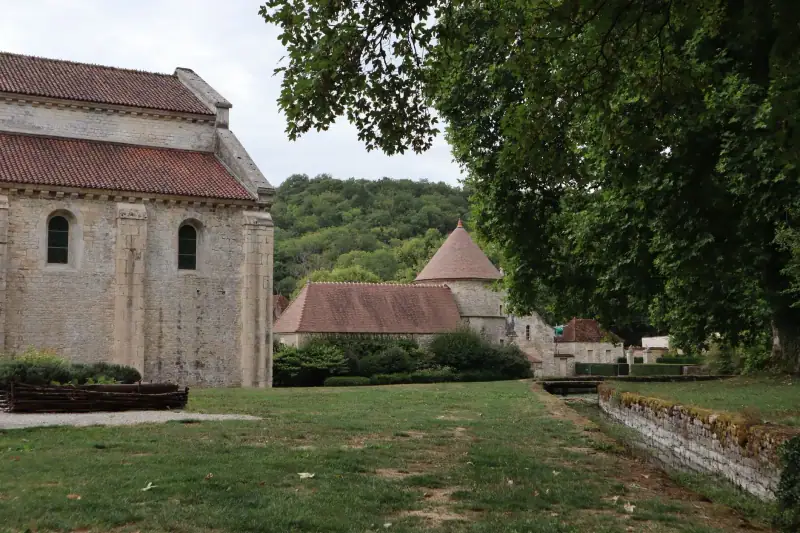
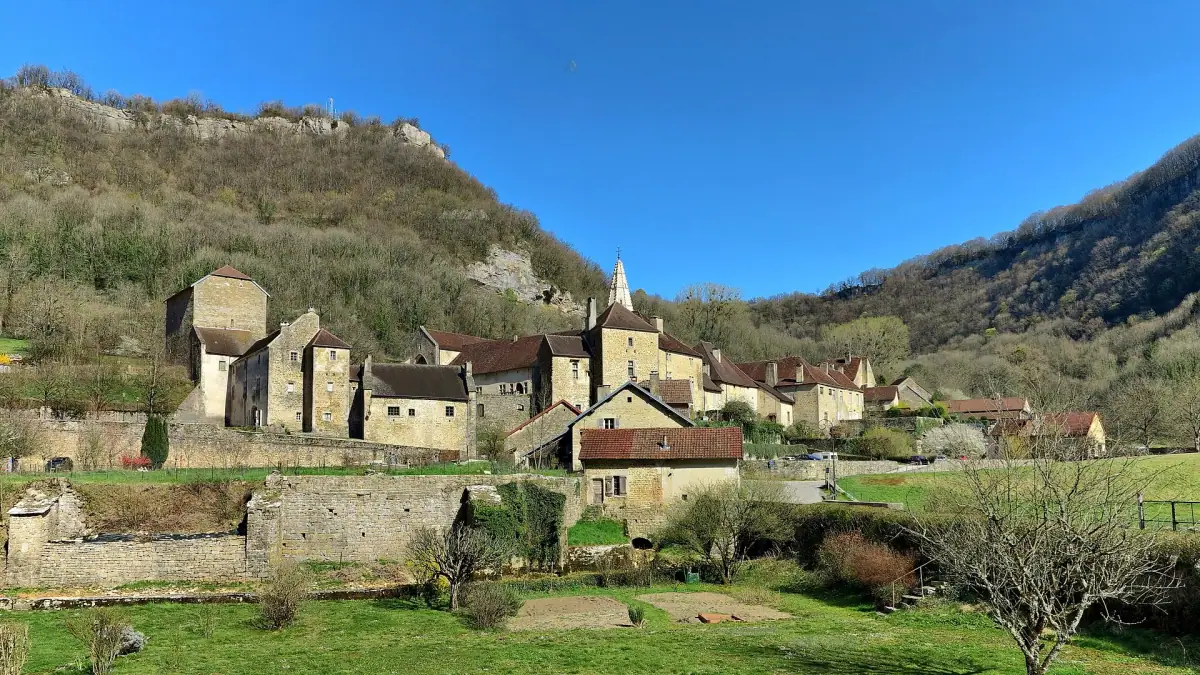
Baume-les-Messieurs is the reculée people cite first, and for good reason. It is about twenty minutes by road from Lons-le-Saunier and divides into three branches, including the Dard and Seille valleys. The site is part of a Natura 2000 zone devoted to the reculées of the Haute Seille.
A village at the bottom of the cirque
The village, listed among the Most Beautiful Villages of France, is nestled at the foot of the cliffs. Its Saint-Pierre Abbey, of medieval origin, is a Cluniac site: tradition says Bernon left it in 910 to found Cluny. Allow an hour or two to wander between the abbey, the lanes and the stream.
Tufa waterfall and cave
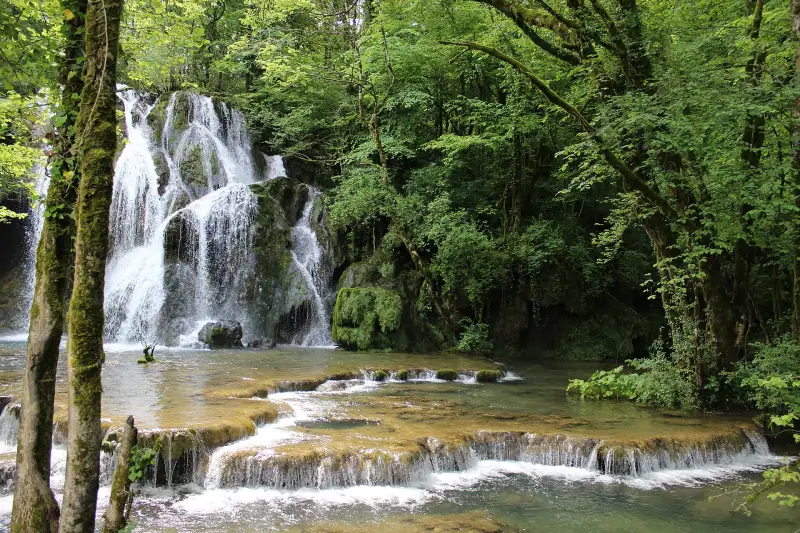
The Dard waterfall, often called the tufa waterfall, owes its look to the precipitation of limestone, in which mosses and plants take part. It is one of the most photogenic landscapes in the department. A cave also opens in the cliff and can be visited, but hours and opening periods vary: check with the tourist office before you come.
The viewpoints
From the heights, the reculée reads like a map. The neighboring village of Château-Chalon, perched on its promontory, overlooks the valley and offers one of the finest panoramas in the area, with its vines below. We cover it in our guide to the Revermont.
A car to link the cirques
The reculées are far from train stations: compare rental companies to get around at your own pace.
Les Planches-près-Arbois: tufa waterfall and the Fer-à-Cheval
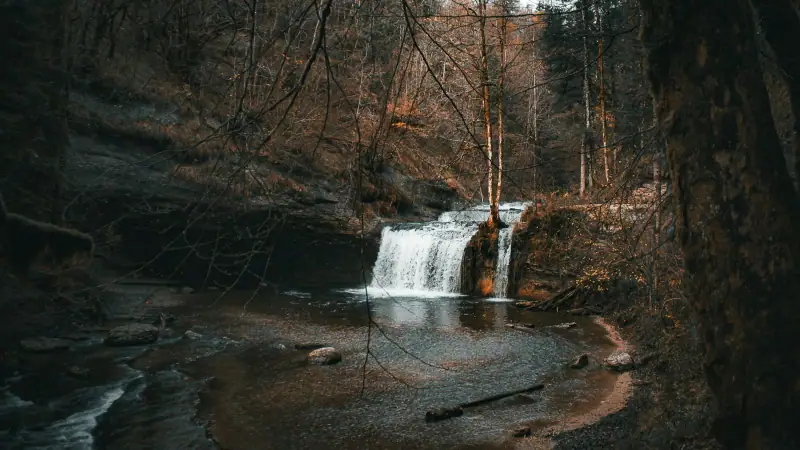
A few minutes from Arbois, the Planches reculée is often presented as the deepest in the Jura, with walls reaching about 250 meters (820 ft). It is also one of the easiest to reach: you start from the village and walk up a valley where the stream, the Cuisance, accompanies you.
A valley that closes in
The valley floor leads to a wall of limestone cliffs. The trails are well marked, and the tufa waterfall at the end of the route is one of the highlights of the visit. The area is also listed as Natura 2000, notably for its waterfalls and tufa basins. Stay on the paths: the environment is fragile and wet stones are slippery.
The Fer-à-Cheval cirque
At the bottom of the reculée, the Fer-à-Cheval (“horseshoe”) cirque marks the “head” of the valley. You reach it by climbing from the floor, and viewpoints let you take in the whole site. Several day outings do the loop; check the hiking guides and tourist offices to choose the length that suits you.
Why make it a base
Arbois, very close, brings together museums, restaurants and tasting cellars: it is an excellent base for exploring this area. Our guide to visiting Arbois details the sights worth seeing, and the one on neighborhoods and places to stay in Arbois helps you choose your accommodation.
Where to stay near the reculées
Compare hotels, guesthouses and gîtes in Arbois, a practical starting point for Les Planches.
The Ladoye cirque: where the Seille rises
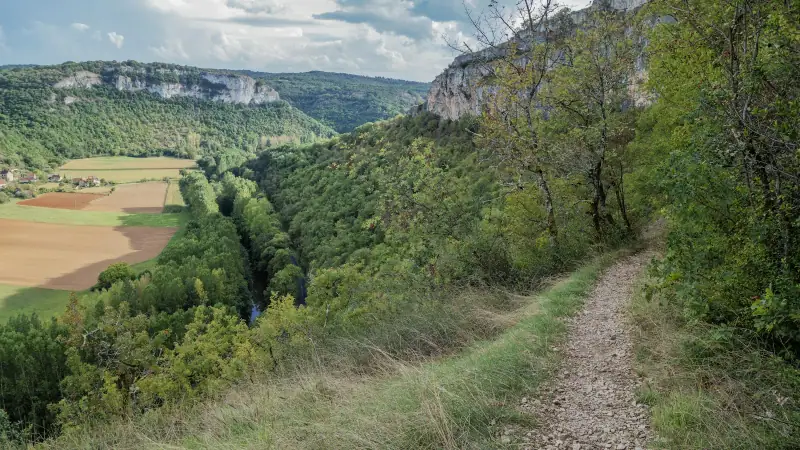
Less visited than Baume, the Ladoye cirque is one of the arms of the great Baume reculée. This is where the Seille rises, a river that then crosses the vineyards and the Bresse plain. The place is wilder: less infrastructure, more silence, and the feeling of truly being at the end of the world.
A more contemplative visit
You come for the walk and the scenery rather than a guided visit. The cirque is seen from the valley floor, then from the rims if you continue along the trails. Conditions vary with the weather and seasons: check the state of the paths before leaving.
To combine with Baume
Since Ladoye and Baume belong to the same system, linking them is natural. You can give each half a day, or join the two with a hiking circuit if you are a good walker. For other outing ideas, see our hikes, waterfalls and lakes in the Jura.
Vaux-sur-Poligny: the simplest reculée
The Vaux reculée, near Poligny, is described as the smallest and simplest in the range: about 3 km (2 mi) long and 150 to 200 m (490 to 655 ft) deep, drained by the Glantine. It is very good for understanding the principle of a reculée without physical commitment.
Who is it for?
For families, for a restful half day after a longer circuit, or for travelers who want to pair a walk with a stop in Poligny, the capital of Comté. The site suits a quiet stroll well, and it suits geology fans looking for a readable example of the phenomenon.
An educational viewpoint
Because it is short and well drawn, the Vaux reculée illustrates the pattern clearly: a valley floor, vertical walls, a spring at the end. If you have a day, you can start here to “learn to read” reculées, then move on to Baume or Les Planches for the more spectacular versions.
Other reculées and nearby sites
The Jura has more reculées than the four big ones. Further south, in the Revermont, valleys such as those of Gizia or Montagna-le-Reconduit punctuate the line of relief and are much less visited. Lake Chalain also occupies a reculée, very different in appearance since water has taken the place of the valley floor.
If you are already in the lake district, our guide to Jura waterfalls and lakes will give you complementary ideas, with an approach more focused on water.
Planning your route between the reculées
The reculées are best explored in a star pattern around two bases: Arbois for the north and Lons-le-Saunier for the south. Distances remain modest, which lets you combine several sites in the same day.
In 1 day: two reculées
Morning at Les Planches-près-Arbois for the valley and the tufa waterfall, lunch in Arbois, then afternoon at Baume-les-Messieurs for the village, the abbey and the tufa waterfall. Plan on a car to link them.
In 2 days: the essentials without rushing
On the first day, Vaux-sur-Poligny then Les Planches, with a stop at the Comté aging cellars of Poligny or a tasting in Arbois. On the second day, Baume-les-Messieurs in the morning, Ladoye in the afternoon, and a sunset over the vines of Château-Chalon. This itinerary is geographically coherent: you always stay on the north-south axis of the Revermont.
In 3 days: with a proper hike
Add a day of walking to link a valley floor to its viewpoints, or to do the full loop of a cirque. For a broader approach to the department, see our 3-day itinerary in the Jura.
Visits and activities in the Jura
Tastings, guided walks and excursions to book in advance.
When to visit the reculées
In spring, the waterfalls are generally well fed by melt and rain, the vegetation is fresh, and crowds remain moderate. Summer enjoys the coolness of the valley floors, but expect more people at the best-known sites. Autumn gives fine colors to the edge forests and combines well with the grape harvest. In winter, some trails become slippery or impassable and sites may close: check conditions. To refine your choice, see our article on when to go to the Jura.
Practical tips
Equipment
Hiking shoes with a lugged sole are essential: wet rock and tufa are slippery. Bring a light jacket, since valley floors are cooler than the plateaus, water and something to protect you from rain. Cliff areas expose you to falling rocks: respect signs and closed zones.
Respecting the environment
Tufa waterfalls are fragile. Do not walk on them outside the intended paths, do not pick anything, take your trash with you. Dogs are sometimes subject to special rules in protected areas: ask locally.
Getting around and where to stay
A car remains the simplest way to link the cirques; our article on how to get around the Jura details the alternatives. For sleeping, Arbois, Poligny and Lons-le-Saunier offer the most choice, with guesthouses and gîtes in the villages. You can also read our guide where to stay in the Jura and prepare your stay with our guide to visiting Lons-le-Saunier.
Frequently asked questions
Answers to the most frequent questions are in the FAQ at the top of the page. In addition, keep in mind that the reculées are natural sites: hours, access and prices for caves or car parks can change from one season to the next. A quick look at the local tourist office website before you leave will save you unpleasant surprises.
Frequently asked questions
What is a reculée in the Jura?
A reculée is a narrow, deep valley that cuts into the edge of a limestone plateau and ends abruptly in a cirque of cliffs. At the bottom of this cirque, a spring (a resurgence) gushes from a cave or an underground network and gives birth to a stream. They are also called "ends of the world" (bouts du monde).
What are the main Jura reculées to visit?
Four names come up consistently: the Baume-les-Messieurs reculée, the Les Planches-près-Arbois reculée, the Ladoye cirque (where the Seille rises) and the Vaux-sur-Poligny reculée, smaller and simpler. Baume and Les Planches are the easiest to visit.
How long do you need to see the reculées?
One day lets you see two reculées, for example Les Planches in the morning and Baume-les-Messieurs in the afternoon. With two days, you add Ladoye, Vaux and a proper hike to the viewpoints.
Can you visit the reculées without a car?
It is difficult. The cirques are away from train stations and bus links are limited. The simplest is to rent a car, or to use Arbois or Lons-le-Saunier as a base and complete the trips by bike. Check timetables with the tourist offices.
What is the best season to visit a reculée?
Spring, when the waterfalls are generally well fed and the vegetation fresh, and early autumn for the colors. Summer is pleasant in the shade of the cliffs, but busier. After heavy rain or in winter, trails can be slippery.
Are the reculées suitable for children?
Yes, for the valley-floor parts: short walks, tufa waterfalls, developed caves. The climbs to the viewpoints are steeper and some stretches are close to drops: keep young children by your side and wear good shoes.
Do you need to book to visit the caves?
The developed caves have hours and opening periods that vary by season. Check the tourist office website before you go, and book ahead in high season if a guided visit is offered.
More Jura guides
Keep reading
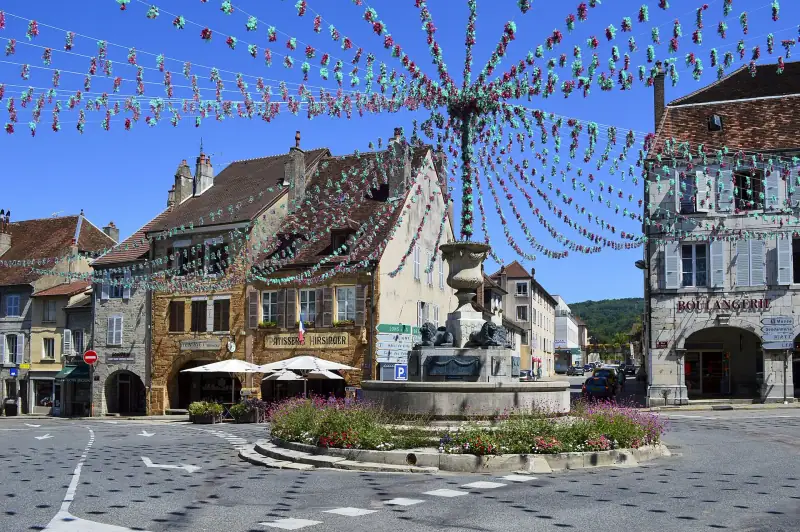
Visiting Arbois: what to do in the capital of Jura wine country
What to see and do in Arbois: Pasteur's house, vineyards, vin jaune, the Planches reculée and Pupillin. A guide to planning your visit in the Jura.
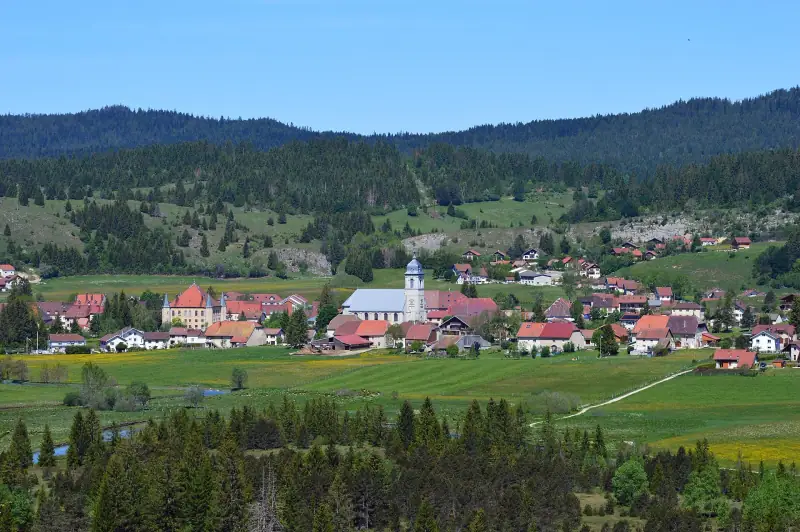
What to see in the Doubs next to the Jura: Pontarlier, Mouthe and the Haut-Doubs
What to see in the Doubs next to the Jura: Pontarlier, Fort de Joux, the source of the Doubs at Mouthe, Lake Saint-Point and Métabief.
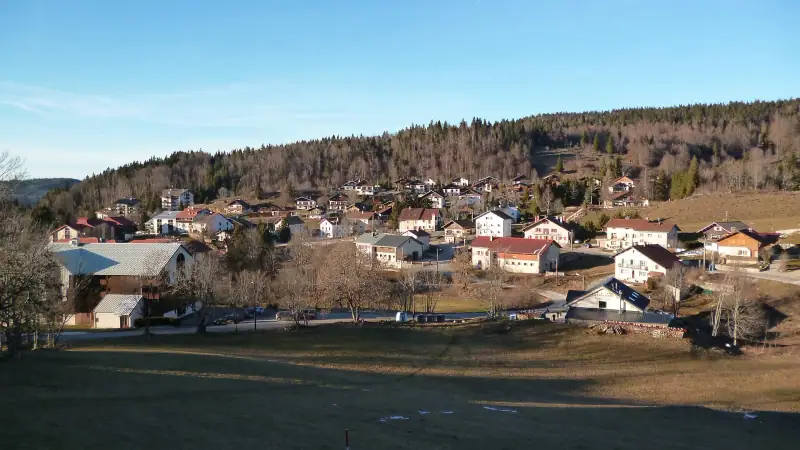
Visiting Les Rousses: what to see and do in the High Jura
What to see and do in Les Rousses: fort, lake, La Dôle, Espace des Mondes polaires, Comté and cross-country skiing. A guide to the High Jura resort.
Ready-made
Jura itineraries
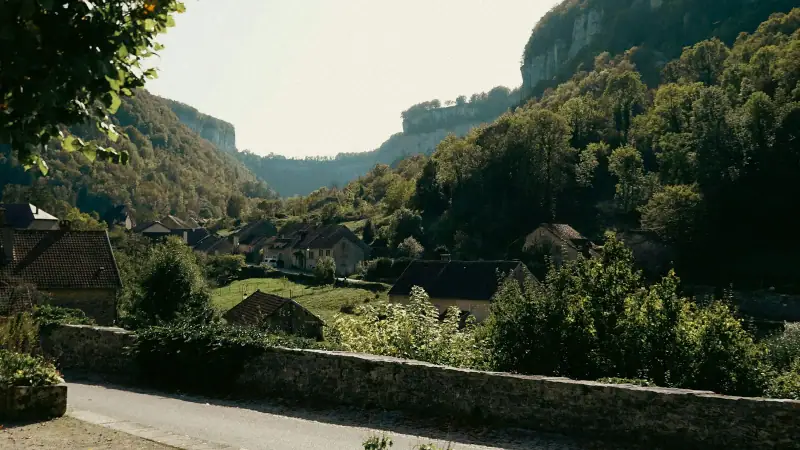
3 days
The Jura in 3 days without a car: a realistic itinerary by train, on foot and by bike
Visiting the Jura in 3 days without a car: a base in Arbois, trains from Mouchard, Salins-les-Bains, Lons-le-Saunier. Stages, distances, times and limits.
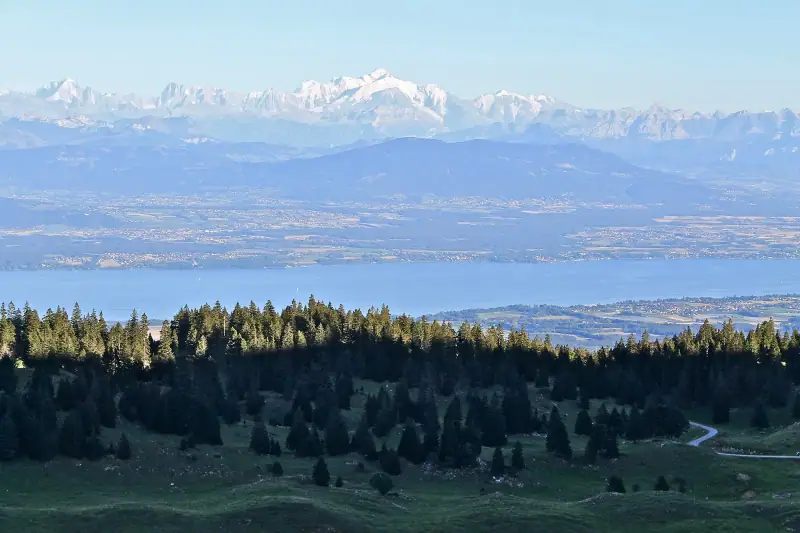
3 days
3 days in the Jura: a day-by-day itinerary through vineyards, waterfalls and the High Jura
A 3-day Jura itinerary by car: Arbois and the vineyards, Baume reculée, Hérisson waterfalls, lakes and the High Jura. Detailed plan and tips.
4 days
The Jura with kids: a 4-day family itinerary through waterfalls, lakes and caves
A 4-day Jura itinerary with children: Hérisson waterfalls, lake swimming, Baume reculée and the High Jura. Pace, tips and practical advice.