Where to stay
Where to stay in the Jura: which base to choose for your trip
We may earn a commission when you book through links on this page, at no extra cost to you. We don't visit or try the places we cover: we summarize published sources. How we work
In short
- For a first stay, the Arbois or Lons-le-Saunier area is the most versatile: vineyards, reculées and the lake district are within about an hour by road.
- The lake district suits families and hikers; the High Jura (Les Rousses, Morez, Saint-Claude) suits mountain lovers and winter sports.
- For a week, two bases work well: three or four nights in the vineyards or lakes, then three in the High Jura.
- Book early for July, August, winter holidays and harvest weekends; a car is strongly advised for most natural sites.
The Jura is not a destination where you settle in one place without thinking. The area stretches from the Revermont vineyards in the west to the big High Jura plateaus in the east, passing through the reculées and the lake district. Landscapes, atmosphere and activities change from one area to another, and mid-mountain roads slow travel. Choosing where to stay in the Jura well therefore comes down to choosing the kind of trip you want to have.
This guide compares the main bases, details the types of lodging available and gives practical advice for booking at the right time. It complements our 3-day itinerary in the Jura and our article on when to go to the Jura.
How to choose your base in the Jura
Before looking at hotels, ask yourself three simple questions: what do you want to do first, how long are you staying, and how are you getting around?
Depending on the length of stay
- A weekend (2 nights): a single base is enough. Choose it according to your main wish, vineyards and heritage or nature and waterfalls.
- A week: two bases are ideal, for example three or four nights in the vineyards or the lake district, then three nights in the High Jura. You limit daily trips and discover two very different atmospheres.
- More than a week: three bases become possible, with a stop near Saint-Claude or in the neighboring Doubs to widen the exploration.
Depending on the type of stay
Wine and food lovers will feel at home in the Revermont. Hikers will prefer the lake district or the High Jura. Families will appreciate a campsite or a gîte near a lake. Cross-country skiers and snowshoers will naturally turn to Les Rousses and Morez.
The role of the car
Even if your lodging is downtown, most natural sites are reached by car. Think about parking when booking: in small towns it is often easy, but in villages with character the street can be narrow. The range’s winding roads mean you should allow generously for travel times.
Arbois and the vineyards: the foodie base
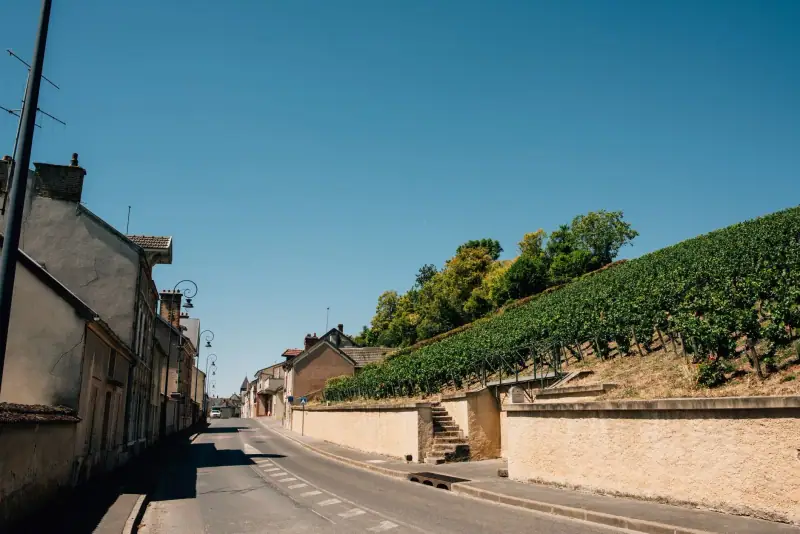
Arbois is probably the most evocative base for a first stay. This small town at the foot of the slopes, crossed by the Cuisance, is closely tied to Jura wine history and Louis Pasteur. You get around on foot, find cellars, traditional restaurants and food shops, and the vineyard literally begins at the town gates.
Why stay in Arbois
- You can dine on foot and taste wines without getting behind the wheel in the evening.
- The town is a reasonable distance from most classic stops: Château-Chalon, Baume-les-Messieurs, the lake district.
- The atmosphere, both peaceful and lively, suits couples, friends and foodie travelers.
Types of lodging
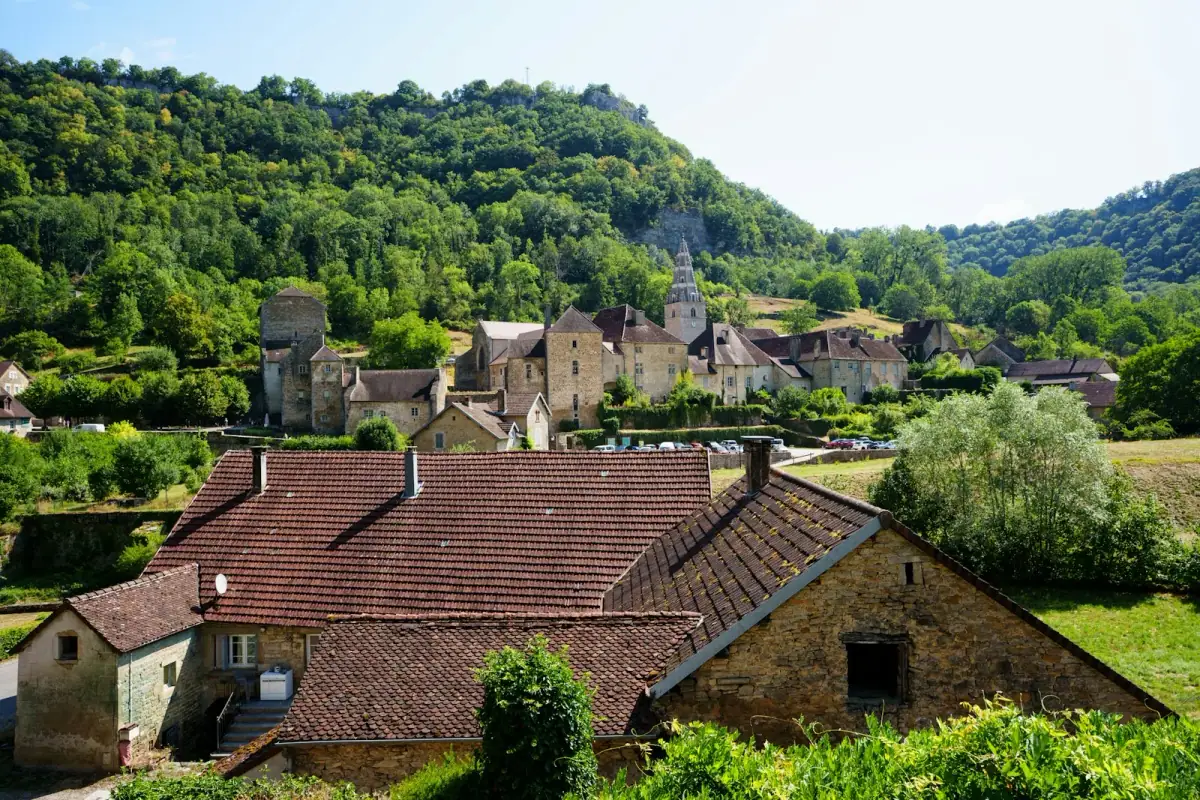
You mainly find small downtown hotels, guesthouses in winegrowers’ houses or buildings with character, and gîtes in the neighboring villages. Establishments are often modest in size: in high season and during wine festivals, it is better to book early.
Points to watch
Arbois is very pleasant, but it is not at the heart of the big mountain sites. For the Hérisson waterfalls or the High Jura, expect longer trips, measured in tens of minutes of winding road. If hiking is your priority, look instead toward the lake district.
To go further on the specialties you will taste in the evening, see our guide to the gastronomic specialties of the Jura.
Stay in Arbois, in the heart of the vineyards
Hotels, guesthouses and gîtes: compare availability for your dates.
Lons-le-Saunier and Dole: the practical towns
If you are looking for more lodging choice, services nearby and a central position, the towns of Lons-le-Saunier and Dole deserve a comparison.
Lons-le-Saunier
The department’s prefecture, Lons-le-Saunier is a human-scale spa town, with an old center of arcades, shops, restaurants and a train station. It is a practical base for day trips to the vineyards, the reculées and the lake district. The offering is more varied than elsewhere: hotels of different categories, residences and a few guesthouses nearby.
Advantages: central position, services, easy parking, rail service, choice of restaurants. Limits: the atmosphere is more urban than a vineyard village, and the big mountain sites remain some distance away.
Dole
Dole lies in the north-west of the department, on the banks of the Doubs and the Rhône-Rhine canal. The town is known for its heritage, its canals and its old stone town. It is an interesting option if you arrive by train or want to combine the Jura with Bourgogne-Franche-Comté more broadly. However, it is quite far from the High Jura: keep it for an arrival or departure stop rather than as the main base of a nature stay.
Who these bases are for
They suit travelers who like having amenities at hand, short stays, train trips followed by a car rental, and mid-range budgets that prefer to compare several hotels. Always compare options for your dates: rates change a lot in season.
The lake district: nature, swimming and hiking
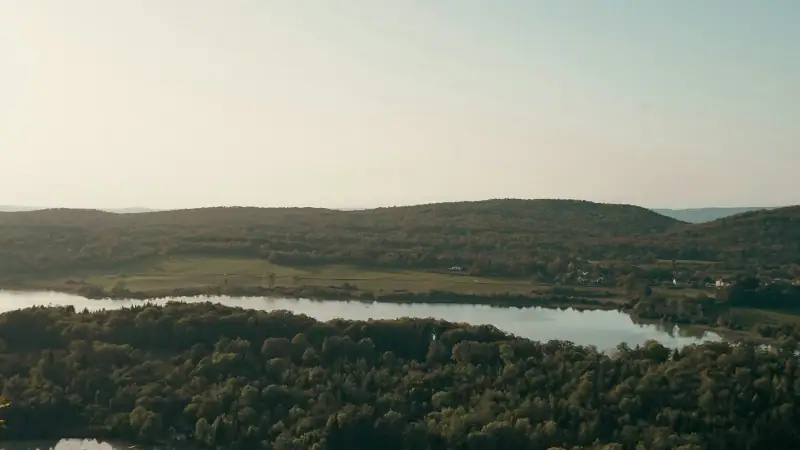
The lake district groups forests, bodies of water and valleys, with the Hérisson waterfalls as the big attraction. It is the best base for families, hikers and summer swimming fans.
Why stay there
- Waterfall trails and lakes are a short drive away.
- In summer, swimming and water activities are close by.
- The setting is calmer and greener than the towns.
Types of lodging
The area has many campsites (pitches, mobile homes, sometimes chalets), gîtes and seasonal rentals, guesthouses and a few modest hotels. Campsites near the bodies of water are very popular in summer: book several months ahead for July and August.
Practical tips
Evenings can be cool even in summer: bring warm clothes, especially if you camp. Out of season, some establishments close: check opening periods. To plan your outings in the area, read our guide to hikes, waterfalls and lakes in the Jura.
Les Rousses, Morez and Saint-Claude: the High Jura
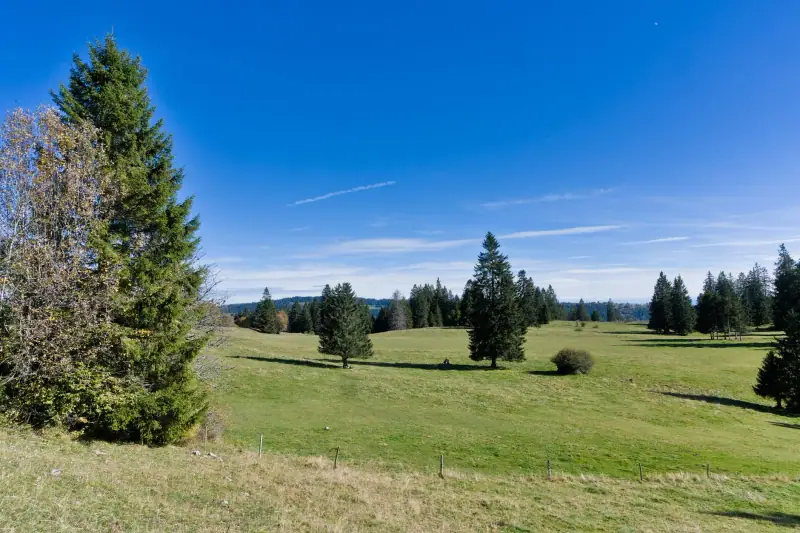
The High Jura is the most mountainous area of the department. High plateaus, fir forests, high-altitude lakes and wide open spaces make a scene very different from the vineyards. The three best-known bases are Les Rousses, Morez and Saint-Claude.
Les Rousses
A resort village near the Swiss border, Les Rousses is oriented toward outdoor sports: cross-country skiing, snowshoeing, mid-mountain alpine skiing in winter, hiking and mountain biking in summer. It concentrates the widest lodging offering in the area: hotels, tourist residences, chalets and gîtes. It is the ideal base for a winter stay, but also for escaping the heat in summer.
Morez
A valley town known for its eyeglass-making history, Morez is a little more discreet and often more affordable. It suits travelers who want to explore the High Jura without staying in a resort, with the feel of a genuine small town.
Saint-Claude
Saint-Claude, in a deep valley, is known for its pipe and diamond tradition, as well as its cathedral. It offers a more authentic and less touristy base, well placed for exploring the south of the High Jura. Lodging choice there is more limited: book ahead in high season.
Winter tips
Winter calls for more anticipation. Check snow cover before booking, plan a vehicle equipped for winter conditions, and know that some secondary roads can be difficult in snow. Winter school holidays are the tightest period: book well in advance.
Stay in Les Rousses, between lakes and slopes
Chalets, hotels and residences in the High Jura: check availability.
Which type of accommodation to choose in the Jura
Beyond the place, the type of lodging profoundly changes the experience of the stay.
Hotels
Hotels are mostly in towns (Lons-le-Saunier, Dole, Arbois) and resorts. They suit short stays, travelers who want simple service and late arrivals. Breakfast is often offered as an option: compare the formulas.
Guesthouses
This is the emblematic type of lodging in the Jura. Set in village houses, renovated farms or winegrowers’ residences, they offer a warm welcome, a generally homemade breakfast and good local advice. Check arrival conditions (hours, minimum number of nights) and accepted payment methods.
Gîtes and seasonal rentals
For a stay of a week or more, or to travel with family or friends, the gîte is often the best value for the comfort. You have a kitchen, more space and a lot of freedom in your rhythm. Many rentals run Saturday to Saturday in high season: factor this into your planning.
Campsites and unusual lodging
The Jura has many campsites, some near lakes, with mobile homes, chalets or bare pitches. There are also more original lodgings, such as cabins or caravans, mostly in the countryside. Always check the actual facilities (bathrooms, heating) before booking, especially out of season.
Mountain huts and hiking lodging
For treks on foot or on skis, there are gîtes d’étape (hostel-style trail stops) and hiking lodgings along the main routes. They generally work by reservation: contact them ahead, especially out of season when hours are reduced.
Activities and outings in the Jura
Guided walks, tastings and experiences to book in advance.
Which base for your profile
To help you decide, here are simple recommendations by type of trip.
Couple and foodie getaway
Choose Arbois or a Revermont village. You enjoy the vineyards, cellars and quality tables, with charming guesthouses for an intimate atmosphere.
Family with children
Opt for a gîte or a campsite in the lake district. The space, summer swimming and short waterfall trails suit children well. Bring shoes with good grip.
Hikers and nature lovers
The lake district or the High Jura are your best choices. Staying closest to the trailheads lets you set out early, when car parks are empty and the light is soft.
Winter stay
Aim for Les Rousses or Morez for easy access to cross-country trails, snowshoe paths and winter landscapes. Book early for school holidays.
Traveler without a car
Towns served by train, such as Lons-le-Saunier or Dole, are the most suitable. You can visit on foot and complement with an organized excursion or an occasional car rental.
Tight budget
Off-peak camping, shared gîtes, simple guesthouses and hotels in mid-sized towns help limit costs. Shifting the stay to May, June or September generally reduces the bill and the crowds.
Tips for booking well
A few simple habits avoid unpleasant surprises.
- Anticipate peak periods: July-August, winter holidays, harvest weekends and public holidays.
- Read the cancellation conditions: favor cancellable rates when the weather is uncertain, notably for a hiking or ski stay.
- Check access and parking: some village lodgings are on narrow streets.
- Look at arrival times: in guesthouses and small hotels, there is not always someone to welcome you late in the evening.
- Plan something for dinner: in small villages, restaurants close early and some are not open all week out of season.
- Compare several bases: a trip thirty minutes longer can open up noticeably better rates.
For a rental car, a comparison site lets you compare rates based on your arrival point, notably from the stations of Dole or Lons-le-Saunier: book early in high season.
Stay ideas by length
2-night weekend
A single base, your choice: Arbois for foodie discovery, the lake district for nature, Les Rousses for the mountains. Focus on two or three visits a day to avoid spending your stay on the road.
Stay of 4 to 5 nights
Combine two atmospheres: two nights in the vineyards or Lons-le-Saunier, then two to three nights in the lake district or the High Jura. Changing base lets you discover the department’s diversity without multiplying trips.
A full week
Go for three stops: a vineyard base, a lake district base, then a High Jura base. This formula lets you cover the main facets of the area in depth, limiting daily travel and keeping free time.
Summary
There is no “best” base for sleeping in the Jura: it all depends on what you come looking for. Arbois and the Revermont charm foodies, Lons-le-Saunier and Dole practical travelers, the lake district families and walkers, and the High Jura lovers of wide spaces and Nordic skiing. For a stay of more than three days, combining two bases is almost always the best choice.
Once your lodging is chosen, all that remains is to organize your days. Our 3-day itinerary gives you a guiding thread, and our article on gastronomic specialties will help you plan your meals.
Frequently asked questions
What is the best base for a first stay in the Jura?
For a first visit, the Arbois or Lons-le-Saunier area is the most versatile: vineyards, reculées and the lake district are within about an hour by road. If you come mostly for the mountains and winter sports, prefer the High Jura, around Les Rousses or Morez.
Do you need to book far in advance?
Yes for July, August, winter holidays and harvest or local festival weekends: gîtes and charming guesthouses go early. Off-season, booking a few weeks ahead is generally enough, with more choice and often lower rates.
Can you do without a car when staying in the Jura?
It is possible in a few towns like Dole, Lons-le-Saunier or Arbois, which can be visited on foot. But to reach the waterfalls, lakes, reculées and villages of the range, a car is still very much advised, as public transport is infrequent.
What type of accommodation should you choose to travel as a family?
A gîte, a holiday apartment or a campsite with mobile homes offers space, a kitchen and some flexibility on mealtimes. Campsites near the lake district lakes are especially popular in summer for swimming.
Where should you stay for cross-country skiing or snowshoeing?
The High Jura, around Les Rousses and Morez, concentrates the Nordic areas and suitable lodging: hotels, chalets, gîtes and residences. Check snow cover and conditions before booking, as it varies from year to year.
Are guesthouses common in the Jura?
Yes, it is one of the most widespread types of lodging, especially in the vineyards, Revermont villages and the countryside. They offer a personal welcome and often valuable advice on cellars, cheese dairies and nearby walks.
Is the Jura expensive for accommodation?
Prices vary strongly with the season and type of lodging. In general, the Jura remains more affordable than the big Alpine destinations. Rates rise in the summer high season and during winter holidays in the High Jura: compare several dates if you are flexible.
More Jura guides
Keep reading
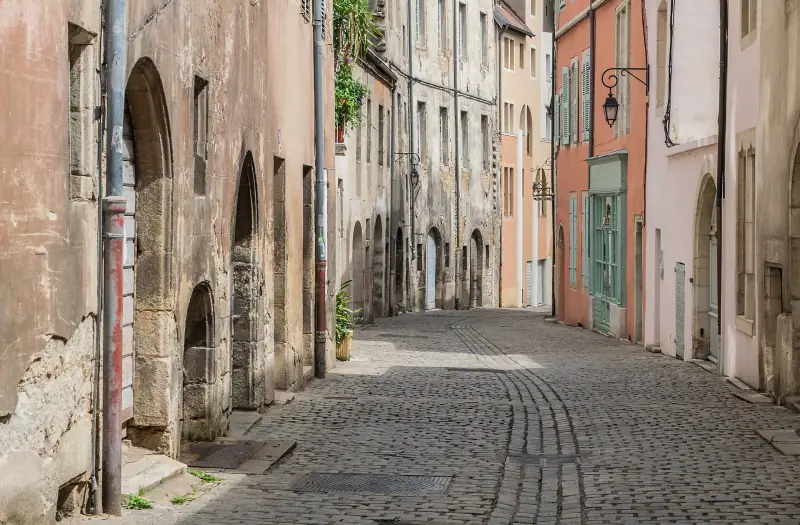
Where to stay in Dole: neighborhoods and types of accommodation
Where to stay in Dole? Historic center, Canal des Tanneurs, train station, Mont-Roland: areas, types of lodging and tips for choosing your Jura base.
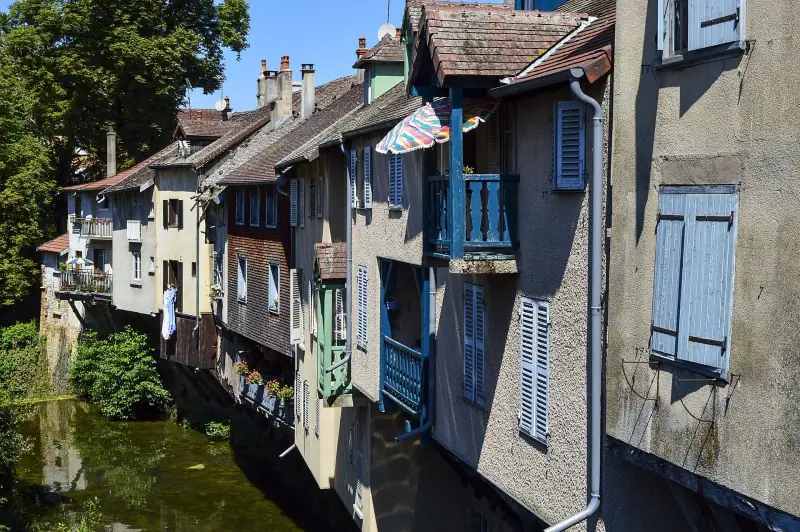
Where to stay in Arbois: neighborhoods and types of accommodation
Where to stay in Arbois? Historic center, Cuisance banks, vineyards and nearby villages: compare areas and types of accommodation before you book.
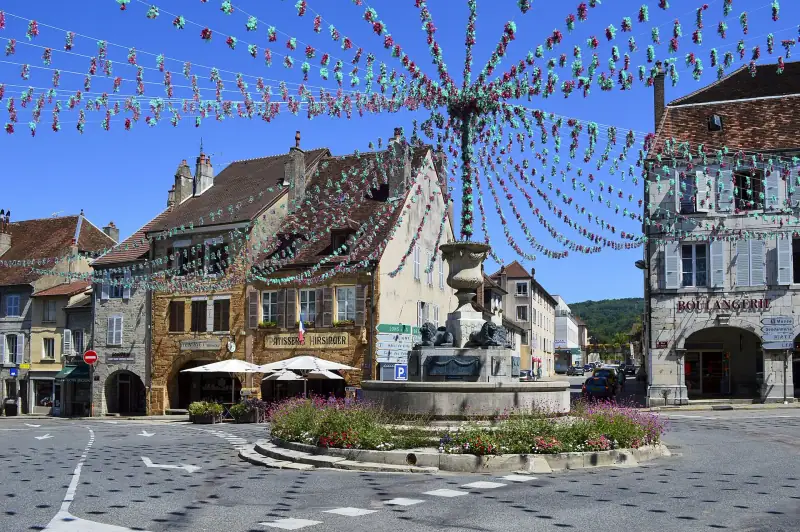
Visiting Arbois: what to do in the capital of Jura wine country
What to see and do in Arbois: Pasteur's house, vineyards, vin jaune, the Planches reculée and Pupillin. A guide to planning your visit in the Jura.
Ready-made
Jura itineraries
3 days
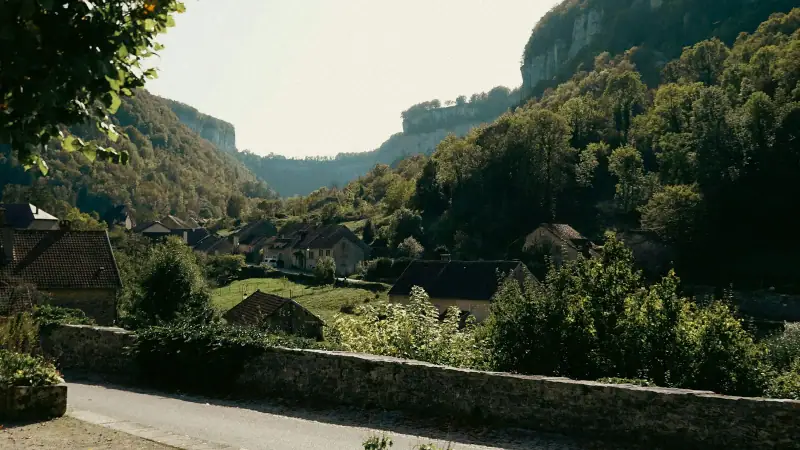
The Jura in 3 days without a car: a realistic itinerary by train, on foot and by bike
Visiting the Jura in 3 days without a car: a base in Arbois, trains from Mouchard, Salins-les-Bains, Lons-le-Saunier. Stages, distances, times and limits.
3 days
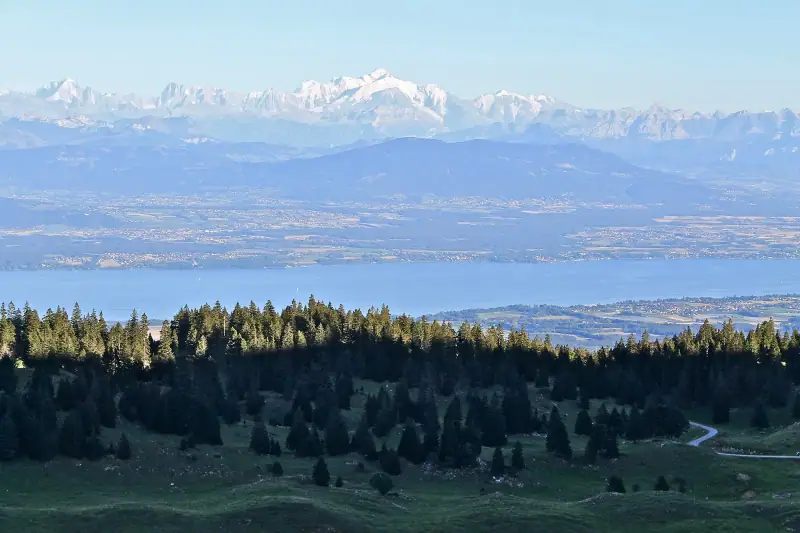
3 days in the Jura: a day-by-day itinerary through vineyards, waterfalls and the High Jura
A 3-day Jura itinerary by car: Arbois and the vineyards, Baume reculée, Hérisson waterfalls, lakes and the High Jura. Detailed plan and tips.
4 days
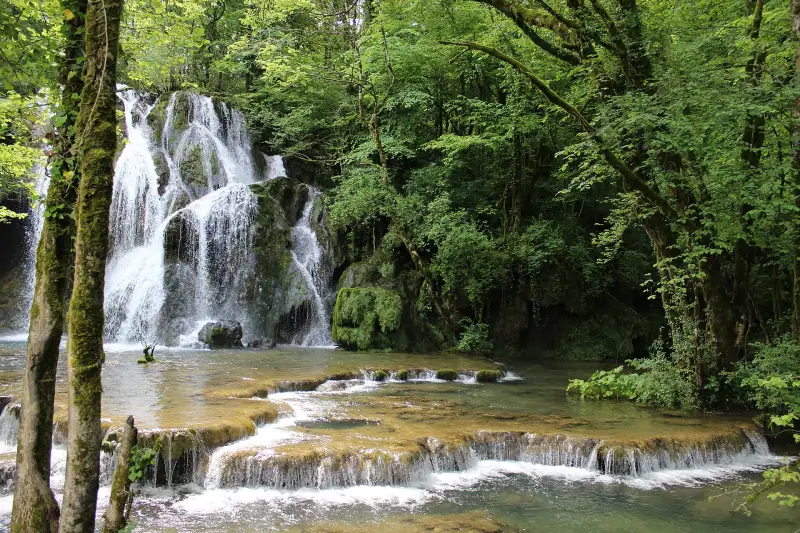
The Jura with kids: a 4-day family itinerary through waterfalls, lakes and caves
A 4-day Jura itinerary with children: Hérisson waterfalls, lake swimming, Baume reculée and the High Jura. Pace, tips and practical advice.