Plan your trip
When to go to the Jura: season by season, what to do and what to plan
We may earn a commission when you book through links on this page, at no extra cost to you. We don't visit or try the places we cover: we summarize published sources. How we work
In short
- Spring brings the most powerful waterfalls, summer the lakes and long days, autumn the grape harvest and colors, winter cross-country skiing and snowshoeing in the High Jura.
- September and early October offer the best mix of weather, colors and food; May and June are good for nature and quiet.
- Book weeks or even months ahead for July, August and winter school holidays, especially near the lakes and in the resorts.
- The weather changes quickly: bring a waterproof jacket and a warm layer in every season. A car is strongly recommended.
The Jura can be visited all year, but not in the same way. A mid-mountain range like this changes its face completely with the season: the waterfalls peak at the snowmelt, the lakes turn into beaches in summer, the vines put on red and gold in autumn, and the High Jura plateaus are covered in snow in winter. Choosing the right time is therefore first of all choosing what you want to experience.
This practical guide helps you decide when to go to the Jura according to your wishes: hiking, swimming, food, cross-country skiing or a simple quiet getaway. We review each season, its strengths, its limits, and what to plan for equipment, booking and budget.
The Jura climate in a few words
Before comparing seasons, you need to understand what makes the Jura climate special. The range is a mid-mountain area stretching between the Saône plain and the Swiss border. Altitude rises clearly from west to east, which creates real differences between the Revermont vineyards, around Arbois and Lons-le-Saunier, and the High Jura, around Les Rousses, Morez and Saint-Claude.
- In the vineyards and on the first plateau, winters are cool, summers rather mild and pleasant, and snow does not last as long.
- In the lake district, the climate is damper, with very green vegetation and well-fed streams.
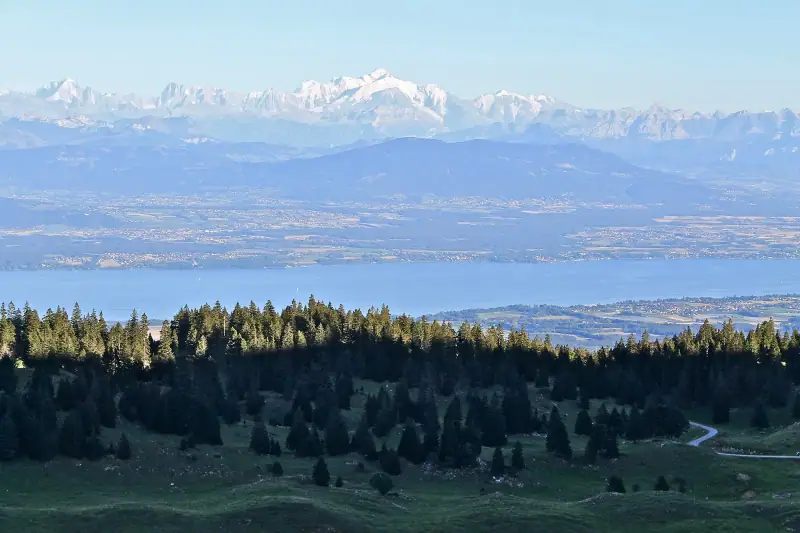
- In the High Jura, winters are long and snowy, summers stay cool, and nights can be chilly even in July.
Above all, remember a simple rule: the weather changes quickly. A fine morning can end with a storm in summer, and a sweater or waterproof jacket belongs in the bag whatever the season. To refine your choice of walks according to the terrain, see our guide to hiking in the Jura.
Spring: powerful waterfalls and nature waking up
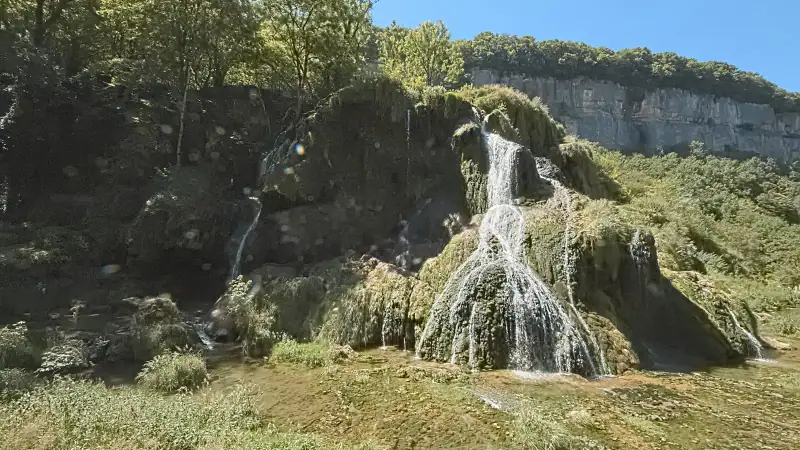
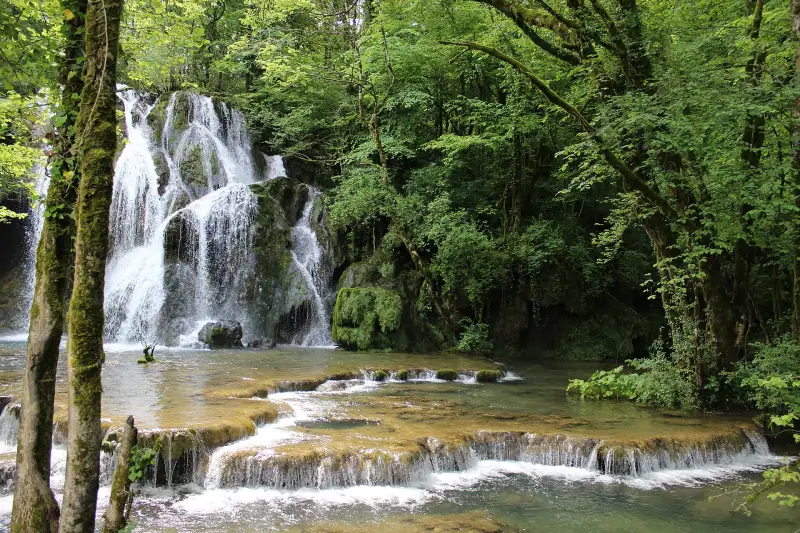
Spring is a season of transition, and that is precisely what makes its charm. The snowmelt and rain feed the rivers, and the lake district waterfalls, including those of the Hérisson valley, are then at their best flow. Forests turn green again, meadows fill with flowers and the trails are quiet.
Strengths:
- Particularly impressive waterfalls.
- Few people at natural sites and in villages.
- Accommodation prices often lower than in summer.
- Beautiful light for photography.
Points to watch:
- Trails can be muddy and slippery, especially near water: shoes with grippy soles are essential.
- Snow can persist at altitude in the High Jura into spring depending on the year.
- Some sites, restaurants or seasonal activities only reopen from late spring or early summer.
- Rain is frequent: plan an indoor plan B, such as a cellar or cheese dairy visit.
Spring suits a walking and nature stay very well, provided you accept a little weather uncertainty.
Where to stay near the waterfalls and lakes?
Gîtes, guesthouses and hotels in the Jura: compare offers for your dates.
Summer: lakes, hikes and long evenings
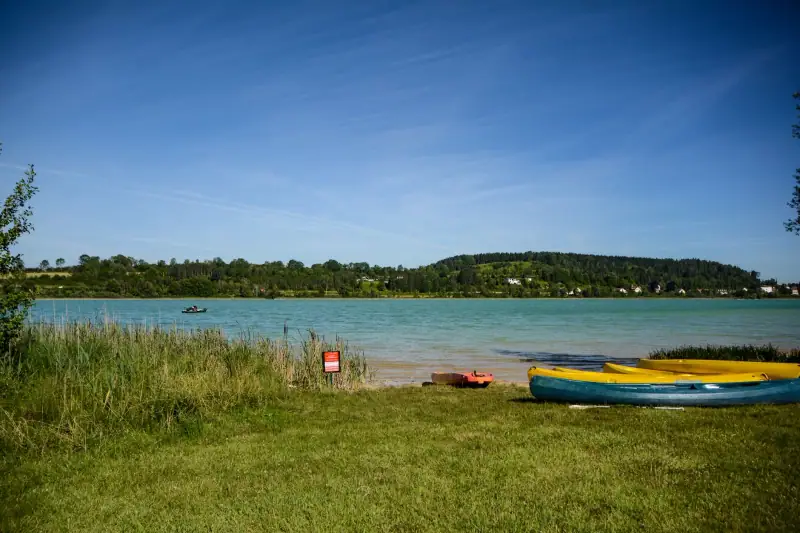
Summer is high season in the Jura, and for good reasons. Days are long, trails are dry, and the lake district becomes a playground for the whole family. Several bodies of water, including Lake Chalain, offer beaches and supervised swimming areas in season. The water stays cool, but it feels good after a hike.
Summer is also the ideal season to take advantage of altitude: when the lowlands swelter, the High Jura offers more bearable temperatures and large shaded forests. It is a good option for escaping a heat wave with children.
Strengths:
- All outdoor activities are accessible: hiking, cycling, swimming, canoeing, horseback rides.
- Tourist sites, markets and farms are open.
- Mild evenings, handy for dining on a terrace.
Points to watch:
- July and August concentrate the crowds: car parks at the top sites fill early, so arrive in the morning.
- Accommodation, especially near the lakes, must be booked well in advance.
- Summer storms can be sudden: avoid ridges and rocks in threatening weather.
- Prices are the highest of the year.
To avoid the crowds, favor early June or early September: the weather is often still very pleasant and crowds drop noticeably.
Autumn: grape harvest, colorful forests and food
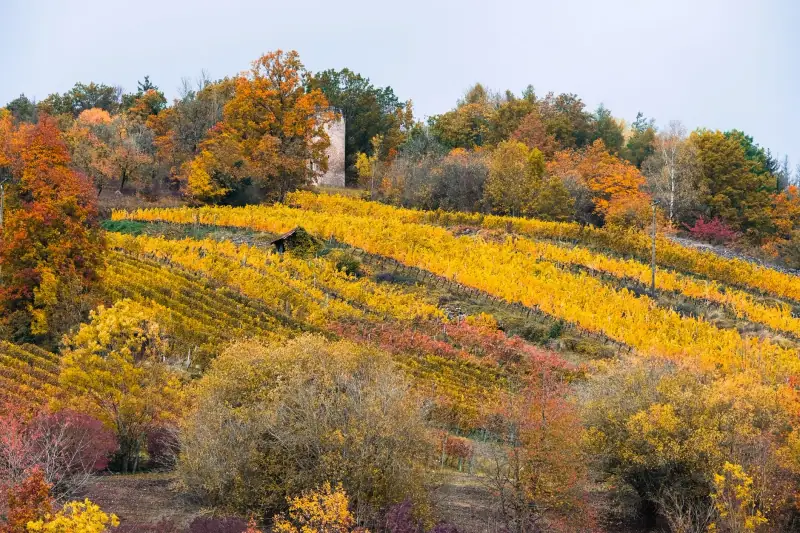
For many regular visitors, autumn is the finest season in the Jura. Beech and maple forests take on coppery tints, the light is soft and the Revermont vines change color. It is also the grape harvest period, which sets the rhythm of life in the vineyards around Arbois and the surrounding wine villages.
Autumn is ideal for combining hiking and food. After a walk in the forest, a break over a Comté platter, a Morteau sausage or a glass of vin jaune makes perfect sense. To prepare your tastings, read our guide to the gastronomic specialties of the Jura.
Strengths:
- Spectacular landscapes for walking and photography.
- Fewer crowds than in summer.
- A friendly atmosphere in cellars and farms.
- Accommodation prices generally lower outside weekends.
Points to watch:
- Days shorten quickly: plan your hikes to finish before dark.
- The weather is more unstable, with possible rain and fog.
- Some summer activities, such as swimming, are no longer available.
- Some seasonal businesses close from October or November.
If you can only go once, September and early October probably offer the best compromise between weather, colors and atmosphere.
Winter: cross-country skiing, snowshoeing and cocooning
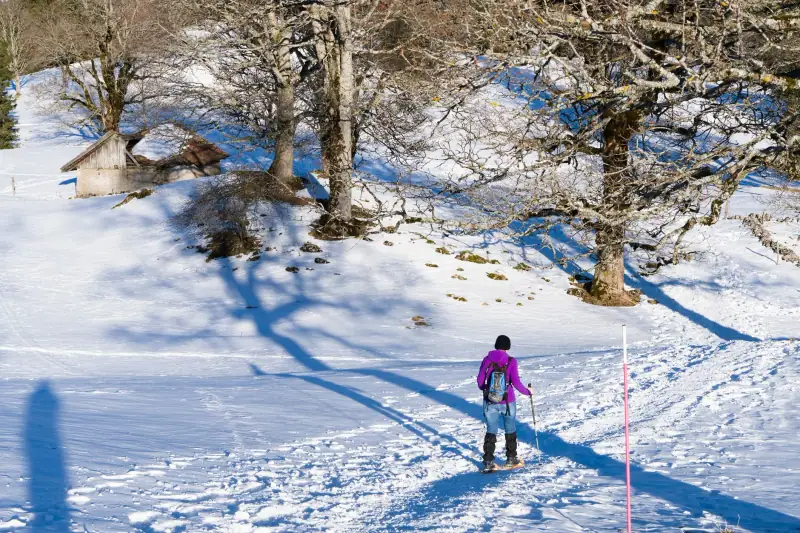
The Jura is a winter destination in its own right, and one of the most accessible for Nordic fans. The High Jura, around Les Rousses, Morez and Saint-Claude, is known for its vast cross-country and snowshoe areas, its fir forests and its mountain villages. There are also mid-mountain alpine ski resorts, more modest than those of the Alps but family-friendly and affordable.
Winter also brings slower pleasures: walks in snowy forests, partly frozen waterfalls, fireplaces, fondues and raclettes in a chalet. The Jura table, with its cheeses and cured meats, suits the cold season particularly well.
Strengths:
- Cross-country skiing, snowshoeing and winter hikes in calm landscapes.
- An authentic atmosphere, far from the big resorts.
- Comforting food.
- Prices often more reasonable than in the Alps.
Points to watch:
- Snow cover varies from year to year: check conditions right before you go.
- Mountain roads can be snowy or icy: bring suitable equipment if you drive at altitude.
- Waterfall and reculée trails are slippery, even closed in places.
- Some accommodation and restaurants are closed outside school holidays.
Coming from far away?
Compare flights and plan your arrival in France before heading to the range.
Which period to choose for your plans?
To decide quickly, here is a simple guide based on what you want to do.
| Your plan | Recommended period | Why |
|---|---|---|
| Waterfalls and hikes | April to June, September-October | Good flow, pleasant temperatures |
| Swimming in the lakes | July and August | Warmest water, supervised beaches |
| Vineyards and tastings | September to October | Grape harvest, atmosphere in the cellars |
| Cross-country skiing and snowshoeing | December to March | Snow at altitude, depending on the year |
| Avoiding crowds | May, June, September | Fewer crowds |
| Family stay | July-August | Water activities, long days |
These guides are indicative: the mountain climate remains unpredictable and it is always useful to check the local weather and the tourist office before finalizing a program.
Budget and booking: what to expect by season
The Jura is generally a more affordable destination than the big Alpine ranges, but prices vary by period.
- High season (July-August and winter school holidays): accommodation is the most expensive and fills quickly. Book several weeks, even several months, ahead, especially near the lakes and in the resorts.
- Mid-season (May-June, September-October): a good balance of prices, availability and weather. Harvest weekends can nonetheless be in demand in the vineyards.
- Low season (November, early spring): prices drop, but some businesses are closed. Check openings before booking.
A tip: if your dates are flexible, compare weekday and weekend rates. The gaps can be significant, especially in tourist areas.
Getting around by season
The Jura is a land of small roads, scattered villages and often isolated natural sites. A car is strongly recommended to link waterfalls, lakes, cellars and villages, as public transport is limited outside the main towns. Compare rental offers before you leave and book early in high season.
In winter, driving at altitude demands more caution: check road conditions, anticipate travel time and make sure your vehicle is equipped for winter conditions. In the shoulder seasons, shorter days require planning trips with a safety margin.
Activities and outings to book
Guided walks, tastings and nature activities in the Jura.
What to pack by season
Whatever the period, a few items are essential in the Jura:
- Hiking shoes with grippy soles, because wet limestone rocks and roots are slippery.
- A waterproof jacket and a warm layer, even in summer.
- A water bottle and a snack for hikes, as resupply points are rare on some trails.
- A swimsuit and towel if you plan to swim in a lake.
- Warm clothes, gloves and a hat in winter, with gaiters or waterproof shoes for snow.
- A headlamp for longer outings in autumn and winter.
Also remember to download your maps and routes before you leave: mobile coverage can be patchy in valleys and forests. Check your carrier’s international plan or consider a travel eSIM before you go.
Tips for choosing your dates
- Define your priority first: waterfalls, swimming, wine, snow or calm. Each wish matches a different season.
- Aim for the shoulder season if you want to combine decent weather, reasonable prices and few people: May-June and September.
- Book early for July-August and winter school holidays.
- Stay flexible so you can adapt your outings to the weather.
- Check openings of sites, cellars, restaurants and accommodation out of season.
- Combine activities: a hike in the morning, a cellar or cheese dairy visit in the afternoon, so rain does not spoil the stay.
Common mistakes to avoid
- Going in winter without checking snow cover: it varies significantly from year to year.
- Underestimating distances: mountain roads are slower than the map suggests.
- Arriving late at heavily visited sites in summer: car parks fill by late morning.
- Neglecting equipment: cool, damp weather can surprise you in midsummer.
- Booking at the last minute in high season: the best accommodation goes fast.
Summary
There is no “bad” time to go to the Jura, only periods suited to different wishes. Spring is for waterfalls, summer for lakes and long hikes, autumn for the grape harvest and colorful forests, and winter for Nordic skiing and meals by the fire. If you hesitate, pick September and early October for the combination of pleasant weather, landscapes and food, or May-June for nature at its best and quiet.
Ready to choose your dates?
Compare places to stay in the High Jura, ideal for summer and winter alike.
Frequently asked questions
What is the best time to visit the Jura?
It all depends on your plans. From May to September, the weather suits hiking, waterfalls and lakes. September and October are very pleasant for the colors and the grape harvest in the vineyards. From December to March, the High Jura becomes a destination for cross-country skiing, snowshoeing and mid-mountain alpine skiing.
Can you swim in the Jura lakes?
Yes, in summer. Several lakes in the lake district, including Lake Chalain, have developed beaches. The water stays cool even in midsummer, and swimming supervision only runs in season: ask the tourist office.
When are the Hérisson waterfalls at their best?
In spring and after heavy rain or the snowmelt, the flow is most spectacular. In summer they are less powerful but the site remains very pleasant. In winter, some parts may be frozen, slippery or closed: check access before you go.
Is there snow in the Jura?
Yes, especially in the High Jura, around Les Rousses or Morez, where the altitude is highest. Snow cover varies from year to year and increases with altitude. Check conditions before booking a snow-focused stay.
Do you need to book ahead in summer?
It is recommended for July and August, notably for gîtes, campsites near the lakes and guesthouses. Winter school holiday weekends and harvest periods can also be busy.
What is the weather like in the Jura?
The climate is semi-continental with a mountain influence: cold, snowy winters at altitude, mild to hot summers, and weather that can change quickly. Storms are possible in summer and rain is frequent in spring and autumn. Always bring a warm layer and a waterproof jacket.
Is the Jura pleasant to visit in winter without skiing?
Yes. Snowshoeing, walks in snowy forests, Comté and vin jaune tastings, villages and spas offer enough for a weekend. Just bring warm clothes and suitable tires or equipment if you drive at altitude.
More Jura guides
Keep reading
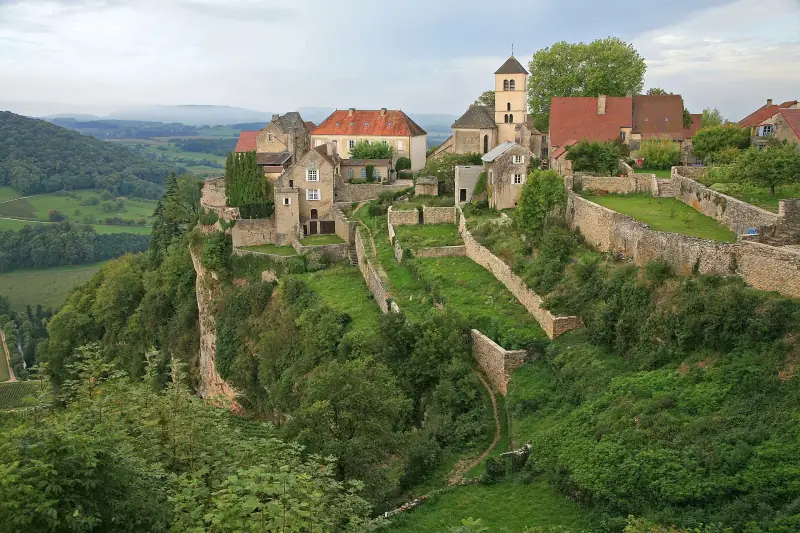
Jura trip budget: real costs, 3 profiles and tips to spend less
How much does a Jura trip cost? Accommodation, transport, meals, activities: a detailed budget, three profiles with figures and tips to pay less.
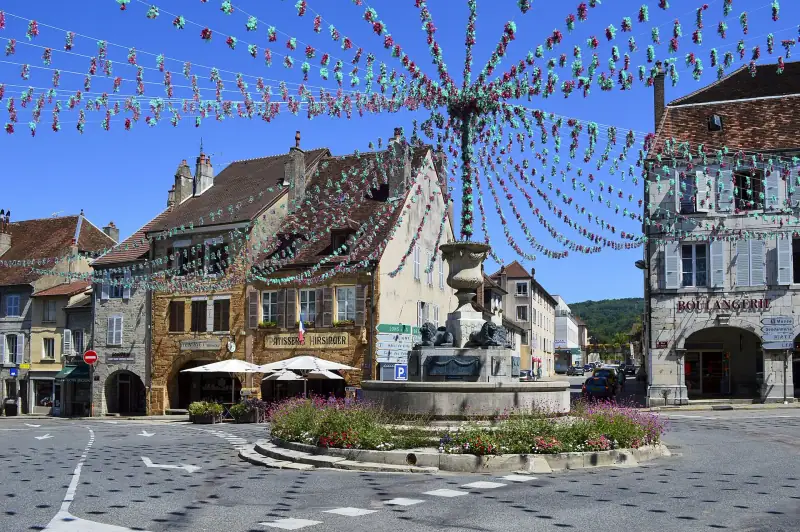
Visiting Arbois: what to do in the capital of Jura wine country
What to see and do in Arbois: Pasteur's house, vineyards, vin jaune, the Planches reculée and Pupillin. A guide to planning your visit in the Jura.
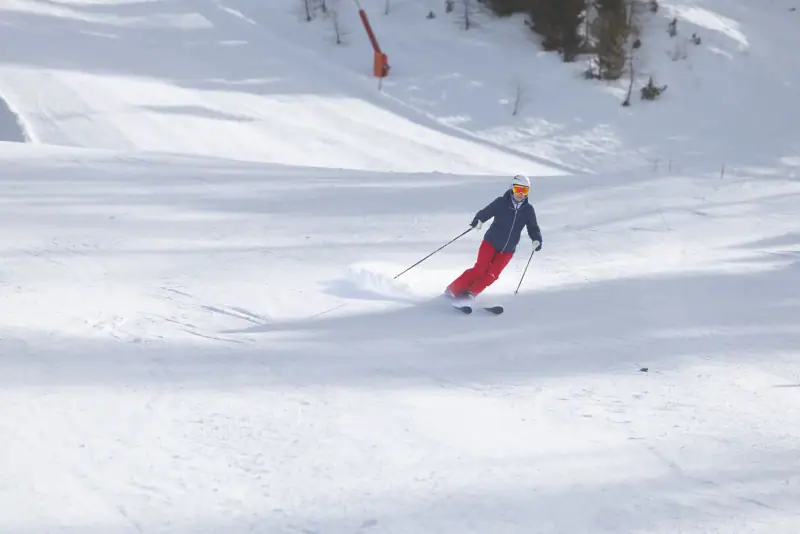
Alpine skiing in the Jura: Métabief, Les Rousses and the small resorts, passes and tips
Alpine skiing in the Jura: Métabief, Les Rousses, Monts Jura and small family resorts. 2026-2027 dates, passes, levels, lodging and practical tips.
Ready-made
Jura itineraries
3 days
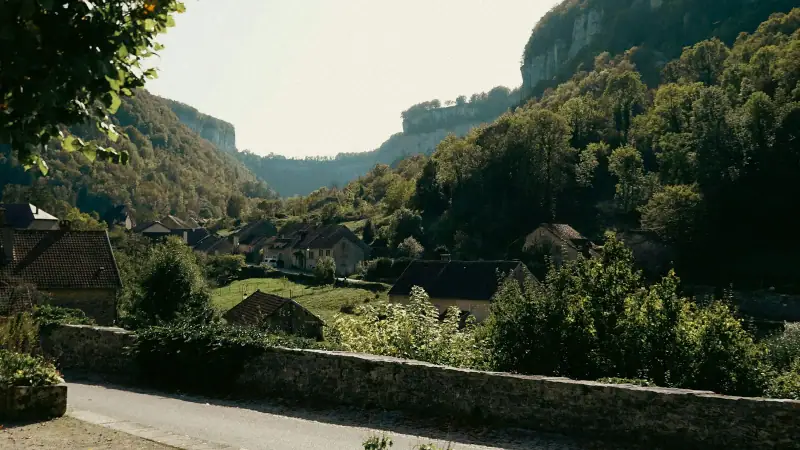
The Jura in 3 days without a car: a realistic itinerary by train, on foot and by bike
Visiting the Jura in 3 days without a car: a base in Arbois, trains from Mouchard, Salins-les-Bains, Lons-le-Saunier. Stages, distances, times and limits.
3 days
3 days in the Jura: a day-by-day itinerary through vineyards, waterfalls and the High Jura
A 3-day Jura itinerary by car: Arbois and the vineyards, Baume reculée, Hérisson waterfalls, lakes and the High Jura. Detailed plan and tips.
4 days
The Jura with kids: a 4-day family itinerary through waterfalls, lakes and caves
A 4-day Jura itinerary with children: Hérisson waterfalls, lake swimming, Baume reculée and the High Jura. Pace, tips and practical advice.