Things to do
Hiking in the Jura: Hérisson waterfalls, lakes and reculées
We may earn a commission when you book through links on this page, at no extra cost to you. We don't visit or try the places we cover: we summarize published sources. How we work
In short
- The Hérisson valley, with about thirty waterfalls on a river path, is the emblematic Jura walk; the Éventail falls are about 65 m (213 ft) high, the Grand Saut about 60 m (197 ft).
- Reculées such as Baume-les-Messieurs and the lakes of the lake district (Chalain, Vouglans) are the other classics; the High Jura around Les Rousses offers ridges and wide spaces.
- Spring gives the most powerful waterfalls, summer suits hiking plus lake swimming, autumn has colors and fewer people; in winter, favor snowshoes and cross-country skiing.
- A car is strongly recommended; trailheads are often isolated. Wear shoes with grip: wet rock and steps near waterfalls are slippery.
The Jura does not have the reputation of the Alps, and that is a good thing. Here there are no dizzying summits or crowds on the trails, but a human-scale mid-mountain range, covered in forests, carved with deep valleys, dotted with lakes and crossed by rivers that end in waterfalls. It is an ideal playground for walkers of all levels, whether they want a two-hour family walk or a long day on the ridges.
This guide helps you choose your hikes, understand the geography of the range, pick the right season and equip yourself well. We review the main sites of the lake district, the reculées of the Revermont and the landscapes of the High Jura, with practical advice for planning your stay.
Understanding the Jura’s terrain before choosing a hike
The Jura range stretches in an arc between Franche-Comté, Switzerland and the Ain. It divides into several very different areas, which directly affects the kind of walking you will do.
- The vineyards and the Revermont, in the west, form a border of slopes and cliffs facing the plain. This is the land of vines, villages with character and reculées.
- The first plateau, where Lons-le-Saunier and Arbois are, mixes forests, meadows and viewpoints.
- The lake district, further east, concentrates rivers, waterfalls and glacial lakes.
- The High Jura, around Les Rousses, Morez and Saint-Claude, offers the highest relief, ridges and vast high-altitude forests.
This diversity lets you build varied stays: a morning walk in a forested valley, an afternoon by a lake, an evening in a cellar. If you want to combine hiking and dining, our guide to Jura gastronomy will give you plenty for your picnics and evenings.
The Hérisson waterfalls: the emblematic hike
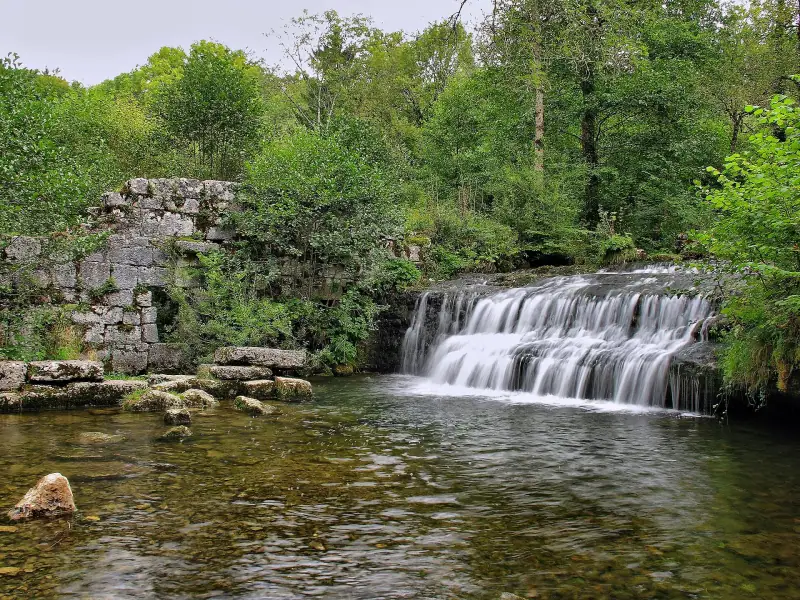
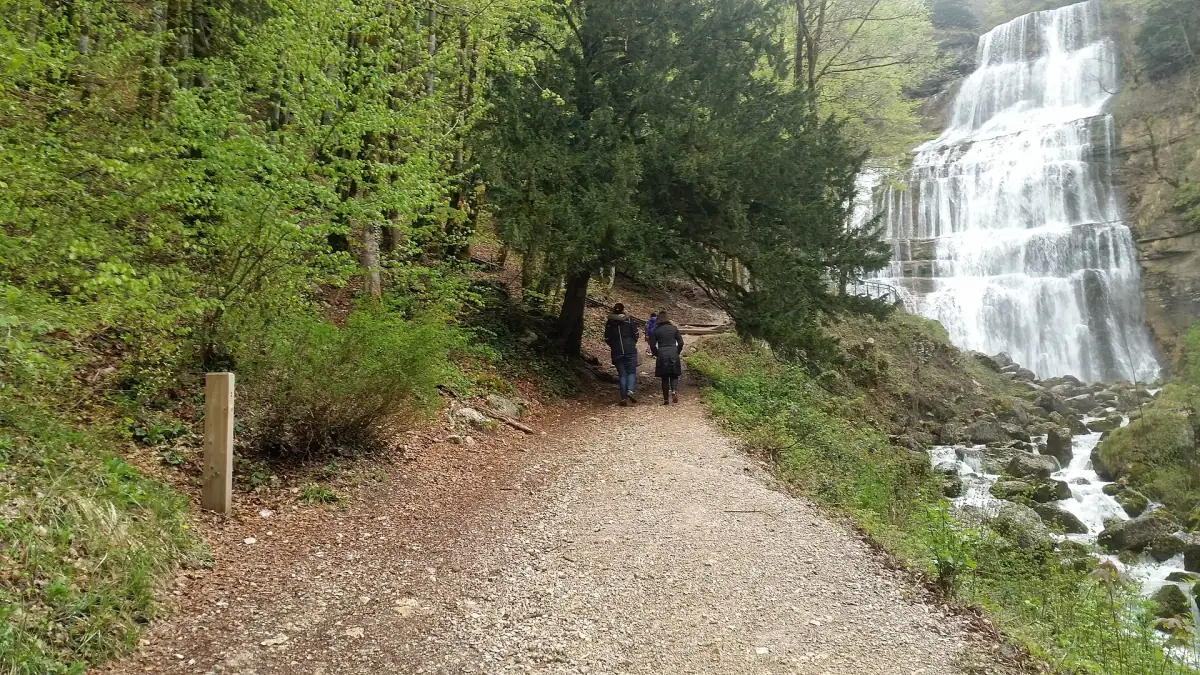
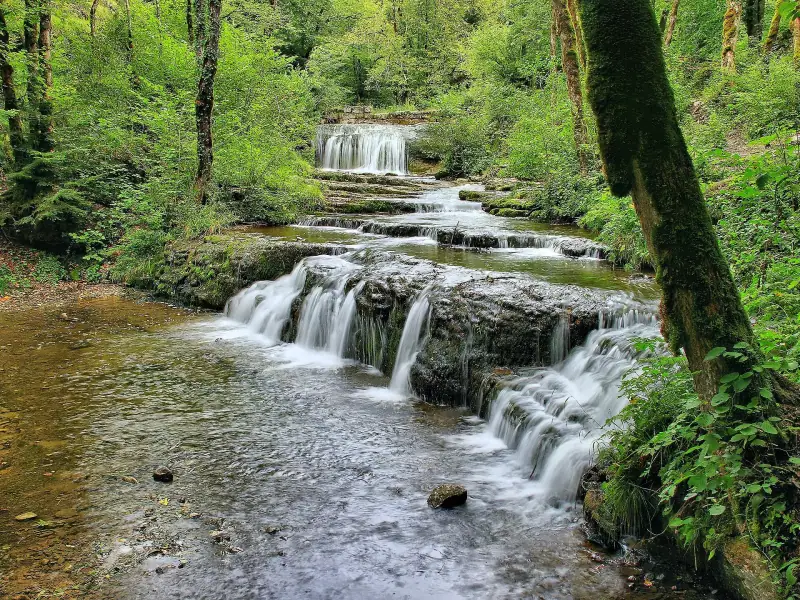
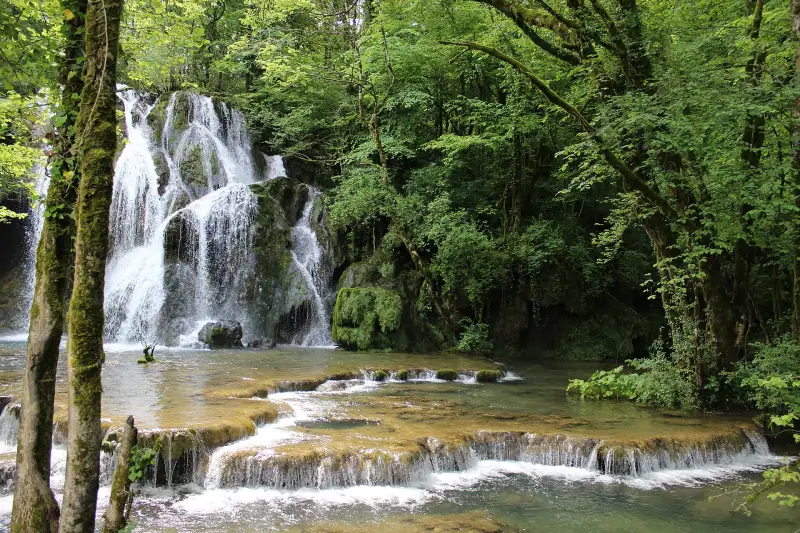
In the lake district, the Hérisson valley is probably the most visited natural site in the range. The river tumbles down a wooded vale forming a series of falls, hence the nickname “valley of waterfalls”. There are about thirty waterfalls in all along the river, from small discreet falls to the large spectacular ones.
A path along the river
The main path goes up the valley following the stream, alternating footbridges, wooden stairs and forest tracks. You pass from one waterfall to the next in a few minutes of walking, which makes the walk very pleasant for children and occasional walkers. The Éventail waterfall, about 65 meters (213 ft) high, is the most impressive: it falls in several steps in a setting of cliffs and forest. The Grand Saut, about 60 meters (197 ft), drops in a single jet.
The Saut Girard, about 35 meters (115 ft), is also among the most photographed sites. Depending on the season, the water can form a powerful curtain or a thin veil.
When to go
The waterfalls are at their peak in spring, when snowmelt and rain swell the river, and after heavy rainfall. In summer, the flow drops but the shade of the trees makes walking pleasant on hot days. In autumn, the beeches color the valley. In winter, the falls can freeze, which gives a superb landscape but makes the path dangerous: find out before you go and wear suitable footwear, as the cover photo of this article illustrates.
Practical tips
- Arrive early in the morning, especially in summer and on weekends: the car park and the path fill up quickly.
- Wear good shoes: wet rocks and wooden steps are slippery.
- Check the safety instructions posted there and the tourist office information, as sections may be closed after a storm or rockfalls.
- Allow half a day to enjoy the walk without rushing, more if you extend toward the neighboring lakes.
Where to stay in the lake district?
Gîtes, guesthouses and hotels near the waterfalls and lakes of the Jura.
The lake district lakes: walking and swimming
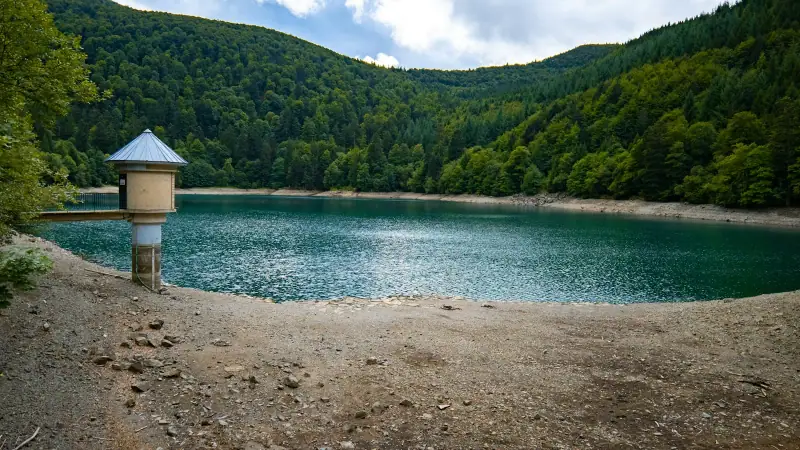
Around the waterfalls, the area takes its name from its many bodies of water. Some are small pocket lakes surrounded by forest, others inland seas where water sports are practiced.
Lake Chalain
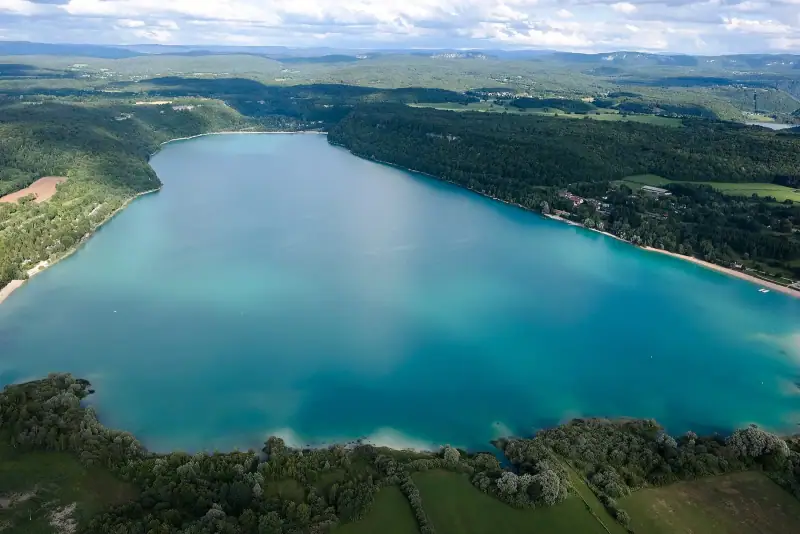
Lake Chalain, nestled at the foot of wooded cliffs, is one of the most appreciated in the range. Its clear water and beaches make it a very busy swimming spot in summer. A path lets you walk around it or climb to the viewpoints that overlook it, with plunging views of the turquoise water. The site is also known to archaeologists for the remains of prehistoric lakeside villages.
Lake Vouglans
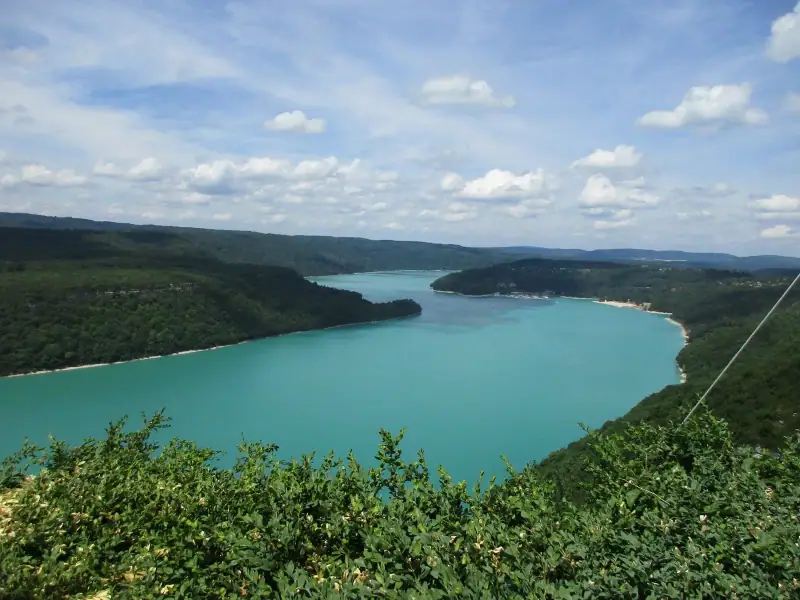
Further south, Lake Vouglans is a large reservoir lake, often cited among the largest artificial lakes in France. It stretches between indented shores and wooded hills. You can sail, paddleboard, kayak and take boat rides there, and paths follow its shores or lead to viewpoints.
Small forest lakes
Other more modest lakes, such as those in the Ilay area, suit quiet walks with little elevation gain. They are good for a picnic or a photo break between busier sites.
Combining walking and swimming
A very simple pattern works well: a walk in the morning (waterfalls or viewpoint), a picnic, then a swim or a paddleboard rental in the afternoon. Always check the state of the beaches, supervision and water quality with the local tourist office.
The reculées: cliffs, caves and stone villages
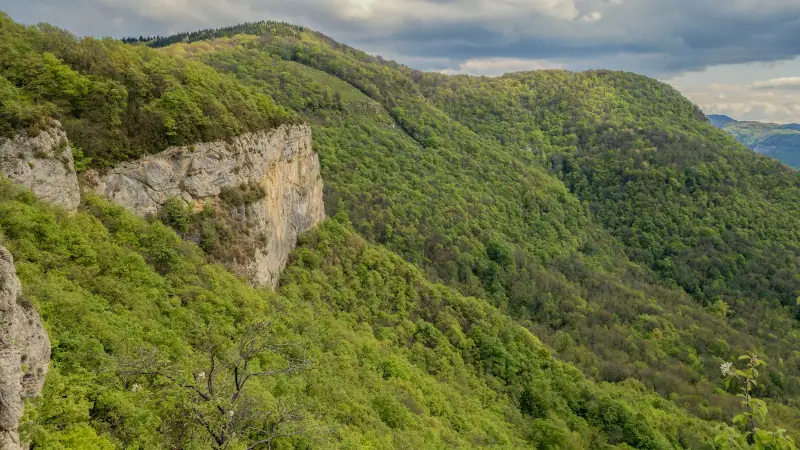
The word reculée refers to a dead-end valley, carved into the limestone plateau by a river and ending in a cirque of high cliffs. It is a geological peculiarity of the Jura, very present in the Revermont.
Baume-les-Messieurs
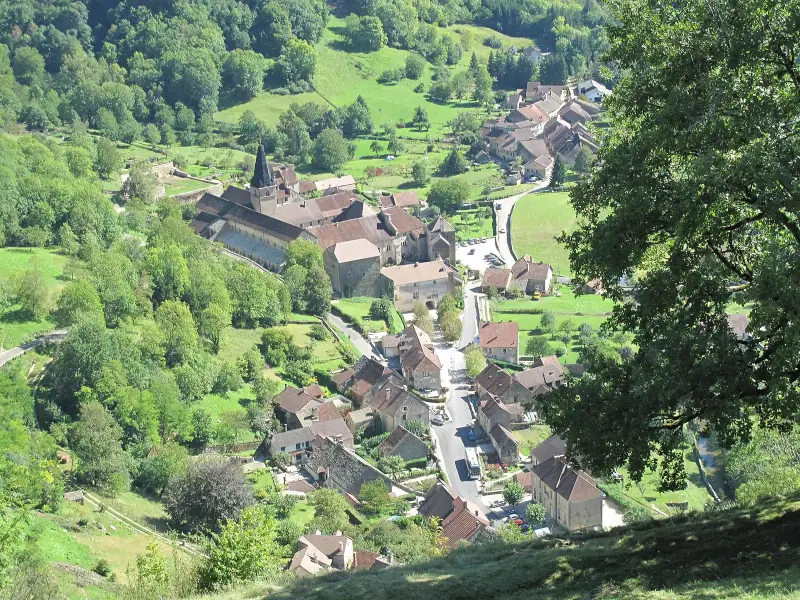
The Baume-les-Messieurs reculée is one of the most beautiful. The village, set at the bottom of the cirque, is listed among the most beautiful villages of France and houses a former abbey. The cliffs around it, the tufa waterfalls and the nearby caves offer a grand setting. Paths climb to the viewpoints above the village, from which you see the whole cirque.
Château-Chalon and the vineyards
Around Château-Chalon, a village perched on a rocky spur overlooking the vineyards, several hiking loops alternate paths between the vines, woods and viewpoints over the Bresse plain. They are lovely outings for combining landscape and tasting. Autumn, at harvest time, is particularly beautiful.
Tips for walking in a reculée
The valley floor is cool and damp, and cliff routes can be steep. Be careful near drops, stay on marked trails and check the weather: rain makes limestone very slippery.
High Jura: ridges, forests and wide spaces
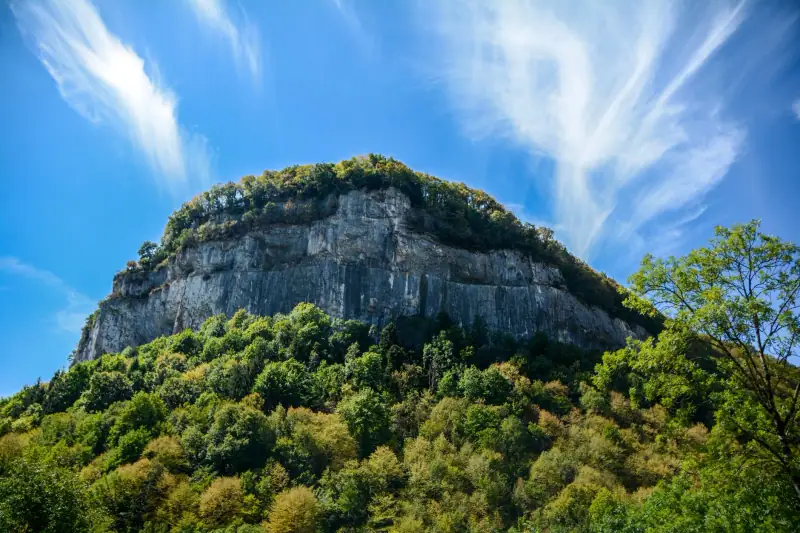
For walkers in search of big horizons, the High Jura changes scale. Around Les Rousses, Morez and Saint-Claude, the landscapes are more open: high meadows, conifer forests, wind-swept ridges and, in clear weather, distant views toward the Alps.
Around Les Rousses
The Les Rousses resort, near the Swiss border, is a good starting point for summer hikes toward the ridges and for forest routes. Lake Les Rousses lets you take easy walks along its shores. In winter, the same area becomes a hub for cross-country skiing and snowshoeing.
The long traverses
The range is crossed by long-distance hiking routes that let you walk several days linking ridges and villages. If a long-distance project tempts you, check the hiking guides and official websites for stages, distances and accommodation: they change from one season to the next.
Respecting altitude
Even though it is not high mountain, the weather can change very quickly at altitude: fog, wind, summer storms. Always bring a waterproof jacket and a warm layer, water and food.
Guided hikes and activities in the Jura
Guided walks, nature activities and outings to book in advance.
When to go hiking in the Jura
Each season completely changes the face of the trails.
Spring
The waterfalls are powerful, the meadows in flower, the forest turns green. It is a choice season for waterfalls and reculées. Expect mud and sometimes leftover snow on the High Jura ridges early in the season.
Summer
High season for the lakes and swimming, with long days and all trails accessible. It is also the busiest period: set out early, avoid the top sites in the middle of the day and book accommodation in advance.
Autumn
A good compromise: colorful beech forests, grape harvest in the vineyards, pleasant temperatures and fewer people. Days get shorter, so plan your return before nightfall.
Winter
The Jura turns into snow country. Walkers become snowshoers and cross-country skiers on the High Jura plateaus. Waterfall trails demand great caution because of ice: find out about their accessibility before you go.
Equipment and safety
Simple equipment is enough for most hikes in the range, but a few rules apply.
- Shoes: proper hiking shoes with a lugged sole, even for a short walk near a waterfall.
- Clothing: several layers, a waterproof and windproof jacket. The microclimate of the valleys is cooler than the plain.
- Water and food: there are few resupply points out in nature.
- Sun protection: hat and sunscreen in summer, especially on viewpoints.
- Map or app: download the route offline, as mobile coverage is patchy in deep valleys. Check your carrier’s international plan or consider a travel eSIM before you go.
- Weather: check the forecasts before setting out, especially in summer, when storms can be violent.
- Respect for nature: stay on the paths, take your trash back, do not pick protected plants and keep your distance from animals.
Organizing your hiking stay
Where to stay
To branch out to several sites, three bases work well. Arbois and Lons-le-Saunier suit walkers who like to combine trails, vineyards and good food. The lake area, around the Hérisson valley, offers gîtes and guesthouses closest to the waterfalls. Les Rousses and Saint-Claude are the natural bases for the High Jura. Book ahead in summer and during winter holidays.
How to get around
A car remains the simplest way to link the sites: starting points are often far from train stations and buses are infrequent. A week-long stay lets you link the vineyards, the lake district and the High Jura without too many kilometers, as distances remain short on the scale of the range. Compare rental companies before you book.
A sample weekend
- Day 1: morning in the Hérisson valley, picnic, then a swim or a walk around Lake Chalain.
- Day 2: Baume-les-Messieurs reculée in the morning, then a walk in the vineyards around Château-Chalon and a tasting in a local cellar.
This program is easy to follow with a car, without long days on the road. Adapt it to the weather and your fitness.
Where to stay in Les Rousses and the High Jura
Hotels, chalets and apartments for exploring the ridges and high-altitude forests.
Common mistakes to avoid
- Underestimating slipperiness: wet limestone rocks, roots and wooden steps are a classic trap near waterfalls.
- Setting out too late: in summer, car parks at the top sites fill by late morning.
- Counting on mobile coverage: download maps and routes before you leave.
- Neglecting the weather: a summer storm in the mid-mountains can arrive fast.
- Trying to see everything in a day: the Jura is to be savored. Better two or three sites in depth than ten in a rush.
- Forgetting to book: in high season, gîtes and guesthouses near the major sites fill early.
Key takeaways
The Jura is an accessible, varied and still unspoiled hiking destination. The Hérisson waterfalls and the lake district lakes will please families, the Revermont reculées lovers of spectacular landscapes, and the High Jura walkers in search of space. Wear good shoes, set out early, check local conditions and give yourself time to enjoy: that is the whole charm of the range.
Frequently asked questions
What is the most beautiful Jura hike for a first visit?
The valley of the Hérisson waterfalls, in the lake district, is the most emblematic walk: a path that follows the river and links several falls in a forest of firs and beeches. It suits most walkers, but some stair sections are steep and slippery. The reculées, such as Baume-les-Messieurs, are the other great classic.
What is the best season for hiking in the Jura?
From spring to autumn. Spring and the snowmelt give the most powerful waterfalls, summer is ideal for combining walking and swimming in the lakes, and autumn offers colorful forests and fewer people. In winter, the Jura is explored on snowshoes or cross-country skis, and some waterfall trails can be slippery or closed.
Do you need to be very fit to walk in the Jura?
No, the range is mostly mid-mountain. There are easy walks of under two hours around lakes or waterfalls, and longer routes with elevation gain in the High Jura or on the reculée viewpoints. Always check the detailed route description before you set out.
Can you swim in the Jura lakes after a hike?
Yes, several lakes in the lake district, including Lake Chalain, are set up for swimming in summer, with beaches and supervised areas in season. Check with the tourist office about supervision periods and water quality before swimming.
Do you need a car to hike in the Jura?
It is strongly recommended. Trailheads are often isolated and public transport is limited outside the main towns. A car lets you link several sites in a day, for example the Hérisson waterfalls then a nearby lake.
What equipment should you bring to hike in the Jura?
Good hiking shoes with grippy soles (rocks and stairs near waterfalls are slippery), a waterproof jacket, water, a snack and a warm layer even in summer, as the weather changes quickly in the mid-mountains. Bring a swimsuit and towel if you are heading to a lake.
Are dogs allowed on the trails?
It depends on the site. In protected natural areas and near some lakes, dogs must be kept on a leash, or are even banned in certain places or at certain times. Check local regulations before you go.
More Jura guides
Keep reading
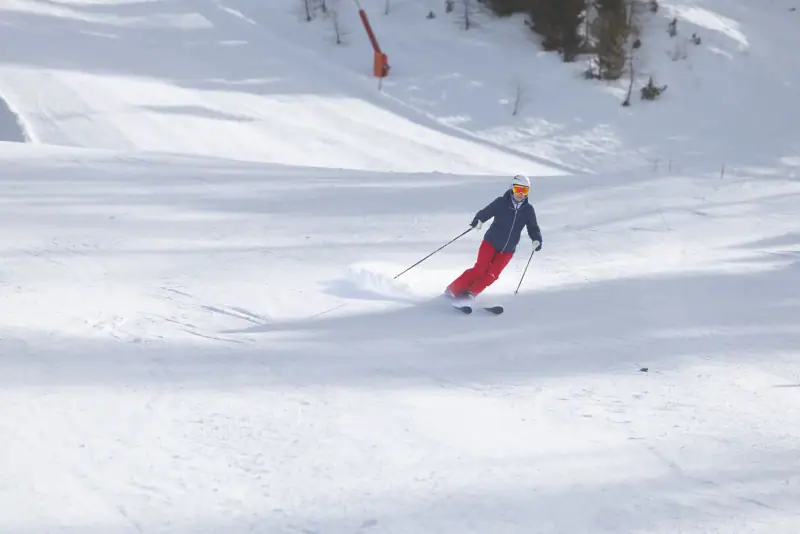
Alpine skiing in the Jura: Métabief, Les Rousses and the small resorts, passes and tips
Alpine skiing in the Jura: Métabief, Les Rousses, Monts Jura and small family resorts. 2026-2027 dates, passes, levels, lodging and practical tips.
The Jura with kids: activities by age and weather for a successful trip
What to do in the Jura with children? Waterfalls, lakes, museums and snow: ideas sorted by age and weather, with practical tips.
Visiting Arbois: what to do in the capital of Jura wine country
What to see and do in Arbois: Pasteur's house, vineyards, vin jaune, the Planches reculée and Pupillin. A guide to planning your visit in the Jura.
Ready-made
Jura itineraries
3 days
The Jura in 3 days without a car: a realistic itinerary by train, on foot and by bike
Visiting the Jura in 3 days without a car: a base in Arbois, trains from Mouchard, Salins-les-Bains, Lons-le-Saunier. Stages, distances, times and limits.
3 days
3 days in the Jura: a day-by-day itinerary through vineyards, waterfalls and the High Jura
A 3-day Jura itinerary by car: Arbois and the vineyards, Baume reculée, Hérisson waterfalls, lakes and the High Jura. Detailed plan and tips.
4 days
The Jura with kids: a 4-day family itinerary through waterfalls, lakes and caves
A 4-day Jura itinerary with children: Hérisson waterfalls, lake swimming, Baume reculée and the High Jura. Pace, tips and practical advice.