What to see
What to see in the Doubs next to the Jura: Pontarlier, Mouthe and the Haut-Doubs
We may earn a commission when you book through links on this page, at no extra cost to you. We don't visit or try the places we cover: we summarize published sources. How we work
In short
- The Haut-Doubs is the part of the Doubs department bordering the Jura to the east and north-east: same plateaus, fir forests and cheese dairies.
- One day covers Pontarlier and Fort de Joux, or Mouthe, the source of the Doubs and Lake Saint-Point; a weekend adds Métabief and the Saut du Doubs.
- Pontarlier sits at about 800 m (2,625 ft) and has a train station; for the source, lakes and viewpoints a car is more practical.
- Winters are long and cold, with cross-country skiing, snowshoeing and alpine skiing at Métabief; summer suits lakes and hiking.
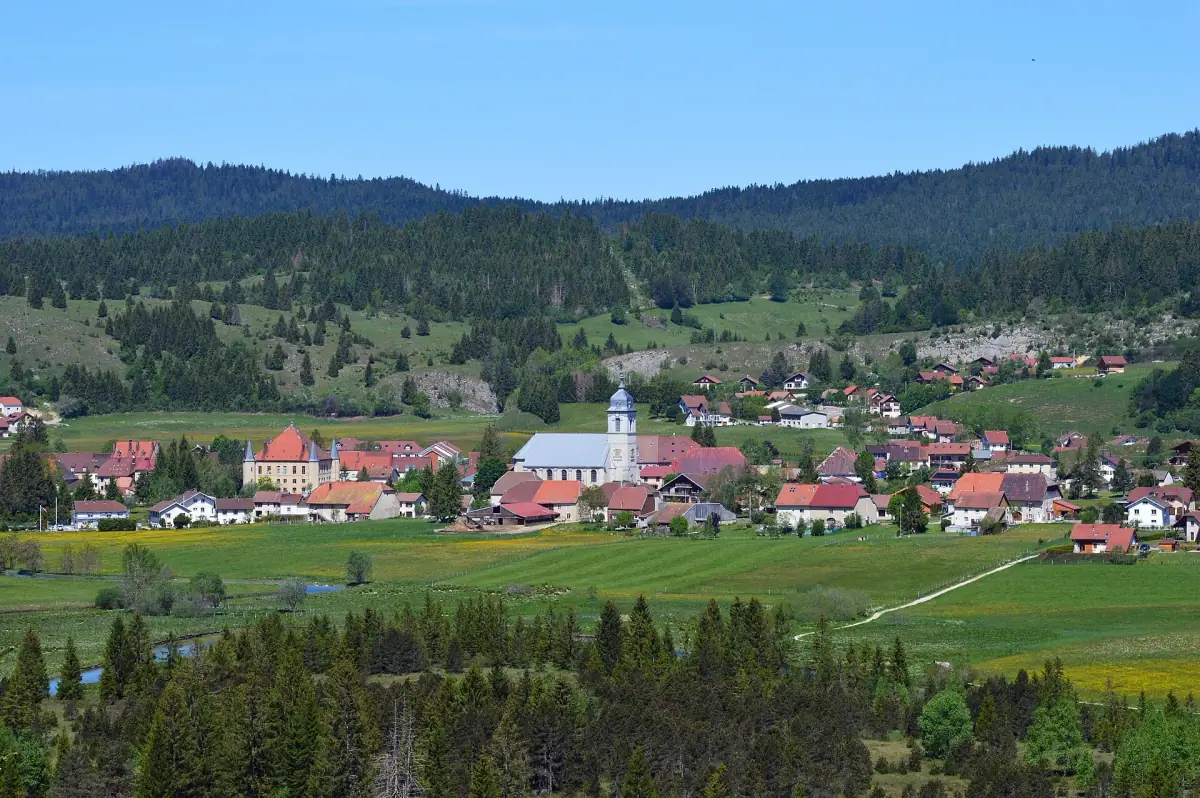
When you plan a trip to the Jura, you mostly look at the vineyards, the waterfalls and the lakes. Yet to the east and north-east of the department, the map spills over into a neighboring area worth the detour: the Haut-Doubs. Here the Jura mountains continue without a break. You find the same stepped plateaus, the same fir forests, the same broad-roofed farms and the same cheese dairies, but with an identity of its own: more mountain-like, harsher in winter and very focused on Nordic skiing.
This guide answers the question “what is there to see in the Doubs next to the Jura?” We cover Pontarlier and its absinthe history, Fort de Joux, the source of the Doubs at Mouthe, Lake Saint-Point, the Métabief resort, the Saut du Doubs and the Loue valley. We also add advice on combining these stops with a stay in the Jura. To place this area within the whole range, our complete guide to the Jura is still the best starting point.
Why go as far as the neighboring Doubs
On paper, the Doubs is a different department. On the ground, the difference shows mostly on the road signs. The Haut-Doubs and the High Jura share the same limestone geology, the same mountain climate and the same pastoral culture. Travelers staying in Les Rousses or Morez are often only a few dozen kilometers from Mouthe or Pontarlier.
A natural extension of the High Jura
Cross-country skiers know it well: the famous Transjurassienne race links Lamoura, in the Jura, to Mouthe, in the Doubs. The race crosses the department border as if it did not exist. To learn more about Nordic skiing in the range, read our article on cross-country skiing and snowshoeing in the High Jura.
What the Doubs adds
The Haut-Doubs offers three assets that complement a stay in the Jura:
- A proper mountain town, Pontarlier, with shops, museums, restaurants and a train station.
- Historic sites such as Fort de Joux, an impressive bastion perched above a cluse.
- Landscapes of lakes and peat bogs around Lake Saint-Point, wilder than the developed shores of the lake district.
To compare with what the Jura offers, you can read our guide what to see in the Jura lake district.
Pontarlier: gateway to the Haut-Doubs
Pontarlier is the main town of the area. It stretches out at about 800 meters (2,625 ft), in a valley floor surrounded by forests, right next to the Swiss border. It is a town people pass through, but also a handy base for exploring the whole Haut-Doubs.
The old center and the Porte Saint-Pierre
The historic heart of Pontarlier is organized around the main street and the Porte Saint-Pierre, a former classical-style triumphal arch that serves as the town’s emblem. A few shopping streets, 18th-century facades and a small museum of art and history show in half a day how this border town lived off trade, timber and cheese.
The simplest approach is to park on the edge of the center and walk to the Porte Saint-Pierre. The walk takes one to two hours at an easy pace, including a coffee stop.
The history of absinthe
Pontarlier is inseparable from absinthe. This plant-based drink, made notably with wormwood and anise, made the town’s fortune in the late 19th century, before it was banned in the early 20th century. Since the ban was lifted, local distilleries have resumed production, and several houses now offer tours and tastings.
If the subject interests you, ask the tourist office which distilleries are open for visits and their hours, which vary by season. Absinthe is a strong alcoholic drink: enjoy it in small amounts, and never before driving.
Fort de Joux
On the way out of Pontarlier, the Château or Fort de Joux stands on a rocky spur that commands the pass to Switzerland. This fortified site was added to over the centuries, making it a kind of textbook of military architecture from the Middle Ages to the 19th century. It is where Toussaint Louverture, a leading figure of Haitian independence, was imprisoned and died in 1803.
The visit combines military history, views over the cluse and a fortress atmosphere. Allow a good while there and check hours and prices before you come, as guided-tour slots change with the season.
Where to stay in Pontarlier or the Haut-Doubs
Compare hotels, gîtes and guesthouses around Pontarlier to explore both the Doubs and the Jura.
Mouthe and the source of the Doubs
A short distance from the High Jura border, Mouthe is a mountain village known for two things: its very cold winters, which earned it the nickname “French Siberia”, and the source of the Doubs.
The source of the Doubs
The river rises at the foot of limestone cliffs, at about 940 meters (3,085 ft). It is not a spectacular torrent leaving the rock, but a quiet resurgence in a setting of forest and wet meadows. The Haut-Jura Regional Natural Park offers an easy loop of under 5 kilometers (3 mi) from the village, taking about an hour and a half, with interpretive panels on the spring, the valley and the peat bogs. A viewpoint overlooks the resurgence and gives a nice panorama of the Mouthe valley.
It is an ideal outing for families: the elevation gain is moderate and the route is easy to follow. However, wear good footwear after the snowmelt or after rain, as wet paths can get muddy.
A village focused on Nordic skiing
Mouthe is also the finish of the Transjurassienne and a major cross-country skiing center. In winter, marked trails start almost from the village, and equipment rental shops are concentrated there. It is a good base for trying Nordic skiing or snowshoeing in a quieter setting than the big resorts.
To prepare a winter trip, see our guide to choosing the best time to go to the Jura.
The brewery, the dairy and local products
As throughout the Haut-Doubs, cooperative dairies are common and sell Comté, Morbier and other cheeses of the region. A dairy visit, when offered, is an excellent way to understand the link between Montbéliarde cows, high pastures and wheels aged in cellars. Ask locally whether workshops are open to the public.
Lake Saint-Point and Malbuisson
North of Mouthe, Lake Saint-Point is one of the largest natural lakes in France. It stretches for several kilometers in a glacial valley, between meadows and forests. Its liveliest shore is Malbuisson, a holiday village with a beach, a watersports base and shops.
What to do around the lake
Depending on the season, the lake offers several activities:
- Swimming and relaxing in summer, in the developed areas.
- Sailing, paddleboarding and canoeing, with seasonal rental companies.
- Walking or cycling on the paths along the shore.
- Skating and walking on the ice in the rare winters when the thickness allows it, with caution and only if local authorities permit it.
The lake is also a nice spot for watching waterbirds. If you like calm settings, avoid peak-season weekends and choose early or late summer.
A lake unlike the Jura lakes
Compared with Lake Chalain or the lakes around Clairvaux, Lake Saint-Point is higher, colder and wider. The landscape is more like a mid-mountain lake than a swimming pond. That contrast is exactly what makes the stop interesting if you have already explored the Jura lake district.
Métabief: the Haut-Doubs ski resort
A few kilometers from Pontarlier, Métabief is the area’s main alpine ski resort. It spreads out at the foot of Mont d’Or, a summit that offers fine panoramas in summer and winter over Lake Saint-Point and, in clear weather, the Alps.
Winter: alpine skiing, cross-country skiing and snowshoeing
The Métabief ski area is the main alpine ski area of the French Jura range for those coming from the Doubs. It suits beginners and intermediate skiers, with a gentler forest setting than the Alpine resorts. To compare with Les Rousses and the small resorts, read our guide to alpine skiing in the Jura. Cross-country skiing and snowshoeing complete the offer, with a trail network extending to neighboring villages.
Summer: hiking, mountain biking and luge
Outside the snow season, the resort turns into a playground for hiking, mountain biking and other outdoor activities. The lifts open at certain times to make it easier to reach the ridges. Hours and prices change from year to year: check the resort’s website before you go.
Activities and excursions in the Jura and the Haut-Doubs
Guided hikes, tastings, tours: discover the experiences offered in the region on GetYourGuide.
The Saut du Doubs and Villers-le-Lac
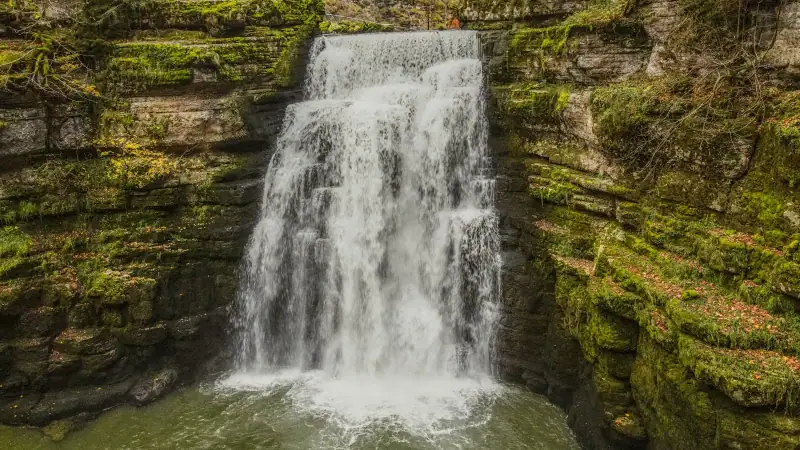
Further north-east, on the Swiss border, the Doubs river forms a series of natural lakes before plunging over a waterfall called the Saut du Doubs. It is one of the best-known sites in the department, reached from Villers-le-Lac.
Lake Chaillexon and the path to the falls
Lake Chaillexon, narrow and hemmed in by wooded cliffs, is traditionally explored by boat or on foot along a riverside path. The falls are at the end of this route. They are impressive after heavy rain or during the snowmelt, more modest in a dry summer.
The flow of the Doubs varies a lot with the season: find out before you leave whether the falls are worth the trip at the time of your visit. The path on the French side is accessible to ordinary walkers, but it can be slippery. Cruises on the lake generally run in season, by reservation or on fixed schedules depending on the period.
A natural border
Here the Doubs forms the border between France and Switzerland along part of its course. This gives the site a special atmosphere: the two banks are only a few meters apart, with landscapes of cliffs, forests and calm water. If you plan to cross the border, check the entry rules for your passport first.
The Loue valley and Ornans
If you have one more day and are heading toward Salins-les-Bains or Arbois, you can complete the circuit with the Loue valley, another river flowing in the Doubs. It rises near Ouhans, in a spectacular reculée where it gushes from a cliff.
The source of the Loue
The resurgence of the Loue is one of the best-known natural sites in Franche-Comté. The water comes out of the cliff in a setting of rock and forest, after crossing the karst. After heavy rain, the flow can be very large. The landscapes recall those of the Jura reculées, which we describe in our article on the reculées of the Jura.
Ornans, the town of the painter Courbet
Further downstream, Ornans is famous for its colorful houses by the river and as the birthplace of the painter Gustave Courbet. A museum devoted to the artist presents his work and his link with the Loue landscape. The walk along the water is pleasant, with views of the facades reflected in the river.
Royal Saltworks of Arc-et-Senans, on the edge of the Jura
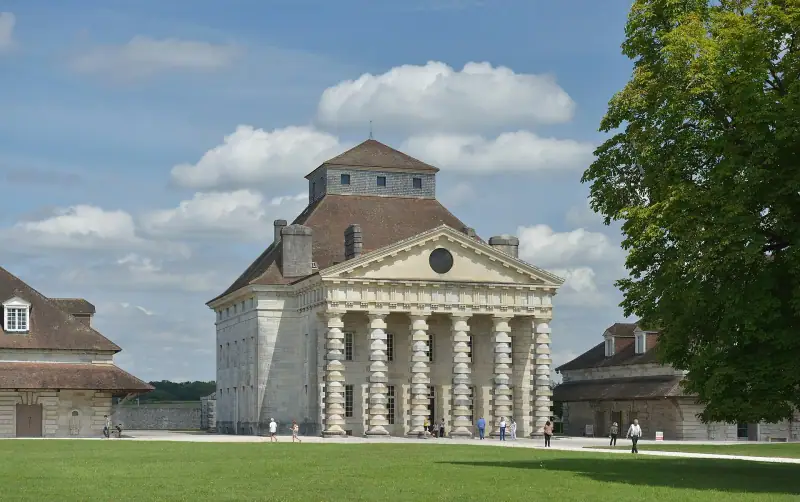
Although it is in the Doubs, the Royal Saltworks of Arc-et-Senans is easy to visit along with Salins-les-Bains and Arbois. This 18th-century architectural complex, designed by Claude-Nicolas Ledoux, is a UNESCO World Heritage site. It illustrates an ideal factory project, with buildings arranged in a semicircle. To extend the visit, read our guide to visiting Salins-les-Bains, which shares a salt-related history with the saltworks.
What to taste in the Haut-Doubs
The specialties of the Haut-Doubs are close to those of the Jura, with a few accents of their own.
Cheeses and cured meats
- Comté, made throughout the range, is eaten in slices as an aperitif or used in cooking.
- Morbier, recognizable by the line of ash through the middle, is a very common pressed cheese.
- Mont d’Or, or Vacherin Mont-d’Or, is a washed-rind cheese sold in a spruce box, available in the cold season. It is often baked in the oven.
- Morteau sausage and Montbéliard sausage are typical cured meats of the region.
Mountain cooking
The Haut-Doubs is the land of cancoillotte, Franche-Comté fondue, potée and raclette. These comforting dishes suit cold days. To compare with Jura products, read our article on the gastronomic specialties of the Jura.
Planning your visit
The neighboring Doubs is easy to visit in one or two days from the Jura. Here are a few principles to get the most from your trip.
One day or a weekend?
One day is enough to see Pontarlier and Fort de Joux, or to do Mouthe, the source of the Doubs and Lake Saint-Point. With a weekend, you add Métabief and the Saut du Doubs without rushing. It is best not to squeeze everything into one day, because mountain roads are slower than they look.
Getting around
A car is the most practical option. The roads are good, but winter requires suitable equipment: check whether snow tires or chains are required on mountain roads. Pontarlier has a train connection, so you can arrive without a car, but the surrounding sites remain far from each other. Our guide to getting around the Jura details the transport options in the range.
Rent a car to explore the Haut-Doubs
The sites are scattered between plateaus and valleys: compare rental companies to get around freely.
When to go
Each season has its appeal. Summer suits lakes and hikes, autumn the forest colors, winter Nordic and alpine skiing. Spring is the season of powerful waterfalls, but also of mud on the trails. Winters are long and snow can fall early: check the weather before each outing.
A typical two-day itinerary
- Day 1: Pontarlier in the morning (old center, Porte Saint-Pierre), Fort de Joux in the afternoon, night in Pontarlier or Métabief.
- Day 2: source of the Doubs at Mouthe in the morning, Lake Saint-Point at Malbuisson in the afternoon, return toward Les Rousses or Morez.
To complete your plans, read our article on visiting Les Rousses, the natural starting point for the Haut-Doubs.
Final thoughts
The neighboring Doubs is not just a side trip from the Jura. It is an extension of the range, with its own riches: a town with character, a fort steeped in history, a river source, a large lake and a mountain resort. By giving it one or two days, you add a different view of the same landscape to your Jura stay. Take the time to check hours and weather, choose the right season, and let yourself be surprised by this corner of the mountains, often forgotten on classic itineraries.
Frequently asked questions
Where is the Doubs next to the Jura?
It is the Haut-Doubs, the part of the Doubs department that borders the Jura to the east and north-east. Pontarlier is its main town and Mouthe the village closest to the High Jura. The landscape continues that of the Jura mountains: plateaus, fir forests, peat bogs and lakes.
What is there to see in Pontarlier in half a day?
The old center with the Porte Saint-Pierre, the municipal museum and the distilleries that recall the history of absinthe are enough for half a day. Add Fort de Joux, which overlooks the edge of town, if you have a few more hours.
Where does the Doubs rise?
The source of the Doubs is near Mouthe, at the foot of limestone cliffs, at about 940 meters (3,085 ft) above sea level. An interpretive trail from the village makes a loop to it, with panels on the spring, the valley and the peat bogs.
Can you combine the Jura and the Doubs in one trip?
Yes, the department border changes nothing in the landscape. From Les Rousses or Morez, the Haut-Doubs is a reasonable drive. Plan one day per area, grouping Pontarlier, Fort de Joux and Lake Saint-Point.
Do you need a car to visit the Haut-Doubs?
A car is the most flexible option, since the sites are scattered between plateaus and valleys. Pontarlier has a train station, so you can visit it without a vehicle, but for the source of the Doubs, the lakes and the viewpoints you are better off with a car.
What is the best season to visit the Haut-Doubs?
Summer suits the lakes, hiking and cheese farms. Winter is the main season for cross-country skiing, snowshoeing and alpine skiing at Métabief. Winters are long and cold: bring warm clothes and check snow conditions before you go.
Which local specialties should you try in the Haut-Doubs?
Comté, Morbier, Mont d'Or (Vacherin Mont-d'Or) in the cold season, Morteau and Montbéliard sausages, and of course Pontarlier absinthe, a local specialty to be enjoyed in moderation.
More Jura guides
Keep reading
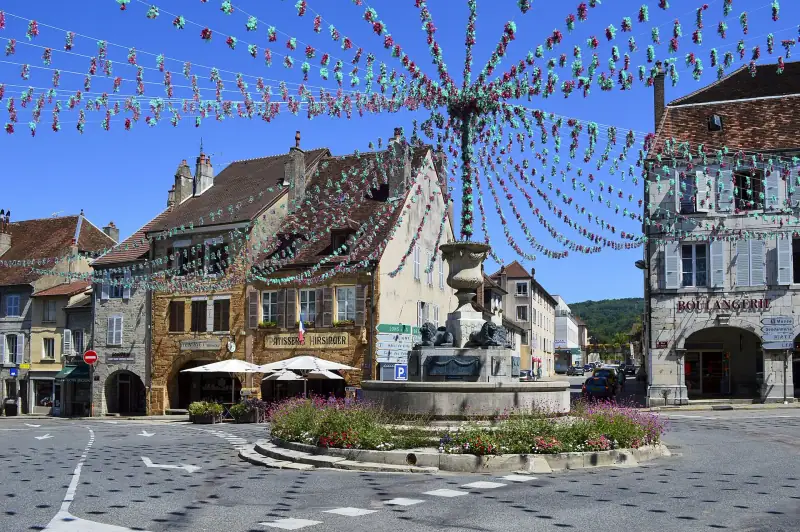
Visiting Arbois: what to do in the capital of Jura wine country
What to see and do in Arbois: Pasteur's house, vineyards, vin jaune, the Planches reculée and Pupillin. A guide to planning your visit in the Jura.
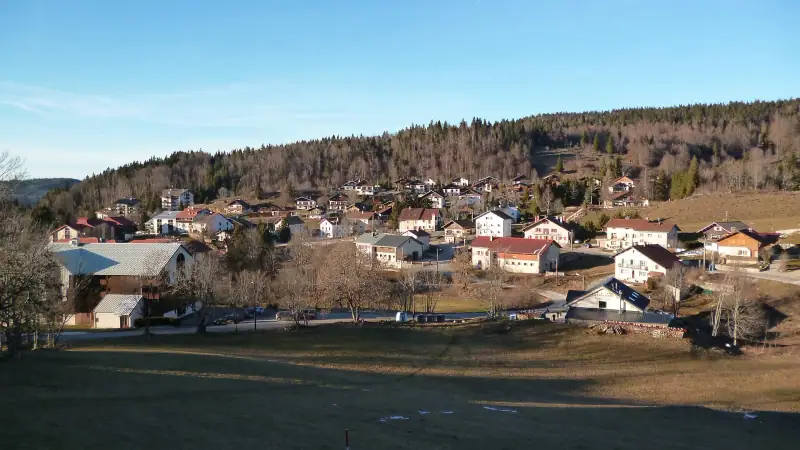
Visiting Les Rousses: what to see and do in the High Jura
What to see and do in Les Rousses: fort, lake, La Dôle, Espace des Mondes polaires, Comté and cross-country skiing. A guide to the High Jura resort.
Visiting Dole: what to see and do in the former capital of Franche-Comté
What to see in Dole: Canal des Tanneurs, Pasteur's birthplace, Notre-Dame collegiate church, Mont-Roland and the Chaux forest. Plan your visit.
Ready-made
Jura itineraries
3 days
The Jura in 3 days without a car: a realistic itinerary by train, on foot and by bike
Visiting the Jura in 3 days without a car: a base in Arbois, trains from Mouchard, Salins-les-Bains, Lons-le-Saunier. Stages, distances, times and limits.
3 days
3 days in the Jura: a day-by-day itinerary through vineyards, waterfalls and the High Jura
A 3-day Jura itinerary by car: Arbois and the vineyards, Baume reculée, Hérisson waterfalls, lakes and the High Jura. Detailed plan and tips.
4 days
The Jura with kids: a 4-day family itinerary through waterfalls, lakes and caves
A 4-day Jura itinerary with children: Hérisson waterfalls, lake swimming, Baume reculée and the High Jura. Pace, tips and practical advice.