Itineraries
3 days in the Jura: a day-by-day itinerary through vineyards, waterfalls and the High Jura
We may earn a commission when you book through links on this page, at no extra cost to you. We don't visit or try the places we cover: we summarize published sources. How we work
Day by day
- Day 1Arbois, Château-Chalon, Baume-les-Messieurs reculée
- Day 2Hérisson valley waterfalls, Lake Chalain, viewpoint
- Day 3Saint-Claude, then Les Rousses, lake and fort
Weather through the year on this route
| Jan | Feb | Mar | Apr | May | Jun | Jul | Aug | Sep | Oct | Nov | Dec | |
|---|---|---|---|---|---|---|---|---|---|---|---|---|
| High °F (°C) | 415 | 436 | 5211 | 5915 | 6619 | 7222 | 7725 | 7725 | 7021 | 6116 | 5010 | 436 |
| Low °F (°C) | 30-1 | 30-1 | 341 | 394 | 489 | 5412 | 5714 | 5714 | 5010 | 457 | 362 | 320 |
Normals 1991–2020 at Dole: averages over 30 years, not a forecast. Source: NASA POWER (MERRA-2), grid of about 50 km. Figures computed by us in November 2026. Rain is shown only where a weather station confirms the figures.
In short
- Day 1 covers Arbois, the vineyards, Château-Chalon and the Baume-les-Messieurs reculée; day 2 the Hérisson waterfalls and the lakes; day 3 Saint-Claude and Les Rousses in the High Jura.
- A car is strongly recommended; stages are short (well under 100 km / 62 mi a day) but mid-mountain roads are winding and slower than they look.
- One base around Arbois or Lons-le-Saunier works; two bases (a night in the High Jura) make day 3 more comfortable. Book early for July, August and harvest weekends.
- May to October is easy; in winter waterfall trails can be closed or slippery.
The Jura is a range that reveals itself in stages. Between the Revermont vineyards, the cliffs of the reculées, the waterfalls of the lake district and the big plateaus of the High Jura, the landscapes change within a few dozen kilometers. That is what makes the area ideal for a short getaway: you can see a lot without spending your life behind the wheel.
This 3-day itinerary in the Jura is designed for a first visit by car. It follows a geographic logic, from west to east: the vineyards and reculées on the first day, the waterfalls and lakes on the second, then the High Jura on the third. Each day has a main program, options to adapt it to your pace and practical tips. To go further on walks, see our guide to hikes, waterfalls and lakes in the Jura.
Before you go: how to organize these 3 days
A few organizational choices avoid unpleasant surprises and make the itinerary much more enjoyable.
Choosing your base
Two options work well:
- A single base in the Arbois, Lons-le-Saunier or lake district area. You do not pack or check in every evening, and you branch out each day.
- Two bases: two nights in the vineyards or the lake district, then one night in the High Jura, near Les Rousses or Saint-Claude. It is more comfortable if you want to enjoy day 3 without too much driving.
For a short stay, we recommend the second option whenever your budget and dates allow. In any case, book early for July, August and harvest weekends.
Planning for the car and the weather
The public transport network does not serve the natural sites well: a car is almost essential. Mid-mountain roads are winding, and travel times are often longer than the distance suggests. Keep some margin in your schedule.
As for weather, it changes quickly in the range. Bring a waterproof jacket and a warm layer even in summer, and keep an indoor plan B (cellar, cheese dairy, museum) for rainy days. Our article on when to go to the Jura will help you pick the right time.
Book your base in the vineyards
Guesthouses, gîtes and hotels around Arbois: compare for your dates.
Day 1: Arbois, the vineyards and the Baume-les-Messieurs reculée
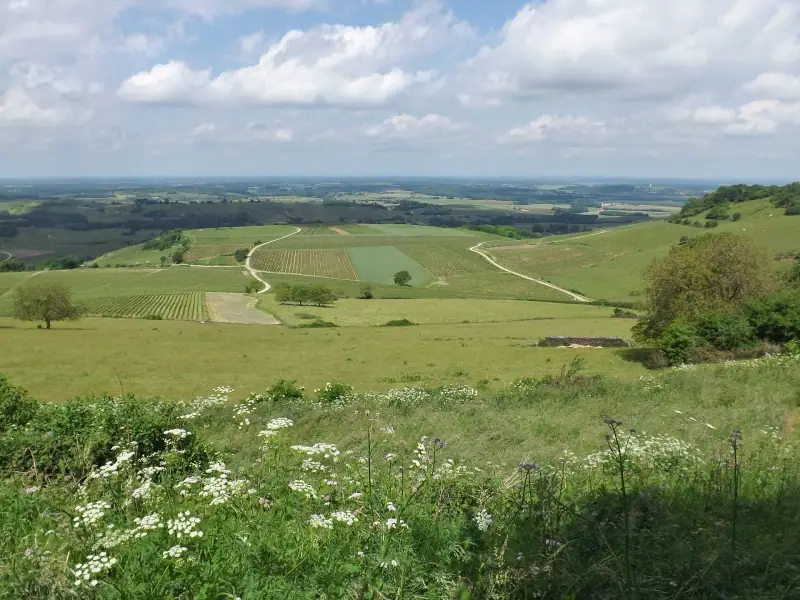
The first day is devoted to the Revermont, the western edge of the range where the Jura vineyards spread. It is a gentle introduction, between villages with character, cellars and cliff landscapes.
Morning: Arbois, capital of the vineyards
Start with Arbois, a small town at the foot of the slopes, crossed by the Cuisance. It is known for its wines and as the home base of Louis Pasteur, whose family house can be visited. Wander the old center, look at the facades along the river, then stop at a cellar for a first tasting of Jura wines.
If you have never tasted vin jaune, now is the time: this unique wine, aged under a veil of yeast for many years, is like no other. Cellars also offer savagnin, poulsard or trousseau, grape varieties typical of the region. Our guide to the gastronomic specialties of the Jura details these products.
Good to know: if you are driving, taste only small amounts or appoint a designated driver. Tastings are generous and the road is long.
Noon: lunch in the vineyards
Look for a traditional table offering Comté, morbiflette or poularde with vin jaune depending on the season. In the vineyard villages, restaurants often run to the rhythm of the midday service: arrive before 1 pm to avoid finding a closed door, and check opening days, especially out of season.
Afternoon: Château-Chalon and Baume-les-Messieurs
Then take the road south to Château-Chalon, a village perched on a rocky spur overlooking the vineyards and the Bresse plain. It is listed among the most beautiful villages of France and gives its name to a vin jaune appellation. The stone lanes and viewpoints are worth the stop on their own, with open views of the vines below.
Continue to the Baume-les-Messieurs reculée. A reculée is a dead-end valley carved into the limestone plateau and closed by a cirque of cliffs: it is one of the geological signatures of the Jura. The village, set at the bottom of the cirque, holds a former abbey and extends into tufa waterfalls and caves. Allow one to two hours for the visit and a short walk to a viewpoint.
Evening: back to your base
The day’s distances remain modest: you travel about thirty kilometers (19 mi) between the main stops, which leaves time for stops. If you sleep in Lons-le-Saunier, enjoy the evening with dinner in town; if you prefer to stay in the vineyards, a guesthouse in Arbois or a neighboring village offers a calmer atmosphere.
Rain option: if the weather is bad, replace the walk to the viewpoint with a cellar or cheese dairy visit, and keep the reculée for a break in the clouds.
Day 2: Hérisson waterfalls and lake district lakes
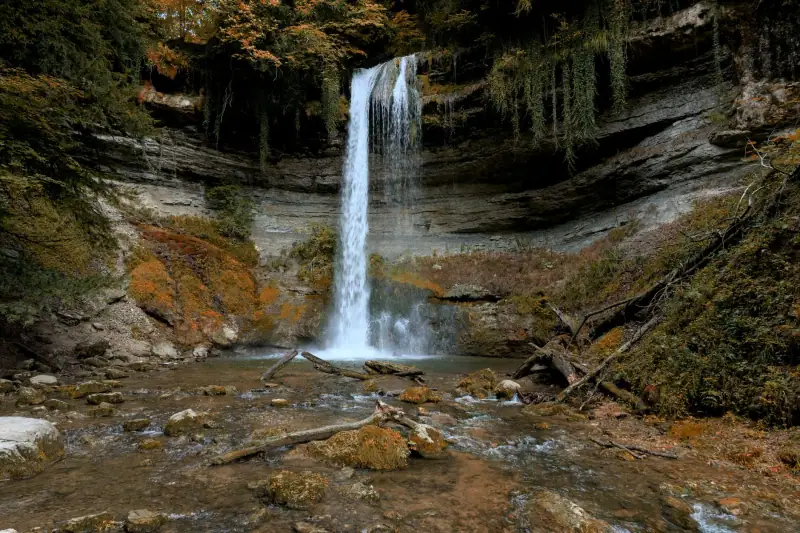
The second day is the most “nature” of the itinerary. Head for the lake district, an area of forests, bodies of water and valleys that ranks among the most beautiful in the range.
Morning: the Hérisson valley
Set out early for the Hérisson valley, nicknamed the “valley of waterfalls”. The path follows the river and links footbridges, wooden stairs and forest tracks. There are about thirty waterfalls in all. Among the best known are the Grand Saut, which drops in a single jet of about sixty meters (200 ft), and the Éventail waterfall, taller, which spreads out in steps.
A few tips to enjoy the site:
- Arrive before 10 am in summer and on weekends: the car park and the path fill up quickly.
- Wear proper shoes: wooden steps and wet rocks are slippery.
- Follow the instructions posted there: sections may be closed after a storm or in winter.
- Allow half a day without rushing; some walkers do only part of the path, others go to the last falls.
Noon: picnic or local table
After the walk, a simple lunch is welcome. A picnic of Comté, Morteau sausage or country bread is easy to put together at a cheese shop or a local market. You can also sit down in one of the villages of the area for a plate of local products.
Afternoon: Lake Chalain and viewpoints
The afternoon suits relaxing. Lake Chalain, one of the best known in the area, offers developed beaches with supervised swimming in season. The water stays cool even in midsummer, but it is perfect after a morning of walking. Outside summer, a simple stroll on the shores or nearby paths is enough to appreciate the colors of the lake.
If you have energy, add a viewpoint: the lake district has several, from which you take in the lakes, forests and plateaus. Ask the tourist office about access and the state of the paths, which vary by season.
Activities and outings to book
Guided walks, tastings and nature activities in the Jura.
Evening: where to sleep?
If you choose to spend the night in the High Jura, head east in the late afternoon. The trip to Les Rousses or Saint-Claude is on mountain roads, and it is better to tackle it before dark, especially out of season. Allow about an hour of driving depending on your starting point. Otherwise, return to your base and plan a longer drive the next day.
Day 3: the High Jura, between Saint-Claude and Les Rousses
The last day changes the scenery. The High Jura is a high plateau of fir forests, high meadows and mountain villages, cooler and wider than the rest of the range.
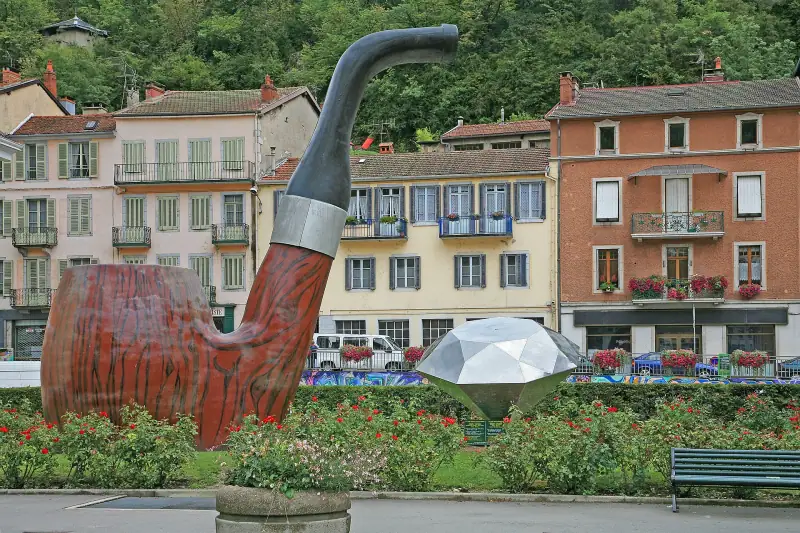
Morning: Saint-Claude, town of pipes and diamonds
Set in the hollow of deep valleys, Saint-Claude is a town of distinctive character. It is famous for its pipes and for gemstone cutting, two skills that have marked its history. Its Pipe and Diamond Museum traces this craft tradition and is worth a visit, preferably in the morning. Also look at the cathedral and the streets of the center, which tell an even older story, that of an abbey and a pilgrimage.
Check the museum’s hours and closing days before you go: they vary by season.
Noon: a mountain table
In the High Jura, the cooking is hearty: fondue, raclette, smoked sausages, blueberry or wild berry tarts. A big lunch prepares you well for a digestive walk in the afternoon.
Afternoon: Les Rousses, lake and forests
Then continue to Les Rousses, a mountain resort near the Swiss border. Lake Les Rousses is an easy walking goal in any season: you can walk or cycle around it, or simply sit on its shores. The Fort des Rousses, a vast fortified complex that overlooks the village, notably holds Comté aging cellars that can be visited: a good chance to understand how this emblematic cheese is made.
If you travel in winter, this is the time to put on cross-country skis or snowshoes, the resort’s flagship activities. The rest of the year, the surrounding forests offer many easy walks. For another hiking day, see our guide to High Jura hikes.
End of the day: heading back
From Les Rousses, the trip back to Lons-le-Saunier or Arbois takes about an hour and a half depending on the route. Keep a margin if you have to catch a train or a plane in the evening: mountain roads are slower than highways and can be slowed by snow in winter.
Coming from far away?
Compare flights and plan your arrival in France before heading to the range.
Variations: adapt the itinerary to your wishes
The basic itinerary can be adjusted to your tastes and the time of year.
Foodie version
Replace some of the walks with visits to cellars, cheese dairies and markets. Spend an extra half day in the vineyards, and add a visit to Salins-les-Bains, a spa town whose old saltworks tell a fascinating industrial story. See our food guide to build a foodie weekend.
Nature and hiking version
Devote day 1 to a loop around Baume-les-Messieurs or Château-Chalon, day 2 to a full trail in the Hérisson valley and the lakes, and day 3 to a hike in the High Jura rather than visits. Bring good shoes, water and a map of the area.
Family version
Keep the waterfalls and the lake as highlights, add a swim in summer, a cheese dairy visit and an easy walk around Lake Les Rousses. The short distances between stages suit children, as long as you plan breaks.
Winter version
The range remains accessible from December to March, but the itinerary must be adapted: waterfalls may be frozen, some trails closed, and mountain roads demand attention. Focus on villages, tastings and snow activities in the High Jura.
Budget and practical tips
The budget varies with your travel style, but a few benchmarks help prepare the stay.
- Accommodation: this is the first expense. Gîtes and guesthouses often offer the best value, especially for several people.
- Meals: a lunch of local products stays reasonable; dinners in gourmet restaurants cost more. Picnics of Comté and cured meats are a good budget option.
- Car and fuel: distances are short, but mountain driving uses more fuel.
- Activities: most nature walks are free; museums, cellars and some activities charge.
A few simple habits will save you time:
- Fill up the tank before heading into the High Jura.
- Download offline maps: mobile coverage is patchy in some vales. Check your carrier’s international plan or consider a travel eSIM before you go.
- Check opening hours before each visit, especially out of season.
- Bring warm clothes: it feels cool even in summer in the shade of the cliffs.
Common mistakes to avoid
Some traps come up regularly for first-time visitors.
- Trying to see everything. The Jura has to be earned: better to do fewer things than rush from one point to another.
- Underestimating travel times. Winding roads slow your progress. Add margin to each stage.
- Neglecting the weather. A storm or a rainy day can turn a trail into a slippery track. Keep an indoor plan B.
- Arriving late at popular sites. The Hérisson waterfalls and lake beaches are much nicer early in the morning.
- Forgetting to book. In high season, accommodation and guided visits fill up quickly.
Key takeaways
In three days, this route takes you through the main faces of the Jura: the vineyards and their hilltop villages, the Baume-les-Messieurs reculée, the Hérisson waterfalls and the lakes, then the High Jura plateaus. It is done by car, with one or two bases, and is easily adjusted to the season, the weather and your appetite for nature or food. Always check hours and access conditions before you go, and keep some free time: it is often in the unplanned stops that you keep the best memories.
Sources
- Jura Tourisme: figures checked November 2026
Frequently asked questions
Are 3 days enough to discover the Jura?
Three days let you see the essentials: the vineyards around Arbois, a reculée, the Hérisson waterfalls and a taste of the High Jura. The range is large and each area deserves time, but this format gives a very good first approach, especially if you accept not doing everything.
Do you need a car for this itinerary?
Yes, it is strongly recommended. The natural sites, villages and cellars are scattered and poorly linked by public transport. A car lets you adapt to the weather and link the stages without timetable constraints.
Where should you stay to limit travel?
A single base in the Arbois or Lons-le-Saunier area works for the first two days. For the third day, you can either branch out from that base or spend a night in the High Jura, near Les Rousses or Saint-Claude, to cut down on driving.
What is the best season for this itinerary?
From May to October, the itinerary is easy to do. Spring favors the waterfalls, summer the lakes, autumn the vineyards and their colors. In winter, waterfall trails can be closed or slippery: adapt the program and check access.
Can you do this itinerary with children?
Yes. The Hérisson waterfalls trail, swimming in the lake, visiting caves or a cheese dairy suit children well. Bring shoes with good grip, warm clothes even in summer and regular breaks.
How many kilometers do you cover over these three days?
Stages are short: you stay well under 100 km (62 mi) of driving a day, but mid-mountain roads are winding and slower than they look. Allow time mostly for stops, more than for distance.
Do you need to book tastings in advance?
In high season and on weekends, it is advisable to contact in advance the cellars and cheese dairies that offer visits. Out of season, some have reduced hours: always check opening times before you go.
More Jura guides
Keep reading
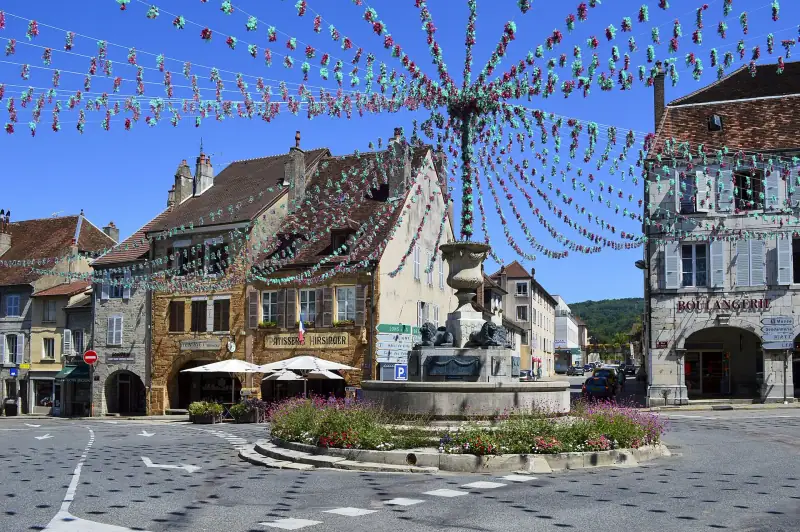
Visiting Arbois: what to do in the capital of Jura wine country
What to see and do in Arbois: Pasteur's house, vineyards, vin jaune, the Planches reculée and Pupillin. A guide to planning your visit in the Jura.
Alpine skiing in the Jura: Métabief, Les Rousses and the small resorts, passes and tips
Alpine skiing in the Jura: Métabief, Les Rousses, Monts Jura and small family resorts. 2026-2027 dates, passes, levels, lodging and practical tips.
What to see in the Doubs next to the Jura: Pontarlier, Mouthe and the Haut-Doubs
What to see in the Doubs next to the Jura: Pontarlier, Fort de Joux, the source of the Doubs at Mouthe, Lake Saint-Point and Métabief.
Ready-made
Jura itineraries
3 days
The Jura in 3 days without a car: a realistic itinerary by train, on foot and by bike
Visiting the Jura in 3 days without a car: a base in Arbois, trains from Mouchard, Salins-les-Bains, Lons-le-Saunier. Stages, distances, times and limits.
4 days
The Jura with kids: a 4-day family itinerary through waterfalls, lakes and caves
A 4-day Jura itinerary with children: Hérisson waterfalls, lake swimming, Baume reculée and the High Jura. Pace, tips and practical advice.