What to see
What to do in Hiroshima and Miyajima: memorial, floating torii and local flavors
We may earn a commission when you book through links on this page, at no extra cost to you. We don't visit or try the places we cover: we summarize published sources. How we work
In short
- Two days work well: one for the Peace Memorial Park, its museum and downtown, one for Miyajima island. A long single day is possible but rushed.
- From Hiroshima, take the JR train to Miyajimaguchi (about 30 minutes), then the ferry (about 10 minutes). The torii seems to float at high tide and can be approached on foot at low tide.
- The Shinkansen from Kyoto or Osaka takes about 1.5 to 2 hours; from Tokyo, more than four hours.
- Hiroshima-style okonomiyaki is layered with noodles; the region is also known for oysters, mostly eaten in the cold season.
Hiroshima is often seen as a simple stop on the route between Kyoto and the west of the country. Yet the city deserves far more than a photo in front of the Atomic Bomb Dome. Rebuilt after 1945, it is today an airy city crossed by rivers, where reflection, daily life and excellent local food mix. A few kilometers away, Miyajima island and its famous torii offer a soothing contrast, with forest trails, free-roaming deer and specialty shops.
This guide presents the essential visits, a way to organize them over two days and the specialties to taste. If you are preparing a big circuit, find this stop in our two-week itinerary for Japan, and for train trips, see our guide on the Shinkansen and the JR Pass.
The Peace Memorial Park: a place of remembrance
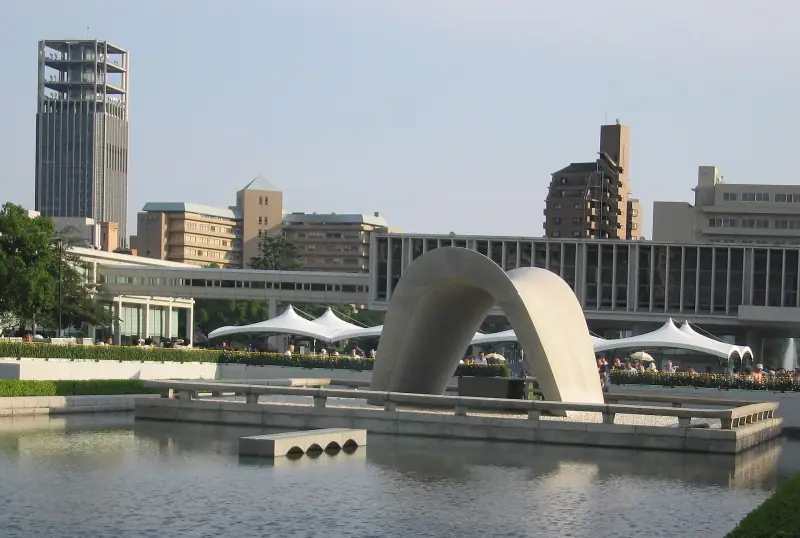
The Peace Memorial Park occupies a strip of land between two river branches, in the center of the city. It was laid out where a district destroyed in the atomic bombing of August 6, 1945 once stood. You walk through it slowly, from one monument to the next, in a calm atmosphere that naturally commands silence.
Notable points include the arch-shaped cenotaph, which lines up with the Flame of Peace and with the Dome at the end of the view, and the Peace Bell, which visitors can ring. The monument to the child victims, linked to the story of Sadako Sasaki and the thousands of paper cranes left there, is one of the most moving places in the park. These cranes arrive from around the world, offered by schools and individuals.
The park can be visited at any hour, but in the morning or late afternoon the light is softer and there are fewer people. Allow at least an hour and a half to go through it without hurrying, more if you stop at the explanatory panels.
The Atomic Bomb Dome and the Memorial Museum
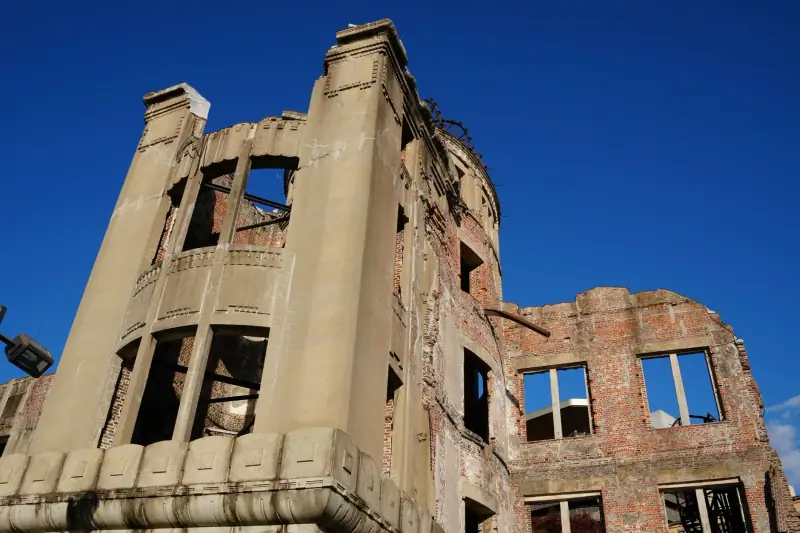
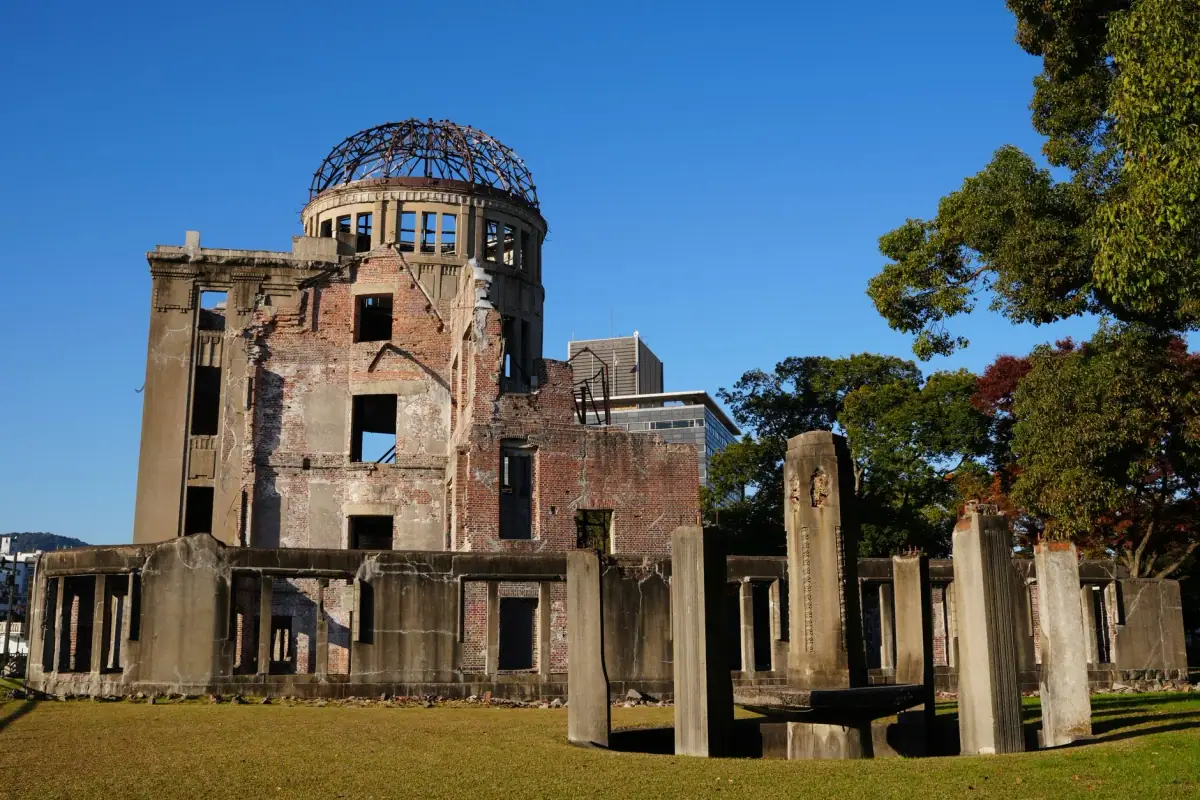
The Atomic Bomb Dome is one of the few buildings to have remained standing near the hypocenter. It has been preserved as it was after the explosion, and it has been a UNESCO World Heritage site since 1996. It is viewed from outside, from the opposite bank or from the immediate surroundings: it is not possible to enter, which reinforces the impression of a ruin frozen in time.
The Peace Memorial Museum, located in the park, completes the visit. It presents the city’s history, the context of the bombing, personal objects, photographs and survivors’ testimonies. Some rooms are harrowing. Take the time you need, allowing an hour and a half to two hours, and do not hesitate to take a break outside if needed. Audio guides and information materials in several languages are generally available; check the services offered and the hours on the museum’s official website before your visit.
Compare stays in Hiroshima
Near the station or the center, by the river: compare hotels for your dates, especially in fall and during cherry blossom season.
Hiroshima Castle and Shukkei-en Garden
For a change of mood after the park, head to the city center. Hiroshima Castle, nicknamed the “Carp Castle,” was destroyed in 1945 then rebuilt after the war. Its keep now houses a small museum on the city’s history before the bombing, and its moats make for a pleasant walk, especially in cherry blossom season.
Not far away, Shukkei-en Garden is a traditional garden laid out around a pond, with bridges, islets and miniature landscapes. It too was damaged in 1945, then restored. It is a calm place, ideal for a one- or two-hour break, and one of the most pleasant in the city at the change of seasons, notably in fall.
The best way to get between these sights is the streetcar: the network serves the station, the center and the Peace Park, and is part of the city’s charm. Check the network map before leaving to spot the useful lines.
Miyajima island: the Itsukushima torii
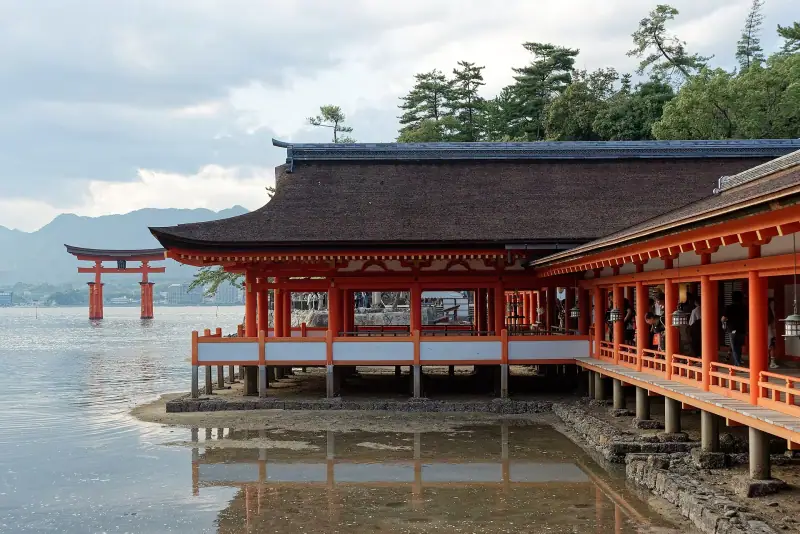
Miyajima, officially Itsukushima, has long been considered a sacred island. Itsukushima Shrine, a UNESCO site since 1996, is unusual in being built largely on stilts, above the sea. The great red torii, planted in the water in front of the shrine, is one of Japan’s most emblematic images.
Access is in two stages: a JR line train from Hiroshima to Miyajimaguchi, in about thirty minutes, then a short ferry of about ten minutes. The crossing already offers fine views of the torii. On the island, deer roam freely in the streets: do not feed them human food and keep your papers and cards out of reach, as they are curious.
The shrine changes look completely with the tides. At high tide, it seems to float on the water; at low tide, you can walk to the foot of the torii on the sand. Ideally, stay long enough to see both looks, or check the tide times before choosing your moment.
Mount Misen and Miyajima’s lanes
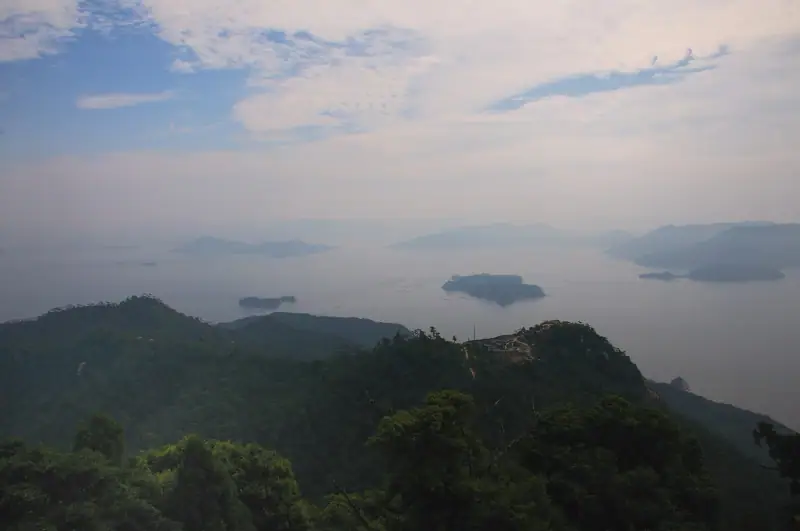
Above the village, Mount Misen towers over the island. You can climb it on foot by forest trails, which takes real effort, or take a ropeway for most of the elevation, followed by a short walk. From the summit, the view extends over the Seto Inland Sea and its islands. Check the ropeway’s operating conditions before your visit, as it may be closed for maintenance or in bad weather.
On the way down, stroll the village’s shopping street. There you find in particular momiji manju, small maple-leaf-shaped cakes most often filled with red bean paste, as well as grilled oysters, very popular in the region. The lanes empty at the end of the day, once the day-trippers have left: that is when the island shows its best face, so consider spending the night if your schedule allows.
Guided visits in Hiroshima and Miyajima
Guided visit of the Peace Park, an excursion to Miyajima or a local experience: compare the activities offered and their cancellation terms.
What to eat in Hiroshima: okonomiyaki and oysters
Hiroshima has its own version of okonomiyaki, the Japanese savory pancake. Unlike the Osaka version, where ingredients are mixed into the batter, Hiroshima’s is built in layers: a thin crepe, cabbage, pork, then noodles (soba or udon), all topped with an egg and a sweet-salty brown sauce. The dish is generally eaten at the counter, in front of the griddle where it is prepared, which is part of the pleasure.
The region is also known for its oysters, farmed in the bay. They are eaten grilled, fried or in a stew, mostly during the cold season. To go deeper into the country’s specialties, see our guide what to eat in Japan, and compare with the Osaka version in our article what to do in Osaka.
If you want a specific address, favor the okonomiyaki specialty restaurants you will come across near the station or in the center, and check opening hours online or locally, as they vary from one establishment to another.
How to organize two days in Hiroshima
Day 1: the city and remembrance. Start with the Peace Memorial Park and the Dome in the morning, then devote time to the museum. In early afternoon, have an okonomiyaki for lunch, then head to the castle and Shukkei-en Garden by streetcar. Finish with a walk by the river.
Day 2: Miyajima. Set off early to enjoy the island before the influx of visitors. Climb Mount Misen in the morning, lunch in the village, then stroll near the shrine and the torii. Plan your return according to the tides and light, as late afternoon is often the most beautiful.
If you are short of time. One day is enough to see the essentials, starting with the Peace Park and museum, then reaching Miyajima at the end of the day. This pace is dense, however, and it is better to spend a night there to fully enjoy the places.
Getting there and where to sleep
Hiroshima is in the Chugoku region, west of Kyoto and Osaka. The Shinkansen trip from Kyoto or Osaka takes roughly an hour and a half to two hours depending on the train chosen. From Tokyo, expect more than four hours, which makes it more a stop on a big circuit than a day round trip.
For lodging, neighborhoods near the station make train and streetcar departures easier, while the city center, near the Peace Park, lets you do everything on foot. Staying on Miyajima is possible, often in a traditional inn, but the offer is limited: book well ahead, notably in fall.
Find your flight to Japan
Compare airlines and schedules to Tokyo or Osaka, the two main entry points for reaching Hiroshima by train.
Practical tips for your visit
- Respect for the places. The Peace Park is a place of remembrance: speak quietly, avoid inappropriate poses for photos and follow the posted instructions.
- Weather and season. Spring and fall are generally the most pleasant. To choose your period, see our guide when to go to Japan.
- Comfortable shoes. Between the park, the museum and Miyajima’s trails, there is a lot of walking over the two days.
- Luggage lockers. Stations generally have lockers, handy if you combine this stop with a hotel change.
- Check before leaving. Museum hours, closing days, ropeway operation and tide times can change: consult the official sites before fixing your program.
Frequently asked questions
How long do you need to visit Hiroshima and Miyajima?
Two days let you separate the two visits well: one day for the Peace Memorial Park, its museum and the city center, another for Miyajima island. On a whirlwind trip, it is possible to do both in one long day, but at the price of a rushed visit.
How do you get from Hiroshima to Miyajima?
The simplest is to take the JR line train to Miyajimaguchi station, in about thirty minutes, then the ferry to the island, a crossing of about ten minutes. A streetcar also links the center to the pier, but the trip is longer.
When can you see the Miyajima torii in the water?
It depends on the tides. At high tide, the torii seems to float; at low tide, you can approach it on foot on the sand. Check the tide calendar before fixing the time of your visit.
Should you sleep in Hiroshima or on Miyajima?
Hiroshima offers the most choice and remains very well linked by train. Staying overnight on Miyajima, often in a traditional inn, lets you enjoy the island in peace after the day visitors leave, but spaces are limited: book early.
Is the Peace Memorial Museum suitable for children?
Some rooms show very striking testimonies and objects. It is better to prepare younger children in advance and decide the pace of the visit on the day.
What is Hiroshima's specialty?
Hiroshima-style okonomiyaki, made in layers with noodles, is the city's emblematic dish. The region is also known for its oysters, mostly eaten in the cold season.
More Japan guides
Keep reading
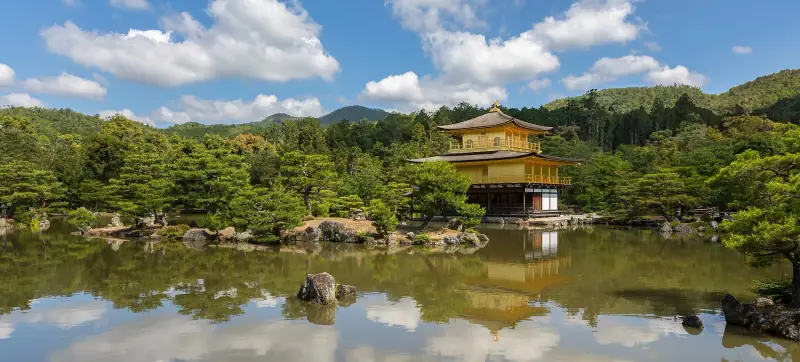
Complete guide to visiting Japan: regions, highlights, budget and tips
Everything to plan your trip to Japan: regions and cities, highlights, when to go, transport, lodging and budget, with links to our detailed guides.
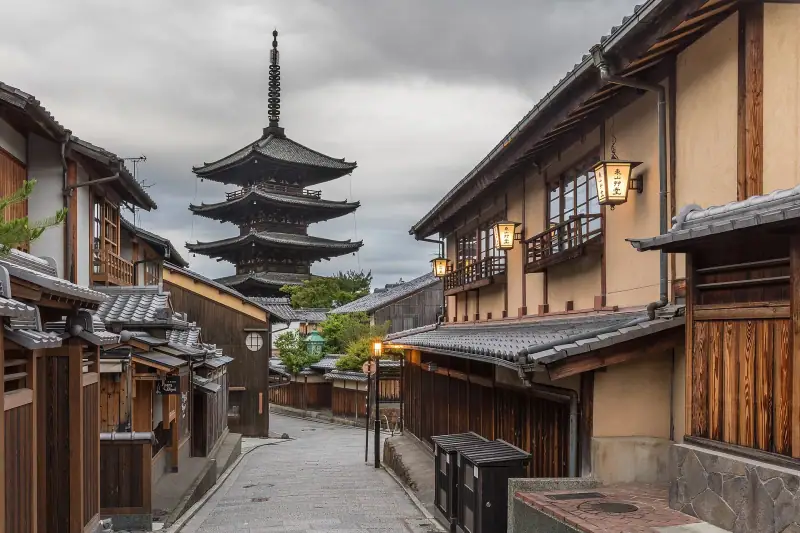
What to do in Kyoto: the 9 must-see sights in the former capital
Fushimi Inari, Kinkaku-ji, Arashiyama, Gion, Kiyomizu-dera: Kyoto's highlights, how to organize them over 2 to 3 days and tips to avoid the crowds.
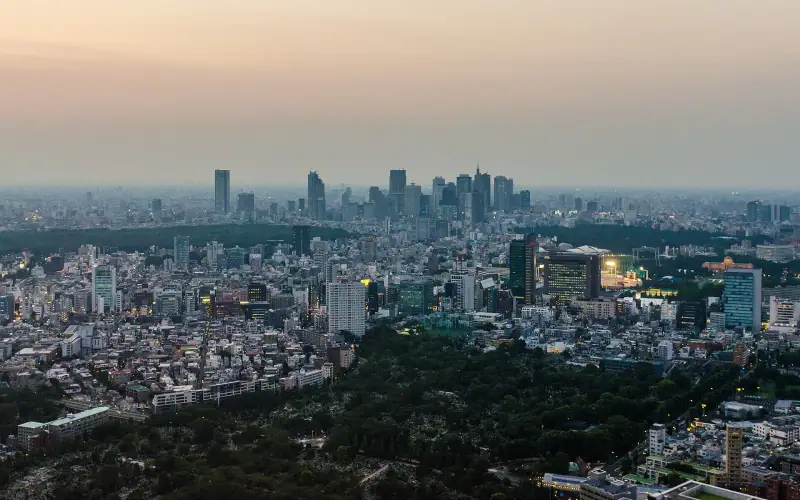
What to do in Tokyo: the highlights of the Japanese capital in 4 days
Asakusa, Shibuya, Shinjuku, Meiji Jingu, Akihabara, Ueno: what to do in Tokyo in 3 to 4 days, how to organize visits by neighborhood and avoid the crowds.
Ready-made
Japan itineraries
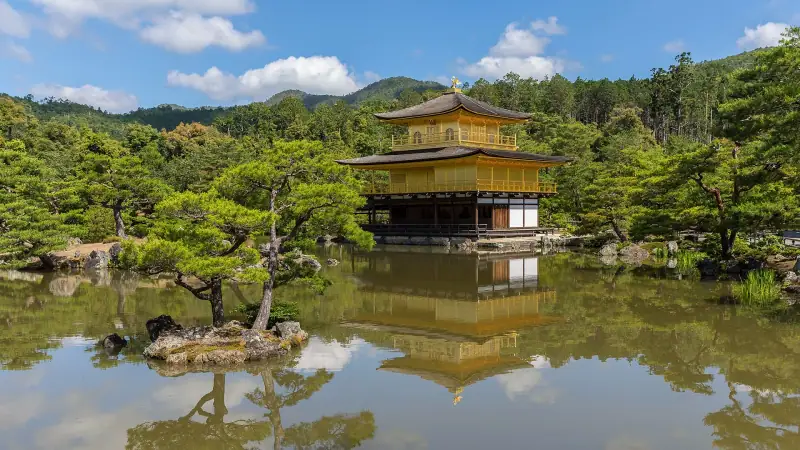
5 days
Kyoto, Nara and Osaka in 5 days: a day-by-day itinerary
A 5-day Kansai itinerary: Kyoto temples, Nara deer and Osaka street food, with transport, tips and mistakes to avoid.
10 days
Japan in 10 days with kids: stops, journeys and a realistic pace
TokyoHakoneKyoto
5 days
Tokyo, Hakone and Mount Fuji in 5 days: a detailed itinerary
A 5-day itinerary through Tokyo, Hakone and the Mount Fuji lakes: trains, onsen, volcano views, budget and mistakes to avoid on a first trip.