Things to do
Nakasendo: hiking from Magome to Tsumago, a practical guide to the Kiso Valley
We may earn a commission when you book through links on this page, at no extra cost to you. We don't visit or try the places we cover: we summarize published sources. How we work
In short
- The hike from Magome to Tsumago covers about 8 km (5 mi) and takes roughly 2 h 30 to 3 h 30 of walking; allow half a day to visit both villages.
- By train: reach Nakatsugawa station (about 1 hour by express from Nagoya), then a local bus to Magome (about 25 minutes, around 800 yen); at the end, a bus links Tsumago to Nagiso station.
- The highest point, Magome Pass, is about 800 m (2,625 ft). The path is well maintained and needs only average fitness and good shoes.
- Tourist offices in both villages generally offer luggage transfer between villages; book ahead and check times and fees.
Before high-speed trains and highways, people crossed Japan on foot. The Nakasendo, the “Central Mountain Route,” linked Edo (today’s Tokyo) to Kyoto through the interior. Created in the early Edo period, it was one of the country’s great official roads, used by feudal lords, their processions, merchants and pilgrims. It had some 69 post stations (shukuba) and measured more than 500 km (310 mi).
Of this long route, one section has remained particularly well preserved: that of the Kiso Valley, between the villages of Magome and Tsumago. About eight kilometers (5 mi) of paved paths, cedar forests, hamlets and waterfalls, with at each end a restored former post town where wooden houses have regained their old look. It is one of the most accessible and most atmospheric hikes in the country, ideal for a day far from the crowds of Tokyo or Kyoto.
This guide details access, the route, difficulty, seasons, equipment and logistics, so you can fit this walk into your itinerary without unpleasant surprises.
The Nakasendo, a historic road turned footpath
To enjoy the walk, it helps to understand what you are treading on. Under the Tokugawa shogunate, regional lords (daimyo) had to travel regularly to Edo with a large retinue. To host these processions, relay stations were set up along the roads, with inns, stables and luggage transport services. The Nakasendo, more inland than the coastal Tokaido road, crossed mountainous regions, which made it quieter but more demanding.
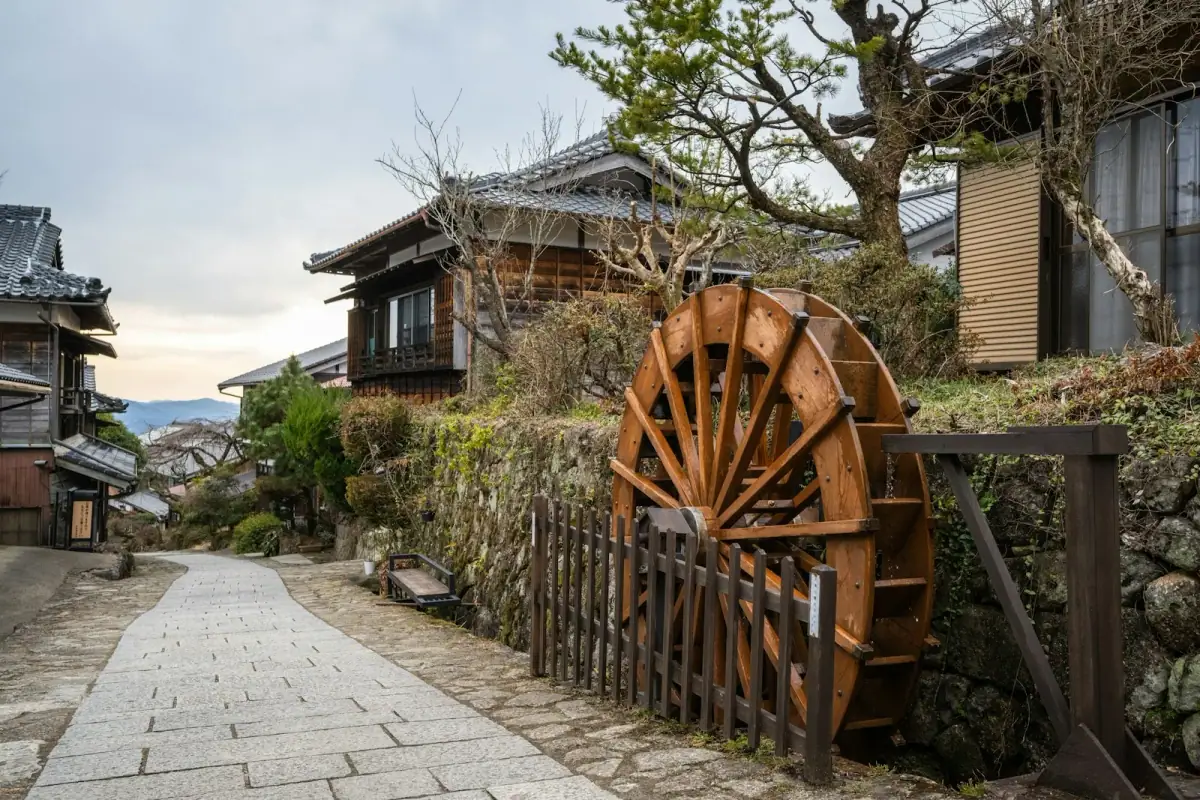
With the arrival of the railway in the Meiji era, these mountain villages were neglected in favor of other routes. Paradoxically, this decline protected their architecture. From the second half of the 20th century, residents mobilized to safeguard and restore the streets, banning for example cars from parking there or unsightly poles from being planted. Today, Magome and Tsumago are among the most evocative stops of pre-modern Japan.
The path itself alternates original or restored stone paths, stretches on narrow road, crossings of farming hamlets and undergrowth. Bilingual signs, markers and shelters line the route, which makes orientation easy even without knowing Japanese.
How to get to Magome and Tsumago
The hike is in Nagano Prefecture, in the Kiso Valley, in the Japanese Alps. It is easily reached from several cities, which lets you fit it into a circuit between Tokyo, Kyoto, Kanazawa or Takayama.
From Nagoya or Kyoto
The most common entry point is Nakatsugawa station, served by the JR Chuo line from Nagoya, with a trip of about an hour on an express train. From Kyoto or Osaka, you generally go through Nagoya by Shinkansen before taking this connection. Ticket, reservation and pass details are in our guide to transport and the Japan Rail Pass, to read before buying anything: depending on your overall route, a rail pass is not always worthwhile.
From Nakatsugawa station, a local bus takes you to Magome in about 25 minutes for a fare of around 800 yen. Departures are not very frequent: check the day’s timetable before setting off, as missing a bus can shift the whole day.
From Takayama or Matsumoto
The Kiso Valley combines very well with a stay in the Japanese Alps. From Takayama or Matsumoto, plan train and bus connections, with a trip of several hours in total. It is therefore often more comfortable to sleep there or in a neighboring town the night before, rather than trying a round trip on the same day.
On the way back: from Tsumago to Nagiso
Once in Tsumago, a bus goes to Nagiso station, where you take the train back to Nagoya or on to the rest of your trip. Again, check the timetables as soon as you arrive in Tsumago so you are not caught off guard. If you still have energy, an extension on foot toward Nagiso is possible, but it adds a few kilometers.
Sleep in the Japanese Alps
To avoid too long a trip on hike day, compare lodging in Takayama, Matsumoto or the Kiso Valley for your dates.
Magome, the starting point at altitude
Magome is built on a slope: its main street climbs in paved steps, lined with wooden houses, craft shops, small restaurants and tea rooms. Cars do not circulate there, which reinforces the atmosphere. Take time to wander before setting off: the mood is most pleasant early in the morning, before the groups arrive.
Local specialties to try there include gohei mochi, grilled rice dumplings coated in a sweet-salty walnut or sesame sauce, as well as chestnut-based products, very present in the region. For a wider idea of what people eat in the country, see our article what to eat in Japan.
At the top of the village, a viewpoint lets you see the valley, with mountains in the background in good weather. The path proper starts just after, leaving the paved street.
The route: from Magome to Tsumago
Here is the typical course of the walk, about 8 km (5 mi), which most hikers cover in two and a half to three and a half hours.
The climb to the pass
From Magome, the path first rises over stone then an earth trail, before crossing a few roads. The climb is steady but moderate. The highest point, Magome Pass, is at about 800 meters (2,625 ft) of altitude. Nothing technical: simply take your time, especially in hot or humid weather.
Hamlets and waterfalls
After the pass, the walk continues through undergrowth then through hamlets where you glimpse farmhouses, vegetable gardens and small shrines. Along the route, you will pass waterfalls reachable by a short detour, rest shelters and a few water points. Bells are installed at regular intervals: ringing them is a way to signal your presence to local wildlife.
You also find along the way a few tea or rest houses offering hot or cold drinks, sometimes free with a gesture of thanks. Bring cash, as card payments are not guaranteed outside the villages. On this point, our Japan budget guide details payment habits.
The descent to Tsumago
The second half of the route is mostly downhill, on earth paths, then on a small road that reaches Tsumago. You gradually glimpse the village’s roofs. The arrival is a pleasure: after hours of forest, finding a quiet wooden street, with no visible power lines, gives the impression of having changed era.
Tsumago, the preserved post town
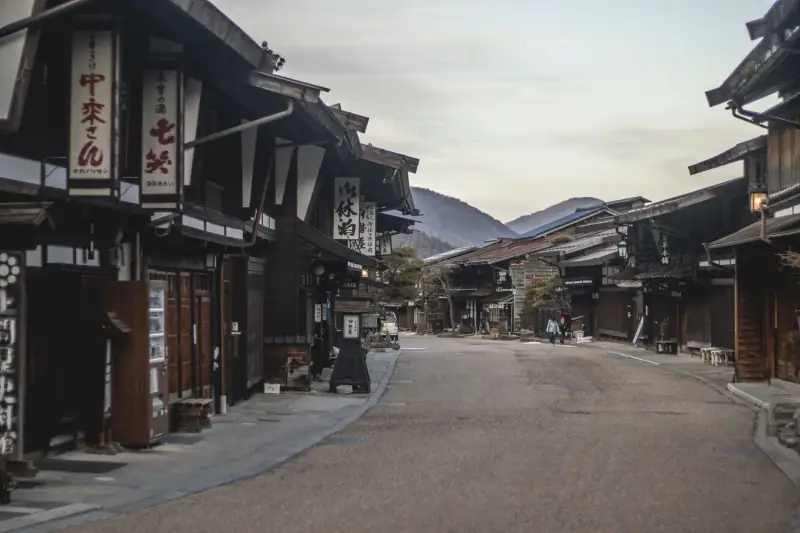
Tsumago is often considered one of Japan’s best-preserved post towns. Its main street, flat and lined with wooden houses with deep eaves, is maintained under strict preservation rules. The village was one of the pioneers of built heritage conservation in Japan and received a national distinction for this effort.
You can visit former travelers’ lodgings and small exhibitions tracing the road’s history, with access generally paid at a modest fee. Opening hours vary by season: check them locally or with the tourist office on arrival rather than relying on old information.
If you stay overnight there, a night in a traditional inn (minshuku or ryokan) is one of the best ways to enjoy the village in the evening, once the day visitors have left. The evening meal, the futon and sometimes a bath complete the change of scene; for the basic bath rules, see our guide to onsen and their etiquette.
Guided excursions in the Japanese Alps
Prefer to be accompanied? Compare day excursions with a guide, transport and a Nakasendo walk.
When to go and what to pack
The best seasons
Spring (late March to May) brings mild temperatures and blossoms in the valley; fall (October to November) offers red and golden foliage and dry air, making it many hikers’ favorite season. Summer is hot and humid, with a risk of thunderstorms and insects; set off early and carry plenty of water. Winter is cold, with sometimes slippery ground: walking remains possible but requires equipment and checking the trail condition. To compare periods across the country, see our article on the best time to go to Japan.
Recommended equipment
- Comfortable walking shoes, already broken in. The path is not technical, but cobbles and descents tire the feet.
- A light waterproof jacket: mountain weather changes fast.
- Water and a snack, even though you find a few drinks along the way.
- Cash for small purchases and the bus.
- A light backpack, hence the value of having big suitcases transferred.
- Insect repellent and sun protection in the warm season.
Our selection of useful accessories for traveling in Japan completes this list with adapters, bags and suitable luggage.
Luggage: a valuable service
Walking with a suitcase makes no sense on this path. The tourist offices in Magome and Tsumago usually offer a luggage transfer from one village to the other, to drop off in the morning and collect in the afternoon, for a fee. Find out in advance the times, booking conditions and price, as they may change.
Organizing your day: a sample schedule
Here is a typical day starting from Nagoya, to adapt to your train times:
- Morning: train from Nagoya to Nakatsugawa, then bus to Magome. Quick visit of the village and luggage drop-off if you use the service.
- Late morning: set off on the trail, with a break at the pass and in a hamlet.
- Early afternoon: arrival in Tsumago, late lunch and a visit of the main street.
- Late afternoon: bus to Nagiso station, then train to your next stop (Nagoya, Matsumoto, Takayama via connections).
If you want to extend the experience, other sections of the Nakasendo exist in the valley, but they are less developed and longer. For most travelers, the Magome-Tsumago route is perfectly sufficient and very satisfying.
Fitting the Nakasendo into a Japan circuit
The hike fits naturally between two big stops. It combines well with Takayama, Kanazawa and the village of Shirakawa-go for a loop through the Japanese Alps, or with Kyoto and Nagoya to break the trip to Tokyo. It also finds its place in a longer itinerary such as the one we offer in our two-week circuit in Japan, as a “nature” variation between the big cities. If you stay in Kyoto, our guide where to stay in Kyoto will help you choose a neighborhood before heading to the mountains.
A stop in Nagoya before or after the valley
Nagoya is the most practical gateway to Nakatsugawa: compare hotels near the station to leave early.
Respect and safety tips
The Nakasendo crosses inhabited villages and private land. A few simple rules ensure good coexistence:
- Stay on the path and close the gates you open.
- Carry out your trash: bins are rare in Japan and the rule is to leave with your own.
- Speak softly in the hamlets, where people live and work.
- Ask before photographing residents or the inside of houses.
- Consider travel insurance that covers hiking and medical costs.
- Tell someone your route and check the weather, especially in the rainy and typhoon seasons.
The hike is not difficult, but slips on wet cobbles are common: take your time on the descents.
Should you do the hike or skip it?
If you like walking, the answer is yes without hesitation: in half a day, you go from stations to forest trails and discover a rural Japan you do not see from the Shinkansen. If you do not like walking, you can visit the two villages separately by bus, but you will lose the essence of the experience. Travelers in a great hurry can do only one of the two villages; those with more time will gain by sleeping there and enjoying the quiet evenings.
In any case, leave a margin in your schedule for the unexpected: a missed bus, a shower, a longer break than planned. It is the rhythm of the road that gives this path its charm, and it is what you remember long after the trip.
Frequently asked questions
How long is the hike between Magome and Tsumago?
Generally expect between 2 h 30 and 3 h 30 of walking for about 8 km (5 mi), depending on your pace and the number of breaks. Plan a full half day if you want to visit both villages.
Do you need to be athletic to do the Nakasendo?
No. The path is well maintained, but it has a steady climb then a descent, on stone paths, roads and forest trails. Average fitness and good shoes are enough.
Which direction is better to walk?
Many travelers start from Magome and finish in Tsumago, as the overall elevation change is more favorable in that direction. The reverse is quite possible if your schedule requires it.
What do you do with your luggage during the hike?
The tourist offices in both villages generally offer a luggage transfer service from one village to the other, to be booked in advance and paid there. Check the times and conditions before you go.
Are there bears on the trail?
The region is mountainous and wooded: bells are installed along the path to signal your presence to wildlife. Ring them, stay alert and follow the posted instructions.
Can you do the hike in winter?
Conditions can be cold and the ground slippery, with snow or ice depending on the year. Find out the trail conditions before leaving and equip yourself accordingly.
Can you get there by train without a car?
Yes. You reach Nakatsugawa station by train, then a bus goes to Magome. At the end of the hike, a bus links Tsumago to Nagiso station to take the train again.
More Japan guides
Keep reading
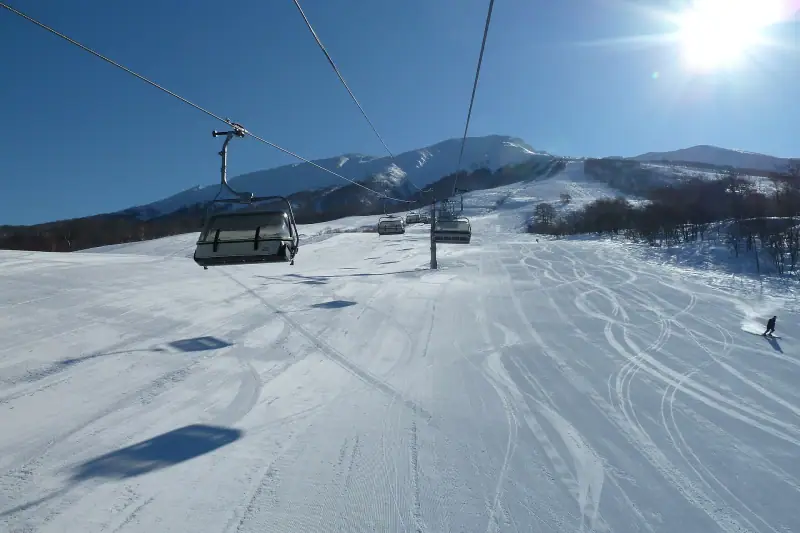
Skiing in Japan: Hokkaido, Niseko, Hakuba, powder, season and budget
Skiing in Japan: Niseko or Hakuba, powder season, 2026-2027 lift pass prices from official sites, access, lodging and budget to plan your trip.
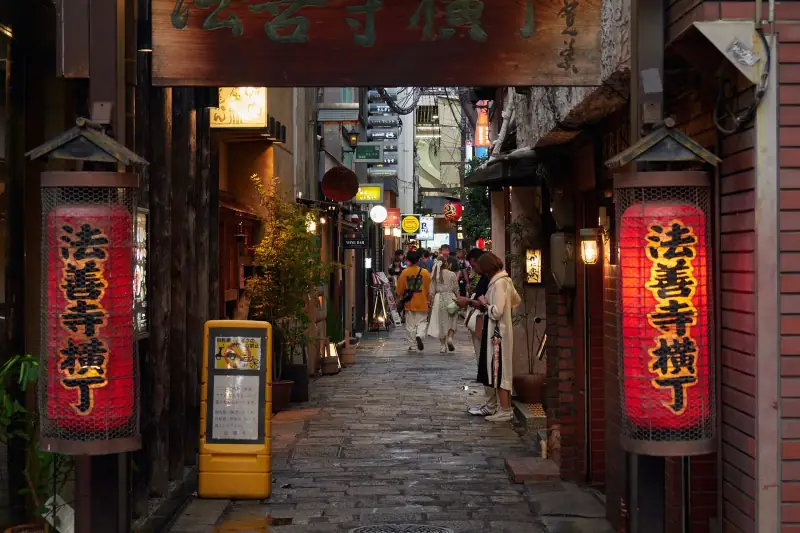
What to do in Osaka: the highlights of Japan's food capital
Dotonbori, Osaka Castle, Shinsekai, Umeda, Universal Studios Japan: what to do in Osaka in 2 to 3 days, how to organize and which excursions to add.

Japan budget: what a trip costs, item by item, and how to spend less
Lodging, transport, meals, activities: the real cost of a stay in Japan, three budget profiles priced in yen, euros and dollars, and tips to save.
Ready-made
Japan itineraries
5 days
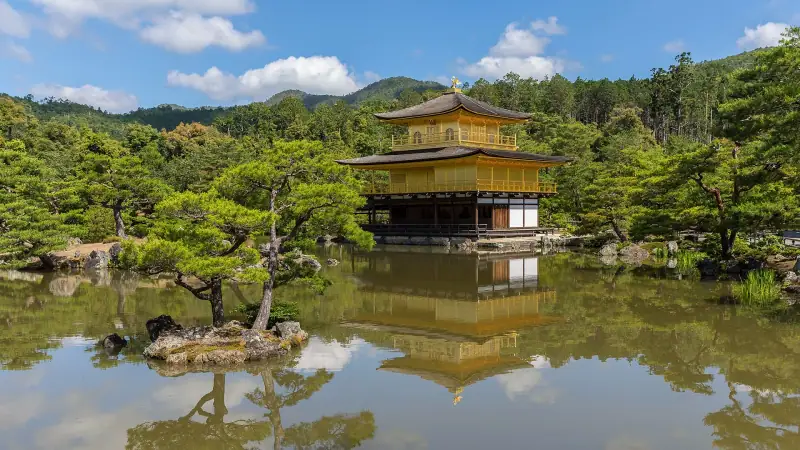
Kyoto, Nara and Osaka in 5 days: a day-by-day itinerary
A 5-day Kansai itinerary: Kyoto temples, Nara deer and Osaka street food, with transport, tips and mistakes to avoid.
10 days
Japan in 10 days with kids: stops, journeys and a realistic pace
TokyoHakoneKyoto
5 days
Tokyo, Hakone and Mount Fuji in 5 days: a detailed itinerary
A 5-day itinerary through Tokyo, Hakone and the Mount Fuji lakes: trains, onsen, volcano views, budget and mistakes to avoid on a first trip.