Where to stay
Where to stay in Killarney: town center, lakes and B&Bs for exploring Kerry
We may earn a commission when you book through links on this page, at no extra cost to you. We don't visit or try the places we cover: we summarize published sources. How we work
In short
- Without a car, the town center around Main Street is the most practical: restaurants, pubs, stations and excursion departures are on foot.
- With a car and a wish for quiet, a B&B on the roads toward the national park (Ross Castle, Muckross) is a very good option; check that parking is included.
- Killarney is one of Ireland's busiest stops: in summer and on long weekends, book several weeks ahead, with free cancellation.
- Two nights cover the national park and a day on the Ring of Kerry (about 180 km / 112 mi); plan three to add the Gap of Dunloe or Dingle.
Killarney is the main gateway to County Kerry. This small tourist town, set at the edge of a national park of lakes, forests and mountains, is the base for most travelers doing the Ring of Kerry. It has a very wide range of accommodation for a town of this size: hostels, B&Bs, hotels, guesthouses and large hotels near the lakes.
The right choice depends mostly on how you travel and what you come for: evenings with music in town, or quiet mornings facing the mountains. Here is how to find your way, area by area, with the pitfalls to avoid so you can book with peace of mind.
Understanding Killarney’s geography
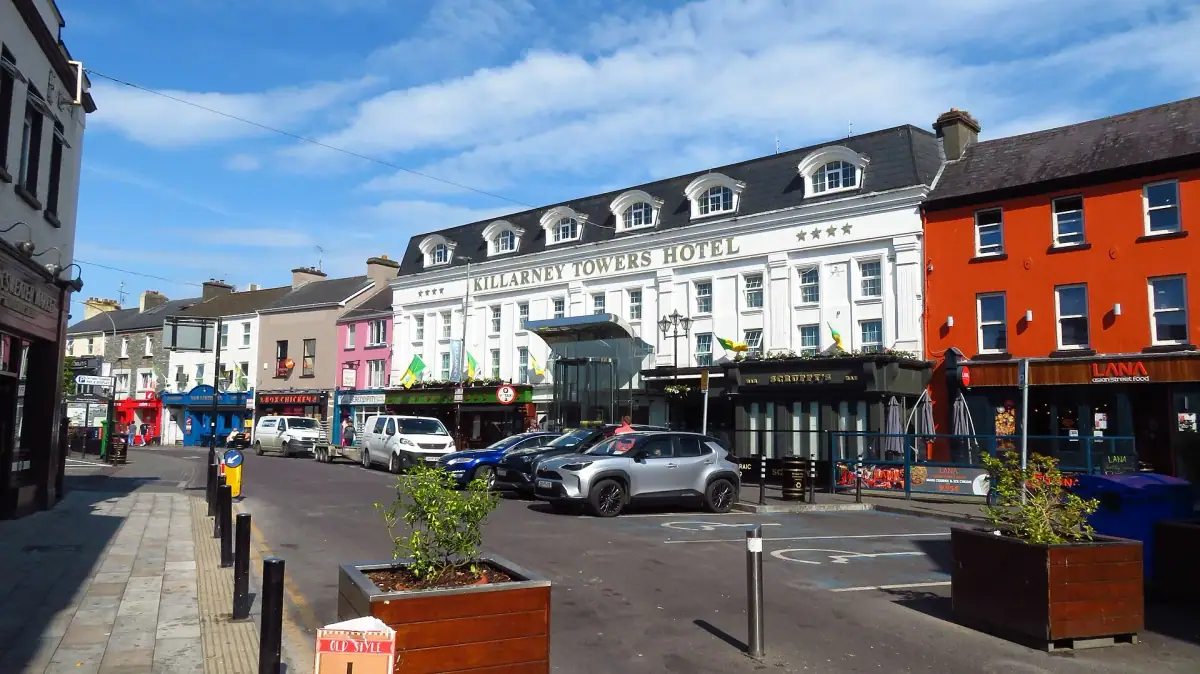
The town is compact. Its main axis, Main Street, concentrates shops, restaurants and pubs, with parallel and cross streets that can be covered on foot in a few minutes. The railway station and the bus station are close to the center, which makes arrivals without a car easier.
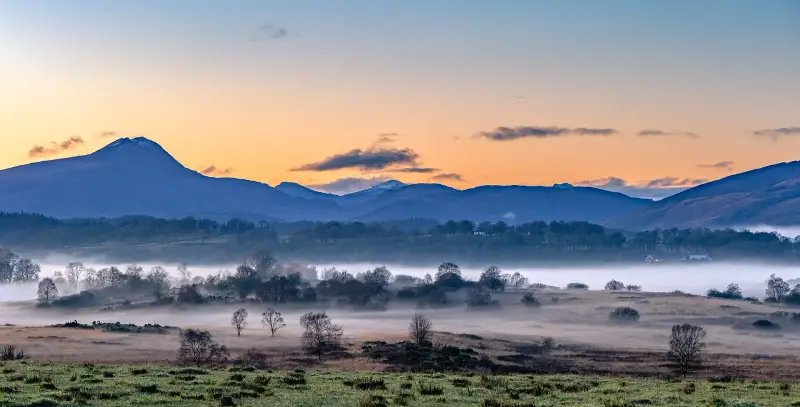
West and south of the town stretches Killarney National Park, which includes the three lakes (Lough Leane, Muckross Lake and the Upper Lake), ancient forests and monuments such as Ross Castle, very close to town, and Muckross House, a few kilometers away. Further on, roads lead to the Ring of Kerry, the Gap of Dunloe and the mountains.
For sleeping, there are three main choices: right in the center, on the roads that reach the park, or farther out in the countryside. Each has its own pace, advantages and budget.
The town center: everything on foot
Sleeping near Main Street is the simplest option if you travel by train or bus, or if you want to go out in the evening without worrying about getting back. Pubs regularly offer live music, restaurants are numerous and excursion departures are often from the center. Our article on Irish pubs and traditional music gives pointers for enjoying the evenings.
Pros: no car needed, a large choice of restaurants and entertainment, transport times that are easy to manage.
Cons: evening noise, especially on weekends and in summer, and higher prices for sometimes compact rooms. The streets near the pubs are the liveliest: ask for a courtyard-side or upper-floor room, and read recent reviews on noise levels.
The center suits solo travelers, small budgets and those who are not renting a vehicle. In busy periods, rooms in the center of town go very early.
Hotels, B&Bs and guesthouses near Main Street: compare locations, rates and traveler ratings.
Near the national park: quiet and nature
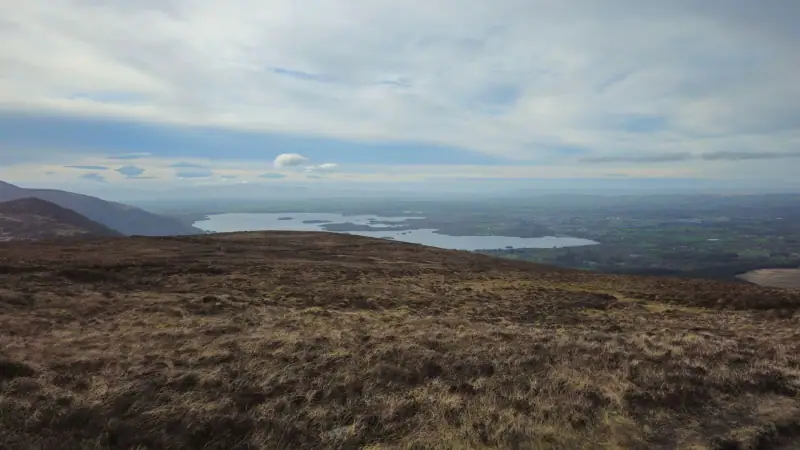
The roads leaving town toward Ross Castle and Muckross are lined with B&Bs, guesthouses and several large hotels. Sleeping on that side means waking up among trees, pastures and mountains, with quick access to the trails, the park’s cycle paths and the lake shores.
Pros: a clearly more peaceful setting, generally roomier rooms, parking most often included and direct access to nature from breakfast.
Cons: you are a few kilometers from the center. Walking back after a dinner in town is possible from the closest places, but not from the farthest, and the roads are poorly lit. Plan a taxi, a bike or a car.
This area is ideal for couples, hikers and anyone who prefers silence to activity. It takes some logistics if you do not drive, because buses and taxis are less frequent there than in town.
Why a car changes everything
In Killarney, the car question steers the whole choice. In town, you get around on foot. But for the Ring of Kerry, a scenic loop of about 180 km (112 mi) around the Iveragh Peninsula, or for the Dingle Peninsula, a car gives a freedom that group excursions do not always provide.
If you rent a vehicle, note that driving is on the left and country roads are narrow: our guide on renting a car in Ireland details insurance and the habits to adopt. In that case, choose accommodation with parking: it is a more important criterion than being right next to the center.
Without a car, stay in town and rely on guided excursions, rental bikes for the national park or boat trips on the lakes. It is perfectly feasible and more restful, but less flexible.
Ring of Kerry, Gap of Dunloe, national park: compare guided excursions and traveler ratings.
The Irish B&B: the most common choice
In Kerry as elsewhere in Ireland, the bed and breakfast remains the standard accommodation. It is generally a family home with a few rooms and a host who knows the region perfectly. Breakfast, the full Irish breakfast, is hearty and often serves as the first meal of the day.
Why choose it:
- valuable advice on roads, weather and current trails;
- a breakfast that is generally included;
- frequent free parking;
- better value than many hotels in high season.
To expect: fewer services than a hotel, bathrooms that are sometimes small, and a reception that is not always staffed all day. Tell your host your arrival time, especially if it is late.
Killarney has many B&Bs, but they fill up fast in summer. Book them preferably with free cancellation, because Atlantic weather may force you to change your plans.
Hotels, hostels and other options
Killarney offers a full range for all budgets:
- Hostels: dorms or private rooms, mostly in the center. The cheapest option, very practical for meeting other travelers and organizing outings.
- Town hotels: mid-size properties and large chains, well placed for excursions and transport.
- Large hotels near the lakes: more upscale places, sometimes with a spa, restaurant and water views, suited to a relaxing stay or a honeymoon.
- Guesthouses and small boutique hotels: a refined setting, more space and personal service.
- Campsites and nature stays: possible around the park, especially for travelers with a camper van or tent, to be booked in season.
Prices vary a lot by period. Summer, long weekends and big events push rates up, while fall and spring often offer better deals. To estimate the whole stay, see our guide to the budget for Ireland.
When to book and how to choose
The calendar matters a lot for accommodation in Killarney. The town attracts visitors almost all year, with a peak between late spring and early fall. Our article on when to go to Ireland details the seasons and weather.
A few simple habits:
- Book early for July and August and for holiday weekends: several weeks ahead is a minimum.
- Choose free cancellation while your route is not fixed.
- Check parking if you are by car, and accessibility if you travel with children or people with reduced mobility.
- Read recent reviews on noise, cleanliness and breakfast.
- Think about the weather: rain is frequent, even in summer. Accommodation with a lounge or common room makes gray days more pleasant.
- Combine stops: Killarney sits well between Cork, Dingle and Galway. Our Kerry and Dingle road trip in 4 days shows how to fit it into a route.
Killarney as a base for day trips
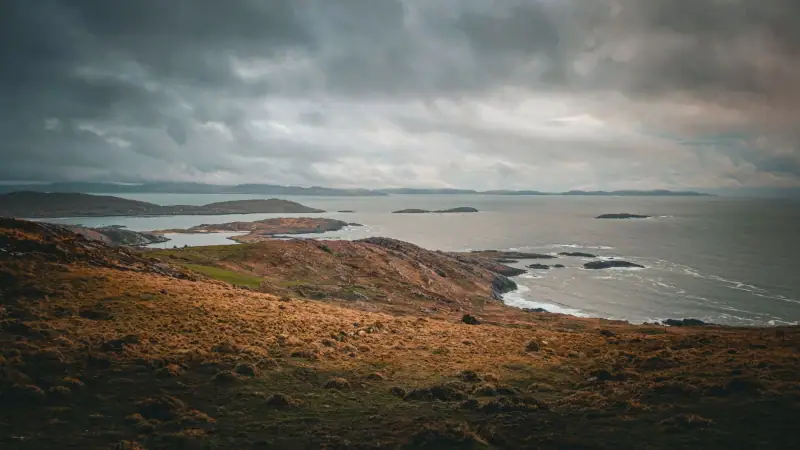
From Killarney, several day trips are realistic. The national park can be explored from town, on foot, by bike or by horse-drawn trap. The Ring of Kerry takes a big day by car, with many stops. The Dingle Peninsula is reached in about an hour and a half by road: many travelers spend at least one night there to enjoy the harbor and the music evenings.
If you only have two or three nights, an efficient setup is to stay in Killarney for the Ring of Kerry and the park, then continue to Dingle or north, rather than multiplying hotel changes. If your trip is longer, alternate: one night in Killarney, one in Dingle, then a last one in a small coastal town.
For a wider trip in the west of the country, our guide on where to stay in Galway is a useful complement, and our article on where to stay in Dingle helps choose the peninsula base.
B&Bs, hotels and guesthouses around Killarney and on the Ring of Kerry: filter by budget, parking and rating.
Insurance and cancellation: a point not to neglect
A trip to Ireland is often planned several months ahead, with hotel and flight bookings. In case of the unexpected (illness, flight delay, lost luggage), suitable coverage avoids losing money. Compare the cover of a travel insurance policy before paying for non-refundable bookings.
Entry rules depend on your passport. Check the official travel advice of your government before you book: travel.state.gov (US), GOV.UK (UK), travel.gc.ca (Canada), Smartraveller (Australia) (checked November 2026).
Summary: which area for your profile?
- Without a car, small budget or music evenings: the town center, around Main Street.
- By car, couple or hiker: the roads leading to Ross Castle and Muckross, on the national park side.
- Relaxing stay or honeymoon: a boutique hotel near the lakes, booked early.
- Family: a B&B or guesthouse with parking and roomy rooms, on the edge of the center.
- Quick one-night stop: the center, to save time and have dinner without driving.
Whatever you choose, keep in mind that Killarney is above all a starting point: most of what makes Kerry beautiful lies outside, on the lakes, in the mountains and along the coast. Comfortable, well-located and well-booked accommodation leaves you the energy to enjoy it.
Frequently asked questions
What is the best area to stay in Killarney?
For a first visit without a car, the town center around Main Street is the most practical: restaurants, pubs, stations and excursion departures are on foot. If you have a car and want quiet, a B&B on the roads leading to the national park is a very good option.
How many nights should you plan in Killarney?
Two nights let you see the national park and do a day on the Ring of Kerry. Plan three nights if you also want to walk in the mountains, do the Gap of Dunloe or head out toward the Dingle Peninsula.
Do you need a car to stay in Killarney?
Not for the town, which is small. The national park can be explored by bike, horse-drawn trap or on foot from town, but the Ring of Kerry and the peninsulas are much simpler by car or with an organized excursion.
Is Killarney expensive in high season?
Yes, it is one of the busiest stops in Ireland: in summer and on long weekends, prices rise and good places fill up several weeks ahead. Off-season, rates are clearly lower.
Is it better to stay in Killarney or Dingle?
Killarney is better placed for the national park and the Ring of Kerry, with more choice of accommodation. Dingle, smaller and strongly marked by music and the sea, suits you better if the peninsula is your priority. Many travelers spend one night in each.
Do you need to reserve parking?
Check that the accommodation has parking, free if possible. Most B&Bs on the outskirts offer it, while places in the center do not always have it.
More Ireland guides
Keep reading
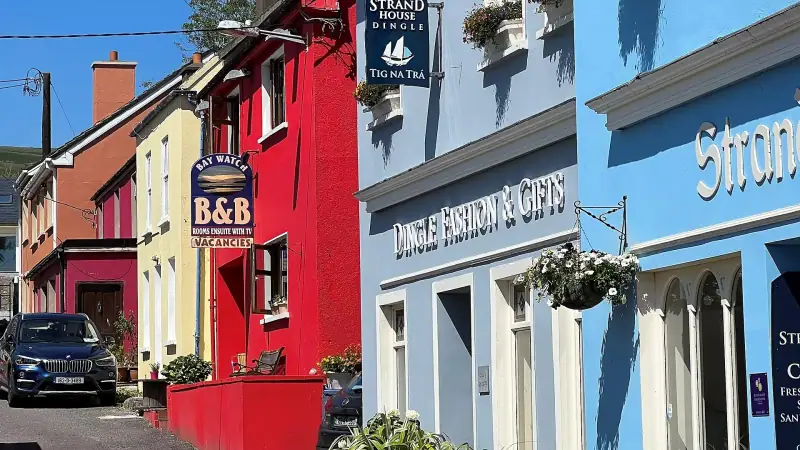
Where to stay in Dingle: town center, harbor or Slea Head, which base to choose?
Where to stay in Dingle? Center, harbor, edge of town or peninsula villages (Ventry, Ballyferriter): how to choose, parking, B&Bs and booking.
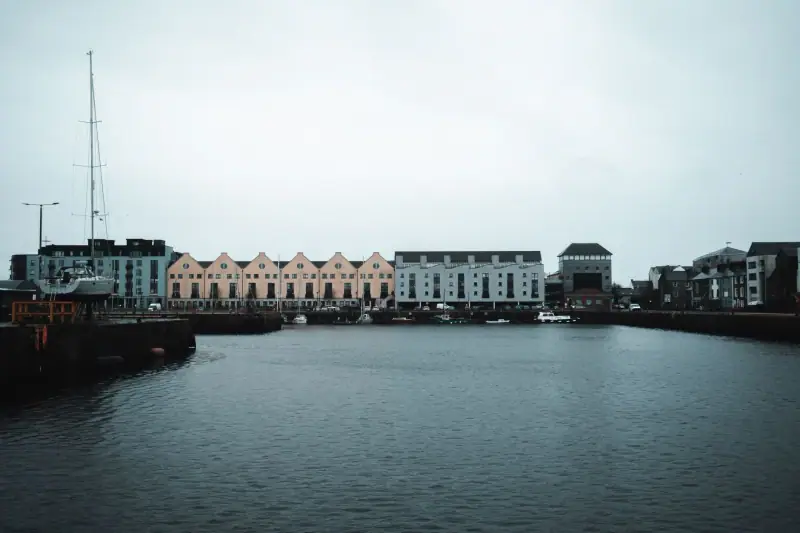
Where to stay in Galway: neighborhoods, B&Bs and tips for choosing well
Which neighborhood to choose in Galway? Latin Quarter, Eyre Square, West End, Salthill: atmosphere, budget, types of accommodation and booking tips.
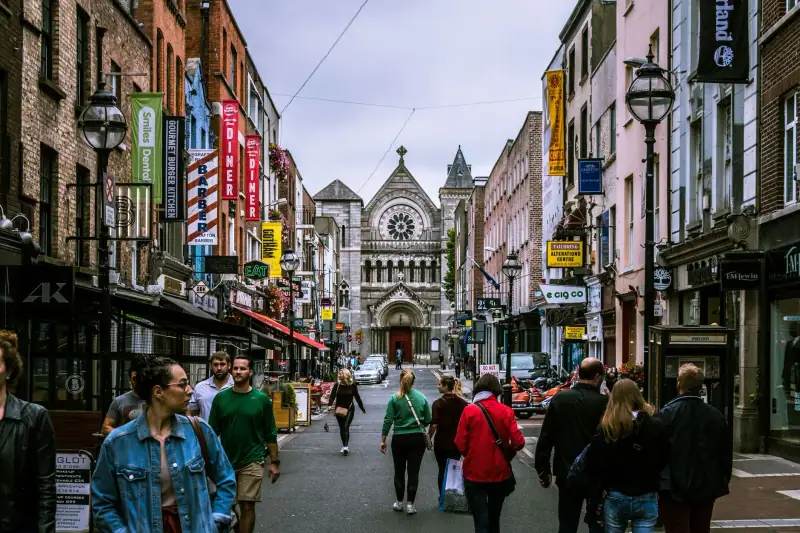
Where to stay in Dublin: neighborhoods, budget and tips for choosing well
Which neighborhood to choose in Dublin? Temple Bar, St Stephen's Green, Docklands, Smithfield: pros, cons, budget and booking tips.
Ready-made
Ireland itineraries
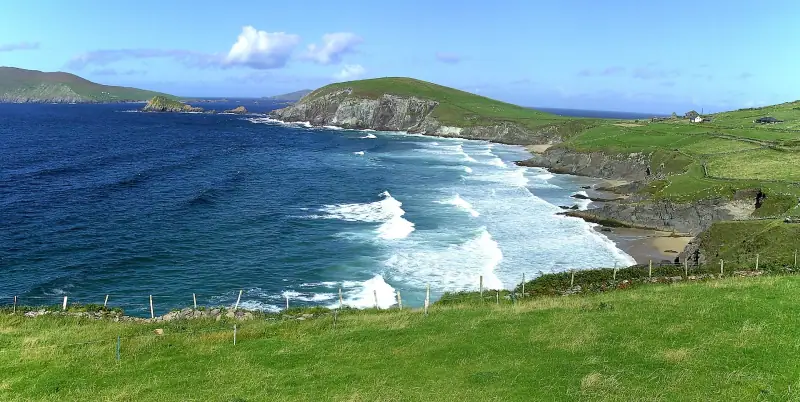
4 days
Kerry and Dingle road trip in 4 days: complete itinerary
KillarneyDingle
7 days
Ireland in 7 days without a car: a realistic train and bus itinerary
DublinGalwayKillarney
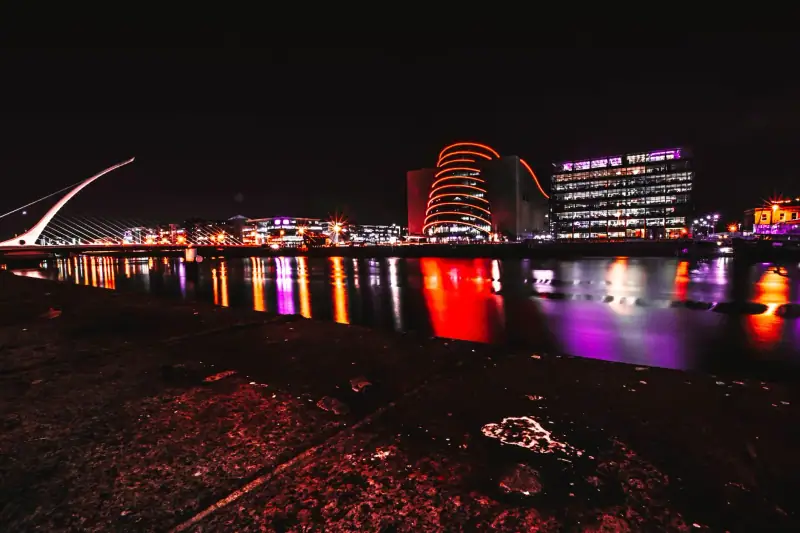
3 days
Visiting Dublin in 3 days: day-by-day itinerary
What to do in Dublin in 3 days? Trinity College, Guinness Storehouse, Kilmainham Gaol, Temple Bar and a trip to Howth: a walking itinerary with tips.