Where to stay
Where to stay in Dingle: town center, harbor or Slea Head, which base to choose?
We may earn a commission when you book through links on this page, at no extra cost to you. We don't visit or try the places we cover: we summarize published sources. How we work
In short
- Without a car, sleep in the center or near the harbor. With a car, a B&B on the edge of town with parking is the best compromise.
- Peninsula villages (Ventry, Ballyferriter) are quieter but isolated in the evening, and a car is essential.
- In summer and on long weekends, book several months ahead, preferably with free cancellation.
- Two nights allow the Slea Head loop in good conditions and an evening in town.
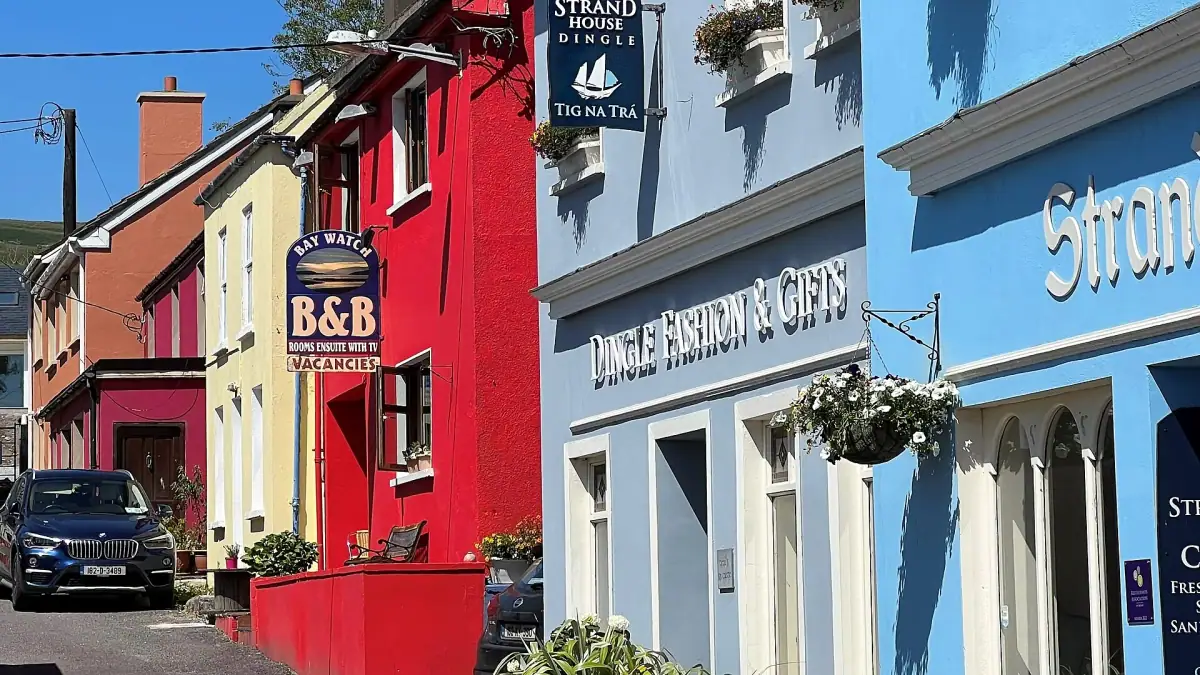
Dingle is a small harbor town on Kerry’s west coast, and the natural base for exploring the peninsula of the same name. It has no real neighborhoods: the real question is whether to sleep in the center, by the harbor, a little further out, or in a village farther along the peninsula.
In short: without a car, sleep in the center or near the harbor to do everything on foot. With a car, a B&B on the edge of town with parking is the best compromise; the peninsula villages (Ventry, Ballyferriter) are quieter but isolated in the evening. In summer, book several months ahead.
Understanding Dingle before you choose
The town is compact enough to cover on foot. The harbor and marina border the south, shopping streets climb from the quay, and pubs are spread throughout the center. The peninsula’s tourist office presents Dingle as an ideal starting point; the area is also one where Irish remains an everyday language, which explains the signs in Gaelic.
To place Dingle in a full route, our Kerry and Dingle road trip in 4 days shows how to link Killarney, the Ring of Kerry and the peninsula.
Sleeping in central Dingle: everything on foot
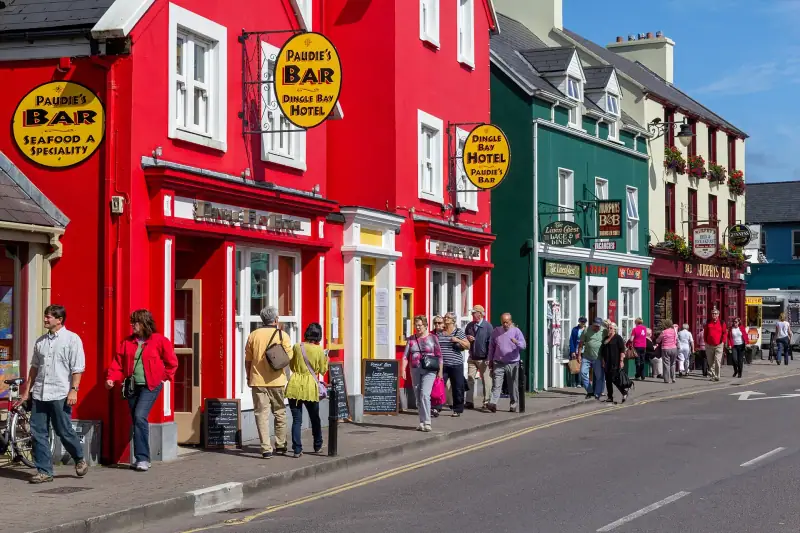
This is the simplest option if you arrive by bus or do not drive. Seafood restaurants, shops and pubs are close by, and you walk home after the evening. Our article on Irish pubs and traditional music gives pointers for enjoying the sessions.
Pros: no car needed, a wide choice of meals, excursion departures within reach.
Cons: evening noise on weekends and in summer, rooms that can be compact, and parking not always included. Ask for a courtyard-side or upper-floor room and read recent reviews on noise levels.
Hotels, B&Bs and guesthouses in town: compare locations, traveler ratings and cancellation terms.
Near the harbor and marina: a view of the bay
Places near the quay often offer a view of the water and the comings and goings of the boats, while staying a few minutes from the center. It is a good choice for a couple or for a stay of a few nights: you get the harbor atmosphere without being in the middle of the pubs.
Check before booking: car access (narrow streets, one-way systems), parking, and the real walking distance to restaurants. A “bay view” room may cost more: compare it with a standard room if budget matters, using our guide to the budget for Ireland.
On the edge of town: the right compromise by car
Several B&Bs and small hotels are a few minutes’ walk or drive from the center. You gain free parking, more spacious rooms and a calmer setting, while still reaching town in under 15 minutes on foot for the closest ones.
This is the area to favor if you have rented a vehicle: parking in the town center is limited, and driving on the left on narrow streets demands attention. Our guide on renting a car in Ireland details insurance and the habits to adopt.
Ventry, Dunquin, Ballyferriter: sleeping on the peninsula
Sleeping outside Dingle means waking up facing the Atlantic and starting the Slea Head loop without traffic. According to the peninsula’s tourist office, Ventry is a seaside village with a long beach (Blue Flag), Dunquin is the access point for crossings to the Blasket Islands between April and October, and Ballyferriter has several bars, a shop and a regional museum.
Pros: quiet, immediate scenery, prices often lower off-season, easy access to the sights of the west.
Cons: little public transport, a limited number of restaurants in the evening, and driving back at night on narrow, poorly lit roads. A car is essential.
A useful reminder for the loop: the tourist office advises doing it clockwise to avoid tour buses, following the road signs rather than the GPS, and allowing at least half a day.
Slea Head by minibus, sea trips, guided tours: compare the options if you do not drive.
B&B or hotel: which to choose in Dingle?
The B&B remains the standard accommodation: a family home, a few rooms, a host who knows the road and the weather, a full Irish breakfast included and often free parking. It fills up fast in summer and reception is not always staffed all day: let them know your arrival time.
The hotel suits you better if you want a restaurant on the premises, a late-open reception and services (pool, spa depending on the property). Hostels and vacation rentals round out the options for small budgets or groups.
The criteria that really matter
- Parking: the first criterion by car. Check that it is included and how far away it is.
- Free cancellation: essential while your route is not fixed, since Atlantic weather can disrupt plans.
- Noise: read recent reviews if you sleep near the pubs.
- Arrival time: to be given in advance for B&Bs.
- Period: July, August and long weekends are the busiest; our guide on when to go to Ireland details the seasons.
Quick table: which base for your profile?
| Profile | Recommended base | Car useful? | Watch out for |
|---|---|---|---|
| No car, music evenings | Town center | No | Evening noise |
| Couple, 2-3 night stay | Harbor and marina | No | Prices of rooms with a view |
| By car, family | Edge of town | Yes | Check parking |
| Hiker, beach, quiet | Ventry or Ballyferriter | Essential | Few restaurants in the evening |
Dingle or Killarney: where to spend the night?
Many travelers spend one night in each town. Killarney is better placed for the national park and the Ring of Kerry, with more choice: see our guide on where to stay in Killarney. Dingle is preferable if the peninsula and harbor atmosphere are your priority. With two nights in Dingle, you do the Slea Head loop without rushing.
B&Bs and small hotels around Dingle: filter by budget, parking and rating.
Sources
Frequently asked questions
Where should you stay in Dingle to do everything on foot?
Choose the center or the streets near the harbor: restaurants, pubs with music, shops and boat trip departures are a few minutes' walk away. This is the best option without a car, with the drawback of evening noise.
Do you need a car to stay in Dingle?
Not for the town itself, which is small. For the Slea Head loop, Gallarus or Dunquin, a car or an organized excursion is much simpler, because public transport serves few remote sights.
Do you need to book far ahead in Dingle?
Yes in summer and on long weekends: places to stay are small and fill up fast. Book several months ahead if you travel in July or August, preferably with free cancellation.
Is it better to sleep in Dingle or in a peninsula village?
Dingle offers the most choice of restaurants, pubs and services. A village like Ventry or Ballyferriter suits you better if you want quiet, the beach and scenery as soon as you wake up, as long as you have a car.
How many nights should you plan in Dingle?
Two nights let you do the Slea Head loop in good conditions and enjoy the town in the evening. A single night forces you to link Killarney, the road and the peninsula with no margin.
Is a B&B better than a hotel in Dingle?
Often, yes: Irish breakfast included, the host's advice on the road and the weather, and frequent parking. A hotel brings more services (restaurant, spa, round-the-clock reception) for a budget that is generally higher in high season.
More Ireland guides
Keep reading
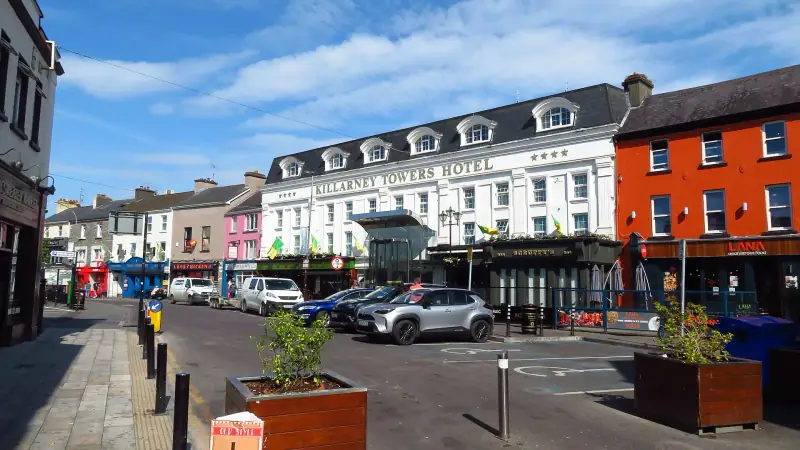
Where to stay in Killarney: town center, lakes and B&Bs for exploring Kerry
Where to stay in Killarney? Town center, Muckross road, national park edges, B&B or hotel: areas, budget and tips for booking before the Ring of Kerry.
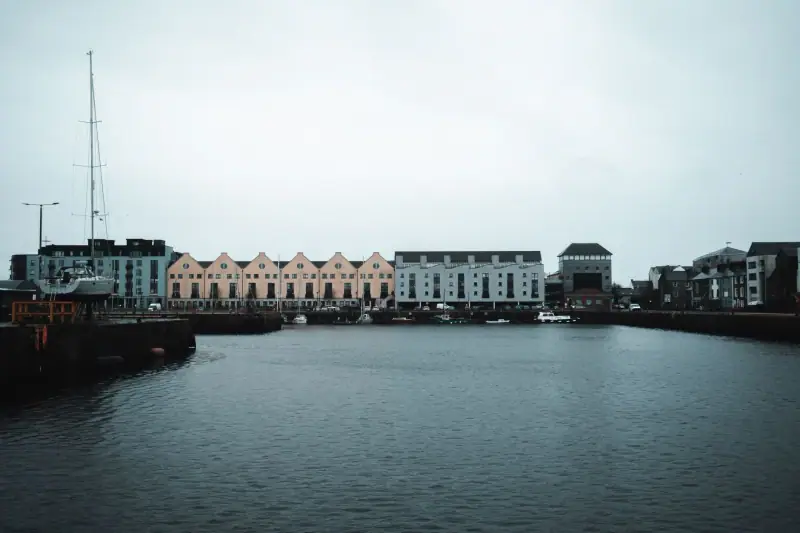
Where to stay in Galway: neighborhoods, B&Bs and tips for choosing well
Which neighborhood to choose in Galway? Latin Quarter, Eyre Square, West End, Salthill: atmosphere, budget, types of accommodation and booking tips.

Where to stay in Dublin: neighborhoods, budget and tips for choosing well
Which neighborhood to choose in Dublin? Temple Bar, St Stephen's Green, Docklands, Smithfield: pros, cons, budget and booking tips.
Ready-made
Ireland itineraries
4 days
Kerry and Dingle road trip in 4 days: complete itinerary
KillarneyDingle
7 days
Ireland in 7 days without a car: a realistic train and bus itinerary
DublinGalwayKillarney

3 days
Visiting Dublin in 3 days: day-by-day itinerary
What to do in Dublin in 3 days? Trinity College, Guinness Storehouse, Kilmainham Gaol, Temple Bar and a trip to Howth: a walking itinerary with tips.