Where to stay
Where to stay in Galway: neighborhoods, B&Bs and tips for choosing well
We may earn a commission when you book through links on this page, at no extra cost to you. We don't visit or try the places we cover: we summarize published sources. How we work
In short
- For a first visit, the area between Eyre Square and the Latin Quarter is the most practical: everything is on foot, from the stations to the pubs.
- The West End is quieter but still close; Salthill suits those who want the seafront, with a bus or walk to the center.
- Galway is expensive in summer, during festivals and on weekends; book early with free cancellation and check parking if you have a car.
- Two nights cover the city and its pubs; plan three or more to use it as a base for Connemara, County Clare or the Aran Islands.
Galway is one of the liveliest cities on Ireland’s west coast. Compact, facing the bay and known for its traditional music, it is also an ideal base for exploring Connemara, the Burren and the Cliffs of Moher. But the choice of accommodation matters a lot here: a few streets are enough to go from a party atmosphere to a peaceful residential district.
This guide details the main areas, the types of accommodation available and the habits to adopt to book at the right time, with no unpleasant surprise on price or noise.
Understanding Galway’s geography
Galway’s center is small and can be covered entirely on foot. The River Corrib flows into Galway Bay, west of the center. A few simple landmarks organize both sides: Eyre Square, a large square to the east, near the railway station and the bus station; the Latin Quarter, in the middle of the historic center, with its pedestrian streets and pubs; the West End, across the river, more bohemian; and Salthill, a seaside resort on the shore, to the west.
To get your bearings, the walk between Eyre Square and the Latin Quarter takes about ten minutes, and most sights in the center can be reached without transport. That is an asset: by sleeping in a good location, you can leave the car parked during your stay in town.
Most people arrive by train from Dublin, by long-distance bus or by car. If you arrive with a rental vehicle, think about parking before booking, because it is limited and paid in the center. Our guide on renting a car in Ireland details driving on the left and insurance.
Latin Quarter: in the middle of the action
The Latin Quarter is Galway’s most emblematic district: pedestrian lanes, colorful facades, shops, street musicians and pubs where traditional music sessions follow one another in the evening. Staying here means having everything on your doorstep: restaurants, the cathedral, the riverbanks and the Spanish Arch area, close to the river mouth.
Pros: an unbeatable location, a very lively atmosphere and the ability to do everything on foot, including walking home after an evening out.
Cons: noise, especially on Thursday, Friday and Saturday nights, and higher prices for often compact rooms. The pedestrian streets gather groups in the evening, and street-facing windows can let music in late at night.
If you choose this area, read carefully the reviews that mention noise levels and ask for a courtyard-side or high-floor room. Our article on Irish pubs and traditional music will help you spot the good evenings.
Hotels, B&Bs and apartments in the historic center: compare locations, rates and traveler ratings.
Eyre Square and the station: the most practical
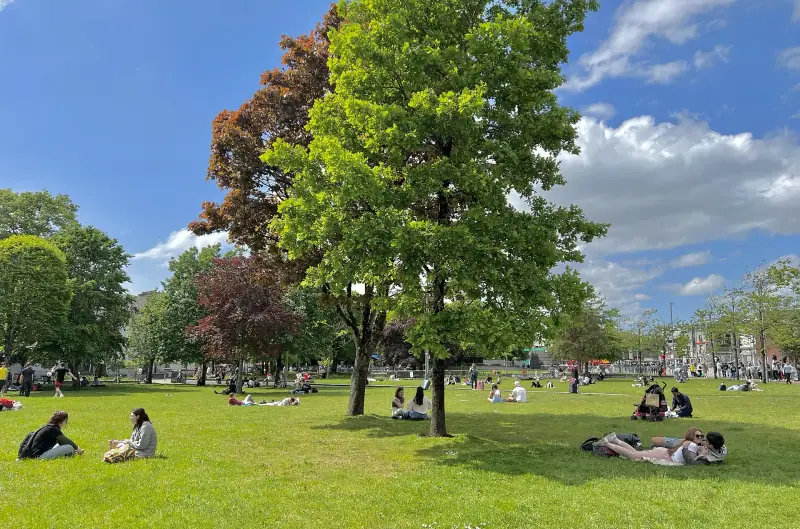
The Eyre Square area, east of the center, is the most practical choice for travelers arriving by train or bus. The railway and bus stations are right next door, which simplifies late arrivals and early departures for organized excursions.
There is a good concentration of chain hotels and mid-size properties, often roomier than in the Latin Quarter and calmer once night falls. The pedestrian center is a few minutes’ walk away, so you can enjoy the buzz without suffering it.
Good to know: the square itself is busy by day, and some surrounding streets lack a bit of charm. Compare photos and recent reviews, and favor places slightly set back from the main square if you want quiet.
This is the area to pick if you plan several day trips: it is easy to reach bus departures for County Clare or Connemara. Our Connemara and Galway road trip in 3 days shows how to organize these outings.
West End: bohemian and quieter
Across the River Corrib, the West End appeals with a more local atmosphere: independent cafés, restaurants, neighborhood pubs and residential streets lined with colorful houses. The Latin Quarter remains a few minutes’ walk away, but in the evening you leave it behind for a clearly more peaceful setting.
Pros: an authentic atmosphere, often slightly lower rates and an interesting compromise between proximity and calm.
Cons: fewer hotels than in the center and an offer made up mostly of guesthouses and small properties. Book earlier if you travel in high season, because charming places fill up fast.
This area suits travelers who enjoy waterside walks, couples and anyone who wants to live the city like a resident rather than a mere visitor.
Salthill: the sea within a short walk
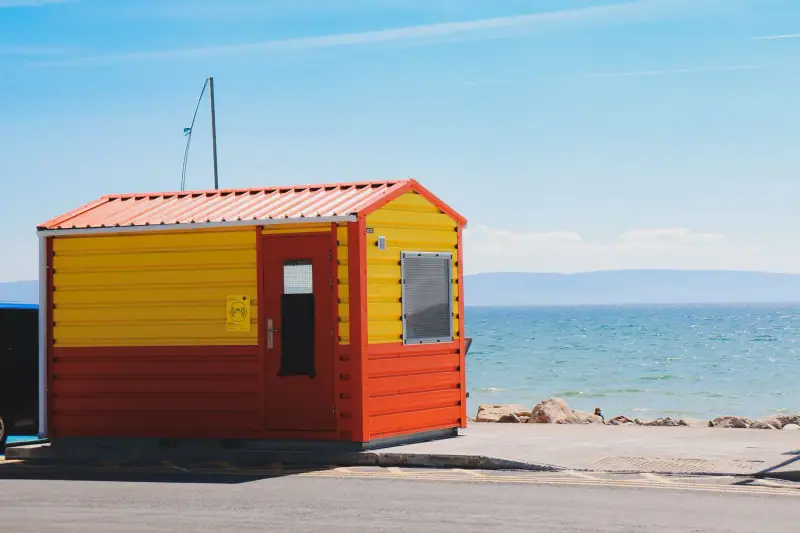
A few kilometers west of the center, Salthill is Galway’s seaside resort. Its seafront promenade is a favorite walking spot for locals, with a view of the bay and, in good weather, of the hills of County Clare in the distance. You will find many B&Bs, hotels and family guesthouses, often more affordable than in the very center.
The city center can be reached on foot along the promenade, in a fairly long walk, or by bus in a few minutes. By car, parking is generally easier than in the city center.
The flip side: in the evening, activity is limited and you need a ride to reach the pubs in the center. In winter, wind and rain make the promenade less inviting. Salthill mostly suits families, travelers with a car and those who prefer calm to partying.
Days in Connemara, at the Cliffs of Moher or on the Aran Islands: compare guided excursions and ratings.
The Irish B&B: an experience in itself
Around Galway as everywhere in Ireland, the bed and breakfast remains an institution. It is generally a family home turned into a few rooms, run by a host who knows the surroundings perfectly. Breakfast, the famous full Irish breakfast, is hearty and often serves as the first meal of the day.
Why choose a B&B:
- a warm welcome and practical advice on pubs, roads and weather;
- a breakfast that is generally included and very complete;
- rates often more reasonable than a hotel for decent comfort;
- frequent free parking, valuable if you are by car.
Its limits: fewer services than a hotel (not always a permanent reception), bathrooms that are sometimes small and arrival times to agree in advance. Tell the host if you arrive late, because there is not always someone there.
Budget and types of accommodation
Galway offers a full range: hostels, B&Bs, guesthouses, chain hotels, boutique hotels and apartments. Prices vary strongly by season, day of the week and events, especially in summer and during the festivals that liven up the city.
- Hostels: the cheapest option, with dorms or private rooms, mostly in the center. Ideal for tight budgets and solo travelers.
- B&Bs and guesthouses: the best value for most travelers, particularly in Salthill and the West End.
- Chain hotels: a safe bet, with standardized rooms, often near Eyre Square.
- Boutique hotels: pricier, perfect for a romantic getaway, to be booked early.
- Apartments: practical for families or multi-day stays.
Prices are generally high for the comfort offered, especially in summer. To control spending, travel outside school holidays, compare several neighborhoods and keep excursions for days when you are on the road anyway. Our guide to the budget for Ireland details the other spending items.
When to book and practical tips
- Book early for summer, long weekends and festival periods: the best places go several weeks ahead.
- Favor free cancellation, because Atlantic weather can disrupt your plans.
- Check parking if you rent a car: in the city center it is scarce and paid.
- Read recent reviews on noise, cleanliness and breakfast quality.
- Think about weekend noise: if you are a light sleeper, avoid rooms facing the pedestrian streets.
- Combine with Dublin: if you arrive via the capital, our guide on where to stay in Dublin helps you choose the first stop.
Compare hotels, B&Bs and apartments before the best places are full.
Which area to pick
For a first stay of two or three nights, choose the area between Eyre Square and the Latin Quarter: practical, central and within walking distance of everything. If you like activity, the Latin Quarter is perfect, as long as you accept the noise. For a calmer stay or a tighter budget, the West End and Salthill offer a very good compromise, especially in a B&B.
Whatever you choose, book early, check parking if you have a car and keep time for excursions. Galway is an excellent gateway to Connemara and the Atlantic coast: well-chosen accommodation makes the whole region more pleasant to explore.
Frequently asked questions
What is the best neighborhood to stay in Galway?
For a first visit, the area between Eyre Square and the Latin Quarter is the most practical: everything is on foot, from the stations to the pubs. The West End is a good alternative, quieter but still close.
Should you stay in the city center or in Salthill?
The city center is ideal for going out in the evening and sightseeing on foot. Salthill, a seaside resort a few kilometers away, suits you if you prefer the seafront promenade and a calmer setting, with a bus ride or a walk to reach the center.
Is Galway expensive to stay in?
Yes, especially in summer, during festivals and on weekends. Prices drop clearly off-season. Booking early with free cancellation and staying a little away from the Latin Quarter helps lower the bill.
Is an Irish B&B worth it?
Yes, it is a very pleasant way to stay: warm welcome, local advice and a full Irish breakfast included. Rooms are sometimes simpler than in a hotel, but the value is generally good.
Do you need a car to stay in Galway?
Not for the city, which can be visited on foot. Parking in the center is limited and paid: if you rent a car for Connemara or the Cliffs of Moher, check that your accommodation has parking.
How many nights should you plan in Galway?
Two nights are enough for the city and its pubs. Plan three or more if you want to use it as a base for Connemara, County Clare or the Aran Islands.
More Ireland guides
Keep reading
Where to stay in Dingle: town center, harbor or Slea Head, which base to choose?
Where to stay in Dingle? Center, harbor, edge of town or peninsula villages (Ventry, Ballyferriter): how to choose, parking, B&Bs and booking.
Where to stay in Killarney: town center, lakes and B&Bs for exploring Kerry
Where to stay in Killarney? Town center, Muckross road, national park edges, B&B or hotel: areas, budget and tips for booking before the Ring of Kerry.
Where to stay in Dublin: neighborhoods, budget and tips for choosing well
Which neighborhood to choose in Dublin? Temple Bar, St Stephen's Green, Docklands, Smithfield: pros, cons, budget and booking tips.
Ready-made
Ireland itineraries
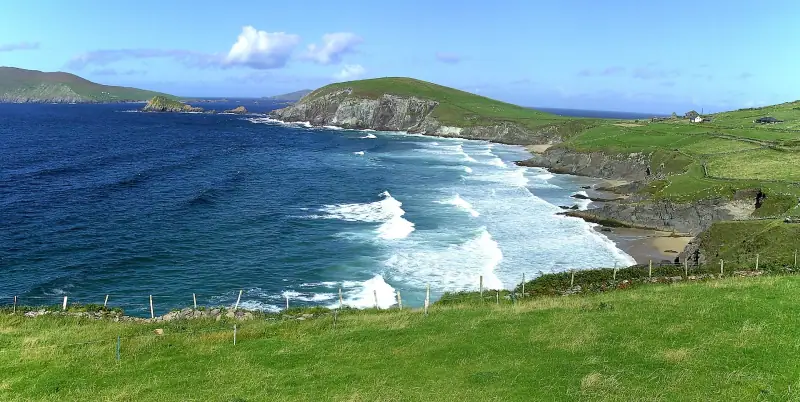
4 days
Kerry and Dingle road trip in 4 days: complete itinerary
KillarneyDingle
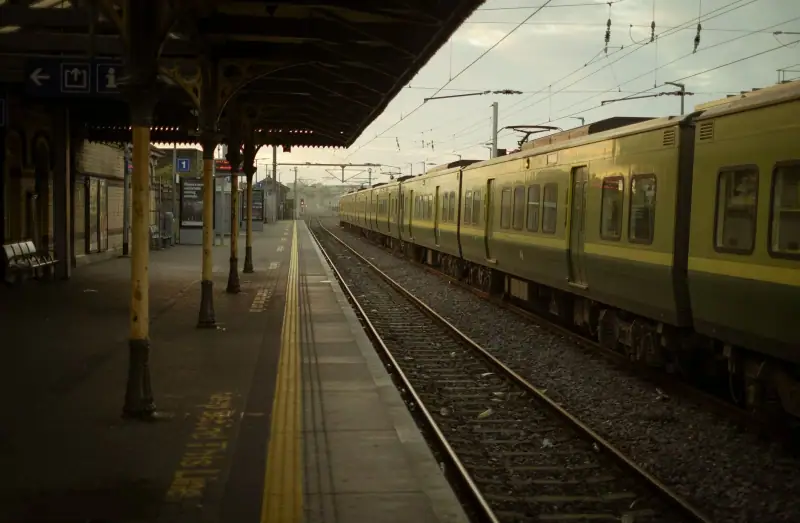
7 days
Ireland in 7 days without a car: a realistic train and bus itinerary
DublinGalwayKillarney

3 days
Visiting Dublin in 3 days: day-by-day itinerary
What to do in Dublin in 3 days? Trinity College, Guinness Storehouse, Kilmainham Gaol, Temple Bar and a trip to Howth: a walking itinerary with tips.