Things to do
Aran Islands: visiting Inis Mór by bike from Galway
We may earn a commission when you book through links on this page, at no extra cost to you. We don't visit or try the places we cover: we summarize published sources. How we work
In short
- Reach Inis Mór by ferry from Rossaveal (about an hour west of Galway by road) or from Doolin; book early for summer weekends and keep a margin for sea conditions.
- Rent a bike at Kilronan, the main village. The island is small and the roads are gentle; the main obstacle is wind.
- Dún Aonghasa is a prehistoric stone fort on a cliff edge with no barrier along the whole site: stay back from the edge.
- A day is short and the return ferry sets your schedule; a night on the island lets you enjoy it once the groups have left.
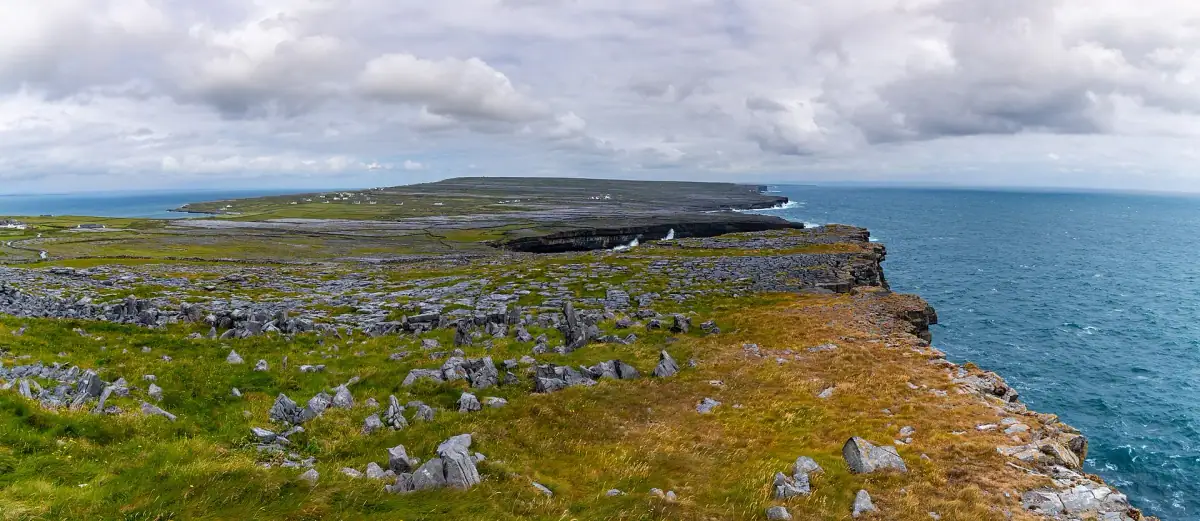
Off Galway Bay, three islands of gray limestone rise from the Atlantic: Inis Mór, Inis Meáin and Inis Oírr. These are the Aran Islands, a setting of dry-stone walls, tiny fields, wind-battered cliffs and villages where Irish is still alive. The largest, Inis Mór, is also the most visited, and cycling is the most pleasant way to discover it.
This guide explains how to get there from Galway, how to organize a day or a night, which sights to see and how to avoid the classic mistakes: a ferry schedule that is too tight, underestimated wind, unsuitable clothing.
The Aran Islands in brief
The archipelago has three main islands, lined up from northwest to southeast at the mouth of Galway Bay. Inis Mór (the “big island”) is the largest and best equipped: villages, shops, bike rentals and historic sites. Inis Meáin, in the middle, is the quietest and wildest. Inis Oírr, the smallest and closest to the County Clare coast, is easy to cover on foot.
The landscape is an extension of the Burren, the karst plateau of County Clare that you can discover in our guide to the Cliffs of Moher and the Burren. Limestone rock outcrops everywhere, and over the centuries the inhabitants built a maze of walls to mark out tiny plots. Seen from the air or from a path, the result is striking.
The islands are part of the Gaeltacht: Irish is in common daily use there, which adds to the feeling of traveling back in time. Signs are often bilingual and the welcome very simple. Keep in mind that people come first for the landscape, the light and the silence more than for a long list of monuments.
How to get there from Galway
There is no bridge: the ferry is the only common way in, with a few very short flights for those who prefer to fly. Two departure points are usual.
- From Rossaveal, in Connemara, about an hour by road west of Galway. This is the most practical solution for a full day, the crossing being relatively short. Some companies offer connecting buses from Galway.
- From Doolin, in County Clare, a very practical departure point if you are already in the Cliffs of Moher area. Some crossings pass near the cliffs, which gives a different viewpoint.
Hours and prices depend on the season and the companies: check them when booking rather than relying on an old figure. In summer, book early for the weekend. Off-season, there are fewer departures and the sea can disrupt crossings: a margin day in the plan avoids a lot of trouble.
If you have no car, an organized excursion is a good option, since it includes bus and ferry. If you rent a vehicle, you can leave it in the harbor parking lot: it is useless on the island for most travelers. Our guide on renting a car in Ireland details driving on the left and insurance.
Transfer from Galway, ferry and free time on Inis Mór: compare day excursions and traveler ratings.
Inis Mór by bike: the ideal setup
As soon as you land, you will find several bike rental shops near the quay, at Kilronan, the island’s main village. You can also rent ahead from some providers. In high season, bikes run short by late morning: arrive early and choose one that fits your size, with a lock, a helmet and, if possible, a pannier.
A few organizing tips:
- Check the brakes and tires before leaving, because the roads are sometimes stony.
- Ride on the left, as everywhere in Ireland, and watch for minibuses and horse-drawn traps.
- Start in the direction that suits you with the wind: in a steady wind, it is better to have it at your back on the way home, when you are tired.
- Bring water and food: places to eat are mostly in the villages and near the sights.
- Keep an eye on the time of the last ferry and plan to be back at the quay with a good margin.
If cycling does not appeal, there are alternatives on the spot: a minibus with a local guide, a horse-drawn trap, an electric bike or simple walking for the areas near the village. They let you see the essentials without effort, even if it is less free to adjust your pace.
Dún Aonghasa: the fort at the edge of the void
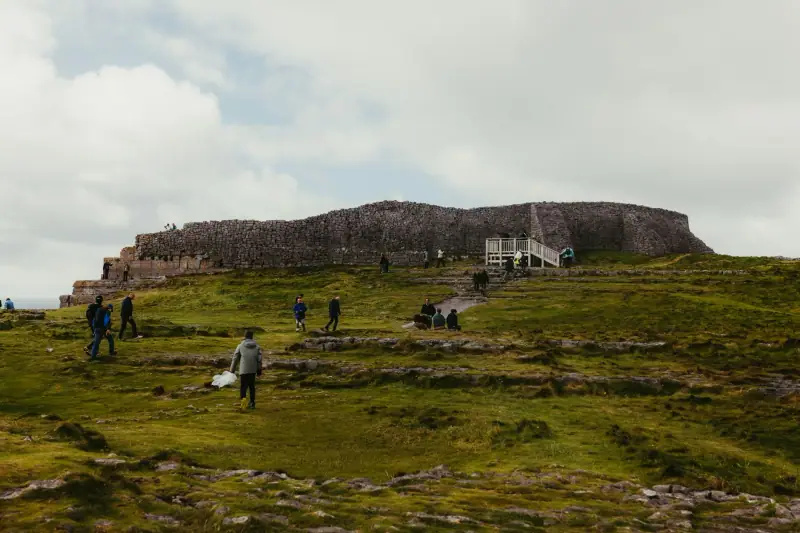
The archipelago’s most famous site is Dún Aonghasa, a prehistoric stone fort standing on a cliff top on the south coast of Inis Mór. Its walls form concentric semicircles that end abruptly at the edge of the void, facing the ocean. The place is impressive and heavily photographed.
Access is from a visitor center, followed by a walking path through a landscape of bare rock. The climb is short, but the ground can be uneven and slippery: good shoes are better than flip-flops. There is an admission fee, with a reduced rate for some groups.
A safety tip: never go near the cliff edge, as there is no barrier along the whole site and the wind can be strong. Keep a reasonable distance and watch children.
To enjoy the place, arrive before the midday groups if possible. The morning and late-afternoon light is also better for photos. Historians place the origin of this kind of fortification in the Bronze or Iron Age, but precise dating remains debated: read the site’s information panels for the latest details.
Villages, beaches and small sights not to miss
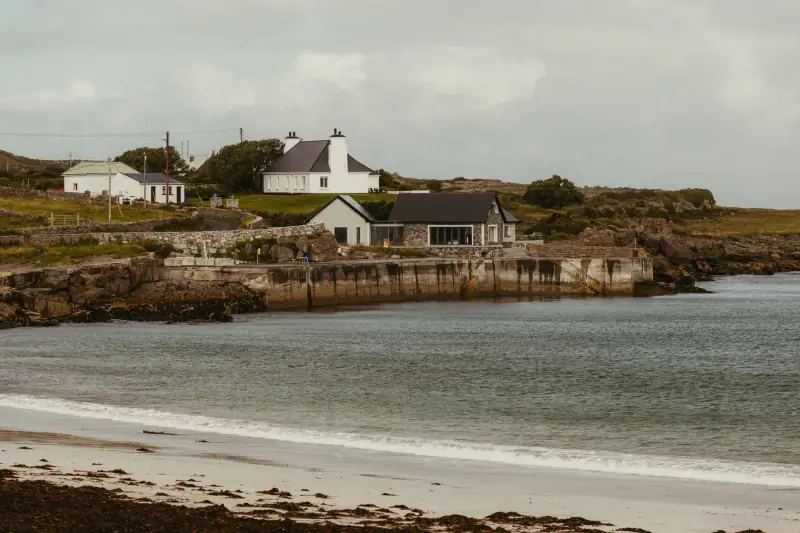
Beyond Dún Aonghasa, the appeal of Inis Mór is to ride slowly and stop often. Here are the useful landmarks.
- Kilronan (Cill Rónáin): the harbor and main village, with wool sweater shops, cafés, pubs and bike rental. It is the starting point for almost all rides.
- The walls and small fields: the whole island is covered with them. Stop to observe the ingenious dry-stone work, which also protects the thin soils from the wind.
- Ruins of churches and early Christian sites: several small stone buildings scattered across the island recall the archipelago’s monastic tradition, mentioned in the historical sources.
- Pale sandy beaches: in good weather they look almost tropical, but the water stays cold and swimming should be done with care.
- Viewpoints on the south coast: the cliffs exposed to the ocean give a foretaste of those in County Clare.
- Seal colonies: you sometimes see them on the coastal rocks, to be watched from afar without disturbing them.
Keep time to do nothing: sitting on a wall, watching the sea and listening to the wind is part of the experience. The Aran Islands are not “done” like a list of monuments, and that is precisely what makes them endearing.
Hotels and B&Bs in Galway, a practical base to reach Rossaveal: compare locations, rates and ratings.
Spending the night on the island
Many visitors make only a day round trip, which leaves little time and a lot of people at the sights. Sleeping on the island changes the experience: you enjoy it after the last ferries leave, with soft light late in the day, a quiet pub and a starry sky when the weather allows.
Accommodation is mostly B&Bs, guesthouses and a few hotels or hostels, concentrated around Kilronan and along the main roads. There are no big chains: places are family-run and capacity is limited, so book very early for summer. Tell your host your arrival time and how you are traveling: some hosts pick travelers up at the quay.
For meals, the cooking is simple and centered on seafood, soup, brown bread and stew. Traditional music sessions are sometimes held in the evening: our article on Irish pubs and traditional music gives keys to enjoying them. Do not expect a wide choice after a certain hour: find out in advance if you have a special diet.
If you stay several days in Galway, our guide on where to stay in Galway helps you choose the neighborhood. To include the islands in a longer circuit, see the Connemara and Galway road trip in 3 days.
When to go and what to expect from the weather
The good season, from late spring to early fall, offers the most crossings, longer days and open services. It is also the busiest period: sights are livelier and accommodation fills up. Spring and early fall are often a good compromise, with fewer people and superb landscapes.
In winter, services shrink, some businesses close and crossings are more often disrupted by the sea. If you come at that time, stay flexible and check the timetables the day before. For an overview of the country’s climate, see our guide on when to go to Ireland.
Whatever the season, the island is exposed to wind and quick showers. Dress in layers, slip a light raincoat in your bag and protect your phone from rain. A day of fine weather can flip in a few minutes, then come back just as fast: that is the charm and the constraint of the Atlantic coast.
Practical tips for the day
- Arrive early at the boarding point and keep your ticket handy.
- Bring cash, because card payment is not guaranteed everywhere on the islands, especially in small shops. Our guide to the budget in Ireland details payment methods.
- Bring a snack and water for the long stretches between two villages.
- Charge your phone and download an offline map, because coverage can vary.
- Respect the walls and properties: they are private and fragile. Close gates and do not climb on the stones.
- Keep a margin for the return: a missed ferry can force you to sleep on the island.
- If you get seasick, ask your doctor or a travel clinic before the crossing, and see the official travel health pages (CDC in the US, TravelHealthPro in the UK), because the Atlantic can be rough.
Finally, think about your health coverage: suitable travel insurance is useful for any stay abroad.
Combine the Aran Islands with a guided day in County Clare: compare packages and ratings.
A sample day
For a day from Galway, here is a realistic sequence, to adapt to the season’s timetables:
- Morning: leave Galway by bus or car for Rossaveal, then take the ferry to Inis Mór.
- Late morning: rent bikes at Kilronan, a short coffee break, then head to the south coast.
- Midday: visit Dún Aonghasa, then a picnic or simple meal nearby.
- Afternoon: ride back slowly on the small roads, stopping at beaches, ruins and viewpoints.
- Late afternoon: return the bikes, a last stroll in Kilronan village, then board for the return.
This program is full but doable for an ordinary cyclist. If you want to do less, limit yourself to Dún Aonghasa and the village: it is better to see less and enjoy it than to rush all day.
Mistakes to avoid
Pitfall number one is underestimating the weather: a cool, windy day on a bike without a jacket quickly becomes unpleasant. The second is trying to see everything: the island is not huge, but it is savored better without a watch. The third is booking accommodation or the ferry late in summer. Finally, do not leave your belongings unattended on the quay or near the bikes: it is not a particularly risky place, but the usual caution applies.
The Aran Islands reward patient travelers. With a good bike, a jacket and a little margin in the schedule, the day becomes one of the finest memories of a stay on the west coast.
Frequently asked questions
How do you get to the Aran Islands from Galway?
You take a ferry from Rossaveal harbor, about an hour by road west of Galway, or from Doolin in County Clare. Organized excursions often include the bus transfer from Galway. Check the season's timetables with the companies, as they vary.
Is a day enough to visit Inis Mór?
Yes for the main sights: the Dún Aonghasa fort, the villages and a few viewpoints by bike. But the day is short and the return ferry sets a schedule. A night on the island lets you enjoy it once the groups have left.
Do you need to be athletic to cycle Inis Mór?
No. The island is small and the roads are mostly gentle, with a few hills. The main obstacle is the wind, sometimes strong. An electric bike is an option if you tire easily; otherwise minibuses and horse-drawn traps exist.
Do you need to book the ferry in advance?
It is advised in summer, on weekends and during holidays, because crossings can be full. Off-season, timetables are reduced and the weather can cancel them: keep some margin in your plan.
Is Irish spoken on the Aran Islands?
Yes, the Aran Islands are part of the Gaeltacht, the regions where Irish remains an everyday language. You will still be understood in English everywhere, and a simple "dia dhuit" (hello) is always well received.
What should you pack for the day?
A waterproof, windproof jacket, comfortable closed shoes, water, food, sunscreen and a little cash just in case. Atlantic weather changes fast: dress in layers.
More Ireland guides
Keep reading
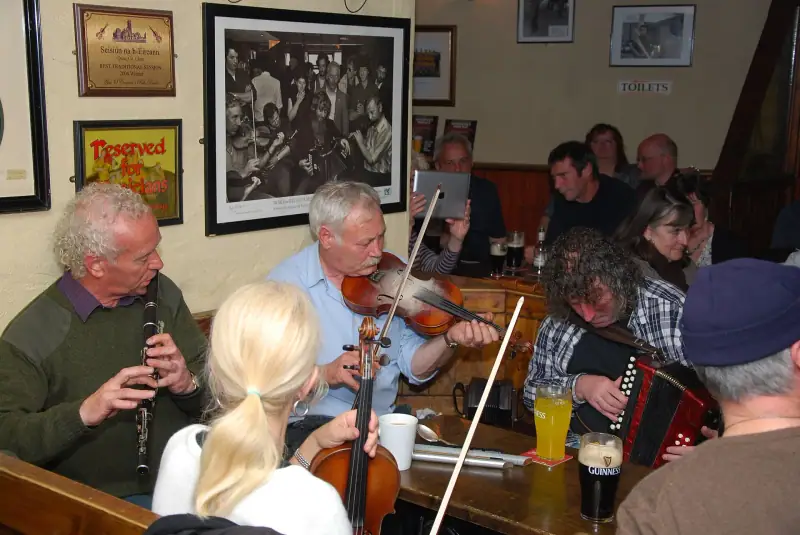
Irish pubs and traditional music: sessions, etiquette and tips
How to enjoy a real pub night in Ireland: trad music sessions, round etiquette, instruments, best towns and mistakes visitors should avoid.
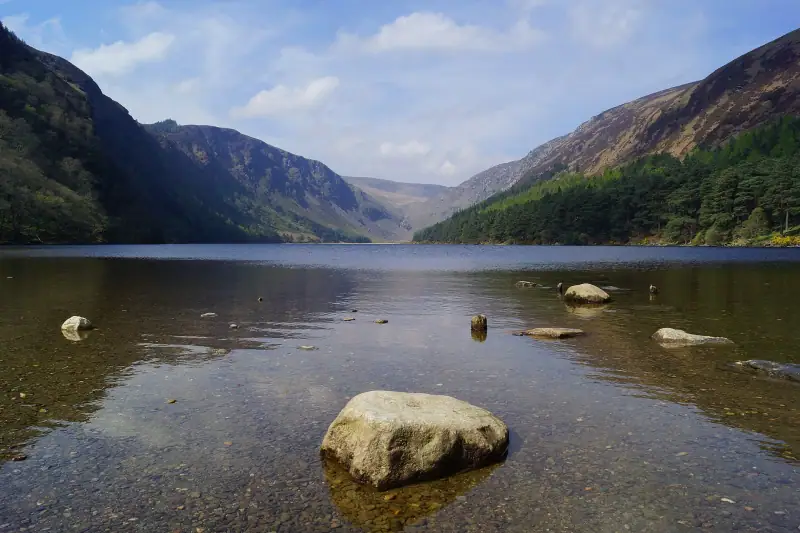
Glendalough and the Wicklow Mountains: a day trip from Dublin
How to visit Glendalough and the Wicklow Mountains from Dublin: monastery, lakes, hikes, Powerscourt, access by bus or car and practical tips.
Budget for a trip to Ireland: real costs and 3 priced profiles
What budget to plan for Ireland? Real costs by category (lodging, transport, meals, activities), three priced profiles and tips to spend less.
Ready-made
Ireland itineraries
4 days
Kerry and Dingle road trip in 4 days: complete itinerary
KillarneyDingle
7 days
Ireland in 7 days without a car: a realistic train and bus itinerary
DublinGalwayKillarney
3 days
Visiting Dublin in 3 days: day-by-day itinerary
What to do in Dublin in 3 days? Trinity College, Guinness Storehouse, Kilmainham Gaol, Temple Bar and a trip to Howth: a walking itinerary with tips.