Itineraries
Yogyakarta to Bali Without a Car: Bromo, Ijen and the Ferry in 6 Days
We may earn a commission when you book through links on this page, at no extra cost to you. We don't visit or try the places we cover: we summarize published sources. How we work
Day by day
- Day 1Yogyakarta: sightseeing, Borobudur and Prambanan
- Day 2Train to Probolinggo, transfer to the Bromo area
- Day 3Bromo sunrise, then to Banyuwangi by train or transfer
- Day 4Ijen night walk, rest in Banyuwangi
- Day 5Ketapang-Gilimanuk ferry, road to Ubud or south Bali
- Day 6Rest day in Bali
Weather through the year on this route
| Jan | Feb | Mar | Apr | May | Jun | Jul | Aug | Sep | Oct | Nov | Dec | |
|---|---|---|---|---|---|---|---|---|---|---|---|---|
| High °F (°C) | 8228 | 8228 | 8228 | 8329 | 8228 | 8127 | 8027 | 8027 | 8127 | 8329 | 8429 | 8329 |
| Low °F (°C) | 7826 | 7826 | 7826 | 7926 | 7725 | 7625 | 7424 | 7323 | 7424 | 7625 | 7826 | 7826 |
| Rain in (mm) | 11.9305 | 9.5245 | 7.3185 | 5.0130 | 2.975 | 1.745 | 1.335 | 0.820 | 1.335 | 2.770 | 5.2135 | 9.5245 |
Normals 1991–2020 at Uluwatu and Canggu: averages over 30 years, not a forecast. Source: NASA POWER (MERRA-2), grid of about 50 km. Figures computed by us in November 2026.
In short
- The route chains a train to Probolinggo (about 430 km / 267 mi, 7 to 9 hours), a jeep tour to Bromo, a train to Banyuwangi, the Ijen night walk and the Ketapang-Gilimanuk ferry.
- The total is roughly 750 to 800 km (466 to 497 mi) from Yogyakarta to Bali's south coast; allow at least 5 to 6 days rather than traveling nonstop.
- The ferry crossing takes about 45 minutes to 1 hour; from Gilimanuk to Ubud or the south coast, allow about 3 to 4 hours.
- Bromo and Ijen are reached at night: most travelers without a car take a jeep tour for Bromo and a guided round-trip transfer for Ijen.
Linking Yogyakarta to Bali without renting a car is one of the most popular routes among travelers in Indonesia, and it is entirely doable: a chain of trains, short transfers and a ferry is enough. The real question is pace. On the map, Java from east to west looks like a simple line; in practice, every stage means several hours of transport. This guide offers a realistic 6-day itinerary, with approximate distances, travel times to plan for and common mistakes.
The durations and distances below are orders of magnitude: train schedules change from one season to the next, and traffic can lengthen road transfers. Always check schedules before booking.
The route at a glance
| Stage | Trip | Approx. distance | Approx. duration |
|---|---|---|---|
| Day 1 | Yogyakarta, local sightseeing | - | - |
| Day 2 | Yogyakarta → Probolinggo (train) then Bromo | 430 km (267 mi) + transfer | 7 to 9 h + 2 h |
| Day 3 | Bromo sunrise, then road to Banyuwangi | 200 to 230 km (125 to 143 mi) | 4 to 5 h |
| Day 4 | Ijen at night, rest in Banyuwangi | - | night walk |
| Day 5 | Ketapang → Gilimanuk (ferry) then southern Bali | about 140 km (87 mi) by road | 1 h + 3 to 4 h |
| Day 6 | Relaxing in Bali | - | - |
The total reaches about 750 to 800 km (466 to 497 mi) from Yogyakarta to Bali’s south coast. It is doable in one very long day for a traveler in a hurry, but it is neither pleasant nor useful: the two volcanoes are precisely there to break up the road.
Day 1: Yogyakarta, the cultural base
Spend at least one full day in Yogyakarta before heading east. Borobudur and Prambanan can each be visited in half a day from the city, and the kraton district, the sultan’s palace, can be explored on foot or by becak. Our article on Yogyakarta, Borobudur and Prambanan details how to organize these visits.
Sleep near Tugu station if your train the next day leaves early: Malioboro and Sosrowijayan are a few minutes’ walk away. You will find neighborhoods and places in our guide to where to stay in Yogyakarta.
🏨 Accommodation in Yogyakarta
Compare hotels and guesthouses near Tugu station for an early-morning train departure.
Day 2: from Yogyakarta to Probolinggo, then Bromo
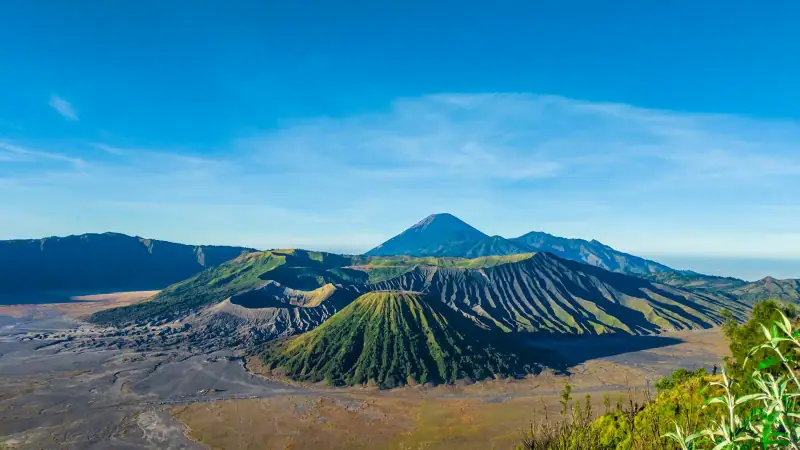
The longest leg of the trip is the train to eastern Java. The classic destination is Probolinggo, the town from which transfers leave for the Tengger massif. Depending on the season’s schedules, a direct service exists; otherwise a change at Surabaya is needed. Plan on about 7 to 9 hours for some 430 km (267 mi): choose a comfortable class (executive or equivalent), because air conditioning and legroom matter over a whole day.
From the station, minibuses and jeeps climb to the villages on the edge of the caldera, generally in about 2 hours. Arrive at the end of the day, eat lightly and go to bed early: the wake-up call is in the middle of the night. Nights are cool at altitude, so bring a fleece.
The schedule trap
The daytime train sometimes arrives only in the late afternoon. If so, plan nothing else that day. A night train or a very early one saves time, but is tiring.
Day 3: sunrise at Bromo, then Banyuwangi
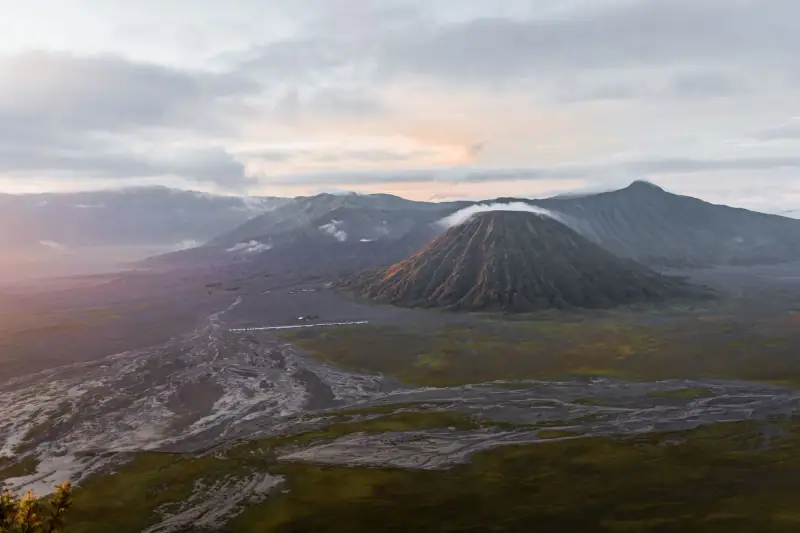
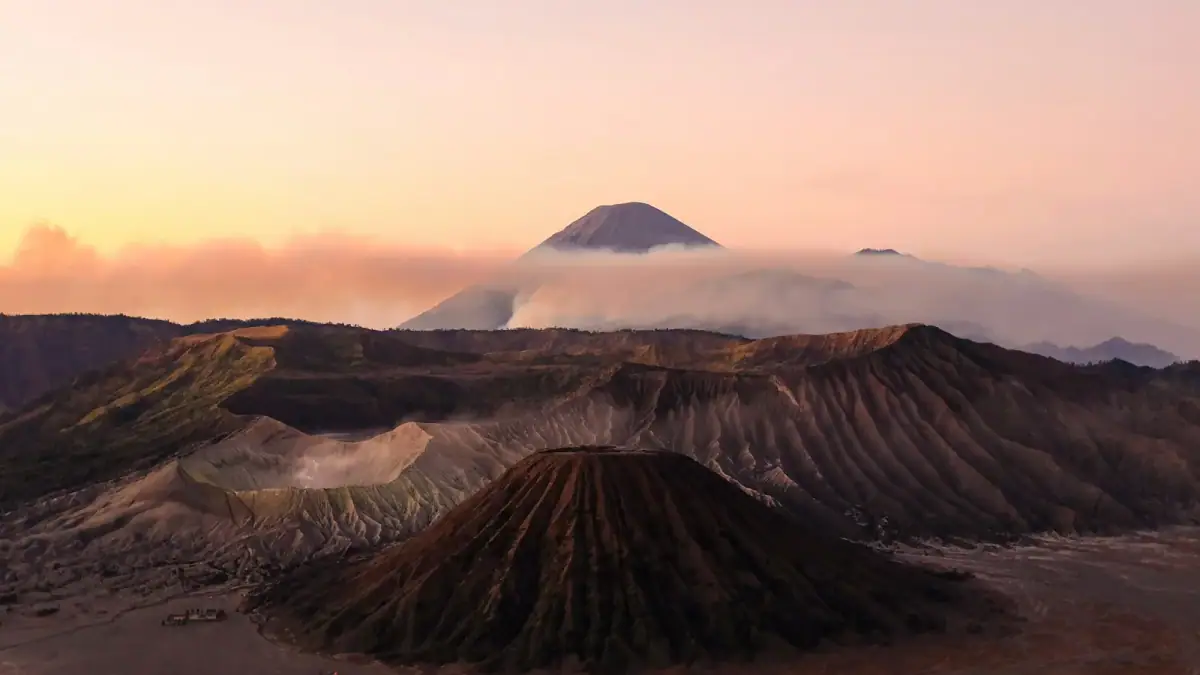
The jeep leaves around 3 am to reach the viewpoint before dawn. The spectacle of the smoking cone in the middle of the sea of sand is detailed in our guide to visiting Bromo and Ijen. Allow the morning for the descent into the caldera and the return to your accommodation.
Then it is on to Banyuwangi, at the far end of eastern Java. Two options:
- Train: from Probolinggo to Banyuwangi, the line follows the coast and then crosses the countryside. Allow about 4 to 5 hours, for 200 to 230 km (125 to 143 mi).
- Private transfer or minibus: more flexible, often offered by Bromo agencies combined with Ijen.
For a trip without a car, the train remains the most predictable option. Check that a departure matches your return time from Bromo, otherwise plan an intermediate night in Probolinggo.
🌋 Bromo and Ijen excursions
Compare guided excursions with transport, handy when you have no vehicle to go up at night.
Day 4: Ijen, the night walk
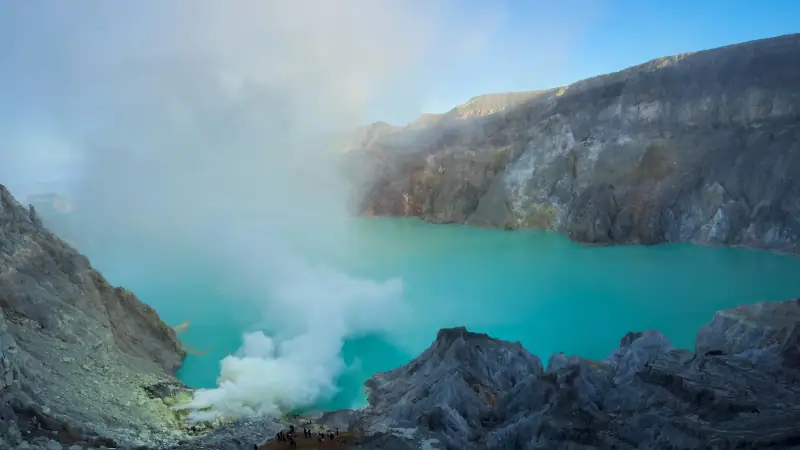
Ijen is visited before dawn: you leave around 1 or 2 am from Banyuwangi or nearby villages, walk about 1 h 30 to 2 h to the crater rim, then descend, wearing a mask, to see the blue flames when they are visible. The turquoise lake is revealed afterward at sunrise. The intensity of the phenomenon varies, so do not rely on seeing it.
Without a car, book a round-trip transfer with a driver for that night: it is the only practical solution, since there is no public transport at those hours. Head back to sleep in Banyuwangi and keep the rest of the day to recover. A local guide is strongly recommended, and anyone with respiratory problems should ask their doctor before going down into the crater.
Day 5: the Ketapang to Gilimanuk ferry and the road to southern Bali
Banyuwangi station is close to the Ketapang ferry terminal, which simplifies the connection. The crossing to Gilimanuk, in western Bali, takes about 45 minutes to 1 hour and runs continuously. The foot-passenger fare is modest; check it at the terminal.
Once in Gilimanuk, there is still road to cover. To Ubud or the south coast, allow about 3 to 4 hours by minibus or by car with a driver, depending on traffic. Shuttles and private transfers are booked in advance; this is the point where a driver by the day or an organized transfer becomes worthwhile. For sleeping and choosing your base, read where to stay in Bali.
🏨 Where to stay in Bali
Compare accommodation in Ubud and on the coast for a first night after the crossing.
Day 6: settling in Bali
End with a day without transport, to wash off the sulfur dust and unpack. After four days of trains, jeeps and short nights, your body will want rest. Depending on your taste, choose rice fields in Ubud, a beach at Uluwatu or a coffee in Canggu. Our 10-day itinerary in Bali gives a logical follow-on if you want to stay longer, and the two-week itinerary through Java, Bali and Lombok extends it to the Gili Islands.
Budget and practical tips
- Train tickets: book in advance in high season. They are bought online from the railway operator, through its app, or at the station.
- Luggage: travel light. Night walks and jeep climbs are not suited to big suitcases.
- Season: the dry season, roughly April to October, offers the clearest skies. See when to go to Indonesia.
- Spending: for price ranges for trains, transfers and entrance fees, see our budget for Indonesia.
- Entering the country: visa and forms are detailed in our entry formalities for Indonesia. Entry rules depend on your passport. Check the official travel advice of your government before you book: travel.state.gov (US), GOV.UK (UK), travel.gc.ca (Canada), Smartraveller (Australia) (checked November 2026).
- Health and insurance: travel insurance with medical cover and repatriation is a useful precaution before a night hike up a volcano.
✈️ Flights to Indonesia
A flight arriving in Yogyakarta and departing from Bali avoids any backtracking: compare the options.
Frequently asked questions
Can you go from Yogyakarta to Bali without a car?
Yes. The classic sequence combines the train to eastern Java, a minibus or jeep transfer to Bromo, then the train to Banyuwangi and the ferry from Ketapang to Gilimanuk. Allow at least 5 to 6 days so you are not traveling continuously.
How long does the Yogyakarta to Bali trip take overland?
Without stops, expect more than a full day of combined transport: about 7 to 9 hours by train to Probolinggo, 4 to 5 hours from Probolinggo to Banyuwangi, then the ferry and the road to southern Bali. That is why it is split into stages around Bromo and Ijen.
Is the Java to Bali ferry reliable?
The Ketapang to Gilimanuk crossing is a heavily used link that runs continuously and takes about 45 minutes to 1 hour. Delays come mostly from waiting to board during holiday periods. Check the schedule and fare at the terminal, as they change.
Do you need to book trains in advance?
Yes, especially for long daytime trips and during school vacations and holidays. Tickets are bought online from the Indonesian railway operator, through its app, or at the station. A ticket bought a few days before departure avoids sell-outs.
Can you do Bromo and Ijen without an organized tour?
It is possible but impractical. Access is at night, the starting villages are far from the stations and public transport is scarce. Most travelers without a car take a jeep tour for Bromo and a guided transfer for Ijen.
Is it better to travel from Yogyakarta to Bali or the other way around?
Both work. Going from Yogyakarta to Bali lets you finish on beaches and rest. In the other direction, you start with relaxation and end with Javanese culture. Choose according to your arrival and departure flights.
Can you add the Gili Islands to this route?
Yes, from Bali's east coast, fast boats reach the Gilis. This adds at least two days. For a fuller trip, see our two-week itinerary through Java, Bali and Lombok.
More Indonesia guides
Keep reading
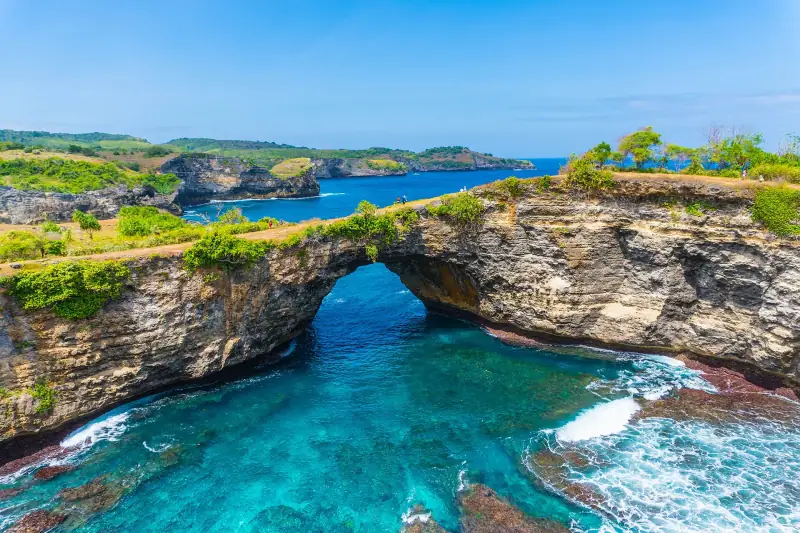
Nusa Penida in One Day from Bali: Boat, Scooter or Organized Tour?
Nusa Penida in one day from Bali: fast boat from Sanur, scooter or driver, west or east circuit, schedules, prices and mistakes to avoid.
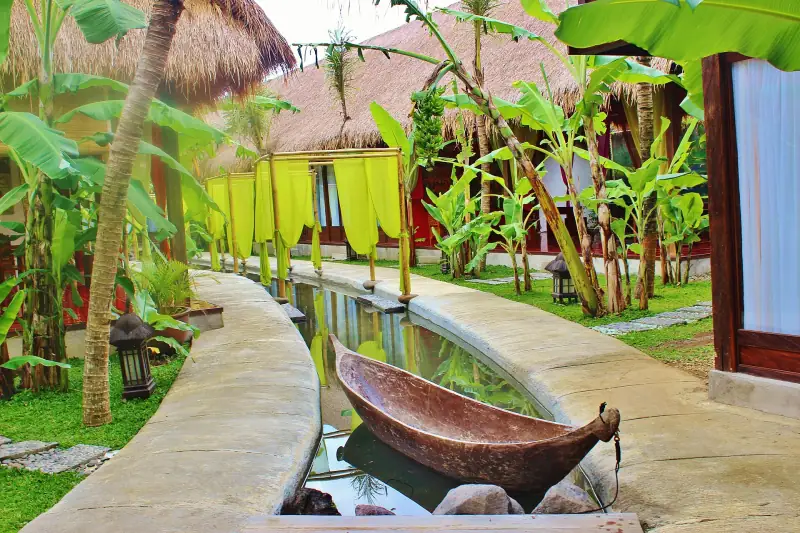
Where to Stay in Bali: Ubud, Seminyak, Canggu or Uluwatu, Which Area to Choose?
Ubud, Seminyak, Canggu, Sanur, Uluwatu: a comparison of where to stay in Bali for culture, beaches, surf or family trips, with tips for choosing well.
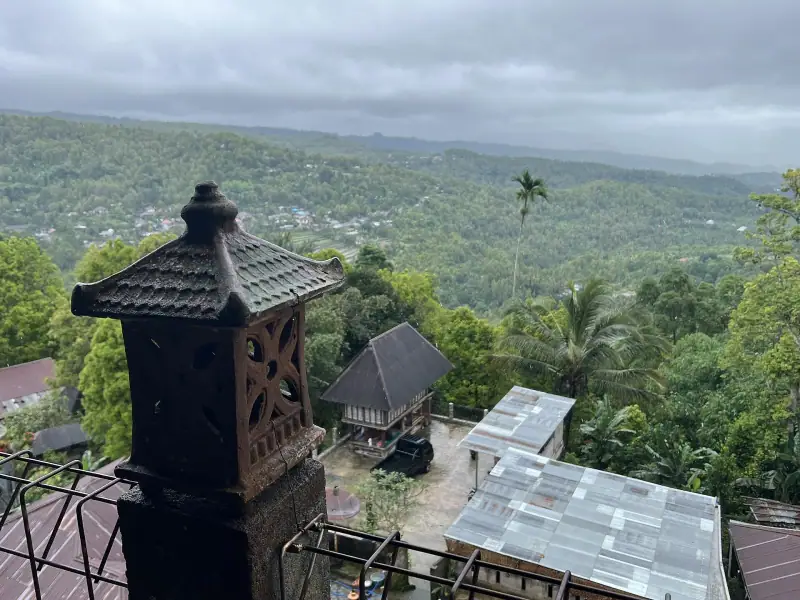
Munduk, Bali: Waterfalls, Lakes and Mountain Coffee, Is It Worth the Detour?
Munduk, a mountain village in northern Bali: waterfalls, twin lakes, drive time from Ubud, ideal length of stay, budget and tips for getting there.
Ready-made
Indonesia itineraries
10 days
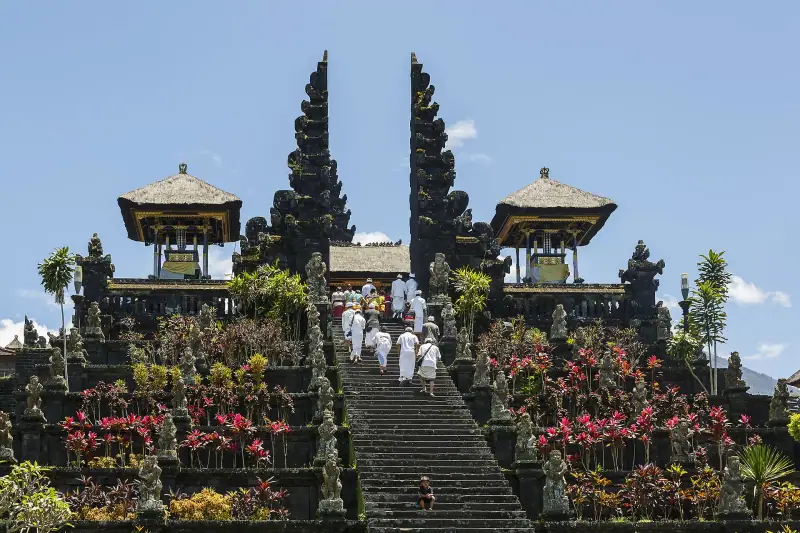
10 Days in Bali: Ubud, the North, the East and the South Coast Day by Day
Bali in 10 days: a detailed itinerary through Ubud, the rice terraces, the north, the east coast, Nusa Penida and the south. Stops, drive times and tips.
8 days
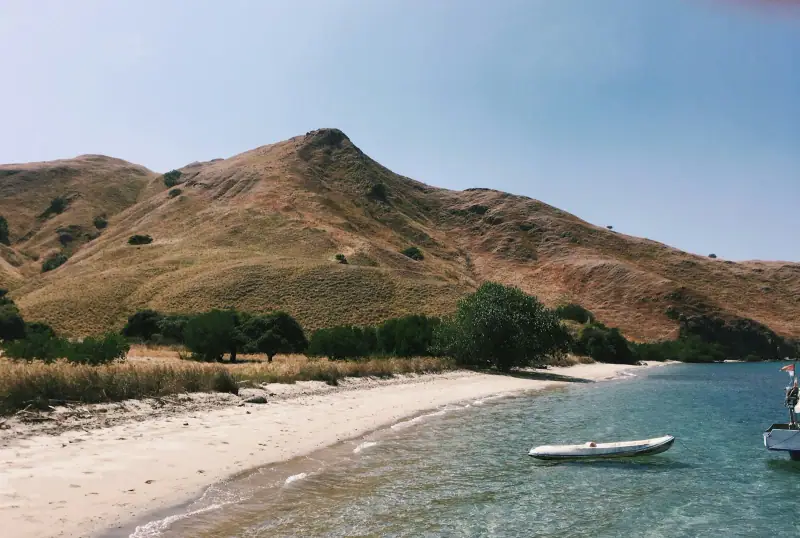
Flores Itinerary: From Labuan Bajo to Kelimutu Volcano in 8 Days
Flores in 8 days: Labuan Bajo, Komodo, spiderweb rice fields, Ruteng, Bajawa, Ende and the Kelimutu lakes. Stops, drive times, pace and tips.
15 days
2 Weeks in Indonesia: Java, Bali and Lombok Day by Day
A 15-day Indonesia itinerary: Yogyakarta, Borobudur, Bromo, Ijen, Ubud and the Gili Islands. Stops, transfers, pace and mistakes to avoid.