Plan your trip
Indonesia Trip Budget: Real Costs, 3 Budget Profiles and Money-Saving Tips

We may earn a commission when you book through links on this page, at no extra cost to you. We don't visit or try the places we cover: we summarize published sources. How we work
In short
- Daily budgets per person, excluding the international flight: about €20 to €40 ($23 to $46) backpacker, €55 to €90 ($64 to $104) comfort, €150 ($175) and up premium.
- Lodging usually takes a third to a half of the in-country budget; Java and Lombok are very affordable, while the tourist areas of Bali, Komodo and Raja Ampat cost much more.
- Bali charges a tourist levy of 150,000 IDR (about €7 / $8) per person (as of October 2026); the rainy season, May, June and September lower rates.
- Warungs and markets expect cash; a warung meal costs about 30,000 to 60,000 IDR, and alcohol is far pricier than food.
Indonesia has a reputation as a cheap destination, and that is partly true: a meal in a small local restaurant costs a few euros, and so does a simple room. But the archipelago spans thousands of kilometers, and the budget for a stay depends more on your choice of islands, domestic flights and excursions than on the price of fried rice. A trip centered on Java and Lombok has almost nothing in common with a cruise in Komodo or a diving stay in Raja Ampat.
This article details real costs item by item, offers three daily budgets with figures and ends with concrete tips for spending less. To build your itinerary, rely on our complete guide to visiting Indonesia.
Exchange benchmarks and the calculation method
The currency is the Indonesian rupiah (IDR), whose amounts look dizzying. At the rate noted in summer 2026, one euro was worth about 20,500 rupiah. This article therefore rounds to 100,000 IDR ≈ €5 (about $6). The rate moves from month to month: redo the calculation when you leave.
The prices quoted come from sources published in 2026: the official immigration portal, boat operators, train and site ticketing, budget guides. When a source gives only a range, it is reproduced as is. Prices in the archipelago change often, particularly park entry fees, and the figures in this article should be taken as orders of magnitude to verify.
A note on method: the daily budgets below are per person, excluding the international flight and excluding travel insurance. They assume two travelers share a room in the comfort and premium profiles, which halves the lodging cost.
Before you go: flight, entry rules and the Bali levy
The first item in the budget is not on site. The international flight is generally the largest amount of a stay in Indonesia, and it fluctuates a lot with the season: July, August and the end-of-year holidays are the most expensive, May, June, September and the rainy season the cheapest. There is no reliable fixed price: compare several dates and accept a stopover, often cheaper than a direct flight when one exists.
Entry rules, visa type and fees depend on your passport. Check the official travel advice of your government before you book: travel.state.gov (US), GOV.UK (UK), travel.gc.ca (Canada), Smartraveller (Australia) (checked November 2026).
One more mandatory fee applies to Bali:
- Bali’s tourist levy: 150,000 IDR (about €7 / $8) per person, to be paid online before the trip or on arrival, with a QR code as proof of payment (as of October 2026).
Keep some room in your budget for insurance and for health preparations, whose amounts depend on your profile: ask your doctor or a travel clinic, and see the official travel health pages (CDC in the US, TravelHealthPro in the UK).
✈️ Compare flights to Indonesia
The flight is the most variable item in the budget: compare dates and airlines for Bali, Jakarta or Yogyakarta before fixing the rest of the trip.
Lodging: from Yogyakarta to Bali, the heaviest item
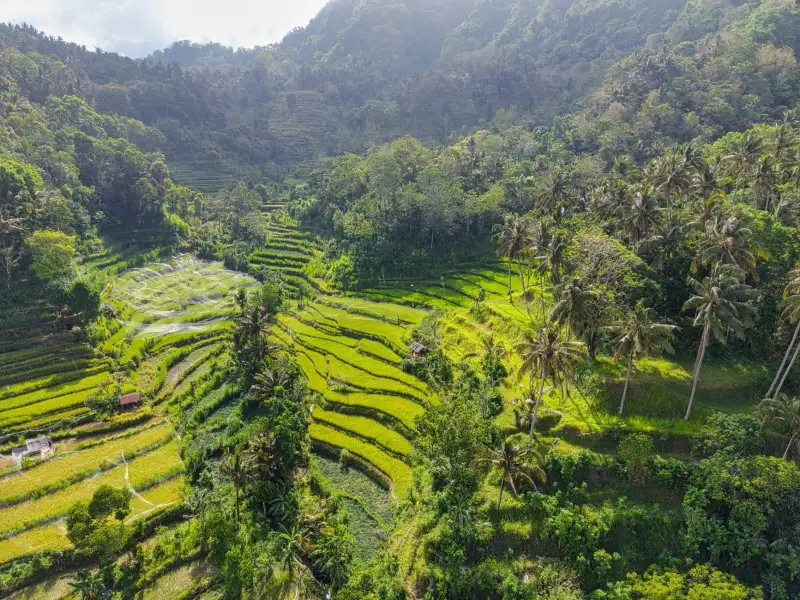
Lodging generally weighs between a third and a half of the in-country budget. The following ranges, taken from several 2026 budget guides, give an idea of reality:
- Hostel dorm: about $5 to $15 a night, sometimes less outside the most touristy areas;
- Comfortable room with air conditioning, Wi-Fi and breakfast: about 500,000 to 1,000,000 IDR (about €25 to €50 / $29 to $58) a night;
- Mid-range hotel or boutique hotel with a pool: about $30 to $70 a night;
- Villas and resorts: from these amounts up, the bill soars, especially in Bali in high season.
The gaps between islands are considerable. In Java, notably in Yogyakarta, you find many clean, simple rooms for very little. In Bali, the same quality costs more in Seminyak or Canggu than in Ubud or the surrounding villages. In the Gili Islands and Komodo, lodging is often pricier than its comfort suggests, because everything is brought in by boat. The breakdown by area is in our comparison of where to stay in Bali.
🏨 Compare accommodation in Bali
Filter by price and area to find a room that fits your budget, from simple guesthouses to hotels with pools.
Transport: scooter in Bali, train in Java and boat to the Gilis
Transport is the item most often underestimated, because distances are large and the islands are linked by air or sea.
Scooter in Bali. Rental runs around 50,000 to 150,000 IDR a day (about €3 to €7 / $3 to $8), depending on the model and the length. It is the cheapest way to get around, but traffic is heavy and your travel insurance must cover riding a two-wheeler. For a day of sightseeing, a private driver is safer and remains reasonable, especially when the cost is shared among several people.
Train in Java. The rail network is one of the best ways to cross the island. In 2026, an executive-class Taksaka ticket between Jakarta (Gambir) and Yogyakarta is listed around 680,000 IDR (about €33 / $38), and a Yogyakarta to Surabaya trip on the executive Sancaka around 350,000 IDR (about €17 / $20). Prices vary by train, class and date, and seats go fast over holiday periods.
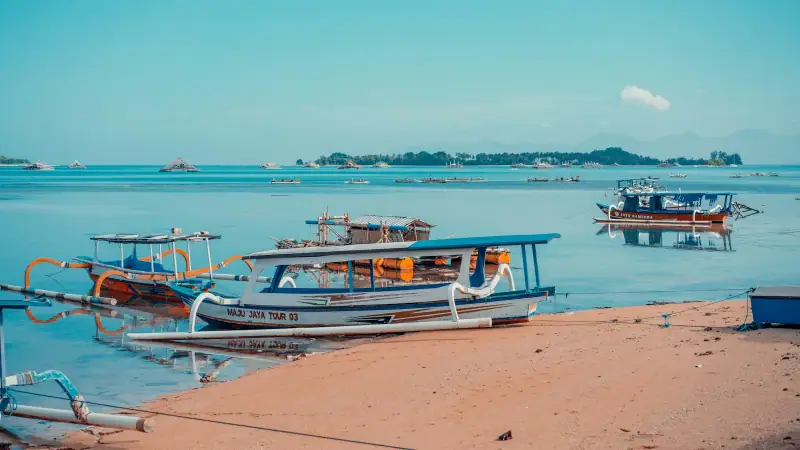
Fast boat to the Gilis. From Padang Bai, expect to pay 350,000 to 700,000 IDR one way (about €17 to €34 / $20 to $39) depending on the operator, the season and the transfers included. The trip takes about 1 h 30 to 2 h. Our article on Lombok and the Gili Islands details the alternatives.
Domestic flights. To reach Labuan Bajo, Sorong or Raja Ampat, flying is almost mandatory. Fares vary too much for a single figure to be useful: book early, check the baggage included and keep a margin in the schedule. Raja Ampat also combines flights, boat transfers and remote lodging, which makes it the most expensive destination in the archipelago, as our article on Raja Ampat shows.
For trips by car with a driver or a rental, always compare the total price with fuel, parking and insurance costs before choosing.
Meals: eating local or Western style
This is the item where Indonesia is most generous. In a warung, the small family restaurant, a full meal costs about 30,000 to 60,000 IDR (about €1.50 to €3 / $2 to $3.50): nasi goreng, mie goreng, fried chicken, rice with vegetables and sambal. A plate of rendang or nasi goreng can sometimes be found between $0.80 and $2.50 in the simplest places.
Restaurants in tourist areas, notably in Seminyak, Canggu or the Gilis, show prices comparable to Western ones for an international dish, with an alcoholic drink that quickly raises the bill: alcohol is heavily taxed in Indonesia and much more expensive than food. As a guide:
- Breakfast in a Western cafe: one to a few euros more than a local breakfast;
- Meal in a warung: €1.50 to €3 (~$2 to $3.50);
- Meal in a mid-range restaurant: about €6 to €12 (~$7 to $14), excluding drinks;
- Beer or cocktail in a tourist area: a separate budget, often several euros per glass.
Our article on dishes to try in Indonesia helps you choose what to order to eat well without blowing the budget. As a rule, small places full of local customers are both the best and the cheapest.
Site entry fees: Borobudur, Bromo and Komodo

Entry fees at the major sites have risen, and foreigners pay a different rate from Indonesians. Here are some benchmarks noted in 2026:
- Borobudur: about $25 for a foreign visitor at the base rate, according to several sources, with quota and pricing rules that change;
- Prambanan: about 375,000 IDR (about €18 / $21) for a foreign adult, and a combined ticket with Borobudur around 575,000 IDR (about €28 / $32);
- Bromo: about 220,000 IDR on weekdays (about €11 / $13) and 320,000 IDR on weekends or holidays (about €16 / $19) for a foreigner;
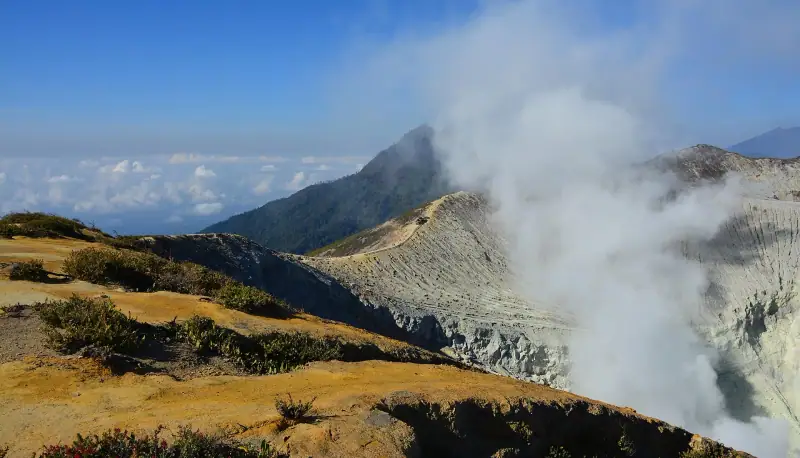
- Ijen: about 100,000 IDR on weekdays (about €5 / $6) and 150,000 IDR on weekends (about €7 / $8);
- Komodo: the park charges a daily entry fee depending on the day of the week, to which conservation and port fees are added; the total comes to several hundred thousand rupiah per person per day, and a daily visitor quota has been applied since April 2026.
These fees come on top of guides, jeeps, boats and meals. A sunrise at Bromo by jeep, for example, costs far more than the entry ticket alone, as our article on Bromo and Ijen explains. Same logic in Komodo: the price of the boat or cruise weighs more than the park entry, detailed in our guide to Komodo National Park.
🚤 Komodo and Labuan Bajo excursions
Compare boat trips for a day or several days: the price depends on length, the boat and whether park entry fees are included.
Three budget profiles with figures
Here are three daily budgets per person, excluding the flight, combining the ranges above. They are estimates compiled from those ranges, cross-checked with the orders of magnitude published by budget guides (about $23 to $40 a day for a frugal traveler, around $64 on average, $195 for luxury): adapt them to the islands.
| Item (per person per day) | Backpacker | Comfort | Premium |
|---|---|---|---|
| Lodging | €5-15 (~$6-17) | €25-45 (~$29-52) | €80+ (~$93+) |
| Meals and drinks | €6-10 (~$7-12) | €15-25 (~$17-29) | €35-60 (~$41-70) |
| Local transport | €3-8 (~$3-9) | €8-15 (~$9-17) | €20-40 (~$23-46) |
| Activities and entry fees | €3-8 (~$3-9) | €10-20 (~$12-23) | €30+ (~$35+) |
| Daily total | about €20-40 (~$23-46) | about €55-90 (~$64-104) | €150+ (~$175+) |
The backpacker profile sleeps in a dorm or simple room, eats almost always in warungs, rents a scooter or takes public transport and does only one or two paid excursions a week. It gets by easily in Java and Lombok, and stays tight in Bali or Komodo.
The comfort profile, the most common among travelers, shares a room with air conditioning and a pool, alternates warungs and good restaurants, takes a driver on some days and treats itself to excursions such as a volcano sunrise or a snorkeling outing.
The premium profile stays in a villa or resort, takes private guides and more flexible domestic flights, and spends part of the stay in expensive areas such as Raja Ampat.
Example over 15 days. For a circuit like our 2-week itinerary through Java, Bali and Lombok, the in-country budget is about €300 to €600 ($350 to $700) per person for a backpacker, €800 to €1,350 ($930 to $1,565) for comfort and at least €2,250 ($2,610) for premium, to which are added the international flight, and domestic flights or trains not included in the “transport” line. Season matters: compare with our article on the best time to go.
Nine tips for spending less
- Travel outside high season. May, June, September and the rainy season lower lodging rates, except at Christmas and New Year;
- Eat where Indonesians eat. A warung full at noon is a reliable sign of fair prices and fresh food;
- Favor the train in Java. It is more comfortable and often cheaper than flying between large cities, as long as you book early;
- Share costs. Driver, jeep at Bromo, boat in Komodo: the cost is divided by the number of travelers;
- Avoid weekends and public holidays in the parks, where entry fees are higher;
- Negotiate, politely. In markets and with street drivers, the first price is rarely the last. In hotels and restaurants, prices are fixed;
- Limit alcohol. It costs far more than food;
- Compare exchange commissions. Withdraw larger sums at once to limit your bank’s fixed fees, but never more than you can keep safe;
- Book outings in advance. Popular excursions fill up, and last-minute prices are rarely lower.
Hidden costs to anticipate
A few unplanned expenses often make a trip’s budget drift:
- A SIM card or eSIM, essential for transport and map apps, is a modest amount compared with its usefulness; also check your carrier’s international plan;
- Tips and small notes: porter, guide or driver services often expect a small gesture;
- Baggage fees on domestic flights, which can double the price of a cheap ticket;
- Insurance: serious cover, including repatriation and diving or scooter if needed, is a real item, but far less costly than a medical evacuation;
- Canceled or delayed crossings, which force an extra hotel night: keep a margin of a few days and a few tens of dollars.
🍳 Cooking classes in Bali
A cooking class or guided market visit lets you learn local recipes at an often reasonable price: compare the packages available.
Frequently asked questions about the budget in Indonesia
Answers to the most common questions are in the FAQ below. Remember the essentials: count about €20 to €40 ($23 to $46) a day as a backpacker, €55 to €90 ($64 to $104) for comfort, €150 ($175) or more for premium, excluding the international flight. The biggest levers for saving are the season, lodging and the choice of islands. Keep a margin of 10 to 15% for the unexpected and check all official rates, visa and site entries first, before you leave.
Sources
- Love Bali (Bali Provincial Government): figures checked November 2026
Frequently asked questions
What daily budget should you plan for Indonesia?
Cross-checked estimates range from about €20 to €40 ($23 to $46) a day in backpacker mode (dorms or simple rooms, warung meals, scooter) to €55 to €90 ($64 to $104) per person for comfort (hotel with a pool, good restaurants, a few excursions), and more than €150 ($175) for high-end. These figures exclude the international flight and vary widely by island.
Is Indonesia expensive compared with Thailand or Vietnam?
It is in the same price range, with big internal gaps. Java and Lombok are very affordable, while the tourist areas of Bali, Komodo and Raja Ampat cost much more, mainly because of remote lodging, cruises and park entry fees.
What mandatory fees should you plan for on arrival?
Entry rules, visa type and fees depend on your passport and change over time: check the official travel advice of your government and the Indonesian government's official sites before you leave. For Bali, a tourist levy of 150,000 IDR (about €7 / $8) per person is added (as of October 2026).
Can you pay by credit card in Indonesia?
Yes in hotels, shopping centers and tourist restaurants, but warungs, markets, drivers and scooter renters expect cash. Withdraw money at bank ATMs, compare your bank's fees and always keep small notes.
When should you travel to pay less?
The rainy season (roughly November to March) lowers lodging rates and crowds, except at Christmas and New Year. May, June and September also offer a good compromise between weather and price, away from the July-August peak.
Should you exchange money before leaving?
It is not necessary. Currency can be exchanged in Indonesia, but very advantageous street changers are often scams. Favor the ATMs of major banks, or an official exchange office that clearly displays its rates, and count your notes in front of the counter.
More Indonesia guides
Keep reading
When to Go to Indonesia: Seasons, Weather and the Best Time for Each Island
Dry season or rainy season? Bali, Java, Lombok, Komodo, Sulawesi and Raja Ampat do not share the same calendar: how to choose the right time for your trip.
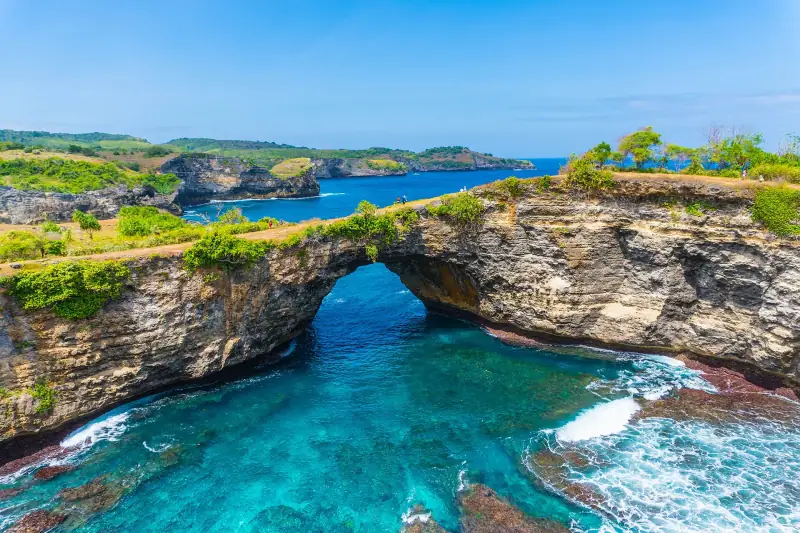
Nusa Penida in One Day from Bali: Boat, Scooter or Organized Tour?
Nusa Penida in one day from Bali: fast boat from Sanur, scooter or driver, west or east circuit, schedules, prices and mistakes to avoid.
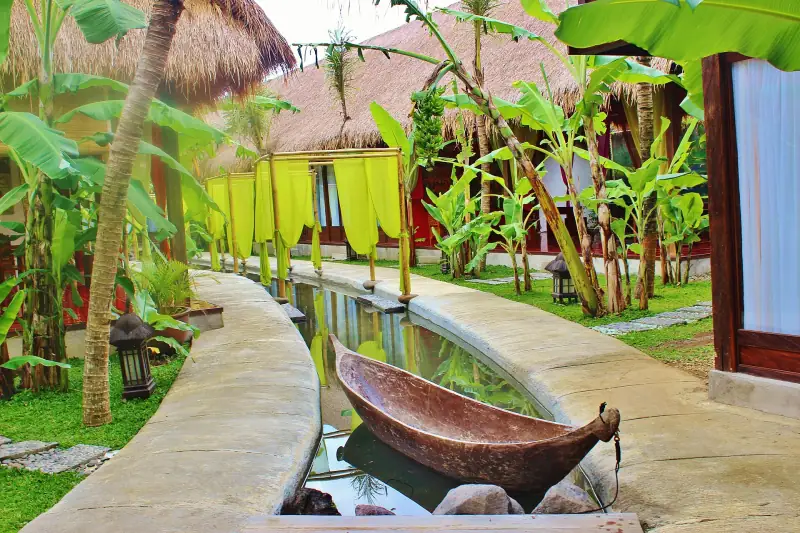
Where to Stay in Bali: Ubud, Seminyak, Canggu or Uluwatu, Which Area to Choose?
Ubud, Seminyak, Canggu, Sanur, Uluwatu: a comparison of where to stay in Bali for culture, beaches, surf or family trips, with tips for choosing well.
Ready-made
Indonesia itineraries
10 days
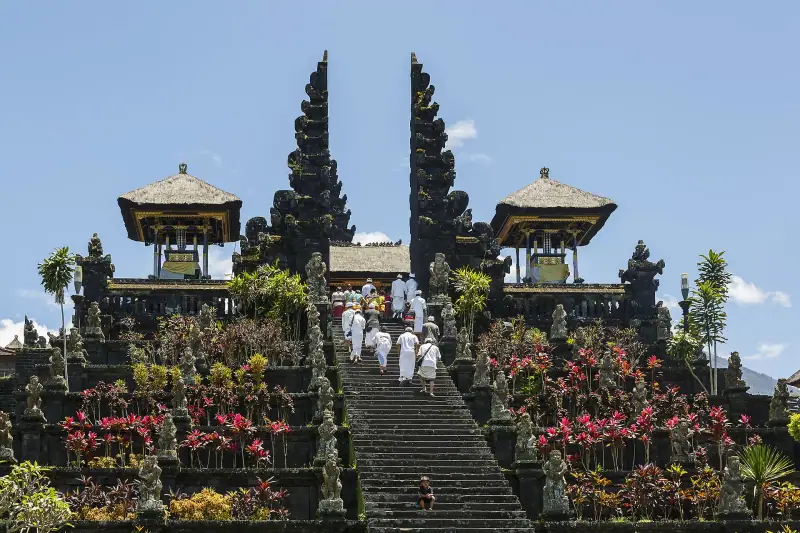
10 Days in Bali: Ubud, the North, the East and the South Coast Day by Day
Bali in 10 days: a detailed itinerary through Ubud, the rice terraces, the north, the east coast, Nusa Penida and the south. Stops, drive times and tips.

6 days
Yogyakarta to Bali Without a Car: Bromo, Ijen and the Ferry in 6 Days
Yogyakarta, Bromo, Ijen then Bali by train, minibus and ferry: stages, distances, realistic travel times and pitfalls to avoid on this car-free route.
8 days
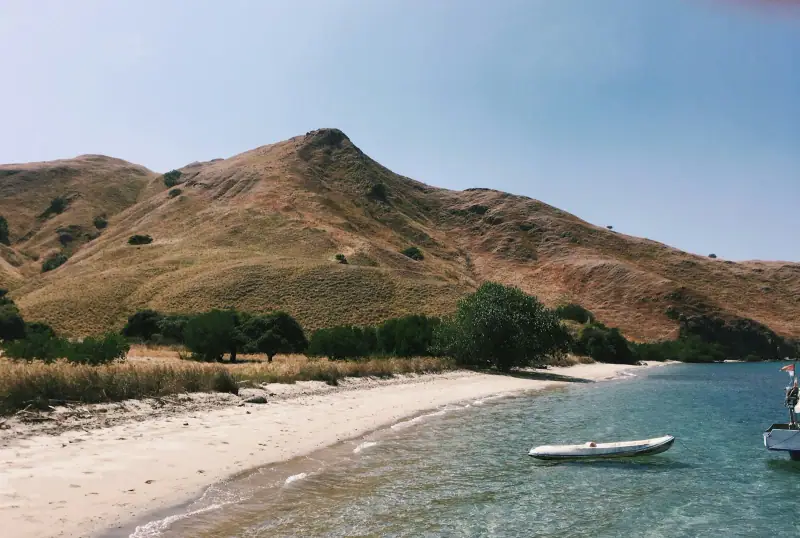
Flores Itinerary: From Labuan Bajo to Kelimutu Volcano in 8 Days
Flores in 8 days: Labuan Bajo, Komodo, spiderweb rice fields, Ruteng, Bajawa, Ende and the Kelimutu lakes. Stops, drive times, pace and tips.