Where to stay
Where to Stay in Yogyakarta: Prawirotaman, Malioboro or Borobudur, Which Area to Choose?

We may earn a commission when you book through links on this page, at no extra cost to you. We don't visit or try the places we cover: we summarize published sources. How we work
In short
- Prawirotaman, south of the center, is often recommended for a first stay: quiet streets, many guesthouses, cafes and restaurants.
- Malioboro and Sosrowijayan suit small budgets and train arrivals, a few minutes from the station, but are noisier.
- Two to three nights cover the Kraton, Taman Sari, Borobudur and Prambanan; most travelers keep one base in town and make day trips.
- Yogyakarta is one of Indonesia's most affordable stops; rates rise over school vacations and holidays.
Yogyakarta, which Indonesians often call Yogya or Jogja, is Java’s great cultural stop. It is home to the sultan’s palace, batik and silver workshops, a lively student life, and above all it serves as a base for visiting the temples of Borobudur and Prambanan. Unlike Bali, where the choice of area depends a lot on traffic, the city is fairly compact: you can get around easily by ride-hailing and trips generally stay short.
The area where you sleep nonetheless changes the experience: quiet lanes, the noise of the shopping street, closeness to the station or to restaurants. Here are the main areas, their assets and their limits. To plan your visits, see our guide to visiting Yogyakarta, Borobudur and Prambanan.
Malioboro and Sosrowijayan: practical for doing everything on foot
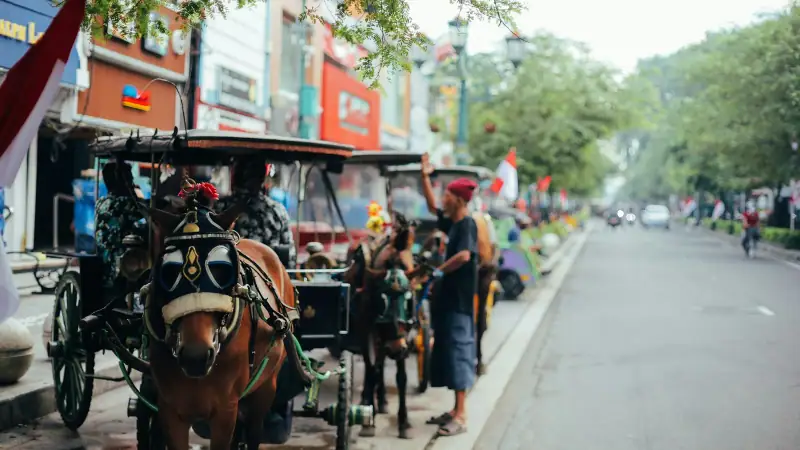
Malioboro is the city’s historic shopping artery, running from Tugu station toward the Kraton. By day it is lined with shops, batik and souvenir sellers and street vendors; in the evening, small food stalls set up on the sidewalks. It is the most central area, with many hotels of very varied categories, from chain brands to small budget places.
Right next door, the Sosrowijayan area, around narrow lanes near the station, has long been the backpackers’ neighborhood. There you find hostels, simple and cheap rooms, agencies selling excursions and low-priced restaurants. The advantage is obvious: the station is a few minutes’ walk away, which simplifies arrivals and departures by train from or to other Javanese cities.
The limits are noise, traffic and vendors’ solicitation. Rooms facing the main street are the noisiest, and some very cheap places offer rudimentary comfort: read recent reviews on bedding, air conditioning and soundproofing. This area suits small budgets, travelers arriving or leaving by train and those who want to be at the center of the action. It suits less those looking for calm.
🏨 Where to stay in Yogyakarta
Compare hotels, hostels and guesthouses in Yogyakarta by dates, budget and whether there is a pool.
Prawirotaman: the guesthouse and cafe neighborhood
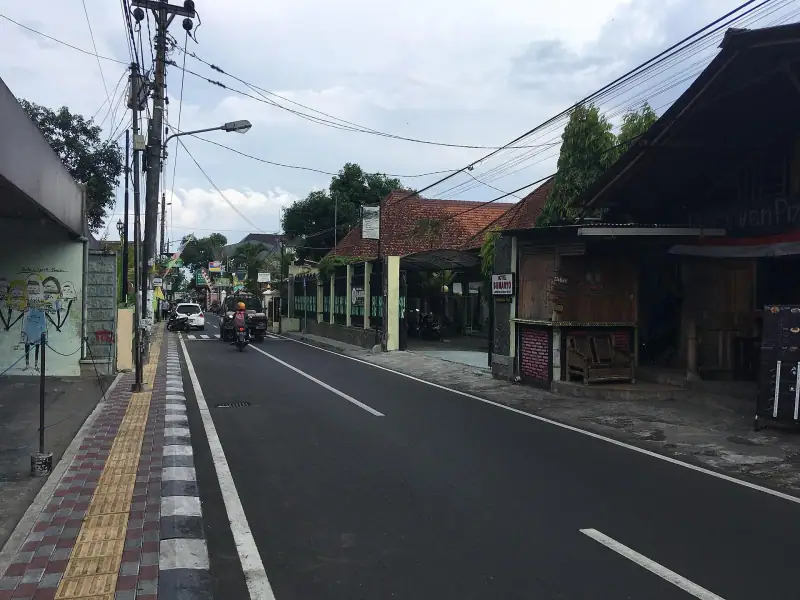
Prawirotaman, south of the center, has become the favorite neighborhood of many travelers who stay more than two nights. The streets are calmer than in the Malioboro area, with guesthouses set up in old residences, small charming hotels, cafes, craft shops, Western and Indonesian restaurants and massage parlors.
It is a good base for a first visit: it is easy to find somewhere to eat late, you can organize excursions with local agencies and reach the Kraton or Taman Sari by car in a few minutes. Many places offer rooms with a pool at prices that would be out of reach in Bali for equivalent comfort.
The main drawback is the walking distance to Malioboro: plan on ride-hailing rather than a long walk in the heat. And as the neighborhood is very popular, the best places fill up fast in high season, especially July to August. To compare this choice with another major stop in the archipelago, see our guide to where to stay in Bali.
Around the Kraton and Taman Sari: cultural immersion
The Kraton is the palace of the Sultan of Yogyakarta, still partly a royal residence. Around it, the narrow lanes of the traditional neighborhoods hold batik workshops, merchants, old houses and the Taman Sari site, the sultans’ former water garden. This area has a particular charm: you meet residents living in a very traditional way, far from mass tourism.
Accommodation is more limited there: mostly guesthouses and small family hotels, often simple. The atmosphere is calm in the evening, but restaurants are fewer and the lanes can be hard to find at night. It is an excellent choice if local immersion appeals to you, and a little less so if you want many services around you.
A tip: check the exact address and the way in. In this maze of lanes, some accommodations can be reached only on foot or by motorbike, and drivers sometimes struggle to find them.
Kota Baru and the north: student atmosphere and modern comfort
North of the station, more residential neighborhoods such as Kota Baru group mid-range and high-end hotels, cafes frequented by students (Yogyakarta is a major university city), shopping centers and restaurants. Nightlife there is geared more to residents than to tourists.
It is a good choice for those who prefer modern rooms and classic hotel services, and who do not care for the street atmosphere of the tourist neighborhoods. The trade-off: you lose a little charm and more often take transport to reach the sights in the center.
Prambanan, Borobudur and the north of the city: sleeping near the temples
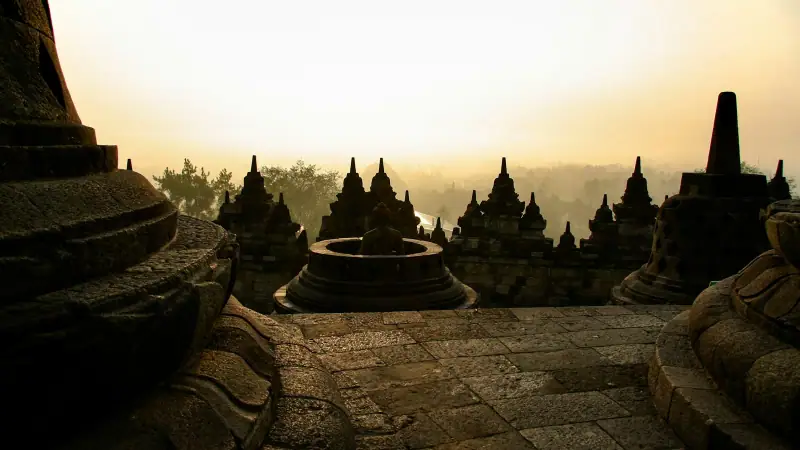
Some travelers prefer to sleep near the sites themselves. There are two options.
Near Prambanan, east of the city, a few hotels and guesthouses let you visit the complex early in the morning or in the evening, when the light is softer and attendance lower. Options remain limited and restaurants are fewer than in town.
Near Borobudur, in the Magelang area, northwest of Yogyakarta, charming hotels and guesthouses amid rice fields and villages offer a rural setting, sometimes with a view of the temple or the surrounding volcanoes. The main appeal is to take advantage of the site’s morning opening before the crowds and a Javanese countryside atmosphere. The drawbacks: fewer dining options, little life in the evening and the need to take transport back to Yogyakarta the next day.
This setup is useful for a two-night stay: one night in the countryside near Borobudur, then the rest of the stay in town. For a short trip, most travelers keep a single base in town and go on day excursions, which avoids unpacking.
🛕 Excursions from Yogyakarta
Borobudur, Prambanan, Merapi, batik or silver workshops: compare excursions with transport from your accommodation.
What budget should you plan for sleeping in Yogyakarta?
The city is one of the cheapest stops in Indonesia. You find dorm beds for a few dollars, simple private rooms in guesthouses at moderate rates, mid-range hotels with a pool at still-accessible prices, and a few more luxurious places, including hotels set in old residences of the city. Rates vary a lot with the season and the type of accommodation: compare offers for your dates rather than relying on a fixed grid.
To place this spending item in the whole of your trip (transport, meals, site entry fees), see our guide to the budget in Indonesia. Entry to Borobudur and Prambanan often represents the biggest activity item: check the official rates and booking procedures before leaving, as they change.
How to split your nights in Java
Yogyakarta combines easily with other stops on the island. A classic pattern: two or three nights in Yogyakarta, then departure for the volcanoes of the east (Bromo, Ijen) by train or organized transport, before heading on to Bali. Our two-week itinerary through Java, Bali and Lombok details this progression.
Allow margin for travel: roads are busy, trains can be full in high season and it is better to book ahead. If you arrive by air, preferably choose a morning or daytime flight so as not to arrive late at a place that is hard to find.
✈️ Flights to Yogyakarta
Compare flights to Yogyakarta or to Jakarta and Bali before building your itinerary in Java.
Tips for choosing your accommodation
- Check the air conditioning and hot water. Yogyakarta is hot and humid all year; air conditioning or a good fan makes a real difference, especially in budget rooms.
- Read recent reviews on noise. Calls to prayer, roosters, traffic and neighboring restaurants can disturb sleep depending on the location. Bring earplugs.
- Look at the exact location on the map. A place advertised as “central” can be several kilometers from the Kraton or Malioboro.
- Ask whether breakfast is included. It is very common in guesthouses and saves looking for a cafe at dawn before an excursion.
- Organize early departures. For Borobudur at sunrise, you must leave very early: ask your host whether they can arrange transport and prepare a packed breakfast.
- Think about the season. The dry months, roughly May to October, are the busiest. See our guide to when to go to Indonesia to choose your period.
- Respect local customs. Modest dress is expected in places of worship and within the palace grounds, and shoes are removed before entering some places.
If you travel in the rainy season, plan accommodation with easy access to a cafe or restaurant: showers can be brief and intense, and it is nice not to have to walk far.
Frequently asked questions about accommodation in Yogyakarta
Answers to the most common questions are in the FAQ below. In short: Prawirotaman for a pleasant, quiet base, Malioboro and Sosrowijayan for closeness to the station and small budgets, the area around the Kraton for immersion, and the Borobudur countryside for a quiet night before sunrise. Whatever you choose, book early in high season and keep two or three nights to see the essentials. To finish preparing your stay, also see our entry formalities for Indonesia. Entry rules depend on your passport. Check the official travel advice of your government before you book: travel.state.gov (US), GOV.UK (UK), travel.gc.ca (Canada), Smartraveller (Australia) (checked November 2026).
Frequently asked questions
What is the best area to stay in Yogyakarta for a first visit?
Prawirotaman, south of the center, is often recommended: quiet streets, many guesthouses, cafes and restaurants, and easy access to the sights by ride-hailing. The Malioboro area suits better those who want to do everything on foot and be near the station.
Should you sleep near Borobudur rather than in Yogyakarta?
For most travelers, no: Yogyakarta offers much more choice and restaurants, and Borobudur can be visited on a day trip. Sleeping near the temple only makes sense if you want to see it very early in the morning, with as few people as possible.
How many nights should you plan in Yogyakarta?
Two to three nights let you see the Kraton, Taman Sari, Borobudur and Prambanan without rushing. Add a night if you want activities around Merapi volcano or craft workshops.
How do you reach the center from Yogyakarta airport?
The international airport is west of the city, several dozen kilometers from the center. A dedicated train and shuttles or taxis connect to the city; check schedules before booking, as they change.
Is accommodation in Yogyakarta expensive?
No, the city is among the most affordable stops in Indonesia: there are dorms, family guesthouses, charming hotels and a few high-end places. Rates rise mostly during school vacations and holidays.
Is it safe to stay in central Yogyakarta?
The city is known as welcoming and rather calm for travelers. The usual precautions apply: keep valuables close in busy areas and beware of overly insistent middlemen in the street.
More Indonesia guides
Keep reading
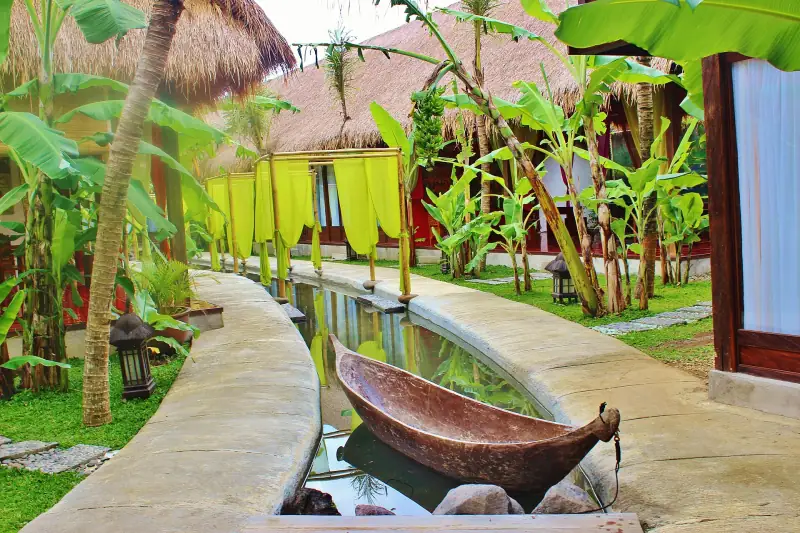
Where to Stay in Bali: Ubud, Seminyak, Canggu or Uluwatu, Which Area to Choose?
Ubud, Seminyak, Canggu, Sanur, Uluwatu: a comparison of where to stay in Bali for culture, beaches, surf or family trips, with tips for choosing well.
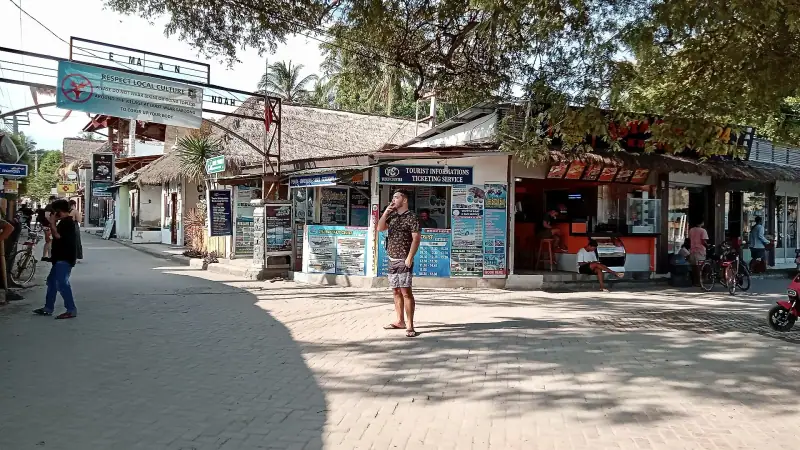
Where to Stay in Lombok and the Gili Islands: Trawangan, Air, Meno, Senggigi or Kuta?
Gili Trawangan, Gili Air, Gili Meno, Senggigi, Kuta Lombok or Rinjani: where to stay in Lombok for your travel style, with practical tips.
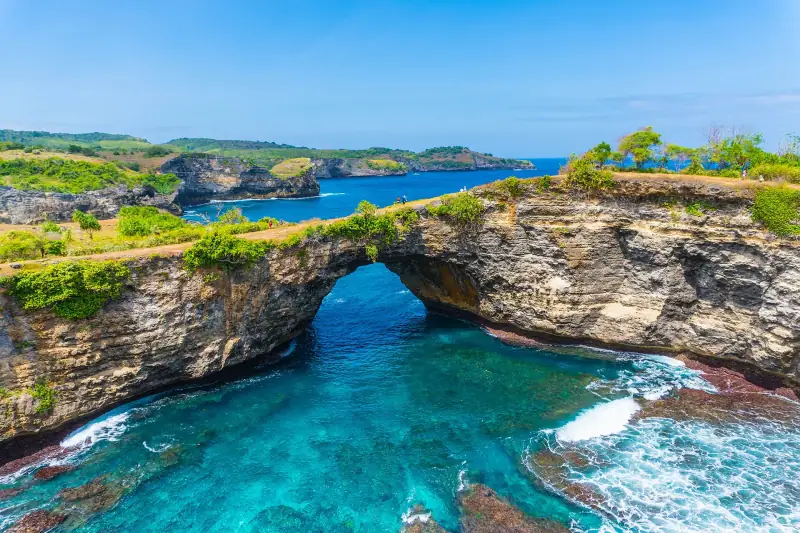
Nusa Penida in One Day from Bali: Boat, Scooter or Organized Tour?
Nusa Penida in one day from Bali: fast boat from Sanur, scooter or driver, west or east circuit, schedules, prices and mistakes to avoid.
Ready-made
Indonesia itineraries
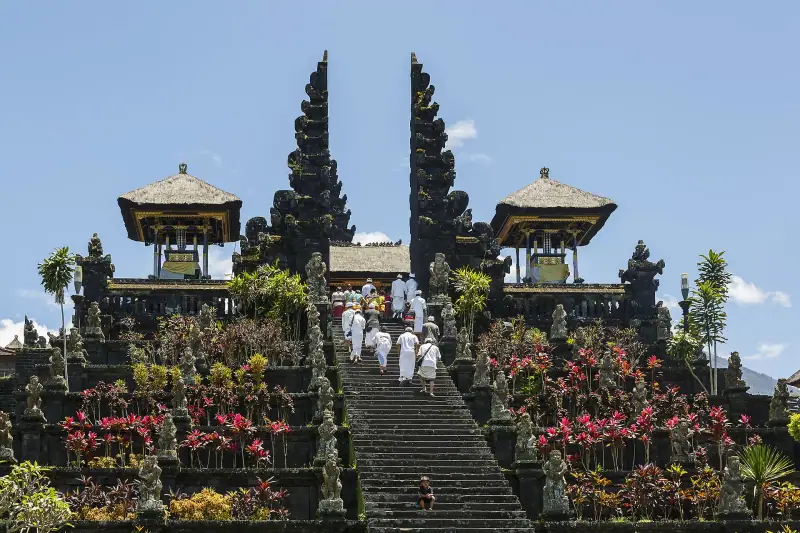
10 days
10 Days in Bali: Ubud, the North, the East and the South Coast Day by Day
Bali in 10 days: a detailed itinerary through Ubud, the rice terraces, the north, the east coast, Nusa Penida and the south. Stops, drive times and tips.
6 days
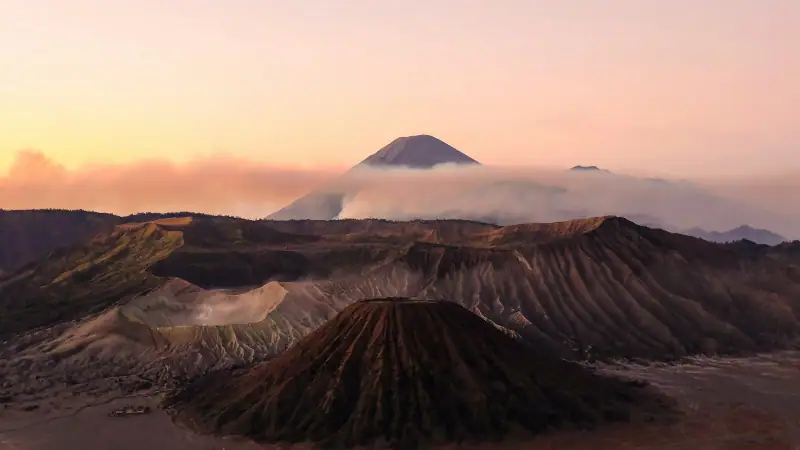
Yogyakarta to Bali Without a Car: Bromo, Ijen and the Ferry in 6 Days
Yogyakarta, Bromo, Ijen then Bali by train, minibus and ferry: stages, distances, realistic travel times and pitfalls to avoid on this car-free route.
8 days
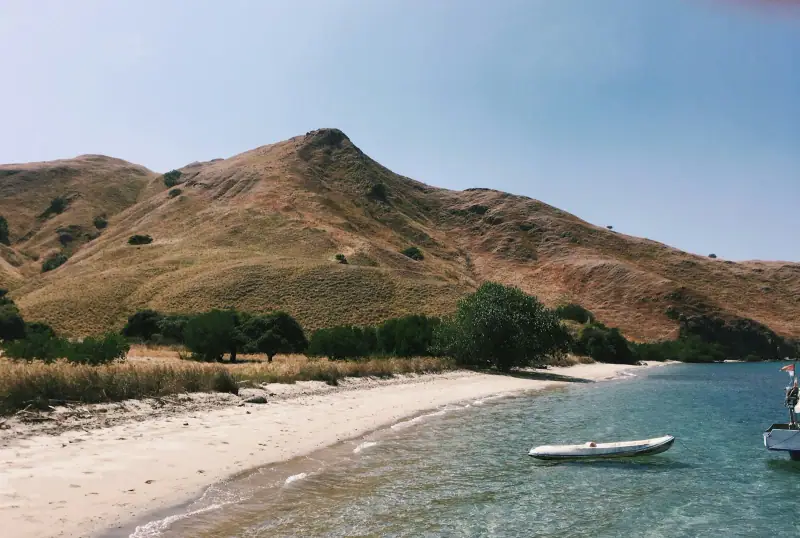
Flores Itinerary: From Labuan Bajo to Kelimutu Volcano in 8 Days
Flores in 8 days: Labuan Bajo, Komodo, spiderweb rice fields, Ruteng, Bajawa, Ende and the Kelimutu lakes. Stops, drive times, pace and tips.