Itineraries
2 Weeks in Indonesia: Java, Bali and Lombok Day by Day
We may earn a commission when you book through links on this page, at no extra cost to you. We don't visit or try the places we cover: we summarize published sources. How we work
Day by day
- Day 1Arrive in Yogyakarta; kraton and surrounding lanes
- Day 2Borobudur
- Day 3Prambanan and the city
- Day 4Transfer by train and road to the Bromo caldera
- Day 5Bromo sunrise, road to Banyuwangi
- Day 6Ijen night climb, blue flames and crater lake
- Days 7-10Ferry to Bali, Ubud: rice fields, temples, cooking class
- Days 11-14Bali east coast, fast boat to the Gili Islands
- Day 15Return to the airport with a safety margin
Weather through the year on this route
| Jan | Feb | Mar | Apr | May | Jun | Jul | Aug | Sep | Oct | Nov | Dec | |
|---|---|---|---|---|---|---|---|---|---|---|---|---|
| High °F (°C) | 8228 | 8228 | 8228 | 8329 | 8228 | 8127 | 8027 | 8027 | 8127 | 8329 | 8429 | 8329 |
| Low °F (°C) | 7826 | 7826 | 7826 | 7926 | 7725 | 7625 | 7424 | 7323 | 7424 | 7625 | 7826 | 7826 |
| Rain in (mm) | 11.9305 | 9.5245 | 7.3185 | 5.0130 | 2.975 | 1.745 | 1.335 | 0.820 | 1.335 | 2.770 | 5.2135 | 9.5245 |
Normals 1991–2020 at Uluwatu and Canggu: averages over 30 years, not a forecast. Source: NASA POWER (MERRA-2), grid of about 50 km. Figures computed by us in November 2026.
In short
- The route runs east in a straight line: Yogyakarta (days 1 to 3), Bromo and Ijen (days 4 to 6), Ubud (days 7 to 10), the Bali coast and the Gili Islands (days 11 to 14), and a safety margin on day 15.
- An open-jaw ticket (arrive in Yogyakarta or Jakarta, leave from Bali) saves a full day over a round trip to Bali.
- Bali is one hour ahead of Java; the Java-Bali ferry crossing is short but the whole trip to Ubud takes most of a day.
- Never schedule an international flight the same day as the boat from the Gilis; return to Bali the day before.
Fifteen days in Indonesia is short given the immensity of the archipelago, but it is a reasonable length for a first trip if you accept having to choose. The Java, Bali and Lombok trio is the most proven combination: you find ancient temples, active volcanoes, rice fields, car-free beaches and well-run infrastructure, with trips that remain bearable.
Here is a day-by-day itinerary, designed to alternate busy days and rest. It runs from west to east, from Yogyakarta to the Gili Islands. To place these stops in a broader trip, first see our complete guide to visiting Indonesia.
The principle of the itinerary: one direction, few bases
The circuit follows a straight line east: Yogyakarta, the volcanoes of eastern Java, Bali, then Lombok and the Gilis. You never backtrack, and you change accommodation only five or six times in fifteen days. This is the golden rule of a successful trip in Indonesia: transfers always take longer than planned, between traffic, waiting for a boat and boarding formalities.
Here is the general breakdown:
- Days 1 to 3: Yogyakarta, Borobudur and Prambanan;
- Days 4 to 6: Bromo and Ijen, two nights of early rising;
- Days 7 to 10: Bali, with Ubud as the base;
- Days 11 to 14: coastal Bali, then Lombok and the Gili Islands;
- Day 15: return to the airport, with a safety margin.
For the international flight, you have two options: an “open jaw” ticket, which arrives in Yogyakarta or Jakarta and leaves from Bali, or a classic round trip to Bali, which forces one more domestic flight. The first saves a whole day.
✈️ Flights to Indonesia
Compare flights to Jakarta, Yogyakarta or Bali, and try the option of arriving and departing in two different cities.
Days 1 to 3: Yogyakarta, Borobudur and Prambanan
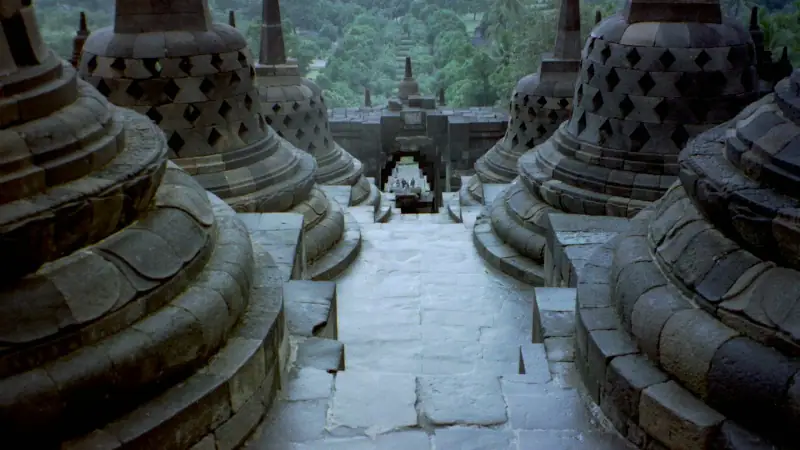
Yogyakarta is the cultural gateway to Java. It is reached by plane, directly from Jakarta or Bali, or by train, comfortable along Java’s main axis. The first day is for settling in: flight fatigue and jet lag make themselves felt, and the city lends itself to a quiet stroll around the sultan’s palace (the kraton) and the nearby lanes where batik and crafts are sold.
The second day is devoted to Borobudur, an immense 9th-century Buddhist monument in the Kedu plain. The site is a UNESCO World Heritage site, and access to the upper levels is regulated to protect the stone: find out the booking rules in force before you go. Many travelers choose to go early in the morning, when the heat is lower and the light softer.
On the third day, it is Prambanan’s turn, a complex of Hindu temples dedicated to Shiva, Vishnu and Brahma. The two sites combine easily in a single day with a driver, but you lose comfort. If you like to take your time, spread them out, and keep the rest of the day for the city. All the practical details are in our article on Yogyakarta, Borobudur and Prambanan.
🏨 Where to stay in Yogyakarta
Compare hotels and guesthouses in Yogyakarta by dates, budget and recent traveler reviews.
Days 4 to 6: Bromo and Ijen
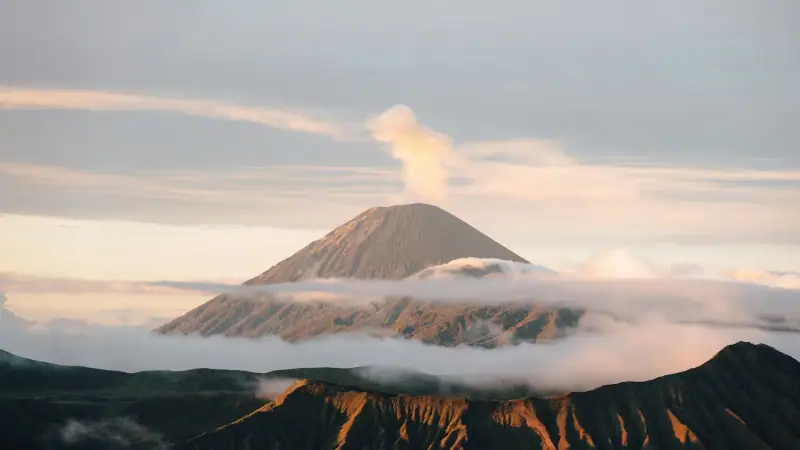
The fourth day is a transfer day. From Yogyakarta, you reach the Bromo area by train and then by road, generally via Surabaya or Malang. Plan on a long day and an arrival in the late afternoon in one of the villages on the edge of the caldera. Yogyakarta agencies also offer group tours with transport, often simpler to organize than getting there on your own.
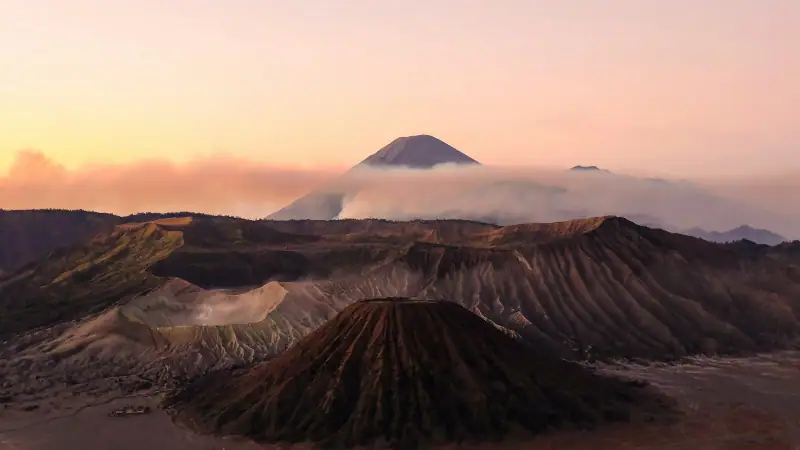
The fifth day starts in the middle of the night: sunrise over Bromo, from a viewpoint on the caldera, is the high point of the stay. Nights are cool at altitude, so bring a fleece and a windbreaker. After sunrise, you descend into the sea of sand and climb to the edge of the smoking crater. In the afternoon, the road resumes east, toward Banyuwangi, the starting point for Ijen visits.
The sixth day is Ijen’s. The climb is done at night, on foot, to see the blue flames, then at daybreak you discover the turquoise crater lake, where sulfur miners work. A gas mask is essential, because the fumes irritate the airways. After the descent, a nap is essential: the night was short. All the organization tips are in our article on Bromo and Ijen.
These two sites are active volcanoes: access may be limited or closed in case of activity. Keep flexibility in your schedule and check the situation before departure.
🌋 Bromo and Ijen excursions
Compare guided excursions with transport for the Bromo sunrise and the Ijen night climb.
Days 7 to 10: Ubud and central Bali
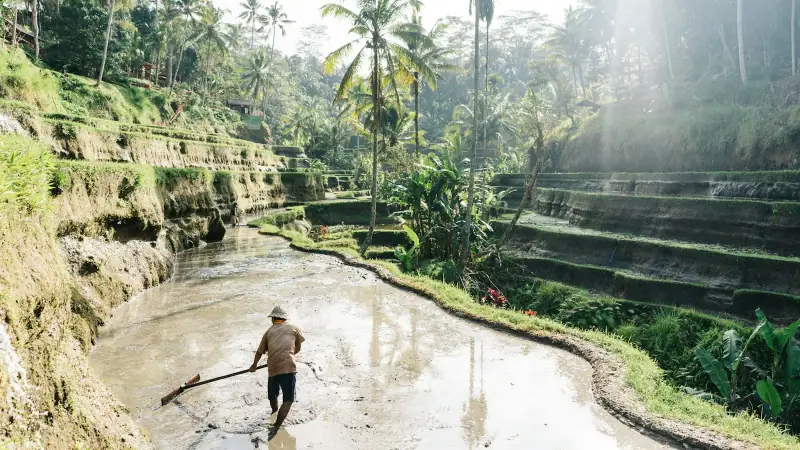
From Ijen, you reach Bali by road and by the ferry linking the eastern tip of Java to western Bali. The crossing itself is short, but the whole trip to Ubud takes most of the day: expect to arrive in the late afternoon, even the evening. Bali is one hour ahead of Java, which moves your arrival forward on paper without changing the real length of the trip.
Ubud is the most pleasant base for discovering the center of the island: terraced rice fields, temples, craft workshops, traditional dances and varied food. Devote one day to the surroundings, with the rice fields and one or two temples, another to culture, with a cooking or dance class, and keep a free day to stroll or swim. Mornings are the nicest: sites are less crowded and the heat milder.
If you want to see Bali from another angle, a dawn hike up one of the island’s volcanoes is an option, but after Bromo and Ijen, you can also skip it. Our guide to where to stay in Bali compares the areas of Ubud, Seminyak, Canggu and Uluwatu so you can choose the base that suits you.
🍛 Cooking classes in Ubud
Visit a market and prepare Balinese dishes with a local cook: compare packages and reviews.
Days 11 to 14: the Bali coast and the Gili Islands
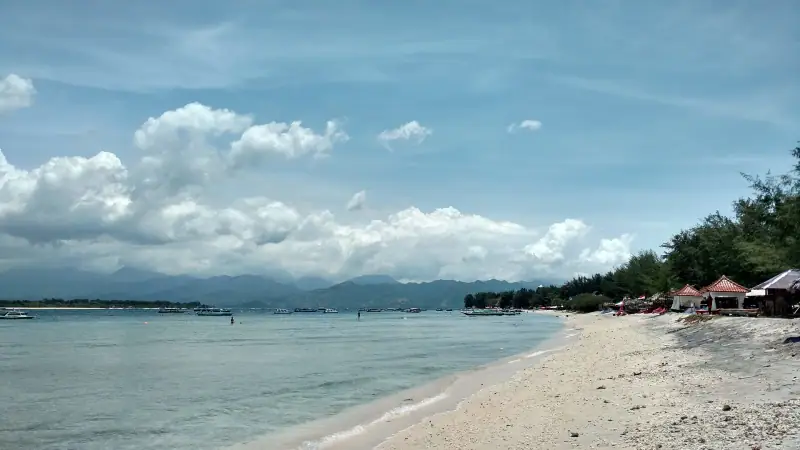
On the eleventh day, leave Ubud for Bali’s east coast, from where the fast boats leave for the Gili Islands. The crossing takes on the order of two hours depending on the boat and the sea, and tickets often include the transfer from your accommodation: check when booking. The Lombok Strait can be rough, and schedules change with the weather.
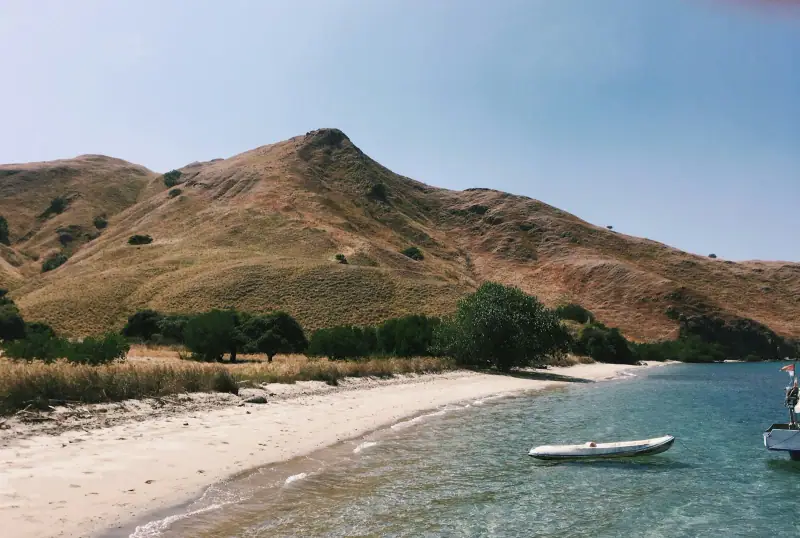
The Gilis are three small islands without cars or scooters, edged with pale sand and reefs reachable with fins. For a three-night stay, base yourself on one island, or switch halfway if you hesitate between the liveliness of Gili Trawangan and the calm of Gili Meno or Gili Air. Turtles are common while snorkeling: look at them without touching. Our article on Lombok and the Gili Islands details each island.
If you like walking, Rinjani is a two- to three-day trek that does not fit in this itinerary without removing time elsewhere. For two weeks, it is better to keep the beach for the end of the trip and the trek for a longer stay.
Day 15: the return, with a safety margin
Never schedule an international flight on the same day as your crossing from the Gilis. The boat can be delayed or canceled in a strong sea. The safest option is to return to Bali the day before, sleep near the airport or in the south of the island, and keep the last day for shopping or a final swim. This precaution costs a night, but it avoids missing a return flight.
If you have three weeks, this same itinerary extends naturally: one more week lets you add Komodo National Park, reached by plane from Bali to Labuan Bajo.
Mistakes to avoid
A few traps come up often among travelers discovering the archipelago:
- Underestimating travel times: roads are slow, distances on the map mislead. allow generous time for each transfer;
- Chaining sunrises: Bromo and Ijen mean short nights, and fatigue builds up. Plan half a day of recovery;
- Neglecting the season: from November to March or so, rains are more frequent and the sea less stable. To choose your period, see our article on when to go to Indonesia;
- Renting a scooter without experience: traffic is heavy and roads uneven. A driver by the day is a good compromise, and renting a car without a driver remains uncommon for foreigners;
- Forgetting insurance: check that your policy covers mountain activities, boat crossings and repatriation.
Finally, keep a margin in the budget for the unexpected: a domestic flight to rebook or an extra night is easier to settle when you have not calculated too tightly. Prices change from one season to the next, so check them when you book.
Frequently asked questions
Are two weeks enough to see Java, Bali and Lombok?
Yes, provided you accept only skimming each stop. Fifteen days let you see Yogyakarta and its temples, two volcanoes in eastern Java, central Bali and the Gili Islands, without rushing every day.
In which direction should you do this itinerary?
From the most intense to the most restful: start with Java, denser in visits and early mornings, and end with the Gili beaches. The reverse also works, but you then have to handle short nights at the end of the trip.
Can you get from Java to Bali without flying?
Yes. From the eastern tip of Java, near Banyuwangi, a ferry links Java to Bali in a relatively short time. The total trip from Ijen depends on traffic and your starting point: allow half a day.
Do you need to adjust your clock between Java and Bali?
Yes, Bali is one hour ahead of Java. Boat and flight times are shown in local time: check them so you do not miss a connection.
What is the best time of year for this circuit?
The dry season, roughly April to October, is the most comfortable for the volcanoes and boat crossings. Details in our article on the best time to go to Indonesia.
More Indonesia guides
Keep reading
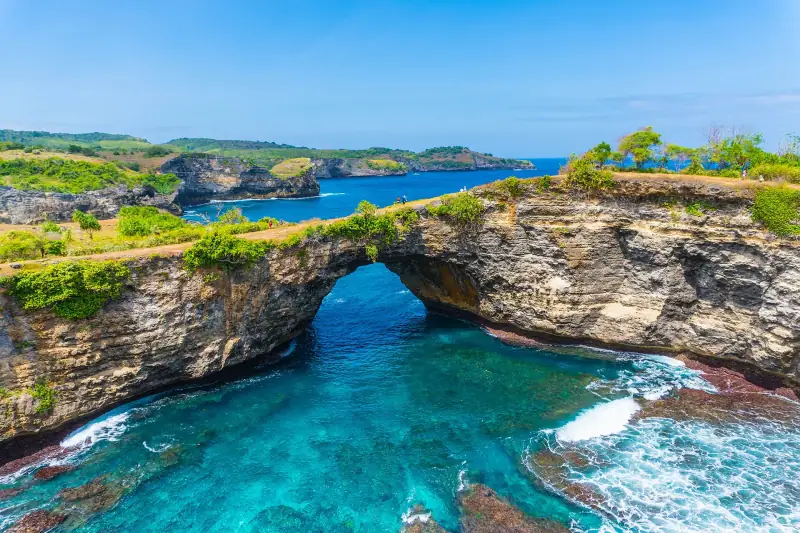
Nusa Penida in One Day from Bali: Boat, Scooter or Organized Tour?
Nusa Penida in one day from Bali: fast boat from Sanur, scooter or driver, west or east circuit, schedules, prices and mistakes to avoid.
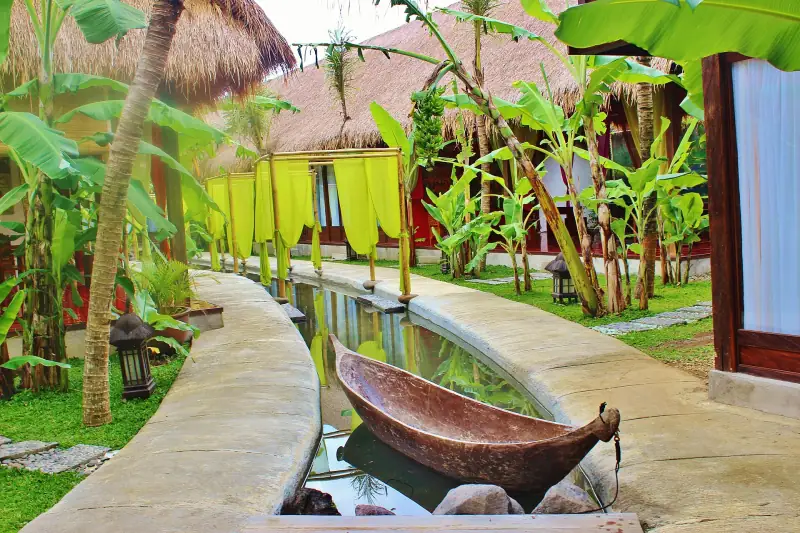
Where to Stay in Bali: Ubud, Seminyak, Canggu or Uluwatu, Which Area to Choose?
Ubud, Seminyak, Canggu, Sanur, Uluwatu: a comparison of where to stay in Bali for culture, beaches, surf or family trips, with tips for choosing well.
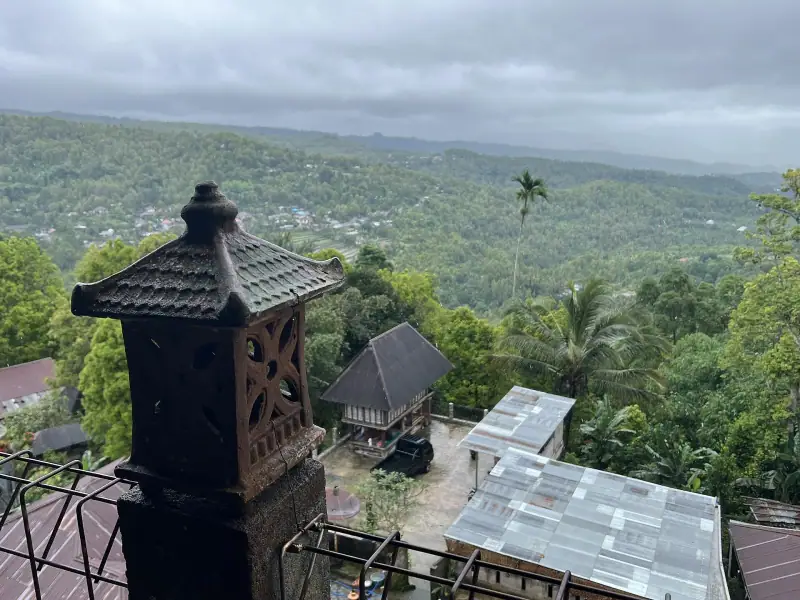
Munduk, Bali: Waterfalls, Lakes and Mountain Coffee, Is It Worth the Detour?
Munduk, a mountain village in northern Bali: waterfalls, twin lakes, drive time from Ubud, ideal length of stay, budget and tips for getting there.
Ready-made
Indonesia itineraries
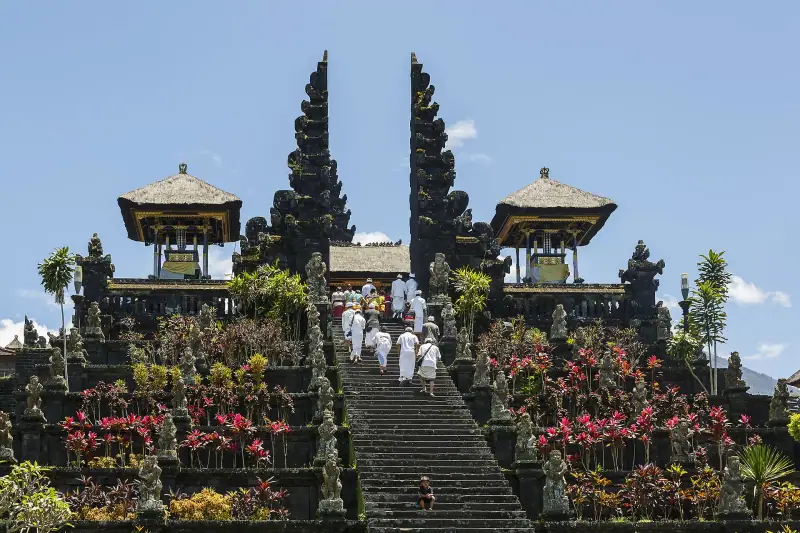
10 days
10 Days in Bali: Ubud, the North, the East and the South Coast Day by Day
Bali in 10 days: a detailed itinerary through Ubud, the rice terraces, the north, the east coast, Nusa Penida and the south. Stops, drive times and tips.
6 days
Yogyakarta to Bali Without a Car: Bromo, Ijen and the Ferry in 6 Days
Yogyakarta, Bromo, Ijen then Bali by train, minibus and ferry: stages, distances, realistic travel times and pitfalls to avoid on this car-free route.
8 days
Flores Itinerary: From Labuan Bajo to Kelimutu Volcano in 8 Days
Flores in 8 days: Labuan Bajo, Komodo, spiderweb rice fields, Ruteng, Bajawa, Ende and the Kelimutu lakes. Stops, drive times, pace and tips.