Plan your trip
When to Go to Indonesia: Seasons, Weather and the Best Time for Each Island
We may earn a commission when you book through links on this page, at no extra cost to you. We don't visit or try the places we cover: we summarize published sources. How we work
In short
- The dry season, roughly April to October, suits most islands (Bali, Java, Lombok, Komodo); the rainy season runs about November to March.
- Bali is busiest in July and August and over the end-of-year holidays; May, June and September are a good balance of weather and crowds.
- Raja Ampat has its own calendar: October to April is the most cited period for diving, with a generally calmer sea.
- Nyepi (Balinese New Year, March or early April) shuts down the island for a day, airport included; the end of Ramadan (Lebaran) overwhelms transport.
Indonesia spans thousands of islands, on both sides of the equator, so there is no single good time to travel there. The general rule comes down to two seasons, dry and wet, but their calendar varies by island, and some destinations, such as Raja Ampat, follow an almost opposite logic to Bali’s.
This article helps you choose your dates according to what you want to do: beach, volcanoes, diving, temples or a combined circuit. To build the trip itself, rely on our complete guide to visiting Indonesia.
Understanding Indonesia’s seasons
The climate is tropical and hot all year: daytime temperatures vary little, around 30 °C (86 °F) on the coasts, and it is rainfall that makes the difference. Broadly, there is a dry season, running from April to October over most of the archipelago, and a rainy season, from November to March or so, during which showers are more frequent and humidity heavier.
These dates are benchmarks, not sharp borders. The transitions, in April-May and October-November, are irregular, and from one year to the next the start of the rains can come forward or slip back by several weeks. The Pacific climate phenomenon called El Niño or La Niña can also shift the calendar: a stay booked very far ahead never guarantees the weather.
Two useful clarifications to avoid disappointment:
- The rainy season is not a permanent deluge. In many regions, the weather is fine in the morning and the storm breaks late in the afternoon. Entirely gray days exist, but they are not the norm;
- The dry season does not mean a perfect sky. In volcano areas, mornings can be misty, and at altitude nights are decidedly cold.
Bali: the dry season, but beware of the crowds
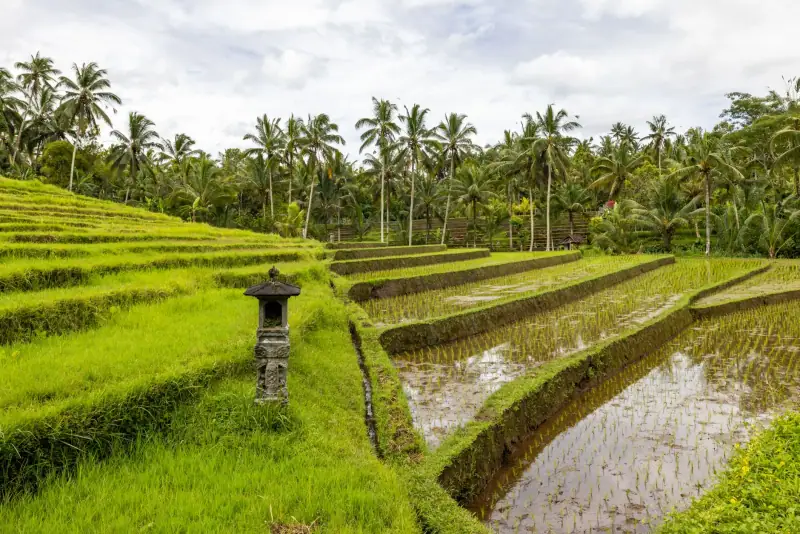
Bali has its dry season from April to October or so. It is the most pleasant period for beaches, rice fields and temple visits: days are sunny, the surf on the south coast is easier to read and roads are more passable. It is also high season, with a peak in July and August, which coincide with European vacations.
If you are looking for a balance, aim for May, June or September. The weather is still good, accommodation prices are lower and the most famous sites, such as the rice fields around Ubud, are a little less overrun at peak hours. Our comparison of where to stay in Bali then helps you choose between Ubud, Seminyak, Canggu and Uluwatu depending on the season.
In the rainy season, from November to March, Bali remains very visitable. The rice fields are at their greenest, prices drop and you find room even in popular places. You simply have to accept showers, high humidity and, some days, beaches that are less pleasant because waves or debris washed up by the sea make them less inviting. The Christmas and New Year period is an exception: it is a second peak, with rising rates despite the weather.
🏨 Where to stay in Bali for your dates
Compare accommodation in Bali for the period you choose: rates vary widely between July-August, the end-of-year holidays and the rainy season.
Java, Bromo and Ijen: aim for the dry season
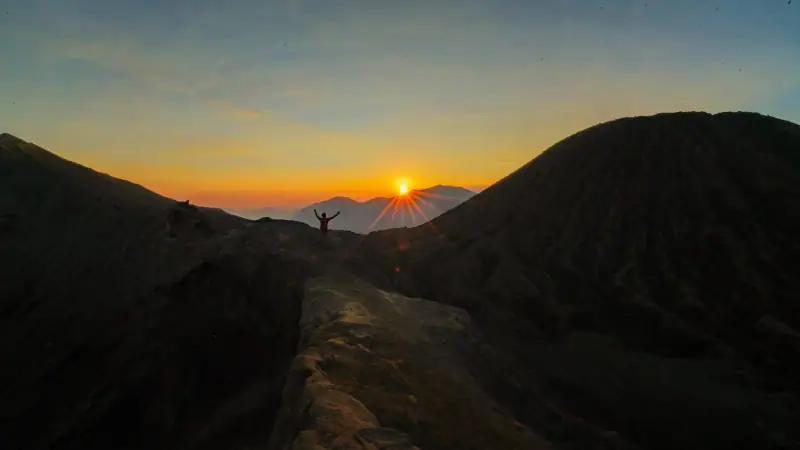
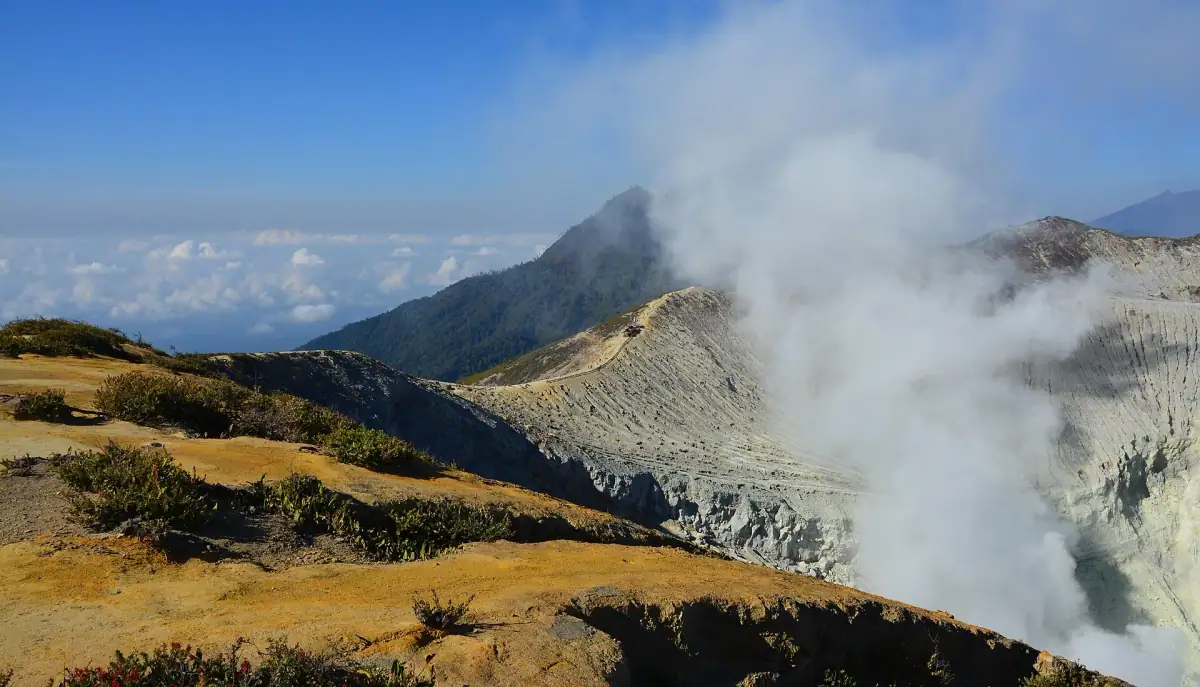
For Java, the dry season is also the best time, especially for the volcanoes. Sunrise over Bromo or the night walk to Ijen depend on a clear sky: in the rainy season, trails are more slippery and views more often hidden. Nights at altitude, on the other hand, are very cold in the dry season, so bring proper warm clothing. The organization details are in our article on Bromo and Ijen.
The temples of the Yogyakarta area, including Borobudur and Prambanan, can be visited all year. In the dry season, heat and sun are strong in the middle of the day: favor the cooler morning, and bring water. In the rainy season, a light umbrella is often enough, and the sites are less crowded.
The volcanoes remain active and access can be restricted or closed whatever the season. Check the authorities’ instructions before buying a tour.
Lombok, the Gilis and Komodo: calm seas and dragons

Lombok and the Gili Islands follow a calendar close to Bali’s, with a dry season from April to October or so. It is the most pleasant period for the beach and snorkeling, and the best window for attempting the ascent of Rinjani volcano, whose trails can be closed in bad weather or during the rainy season. Again, check the park’s openings before committing.
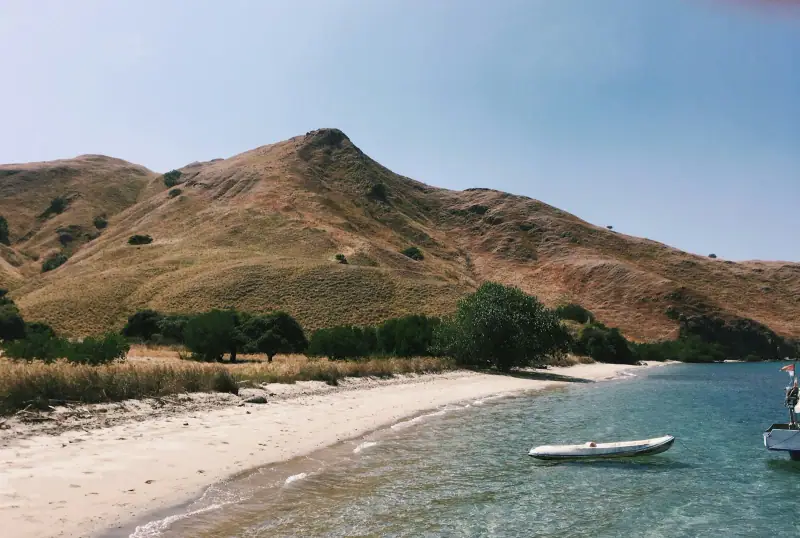
In Komodo, the dry season is the best suited to boat excursions from Labuan Bajo: skies are clearer for the Padar panoramas and the sea is generally easier. This period is also the most popular with travelers. The rainy season remains possible, with intensely green hills, but sea conditions can be worse and some outings may be modified or canceled. Excursion details are in our guide to Komodo National Park.
🚤 Komodo and Labuan Bajo excursions
Compare boat trips from Labuan Bajo, for a day or several days, with guide and transfers depending on the season.
Raja Ampat: a calendar of its own
Raja Ampat, in Indonesian Papua, does not follow Bali’s calendar. The best diving period is usually placed between October and April or so, with a generally calmer sea. Between May and September, winds can raise stronger waves in some areas and make crossings less comfortable, even though a stay remains possible.
The point to remember is practical: it is rare to be able to cover both Bali in the middle of the dry season and Raja Ampat at its best. If the archipelago is the main reason for your trip, build the calendar around it, and treat Bali or Java as an extension. The organization of the stay is detailed in our article on Raja Ampat.
A clarification to avoid confusion: Raja Ampat is in Indonesian Papua (the province of Southwest Papua since 2022), not in Papua New Guinea, the neighboring country.
Festivals, holidays and days to avoid
The religious and school calendar influences the trip as much as the weather:
- Ramadan shifts by about ten days each year. Travel remains possible, but some small restaurants open later in the day in regions with a strong Muslim majority;
- Eid (Lebaran), at the end of Ramadan, causes huge waves of domestic travel: trains, planes, boats and accommodation are saturated for several days. Avoid planning a long transfer at that time;
- Nyepi, the Balinese New Year, falls in March or early April depending on the local calendar. For one day, the island stops: no traffic, lights off and, in practice, a ban on leaving your accommodation, including for visitors. The airport closes. Check the date before booking;
- European vacations, in July-August and at Christmas, push up prices and crowds at the best-known sites;
- Indonesian school vacations increase local tourist traffic in Java, Bali and Lombok.
✈️ Flights to Indonesia
Tickets for July, August and the end-of-year holidays are best booked well ahead: compare flights to Bali or Jakarta for your dates.
Which month to choose for your plan?
A few benchmarks to decide, to adapt to how the weather evolves:
- Beaches, rice fields and culture in Bali: May, June or September to limit the crowds; July and August for the most sun, at the price of the crowds;
- Java’s volcanoes and a trek on Lombok: the dry season, April to October or so;
- Komodo and cruises: the dry season too, preferably outside the two vacation peaks;
- Diving in Raja Ampat: October to April or so, allowing margins for flights and boats;
- Small budget: the rainy season, with lower rates and fewer people, as long as you accept more unpredictable weather;
- Full circuit through Java, Bali, Lombok and Komodo: May, June, September or early October, when the weather is stable everywhere.
Whatever month you choose, plan a light raincoat, effective sun protection and quick-drying clothes. Also keep a few days of slack in the schedule: a delayed domestic flight or a crossing canceled by the sea is more common than you might think.
Frequently asked questions about when to travel
Answers to the most common questions are in the FAQ below. Remember the essentials: the dry season, April to October, suits most islands, Raja Ampat is the exception with a best period of October to April, and high season in July-August and over the end-of-year holidays costs you in prices and crowds.
Frequently asked questions
What is the best time to visit Bali?
The dry season, roughly April to October, is the most pleasant: clearer skies, rare rain and a calmer sea on the south coast. It is also high season, especially in July and August. May, June and September are often a good compromise between weather and crowds.
Can you travel in Indonesia in the rainy season?
Yes. Showers are often intense but brief, and prices and crowds drop. The trade-offs are high humidity, sometimes slippery roads, volcano views more often hidden and, depending on the area, a rougher sea that can cancel crossings.
When should you go to Raja Ampat?
The most cited period for Raja Ampat is roughly October to April, with a generally calmer sea. The calendar there is therefore different from that of Bali or Komodo. Check conditions with your accommodation before booking flights and boats.
Which month should you choose to combine several islands?
For a Java, Bali, Lombok and Komodo circuit, dry-season months such as May, June, July or September are the safest. If Raja Ampat is on the itinerary, ideally, separate that stay from the rest of the trip or to aim for the end of the dry season, in October.
Does Ramadan change a trip to Indonesia?
Ramadan shifts from year to year. Travel remains possible, but some neighborhood restaurants open later in the day in strongly Muslim areas, and the mass movements at the end of the month, around Eid, overwhelm transport and lodging. Bali, mostly Hindu, is little affected.
More Indonesia guides
Keep reading
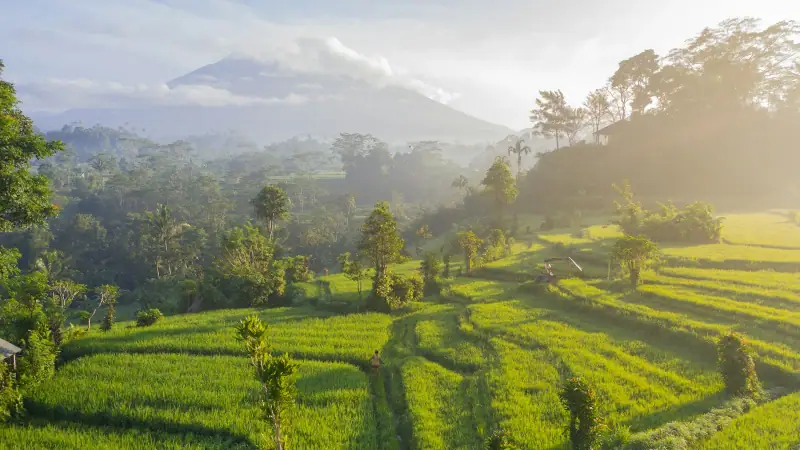
Indonesia Trip Budget: Real Costs, 3 Budget Profiles and Money-Saving Tips
How much does Indonesia cost? Lodging, transport, meals, site fees, three daily budgets with figures, and tips to spend less without sacrificing anything.

Nusa Penida in One Day from Bali: Boat, Scooter or Organized Tour?
Nusa Penida in one day from Bali: fast boat from Sanur, scooter or driver, west or east circuit, schedules, prices and mistakes to avoid.

Where to Stay in Bali: Ubud, Seminyak, Canggu or Uluwatu, Which Area to Choose?
Ubud, Seminyak, Canggu, Sanur, Uluwatu: a comparison of where to stay in Bali for culture, beaches, surf or family trips, with tips for choosing well.
Ready-made
Indonesia itineraries
10 days
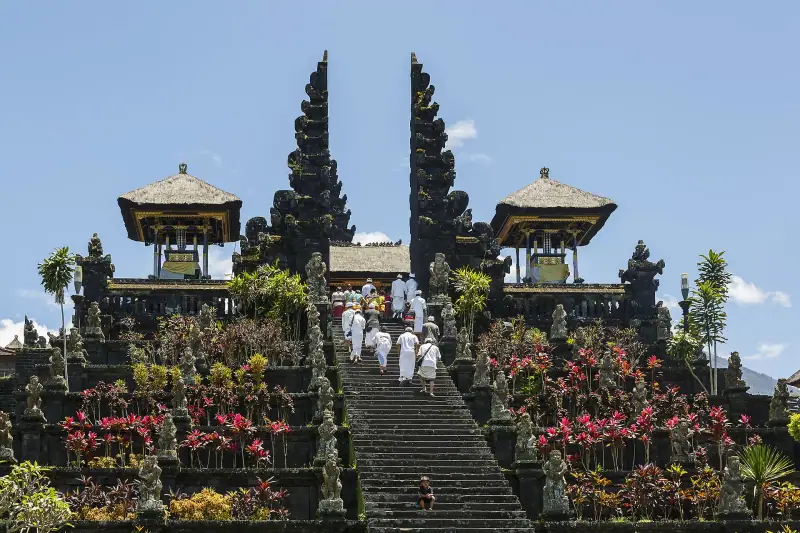
10 Days in Bali: Ubud, the North, the East and the South Coast Day by Day
Bali in 10 days: a detailed itinerary through Ubud, the rice terraces, the north, the east coast, Nusa Penida and the south. Stops, drive times and tips.
6 days
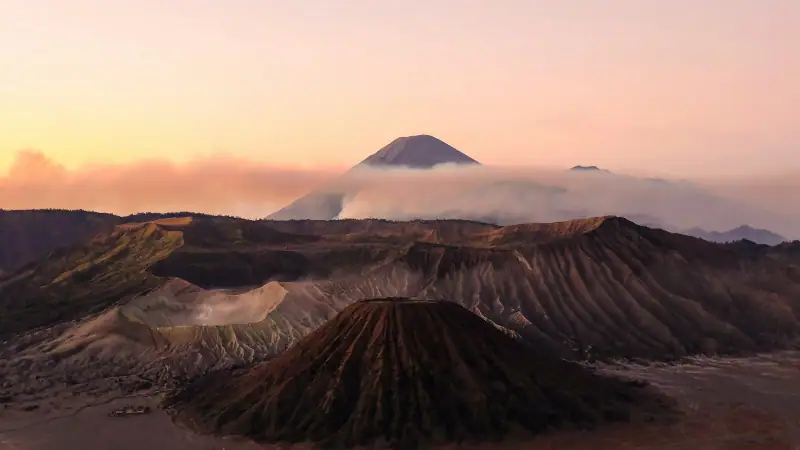
Yogyakarta to Bali Without a Car: Bromo, Ijen and the Ferry in 6 Days
Yogyakarta, Bromo, Ijen then Bali by train, minibus and ferry: stages, distances, realistic travel times and pitfalls to avoid on this car-free route.
8 days
Flores Itinerary: From Labuan Bajo to Kelimutu Volcano in 8 Days
Flores in 8 days: Labuan Bajo, Komodo, spiderweb rice fields, Ruteng, Bajawa, Ende and the Kelimutu lakes. Stops, drive times, pace and tips.