What to see
Complete Guide to Visiting Indonesia: Bali, Java, Lombok, Komodo and Raja Ampat
We may earn a commission when you book through links on this page, at no extra cost to you. We don't visit or try the places we cover: we summarize published sources. How we work
In short
- Indonesia is an archipelago of thousands of islands: you do not visit 'Indonesia', you pick pieces of it, and transport times matter more than the map suggests.
- The dry season, roughly April to October, suits Bali, Java, Lombok and Komodo; for Raja Ampat, October to April is generally recommended.
- Typical combinations: one week in Bali; two weeks in Java and Bali; three weeks adding Lombok and Komodo; four weeks or more for Raja Ampat or Toraja.
- For a first trip, Bali and Java make an excellent pair; keep Raja Ampat and the less-visited islands for a second trip.
Indonesia is an archipelago of thousands of islands, stretched over a distance comparable to that between Ireland and Iran. It brings together the most populous Muslim-majority country in the world and the Hindu island of Bali, active volcanoes, thousand-year-old Buddhist temples, forests, some of the richest reefs on the planet and cultures that differ greatly from one island to the next. That variety is precisely what makes planning tricky: you do not visit “Indonesia,” you choose pieces of Indonesia.
This guide presents the main regions, the highlights, practical benchmarks and a few ways to put together a coherent trip. It is a starting point: at every stage, real distances and transport times matter more than the map suggests.
Bali, island of gods and rice fields
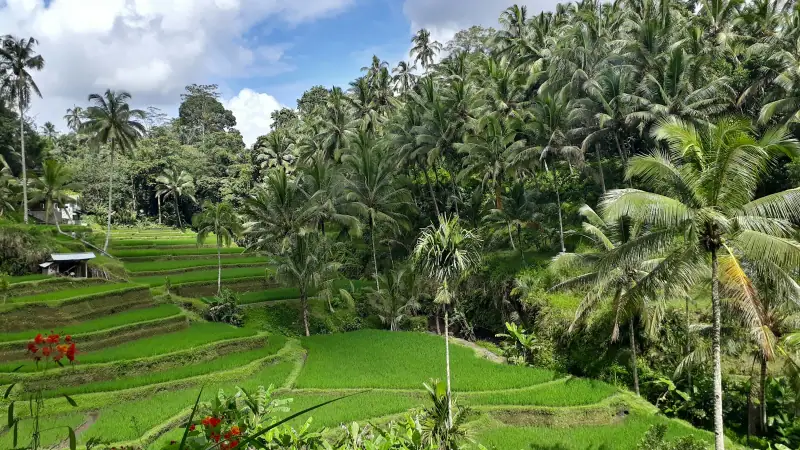
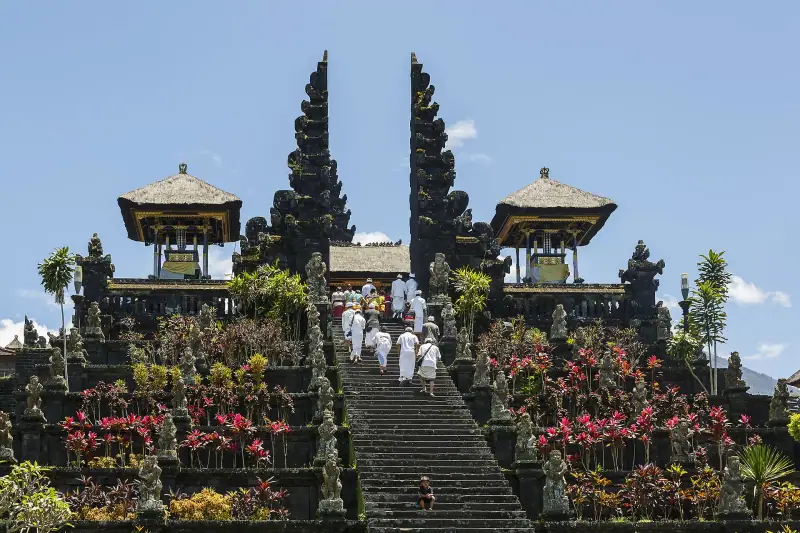
Bali is the gateway to the country for most travelers, and for good reason. The island, with its Hindu culture, moves to the rhythm of daily offerings placed in front of houses, village ceremonies and temple festivals. It offers beaches, surf spots, volcanoes, terraced rice fields and a rich cultural life in a small space.
Ubud, in the heart of the island, is the classic base for anyone interested in dance, crafts, yoga and the surrounding rice-field landscapes. Beaches and nightlife are concentrated rather in the south, around Seminyak, Canggu or the Bukit Peninsula. The terraced rice fields of the Tegallalang area, north of Ubud, are among the island’s best-known sights, but are also very busy: leave early in the morning to enjoy them.
A few benchmarks to enjoy Bali:
- Vary your bases. Spending the whole week in one neighborhood means staying on the surface of the island. Combine an inland base and a coastal base;
- Account for traffic. Distances are short but the roads are congested, especially in the south: a trip of a few dozen kilometers can take a good part of the morning;
- Respect the temples. A sarong and sash are required to enter most of them, often rented at the entrance; women who are menstruating are traditionally not admitted inside the grounds;
- Avoid Nyepi. The day of silence, in spring, brings the whole island to a halt, airport included: know this before fixing your dates.
Accommodation in Bali
Compare hotels and villas in Ubud, Seminyak or on the coast by dates and budget.
Java: Yogyakarta, Borobudur and Prambanan
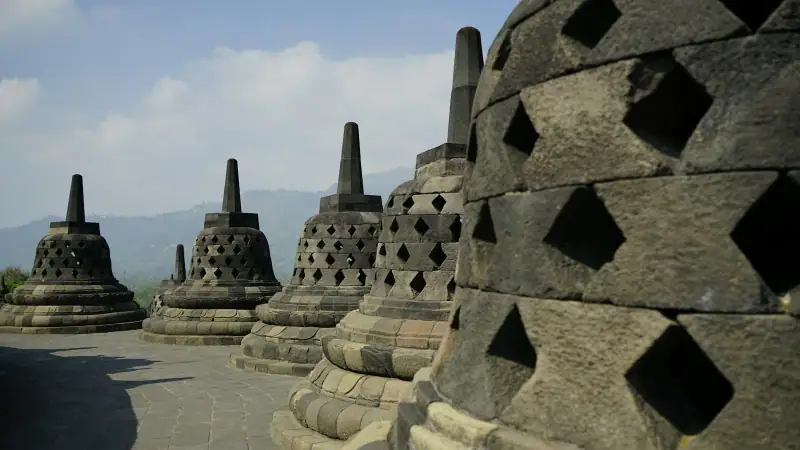
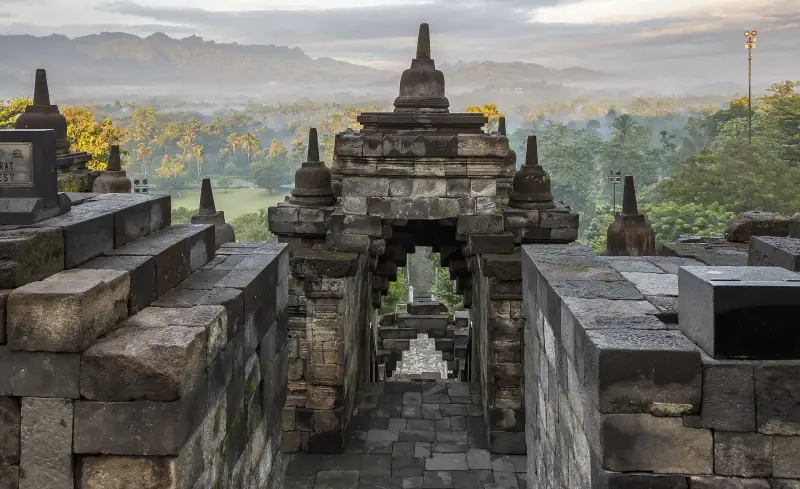
Java is the country’s most populous island, and its political center with Jakarta, the capital. It is also the historic cultural heart of the archipelago. Yogyakarta, a university and arts city, is the ideal base for discovering two major sites: Borobudur, an immense 9th-century Buddhist monument raised in the Kedu plain, and Prambanan, a complex of Hindu temples dedicated to Shiva, Vishnu and Brahma. Both are UNESCO World Heritage sites and are usually visited in one day each, or even in one combined day from Yogyakarta.
The city itself deserves a day or two: the sultan’s palace (kraton), batik workshops, markets and a renowned street food scene. For Borobudur, access to the upper terrace is regulated to protect the monument: find out the booking rules in force before you go.
Jakarta, an immense metropolis, is mainly an air hub. Half a day in the colonial old town (Kota Tua) is enough for anyone with a layover, but most travelers go directly to Yogyakarta by plane or train.
The volcanoes of eastern Java: Bromo and Ijen

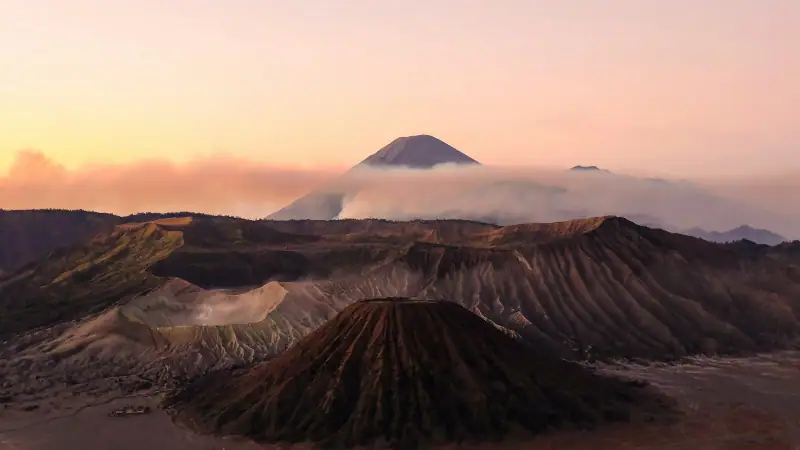
Eastern Java holds two striking volcanic experiences. Mount Bromo, in the Tengger massif, is traditionally admired at sunrise from a viewpoint, above a sea of clouds that wraps the caldera. You can then descend into the “sea of sand” and walk to the edge of the smoking crater.
The Ijen massif, farther east, is famous for its turquoise crater lake and its sulfur miners, who go down into the crater every day. Visits leave at night to see the “blue flames,” a phenomenon caused by the burning of sulfurous gases. The trip is made on foot along a steep trail; bring a headlamp, warm layers and a gas mask, because the fumes are irritating. The two sites can be linked, but night departures are tiring: take time to recover between them.
Bromo and Ijen are classically combined on a multi-day circuit between Yogyakarta and Bali, which links Java to Bali overland, with a short ferry crossing as the key link.
Bromo, Ijen and Borobudur excursions
Compare guided excursions with transport from Yogyakarta or Malang, often more practical for sunrises.
Lombok and the Gili Islands
East of Bali, across the Lombok Strait, the island of Lombok is quieter, more strongly Muslim and less urbanized. It is dominated by Rinjani, a volcano that peaks at more than 3,700 m (12,100 ft) and whose ascent, over two to three days with a guide and porters, ranks among the finest hikes in the country. The south of the island attracts surfers, for its sandy beaches and waves.
In the northwest, the three Gili Islands (Trawangan, Meno and Air) offer long stretches of pale sand, easy diving and no motor vehicles: you get around on foot, by bike or by horse cart. Gili Trawangan is the liveliest, Gili Meno the quietest, Gili Air in between. They are reached by fast boat from Bali or from the Lombok coast. Crossings can be rough depending on the sea; do not plan a flight on the same day as your return to Bali.
Komodo and Flores
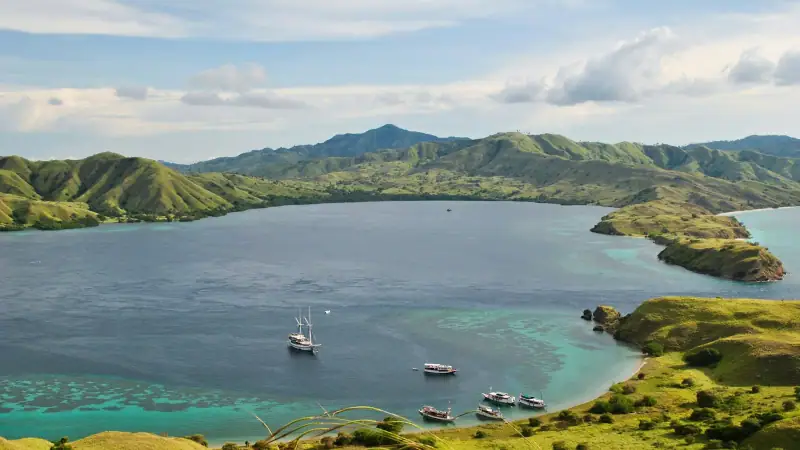
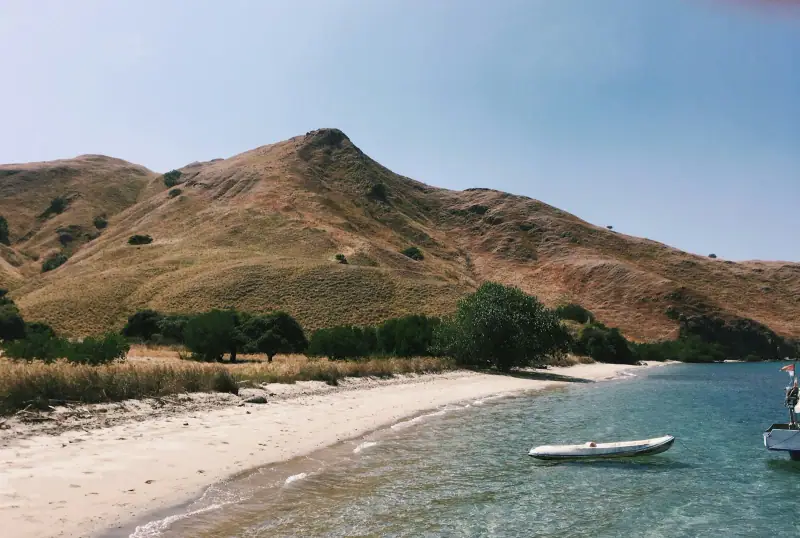
Komodo National Park, a UNESCO site, is home to the famous Komodo dragon, the world’s largest lizard, found in the wild only in this part of the archipelago. The departure base is the small town of Labuan Bajo, in the west of the island of Flores, reachable by direct flight from Bali. Excursions are by boat, for a day or several days, with stops at islands for hikes with rangers, pink-sand beaches, and diving or snorkeling, including the chance to approach manta rays depending on the site and season.
Farther east on Flores, Kelimutu is famous for its three crater lakes whose color changes over time. The island is crossed by road, but distances, on winding mountain roads, are longer than the map suggests. For a first stay, Labuan Bajo and Komodo National Park are more than enough; Kelimutu is for those with several extra days.
Komodo cruises
Compare day or multi-day boat trips from Labuan Bajo: length, meals and equipment included.
Sulawesi and Toraja country
Sulawesi, an island shaped like the letter K, stands out for its Toraja culture, in the southern highlands. The Toraja are known for their traditional houses with boat-shaped roofs (tongkonan), their rice-field landscapes and their elaborate funeral rites, which play a central role in the life of the people. Some ceremonies are open to visitors, but you should go with a local guide, discreetly and with respect for the families.
Farther north, the Togian Islands, in the Gulf of Tomini, appeal to diving fans and lovers of remote places. Access, by boat and with little infrastructure, demands patience: this destination is planned in advance and suits seasoned travelers.
Raja Ampat, a diving paradise
Raja Ampat, “the four kings,” is an archipelago in Southwest Papua province, at the western tip of the island of New Guinea. It is known for the exceptional biodiversity of its reefs, among the richest in the world, and for its landscapes of forested karst islets, of which the Wayag viewpoint, in the north, is the most famous. It is a top-tier diving and snorkeling destination.
One point of caution: do not confuse Raja Ampat, in Indonesia, with Papua New Guinea, which is a separate country, east of the island. You generally arrive by flight to Sorong, then by boat to Waisai or to your accommodation. Lodging is most often in small family guesthouses or bungalows. Infrastructure is limited, prices are higher than elsewhere in Indonesia, and you need to plan several days there for the trip to be worthwhile.
Flights to Indonesia
Compare flights to Bali, Jakarta or Yogyakarta, and domestic flights to Labuan Bajo or Sorong.
When to go to Indonesia
The climate is tropical and two seasons dominate: a dry season, roughly April to October, and a more pronounced rainy season from November to March. In Bali, Java, Lombok and Komodo, the dry season is the most comfortable for hikes and cruises. July and August remain the busiest and most expensive months.
Seasons are not the same everywhere: the far east of the archipelago, including Raja Ampat, has a different calendar, and the sea is often calmer between October and April. Tropical rains are generally brief and do not prevent travel, but they make mountain roads and night departures to the volcanoes less pleasant. For a first trip, aim for May, June or September, quieter than high summer.
Visa, health and formalities
Entry rules depend on your passport. Check the official travel advice of your government before you book: travel.state.gov (US), GOV.UK (UK), travel.gc.ca (Canada), Smartraveller (Australia) (checked November 2026). Passports must generally remain valid for several months after entry. Several digital procedures are also requested on arrival, notably an online customs declaration and, for Bali, a tourist levy (as of October 2026). These rules change regularly: check the official sites before leaving and do not rely on an old account.
On health, ask your doctor or a travel clinic, and see the official travel health pages (CDC in the US, TravelHealthPro in the UK). Mosquitoes are present across much of the country: protect yourself from bites. Drink bottled or filtered water. Travel insurance with repatriation is strongly recommended, especially for diving, high-altitude treks and boat travel.
Getting around the archipelago
The plane is the most efficient way to cover large distances, especially as the country spans three time zones. Several airlines operate between Bali, Jakarta, Yogyakarta, Labuan Bajo or Sorong, with baggage allowances sometimes limited: check the allowance before booking. Between Bali, the Gilis and Lombok, fast boats run back and forth. On Java, the train is comfortable and punctual between Jakarta, Yogyakarta and Surabaya.
Once there, motorbike taxis and ride-hailing apps are everywhere, but riding a scooter yourself is risky: congested roads, rules little respected, and insurance that does not always cover accidents without a suitable license. For long-distance excursions, a private driver by the day is often a good compromise between comfort and price. Renting a car without a driver is quite rare for foreign travelers.
Budget: what to expect
The currency is the Indonesian rupiah. Indonesia remains broadly affordable, with large gaps: a trip to Java or Lombok costs noticeably less than a stay in the tourist corners of Bali, Komodo or Raja Ampat, where cruises and remote lodging cost more. Local meals in small restaurants (warungs) are very cheap; popular restaurants in tourist areas are more expensive.
The main spending items are long-haul flights, domestic flights, Komodo cruises and diving. For figures, check rates at the time of booking: they change from one season to the next.
At the table: flavors of Indonesia
Indonesian cuisine is fragrant, spicy and very varied. Nasi goreng (fried rice) and mie goreng (fried noodles) are everywhere, as are satay skewers and gado-gado, a vegetable salad with peanut sauce. In Bali, roast pork (babi guling) is a festival specialty; in Yogyakarta, gudeg, a simmered jackfruit dish, is a classic. Tempeh, made from fermented soy, is a Javanese institution.
A cooking class is an excellent way to understand these flavors: you visit a market, prepare several dishes and then taste them.
Cooking classes in Bali
Discover the markets and prepare Balinese dishes with a local chef: compare packages and reviews.
Itinerary ideas
Rather than skimming everything, choose a guiding line. Here are a few classic combinations, to adapt to your length of stay:
- One week: Bali. Ubud, the coast, a volcano or a temple. Simple, with no long transfers;
- Two weeks: Java and Bali. Yogyakarta, Borobudur, Prambanan, Bromo, then Bali;
- Three weeks: Bali, Lombok, Komodo. A cultural island, car-free beaches in the Gilis, then the dragons and diving of Labuan Bajo;
- Four weeks and more: west and east. Add Raja Ampat or Toraja country, allowing margins for domestic flights.
Do not overload your schedule: in Indonesia, transfers and waiting for a boat or a flight are part of the trip. If you want to extend your trip to Malaysia or the Philippines, air links exist from Bali and Jakarta, but those countries deserve their own trip.
The final word: where to start?
For a first time, Bali and Java make an excellent pair: culture, volcanoes and beaches, within an accessible radius, with proven infrastructure. Add Lombok or Komodo if you have three weeks, and keep Raja Ampat, Toraja country and the least-visited islands for a second trip.
Book high-season flights and accommodation in advance, check the entry conditions, stay flexible in your schedule, and leave time for the unexpected. It is often around a market, a village ceremony or a boat that is slow to leave that Indonesia will leave its strongest mark on you. Have a great trip!
Frequently asked questions
How long do you need to visit Indonesia?
The country is huge: three weeks let you combine two or three major stops, for example Bali, Java and Lombok. To add Komodo or Raja Ampat, plan on four weeks, because domestic flights and boat crossings take time.
What is the best time to go to Indonesia?
The dry season, roughly April to October, is the most favorable for Bali, Java, Lombok and Komodo. As the country stretches over a very long distance, seasons vary by island: for Raja Ampat, October to April is generally recommended. Check island by island before booking.
Do you need a visa for Indonesia?
Entry rules depend on your passport. Check the official travel advice of your government before you book: travel.state.gov (US), GOV.UK (UK), travel.gc.ca (Canada), Smartraveller (Australia) (checked November 2026). Rules change: also check the conditions, fees, passport validity and digital forms on the Indonesian government's official sites before leaving.
Can you see everything in a single trip?
No, and it is not desirable. It is better to choose one or two regions, limit island changes and keep time for transfers, which are often longer than expected. The rest will make an excellent second trip.
Is Raja Ampat in Papua New Guinea?
No. Raja Ampat belongs to Indonesia, in the western part of the island of New Guinea. Papua New Guinea is a separate country, farther east: do not confuse the two. It is generally reached via Sorong, in Indonesia's Southwest Papua.
Can you combine Indonesia with Malaysia or the Philippines?
Yes, they are close neighbors and regular flights connect the region. Each of these countries deserves its own trip, however.
More Indonesia guides
Keep reading
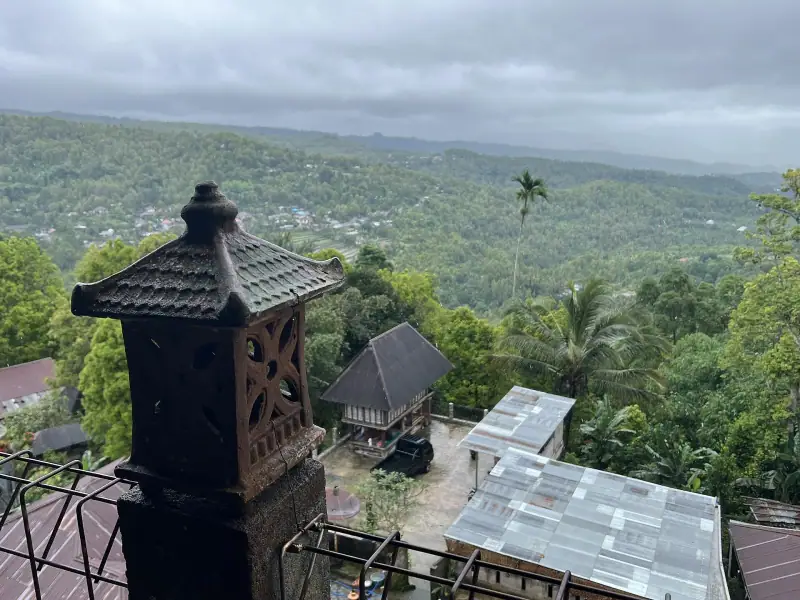
Munduk, Bali: Waterfalls, Lakes and Mountain Coffee, Is It Worth the Detour?
Munduk, a mountain village in northern Bali: waterfalls, twin lakes, drive time from Ubud, ideal length of stay, budget and tips for getting there.
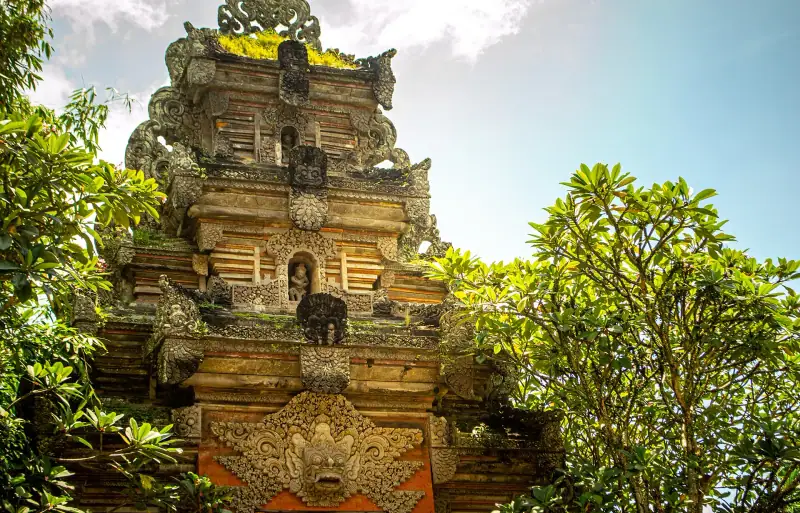
Visiting Ubud: Rice Fields, Temples and Culture in the Heart of Bali
What to see in Ubud: Monkey Forest, Tegallalang rice terraces, Tirta Empul, dance and markets. How to plan 2 to 3 days, avoid the crowds and choose well.
Visiting Yogyakarta, Borobudur and Prambanan: The Cultural Center of Java
Borobudur at sunrise, Prambanan temples, the kraton and Malioboro: how to plan your stay in Yogyakarta, with transport, tips and mistakes to avoid.
Ready-made
Indonesia itineraries
10 days
10 Days in Bali: Ubud, the North, the East and the South Coast Day by Day
Bali in 10 days: a detailed itinerary through Ubud, the rice terraces, the north, the east coast, Nusa Penida and the south. Stops, drive times and tips.
6 days
Yogyakarta to Bali Without a Car: Bromo, Ijen and the Ferry in 6 Days
Yogyakarta, Bromo, Ijen then Bali by train, minibus and ferry: stages, distances, realistic travel times and pitfalls to avoid on this car-free route.
8 days
Flores Itinerary: From Labuan Bajo to Kelimutu Volcano in 8 Days
Flores in 8 days: Labuan Bajo, Komodo, spiderweb rice fields, Ruteng, Bajawa, Ende and the Kelimutu lakes. Stops, drive times, pace and tips.