Where to stay
Where to stay in Waikiki: guide by area
We may earn a commission when you book through links on this page, at no extra cost to you. We don't visit or try the places we cover: we summarize published sources. How we work
In short
- Waikiki is the Hawaiian area best suited to going without a car: beach, restaurants and shops are on foot. A car is only needed for the North Shore or Kailua.
- Kuhio Avenue is the budget pick (the article gives €100-200 a night, about $115-230), 5 to 10 minutes' walk from the beach.
- The Diamond Head end is the quietest part of Waikiki; the beachfront has the historic resorts but rarely costs less than €350 (about $405) a night in high season.
- Resort fees and hotel taxes add up: about 18 to 19% in taxes since January 1, 2026, plus resort fees. Low season is September to November.
Waikiki is the image that comes spontaneously to mind when you think of Hawaii: a white sand beach framed by palm trees, glass skyscrapers and Diamond Head in the background. This iconic Honolulu neighborhood covers about 8.8 km² (3.4 sq mi) between the beach and the canals, and has the highest density of hotels in the whole Hawaiian archipelago. With about 30,000 hotel rooms in and around Waikiki, the supply is huge, and the choice can quickly become intimidating.
But Waikiki is not uniform. Depending on whether you stay on the beachfront a step from the water, or on a parallel street one or two blocks farther, the experience will be radically different. Prices can vary by a factor of three for fairly similar overall quality. This guide reviews the different lodging areas of Waikiki to help you find the ideal option for your expectations and budget. For an overview of the whole island, also see our article on Oahu’s must-sees.
The Waikiki Beach waterfront: the quintessence of the Hawaiian dream
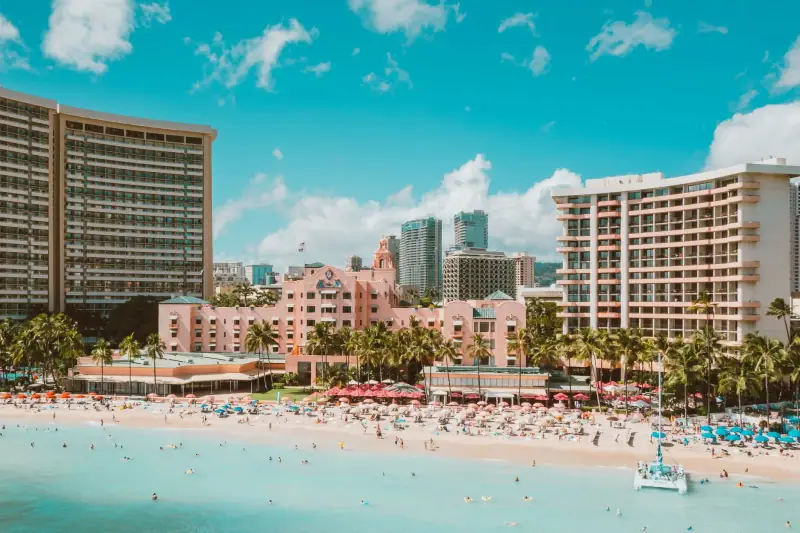
Kalakaua Avenue runs directly along Waikiki beach for its whole length. This is where the most emblematic resorts are, the ones whose names are part of Hawaii’s history. Staying on this strip means having the beach less than 100 meters (330 ft) from your room and enjoying the most spectacular views on the island.
Why choose the waterfront?
The beach within reach. The main advantage is obvious: you leave the hotel and you are on the sand. No walking, no crossing roads. In the morning, before the crowds arrive, the beach is peaceful and swimming is ideal.
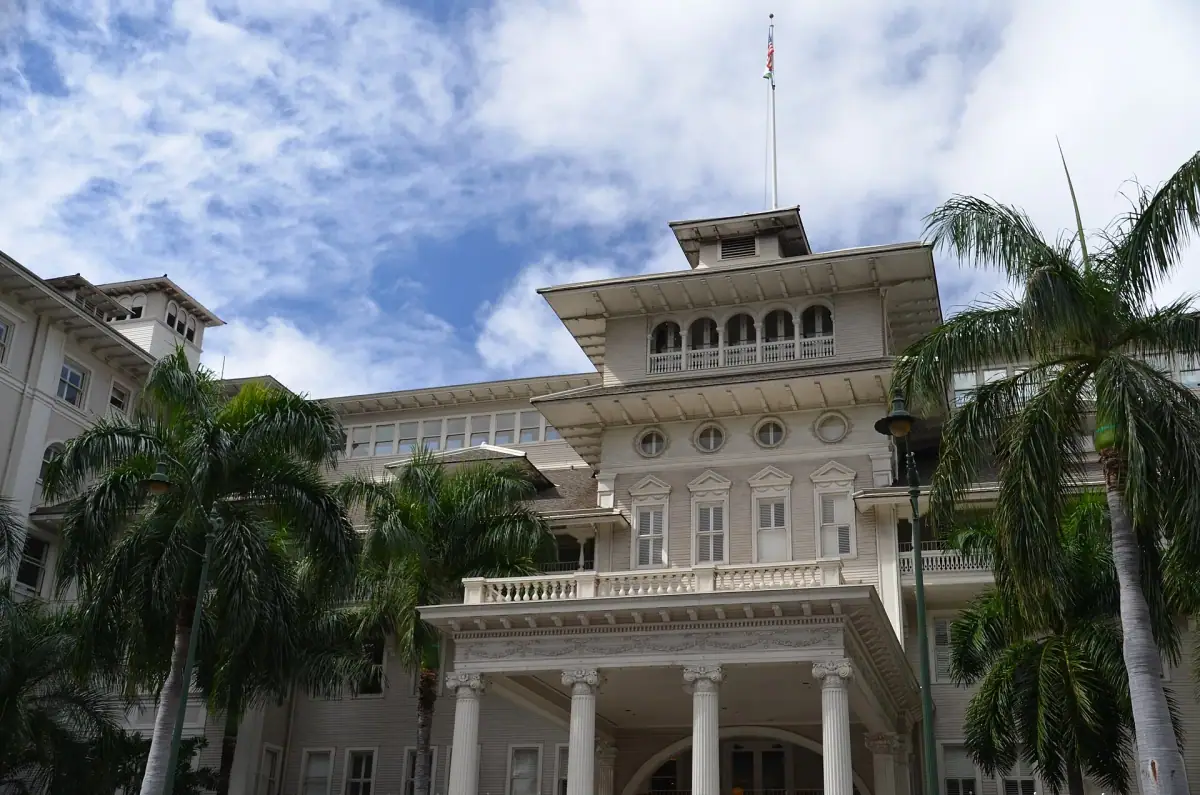
The historic resorts. The Moana Surfrider, opened in 1901, is the oldest hotel in all of Hawaii. The Royal Hawaiian, opened in 1927, is nicknamed the “Pink Palace of the Pacific” for its pastel pink facade that has become a symbol of Waikiki. These properties offer an experience that goes beyond simple lodging: it is an immersion in the history of the archipelago.
Full resort services. Infinity pools, award-winning spas, restaurants with ocean views, concierge services dedicated to excursions: the big waterfront resorts offer everything there. Some even include surf, hula or ukulele lessons.
The constant spectacle. From a room with an ocean view, sunrise and sunset behind Diamond Head or over the sea are unforgettable experiences. The night view of Waikiki’s lights and the dark waters of the Pacific is striking.
Downsides of the waterfront
- Very high prices: rarely less than €350 a night (about $405) in high season
- Significant resort fees: €30 to €50 a night (about $35-58) on top of the advertised rate
- Crowds: the beach in front of the big resorts is the busiest in Waikiki
- Evening noise: Kalakaua Avenue is lively until midnight
Waterfront lodging budget
| Category | Price per night | Profile |
|---|---|---|
| Upper mid-range | €300-500 (~$350-580) | Sheraton Waikiki, Marriott Waikiki Beach |
| Luxury | €500-800 (~$580-930) | Hilton Hawaiian Village, Hyatt Regency Waikiki |
| Iconic | €700-1,500 (~$810-1,740) | Royal Hawaiian, Moana Surfrider |
Who is it for?
The waterfront is perfect for a honeymoon or anniversary trip, for those on a first trip to Hawaii who want the full experience, and for travelers who want to maximize beach time with no logistical constraints.
Hotels in Waikiki
Compare the best hotels on the waterfront and in the neighborhood.
The Diamond Head side: calm and exclusivity
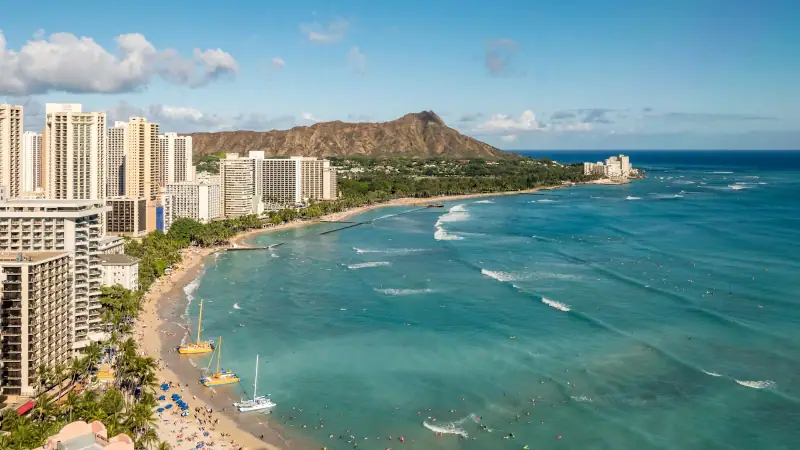
At the east end of Waikiki, beyond Kapiolani Park, the neighborhood stretches toward Diamond Head and Kaimana Beach (also called Sans Souci Beach). This zone is set slightly back from the main activity of Waikiki and is one of the most balanced options in the whole neighborhood.
Why choose the Diamond Head side?
A more peaceful atmosphere. This part of Waikiki escapes the bustle of the big resorts. The streets are less crowded, there is less noise and the general mood is more residential. It is a good compromise between closeness to the attractions and tranquility.
Kaimana Beach. Less known than Waikiki’s main beach, Kaimana Beach is often less crowded. Snorkeling is excellent there, especially around the rocks to the east. The beach borders Kapiolani Park, one of Honolulu’s most beautiful green spaces, with its shaded lawns, bandstand and sports fields.
Proximity to Diamond Head. Climbing Diamond Head crater is one of the most popular hikes on Oahu. From this area, the trail is reachable in 30 to 40 minutes on foot, or 5 minutes by car / a few minutes by Uber. Leaving early in the morning from your hotel, before the tourist shuttles arrive, is a real luxury. Note: non-resident visitors must reserve their entry slot in advance (about $5 per person) on the official Hawaii State Parks website; without a reservation there is no access.
Slightly gentler prices. Although still in the “premium” category, lodging in this area is generally 10 to 20% cheaper than the Kalakaua waterfront for comparable quality.
Downsides of the Diamond Head side
- Less going on in the evening: fewer restaurants and bars than in central Waikiki
- Slightly farther from shops: Ala Moana Center or Royal Hawaiian Center take 20 to 30 minutes on foot
- Inner streets with no sea view: hotels that don’t face Kaimana Beach directly can disappoint
Diamond Head side lodging budget
| Category | Price per night | Profile |
|---|---|---|
| Mid-range | €180-280 (~$210-325) | Condominiums and apartments with kitchen |
| Upscale | €280-450 (~$325-520) | Boutique properties with sea views |
| Luxury | €450-700 (~$520-810) | Suites and upscale residences |
Who is it for?
This area suits couples who want a romantic setting without the crush, travelers who hike or jog in the morning, and those who like a more residential, authentic environment.
Fort DeRussy and west Waikiki: the resort area par excellence
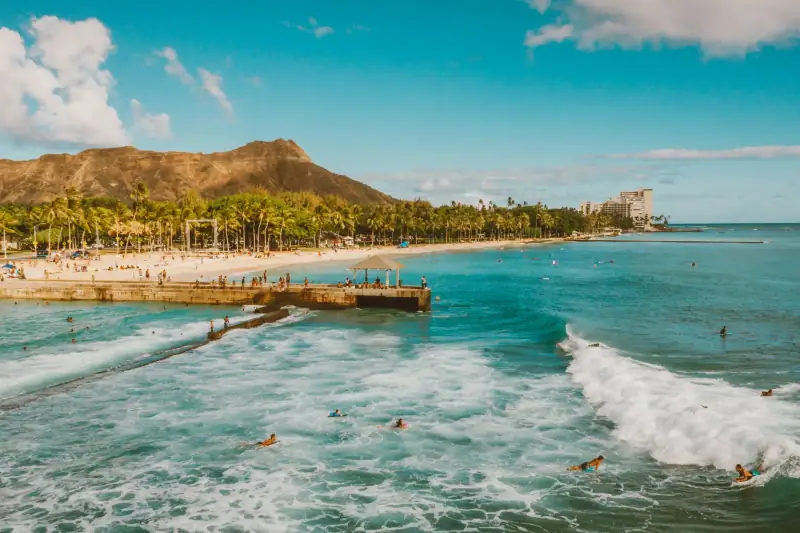
At the west end of Waikiki Beach, the presence of Fort DeRussy (a federal military reserve with its own public beach) creates an open green space that breaks up the built-up line of resorts. The Hilton Hawaiian Village dominates this area, with its many towers, pools, artificial lagoon and private beaches.
Why choose west Waikiki?
The sheer size of the Hilton Hawaiian Village. With more than 2,500 rooms and suites, the Hilton Hawaiian Village is the biggest resort in Hawaii. It works like a small self-contained town with restaurants, shops, spas, lagoons, dive centers and Friday night shows. For families, the offering is especially complete.
Fort DeRussy beach. Kalia Beach (facing Fort DeRussy) is often less crowded than Waikiki’s main beach. The sandy bottom slopes more gradually, making it an ideal spot for young children and beginner swimmers.
The link with Ala Moana. This part of Waikiki is the closest to Ala Moana Center, the largest open-air mall in the United States. For those who want to combine beach and shopping, that is an undeniable advantage.
Downsides of west Waikiki
- Very touristy: little contact with local life
- High resort prices in the big properties
- Large crowds around the Hilton Hawaiian Village, especially on Friday nights during the fireworks shows
West Waikiki lodging budget
| Category | Price per night | Profile |
|---|---|---|
| Upscale | €280-500 (~$325-580) | Hilton Hawaiian Village, Outrigger Reef |
| Luxury | €500-900 (~$580-1,045) | Suites and higher categories |
Kuhio Avenue: the good deal one street from the beach
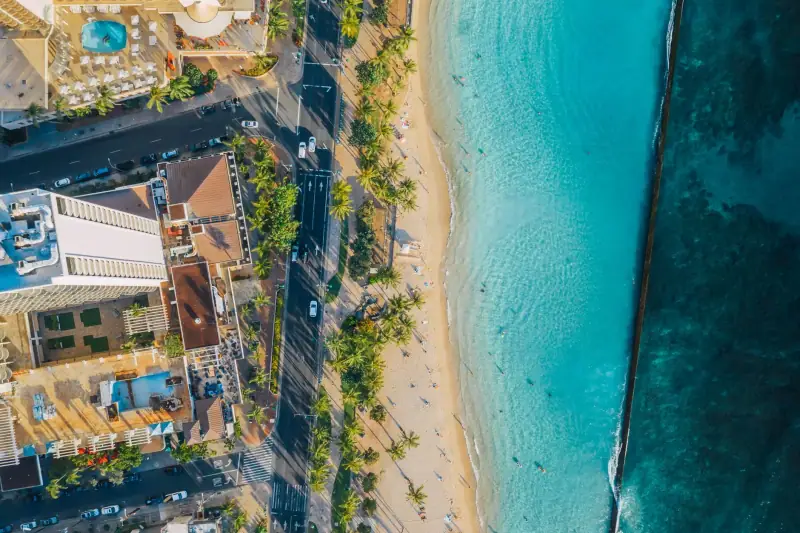
Kuhio Avenue runs through Waikiki parallel to Kalakaua, only one or two blocks from the beach. This is where the more reasonably priced lodging is concentrated: hotels in older buildings, well-kept modern hostels, and condominiums for rent. The beach is a 5- to 10-minute walk away.
Why choose Kuhio Avenue?
The price. This is the main reason to choose this area. For a stay in Waikiki on a limited budget, Kuhio Avenue lets you be within walking distance of the beach for €100 to €200 a night (about $115-230), two to four times cheaper than a waterfront resort.
Local buzz. Kuhio Avenue is livelier than the streets of the big resorts: affordable fusion restaurants, popular bars, independent shops and street food stands follow one another. The International Market Place and the Waikiki Shopping Plaza are close by.
Mobility on foot. From Kuhio Avenue, all of Waikiki is reachable on foot: the beach in 5 minutes, the big Kalakaua resorts for shopping in 3 minutes, and Waikiki’s best surf spots in a 10-15 minute walk.
Varied supply. Kuhio Avenue and its cross streets offer a range from design hostels to boutique hotels and condominiums with kitchenettes, which gives real flexibility depending on the type of traveler.
Downsides of Kuhio Avenue
- No sea view from most rooms
- More night noise: the street is lively late in the evening, especially on weekends
- A walk to the beach: 5 to 10 minutes, which sounds short but can wear on you over time
Kuhio Avenue lodging budget
| Category | Price per night | Profile |
|---|---|---|
| Budget | €80-140 (~$93-160) | Hostels, simple small hotels |
| Mid-range | €140-250 (~$160-290) | 3-star hotels, condos with kitchenettes |
| Comfort | €250-380 (~$290-440) | Boutique hotels, small upscale residences |
Who is it for?
Kuhio Avenue is ideal for solo travelers, young couples on a tight budget, backpackers and anyone who wants to enjoy Waikiki without going broke. If your first contact with the beach comes in the morning after a coffee in a local bakery, a few minutes’ walk is no problem. See our guide to cheap hotels in Hawaii for more tips.
The Ala Moana edge: practical and less touristy
At the gates of Waikiki, between the Ala Wai Canal and Ala Moana Center, a few hotels and residences offer a less touristy alternative. This area is not officially Waikiki, but it is linked to the neighborhood by about a ten-minute walk or a few minutes by bus.
Why choose the Ala Moana edge?
The best price in the whole area. This is where you find the lowest rates while staying within a reasonable distance of Waikiki and its beaches. For long stays (10 days or more), the savings can amount to several hundred dollars.
Easy access to Honolulu. The closeness of Ala Moana Center makes it easy to take the city buses (TheBus) to any Honolulu neighborhood: Chinatown, Kaimuki, Diamond Head or the airport. To discover real Honolulu life beyond Waikiki’s tourist bubble, that is an advantage.
Ala Moana Beach Park. Right across from the mall, this park of about 40 hectares (100 acres) with its quiet beach and protected lagoon is one of the best calm-water swimming spots on Oahu. Less known to tourists, it is much loved by residents.
Downsides of the Ala Moana edge
- Not in Waikiki: you will have to walk or take the bus to reach the famous beach
- Less picturesque surroundings: the feel is more urban and commercial
- Little lodging available: hotel supply is limited in this area
Ala Moana edge lodging budget
| Category | Price per night | Profile |
|---|---|---|
| Budget | €90-150 (~$105-175) | Simple hotels, guesthouses |
| Mid-range | €150-250 (~$175-290) | Apartments with kitchen |
Car rental in Honolulu
To explore Oahu beyond Waikiki: North Shore, Kailua, Pearl Harbor...
Waikiki area comparison table
| Area | Average price/night | Distance to beach | Atmosphere | Car useful |
|---|---|---|---|---|
| Waterfront (Kalakaua) | €350-900 (~$405-1,045) | On the beach | Luxury resort | No |
| Diamond Head / Kaimana | €200-500 (~$230-580) | 5-10 min | Calm and residential | No |
| West / Fort DeRussy | €280-700 (~$325-810) | On the beach | Large beach resort | No |
| Kuhio Avenue | €100-280 (~$115-325) | 5-10 min | Lively, mixed | No |
| Ala Moana edge | €90-200 (~$105-230) | 15-20 min | Urban, local | Advised |
Which area to choose for your profile?
First trip to Hawaii: The Kalakaua waterfront for the complete iconic experience, or Kuhio Avenue for the same setting at a lower price. Read our article on Waikiki for everything you need to know before arriving.
Romantic trip / honeymoon: The Diamond Head side for serenity and views, or a waterfront resort with an ocean-view room and direct beach access.
Family with children: West Waikiki (Hilton Hawaiian Village area) for its pools, lagoon and family-friendly infrastructure. Kuhio Avenue can also work with young children if budget is a key criterion. With toddlers, also compare with the calm lagoons of the west coast in our guide Ko Olina or Waikiki for families.
Tight budget: Kuhio Avenue without hesitation, or even the Ala Moana edge for long stays. Beach access stays very easy and the savings are substantial. Our Hawaii budget guide will help you optimize all your spending.
Solo traveler / local discovery: Kuhio Avenue or the Ala Moana edge, to stay close to real Honolulu life while enjoying Waikiki’s beaches.
Practical tips for lodging in Waikiki
Book early, especially in high season. Waikiki is one of the most booked destinations in the United States. In December-January and July-August, popular hotels are full 4 to 6 months ahead. The best time to visit Hawaii remains spring and fall, which are less crowded.
Watch for hidden fees. Waikiki is famous for its “resort fees” (€25 to €50 a night, about $29-58) added to the room rate. Also add Hawaii’s lodging taxes (about 18 to 19% in total since the TAT increase on January 1, 2026). Always calculate the total cost per night before comparing offers.
Car or no car? Waikiki is the only place in Hawaii where you can do without a car for daily life. Buses, Uber and organized tours are enough to explore the city and its surroundings. However, to go to the North Shore, visit Kailua or explore Oahu’s remote coasts, a rental car is needed. Rent it by the day if needed rather than for the whole stay.
Choose weeknights. Prices in Waikiki rise noticeably on Friday and Saturday. If you have flexibility, arriving on a Sunday or Monday can save 15 to 25% on the first nights.
Surfing and activities: Waikiki is the ideal surf spot for beginners, with regular waves and quality schools. From the beach, board rental shops and instructors are available without reservation on most days. To go further, our article on surfing in Hawaii lists the best spots of the archipelago.
Waikiki remains one of the most emblematic beach destinations in the world, and each of its areas offers a different way to enjoy it. Whether you are after the total resort experience on the front line, the tranquility of the Diamond Head side or the best value on Kuhio Avenue, you will find in Waikiki an option that matches your vision of Hawaiian paradise.
Frequently asked questions
Do you need a car to stay in Waikiki?
No, Waikiki is the Hawaiian area best suited to going without a car. The beach, restaurants and shops are all within walking distance. To explore the rest of Oahu (Polynesian Cultural Center, North Shore), a car or organized tours are needed.
Which part of Waikiki is the quietest?
The Diamond Head end of Waikiki, around Kaimana Beach (Kapiolani Park), is the quietest. It is set slightly back from the main shopping streets and big resorts, which gives it the feel of a coastal residential neighborhood.
How much does a hotel cost in Waikiki per night?
Prices range from €100 to €150 (about $115-175) for a budget hotel behind Waikiki, to €300-600 (about $350-695) on the beachfront, and up to €900-1,500 (about $1,045-1,740) for iconic resorts like the Royal Hawaiian or the Moana Surfrider. Outside high season, rates can drop by 20 to 30%.
Waikiki or Honolulu: where to stay?
For a first trip focused on the beach and a tropical atmosphere, Waikiki is the obvious choice. For a stay oriented toward culture, food and local life without the tourist crowds, other Honolulu neighborhoods (Kaimuki, Chinatown) may be preferable. Our guide where to stay in Honolulu compares all the options.
When is the best time to get good prices in Waikiki?
Low season in Waikiki runs from September to November. Prices are about 20 to 30% lower than in high season (December-March, June-August), the weather stays very pleasant and the beaches are less crowded.
Are there affordable hotels in Waikiki?
Yes, on Kuhio Avenue and in the parallel streets behind Kalakaua, several properties offer rates of €100 to €200 a night (about $115-230). Some condominiums with a full kitchen also offer good value for stays of more than a week.
More Hawaii guides
Keep reading
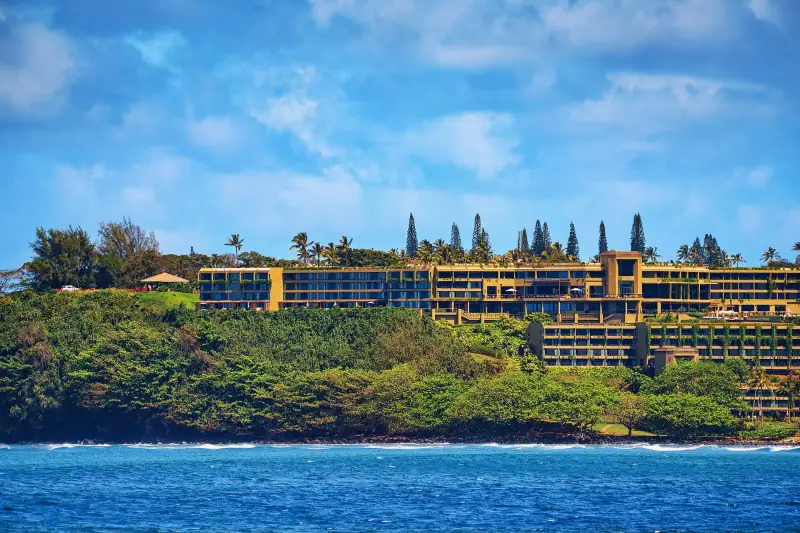
Where to stay in Kauai: complete guide to the best lodging
Which area to choose for staying in Kauai? Poipu, Princeville, Kapaa or Lihue: a full comparison of areas, lodging types and budgets.
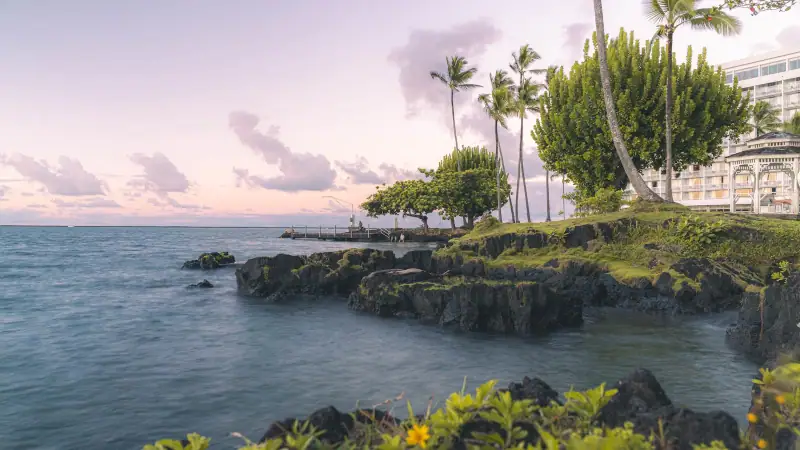
Where to stay on Big Island: complete guide to the best areas
Kailua-Kona or Hilo, Kohala Coast or Volcano Village? How to choose where to stay on Big Island according to your budget and what you want to do.
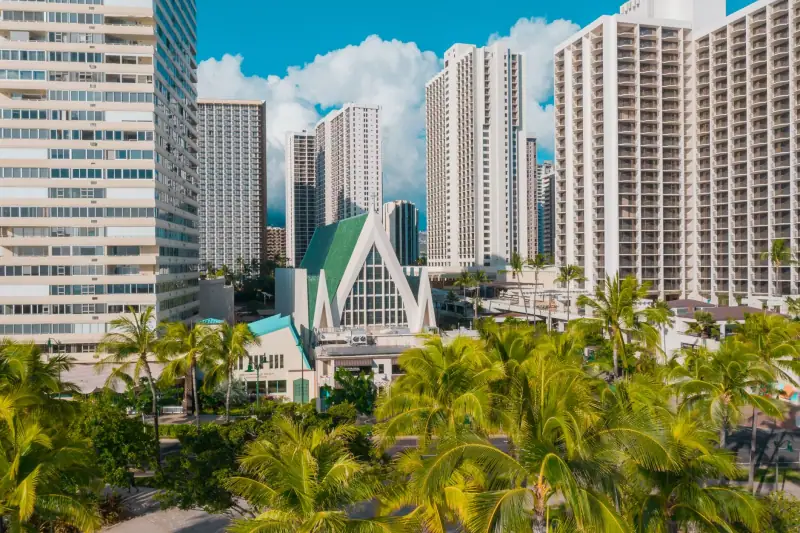
Where to stay in Honolulu: the best neighborhoods
The best neighborhoods to stay in Honolulu for your budget and travel style: Waikiki, Ala Moana, Chinatown, North Shore, Kailua. Complete guide.
Ready-made
Hawaii itineraries

5 days
Big Island road trip in 5 days
Kailua-KonaVolcano VillageHilo or Hamakua Coast
7 days
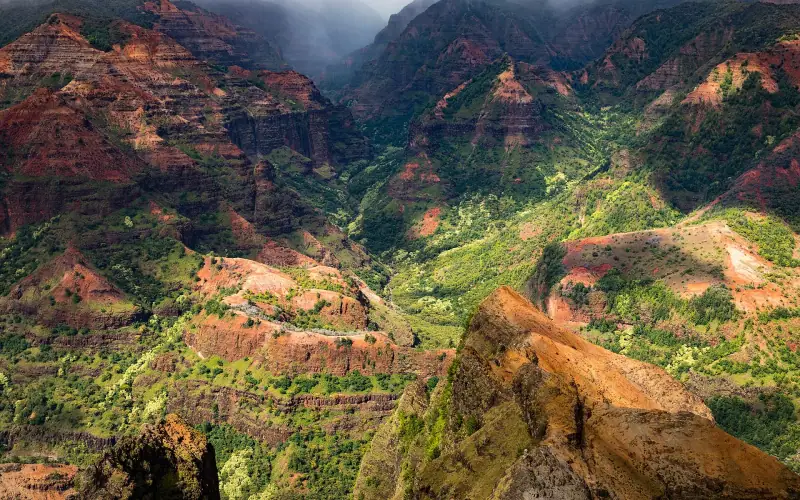
Kauai 7-day itinerary: the best road trip on the wild island
A detailed 7-day Kauai itinerary: Na Pali Coast, Waimea Canyon, Hanalei Bay and the best beaches. Day-by-day plan for an unforgettable road trip.
7 days
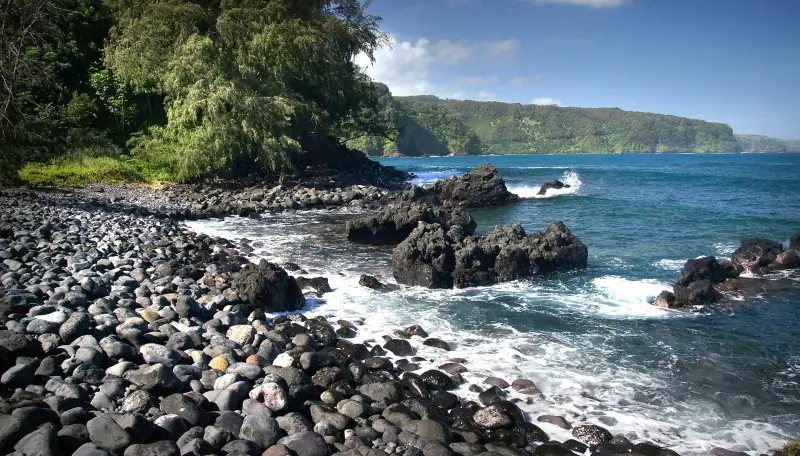
Maui 7-day itinerary: the complete guide to planning your trip
Maui in 7 days: Road to Hana, Haleakala, Wailea and Kaanapali beaches. A day-by-day plan to discover the pearl of the Hawaiian archipelago.