What to see
Visiting Le Touquet-Paris-Plage: what to see and do in 1 to 3 days
We may earn a commission when you book through links on this page, at no extra cost to you. We don't visit or try the places we cover: we summarize published sources. How we work
In short
- One day covers the seafront, the shopping street, the market (on opening days) and a forest walk. A two-day weekend adds a water activity, the lighthouse and Canche Bay.
- The nearest station is Étaples-Le Touquet, a few kilometers from the resort: plan a bus, taxi or bike. Boulogne-sur-Mer is about 30 km (19 mi) away, roughly half an hour.
- Le Touquet is one of the most expensive resorts on the Opal Coast. Visit on weekdays or off season, or stay in Étaples.
- Check tide times before walking on the beach or in Canche Bay, and bring a windbreaker in any season.
Le Touquet-Paris-Plage is the most elegant resort on the Opal Coast. It looks like neither the fishing ports of the north nor the wide wild spaces of the capes: here, everything is about sand, pines and villas. An immense beach open to the Channel, a forest planted at the end of the 19th century, streets laid out in straight lines and holiday houses of very different silhouettes make up a setting unique in the region.
This guide helps you plan your visit: a little history to understand the town, the main sights, the activities to try, how to get there and around, a sample program over one to three days and a few tips for keeping to a budget.
Le Touquet-Paris-Plage in brief
The resort is in the Pas-de-Calais department, between the mouth of the Canche and the sea, at the southern end of the Opal Coast. It faces the Channel, and the neighboring town of Étaples lies across the estuary, on the Canche Bay side.
Its history is recent by the region’s standards. In the middle of the 19th century, the site was just a set of shifting dunes. Maritime pine plantations gradually stabilized them and gave birth to the forest, which is today one of the resort’s great assets. A first seaside resort then developed, and, at the beginning of the 20th century, British investors gave it new momentum with leisure facilities, notably golf. Le Touquet became a renowned holiday spot, frequented by visitors from Paris and from across the Channel, and this heritage can still be read in the architecture.
Today the town lives mostly from tourism: second homes, hotels, restaurants, shops, sports facilities and events all year. It remains very popular for weekends with visitors from Paris and Lille.
Good to know: Le Touquet is a much-requested weekend destination. For the spring long weekends, summer and school holidays, book several weeks ahead, especially accommodation and restaurants.
To place the resort in the context of the coast, our guide to visiting the Opal Coast also presents the capes, Wimereux and Wissant.
Getting there and getting around
Getting there
From Lille, allow about an hour and a half to two hours by road depending on traffic. Boulogne-sur-Mer is about thirty kilometers (19 mi) away, roughly half an hour.
By train, the station to use is Étaples-Le Touquet, served by regional TER trains. It is not in the resort: allow a few kilometers to reach the center. Depending on the period, a bus, taxi or bike covers the link. Check schedules before you leave.
Getting around locally
- On foot: the center, the shopping street, the seafront and the first wooded streets are easy to cover on foot.
- By bike: the resort is flat and well suited to cycling, with routes in the forest and along the coast. It is even one of the best ways to discover the villa districts. The wind can however be felt on the seafront.
- By car: practical for getting to Étaples, Boulogne-sur-Mer or the Bay of Somme. In high season, parking in the town center and near the beach is complicated: arrive early or park a little further away.
- By bus and taxi: useful for the link with Étaples-Le Touquet station. Find out about local schedules, which vary with the season.
Where to stay in Le Touquet-Paris-Plage
Summer weekends, long weekends and school holidays fill up fast. Compare hotels, rentals and bed and breakfasts in the resort and the surrounding area.
The beach and the seafront
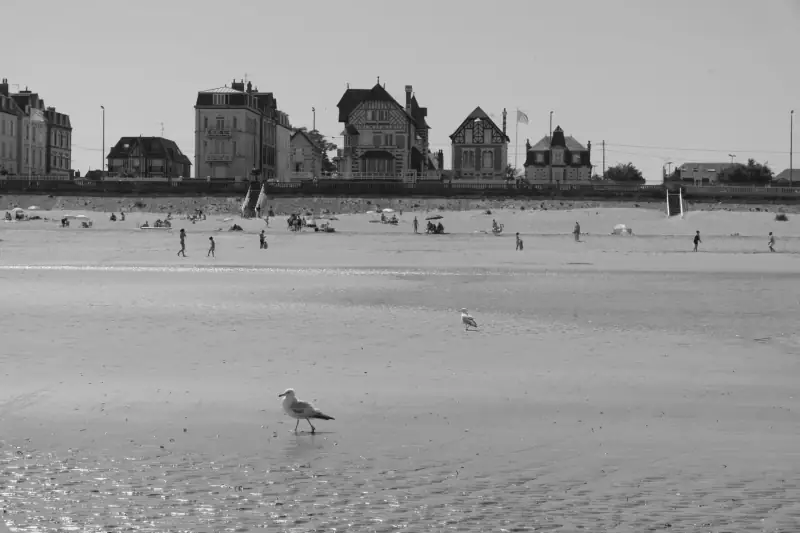
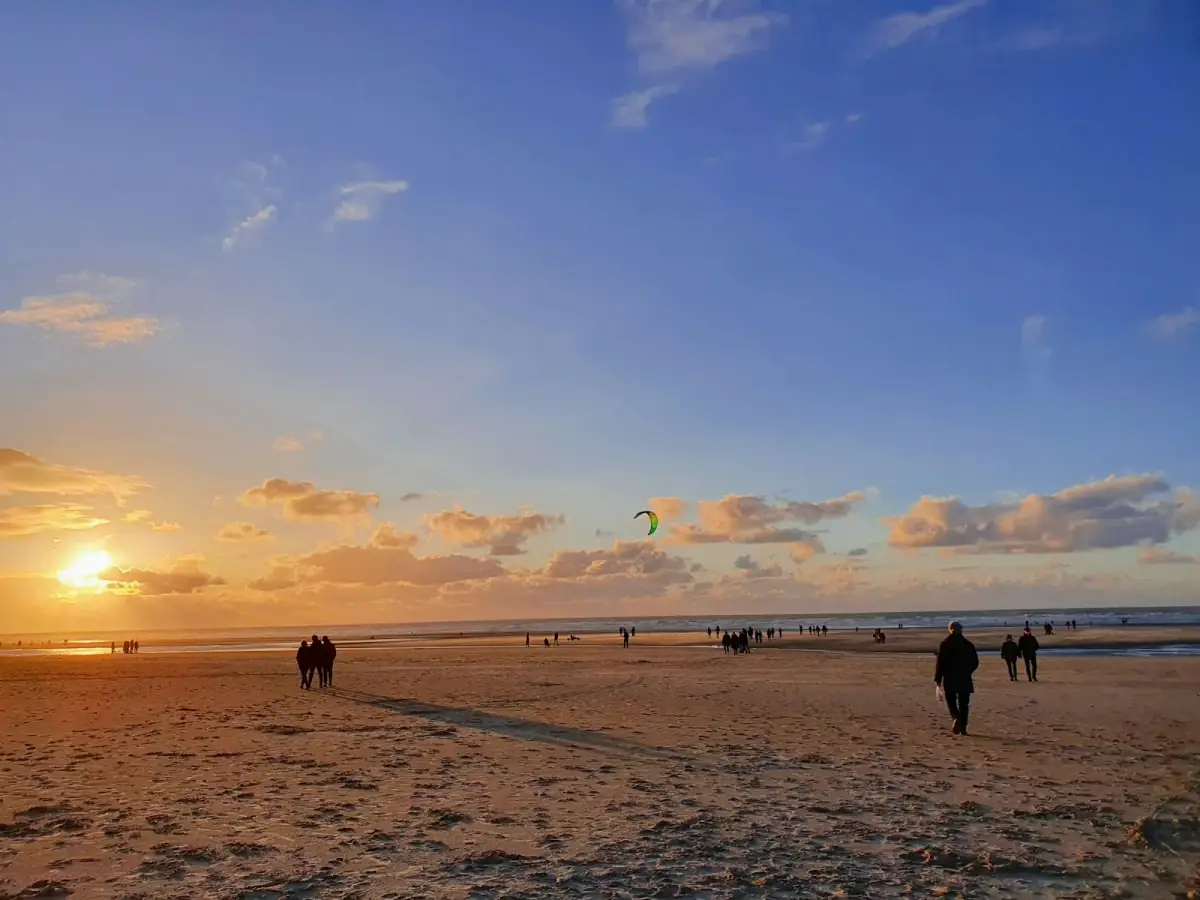
This is the heart of the visit. Le Touquet beach is a very large stretch of fine sand, facing the Channel and backed by dunes and pines. At low tide, the sea pulls back very far and leaves an immense playground for walkers, riders, kite flyers and racket-game players.
Strolling and enjoying the sand
The most pleasant thing is to walk along the water, preferably in mid-morning or late afternoon when the light is beautiful. For a beach day, settle in the supervised areas, especially with children. A few useful pointers:
- Check the tide times before heading out on the sand: the water can rise quickly on these big tidal flats.
- Respect the swimming flags and the supervised zones.
- Bring a windbreaker, even in summer: the sea air is brisk.
- Do not leave litter: the beach is a natural space in constant use.
The seafront
Behind the beach, the seafront lines up restaurants, outdoor cafes and residences. It is a good place for lunch facing the water or a break at the end of the day. Menus often lean toward fish, seafood and brasserie dishes, with fairly high prices in season.
Sand yachting and water activities
The beach is also a playground for board and wind sports fans. Sand yachting, which means letting the wind pull you across the sand in a small wheeled craft, is one of the resort’s emblematic activities: schools offer introductory sessions, often open from a certain age and with no prior experience. Kitesurfing, kite flying, light sailing and paddleboarding are also practiced depending on conditions. Ask the clubs about conditions, minimum ages and rates, which vary with the season.
Activities and excursions in Le Touquet
Guided walks, nature outings and experiences around Le Touquet and the Opal Coast: compare the offers available for your dates.
The Le Touquet forest
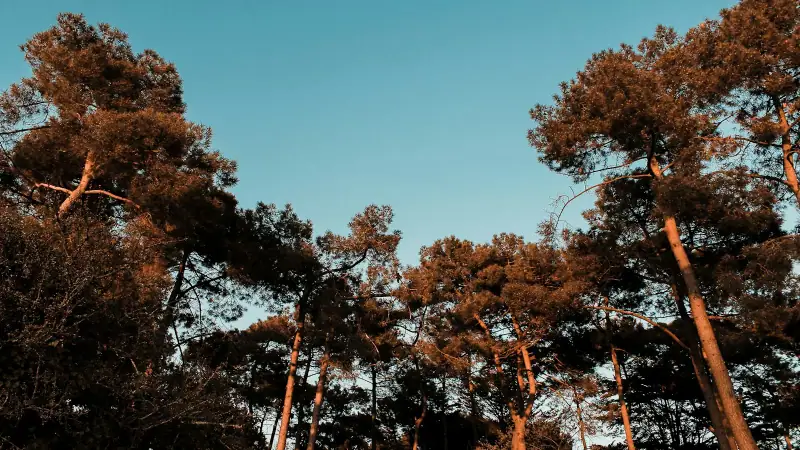
The pine forest is what most sets the resort apart from the other seaside towns of the coast. Planted from the second half of the 19th century to fix the dunes, it surrounds a large part of the town and offers shade, the scent of resin and big open spaces for walks when the wind blows on the seafront.
Walking, cycling or horseback riding
Several lanes and paths allow long walks on foot or by bike. The atmosphere is very different from the beach: calm, shaded, with glimpses of the dunes. Riding fans also find riding centers there, and the forest lets you reach the sand on horseback depending on the period and permits. For walks on foot, bring good shoes, water and a map: it is easy to get lost in the maze of paths.
The villa districts
In the wooded streets, the villas tell the story of the resort. You see holiday houses in very varied styles: half-timbering and Anglo-Norman style roofs, brick facades, neo-regional decor, the more geometric lines of the interwar period. They are best discovered on foot or by bike, strolling without a precise goal. Most are private property: admire them from the street, without going in.
The center, the shopping street and the market
The heart of the resort is organized around a pedestrian shopping street lined with fashion and decor boutiques, chocolate makers, galleries and cafes. It is a very busy place for strolling on weekends, and a good fallback in rain or wind.
The market
The market in the center is a highlight of the visit, with fresh produce, local specialties and a fine atmosphere. Opening days vary with the season: check with the tourist office before planning around it. It is a chance to taste seafood, cheeses and specialties of the North. For other ideas of products to try on this coast, our guide to the culinary specialties of the Bay of Somme gives a good overview of the neighboring coastal table.
Eating in Le Touquet
Dining is plentiful and varied, from brasseries to more upscale tables, with creperies and tea rooms in between. In high season, on weekends and for lunch with outdoor seating, book. Off season or on weekdays, you will have more choice. Rather than following a specific name, favor short menus that work with fish and seasonal produce, and compare the menus posted at the door.
The Canche lighthouse and Canche Bay
The Canche lighthouse is one of the symbols of the resort. It can be spotted from afar, above the trees, and can be visited during variable opening periods: check the hours and access conditions with the tourist office before you come. At the top, the view takes in the forest, the roofs of the town, the beach and the bay: it is an ideal viewpoint for understanding the geography of the site.
Canche Bay
On the estuary side, Canche Bay offers a completely different atmosphere: mudflats, dunes, migratory birds, with wilder nature that changes a lot with the tide. It is a pleasant spot for bird and photography fans, especially at sunrise and sunset. Keep in mind that sandy and muddy areas can be treacherous when the tide comes back in: stay on the paths and marked areas.
Further south, the neighboring Bay of Somme offers another great nature experience: if you extend your stay, see our article on Marquenterre park, which pairs well with a stay in Le Touquet.
Golf, horseback riding and sports
Le Touquet owes part of its reputation to its sports facilities. The resort offers in particular:
- golf courses in a setting of dunes and pine groves, which have contributed to its image since the early 20th century;
- riding centers and rides in the forest or on the sand;
- sailing clubs for sailing, sand yachting, kitesurfing and paddleboarding;
- bike paths and jogging routes through the forest;
- a major sand motorcycle event held in winter, which draws a large crowd: find out the dates and the traffic and parking restrictions, because they can disrupt access to the resort.
For families, the resort also has an indoor water park, handy when the weather is gloomy, and spa and thalassotherapy facilities for those who want to extend the seaside resort spirit. Opening hours and rates of these facilities change with the period: check them online before you go.
What to do in 1, 2 or 3 days
One day
- Morning: arrival, coffee on the seafront and a long walk on the beach.
- Midday: lunch in the center, then the shopping street and the market if it is an opening day.
- Afternoon: bike ride or walk through the villa districts and the forest.
- End of the day: the Canche lighthouse or back to the sand for sunset.
Two days
- Day 1: the program above.
- Day 2: a water activity in the morning (sand yachting, paddleboarding, kitesurfing depending on conditions), lunch, then Canche Bay and a detour through Étaples in the late afternoon.
Three days
- Day 3: excursion to Boulogne-sur-Mer, about half an hour away, for the upper town and Nausicaá. Our guide to visiting Boulogne-sur-Mer details the visit. You can also head back up to the capes, or down to the Bay of Somme.
For a longer stay, our 5-day road trip in the Hauts-de-France includes several stops along the coast.
A base for exploring the coast
Étaples, Le Touquet or Boulogne: compare accommodation according to your budget and your sightseeing program.
Where to stay to visit Le Touquet
The choice depends mostly on your budget and your pace:
- In the center or near the seafront: practical for doing everything on foot, but more expensive, especially in season.
- In the wooded districts: calmer, often in a villa or guesthouse, ideal for a stay as a couple or a family.
- In Étaples, across the estuary: a more affordable alternative, with a small fishing port and an authentic town atmosphere, a few kilometers away.
- On the rest of the coast: Boulogne-sur-Mer or Wimereux to explore more widely.
Our comparison where to stay on the Opal Coast details these options by travel profile.
Budget and practical tips
Le Touquet is at the high end of the range of Opal Coast resorts. The main expenses are accommodation, restaurant meals and water activities. To estimate the total cost of a stay in the region, see our guide to the budget in the Hauts-de-France.
A few ideas for keeping the bill under control:
- Visit on weekdays or off season, when prices drop noticeably.
- Stay in Étaples or a little set back from the seafront.
- Enjoy the free activities: beach, forest, walks through the villa districts, the viewpoint over the bay.
- Compare menus and favor lunch set menus.
- Book early for accommodation and activities on summer weekends.
A few useful habits while you are there:
- Wind: a windbreaker is essential in any season.
- Tide: check the times before going on the beach or into Canche Bay.
- Shoes: bring comfortable ones for sand, forest and sidewalks.
- Gear: our article on useful accessories in the Hauts-de-France sums up the essentials to pack.
When to visit Le Touquet-Paris-Plage
- Spring (April to June): pleasant light, longer days and moderate crowds on weekdays, with peaks on long weekends.
- Summer (July-August): the busiest season, with a crowded beach, top rates and difficult parking. Book long in advance.
- Fall (September-October): a calmer atmosphere, beautiful light and still mild temperatures, a good time for the beach and the forest.
- Winter: long walks on the sand, restaurants and shops less crowded, but short days and a sharper wind.
Key takeaways
Le Touquet-Paris-Plage is a seaside resort apart: big beach, pine forest, old villas, shops and water activities. Allow at least one day for a first visit, ideally a full weekend to enjoy the beach, the forest and Canche Bay. Combine it with Boulogne-sur-Mer, the capes or the Bay of Somme for a fuller stay, and see our complete guide to the Hauts-de-France to build your trip.
Frequently asked questions
How long do you need to visit Le Touquet-Paris-Plage?
One day is enough for a first approach: seafront, shopping street, market on an opening day and a walk in the forest. A two-day weekend is more comfortable for adding a water activity, the lighthouse and Canche Bay. Three days let you add Étaples, Boulogne-sur-Mer or the Bay of Somme.
What should you see first in Le Touquet?
The big sandy beach and its seafront, the early 20th-century villas in the wooded districts, the pine forest, the shopping street in the center and the market. The Canche lighthouse and Canche Bay, on the Étaples side, round off the visit well.
Can you reach Le Touquet by train?
The nearest station is Étaples-Le Touquet, served by regional TER trains. It is a few kilometers from the resort: you then need a bus, taxi or bike. Check schedules and connections before you leave; they are less frequent on weekends and in the evening.
Is Le Touquet expensive?
It is one of the most expensive resorts on the Opal Coast, especially for accommodation and dining in high season. To ease the budget, visit on weekdays or off season, stay in Étaples or in accommodation set back from the seafront, and enjoy the free activities: beach, forest, walks.
Can you swim in Le Touquet?
Yes, in summer, in the supervised beach areas. The water stays cool and the tide is pronounced: the sea pulls back very far at low tide. Respect the flags, find out the tide times and do not wander off without knowing them.
What can you do in Le Touquet when it rains?
The shops in the center, restaurants, spa and thalassotherapy facilities, an indoor water park or a local museum let you wait for a break in the weather. A windproof jacket is still essential: the weather changes fast on the coast.
What is the best time to visit Le Touquet?
From May to September for the beach and water activities, with a preference for June and September, less busy than July and August. Fall and winter suit those who like long walks on the sand and the calmer atmosphere of the resort.
More Hauts-de-France guides
Keep reading
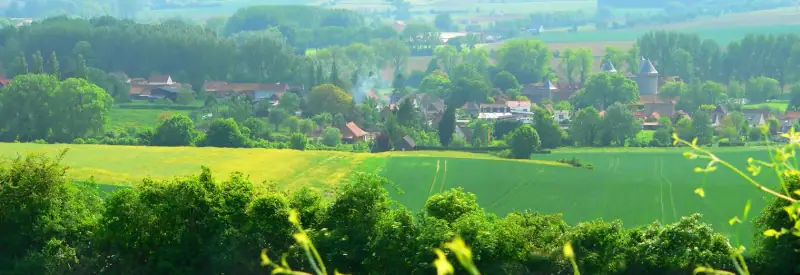
What to see in Artois: Lens, Vimy, Béthune, Azincourt and beyond Arras
What to see in Artois? Louvre-Lens, twin slag heaps, Vimy, Notre-Dame-de-Lorette, Béthune, Azincourt: 8 stops beyond Arras and a 2 to 3 day plan.
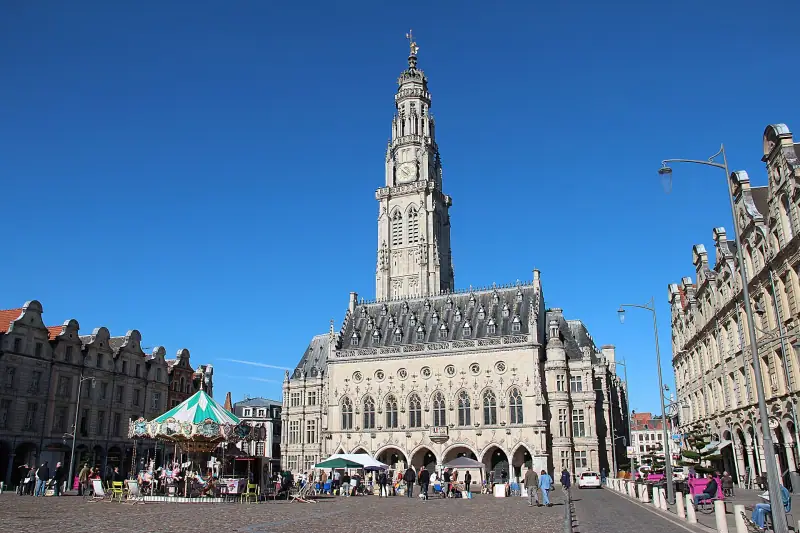
Visiting Arras: what to see and do in 1 to 2 days
What to see in Arras? Grand'Place, Place des Héros, belfry, boves, citadel, fine arts museum and memorial sites: a guide to plan your visit.
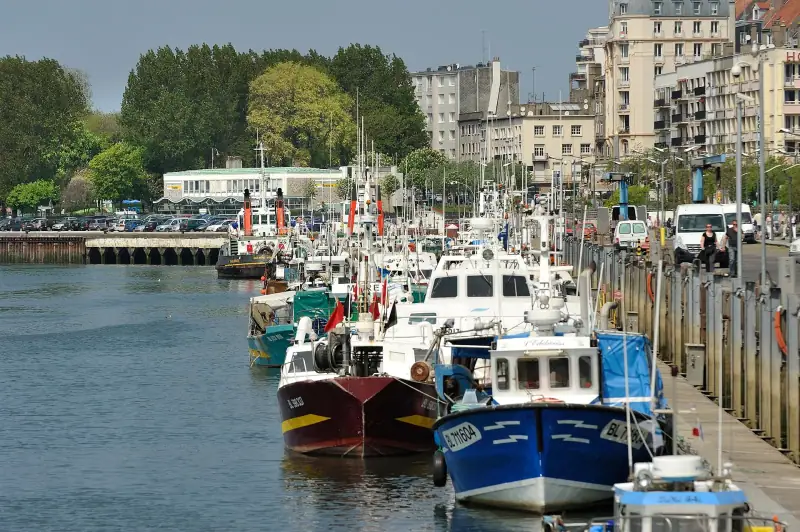
Visiting Boulogne-sur-Mer: what to see and do in 1 to 2 days
What to see in Boulogne-sur-Mer? Upper town, belfry, basilica, Nausicaá, fishing port and beaches: a guide to plan your visit on the Opal Coast.
Ready-made
Hauts-de-France itineraries
2 days
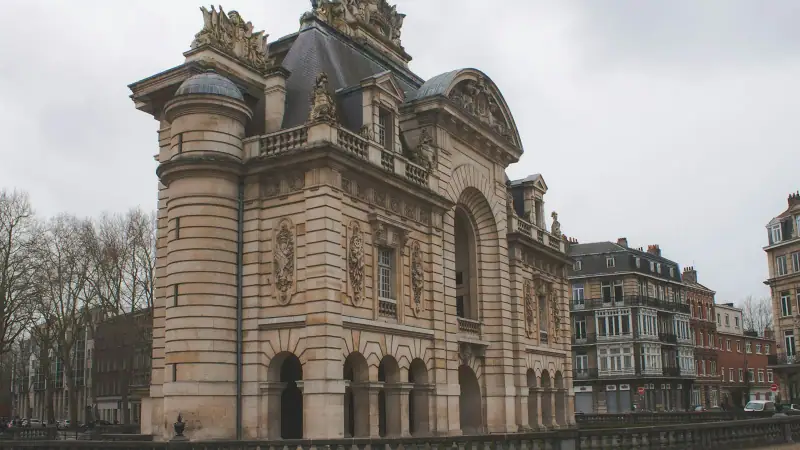
Weekend in Lille: what to see and do in 2 days
A weekend in Lille in 2 days: Old Lille, Grand'Place, Vieille Bourse, museums, the Citadelle, local dishes and practical tips for planning your stay.
2 days
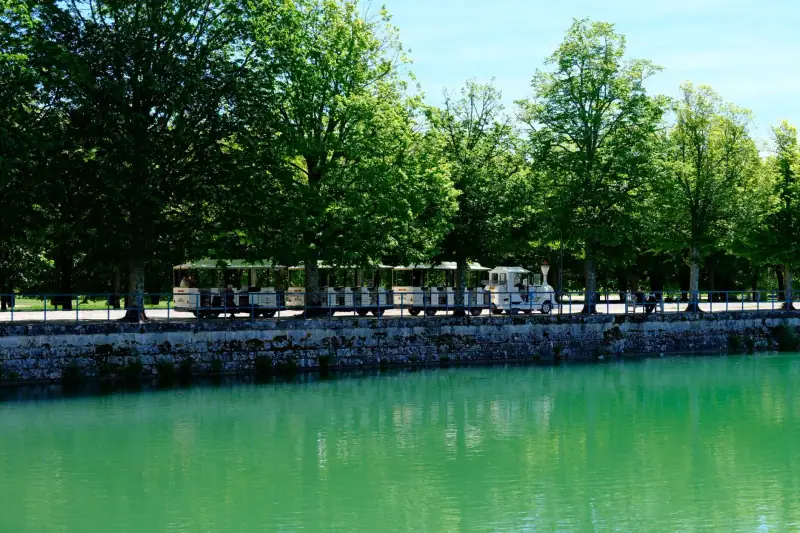
Car-free weekend in the Bay of Somme: train, bike and tourist train
A weekend in the Bay of Somme without a car: arrive by train, stay in Saint-Valery or Le Crotoy, get around by tourist train and bike. Program and tips.
5 days
Hauts-de-France road trip in 5 days: from Lille to the Bay of Somme
CalaisBoulogne-sur-MerLe Touquet-Paris-PlageLe Crotoy
Can be adapted in the planner