Itineraries
Weekend in Lille: what to see and do in 2 days
We may earn a commission when you book through links on this page, at no extra cost to you. We don't visit or try the places we cover: we summarize published sources. How we work
Day by day
- Day 1Grand'Place, Vieille Bourse, Opera, Old Lille, Hospice Comtesse
- Day 2Palais des Beaux-Arts, cathedral, belfry, Citadelle
Weather through the year on this route
| Jan | Feb | Mar | Apr | May | Jun | Jul | Aug | Sep | Oct | Nov | Dec | |
|---|---|---|---|---|---|---|---|---|---|---|---|---|
| High °F (°C) | 436 | 457 | 5211 | 5815 | 6418 | 6921 | 7323 | 7323 | 6720 | 5915 | 5010 | 447 |
| Low °F (°C) | 331 | 331 | 373 | 394 | 468 | 5111 | 5513 | 5513 | 5010 | 468 | 394 | 352 |
| Rain in (mm) | 2.565 | 2.155 | 2.050 | 1.950 | 2.565 | 2.565 | 2.565 | 2.770 | 2.460 | 2.870 | 3.075 | 3.285 |
Normals 1991–2020 at Lille and Saint-Valery-sur-Somme: averages over 30 years, not a forecast. Source: NASA POWER (MERRA-2), grid of about 50 km. Figures computed by us in November 2026.
In short
- Two days cover the essentials: Old Lille, the Grand'Place, the Vieille Bourse, a major museum (the Palais des Beaux-Arts) and the Citadelle. The center is almost entirely walkable.
- Day 1 is the historic center and Old Lille; day 2 mixes the Palais des Beaux-Arts, the cathedral, the belfry and the Citadelle.
- Old Lille is the most charming area but often the most expensive; the areas around Lille-Flandres and Lille-Europe stations are practical and more affordable.
- Book well ahead for the Braderie in early September and for the Christmas market.
Lille is one of the most pleasant cities to discover in a short format. Capital of French Flanders, it charms with its brick and white stone facades, its cobbled lanes, its warm estaminets and its first-rate museums. Above all it is compact: the historic heart can be covered on foot, which makes it an ideal weekend destination.
This two-day itinerary is designed for a first visit. The first day is devoted to the historic center: the Grand’Place, the Vieille Bourse, the Opera and Old Lille. The second mixes art, history and relaxation with the Palais des Beaux-Arts, the cathedral and the Citadelle. You will also find tips on where to stay, how to get around, what to eat and how to adapt the program to the weather.
Before you go: organizing your weekend
Getting to Lille
Lille is a major rail hub. Two stations sit right in the center, a few minutes’ walk from each other: Lille-Flandres, where regional trains and many long-distance trains arrive, and Lille-Europe, served by the international links and the TGV high-speed trains. This makes a weekend very accessible. To compare options, check schedules and fares on the carriers’ websites.
Coming by car is possible but not always practical: street parking is paid and the parking garages in the center are expensive on weekends. If you arrive by car, leave it in a garage and enjoy the city on foot.
Choosing your neighborhood
- Old Lille: the most picturesque, with its cobbled streets, shops and restaurants. It is also the most expensive.
- Center / Grand’Place: very central, lively, ideal for doing everything on foot.
- Around the stations: practical for early departures and often more affordable. The Euralille district is more modern, with a shopping mall and contemporary buildings.
- Wazemmes: a working-class, cosmopolitan district, known for its market and local atmosphere, slightly away from the tourist center.
Where to stay in Lille
Old Lille, the center or the station area: compare accommodation and book early for busy weekends.
Getting around
The historic center is visited on foot: allow a few minutes between the Grand’Place and Old Lille, and about twenty minutes to reach the Citadelle. For longer distances, Lille has a metro and tram network and a bike-sharing system. The metro also makes it easy to reach Roubaix or Villeneuve-d’Ascq if you want to add a museum outside the center.
Tip: wear comfortable shoes. The cobblestones of Old Lille are charming, but unpleasant with heels or a wheeled suitcase.
Day 1: the historic center and Old Lille
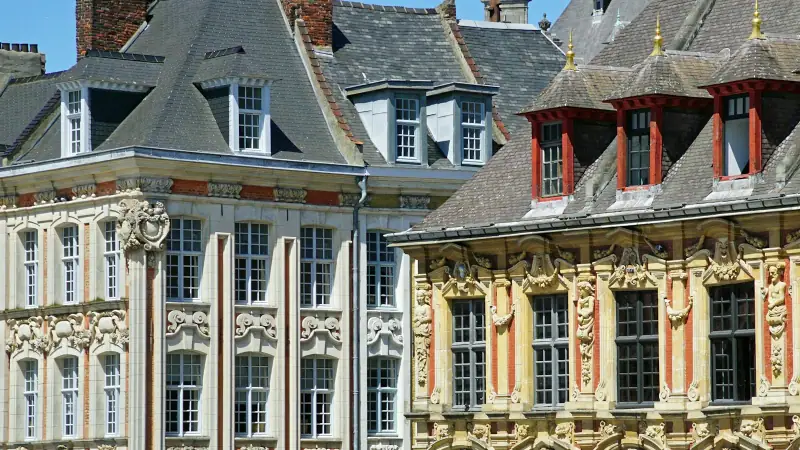
Morning: the Grand’Place and the Vieille Bourse
Start in the heart of the city, on the Grand’Place (officially Place du Général-de-Gaulle). Lined with gabled facades, Flemish-style buildings and the theater building, it is the locals’ meeting point. In the middle stands the Column of the Goddess, erected in memory of the siege of 1792.
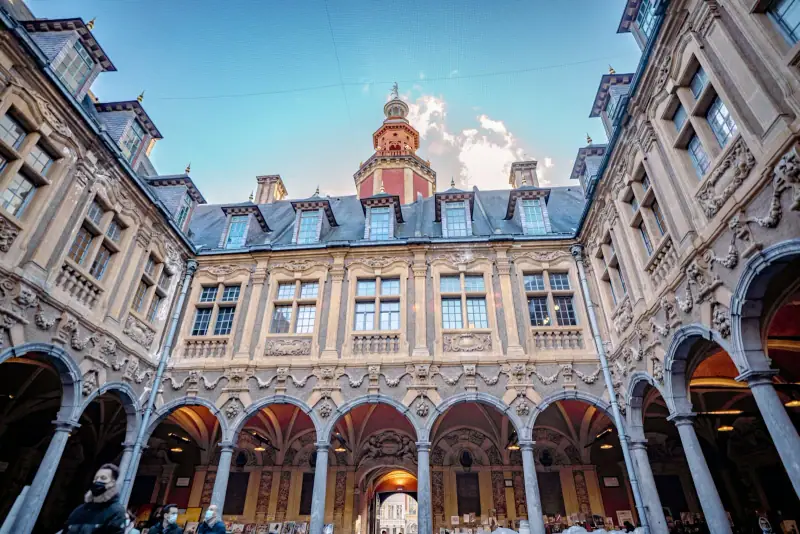
A short walk away, the Vieille Bourse is one of the city’s most beautiful monuments. Built in the 17th century in a highly ornate Flemish style, it forms an inner courtyard surrounded by arcades. You often find secondhand booksellers there and, at the end of the day, chess players. It is a free and photogenic stop.
Continue to the Place du Théâtre, where the neoclassical Lille Opera stands next to the Chambre de Commerce (Chamber of Commerce), whose belfry dominates the square. Take time to look at the facades: Lille’s architecture mixes brick, stone and sculpted ornament.
Lunch: an estaminet for Northern cooking
Lunch is the right time to discover an estaminet, the traditional taverns serving hearty food: Flemish carbonnade, welsh, potjevleesch, mussels and fries, with a Northern beer. Book on weekends, because the good places fill up quickly.
If you prefer a lighter break, try a filled waffle, a Lille specialty, in a pastry shop in the center.
Afternoon: a stroll through Old Lille
Old Lille is the most charming historic district. Its cobbled streets, its 17th- and 18th-century mansions and its designer boutiques are best discovered without a precise route. A few landmarks:
- Rue de la Monnaie, one of the prettiest, lined with old facades and small shops;
- Place du Lion d’Or and its surroundings, very lively;
- Rue de Gand, more festive, known for its restaurants and bars;
- the inner courtyards and small churches, which offer calmer breaks.
It is also an excellent district for food shopping: chocolates, biscuits, beers, cheeses such as maroilles. On the way, you can visit the Hospice Comtesse museum, a former medieval hospital turned museum, which gives an overview of life in old Flanders. Check its opening hours before you come.
Tours and activities in Lille
Guided tours, themed walks and activities: find the experiences that interest you.
Evening: dinner and atmosphere
Old Lille and the area around Rue Masséna and Rue de Gand are very lively in the evening. You will find restaurants of every style, beer bars and more upscale tables. For a typical dinner, choose an estaminet again or a brasserie in the center. Finish with a walk around the Grand’Place, nicely lit.
Day 2: museums, cathedral and Citadelle
Morning: the Palais des Beaux-Arts
Spend the morning at the Palais des Beaux-Arts, on Place de la République. It is one of the largest museums in France, with collections running from Antiquity to modern art, from the Flemish primitives to 19th-century painters. Even without special knowledge, the visit is a pleasure, thanks to the architecture of the building and the richness of the works.
Allow two to three hours, a little less if you target a few rooms. Closing days and rates vary: check the official website before you come.
Lunch: market or brasserie
If you are in Lille on a Sunday morning, do not miss the Wazemmes market, one of the largest markets in France, rich in color, local produce and flavors from around the world. The atmosphere is bustling and unpretentious. On other days, a brasserie in the center or a cafe on Place de la République will do very well.
Afternoon: cathedral, belfry and Citadelle
Resume your discovery with the Notre-Dame-de-la-Treille cathedral, an original building mixing neo-Gothic and contemporary styles, whose facade is a large modern rose window. An interesting detour for anyone who likes architecture.
Then, if the weather allows, climb the town hall belfry. Listed as a UNESCO World Heritage site along with other belfries of the region, it offers one of the best views of the city. Check access conditions, because the climb can be limited on some days.
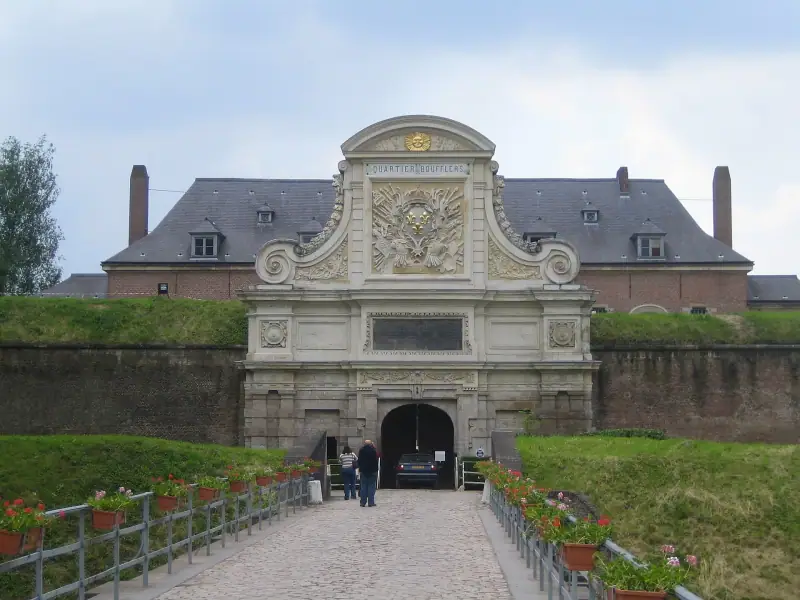
Finish with the Citadelle, a star-shaped fortress designed by Vauban in the 17th century. It is still occupied by the military, but the Citadelle park around it is open to the public. It is a haven of calm, perfect for a walk, with its lawns, ponds and paths. The ramparts are easy to walk along and offer fine viewpoints.
Evening: a last drink and the trip home
If your train is not too early, extend the day with a last drink near the Grand’Place or dinner in Old Lille. Avoid cutting your departure too tight: the stations are close, but Sunday evening trains are often quite full.
Ideas to extend or adapt the weekend
If you have a little more time, or already know the center, several easy excursions can be made from Lille by metro or train:
- Roubaix, with its former Art Deco swimming pool turned museum, La Piscine, a much-appreciated visit;
- Villeneuve-d’Ascq, home to the LaM, museum of modern art, contemporary art and art brut;
- Arras, a few dozen minutes away by train, known for its squares with Flemish facades and its memorial sites;
- the Opal Coast, for a day in the fresh air; our article on visiting the Opal Coast details the capes, Wimereux and Le Touquet.
If you want to extend your stay with a bit of nature, the Bay of Somme is a fine next stop: read our 3-day itinerary in the Bay of Somme, and our guide to getting around the Bay of Somme if you are hesitating between train, bike and car.
Extend your stay
One more night to enjoy the city without rushing? Compare availability in Lille.
When to go: events to know about
Lille can be visited all year, but some events change the atmosphere, and accommodation prices:
- the Braderie de Lille, one of the largest flea markets in Europe, takes place every year in early September. It draws huge crowds: book long in advance;
- the Christmas market, at the end of the year, gives the Grand’Place a fairytale atmosphere;
- spring and early fall are ideal for walking, with mild temperatures and fewer people.
The climate of the North is changeable: rain is possible in any season, along with wind and cool temperatures. Bring a light rain jacket and layers of clothing, even in summer.
What to eat in Lille
Lille cooking is hearty, rustic and comforting. The essentials:
- Flemish carbonnade, a beef stew simmered in beer, often served with fries;
- welsh, a dish of bread, ham and cheddar melted in beer;
- potjevleesch, a terrine of cold meats, a Flanders specialty;
- mussels and fries, very popular in the North;
- maroilles, a soft, washed-rind cheese with a strong taste;
- filled waffles and other sweet treats for an afternoon snack;
- Northern beers, plentiful, from blondes to bières de garde.
Estaminets are the ideal places to taste this cooking in a friendly atmosphere. The brasseries in the center also serve classic food, faster.
What budget to plan
The budget depends mostly on the type of accommodation and the season. The main items are:
- accommodation, more expensive in Old Lille, on weekends and during events;
- transport, especially if you come from far away by train: book early for better fares;
- meals, anywhere between a waffle or a friterie and dinner at a good restaurant;
- museums, whose rates vary. Check for any free days and the passes available from the tourist office.
To save money, favor accommodation near the stations, eat out at lunch rather than in the evening and take advantage of the many free sights: the Vieille Bourse, the Grand’Place, Old Lille and the Citadelle park.
Itinerary summary
| Day | Morning | Afternoon | Evening |
|---|---|---|---|
| 1 | Grand’Place, Vieille Bourse, Opera | Old Lille and Hospice Comtesse | Dinner in Old Lille |
| 2 | Palais des Beaux-Arts | Cathedral, belfry, Citadelle | Last drink, trip home |
Two days do not exhaust Lille, but they give a faithful glimpse of its charm: a city of brick and stone, lively, food-loving and welcoming, where you move effortlessly from history to a good time. Leave a little slack in your schedule, let yourself be tempted by the lanes and taste the local cooking: it is the best way to understand why so many visitors come back.
Frequently asked questions about a weekend in Lille
Detailed answers are in the FAQ above. For a successful weekend in Lille, a few simple habits make all the difference.
- Sleep near the center: in Old Lille for charm, near the stations for convenience and budget. Everything is then done on foot, without losing time in transport.
- Book your weekend meals: estaminets and the good tables of Old Lille are often full on Saturday night. A call or an online booking a few days ahead avoids unpleasant surprises.
- Check the opening days and hours of the museums, the belfry and the Hospice Comtesse before setting the order of your two days, then simply swap stops if needed.
- Keep a rain jacket in your bag: the weather in the North changes fast, and most visits are fortunately indoors or in short stages.
- Leave a margin before your return train: Sunday evening trains are often quite full, and the two stations are easy to reach on foot from the center.
Sources
- Lille Tourist Office: figures checked November 2026
Frequently asked questions
Are two days enough to visit Lille?
Yes, two days cover the essentials: Old Lille, the Grand'Place, the Vieille Bourse, a major museum and the Citadelle. The center can be covered almost entirely on foot. To add Roubaix, Villeneuve-d'Ascq or a trip to Arras, allow three or four days.
Where should you stay for a weekend in Lille?
Old Lille offers charm and restaurants within walking distance, but prices are often higher. The areas around Lille-Flandres and Lille-Europe stations are practical if you arrive by train, and more affordable. Book early for event weekends, especially the Braderie in September and the Christmas market.
Do you need a car in Lille?
No, and one is even discouraged in the city center: street parking is paid and traffic is dense. The center is visited on foot, and the metro and tram serve the outlying districts as well as Roubaix. Arriving by train is the simplest, since both stations are right in the center.
What is the best time for a weekend in Lille?
Lille can be visited all year, since many activities are indoors. Spring and early fall offer a good balance of mild weather and liveliness. Winter is appreciated for its holiday atmosphere, as long as you bring warm clothes and an umbrella.
What should you taste in Lille?
Classics include Flemish carbonnade, welsh, mussels and fries, maroilles cheese, filled waffles and Northern beers. Estaminets, the traditional taverns, are the ideal place to discover local cooking in a warm atmosphere. Book on weekends.
What can you do in Lille when it rains?
Museums are the safe bet, especially the Palais des Beaux-Arts. You can also explore the galleries and shops of Old Lille, visit an estaminet or climb the belfry. Check museum closing days before building your program.
Can you visit Lille with children?
Yes. The Citadelle park, the gardens, the markets, the waffles and some museums appeal to children. Distances are short, which avoids long trips. Plan regular breaks, since the cobblestones of Old Lille tire small legs quickly.
More Hauts-de-France guides
Keep reading
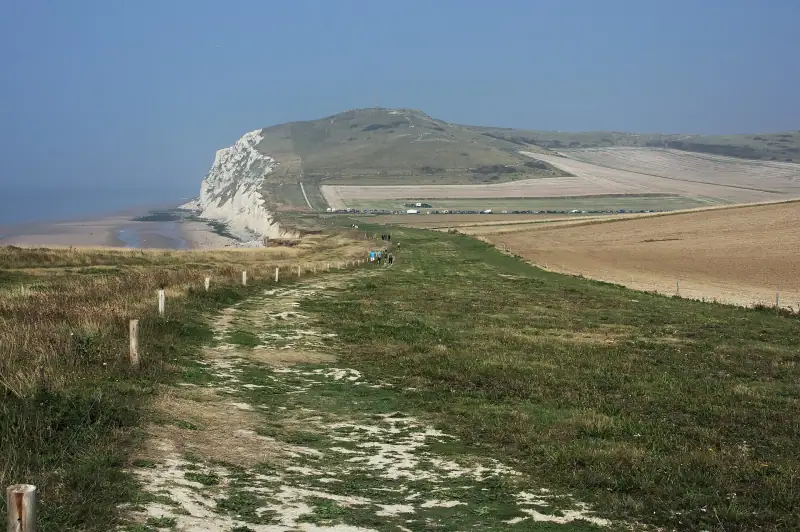
Hiking Cap Blanc-Nez without an agency: loops from Escalles, timing and tides
Hike Cap Blanc-Nez without a guide: a 10 km loop from Haute-Escalles, 1-hour variants, free parking, tides, shoes and safety.
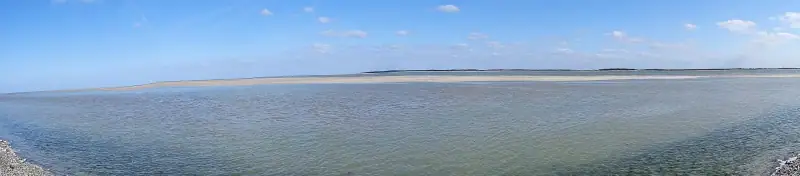
When to go to the Bay of Somme: seasons, tides and weather
What is the best time to visit the Bay of Somme? Seasons, big tides, weather, crowds and tips to plan your stay calmly.
Where to park at Cap Gris-Nez: Audinghen parking lot, viewpoints and walks
Where to park for Cap Gris-Nez: access via Audinghen, viewpoints 15 min away, loops of 5 to 12 km from the Maison du Site, bus 427 and practical tips.
Ready-made
Hauts-de-France itineraries
2 days
Car-free weekend in the Bay of Somme: train, bike and tourist train
A weekend in the Bay of Somme without a car: arrive by train, stay in Saint-Valery or Le Crotoy, get around by tourist train and bike. Program and tips.
5 days
Hauts-de-France road trip in 5 days: from Lille to the Bay of Somme
CalaisBoulogne-sur-MerLe Touquet-Paris-PlageLe Crotoy
Can be adapted in the planner