What to see
What to see in Artois: Lens, Vimy, Béthune, Azincourt and beyond Arras
We may earn a commission when you book through links on this page, at no extra cost to you. We don't visit or try the places we cover: we summarize published sources. How we work
In short
- Two days cover Arras, Vimy, Lens and the Louvre-Lens; three days add Notre-Dame-de-Lorette, Béthune and Azincourt. The memorial sites and the museum each need half a day.
- The main sites lie within about an hour's drive of Arras, except Azincourt, a little further west.
- Arras, Lens and Béthune are served by train, notably from Lille; for Vimy, Notre-Dame-de-Lorette, the slag heaps and Azincourt, a car is much more practical.
- Military cemeteries are places of remembrance: explain this to younger children before the visit.
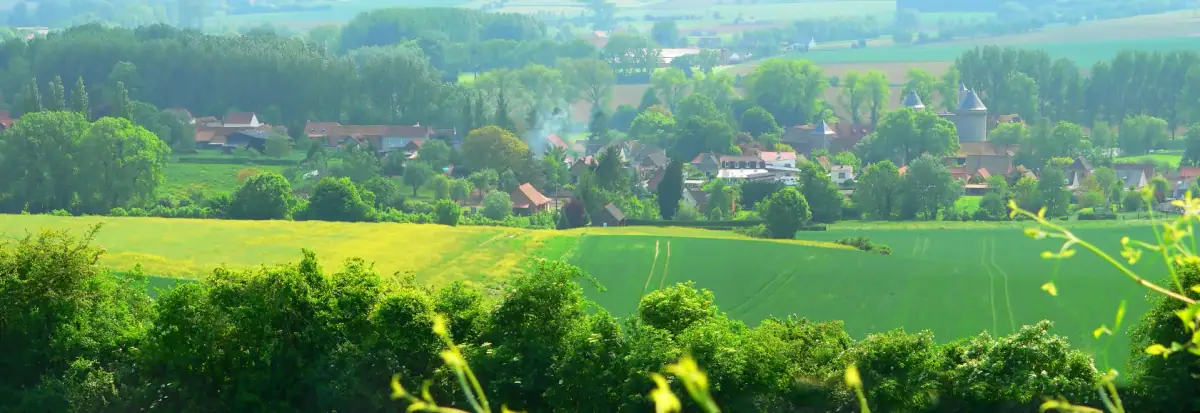
Everyone knows Arras and its Flemish squares; fewer people know what surrounds it. Yet Artois is one of the most surprising territories of northern France: a Louvre museum set on a former mine site, black shale hills turned into walks, an immense Canadian memorial, the largest French military necropolis, a belfry rebuilt after the war and the battlefield of Agincourt (Azincourt).
This article does not repeat what we have already detailed in our guide to visiting Arras. It shows what lies around it, how to link the stops and how to organize two or three days in the region. To place Artois within a wider trip, see also our complete guide to the Hauts-de-France.
Artois in brief: what to know before you go
Artois is a former province that corresponds, for the most part, to the Pas-de-Calais department. It grew up around Arras, which passed in turn under Burgundian, Spanish and French influence. This history explains the architecture of the squares, the taste for brick and white stone, and the presence of belfries.
The territory then went through two great periods that still define it:
- The age of the mine, from the 19th century until the last closures at the end of the 20th century. It left miners’ housing complexes, pithead frames and slag heaps, now recognized by UNESCO as the Nord-Pas de Calais mining basin.
- The Great War, whose front crossed the region. The fighting of 1914-1918, in particular that of 1915 and 1917, deeply marked the landscape and local memory.
Good to know: distances are short. The main sites lie within a radius of about an hour’s drive around Arras, except Azincourt, a little further west. Check your routes on a mapping tool before you leave, especially at rush hour.
1. Lens and the Louvre-Lens
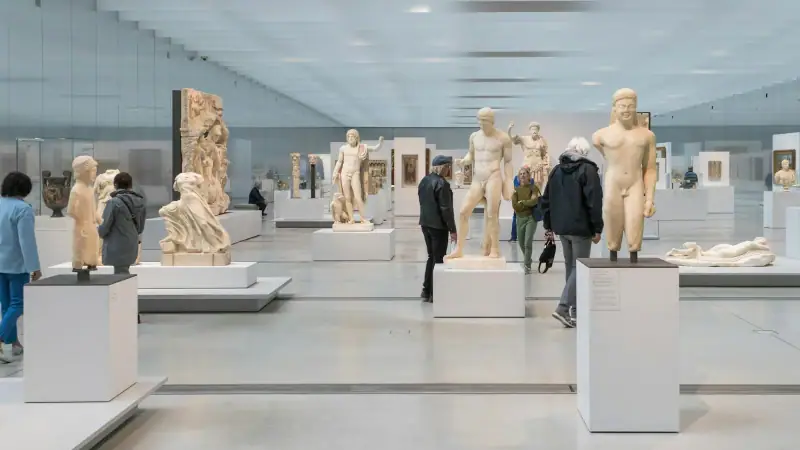
The Louvre-Lens is the stop that most overturns preconceived ideas. Opened in 2012 on the site of a former mine shaft, this museum is a branch of the Louvre. Its building, designed by the Japanese firm SANAA, is made of low, glazed volumes in polished aluminum that reflect the park and the northern sky.
The heart of the visit is the Galerie du Temps (Gallery of Time), a large hall where works are presented in chronological order, from Antiquity to the 19th century, rather than by department or civilization. You move from an Egyptian statue to a Romantic painting in a few steps, which makes it very easy to read, even for visitors unfamiliar with museums. Temporary exhibitions complete the offer. Rates and access conditions for each space change: check the museum’s official website before you come.
The park around the building is free to enter and lends itself to a break. The center of Lens, for its part, deserves a short detour: the Art Deco station, whose shape evokes a locomotive, dates from the interwar period, and the city lives to the rhythm of its soccer club, whose stadium is a local institution.
Time to allow: half a day for the museum, a day with the town center and the slag heaps.
2. The twin slag heaps of Loos-en-Gohelle and the mining basin
A few kilometers from the Louvre-Lens, the twin slag heaps of Loos-en-Gohelle are the most recognizable silhouettes of the landscape. These two conical hills are made of mine waste and are part of Base 11/19, a group of preserved mining sites. They are among the highest slag heaps in Europe, with a summit above 180 meters (591 ft).
You can climb them by developed paths. The effort is real but short, and the reward is worth it: from up there, you take in the plain, the mining housing complexes, the buildings of the Louvre-Lens and, in clear weather, the flat landscape of Artois for tens of kilometers. Bring good shoes, water and a windproof layer.
The Base 11/19 site also offers rehabilitated industrial buildings that tell the story of the mine. To understand this territory better, a guided visit of the mining basin adds a great deal: the old trades, the housing complexes, the slag heaps and the miners’ daily life then take on their full meaning.
Guided tours around Arras and Lens
To understand the mining basin, the battlefields or the underground city, a guided tour changes everything. Compare the activities and excursions available in the region.
Time to allow: two to three hours to climb the slag heaps and enjoy the view.
3. The Canadian National Vimy Memorial
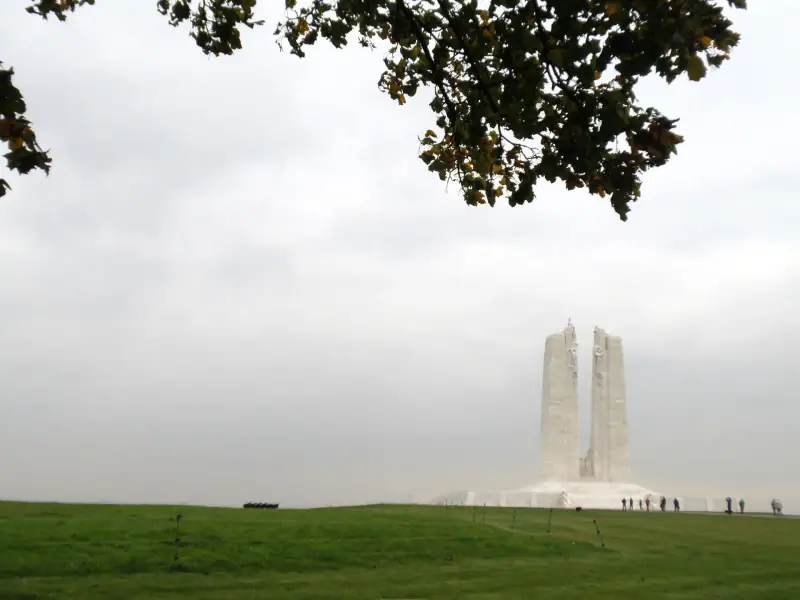
On Vimy Ridge, north of Arras, the Canadian National Memorial overlooks the Lens plain. This white stone monument, unveiled in 1936, pays tribute to the Canadian soldiers engaged in the battle of April 1917 and to those who, with no known grave, are listed as missing in France. Its architecture, with its two soaring pylons and its sculptures, impresses by its sobriety.
Around the monument, a vast park has been planted with trees and preserves the terrain upended by the fighting: craters, trenches and underground galleries. Guides, often Canadian students, accompany the visit of the trenches and of a tunnel sector. Entry is free, but some guided visits require registration or checking in at the reception: find out before you come. At the site, stay within the marked areas, because the ground still contains munitions.
The park is a place for a quiet walk, with sheep that maintain the lawns. It is also a place where you can measure the weight of remembrance without forcing the point.
Time to allow: half a day with the visitor center, the trenches and the monument.
4. Notre-Dame-de-Lorette and the Ring of Remembrance
A few kilometers from the Louvre-Lens, the hill of Notre-Dame-de-Lorette, near Ablain-Saint-Nazaire, holds the largest French military necropolis. Thousands of white crosses line up around a basilica and a lantern tower. The fighting for this position, in 1914 and 1915, was among the deadliest of the Western Front.
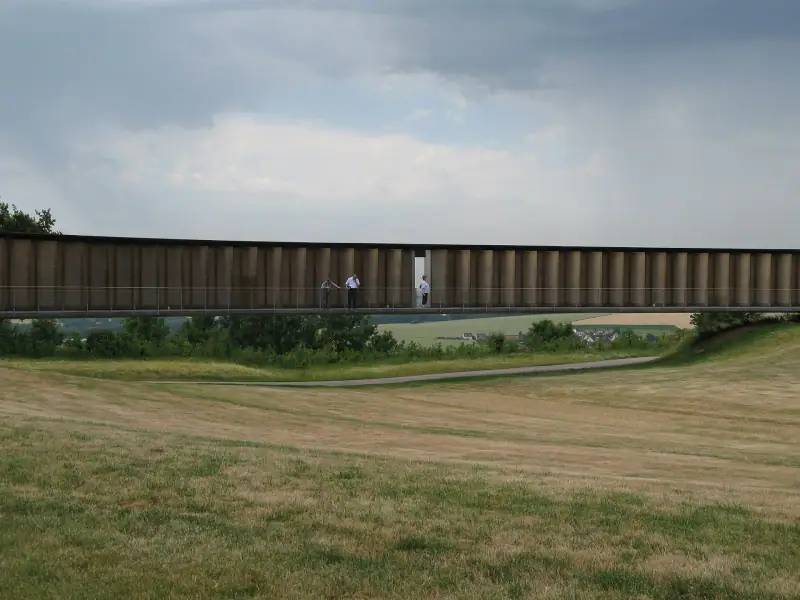
Nearby, the Ring of Remembrance (Anneau de la Mémoire), unveiled in 2014, is a large steel circle on which are engraved, in alphabetical order, the names of soldiers of all nationalities who fell in the region, without distinction of army or side. The gesture is a powerful one: a single alphabet brings together yesterday’s enemies. A presentation space, the Historial Terre de Lorette, completes the visit with historical explanations.
As at Vimy, this site is visited in quiet. For those who wish to go further, the region has many cemeteries of all nationalities, often discreet, along the roads.
Time to allow: two to three hours.
5. Béthune: the belfry and the Grand’Place
West of Lens, Béthune is a town of brick and stone that was largely rebuilt after the First World War. The belfry, rebuilt in the 1930s, dominates the Grand’Place. It is among the belfries of Belgium and France listed as UNESCO World Heritage. From its top, there is a fine view of the roofs, the slag heaps and the plain.
The Grand’Place is lined with carefully rebuilt Flemish-style facades, cafes and shops. The town has the atmosphere of a lively provincial town, less touristy than Arras, which appeals to those who like authentic places. Lanes around the square invite strolling and lunch at prices often lower than in Lille. Béthune is also known for its Confrérie des Charitables, an old tradition of mutual aid, whose costumes and banners are shown at local events.
Time to allow: two to three hours, or half a day with a food break.
6. Azincourt: the battlefield of 1415
Further west, in a countryside of open fields, the small village of Azincourt (Agincourt) was the scene, on October 25, 1415, of one of the most famous defeats of French chivalry during the Hundred Years’ War. English archers faced the French army on muddy ground squeezed between woods, an episode popularized by Shakespeare’s plays.
The interpretation center in the village presents the battle in a modern way, with reconstructions, objects and a chronological route. It continues with a visit to the site and an observation point over the battlefield. Opening hours and closing days change with the seasons, and a medieval festival takes place in summer: check the tourist office website before you come.
Azincourt appeals to medieval history fans and families: you understand very concretely how a battle played out, which is hard to grasp in a book.
Time to allow: half a day with the trip.
7. What to eat in Artois
Local cooking is that of the North, hearty and warm. A few dishes come up almost everywhere:
- Flemish carbonnade, beef simmered in beer,
- potjevleesch, a terrine of white meats served cold with fries,
- maroilles and the washed-rind cheeses of the region,
- sugar tart (tarte au sucre) or waffles for dessert,
- beer, brewed by many small craft breweries.
Daily set menus in the brasseries of central Arras, Béthune or Lens are generally more affordable than in Lille. Prices vary by establishment: check the menus posted before sitting down. For other food atmospheres of the North, see our articles on welsh and snacking in Lille and on mussels and fries at the Braderie.
8. Villages and small stops
If you have a bit more time, Artois hides some pleasant stops: mining housing complexes with colorful bricks, canals and towpaths for walking or cycling, and towns of character such as Hesdin, on the road to the Opal Coast. To continue toward the sea, our guide to visiting the Opal Coast follows on naturally.
A few simple ideas to complete a stay:
- a bike ride on old towpaths,
- a visit to a miners’ housing estate and its church,
- a village market in the morning, to taste local products,
- a match evening in Lens, if the calendar allows: the atmosphere is memorable.
Where to stay in Artois
Arras is the most practical base, with its station and restaurants, but Lens and Béthune are also good stopping points. Compare the accommodation available in the region.
Getting around Artois
Artois is a spread-out area: the sites are spread between mid-sized towns and rural areas. A few practical pointers.
By train
Arras, Lens and Béthune are linked to each other and to Lille by the regional network. From the station of each of these towns, the center can be visited on foot. It is the best format for a car-free weekend centered on the towns. Check schedules and possible disruptions before you leave, especially on weekends.
By car
It is the most flexible way to link Vimy, Notre-Dame-de-Lorette, the slag heaps and Azincourt, which are poorly served by public transport. The roads are good and parking is generally simple, outside events.
Rent a car for Artois
To link Vimy, Lens, Béthune and Azincourt at your own pace, compare rental companies and pick up the vehicle at the station or the airport.
By bike
The ground is flat, which makes distances comfortable, but the wind can be strong. The old mining roads and the canals are good routes for regular cyclists.
Three possible itineraries
Two days: the essentials
- Day 1: Arras in the morning (squares, belfry, boves), then Vimy in the afternoon.
- Day 2: Louvre-Lens in the morning, Loos-en-Gohelle slag heaps in the afternoon.
Three days: remembrance and heritage
- Day 1: Arras and its boves.
- Day 2: Vimy, then Notre-Dame-de-Lorette and the Ring of Remembrance.
- Day 3: Louvre-Lens and slag heaps, then Béthune at the end of the day.
Three days: history and an opening onto the coast
- Day 1: Arras and Vimy.
- Day 2: Béthune, then Lens and the slag heaps.
- Day 3: Azincourt, then the road to the Opal Coast, as in our 5-day road trip.
Budget and tips
Artois is an affordable destination, notably for accommodation and dining compared with Lille or the coastal resorts. For a more precise budget, see our article on the budget in the Hauts-de-France. A few tips:
- book ahead for guided visits of the boves and trenches in high season,
- check museum closing days before building the program,
- bring warm and waterproof clothing, even in summer,
- for a longer stay combining several regions, travel insurance can be useful.
If you like regions of character, finally compare Artois with neighboring Picardy, which offers cathedrals and castles, or with an urban escape during a weekend in Lille.
In summary
Artois does not try to seduce with postcards, it touches by its sincerity. A museum in a former mining zone, slag heaps turned into viewpoints, memorials that call for silence, a rebuilt belfry and a medieval battlefield: five very different atmospheres within an hour of each other.
If you have only two days, choose Arras, Vimy, the Louvre-Lens and the slag heaps. With three days, add Notre-Dame-de-Lorette and Béthune. And if the road then takes you toward the sea, Azincourt makes an ideal stop.
Frequently asked questions
Where is Artois?
Artois is a former province of northern France, today spread across the Pas-de-Calais department. Its historic capital is Arras, and it includes notably Lens, Béthune, Saint-Pol-sur-Ternoise and Hesdin. It lies between the Lille metropolitan area, the Opal Coast and Picardy.
How long do you need to visit Artois?
Allow two days for the essentials (Arras, Vimy, Lens and the Louvre-Lens) and three days if you add Notre-Dame-de-Lorette, Béthune and Azincourt. Distances are short, but the memorial sites and the museum each need half a day.
What should you see first in Artois?
The three pillars are Arras (squares, belfry, boves), the Louvre-Lens with the UNESCO-listed mining basin, and the Great War memorial sites such as Vimy and Notre-Dame-de-Lorette. Béthune and Azincourt round out the program well for architecture and medieval history fans.
Can you visit Artois without a car?
In part. Arras, Lens and Béthune are served by train, notably from Lille, and their centers can be visited on foot. For Vimy, Notre-Dame-de-Lorette, the slag heaps and Azincourt, a car is much more practical. Check train and bus schedules before you leave.
Is Artois suitable for children?
Yes, with a few precautions. The Louvre-Lens offers routes for families, the slag heaps make a proper walk with a view, and the Vimy trenches are easy to visit. Military cemeteries are places of remembrance: explain this to younger children before the visit.
What is the best time to visit Artois?
From May to September for walks and outdoor sites. Spring and early fall are pleasant and less busy. The museums, the boves and the Louvre-Lens work well on rainy days, which are frequent in the region: bring a windbreaker in any season.
Can you combine Artois with Lille?
Very easily. Lens and Arras are a short distance from Lille by train or car, so you can stay in Lille and make day trips, or conversely sleep in Arras and go to Lille for an urban day.
More Hauts-de-France guides
Keep reading
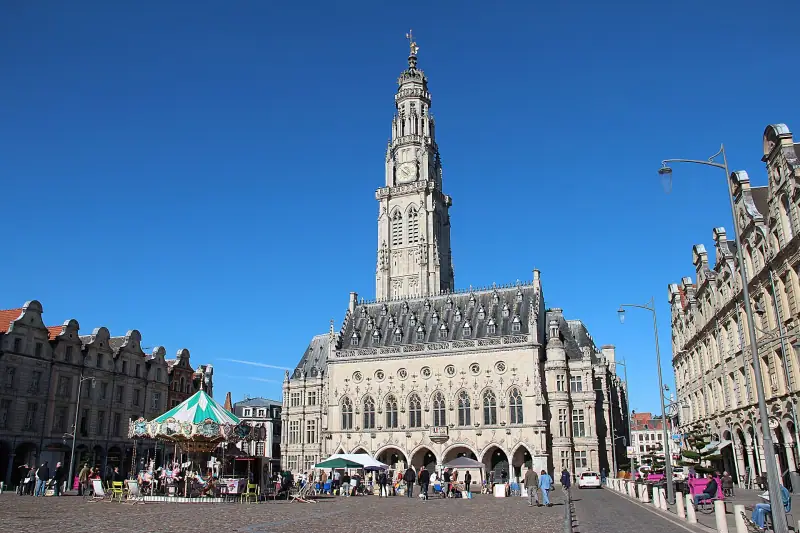
Visiting Arras: what to see and do in 1 to 2 days
What to see in Arras? Grand'Place, Place des Héros, belfry, boves, citadel, fine arts museum and memorial sites: a guide to plan your visit.
Visiting Le Touquet-Paris-Plage: what to see and do in 1 to 3 days
What to see and do in Le Touquet-Paris-Plage: beach, forest, villas, market, sand yachting, lighthouse and Canche Bay on the Opal Coast.
Visiting Boulogne-sur-Mer: what to see and do in 1 to 2 days
What to see in Boulogne-sur-Mer? Upper town, belfry, basilica, Nausicaá, fishing port and beaches: a guide to plan your visit on the Opal Coast.
Ready-made
Hauts-de-France itineraries
2 days
Weekend in Lille: what to see and do in 2 days
A weekend in Lille in 2 days: Old Lille, Grand'Place, Vieille Bourse, museums, the Citadelle, local dishes and practical tips for planning your stay.
2 days
Car-free weekend in the Bay of Somme: train, bike and tourist train
A weekend in the Bay of Somme without a car: arrive by train, stay in Saint-Valery or Le Crotoy, get around by tourist train and bike. Program and tips.
5 days
Hauts-de-France road trip in 5 days: from Lille to the Bay of Somme
CalaisBoulogne-sur-MerLe Touquet-Paris-PlageLe Crotoy
Can be adapted in the planner