What to see
Visiting Arras: what to see and do in 1 to 2 days
We may earn a commission when you book through links on this page, at no extra cost to you. We don't visit or try the places we cover: we summarize published sources. How we work
In short
- One day covers the two squares, the belfry, the boves and a walk in the center; two days add the fine arts museum, the citadel and a trip to the nearby Great War memorial sites.
- The center was rebuilt identically after 1918, and everything from the station to the citadel can be done on foot.
- The belfry is about 75 m (246 ft) tall and listed by UNESCO; the boves are visited with a guide and stay cool all year.
- Arras is about 50 km (31 mi) from Lille; Vimy and Notre-Dame-de-Lorette are about half an hour away by car.
About fifty kilometers (31 mi) from Lille, Arras is one of those towns people pass through too often by car without stopping, which is a pity. Historic capital of Artois, it has two squares with gabled facades among the most harmonious in northern France, a belfry listed as UNESCO World Heritage, a whole network of underground quarries and a citadel designed by Vauban. It can all be covered on foot, in a human-scale center.
This guide helps you plan your visit to Arras: a little history to understand the town, the main sights and a logical order for them, the museums, the nearby memorial sites, a few ideas for eating and sleeping, then a one- or two-day program.
Arras in brief
Arras is the prefecture of the Pas-de-Calais, in the former province of Artois. It grew rich in the Middle Ages through trade, notably in textiles, before passing under Spanish and then French rule. It is also the birthplace of Robespierre, a major figure of the Revolution.
The First World War left deep scars: the front was a few kilometers away and the town was largely destroyed by bombardment. The center was rebuilt identically after 1918, which explains the impression of architectural unity today. Behind these brick and stone facades, the history is therefore both old, in the layout and styles, and very recent, through the reconstruction.
Good to know: the heart of the town fits in a small perimeter. From the station to the citadel, everything is done on foot, with trips of a few minutes to a quarter of an hour depending on the starting points.
To place Arras within a wider stay, see our complete guide to the Hauts-de-France, which presents Artois alongside the Opal Coast, the Bay of Somme and the Lille metropolitan area.
The Grand’Place and the Place des Héros
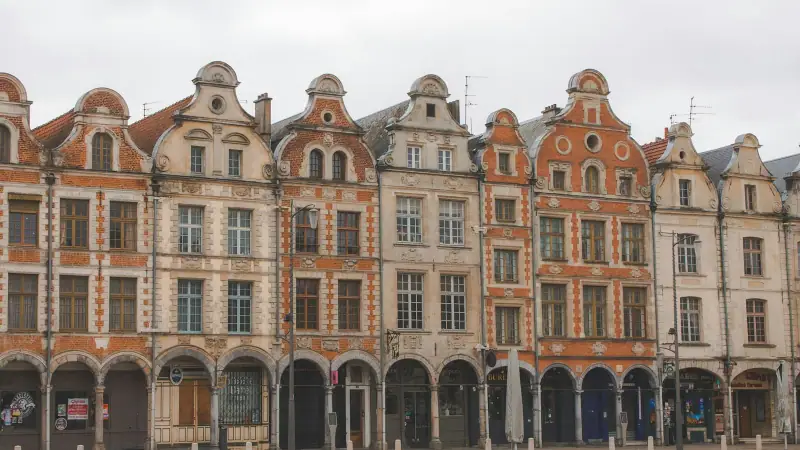
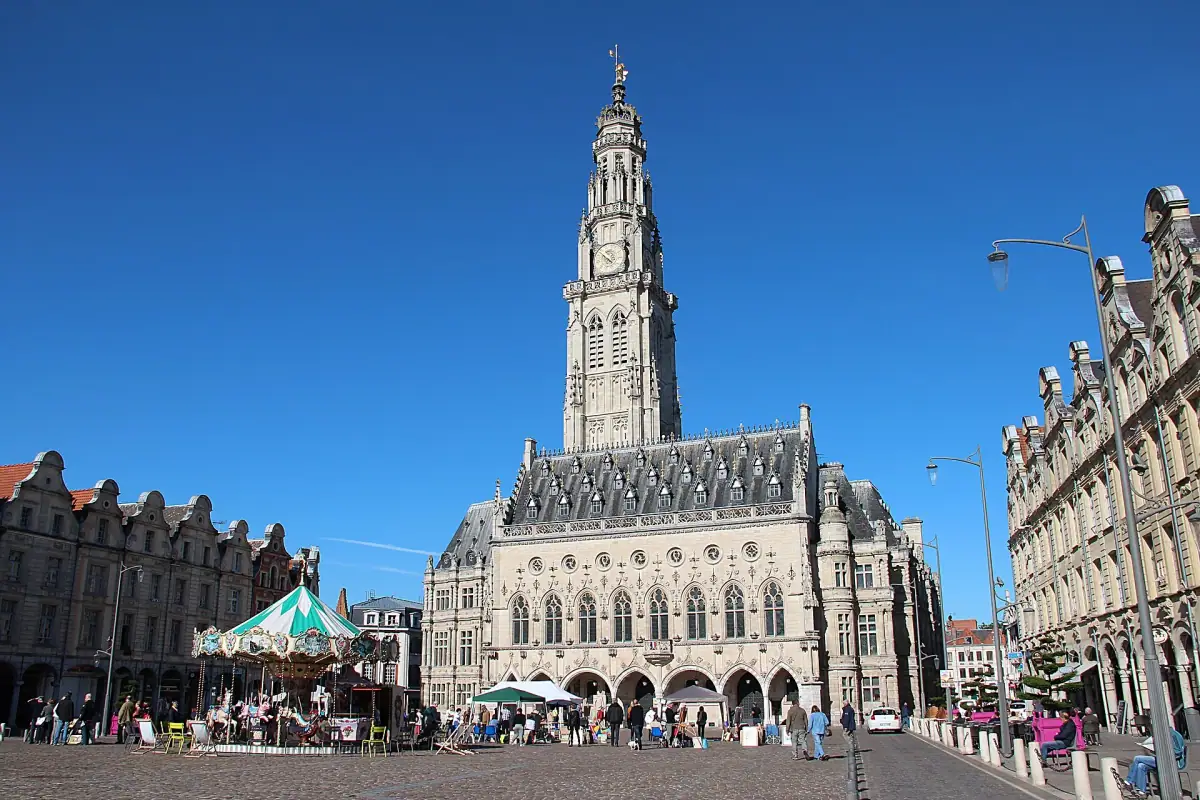
If you were to see only one thing in Arras, this would be it. The Grand’Place and the Place des Héros, which touch each other, form a rare architectural ensemble. The houses rest on arcades, under which you walk sheltered from the rain, and their scroll gables recall the Flemish style. You will see facades of white stone or brick, often in light colors, whose alignment draws a very regular silhouette.
Two squares, two atmospheres
- The Grand’Place is the larger, irregular in shape, with its cafes, outdoor tables and a weekly market that keeps it lively. It is a very good spot for watching the life of the town.
- The Place des Héros, smaller and rectangular, is home to the town hall and its belfry. Its name recalls the fighting of the war.
Both squares were rebuilt after the First World War. So do not expect original 17th-century buildings: the interest lies in the fidelity of the reconstruction.
Tip: arrive early in the morning or late in the afternoon to enjoy the light on the facades, and come back at nightfall, when the squares are lit.
The belfry and the town hall
Where to stay in Arras
The center is compact: a hotel near the squares or the station lets you do everything on foot. Compare the accommodation available.
The Arras belfry dominates the Place des Héros from its roughly 75 meters (246 ft). Its origin goes back to the 16th century in the flamboyant Gothic style, and it too was rebuilt after the destruction of the war. It is part of the group of belfries of Belgium and France listed as UNESCO World Heritage.
Going to the top
The visit generally combines the climb of the belfry (an elevator then a few steps depending on the period) and the discovery of rooms devoted to the history of the building. From the top, the view takes in the roofs of the town, the two squares, the cathedral and the Artois countryside. It is a good way to understand the structure of the center right at the start of your stay.
Hours, rates and closing days vary with the season: check the Arras tourist office website before you come.
The town hall
At its foot, the town hall is recognizable by its highly ornate Gothic facade. It is part of the same ensemble and deserves a close look at the carved details, even if the interior is not always freely visitable.
The boves: the underground city
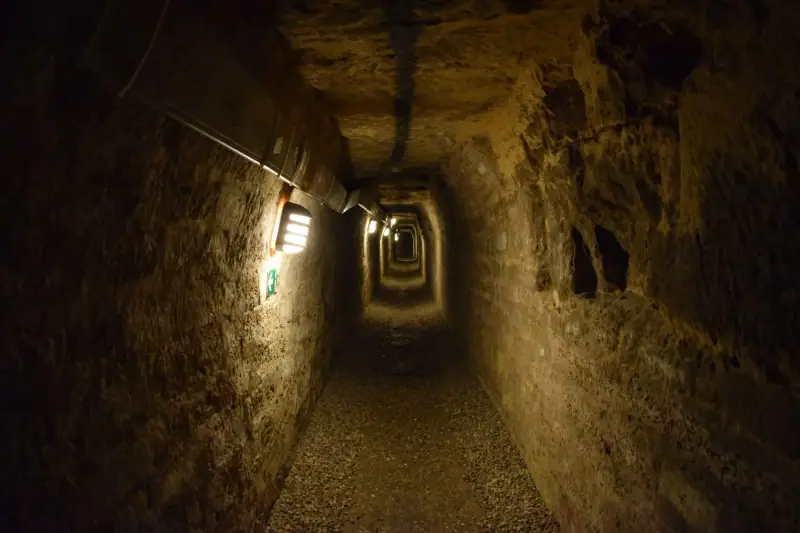
Under Arras stretches a network of boves, former chalk quarries dug in the Middle Ages to supply the town’s building materials. They later served as cellars, refuges or storage places. The boves lie under the houses of the squares and under several streets of the center.
What you discover there
The visit, generally guided, takes you down into galleries dug in the chalk, where you learn how the town used this underground over the centuries, in particular during wars. You see vaulted rooms, graffiti left by soldiers and accounts of underground life.
Good to know:
- the temperature is cool all year, so bring a light jacket;
- the stairs and uneven floor make the route poorly suited to people with reduced mobility;
- booking is advised in high season and during school holidays.
The Wellington Quarry and the memory of 1917
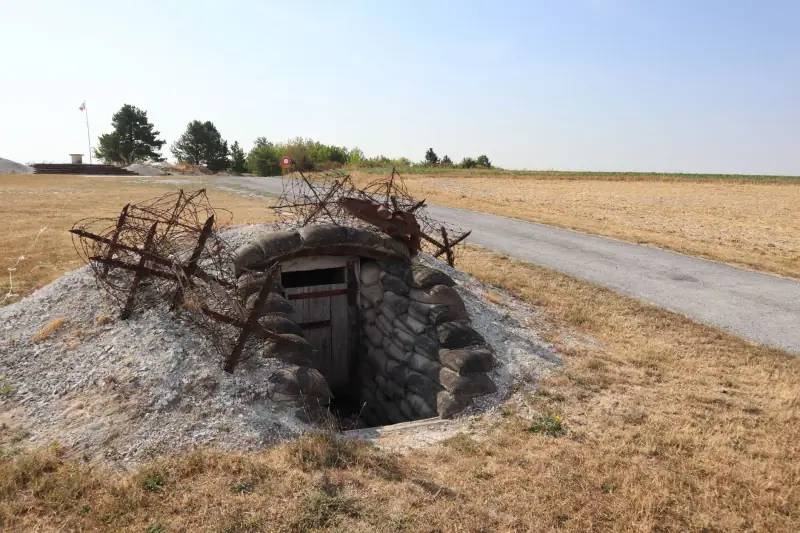
Further on, south of the station, the Wellington Quarry (Carrière Wellington) is the town’s most striking memorial site. During the Battle of Arras in 1917, British and New Zealand soldiers fitted out these former chalk quarries to house many men before the offensive, linking them by galleries and stairs to the front line.
Today, a museum route recreates this underground life, with remains, objects and accounts. The visit is moving and very informative, including for those who know little about the Great War. Allow about an hour and a half, and check the official website for hours, rates and booking.
The Mur des Fusillés (Wall of the Executed), within the citadel grounds, recalls another painful episode of local history: members of the Resistance were executed there during the Second World War. Respect and restraint are called for.
Saint-Vaast abbey, the cathedral and the fine arts museum
Guided tours around Arras
Memorial sites, town tours and excursions in Artois: compare the offers available.
A few minutes’ walk from the squares, the former Saint-Vaast abbey is a vast classical ensemble, whose buildings now house the fine arts museum. The collections cover several centuries of painting, sculpture and decorative arts, with an important place for local history. The museum suits a visit in rainy weather.
The cathedral
Right next door, the former abbey church is now Arras’s cathedral. Its classical architecture, with its imposing facade, contrasts with the Gothic sobriety you usually expect. The interior, vast and bright, is worth the visit.
The gardens
The surroundings of the abbey invite a pause. Catch your breath before resuming your walk, or to sit for a few minutes with a coffee.
Vauban’s citadel
The Arras citadel, built by Vauban in the 17th century, is part of the famous engineer’s fortifications listed as UNESCO World Heritage. It lies west of the center, about twenty minutes’ walk from the squares.
You come for its star-shaped plan, its ramparts, its moats and its wide green spaces. Today, the citadel remains a place for walks and big outdoor events. It also holds the Mur des Fusillés. Access to some areas may be regulated: check the instructions there.
Walk idea: walk from the squares to the citadel, cross it, then come back by another route to discover more residential streets.
Eating in Arras
The two squares concentrate many cafes and restaurants, with outdoor seating under the arcades when the weather allows. Northern cooking is well represented: slow-cooked dishes, cheeses, local beers, farm products.
The Cœur d’Arras
The most emblematic specialty is the Cœur d’Arras, a heart-shaped cow’s milk cheese with a pronounced taste, found in markets and cheese shops in the center. It makes a very good souvenir to bring back.
Rather than looking for a specific address, favor short menus that highlight seasonal products, and book on weekends. For an overview of the food of the neighboring coast, see our article on the culinary specialties of the Bay of Somme.
Around Arras: Vimy and Notre-Dame-de-Lorette
Arras is an excellent base for discovering the memorial sites of Artois, all reachable by car in about half an hour.
- The Canadian National Vimy Memorial, dedicated to the Canadian soldiers of the Great War, lies northeast of Arras. The park surrounds preserved trenches and a monumental white stone monument.
- The Notre-Dame-de-Lorette national necropolis, to the northwest, holds one of the largest French military cemeteries, with a circular memorial, the Ring of Remembrance (Anneau de la Mémoire), dedicated to the soldiers who died in the Nord and Pas-de-Calais.
These places leave a deep impression and are visited in quiet, taking the time to read and observe. Allow half a day each if you want to combine the site and the exhibitions.
Make Arras a multi-night stop
To link Vimy, Notre-Dame-de-Lorette and the neighboring villages without rushing, compare accommodation in Arras and its surroundings.
Getting there and getting around
- By train: Arras station is linked to Lille, to Paris and to other cities of the Hauts-de-France. It is a few minutes’ walk from the center.
- By car: Arras is served by the highway. Park in one of the parking lots in the center, because parking on the squares is limited.
- Getting around: everything is on foot. Distances between the squares, the belfry, the abbey and the citadel are short.
The trip from Lille is well suited to a day excursion: our guide to a weekend in Lille in fact suggests Arras as a complementary excursion. If you are preparing a longer stay, the 5-day road trip in the Hauts-de-France shows how to fit it into a wider itinerary.
Suggested itinerary: 1 day and 2 days
One day
- Morning: Grand’Place, Place des Héros, belfry and town hall.
- Midday: lunch on one of the squares.
- Afternoon: visit to the boves or the Wellington Quarry, then a walk to Saint-Vaast abbey and the cathedral.
- End of the day: stroll to the citadel, then back under the arcades.
Two days
- Day 1: the program above, adding the fine arts museum.
- Day 2: excursion by car to Vimy and Notre-Dame-de-Lorette, back to Arras for a quiet dinner, or continuing to Amiens, its cathedral and its hortillonnages.
Budget and practical tips
Arras remains an affordable destination. The squares, the citadel and the walks are free; only the belfry, the boves, the Wellington Quarry and the museum charge admission. To estimate the overall cost of a stay in the region, our guide to the budget in the Hauts-de-France details the expense items.
A few tips to prepare your visit well:
- wear comfortable shoes: there are many cobblestones;
- bring a rain jacket, even in summer;
- book guided visits ahead in high season;
- keep some time to stroll: Arras’s beauty lies as much in its atmosphere as in its monuments;
- if you combine Arras with a longer stay, consider travel insurance.
In summary
Arras does not try to compete with the big cities, and that is its strength. Its arcaded squares, its belfry, its boves, its citadel and its memorial sites make it an easy one-day stop between Lille, Amiens and the coast, or a two-day stay if you want to take the time to understand Artois. Be sure to taste a Cœur d’Arras, and keep a moment to watch the facades light up at nightfall.
Frequently asked questions
How long do you need to visit Arras?
One day is enough for the two squares, the belfry, the boves and a walk through the center. With two days, you add the fine arts museum, the citadel and a trip to the Great War memorial sites, which are very close.
What should you see first in Arras?
The Grand'Place and the Place des Héros, the town hall belfry (UNESCO-listed), the boves (former underground chalk quarries), the former Saint-Vaast abbey with its fine arts museum, and the citadel built by Vauban.
Is Arras easy to visit from Lille?
Yes. Arras is about fifty kilometers (31 mi) from Lille. Trains link the town to Lille, and the station is a few minutes' walk from the center. Check schedules and fares on the rail operator's website before you leave.
Are the boves of Arras accessible to everyone?
They are generally visited with a guide, through the tourist office, and involve stairs and uneven floors. The temperature is cool all year: bring a light jacket. Ask about time slots and booking before you come.
Can you visit Arras without a car?
Yes, the historic center, the station, the squares, the boves and the citadel are all reachable on foot. A car becomes useful for the memorial sites in the surrounding countryside, such as Vimy or Notre-Dame-de-Lorette.
What is the best time to visit Arras?
Arras can be visited all year. Spring and early fall offer the best conditions for strolling on the squares. At the end of the year, a Christmas market enlivens the center. Summer remains pleasant, but bring a rain jacket: the weather changes fast in the North.
What should you taste in Arras?
The Cœur d'Arras, a heart-shaped cow's milk cheese, is the best-known specialty. The cafes on the two squares also let you taste typical dishes and beers of the North. Prices and menus vary: check them there.
More Hauts-de-France guides
Keep reading
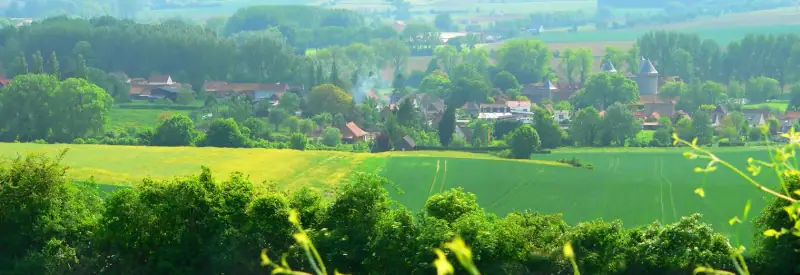
What to see in Artois: Lens, Vimy, Béthune, Azincourt and beyond Arras
What to see in Artois? Louvre-Lens, twin slag heaps, Vimy, Notre-Dame-de-Lorette, Béthune, Azincourt: 8 stops beyond Arras and a 2 to 3 day plan.
Visiting Le Touquet-Paris-Plage: what to see and do in 1 to 3 days
What to see and do in Le Touquet-Paris-Plage: beach, forest, villas, market, sand yachting, lighthouse and Canche Bay on the Opal Coast.
Visiting Boulogne-sur-Mer: what to see and do in 1 to 2 days
What to see in Boulogne-sur-Mer? Upper town, belfry, basilica, Nausicaá, fishing port and beaches: a guide to plan your visit on the Opal Coast.
Ready-made
Hauts-de-France itineraries
2 days
Weekend in Lille: what to see and do in 2 days
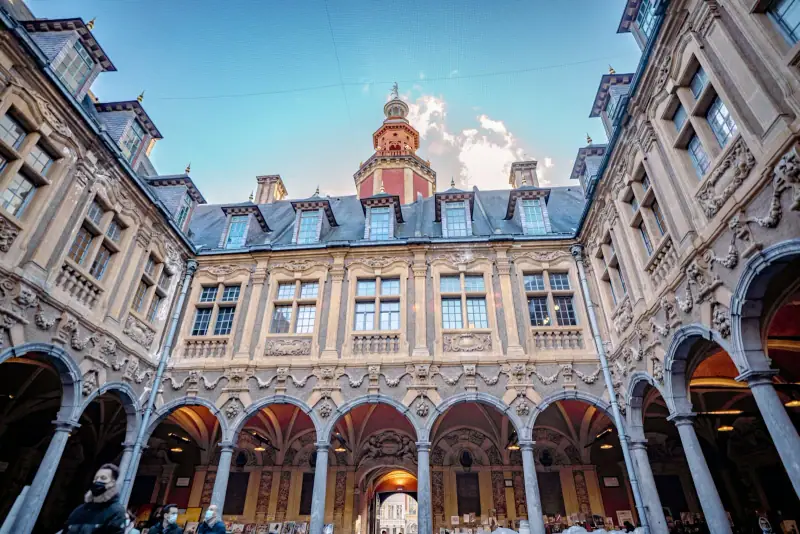
A weekend in Lille in 2 days: Old Lille, Grand'Place, Vieille Bourse, museums, the Citadelle, local dishes and practical tips for planning your stay.
2 days
Car-free weekend in the Bay of Somme: train, bike and tourist train
A weekend in the Bay of Somme without a car: arrive by train, stay in Saint-Valery or Le Crotoy, get around by tourist train and bike. Program and tips.
5 days
Hauts-de-France road trip in 5 days: from Lille to the Bay of Somme
CalaisBoulogne-sur-MerLe Touquet-Paris-PlageLe Crotoy
Can be adapted in the planner