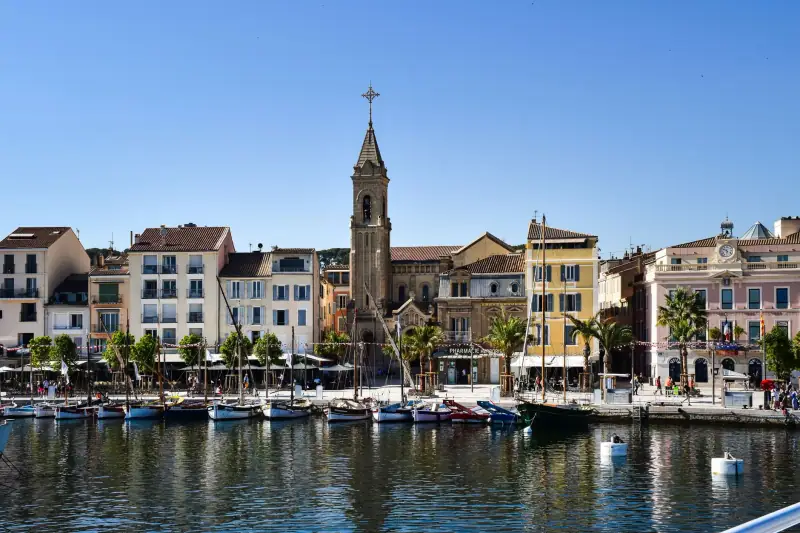
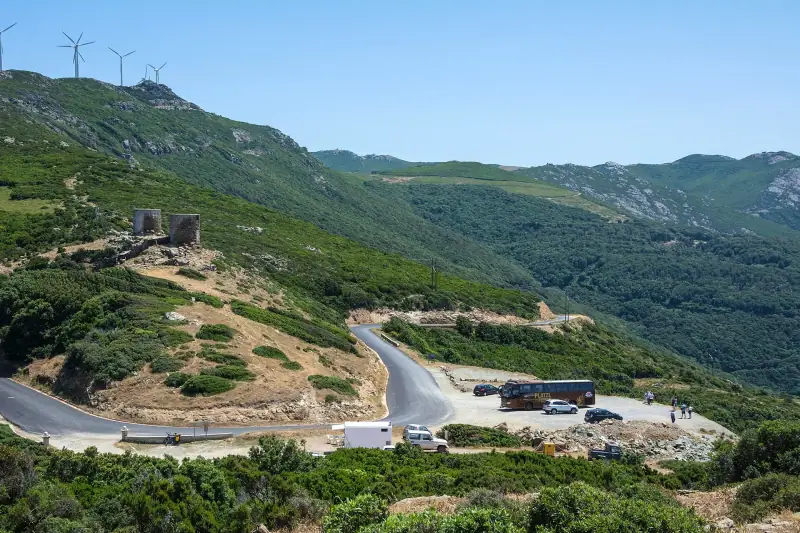
What to see
What to see around Cannes and Antibes: Cannes, Antibes, the Lérins Islands and hinterland villages
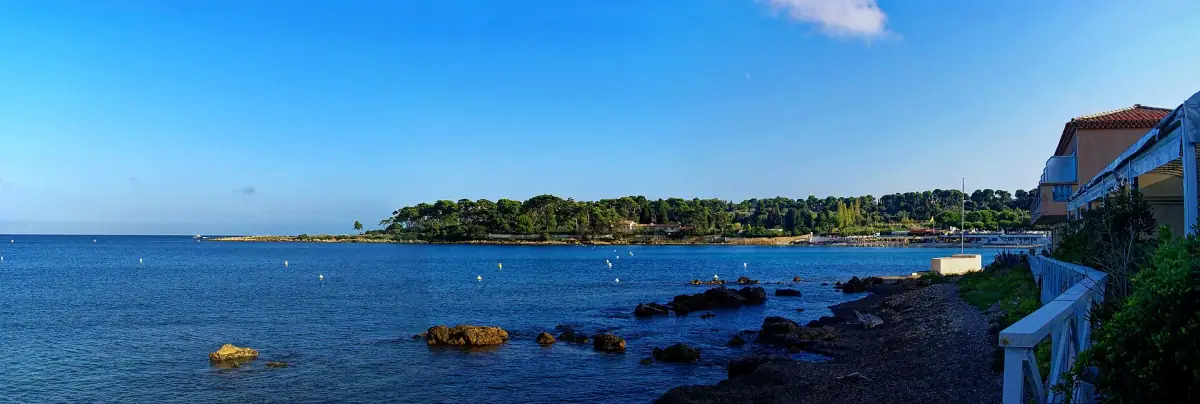
We may earn a commission when you book through links on this page, at no extra cost to you. We don't visit or try the places we cover: we summarize published sources. How we work
In short
- The area runs from Mandelieu-la-Napoule to Antibes, with Cannes, the Lérins Islands, Mougins, Vallauris-Golfe-Juan, Juan-les-Pins, Antibes and Biot as the main stops.
- The regional train links Cannes, Golfe-Juan, Juan-les-Pins and Antibes; buses serve inland villages such as Mougins, Vallauris and Biot.
- Plan 2 days for Cannes with the Lérins Islands and Antibes; 3 to 4 days to add Vallauris, Biot, Mougins and beach time.
- May, June, September and early October offer good weather and fewer crowds. In summer, booking the island crossing ahead is prudent.
Between the Esterel to the west and the Bay of Angels to the east, the Cannes area is one of the most varied parts of the French Riviera. It has a world-famous city of congresses and festivals, two islands offshore that shelter an abbey and a fortress, a fortified old town where Picasso worked, sand beaches that are rare on this coast and, inland, villages of potters, glassblowers and perfumers.
This guide tours the region: what to see, in what order, how long to plan and how to link the stops. For each place, we point to a detailed guide when one exists. Opening hours and entry fees change with the seasons: we give none here, so always check the official websites before you go.
The Cannes area at a glance
The region reads from west to east, from Mandelieu-la-Napoule to Antibes, with excursions inland. Here are the main stops:
- Cannes: the Croisette, Le Suquet, the Forville market and the departure point for the islands.
- Lérins Islands: Sainte-Marguerite and Saint-Honorat, a short boat ride away.
- Mougins: a medieval village above Cannes, known for its food tradition.
- Vallauris-Golfe-Juan: ceramics, Picasso and the gulf where Napoleon landed in 1815.
- Juan-les-Pins: a beach resort of sand beaches and jazz.
- Antibes: ramparts, Picasso Museum, Port Vauban and Cap d’Antibes.
- Biot: a hilltop village famous for its blown glass.
One point makes everything easier: the railway runs along the coast and serves Cannes, Golfe-Juan, Juan-les-Pins and Antibes. Our guide to getting around the French Riviera without a car details trains and buses. To compare with the neighboring region, also read what to see on the Nice Riviera.
Cannes, much more than the Croisette
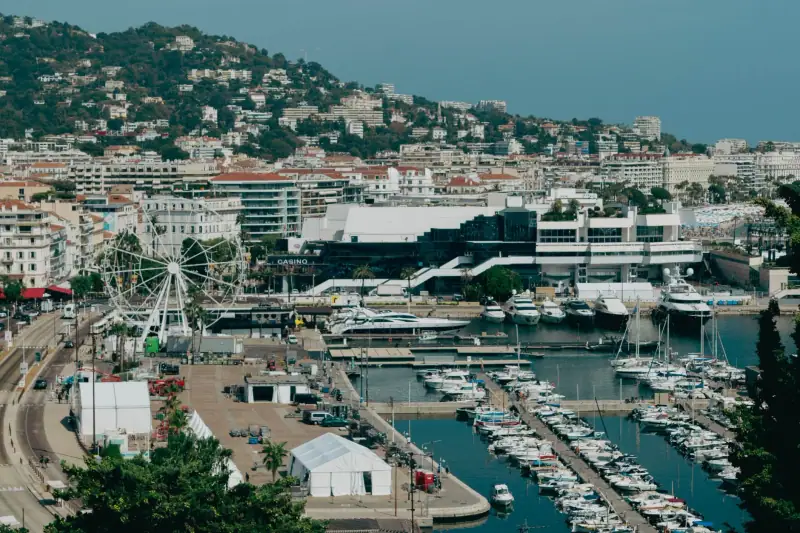
Cannes is known for its Film Festival, but the town is very good to visit outside any event. The core of a stay comes down to a few landmarks:
- The Croisette, a wide seaside promenade lined with palace hotels, private beaches and public beaches. You walk or cycle it, preferably at the end of the day when the light softens.
- The Palais des Festivals, with its red staircase, which people happily photograph even outside festival time.
- Le Suquet, the old town perched on a hill, with its lanes, church and tower offering a fine panorama of the bay. The Musée de la Castre, in the former castle, is also there.
- The Forville market, a covered Provençal market, ideal for buying fruit, cheese and regional specialties.
- The Old Port, where fishing boats and yachts moor, and where you take boats to the islands.
The public beaches are fine sand with a gentle slope, which families like. A large part of the seafront is taken by paid private beaches: spot the free access points before settling in.
To choose your neighborhood if you sleep here, see our guide to where to stay in Cannes.
Stay in Cannes, an ideal base for the Cannes area
Cannes has a station, a harbor for the islands and many places to stay. Book early in summer and during big events: rates climb fast.
The Lérins Islands, two islands, two atmospheres
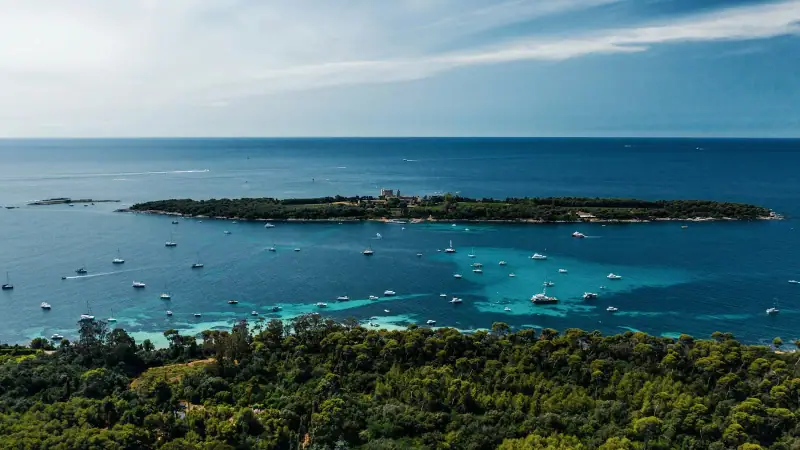
Off Cannes, the Lérins Islands offer a nature break a few minutes away by boat. There are two to visit:
- Sainte-Marguerite island, the larger one, covered in pines and eucalyptus and crossed by easy trails. Its Fort Royal houses a museum and the cell where the famous “Man in the Iron Mask”, a mysterious 17th-century prisoner, was held.
- Saint-Honorat island, smaller and calmer, occupied for centuries by a community of monks. It has a working abbey, a fortified monastery and vineyards from which the monks make wine. Respect the religious character of the place: dress properly and keep quiet near the abbey.
Half a day is enough for one island; a full day lets you do both with a picnic and a swim. Boats leave from Cannes for both islands, and other links exist depending on the season: check with the companies for timetables. All our preparation is in the guide to visiting the Lérins Islands from Cannes.
Mougins, the village of artists and food lovers
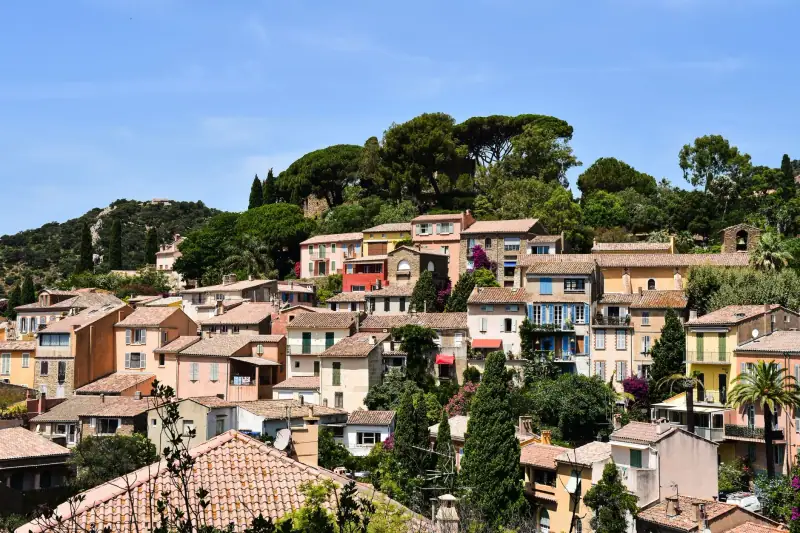
A few kilometers from Cannes, inland, Mougins is a fortified village of cobbled lanes, shaded squares and art galleries. It is known for its food tradition, but you can simply stroll, have a coffee on a terrace and look at the panorama of the coast.
The village is small and can be visited in one to two hours. It is easily combined with a day in Cannes. Expect a bit of walking, as the streets are sloped.
Vallauris-Golfe-Juan, the town of Picasso and potters
Between Cannes and Antibes, Vallauris has long been a town of ceramists. Picasso settled there after the war and revived the art of pottery; the town pays tribute to him with a museum and a chapel decorated with a large fresco painted by the artist. You still come across many ceramic workshops and shops where you can buy locally made pieces.
Farther down, Golfe-Juan is a quiet beach resort and marina. This is where Napoleon landed in 1815 on his return from the island of Elba, an episode recalled by a monument on the seafront. Together they make a pleasant stop, more authentic than the big neighboring towns.
Boat excursions to the Lérins Islands
Boat outing, coastal ride or guided tour: compare the activities offered from Cannes and book ahead in high season.
Juan-les-Pins, sand beaches and a jazz spirit
Juan-les-Pins is the beach resort of the Cannes area, nestled in a pine-lined bay. It stands out for its fine sand beaches, rare on the French Riviera, its lively lanes in the evening and its jazz festival, a summer event known to enthusiasts. For dates and program, check the festival’s official website before planning your stay.
It is a good base for families and for those who want a stay built around the beach rather than heritage. The station is close to the seafront, which simplifies excursions to Cannes and Antibes.
Antibes, ramparts, Picasso and Provençal market
Antibes is the big heritage stop of the area. Its old town, enclosed in ramparts overlooking the sea, can be walked in complete calm. The Château Grimaldi houses the Picasso Museum, a reminder that the artist set up his studio there in 1946. The Provençal market, in the very center, is one of the most pleasant in the region for buying local products and putting together a picnic lunch.
Other landmarks:
- Port Vauban, one of the largest marinas in the Mediterranean, with its yachts and the ramparts as a backdrop.
- Fort Carré, a star-shaped fortress overlooking the harbor entrance.
- Cap d’Antibes, a wooded, residential peninsula, with a coastal path that offers fine views over the sea and the coves.
Plan a full day for the old town, a museum and a tour of the cap. Our guide to visiting Antibes: what to see and do details the route, and the one on where to stay in Antibes helps you choose between old town, harbor, cap and Juan-les-Pins.
Biot, hilltop village and blown glass
Inland, Biot is a hilltop village whose arcaded square and medieval lanes have kept a lot of charm. It is famous for its glassworks: you can watch glassblowing demonstrations and buy pieces made there. The village also has a museum devoted to Fernand Léger.
Biot is visited in half a day, preferably outside the hottest hours. You reach it from Antibes by public transport or car: check the links depending on the season.
How to link the stops
The regional train is the backbone of the Cannes area: it links Cannes, Golfe-Juan, Juan-les-Pins and Antibes in a short trip, both economical and free of parking worries. For the inland villages (Mougins, Vallauris, Biot), add buses or take a taxi to save time.
A car lets you link several villages in a day, but traffic on the coast is heavy in summer and parking is hard in town centers. If you rent, book ahead and favor a small vehicle.
Rent a car for the hinterland villages
Handy for linking Mougins, Vallauris and Biot in a day. Compare rental companies and book early in summer.
What program for how long you stay
Here are realistic programs, designed around the train:
- 1 day: Cannes (Le Suquet, the Croisette) and one Lérins island for half a day.
- 2 days: day 1 in Cannes and the Lérins Islands; day 2 in Antibes, with the market, Picasso Museum and a tour of the cap.
- 3 days: add a day for Vallauris, Golfe-Juan and Biot, or for Mougins.
- 4 days: take time for Juan-les-Pins, the beach, the Cap d’Antibes path and a rest day.
To complement it, our 3 days on the French Riviera by train from Nice itinerary includes a day to the west, and the guide on when to go to the French Riviera helps you choose the season. To calibrate your spending, see the French Riviera budget.
Practical tips for your visit
A few habits simplify the stay:
- Leave early: the islands, villages and Le Suquet are more pleasant in the morning.
- Check hours: museums, the fort and the abbey have closing days that vary by season.
- Bring water and a picnic for the Lérins Islands, where food options are limited.
- Comfortable shoes: cobbles, stairs and trails are everywhere.
- Book ahead in July and August, for accommodation as well as crossings.
- Allow some leeway: if the wind rises, boat links can change.
Insurance. If you travel from far away or with young children, travel insurance with assistance can be reassuring.
In short: making the most of the Cannes area
The Cannes area suits every pace, from a one-day stop to a week’s stay. Remember the essentials:
- Choose Cannes or Antibes as your base, both served by train.
- Devote half a day to one Lérins island, or a day for both.
- Keep Antibes for a full day: old town, Picasso Museum, market and cap.
- Add the inland villages (Vallauris, Biot, Mougins) if you have three days or more.
- Check hours and fares before each visit.
With a bit of organization, this part of the French Riviera offers a concentrate of sea, heritage and local crafts, without the crowds of the most famous towns.
Frequently asked questions
Which towns does the Cannes area include?
The term designates the part of the French Riviera centered on Cannes and Antibes: Cannes, Le Cannet, Mandelieu-la-Napoule, Mougins, Vallauris-Golfe-Juan, Antibes-Juan-les-Pins, Biot and the Lérins Islands offshore. The boundaries vary by usage, but these are the stops most travelers visit.
How many days do you need to visit the Cannes area?
Two days let you see Cannes and the Lérins Islands on one side, Antibes on the other. With three or four days, you add Vallauris, Biot, Mougins and time at the beach or walking on Cap d'Antibes.
Can you visit the Cannes area without a car?
For the most part, yes: the regional train links Cannes, Golfe-Juan, Juan-les-Pins and Antibes, and buses serve villages such as Vallauris, Biot or Mougins. A car gives more flexibility for the hinterland, but parking is hard in summer.
What is the best time to visit the Cannes area?
May, June, September and early October offer good weather, a pleasant sea and fewer people. July and August are the busiest and most expensive months. Cannes is also very busy during its big events, which affects accommodation prices.
Do you need to book for the Lérins Islands?
In summer, it is prudent to book your crossing ahead, as the boats fill up. Out of season, you can generally find a seat on the spot. Check timetables and fares with the ferry companies before you go.
Where should you stay to explore the Cannes area?
Cannes and Antibes are the two best bases, both on the train line. Cannes suits the Lérins Islands and the Croisette atmosphere; Antibes or Juan-les-Pins suit the sea, sand beaches and a more relaxed stay.
Is the Cannes area suitable for children?
Yes: sand beaches in Cannes and Juan-les-Pins, a boat crossing to the islands, the Antibes ramparts and easy walks on Sainte-Marguerite island. Bring a hat, water and sunscreen in summer.
More French Riviera guides
Keep reading
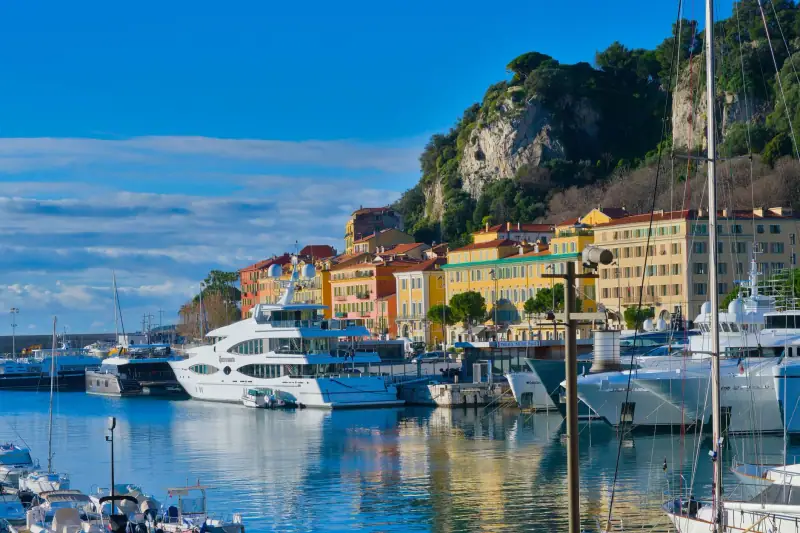
What to see on the Nice Riviera: Nice, Villefranche, Èze, Cap Ferrat and Menton
What to see on the Nice Riviera? Nice, Villefranche, Cap Ferrat, Èze, Roquebrune and Menton: top stops, how to link them and how long to plan.
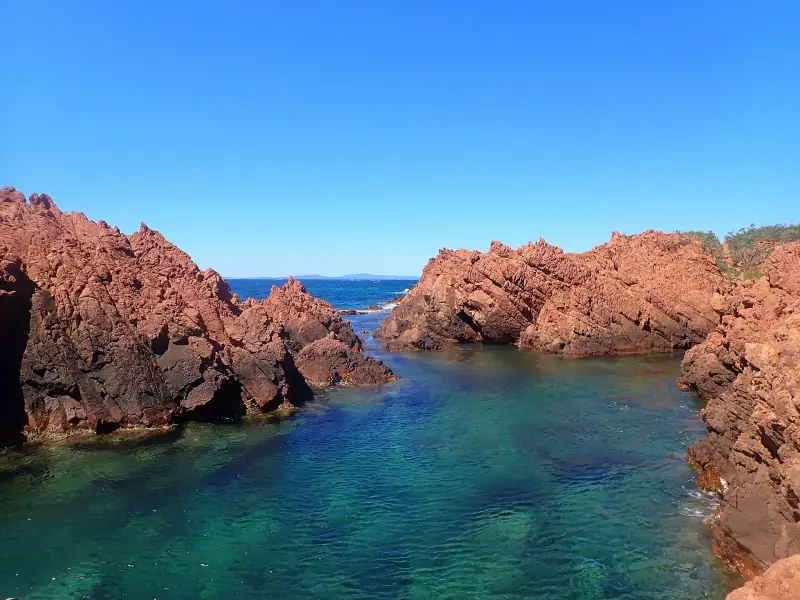
What to see in the Esterel: Corniche d'Or, Agay, Cap Roux and Mont Vinaigre
What to see in the Esterel? Corniche d'Or, Agay bay, Dramont, Cap Roux, Pic de l'Ours and Mont Vinaigre: stops, timing, access rules and tips.
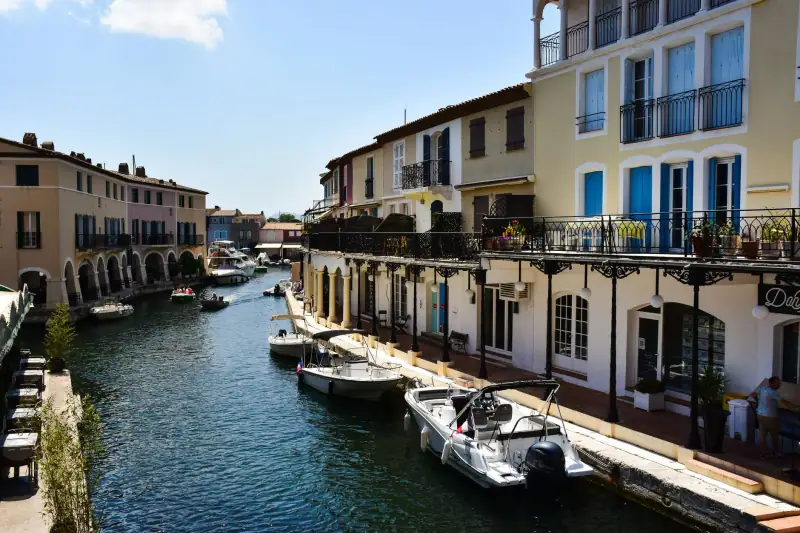
What to see in the Gulf of Saint-Tropez: Ramatuelle, Grimaud, Gassin and Sainte-Maxime
What to see in the Gulf of Saint-Tropez? Ramatuelle, Pampelonne, Gassin, Grimaud, Port Grimaud, Cogolin and Sainte-Maxime: stops, timing and tips.
Ready-made
French Riviera itineraries
4 days
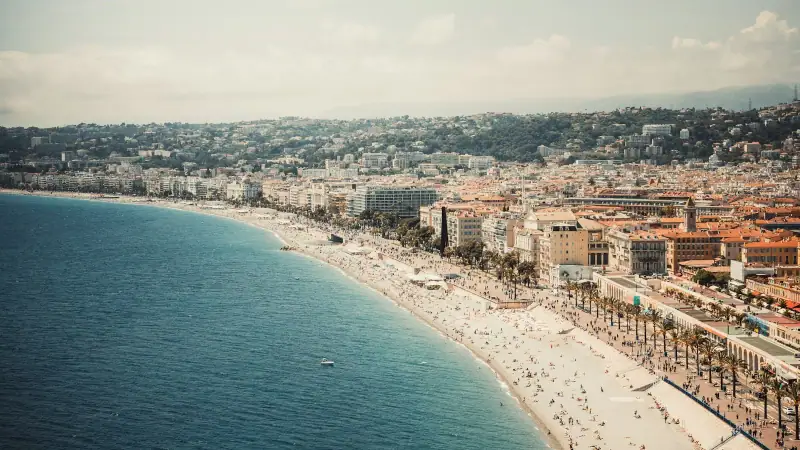
French Riviera in 4 days with kids: stops and pace
The French Riviera with kids in 4 days: a realistic plan from Nice, with travel times in minutes, short days, beaches and breaks, no car required.
Can be adapted in the planner
3 days
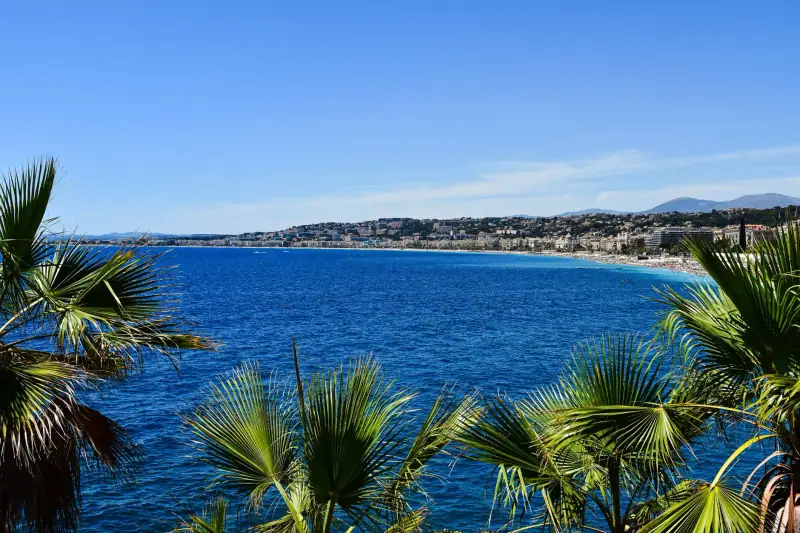
3 days on the French Riviera from Nice: a car-free itinerary by train
Nice, Villefranche, Èze, Menton, Antibes and Cannes in 3 days: a day-by-day itinerary by train and bus, with timing advice and tips to avoid crowds.
5 days
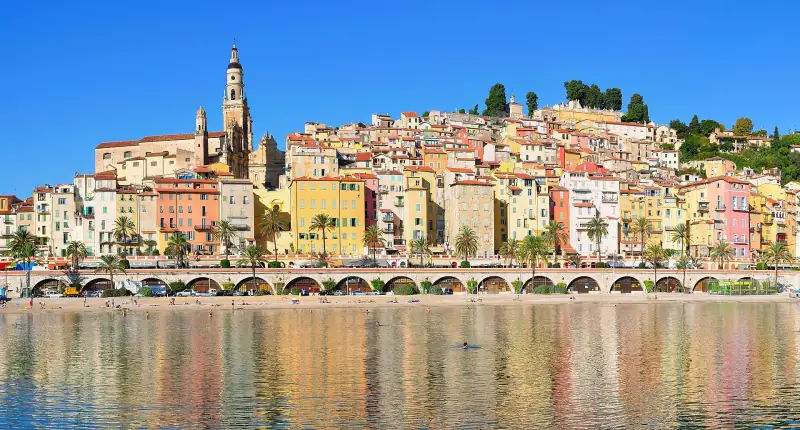
French Riviera road trip in 5 days: from Menton to Saint-Tropez by car
A 5-day road trip between Menton and Saint-Tropez: corniche roads, hilltop villages, the Esterel and parking tips to avoid traffic jams.