What to see
What to see in the Gulf of Saint-Tropez: Ramatuelle, Grimaud, Gassin and Sainte-Maxime
We may earn a commission when you book through links on this page, at no extra cost to you. We don't visit or try the places we cover: we summarize published sources. How we work
In short
- The gulf's main stops are Saint-Tropez, Ramatuelle, Gassin, Grimaud, Port Grimaud, Cogolin and Sainte-Maxime. The peninsula has no train station.
- Traffic is the real issue in summer. Staying on the opposite shore, for example in Sainte-Maxime, and taking the seasonal boat (about 15 minutes) avoids the road.
- May, June, September and early October combine good weather, pleasant sea and reasonable traffic; July and August are the busiest.
- Plan 2 days for Saint-Tropez, Ramatuelle, Grimaud, Port Grimaud and Sainte-Maxime; 3 days to add Gassin, Cogolin, Cap Camarat and a beach day.
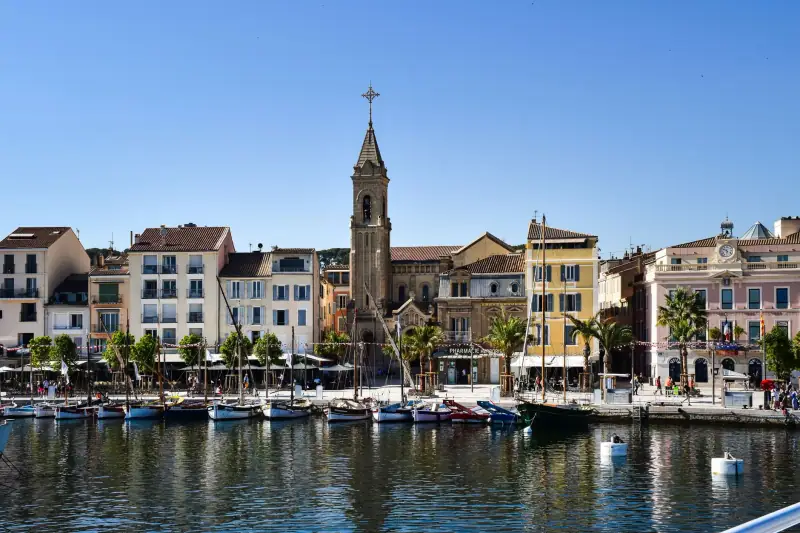
At the western end of the French Riviera, in the Var, the Gulf of Saint-Tropez forms a wide bay closed by a peninsula of hills, vineyards and umbrella pines. Its reputation often comes down to a single name, that of the fishing village that became world famous. Yet it is in the surroundings that you find the most variety: hilltop villages overlooking the sea, a waterside town built in the 20th century, long sand beaches, a wild cape topped by a lighthouse and a family beach resort on the opposite shore.
This guide tours the gulf: what to see, in what order, how long to plan and how to link the stops. The village of Saint-Tropez itself has a detailed guide, visiting Saint-Tropez: what to see and do; here we focus on everything around it. Opening hours and prices change with the seasons: we give none, so always check the official websites before you go.
The Gulf of Saint-Tropez at a glance
The region is read around the bay, with two distinct shores: the peninsula to the south, facing the open sea, and the head of the gulf to the north, more sheltered. Here are the main stops:
- Saint-Tropez: the harbor, the old town, the citadel and the Annonciade Museum.
- Ramatuelle: a perched, flowery village, gateway to the Pampelonne beaches and Cap Camarat.
- Gassin: a village perched on a ridge, known for its open views over the gulf and the Îles d’Or offshore.
- Grimaud: a medieval village dominated by the ruins of its castle.
- Port Grimaud: a waterside town of canals and colorful houses.
- Cogolin: a small Provençal town, known for its craft skills.
- Sainte-Maxime: a family beach resort facing Saint-Tropez, with a promenade, beaches and a market.
Two points of orientation help you avoid getting lost. First, there is no train station on the peninsula: everything is by car, bus, bike or boat. Second, traffic is the real issue in summer, which drives many choices (where to sleep, what time to leave). To place the gulf in a wider trip, our 5-day road trip from Menton to Saint-Tropez makes it the final stop.
Ramatuelle and the Pampelonne beaches
Ramatuelle is the most charming village of the peninsula. Perched on a hill, it can be walked in a short hour: cobbled lanes, vaulted passages, ocher stone facades, shaded squares and bougainvillea in fine weather. The village cemetery, with a sea view, holds the grave of the actor Gérard Philipe, which draws a few visitors each year. Outside peak season, the atmosphere is calm and very Provençal.
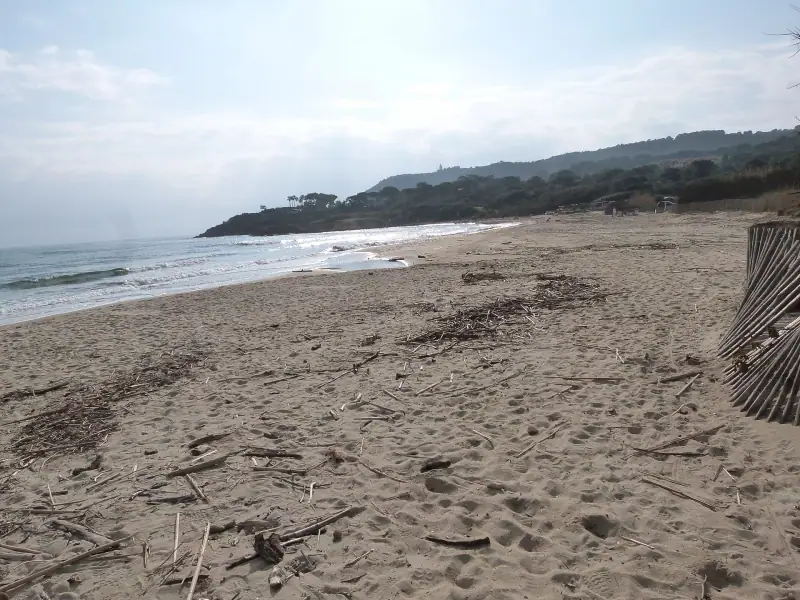
From the village, the road descends to Pampelonne beach, one of the most famous on the French coast. It stretches over several kilometers of fine sand, bordered by dunes and low vegetation. A large part of the seafront is occupied by paid beach clubs, but there are also free sections where you can set up with your own towel. A few tips to approach it calmly:
- Arrive early: in July and August, the parking lots are full by late morning.
- Spot the public access points before settling in, especially if you do not want to rent a lounger.
- Respect the dune: the vegetation there is fragile and protected.
- Bring water, as shade is rare outside the beach clubs.
For the town’s other beaches, smaller or wilder, find out about access conditions locally: some coves are reachable only by a trail and crowds vary a lot by season.
Cap Camarat, the lighthouse and the coastal path
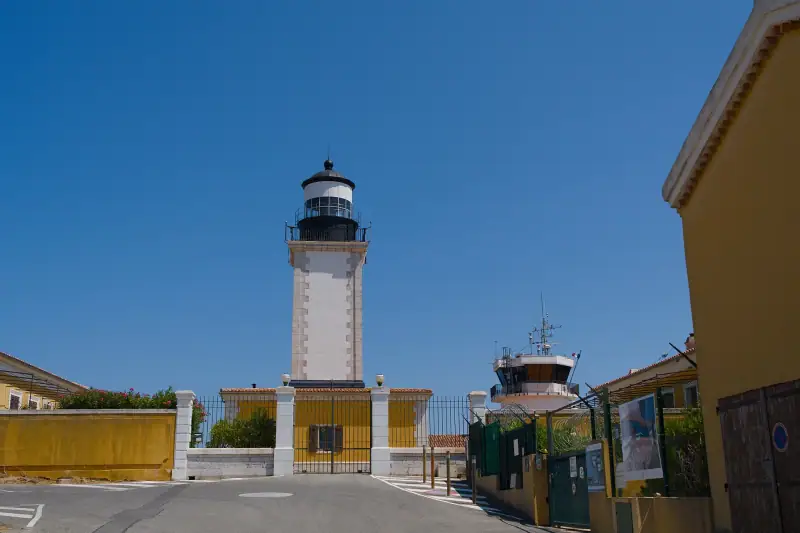
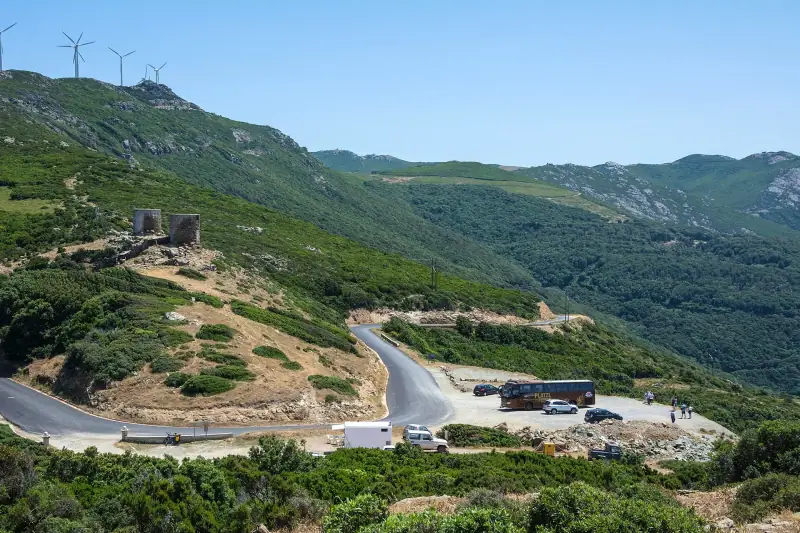
South of Ramatuelle, the peninsula ends at Cap Camarat. A lighthouse overlooks the sea, and the road to the site crosses a landscape of scrub, vineyards and hills very different from the atmosphere of the port of Saint-Tropez. The panorama over the open sea is one of the finest in the region, particularly at the end of the day.
This part of the coast is protected: it is one of the preserved natural areas of the Var coast. The coastal path links several coves and capes over sections of varying length and difficulty. It is generally open all year, but some areas can be closed in periods of fire risk in summer: ask the tourist office or check the information panels before setting off. Bring good shoes, water and a hat, as shade is rare on exposed sections.
For a wider walk along the regional coast, our selection of hikes on the French Riviera gives ideas for coastal trails for all levels.
Stay in Sainte-Maxime, facing Saint-Tropez
On the opposite shore of the gulf, accommodation is generally more affordable than in Saint-Tropez, and a seasonal boat reaches the village in a few minutes. Book early in summer.
Gassin, the hilltop village with big views
Halfway between Saint-Tropez and Ramatuelle, Gassin occupies a ridge overlooking the vineyards and the sea. The village is tiny and can be visited in about an hour: a main street, a few lanes, a church and a panoramic terrace from which you take in the gulf, the peninsula and, on a clear day, the islands offshore. It is an excellent viewpoint for understanding the geography of the region before setting off to explore.
The vines around Gassin and Ramatuelle belong to the wine zone of the peninsula. If you feel like tasting the region’s wines, many estates offer tastings, often by reservation: ask them directly. In the neighboring hills, an old windmill is visible from afar on the ridge and can be visited on a walk, with an open view.
Grimaud, the medieval village and its castle
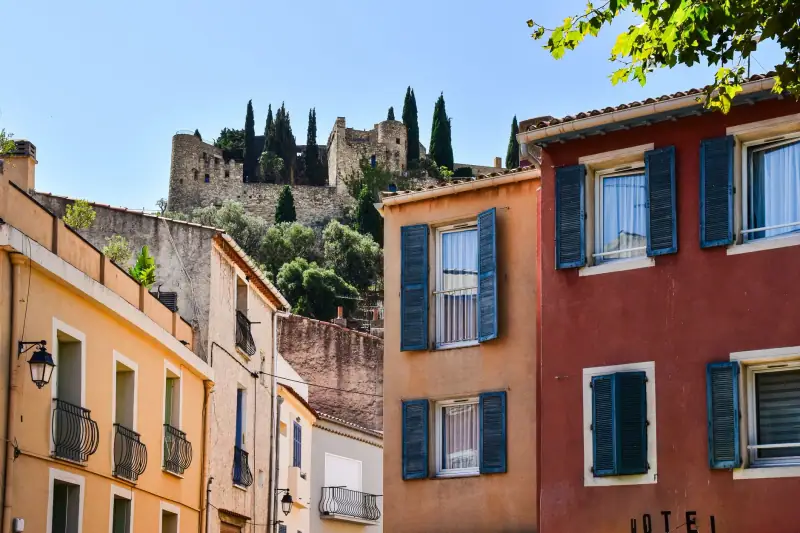
At the head of the gulf, Grimaud rises up a hill crowned by the remains of a medieval castle. The village has kept its old layout: sloping lanes, vaulted passages, fountains, warm-colored houses and a small square where you happily settle on a terrace. A cobbled street, often flowery, climbs to the castle, from where the view over the gulf, Port Grimaud and the Maures hills is superb, especially at sunset.
Visiting the village takes one to two hours, more if you go on to the ruins. Expect uphill walking and uneven cobbles: good shoes are better than sandals. In season, the lanes are lively in the evening; outside it, the village returns to a peaceful rhythm.
Port Grimaud, the 20th-century “Provençal Venice”
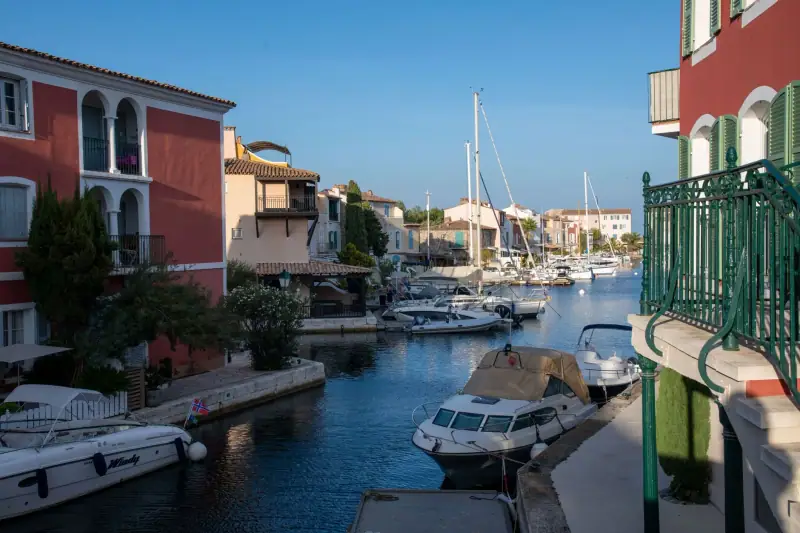
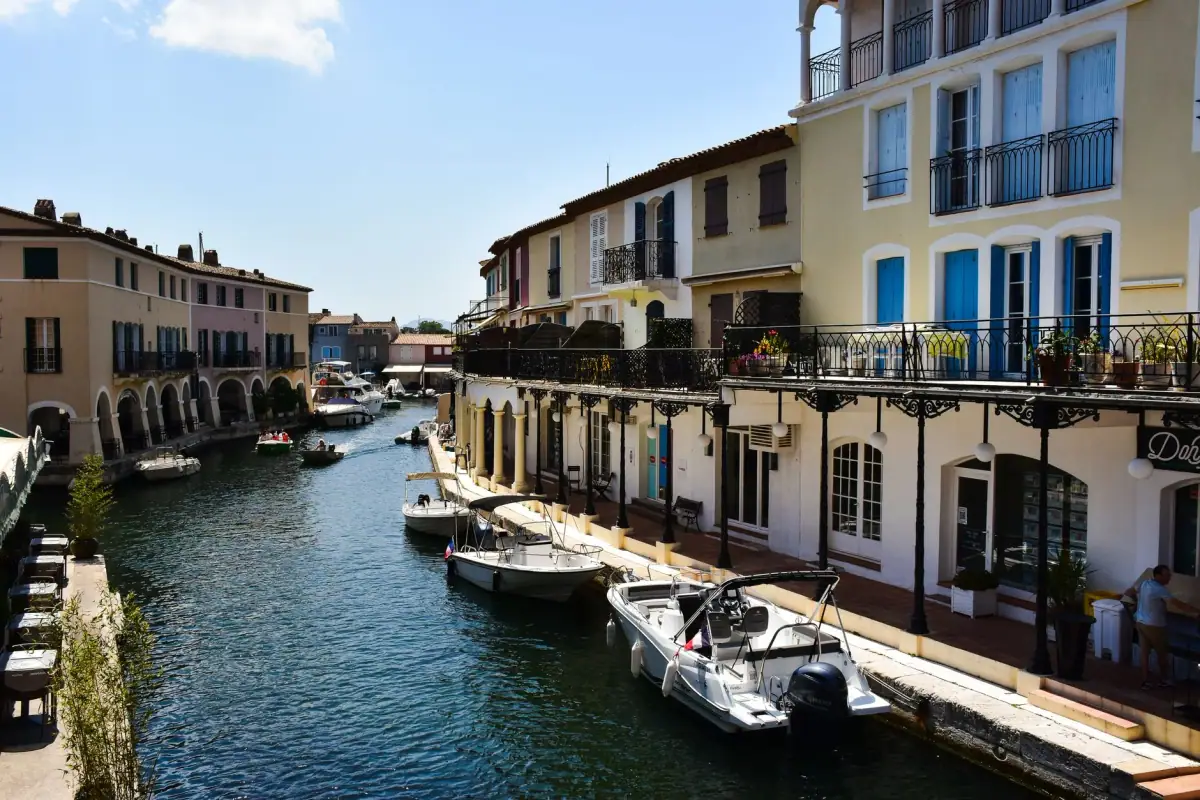
At the foot of Grimaud, Port Grimaud is a waterside town designed by the architect François Spoerry and built from the 1960s. It is inspired by Mediterranean fishing villages: houses with colorful facades, tiled roofs, bridges, small squares and canals on which each home has its own mooring. The very photogenic result often earns it the nickname “Provençal Venice”.
You visit it on foot in an hour or two, strolling along the quays and crossing the bridges. The district is pedestrian: cars stay in the entrance parking lots. Small electric boats offer tours of the canals in season, which gives another perspective on the houses and gardens. It is a very popular outing for families, and a lovely time at the end of the day, when the light gilds the facades.
Boat rides and excursions in the gulf
Boat outing, coastal cruise or guided tour of the peninsula: compare the activities offered around Saint-Tropez and book ahead in high season.
Cogolin, the craft stop
A few kilometers from the head of the gulf, Cogolin is a small Provençal town, more authentic and less touristy than its neighbors. It is known for its craft skills, notably hand-made carpets and the pipe-making tradition. The old center, with its lanes, fountains and central square, can be walked at leisure in an hour or two. It is an interesting stop for travelers who want to see something other than beaches, and a good place for lunch without paying harbor prices.
Visiting hours for workshops and craft shops vary: better to check with the tourist office before you go.
Sainte-Maxime, the gulf’s family resort
Sainte-Maxime lies opposite Saint-Tropez, across the bay. Its seafront is laid out as a promenade, lined with restaurants and sand beaches. The marina, the old town and a medieval tower, the Tour Carrée, which houses a small museum, complete the scene. The town is lively but remains more affordable and more family-oriented than its famous neighbor, which makes it a very good base for exploring the gulf.
Its major asset is the sea link with Saint-Tropez: in season, a boat crosses the bay in about 15 minutes and drops you right at the harbor, avoiding the traffic jams on the road. Timetables and frequency vary by period: check them before planning the day. For places to sleep on the Saint-Tropez side, our guide on where to stay in Saint-Tropez compares the areas.
Getting around the gulf
The options complement rather than oppose each other:
- A car offers the most freedom, but the access road to Saint-Tropez is one of the region’s worst traffic bottlenecks in summer, with queues of several kilometers in high season. Beach and village parking lots fill early.
- The boat: seasonal links from Sainte-Maxime and some other ports of the gulf. It is the most pleasant way to reach Saint-Tropez.
- The bus: regional lines serve the main towns. Trips are slower than by car and sensitive to traffic, but they avoid the parking question.
- Bike or e-bike: excellent out of season and early in the morning, especially in the hills of Ramatuelle and Gassin. In midsummer, traffic and heat make it more demanding.
Details on getting around without your own vehicle are in our guide to getting around the French Riviera without a car, even though the peninsula remains the hardest area to cover without a car.
Rent a car to explore the peninsula
Handy for linking Ramatuelle, Gassin, Grimaud and the beaches in a day. Compare rental companies and book early in summer.
Markets and flavors of the gulf
The market is a highlight of local life. The one on place des Lices in Saint-Tropez is the most famous, but several towns of the gulf hold their own Provençal markets, with fruit, vegetables, cheeses, olives, flowers and local products. Days and hours vary by town and season: ask the tourist offices. To understand what you find there, our guide to Provençal markets on the French Riviera gives useful pointers.
At the table, you will meet classic Provençal cooking: grilled fish, composed salads, tapenade, sun-ripened vegetables. In Saint-Tropez, the tarte tropézienne, a brioche filled with cream, remains the emblematic sweet. To avoid harbor prices, lunch in the inland villages such as Cogolin or Grimaud.
What program for how long you stay
Here are realistic programs, without excessive driving (the gulf is compact, but traffic lengthens times):
- 1 day: Saint-Tropez in the morning, Ramatuelle and a stop at Pampelonne beach in the afternoon.
- 2 days: day 1 in Saint-Tropez, Gassin and Ramatuelle; day 2 in Grimaud, Port Grimaud, then an afternoon in Sainte-Maxime.
- 3 days: add a day for Cap Camarat, the coastal path and a long beach session.
- 4 days: take time for Cogolin, a tasting at a wine estate and a boat outing.
To choose the right season, see our guide on when to go to the French Riviera. To calibrate your spending, also read the French Riviera budget: the peninsula is among the most expensive areas of the region.
Practical tips for your visit
A few habits make the stay easier:
- Leave early: villages, beaches and parking lots are more pleasant before 10 am.
- Avoid summer weekends for driving to Saint-Tropez.
- Stay on the opposite shore (Sainte-Maxime, Grimaud, Cogolin) to cut the bill, and use the boat.
- Follow the fire rules: in summer, access to some massifs and trails may be restricted.
- Comfortable shoes: cobbles, slopes and trails are everywhere.
- Bring water and sunscreen: shade is limited on the beaches and trails.
- Book ahead in July and August, both for accommodation and for boat outings.
Insurance. If you travel from far away or with children, travel insurance with assistance can be reassuring.
In short: making the most of the Gulf of Saint-Tropez
The Gulf of Saint-Tropez deserves more than a stop at the harbor. Remember the essentials:
- Do not limit yourself to the village: Ramatuelle, Gassin and Grimaud offer very different atmospheres.
- Set aside half a day for Pampelonne and another for Cap Camarat or the coastal path.
- Visit Port Grimaud late in the afternoon, on foot or in a small boat.
- Sleep on the other side of the gulf and cross by boat to avoid the road.
- Avoid high season if possible: May, June and September are ideal.
With a bit of organization, this region offers a condensed mix of villages, nature and sea, far from the narrow image of the most famous harbor on the French Riviera.
Frequently asked questions
Which towns make up the Gulf of Saint-Tropez?
Depending on usage, the gulf groups Saint-Tropez, Ramatuelle, Gassin, Grimaud (with Port Grimaud), Cogolin and Sainte-Maxime. The boundaries are not strictly official: some add La Croix-Valmer or Les Issambres. These are in any case the stops most travelers visit.
How many days do you need to visit the Gulf of Saint-Tropez?
Two days let you see Saint-Tropez and Ramatuelle on one side, Grimaud, Port Grimaud and Sainte-Maxime on the other. With three days, you add Gassin, Cogolin, a long beach day and a coastal walk without rushing.
Can you visit the Gulf of Saint-Tropez without a car?
Partly. Seasonal boats link Sainte-Maxime and other ports of the gulf to Saint-Tropez, and regional buses serve the villages. But a car, e-bike or scooter gives far more freedom for Ramatuelle, Gassin and the beaches, and there is no train station on the peninsula. Check timetables, which vary by season.
What is the best time to visit the Gulf of Saint-Tropez?
May, June, September and early October combine good weather, a pleasant sea and reasonable traffic. July and August are the busiest months: saturated roads, full parking lots, expensive accommodation. Out of season, some shops and beach clubs are closed, but the villages and trails are very quiet.
How do you avoid traffic jams toward Saint-Tropez?
Avoid arriving or leaving at rush hour in summer, especially on weekends. The smartest move is to stay on the other side of the gulf, for example in Sainte-Maxime, and reach Saint-Tropez by boat. Leaving early in the morning or late in the afternoon also makes a big difference.
Where should you stay to explore the Gulf of Saint-Tropez?
Sainte-Maxime, Grimaud and Cogolin generally offer more accessible rates than Saint-Tropez itself, with good connections. Ramatuelle and Gassin suit a quiet stay in the hills. To compare the village's neighborhoods, see our dedicated guide to accommodation in Saint-Tropez.
Is the Gulf of Saint-Tropez suitable for children?
Yes: gently sloping sand beaches, boat rides, the canals of Port Grimaud to explore in a small boat, and easy trails. Bring a hat, water and sunscreen, and avoid the hottest hours in summer.
More French Riviera guides
Keep reading
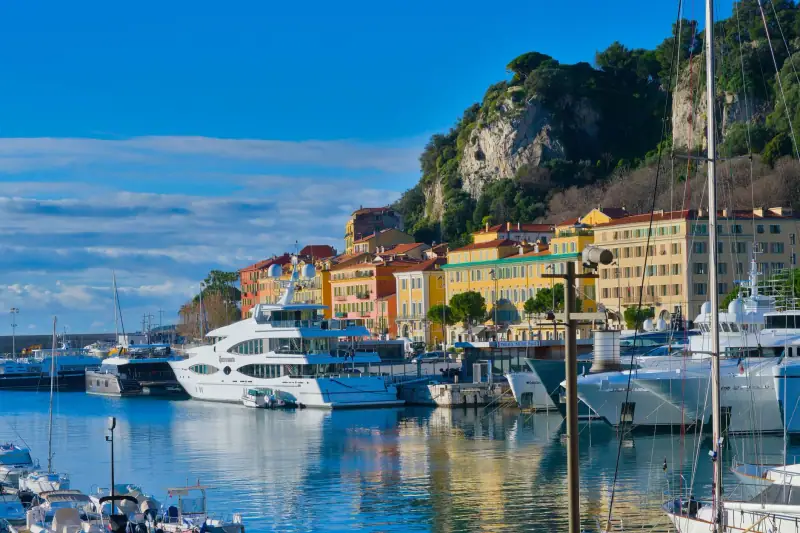
What to see on the Nice Riviera: Nice, Villefranche, Èze, Cap Ferrat and Menton
What to see on the Nice Riviera? Nice, Villefranche, Cap Ferrat, Èze, Roquebrune and Menton: top stops, how to link them and how long to plan.
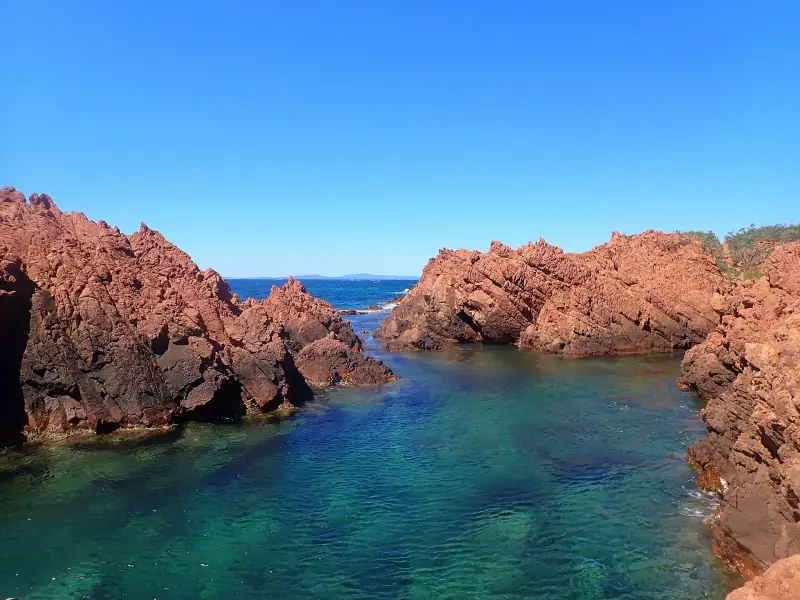
What to see in the Esterel: Corniche d'Or, Agay, Cap Roux and Mont Vinaigre
What to see in the Esterel? Corniche d'Or, Agay bay, Dramont, Cap Roux, Pic de l'Ours and Mont Vinaigre: stops, timing, access rules and tips.
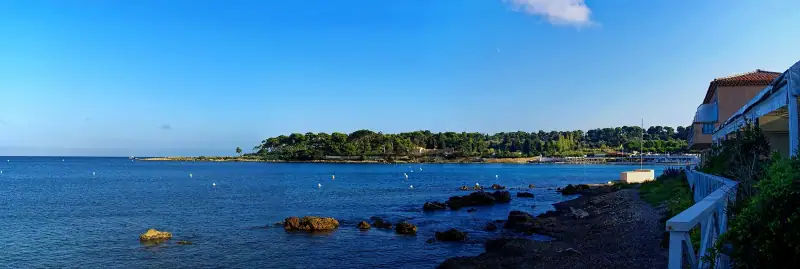
What to see around Cannes and Antibes: Cannes, Antibes, the Lérins Islands and hinterland villages
What to see around Cannes? Cannes, Lérins Islands, Antibes, Juan-les-Pins, Vallauris, Biot and Mougins: the top stops and how to link them.
Ready-made
French Riviera itineraries
4 days
French Riviera in 4 days with kids: stops and pace
The French Riviera with kids in 4 days: a realistic plan from Nice, with travel times in minutes, short days, beaches and breaks, no car required.
Can be adapted in the planner
3 days
3 days on the French Riviera from Nice: a car-free itinerary by train
Nice, Villefranche, Èze, Menton, Antibes and Cannes in 3 days: a day-by-day itinerary by train and bus, with timing advice and tips to avoid crowds.
5 days
French Riviera road trip in 5 days: from Menton to Saint-Tropez by car
A 5-day road trip between Menton and Saint-Tropez: corniche roads, hilltop villages, the Esterel and parking tips to avoid traffic jams.