Where to stay
Where to stay in Cannes: neighborhoods and types of accommodation
We may earn a commission when you book through links on this page, at no extra cost to you. We don't visit or try the places we cover: we summarize published sources. How we work
In short
- The area between the Croisette and rue d'Antibes is the most practical for a first stay: beach, shops, restaurants and the train station are all within walking distance.
- Rates peak during the Cannes Film Festival in May, large trade fairs and summer. Out of those periods, Cannes is much more affordable.
- Rooms a few streets back from the Croisette are usually much cheaper than sea-view rooms, for similar comfort.
- Cannes is easy without a car: the station is close to the center and trains serve Nice, Antibes and Saint-Raphaël.
Cannes instantly calls to mind the red carpet, the palace hotels of the Croisette and the Film Festival, but the town is also a human-scale beach resort, with a hilltop old town, a fishing and pleasure harbor, sand beaches and a lived-in local neighborhood around rue d’Antibes. Where you sleep changes the experience noticeably: facing the sea, you enjoy the show of the bay; near the station, you save money; in the hills, you gain quiet. This guide goes through the neighborhoods of Cannes, the types of accommodation and tips on booking at the right time, to help you choose without regrets.
How to choose: the criteria that really matter
Before comparing areas, ask yourself a few simple questions. They often weigh more than the star rating.
1. The reason for your stay. A beach weekend, a trade fair, a base for exploring the coast or a family vacation do not call for the same accommodation. For a business trip to the Palais des Festivals, being close to the Croisette comes first. For day trips by train, the station is the priority.
2. The period. Cannes is a town of events. The Cannes Film Festival in May, large trade fairs and the summer high season push rates up and reduce availability. Outside those times, the town is much more affordable and pleasant, as our guide on when to go to the French Riviera explains.
3. The budget. The farther you get from the seafront, the lower the prices. A room ten minutes’ walk from the beach generally costs far less than a sea-view room on the Croisette, for often comparable comfort. To put your overall spending in context, see our French Riviera budget.
4. Hills and luggage. The center is flat, but Le Suquet and La Californie climb. With big suitcases, check the elevator and access by car or taxi.
5. Noise. In summer, busy streets, terraces and night events can disturb sleep. If you are sensitive, ask for a room on the courtyard side or on a high floor, and check the air conditioning.
The Croisette: the iconic seafront
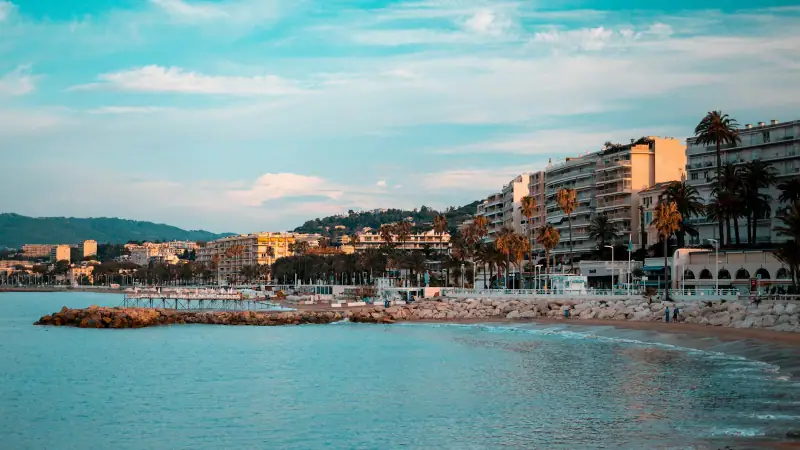
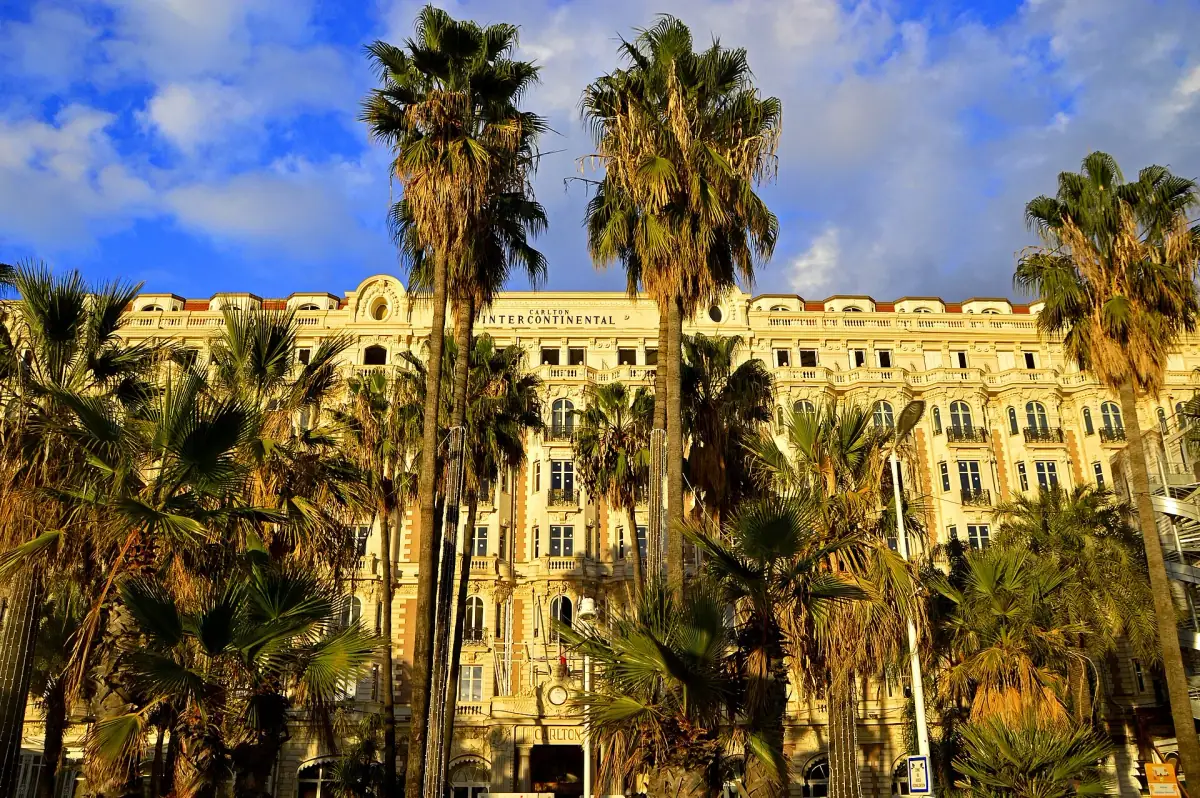
The Croisette is the boulevard that runs along the bay of Cannes for about two kilometers (1.2 mi), between the Palais des Festivals and the Pointe de la Croisette. This is where the grand historic hotels, luxury shops and beaches, private or public, are concentrated.
Pros. Sea views from well-oriented rooms, direct access to the beach and the promenade, closeness to the Palais des Festivals, an elegant and very international atmosphere. It is the obvious choice for an upscale beach stay or a business trip.
Cons. It is the most expensive area of the town, with spectacular swings during events. Street-side rooms are often much cheaper than sea-side ones, but traffic can be noisy. Restaurants in hotels and private beaches are generally pricier than in the rest of town.
Best for. Travelers who want to stay facing the sea, relaxing or business stays, special occasions.
Tip. The Croisette is not only palace hotels. By choosing a hotel in the streets just behind, you stay a few minutes from the beach for a rate that is often more moderate.
Stay near the Croisette
Compare hotels on the seafront and in the neighboring streets, checking the view, air conditioning and cancellation terms.
The town center, rue d’Antibes and the Carnot district: the best compromise
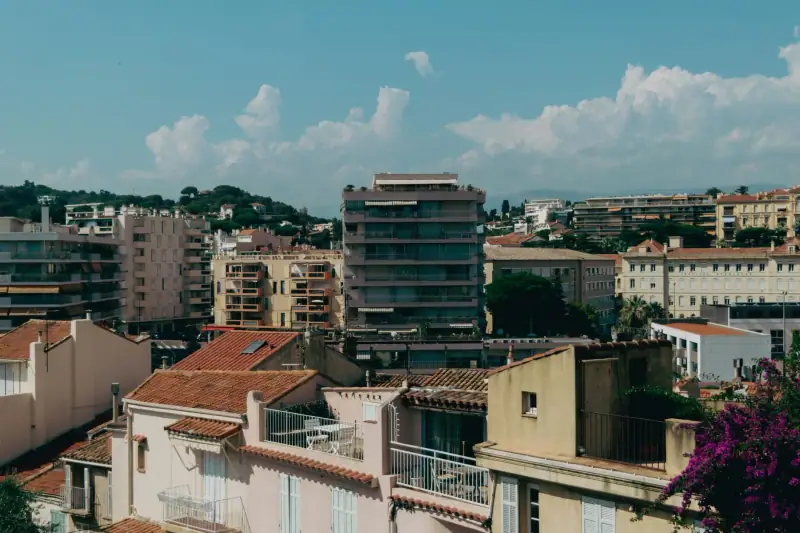
Behind the Croisette lies the shopping heart of Cannes. Rue d’Antibes, parallel to the seafront, concentrates shops, cafés and restaurants. The Carnot district, toward the station, is more residential and very lively, with neighborhood shops.
Pros. This area combines closeness to the sea (a few minutes on foot), easy access to the station, a wide choice of hotels in all categories and lower rates than on the waterfront. Restaurants are plentiful and more varied than on the seafront. It is the most versatile area for a first stay.
Cons. The atmosphere is urban, with no sea view from most rooms, and some shopping streets are busy in the evening. Hotels vary greatly in quality: read recent reviews.
Best for. Almost everyone: couples, families, travelers without a car, mid-range budgets. This is our default recommendation.
Tip. For local food, head to the Forville covered market, which Cannes residents use. You are in an ideal neighborhood to walk there and pick up picnics for the beach.
Le Suquet and the Old Port: Provençal charm
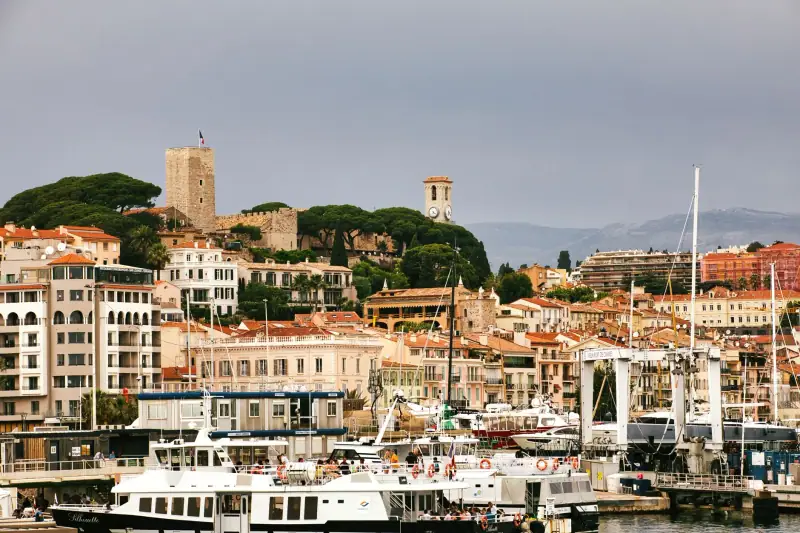
Le Suquet is the old town of Cannes, built on a hill overlooking the Old Port. It has cobbled lanes, colorful houses, stairways, restaurants, and at the top the former fortress with its tower and view over the bay. The Old Port below hosts fishing boats, yachts and quayside restaurants.
Pros. This is the most authentic neighborhood, with a village atmosphere. Sunsets from the heights are superb, and the restaurants here are more varied than on the seafront. The Old Port is also the departure point for crossings to the Lérins Islands, which makes it easy to organize an excursion to the Lérins Islands from Cannes.
Cons. Streets are steep, sometimes narrow, with little parking. Hotel supply is more limited, and some places are in old buildings with no elevator. The beach is reachable on foot, but suitcases are less comfortable to carry.
Best for. Couples, lovers of old stone and fine views, travelers with light luggage. Avoid it if you have trouble walking uphill or have a lot of luggage.
La Californie and the hills: quiet and villas
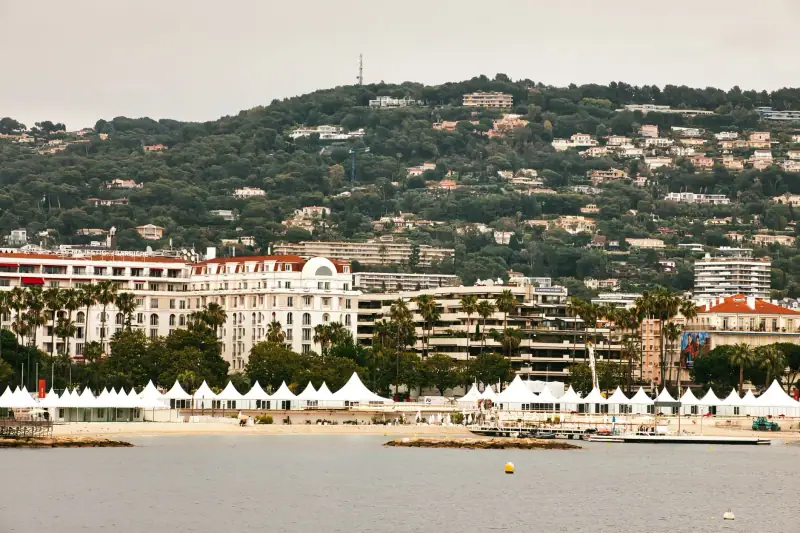
La Californie is a residential hillside district east of the center, known for its Belle Époque villas and gardens. A few hotels and rentals are tucked in, often with a view over the bay.
Pros. Quiet, greenery, views, spacious places with a terrace or parking, perfect for families or long stays. Prices can be better than on the seafront for larger spaces.
Cons. It is away from the action: without a car, count on a bus or taxi, and the uphill walk back in the evening can be tiring. Shops and restaurants are fewer than downtown.
Best for. Families with a car, long stays, travelers who want quiet and space. Check the actual distance to the center before you book.
Compare stays in Cannes
Hotels, apartments and residences: filter by neighborhood, budget and cancellation terms to find your place.
The station area: practical and affordable
Around Cannes train station, there is a good concentration of simple to mid-range hotels, often more affordable than near the sea.
Pros. The station is the gateway to your excursions: Nice, Antibes, Saint-Raphaël and the coastal towns are all reachable by train. Our 3-day itinerary by train from Nice and our guide to getting around without a car detail these links. The Croisette and the beach are reachable on foot in about 15 minutes, depending on the exact address.
Cons. The atmosphere is more urban and less picturesque, and some streets near the tracks are noisy. Hotel quality varies: favor places with good recent ratings.
Best for. Small budgets, travelers arriving by train, stays built around excursions.
La Bocca and the west: beaches, local life and low prices
West of Cannes, the La Bocca district is a more working-class and residential area, with a long beach and local life. Farther on, you reach the neighboring towns toward Mandelieu-la-Napoule.
Pros. Often lower rates, apartments and residences, a no-frills atmosphere and quieter beaches. A local train or bus gets you to the center of Cannes.
Cons. The neighborhood is less touristy and less picturesque, and the center is some distance away: check the actual travel time and evening transport schedules.
Best for. Tight budgets, families in apartments, travelers with a car who are not after the Croisette atmosphere.
Hotel, apartment, hostel or campground: which type of accommodation?
The type of accommodation matters as much as the neighborhood.
Palace and grand hotels are concentrated on the Croisette. They appeal for the service, views and experience, with rates to match, and strong swings during events.
Mid-range hotels dominate the town center and the Carnot district. They offer the best value for a short stay: front desk, breakfast, flexibility. Check room size and air conditioning.
Apartments and residences suit stays of several nights: kitchen, space, the chance to buy at the market. Check access conditions, cleaning fees and the tourist tax, often charged on top.
B&Bs and small charming houses are found mostly in the hills. They offer a personal welcome and good local tips, but often require a vehicle.
Hostels and budget accommodation are rarer on the Croisette, but exist farther from the seafront. They interest solo travelers or groups in high season, when hotels are expensive.
Campgrounds are mostly on the outskirts and in neighboring towns. They suit families with a car who want an economical stay, as long as you check the distance to the sea and to transport.
When to book and what budget to plan
Cannes rates vary strongly by period. The Cannes Film Festival in May, large trade fairs and summer are the most expensive and tightest times. By contrast, spring outside the festival, early fall and winter offer more accessible rates, with a generally mild climate and smaller crowds.
A few habits to optimize your booking:
- Plan around events: check the fair and festival calendar before fixing your dates.
- Book early for high season, with free cancellation if possible, even if you adjust later.
- Compare several dates: shifting your stay by a day or two, or avoiding the weekend, can noticeably lighten the bill.
- Check the total price: tourist tax, cleaning fees and extras are not always in the displayed rate.
- Read recent reviews rather than just the overall score, looking at what is said about noise, air conditioning and cleanliness.
- Think about parking: if you come by car, check whether there is parking and what it costs before you book. Parking downtown is paid and limited.
What if you stay somewhere other than Cannes?
Cannes is an excellent base, but some neighboring towns deserve consideration, especially during events when prices soar.
Antibes, a few train stops away, is a more intimate town, with its old town, ramparts and beaches. Our guide to visiting Antibes will help you judge its atmosphere. Nice, larger and livelier, offers an even wider choice of accommodation, as shown in our guide to Nice neighborhoods. Mandelieu-la-Napoule, to the west, sometimes has lower rates, with simple access to Cannes.
If you plan to combine several towns, our complete guide to the French Riviera will help you split your nights among the different bases.
Excursions from Cannes
Guided tours, boat trips or excursions to neighboring villages: compare the activities from Cannes.
Our pick by type of traveler
To sum up, here is the area to favor depending on your profile:
- First visit, short stay: the town center between rue d’Antibes and the Croisette, to do everything on foot.
- Upscale beach stay: the Croisette, checking the room’s orientation carefully.
- Couple looking for charm: Le Suquet and the Old Port, accepting the hills.
- Small budget and train excursions: the station area and Carnot.
- Family or long stay with a car: La Californie or an apartment in a residential neighborhood.
- Tight budget in an apartment: La Bocca and the west of town.
Whatever you choose, Cannes remains compact and well connected: a wrong neighborhood choice is easily fixed with a few minutes by bus or on foot. The key is to book early, especially during events, check the cancellation terms and read recent reviews.
Frequently asked questions
What is the best neighborhood to stay in Cannes for a first visit?
The area between the Croisette and rue d'Antibes, around the town center, is the most practical: beach, shops, restaurants and the train station are all within walking distance. Le Suquet suits you if you prefer the old-town atmosphere, with more hills.
Is Cannes much more expensive than Nice for accommodation?
In general, seafront hotels are pricier in Cannes, and prices soar during large trade fairs and festivals. Outside events, neighborhoods set back from the Croisette offer much more reasonable rates. Always compare several dates before booking.
When should you avoid booking in Cannes?
During the Cannes Film Festival in May and major trade fairs, supply gets scarce and prices climb sharply. If your dates are flexible, favor spring outside the festival, early summer or fall, which are more affordable.
Can you stay in Cannes without a car?
Yes, very easily. The town is compact, the station is close to the center and trains serve Nice, Antibes and Saint-Raphaël. A car is mostly useful if you stay in the hills or far from the center, and parking in town is paid and limited.
Is it better to stay in Cannes or Antibes?
Cannes has more hotels, restaurants and activity, with a more urban and chic atmosphere. Antibes is more intimate, with its old town and ramparts. The two are linked by a short train ride: the choice mostly depends on the atmosphere you want.
Do you need to stay in Cannes to visit the Lérins Islands?
It is the simplest, since the crossings leave from Cannes. Staying near the Old Port or the center saves you long trips in the morning. Check the ferry company's timetable before you come, as it varies by season.
Are apartments a good option in Cannes?
Yes for stays of several nights or for families: kitchen, space and the chance to shop at the market. Check the elevator, air conditioning, cleaning fees and the tourist tax, often added to the displayed price.
More French Riviera guides
Keep reading
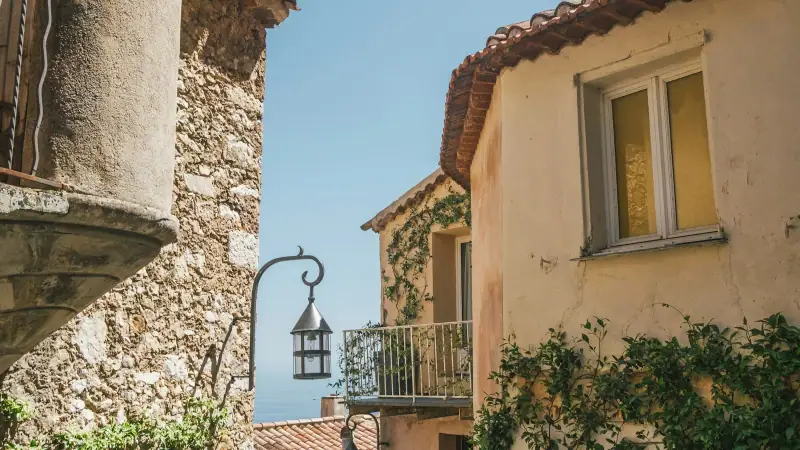
Where to stay in Èze: neighborhoods and types of accommodation
Medieval village, Èze-sur-Mer, Col d'Èze or Nice as a base: Èze neighborhoods and types of accommodation compared by budget and trip.
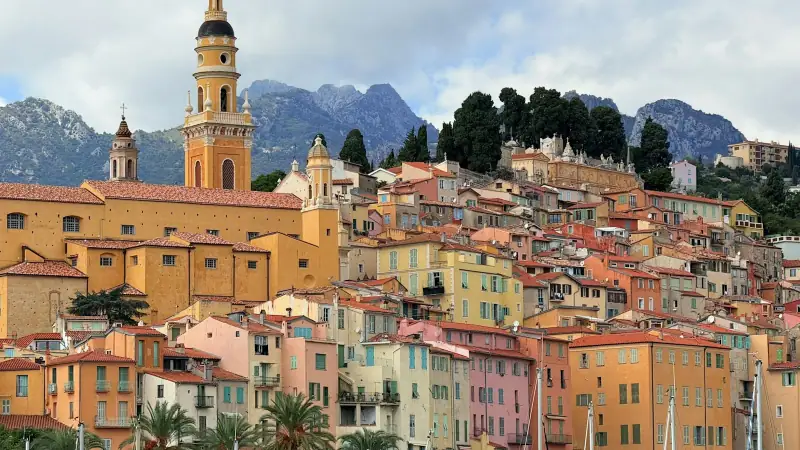
Where to stay in Menton: neighborhoods and types of accommodation
Old town, center, Garavan, seafront, hills: Menton neighborhoods and types of accommodation compared by budget and style of stay.
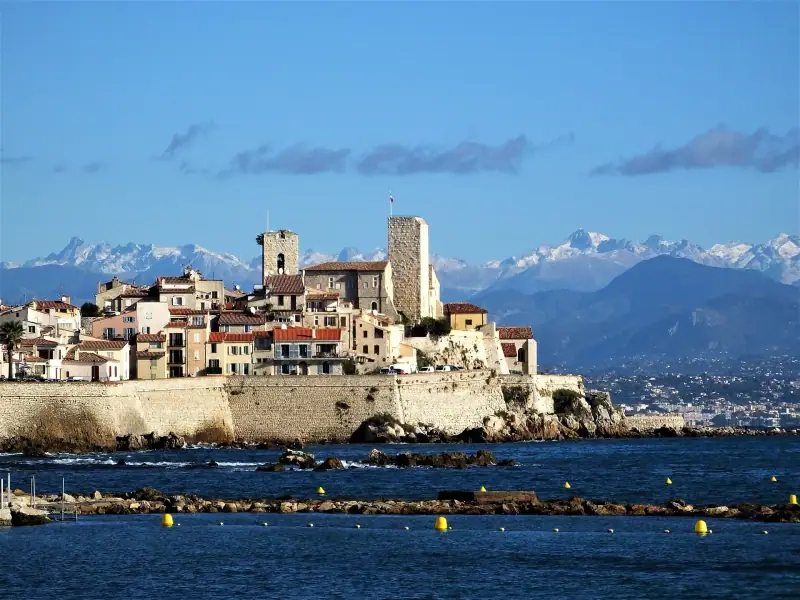
Where to stay in Antibes: neighborhoods and types of accommodation
Old Antibes, Juan-les-Pins, Cap d'Antibes, Port Vauban, the station: Antibes neighborhoods and types of accommodation compared by budget and trip style.
Ready-made
French Riviera itineraries
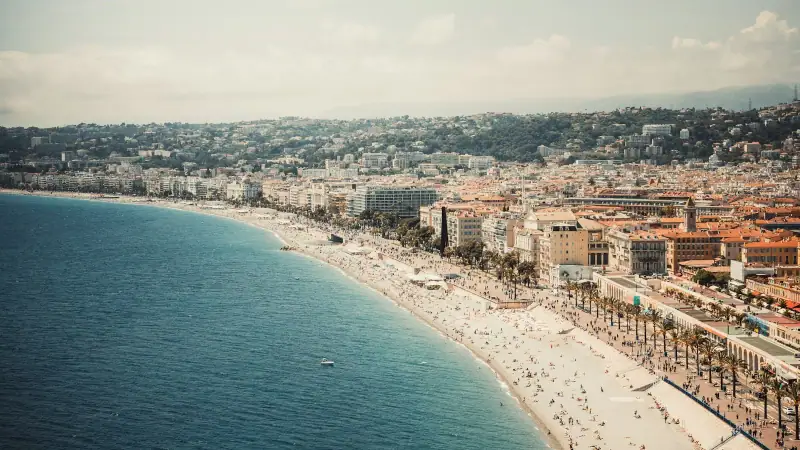
4 days
French Riviera in 4 days with kids: stops and pace
The French Riviera with kids in 4 days: a realistic plan from Nice, with travel times in minutes, short days, beaches and breaks, no car required.
Can be adapted in the planner
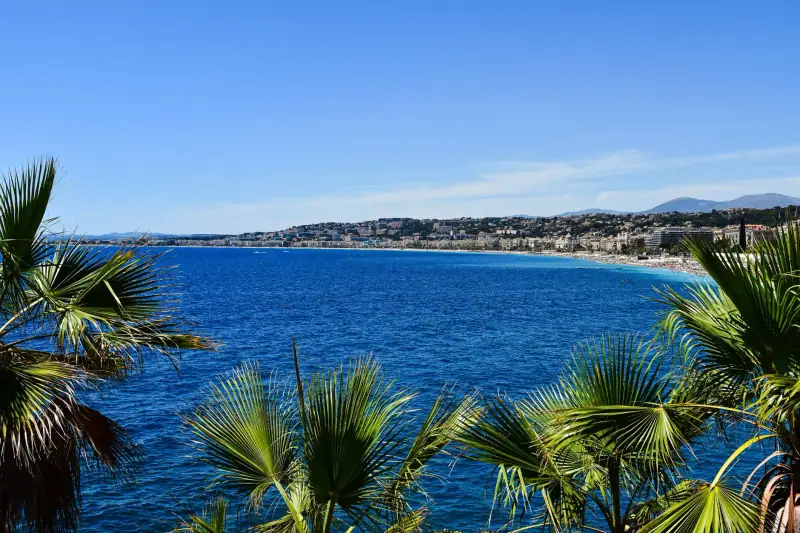
3 days
3 days on the French Riviera from Nice: a car-free itinerary by train
Nice, Villefranche, Èze, Menton, Antibes and Cannes in 3 days: a day-by-day itinerary by train and bus, with timing advice and tips to avoid crowds.
5 days
French Riviera road trip in 5 days: from Menton to Saint-Tropez by car
A 5-day road trip between Menton and Saint-Tropez: corniche roads, hilltop villages, the Esterel and parking tips to avoid traffic jams.