Things to do
Ecuador with kids: trip ideas and family activities
We may earn a commission when you book through links on this page, at no extra cost to you. We don't visit or try the places we cover: we summarize published sources. How we work
In short
- Ecuador suits family travel if you adapt the pace: allow ten days at least, ideally two weeks, with two or three bases and only one big travel day per stop.
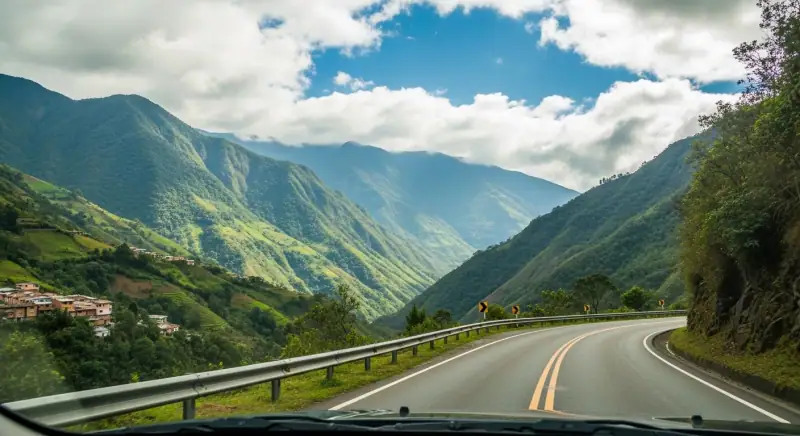
- Points to watch are altitude in the Andes (Quito is at about 2,800 m / 9,190 ft), intense sun and long winding mountain roads.
- Easy highlights for kids: hummingbirds and butterflies in Mindo, waterfalls and bikes in Baños, the iguana park in Guayaquil and sea lions and tortoises in the Galápagos.
- On the Galápagos, a land-based stay with day excursions is generally simpler with children than a cruise.
Ecuador is one of those countries that lend themselves well to a family trip. In a few hours of road, you go from an Andean capital to a cloud forest full of hummingbirds, from an indigenous market to a smoking volcano, and a flight of a few hours leads to the Galápagos, where sea lions let you approach like nowhere else. For children, it is an exceptional playground, as long as you organize the stay with a little method.
This article gathers activity ideas sorted by stop, tips to adapt the pace to the children’s ages and the essential precautions (altitude, sun, mosquitoes, travel). If you are preparing the trip as a whole, also keep our complete guide to Ecuador and our article on the best time to go at hand.
Preparing a family trip to Ecuador
Before choosing activities, three parameters determine the success of the stay: altitude, length and pace.
Altitude, the first topic to anticipate
Quito sits at around 2,800 m (9,190 ft), making it one of the highest capitals in the world. For anything related to altitude and children’s health, ask your pediatrician or a travel clinic before departure, especially for a baby or a child with a respiratory or heart history, and see the official travel health pages (CDC in the US, TravelHealthPro in the UK).
A simple way to ease the itinerary is to alternate a stop at altitude with a lower stop (Mindo, Guayaquil, the Amazon).
What length and what pace
A stay of ten to fifteen days suits well. A child copes poorly with a new city every evening. Aim for two or three bases and organize excursions around them: Quito and its surroundings, the Baños region, then the coast or the Galápagos. Limit big trips to one every two or three days and keep a half day free from time to time.
To build a framework for the stay, you can rely on our one-week itinerary in Ecuador, to stretch and lighten according to the children’s ages.
Sun and climate
Near the equator, the sun is strong all year, and even more so at altitude. A hazy sky does not protect. Temperatures vary a lot within a single day in the Andes: plan layered clothing, hats, sunglasses suited to children and sun protection to reapply often.
Quito with kids: city, volcano and parks
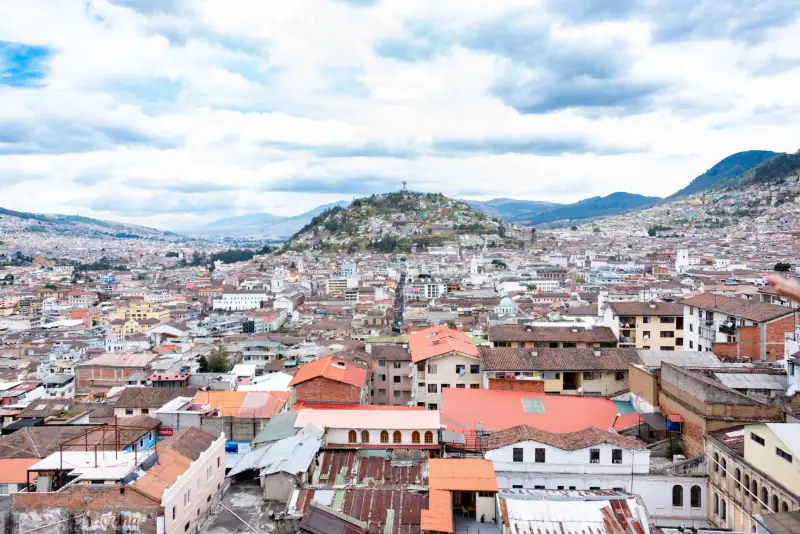
The capital is a good entry point for a family: it has varied lodging, many restaurants and activities that please almost all ages.
The TelefériQo and the climb up the hill
The TelefériQo is a cable car rising on the flank of Pichincha volcano, from the city to a viewpoint at about 4,000 m (13,125 ft). Depending on the sources, the upper station is between 3,900 and 4,050 m. The ride offers a spectacular view of the capital and, in clear weather, of several volcanoes. The official site describes it as “a place for the whole family” and offers more or less sporty activities at the top.
For children, two precautions are needed. First, altitude: stay only a short time at the top with the youngest. Second, cold and wind: it can be cool even in fine weather, so bring a hat, gloves and a windbreaker. Check the official website for hours, prices and children’s access conditions, which can change.
The historic center, kids’ version
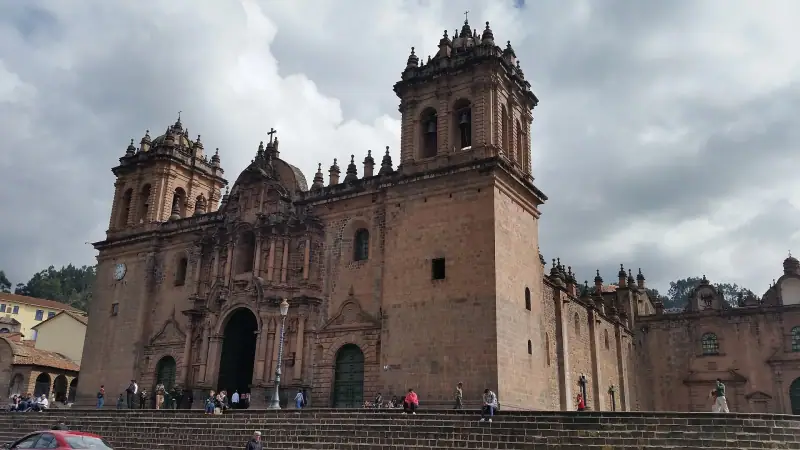
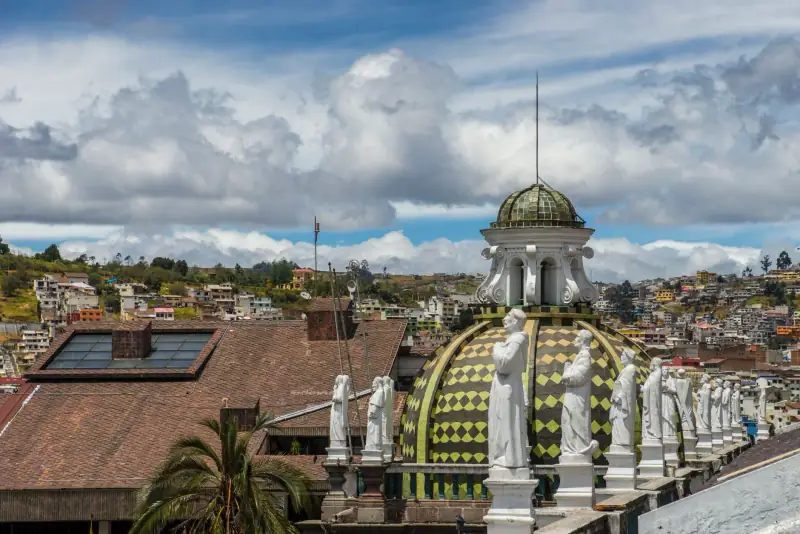
Quito’s colonial center, a World Heritage site, is visited on foot. To keep children from getting bored, turn the walk into a game: look for balconies, count bell towers, spot paintings on facades, have an ice cream on a square. Avoid overly long church visits and favor short sequences interspersed with breaks on the squares. Our article what to do in Quito in 3 days details the highlights, from which you can keep the most visual.
A park to catch your breath
Quito has several large urban parks, where children can run, bike or play while parents rest. An afternoon in a park, after a morning of sightseeing, is often worth more than another attraction. This break is also a good way to recover from jet lag.
The equator line
Being photographed with one foot in each hemisphere amuses children a lot. Several sites offer small experiences around the equator line, in the region north of the capital. Our article on north of Quito: Pululahua, Cayambe and Ibarra helps you choose a day outing that combines the line, a crater and villages.
Where to stay in Quito as a family
For a family, favor lodging with connecting rooms, apartments or a hearty breakfast, in a calm, safe neighborhood. Our guide to where to stay in Quito compares neighborhoods and their advantages. An apartment with a kitchen simplifies evening meals with little ones.
🏨 Where to stay in Quito as a family: apartment, family room or hotel with breakfast, compare accommodation according to your dates and the number of travelers.
See hotels in Quito Compare on Booking.com · Vacation rentals on Vrbo
Mindo: gentle nature for kids
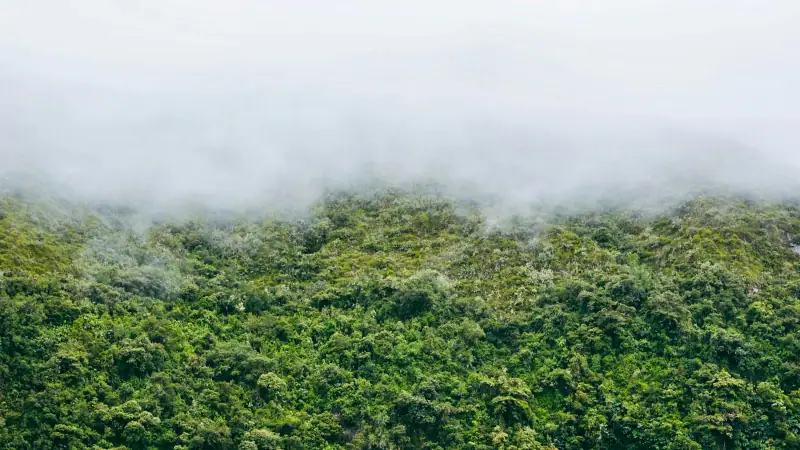
Mindo is probably the easiest stop and the one children enjoy most. This small cloud forest village is about two hours by road from Quito, and its altitude is clearly lower than the capital’s.
Hummingbirds, butterflies and short walks
Several gardens and lodges welcome visitors to watch hummingbirds from a few meters away, which fascinates almost all children. Mariposarios (butterfly houses), the greenhouses where you watch butterflies at different stages of life, work well with the youngest: you see chrysalises, caterpillars and spread wings without any walking effort. Short trails lead to waterfalls in the heart of the forest. Choose the easiest routes, ask about the trail’s condition and bring good shoes.
For older children, river tubing or a gondola ride over the canopy are popular activities. Always check the safety equipment, life jackets and supervision, and ask whether the activity accepts your child’s age and weight. To go further, read our guide to Otavalo and Mindo as excursions from Quito.
Mosquitoes and humidity
The cloud forest is humid, and showers are frequent, especially in the afternoon. Bring waterproof clothing, spare clothes and quick-drying shoes. Use a repellent suited to each child’s age: some formulas are not recommended for infants, hence the value of asking your doctor or pharmacist for advice.
Baños and the Avenue of the Volcanoes: child-sized adventure
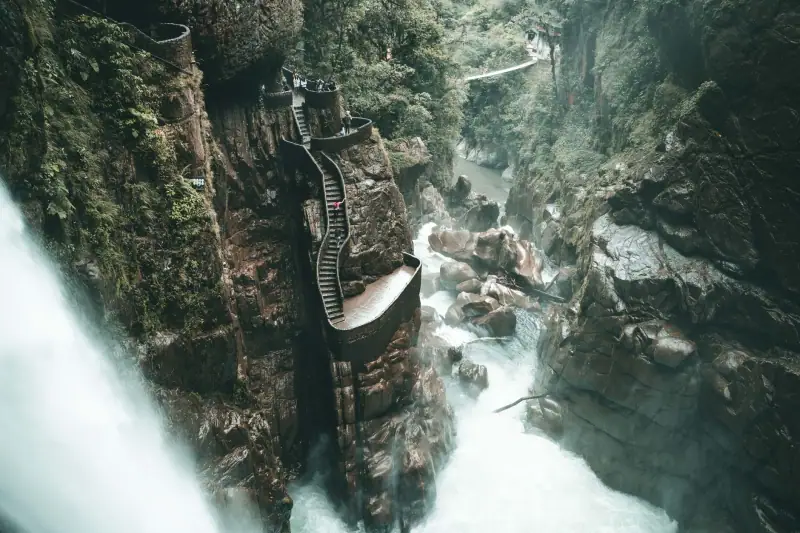
Between Quito and Baños, the road crosses what is called the Avenue of the Volcanoes. For a family, it is a spectacular trip, but it needs to be split up. Our article on the Avenue of the Volcanoes, Cotopaxi, Quilotoa and Baños details possible stages.
Cotopaxi and Quilotoa: take it carefully
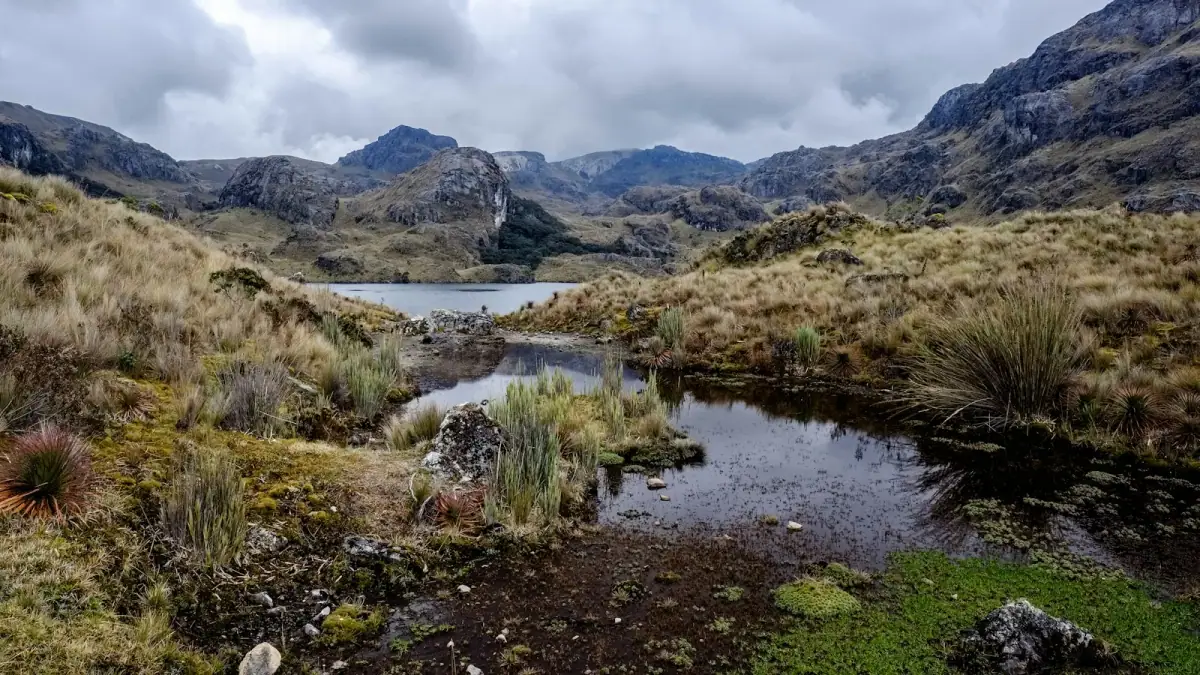
Cotopaxi volcano and Quilotoa lagoon are unforgettable landscapes, but they sit at high altitude. With children, favor short visits and accessible viewpoints rather than long walks. Bring plenty of warm layers, water and snacks.
Baños, a town of activities
Baños, at a much more moderate altitude, is a practical resort town for families: hot springs, waterfalls, panoramic swings, bike rentals and many supervised activities. There are outings suited to different ages, from bike rides on the road to waterfalls reachable on foot. Choose reputable providers, check the equipment supplied and ask about the minimum age of each activity before booking.
For the night, our guide to where to stay in Baños compares the quiet neighborhoods and those near restaurants and hot springs.
What kids like in Baños
- waterfalls reachable by short trails;
- the swings and viewpoints of the region, to be used with care and by following safety instructions;
- the thermal pools, to use without excessive time with little ones, as the water is hot;
- bike rides on quiet roads;
- craft workshops for local sweets and candies, popular with those with a sweet tooth.
Guayaquil: the city, the river and the iguanas
Guayaquil is the big city of the coast, hot and lively, and it often pleases children for simple reasons: a riverfront landscaped for strolling, games, green spaces and animals visible without effort. The city is at low altitude.
A downtown park is known for its iguanas roaming freely, a sight that greatly amuses children. The malecón along the river offers walks, playgrounds and viewpoints. Our article visiting Guayaquil: what to see and do gives the details and the safety tips for getting around the city.
Guayaquil is also the departure point for many flights to the Galápagos, making it a logical stop before or after the islands. The heat is strong: plan air-conditioned breaks and plenty of water. For sleeping, see our article where to stay in Guayaquil.
The Galápagos with kids
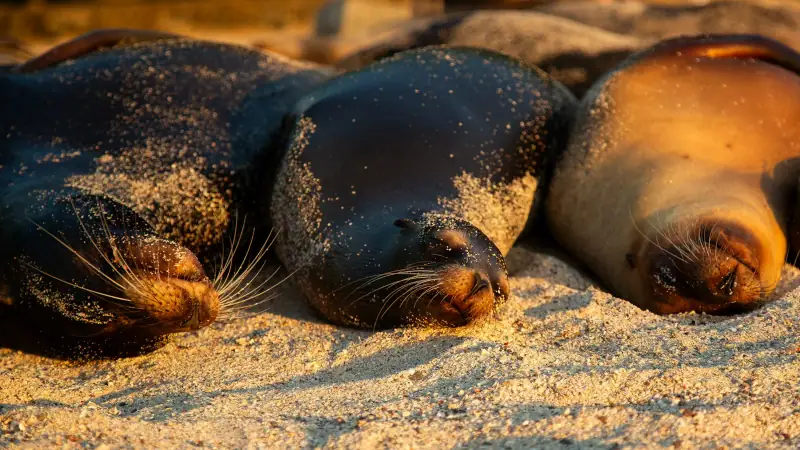
The Galápagos are often the highlight of a family trip. The animals are not afraid of humans and can be observed very closely: lazy sea lions on the beach, marine iguanas, giant tortoises, colorful crabs, seabirds. You do not need to be a great athlete to enjoy them.
Making Santa Cruz a family base
Santa Cruz and its town, Puerto Ayora, are a practical base: there are lodgings, restaurants and many excursion departures. From the town, you can organize day outings without changing hotel, which avoids carrying suitcases and tiring the children. Our article visiting Puerto Ayora lists the places to see, and the one on the islands to visit helps choose between Santa Cruz, San Cristóbal and Isabela.
Suitable activities
- watching wildlife on beaches and landscaped trails, with children able to stay calm and respect distances;
- visiting a breeding or research center devoted to tortoises, to understand the archipelago’s conservation work;
- snorkeling in shallow water, with a life vest, fins and a mask sized to the child, accompanied by an adult;
- taking a day boat excursion rather than a multi-night cruise if the children are young.
The national park rules apply to everyone, children included: do not touch the animals, do not leave the trails, take nothing back. An accredited naturalist guide accompanies most visits, and it is a good opportunity for children to ask questions. Explain these rules to them before departure to avoid frustration once you are there.
Cruise or land-based stay?
With children, a land-based stay at a fixed base is generally simpler than a cruise: less closeness, more flexibility, the option to stop if tired. A cruise can suit older children used to boats, but check the minimum age accepted, the program and the conditions in case of seasickness.
🎟️ Family excursions: many guided day outings exist around Quito, Mindo and in several regions of the country. Compare formats, durations and age conditions before booking.
Amazon and culture: experiences to choose by age
The Amazon, for the older ones
A lodge stay in the Ecuadorian Amazon is an exciting adventure, but it takes more preparation: humid heat, mosquitoes, canoe trips, limited electricity. With children, favor lodges that accept families, offer suitable activities and are at a reasonable distance from the starting point. Ask in advance about the conditions for minors and the safety measures. Our article Ecuadorian Amazon: Tena, Cuyabeno and Yasuní presents the main regions.
Before any trip to a tropical area, talk to your doctor or a travel clinic about health precautions. Our article formalities, health and money in Ecuador recalls the essential points.
Markets and cultural encounters
Andean markets are a good chance for children to see colors, hear other languages and taste unfamiliar fruit. A few rules: hold the youngest by the hand in the crowd, ask people before photographing them, and let children pick a small souvenir with a budget set in advance. A small notebook for drawing or sticking tickets is also a nice trace of the trip.
Tasting local food
Children often enjoy simple Ecuadorian food: rice, fried plantains, grilled chicken, soups, tropical fruit and fresh juices. For picky eaters, mild dishes are plentiful. Take bottled or purified water, and wash hands before meals. For more ideas, see our article on dishes to try in Ecuador.
Sample two-week family stay
Here is a framework that limits fatigue and alternates altitude and low altitude. Adapt it to the children’s ages and the time available.
- Days 1 to 3: Quito. Relaxed arrival, historic center in short sequences, a park, then the TelefériQo or an outing to the equator line.
- Days 4 and 5: Mindo. Hummingbirds, butterflies, easy waterfalls, a pool or river to catch your breath.
- Days 6 to 8: Baños. Waterfalls, hot springs, biking, restaurants. Option of a day excursion to a viewpoint over the volcanoes.
- Days 9 and 10: Guayaquil. River, iguana park, relaxation and air conditioning.
- Days 11 to 14: Galápagos. Base at Santa Cruz, day outings, snorkeling in calm water, meetings with tortoises and sea lions.
If your budget or vacation days are shorter, drop Guayaquil or Baños rather than speed up. To estimate costs, our article budget for Ecuador details the spending items.
Practical tips for traveling with kids
Transport
Between cities, buses are cheap, but they are long and not always comfortable with children. A private driver or an organized excursion simplifies the hardest stages. Whatever the mode of transport, seat children properly, check the seat belt and do not count on child seats being in every vehicle: if it matters to you, bring a booster or ask the provider in advance.
Mountain roads are winding. If one of your children is prone to motion sickness, ask a pharmacist or doctor for advice before leaving.
Health and safety
- before departure, check each family member’s vaccinations and consult a doctor or a travel clinic;
- bring a small first-aid kit (ask your doctor or pharmacist what to include) and a thermometer;
- take out travel insurance with repatriation assistance, essential at altitude and in remote areas;
- keep the contact details of your embassy and proof of insurance with you;
- regularly check your government’s travel advice for Ecuador before departure: travel.state.gov (US), GOV.UK (UK), travel.gc.ca (Canada), Smartraveller (Australia) (checked November 2026). They report weather alerts, the security situation and current health issues.
What to pack
- layered clothing, a windbreaker and a hat for the Andes;
- swimsuits, flip-flops and a UV-protective shirt for the kids;
- hats, sunglasses and sunscreen;
- a repellent suited to each age;
- light games, cards and a notebook for trips;
- a water bottle per child.
Money and formalities
Check the identity documents and the authorizations needed for each child, in particular if only one parent travels or if the child is accompanied by another person. Conditions can change: refer to official sources before departure. For money and payment, read our article formalities, health and money in Ecuador.
The key takeaway
Start quietly in Quito, limit trips, alternate altitude and low altitude, protect children from sun and mosquitoes, and favor short, varied activities. A successful family trip in Ecuador depends less on the number of sites seen than on shared enjoyment.
Sources
Frequently asked questions
Is Ecuador suitable for trips with children?
Yes, as long as you adapt the pace. The country is compact, trips between sites are short compared with other South American destinations, and nature offers many activities accessible to children. Points to watch are altitude in the Andes, intense sun and long drives on mountain roads.
From what age can you take a child to altitude?
There is no simple rule: Quito's altitude, around 2,800 m (9,190 ft), is tolerated by most children, but very young children cannot say how they feel. Ask your pediatrician or a travel clinic before departure, especially for a baby, and see the official travel health pages (CDC in the US, TravelHealthPro in the UK).
What is the best length for a family trip?
Allow ten days at least, ideally two weeks. This lets you take it easy in Quito, limit travel days to one per stop and keep a half day free for the pool, play or rest.
Are the Galápagos accessible to children?
Yes, many families go. Watching sea lions, tortoises and iguanas on the beach requires no particular fitness. For cruises, ask the operator about the minimum age accepted and the activities offered to the youngest.
Do you need vaccines or health precautions for children?
Ask your doctor or a travel clinic well before departure, and check that each child's vaccination schedule is up to date; see the official travel health pages (CDC in the US, TravelHealthPro in the UK). Check your government's travel advice for Ecuador too. A repellent suited to the child's age is useful in hot, humid areas.
How do you handle long car or bus trips with children?
Plan short stages, frequent breaks, snacks and activities for the trip. Mountain roads are winding: if your child is prone to motion sickness, ask a pharmacist or doctor for advice before leaving.
More Ecuador guides
Keep reading
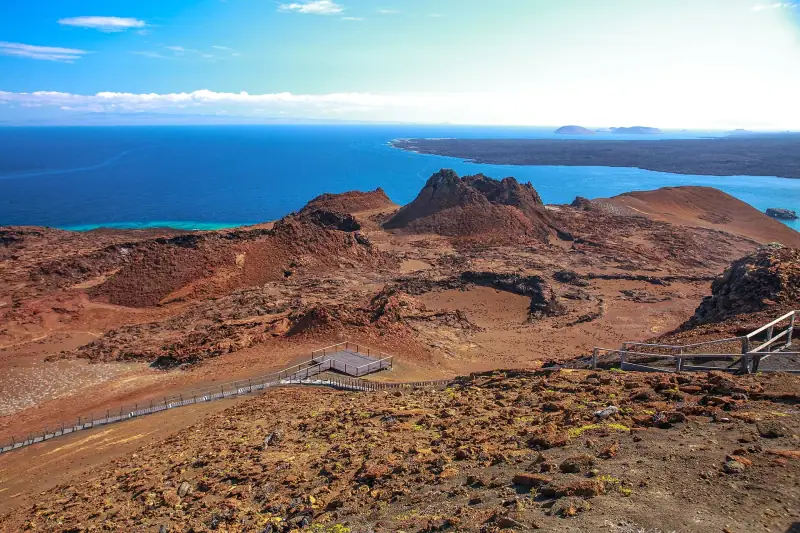
Galápagos: which islands to visit and how to organize your stay
Santa Cruz, San Cristóbal or Isabela? Comparing the inhabited Galápagos islands, activities, cruise or land-based stay, entry fee and practical tips.
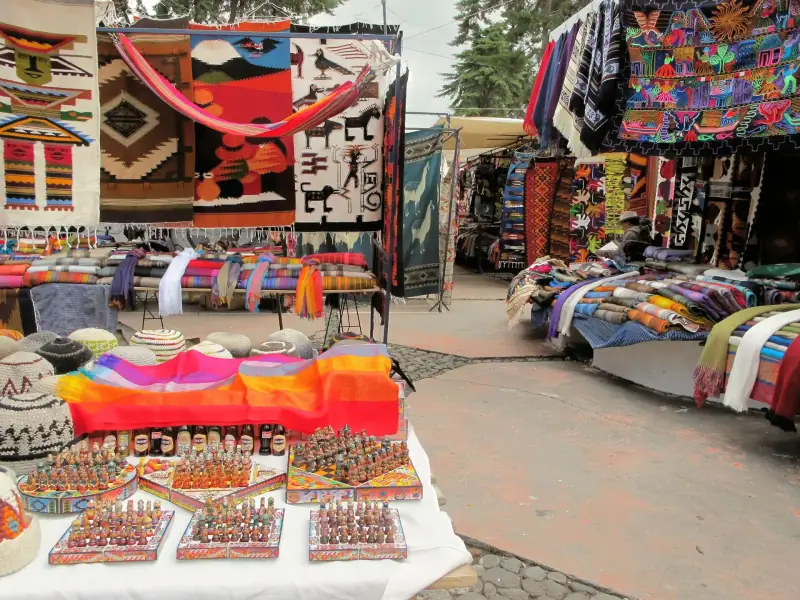
Otavalo and Mindo from Quito: two day trips, an Andean market and a cloud forest
Otavalo and Mindo from Quito: craft market, Peguche waterfall, Lake Cuicocha, hummingbirds and butterflies of the cloud forest. Tips for planning.

Where to stay in Guayaquil: areas and types of accommodation to help you choose
Where to stay in Guayaquil: downtown and Malecón, Las Peñas, Urdesa, Kennedy, the airport area or Samborondón. Areas, lodging types and tips for choosing.
Ready-made
Ecuador itineraries
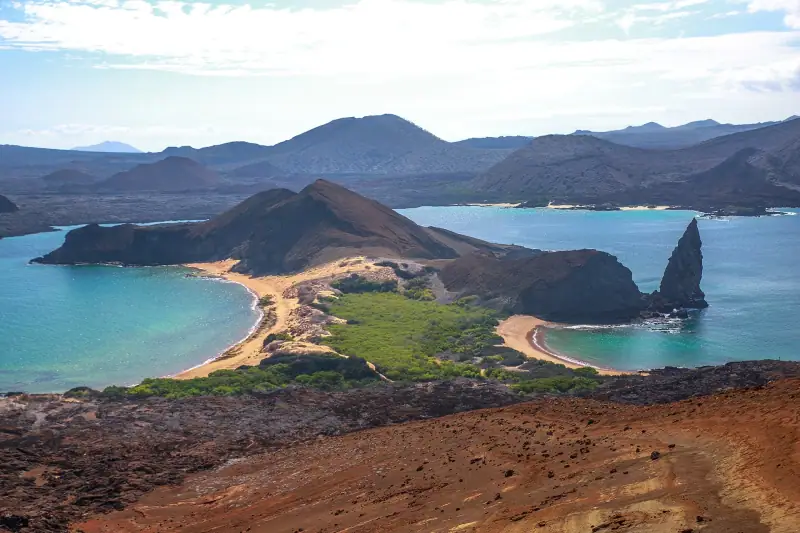
7 days
One week in Ecuador: a 7-day itinerary, day by day
QuitoLatacungaBaños
Can be adapted in the planner
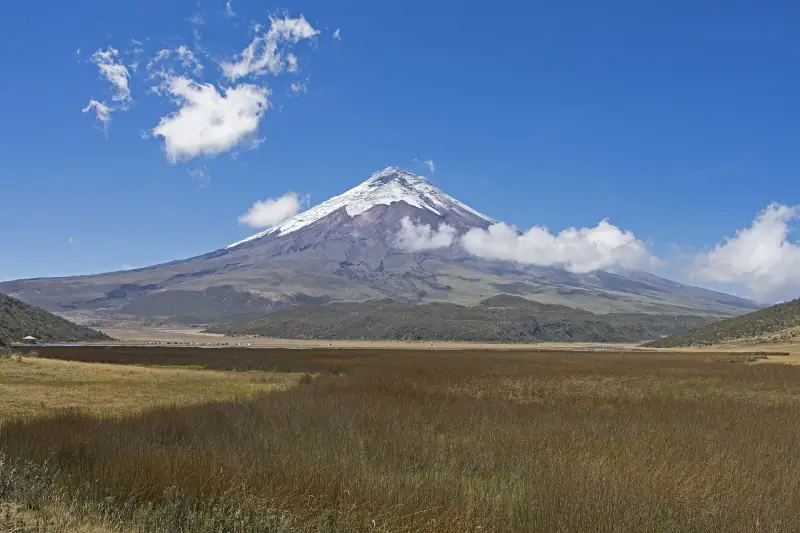
5 days
Avenue of the Volcanoes in Ecuador: Cotopaxi, Quilotoa and Baños in 5 days
A 5-day itinerary on the Avenue of the Volcanoes from Quito: Cotopaxi, Quilotoa lagoon, Baños and Chimborazo, with travel times, stops and altitude notes.
3 days
What to do in Quito in 3 days: historic center, volcano views and the Mitad del Mundo
Quito in 3 days: UNESCO-listed historic center, Panecillo, cable car, La Ronda and the Mitad del Mundo. A realistic itinerary that builds up gradually.