Things to do
Galápagos: which islands to visit and how to organize your stay
We may earn a commission when you book through links on this page, at no extra cost to you. We don't visit or try the places we cover: we summarize published sources. How we work
In short
- Santa Cruz is the most practical first base (services, Charles Darwin Research Station, many excursions); San Cristóbal is calmer and Isabela wilder.
- A national park entry fee is charged on arrival: about $200 per foreign adult as of October 2026, with a reduced rate for children; check the amount before you go.
- A land-based stay with day excursions is more flexible and cheaper than a cruise; a cruise reaches remote islands.
- The islands can be visited all year; book lodging, inter-island boats and excursions well ahead in high season.
There is no single “right” plan for the Galápagos: the archipelago has several very different inhabited islands, and which ones you pick completely changes the stay. Wildlife with no fear of humans, volcanic landscapes, clear water for snorkeling: it is all there, but not everywhere to the same degree. Here is how to find your way.
This guide focuses on the islands accessible without a cruise, then compares the two possible formulas. For the season, see our guide to the seasons in Ecuador.
Understanding the archipelago before choosing
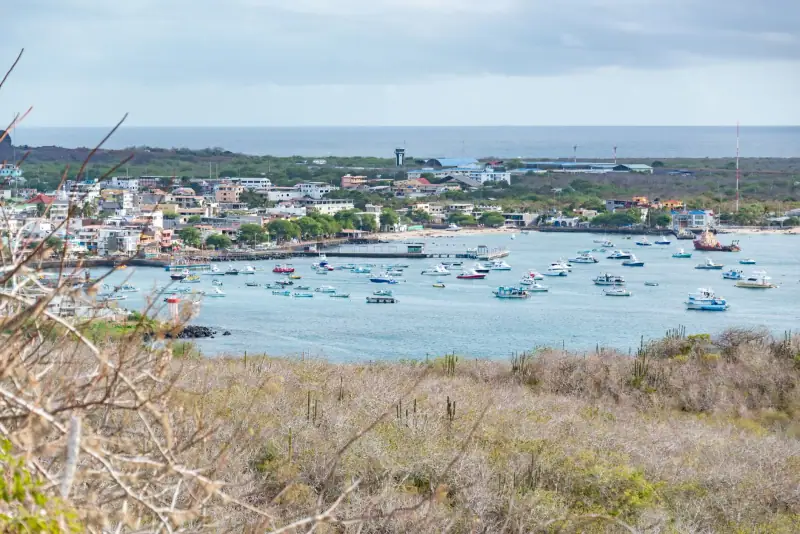
The Galápagos lie in the Pacific, about 1,000 km (620 mi) off the Ecuadorian coast. The archipelago forms a province of Ecuador and most of its territory is protected as a national park. Only a few islands are inhabited, and only a small part of the territory is open to the population: the rest is visited with accredited naturalist guides.
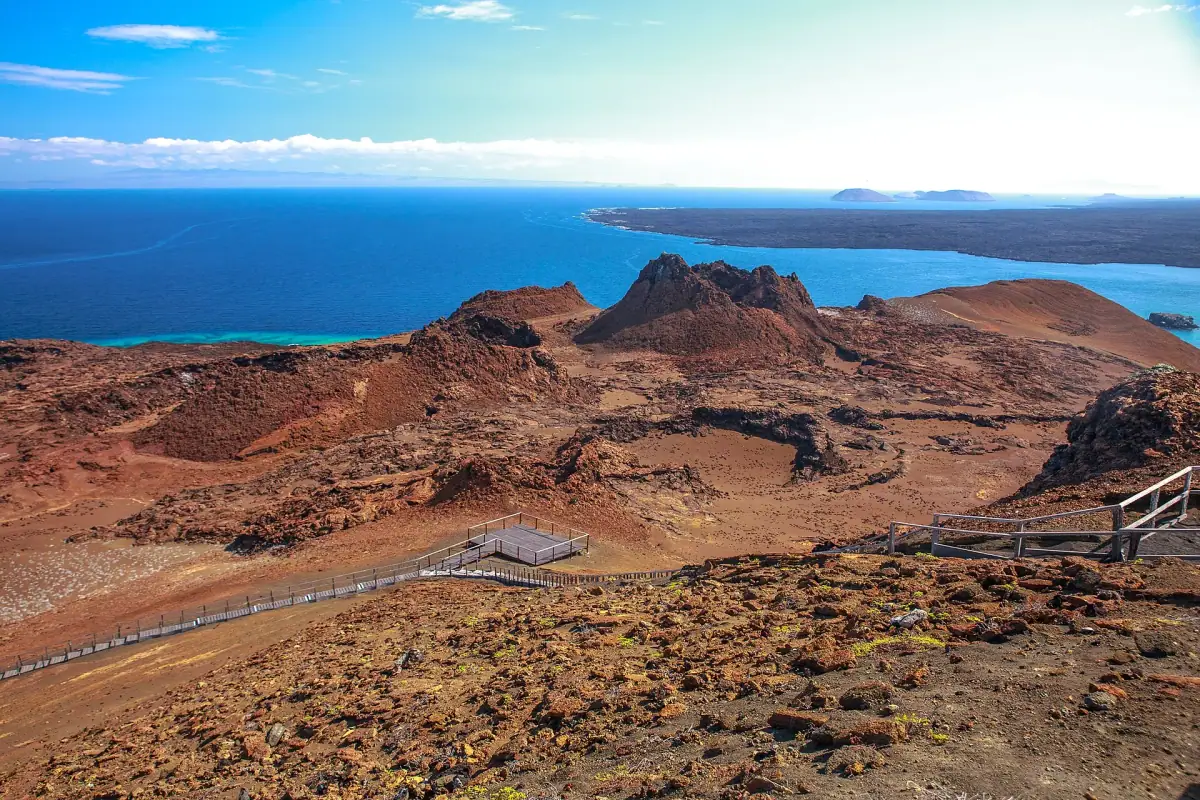
The islands have distinct profiles. Some are flat and arid, others dominated by volcanoes, with dense vegetation at altitude. Some species are endemic to one specific island, which explains why travelers sometimes return to see another.
On arrival, you pay a national park entry fee of about $200 for a foreign adult (as of October 2026). The amount and terms may change: check the official information before leaving. A transit check is also required at boarding in mainland Ecuador.
Santa Cruz: the most practical base
Santa Cruz is the most populated island, and Puerto Ayora, its port town, is the liveliest in the archipelago. This is where you find the widest choice of lodging, restaurants, agencies and excursions. It suits a first stay very well, as it lets you see a lot without traveling much.
The Charles Darwin Research Station, in Puerto Ayora, presents the research and conservation work carried out on the archipelago, notably the breeding of giant tortoises. The center is reached on foot from town, a few minutes’ walk.
Among the island’s highlights:
- Tortuga Bay: a long white-sand beach reachable on foot from Puerto Ayora by a landscaped trail. Marine iguanas are often seen there, and swimming is possible in the designated areas.
- The island’s highlands: in the greener areas, you can watch giant tortoises in the wild by visiting a private reserve or a ranch.
- The lava tunnels: volcanic galleries that can be explored on a guided visit.
Santa Cruz is also a starting point for day excursions to neighboring islets, with snorkeling and birdwatching. Conditions vary with the season and the weather.
🏨 Where to stay in Puerto Ayora: the accommodation offer is the widest in the archipelago. Compare options for your dates, as the best places fill up in high season.
San Cristóbal: a more relaxed atmosphere
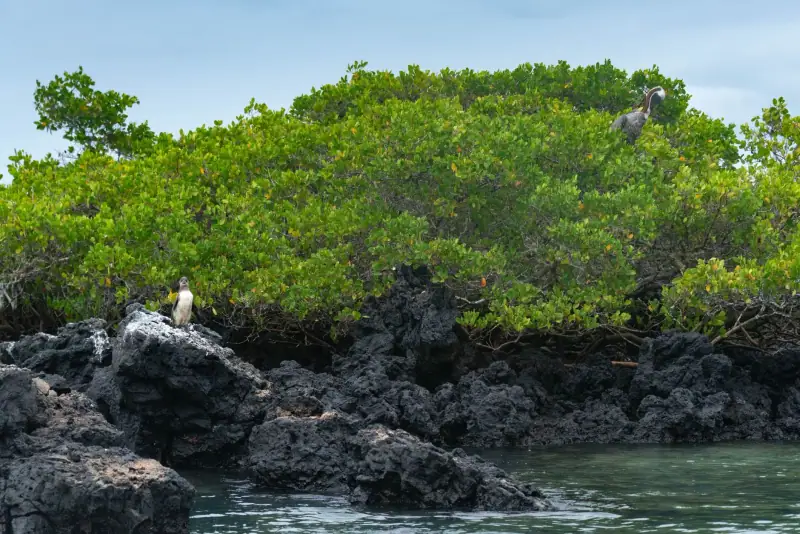
San Cristóbal, whose main town is Puerto Baquerizo Moreno, offers a calmer pace. The town is easily explored on foot, with a waterfront where sea lions happily lounge on benches and piers. This closeness to the animals is part of the island’s charm.
The island is also known for its snorkeling. Offshore, Kicker Rock, also called León Dormido, is a classic excursion destination, much appreciated for its clear waters and the marine life you can see there. This outing is generally booked for the day with a local agency.
On the island, you can also visit an interpretation center devoted to the natural and human history of the archipelago, as well as beaches near town where sea lion colonies are easy to watch. San Cristóbal lends itself well to a stay of two to three nights, on its own or combined with Santa Cruz.
The island has its own airport. Depending on your flight, you can therefore start with San Cristóbal and finish with Santa Cruz, or the reverse, which avoids retracing your steps.
Isabela: the wildest
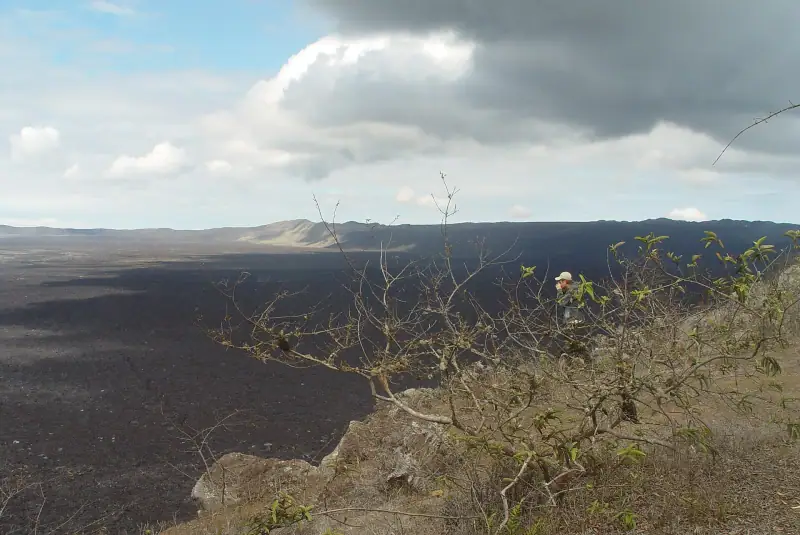
Isabela is the largest island of the archipelago. It is made up of several volcanoes joined together, which gives it its characteristic shape, and remains little urbanized. The village of Puerto Villamil, on the south coast, has a village atmosphere, with sandy streets and beaches where you meet marine iguanas.
People come for the nature: hiking toward a volcano, snorkeling among lava formations, watching Galápagos penguins and sea turtles depending on the sites. The coastal lava tunnels and channels are especially appreciated by snorkeling enthusiasts, with clear water and varied wildlife.
Isabela takes a bit more organization, as you get there by boat from Santa Cruz. The crossing lasts a few hours and is not always comfortable if the sea is rough. Plan at least two nights there to make the trip worthwhile.
🤿 Galápagos excursions: snorkeling, kayaking, tortoise reserve visits or boat outings. Compare offers and reviews before booking.
Cruise or land-based stay: which formula?
This is the big question of any Galápagos trip. Both formulas have their advantages, and the right choice depends on your budget, your time and your tolerance for boats.
The cruise takes you to remote sites, impossible to reach on a day excursion, and bundles lodging, meals and guided visits. The itinerary is dense and the pace sustained. In return, the budget is clearly higher and you have no freedom over the schedule. Departures are often booked long in advance.
The land-based stay means lodging on one or several inhabited islands and taking day excursions. It is cheaper, more flexible, and lets you spend time in the towns, taste local cuisine and choose your activities day by day. You see fewer distinct sites, but the itinerary remains very rich.
For a first trip, a land-based stay of 5 to 7 days on two or three islands is a good compromise. If you dream of the most isolated islands, the cruise remains the only option.
Organizing flights and getting around
You reach the Galápagos by plane from Quito or Guayaquil, with a stopover depending on the flights. Two main airports serve the archipelago: the one on Baltra island, near Santa Cruz, and the one on San Cristóbal. From Baltra, a short transfer with a ferry crossing leads to Puerto Ayora.
Between the inhabited islands, you get around by fast, regular boats, which you book locally or through your accommodation. Schedules depend on the season: ask in advance to set your itinerary.
✈️ Find a flight to Ecuador: fares vary with the season and the number of stops. Compare offers before locking in your dates, then add the domestic flight to the archipelago.
Before leaving, plan a stopover in Quito to visit the city: our 3-day Quito itinerary helps you organize this stage.
Respecting the national park rules
The archipelago is a fragile environment. It is forbidden to touch animals, to get too close or to feed them, and to leave the marked trails. It is also forbidden to collect shells, stones or plants. Visits to natural sites are made with an accredited guide, who ensures these rules are followed.
A few simple actions help: use sunscreen that is respectful of the marine environment, bring your own water bottle and avoid single-use plastic. Many travelers also like to limit their air travel and stay longer on each island.
Budget and practical tips
The Galápagos are among the most expensive destinations in South America, because of the distance, the entry fee and the cost of flights. Meals and lodging are pricier than on the mainland. To control the budget, favor simple lodging, small-group excursions and a few local meals.
- Money: the currency used is the US dollar. Withdraw cash before leaving for small purchases, as ATMs are rare on the less populated islands.
- Health and insurance: bring sun protection, and for any health question ask your doctor or pharmacist before departure (see the CDC in the US or TravelHealthPro in the UK). Travel insurance covering care and repatriation is recommended.
- Equipment: hat, sunglasses, closed shoes for walking and water shoes for lava rocks. A personal mask and snorkel are handy, although rental is possible locally.
- Booking: in high season, book lodging, inter-island boats and excursions well in advance.
Whatever formula you choose, leave room for the unexpected: an outing canceled by the weather or an unexpected encounter with a sea lion colony often makes the best memories of the trip.
Frequently asked questions
Which Galápagos island should you choose for a first stay?
Santa Cruz is the most practical: it concentrates services, the Charles Darwin Research Station and many excursions. San Cristóbal is calmer, Isabela wilder. Many travelers combine two or three islands.
Do you have to pay an entry fee for the Galápagos?
Yes, a national park entry fee is required on arrival. It was about $200 per foreign adult as of October 2026, with a reduced rate for children. Amounts may change: check them before you go.
Cruise or land-based stay in the Galápagos?
A cruise reaches remote islands and multiplies the sites visited, but costs more. A land-based stay, radiating from one or several inhabited islands with day excursions, is more flexible and cheaper.
When should you go to the Galápagos?
You can go all year. The warm, wet season, roughly December to May, offers warmer seas. The cooler, drier season, roughly June to November, brings colder water, often richer in marine life, but a sometimes rougher sea.
Can you see giant tortoises without a cruise?
Yes. Tortoises live in the wild in the highlands of Santa Cruz, and breeding centers exist on several inhabited islands. These visits are easily done in a day from the towns.
More Ecuador guides
Keep reading
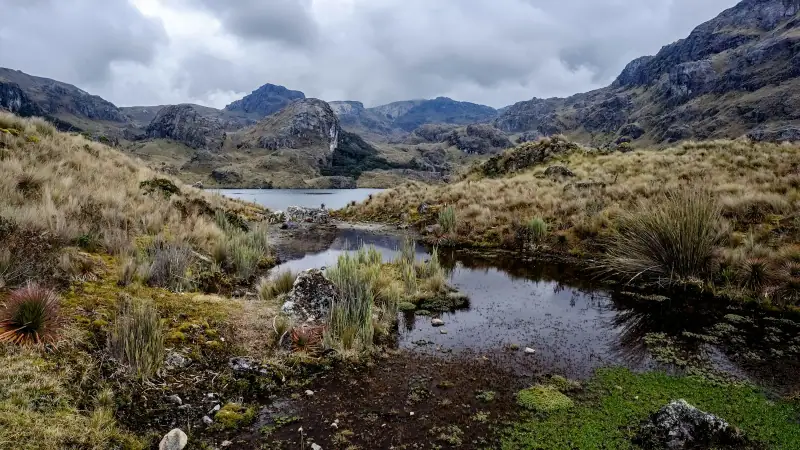
Ecuador with kids: trip ideas and family activities
Traveling in Ecuador with children: activities by age, Quito, Mindo, Baños, Guayaquil and the Galápagos, altitude, health and a pace for a calm trip.

Otavalo and Mindo from Quito: two day trips, an Andean market and a cloud forest
Otavalo and Mindo from Quito: craft market, Peguche waterfall, Lake Cuicocha, hummingbirds and butterflies of the cloud forest. Tips for planning.

Where to stay in Guayaquil: areas and types of accommodation to help you choose
Where to stay in Guayaquil: downtown and Malecón, Las Peñas, Urdesa, Kennedy, the airport area or Samborondón. Areas, lodging types and tips for choosing.
Ready-made
Ecuador itineraries
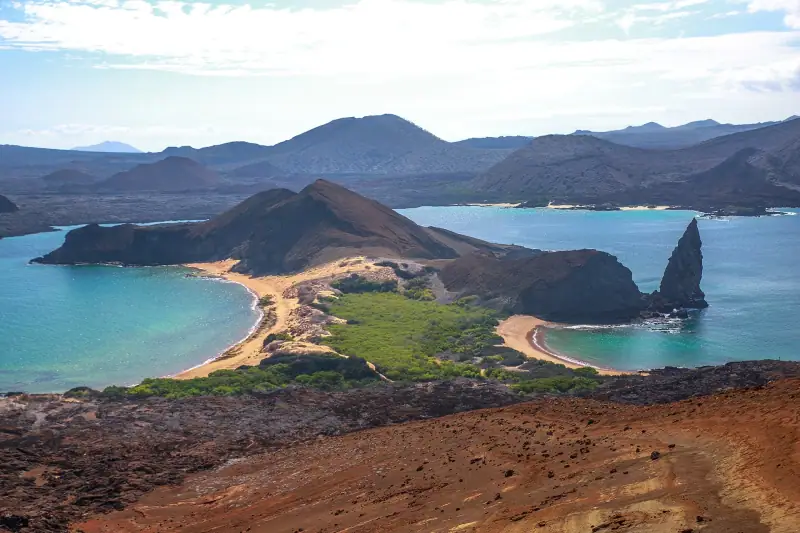
7 days
One week in Ecuador: a 7-day itinerary, day by day
QuitoLatacungaBaños
Can be adapted in the planner
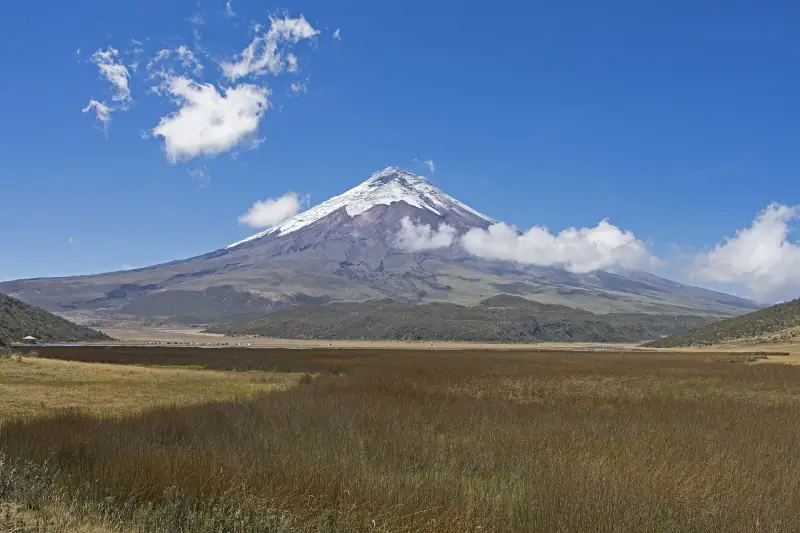
5 days
Avenue of the Volcanoes in Ecuador: Cotopaxi, Quilotoa and Baños in 5 days
A 5-day itinerary on the Avenue of the Volcanoes from Quito: Cotopaxi, Quilotoa lagoon, Baños and Chimborazo, with travel times, stops and altitude notes.
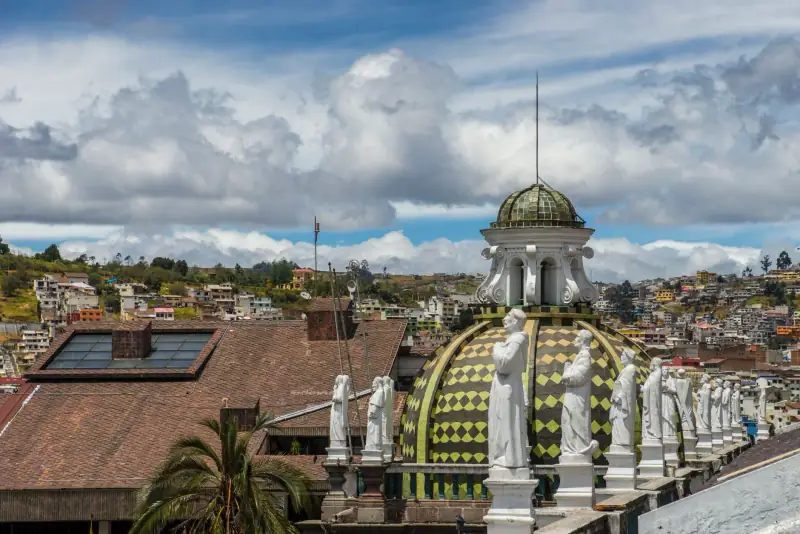
3 days
What to do in Quito in 3 days: historic center, volcano views and the Mitad del Mundo
Quito in 3 days: UNESCO-listed historic center, Panecillo, cable car, La Ronda and the Mitad del Mundo. A realistic itinerary that builds up gradually.