Where to stay
Where to stay in Ecuador: the best neighborhoods, cities and regions
We may earn a commission when you book through links on this page, at no extra cost to you. We don't visit or try the places we cover: we summarize published sources. How we work
In short
- Think in regions rather than cities: the Andean Sierra, the Pacific coast around Guayaquil, the Amazon and the Galápagos.
- In Quito, the historic center suits sightseeing on foot; La Mariscal is more modern and practical but calls for more caution at night.
- Limit changes of lodging: two or three nights per stop beat one night everywhere. Book Galápagos and Amazon lodges several weeks ahead.
- Ecuador uses the US dollar, so prices are shown in the same currency everywhere, including remote lodges.
Ecuador is small in size, but the accommodation scene changes completely from one region to another. You might stay in a restored colonial house in Quito, in a mountain inn facing a volcano, in a lodge deep in the Amazon forest or on a boat in the Galápagos. Choosing the right base saves driving time and makes the trip much more pleasant.
This guide reviews the main bases, with the advantages of each, the types of accommodation found there and a few booking tips. We do not name any particular property: prices and quality change quickly, so always compare recent reviews for your dates.
How to choose your base in Ecuador
Before booking, think in regions rather than cities. The country divides into four main areas: the Andean Sierra with Quito, Otavalo, Cuenca and the Avenue of the Volcanoes, the Pacific coast around Guayaquil, the Amazon to the east and the Galápagos offshore. Distances look short on the map, but mountain roads are slow and trips often take longer than expected.
A few simple principles:
- limit changes of lodging: two or three nights per stop are better than one night everywhere;
- use Quito as a starting point for the north and the Avenue of the Volcanoes;
- keep a one-day margin before a flight to the Galápagos or a departure from the Amazon;
- see our guide to when to visit Ecuador to avoid the rainy season in the region you visit.
The country uses the US dollar, which simplifies the budget: rates are shown in the same currency everywhere, including the most remote lodges.
Quito: historic center or La Mariscal
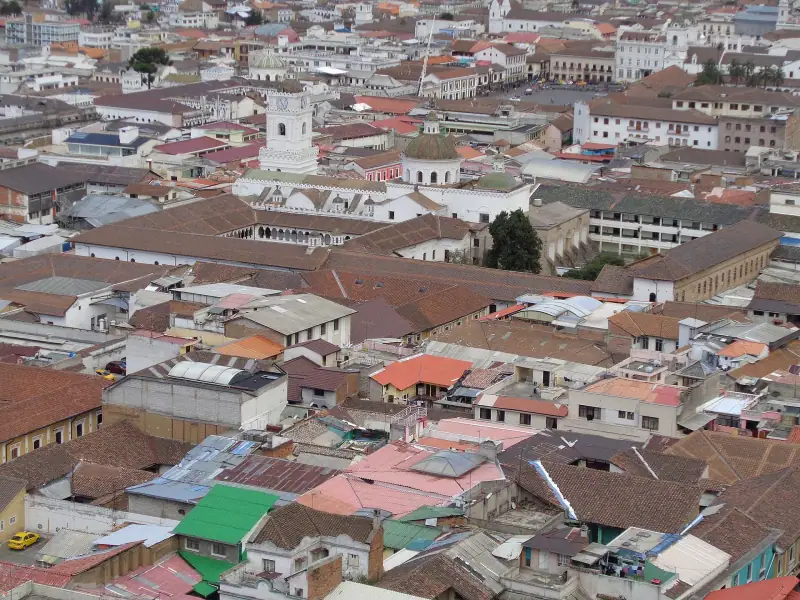
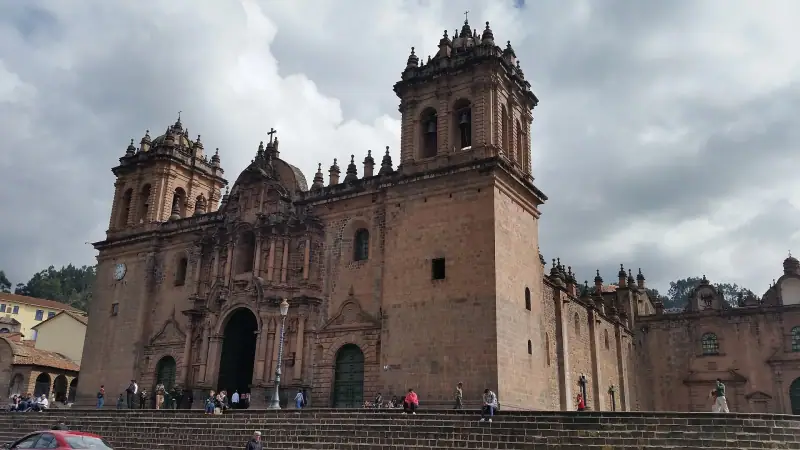
The capital is at about 2,800 m (9,190 ft) and serves as the gateway for most trips. Two neighborhoods share visitors’ favor. The UNESCO-listed historic center concentrates churches, squares and cobbled lanes. Many old houses there have been converted into small boutique hotels, with an inner courtyard and rooms under high ceilings. It is the best choice for sightseeing on foot, as long as you take a taxi back once night has fallen.
The La Mariscal district, further north, is the modern, traveler-oriented district: hostels, mid-range hotels, restaurants, cafés and excursion agencies. It is practical for organizing the rest of the trip, but nightlife there calls for more caution. Avoid going out with your valuables and favor official taxis or ride apps.
If you arrive by air, some travelers prefer to spend the first night near the international airport, which is a fair distance from the city. The trip to the center generally takes a little under an hour depending on traffic. For details on sights, see our itinerary Quito in 3 days.
🏨 Where to stay in Quito: colonial houses in the center or modern hotels in La Mariscal, compare accommodation, recent reviews and cancellation conditions for your dates.
Otavalo and Mindo: getaways north of Quito
Otavalo, north of the capital, is famous for its large craft and textile market, liveliest on Saturday. You can come for the day from Quito, but spending a night or two lets you enjoy the place without the crowd and explore the surroundings: lagoons, villages and mountain landscapes. Lodgings are often family inns and haciendas converted into guesthouses, sometimes with a fireplace, which is welcome when nights are cool.
Mindo, west of Quito, lies in the cloud forest, at a much lower altitude than the capital. The climate is milder and humid. It appeals to bird, butterfly and hiking lovers. You mostly find small lodges, cabins and inns nestled in the vegetation. Bring rain clothes and mosquito repellent, whatever the season.
For a short getaway, two nights there are enough. If you are in a hurry, both destinations can also be done as day trips from Quito, which saves you unpacking.
The Avenue of the Volcanoes: Cotopaxi, Quilotoa, Baños
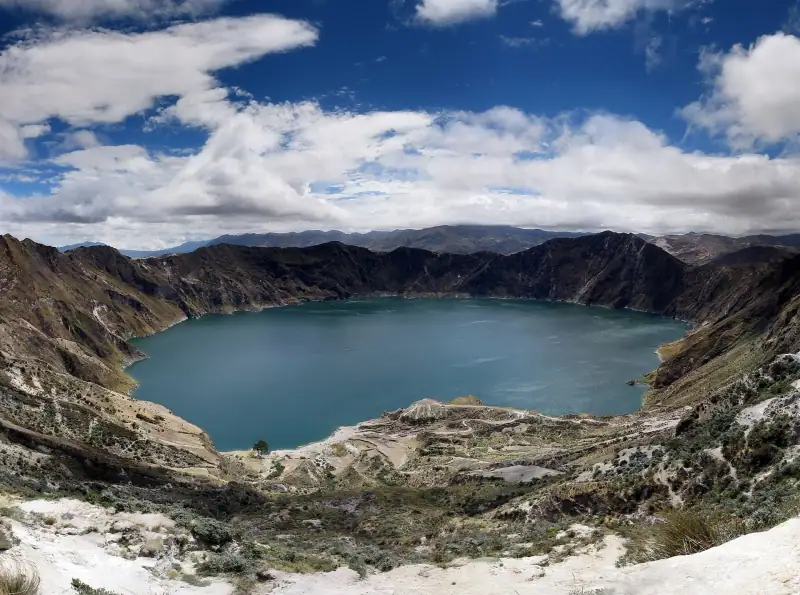
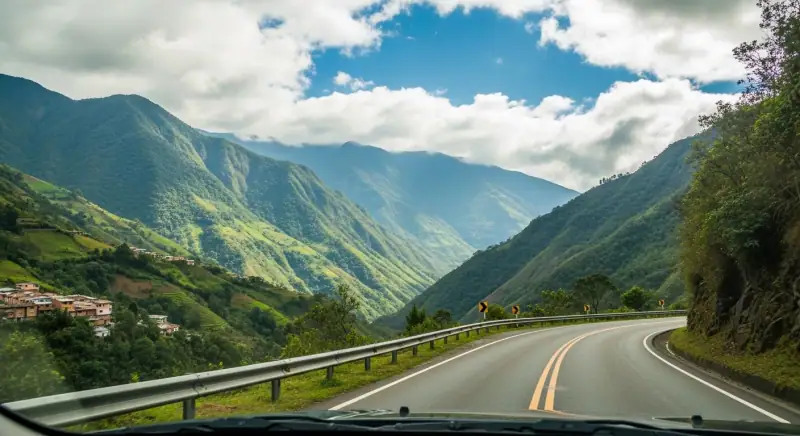
South of Quito, the road runs along a succession of volcanoes and Andean villages. Three types of bases appear. Around Cotopaxi National Park, there are haciendas and mountain lodges that let you leave early in the morning, before clouds cover the summit. Around Quilotoa lagoon, the setting is simpler: community inns and small village hotels, with cool evenings and often cold nights.
Baños, at the foot of Tungurahua volcano, is the liveliest base in the region. The town is known for its hot springs, waterfalls and outdoor activities. It offers a wide choice of lodging, from budget dorms to hotels with mountain views. It is also a good gateway to the Amazon. Our itinerary on the Avenue of the Volcanoes details a possible multi-day sequence.
One note: altitude is high around Cotopaxi and Quilotoa; for any health concern, ask your doctor or a travel clinic.
🎟️ Excursions around Baños and the volcanoes: waterfalls, canyoning, hot springs, guided tours from Quito. Compare formats and cancellation conditions.
Cuenca: the colonial charm of the Southern Andes
Cuenca, also UNESCO-listed for its historic center, is often described as the most pleasant of the country’s Andean cities. Smaller and calmer than Quito, it is easily explored on foot and its altitude, around 2,500 m (8,200 ft), is a bit lower. Streets lined with colonial houses, bridges over the river and markets make you want to stay several days.
For sleeping, the historic center offers the best compromise: boutique hotels in old mansions, guesthouses and apartments for longer stays. The neighborhoods bordering the center are calmer and often cheaper, while staying within walking distance of the main sights. Allow at least two nights so as not to rush.
From Cuenca, you reach sites such as the Ingapirca ruins, the country’s most important Inca remains, or Cajas National Park, known for its high-altitude lagoons. As the trip between Quito and Cuenca is long, many travelers do it by domestic flight rather than overnight bus.
Guayaquil and the Pacific coast
Guayaquil is the country’s largest city and main port. Hot and humid, it is mostly a logistical stop: it is one of the two gateways to the Galápagos, with Quito. Spending a night in town avoids missing an early flight. Hotels are plentiful, by the riverside malecón as well as in business districts, and easier to find for a mid-range budget.
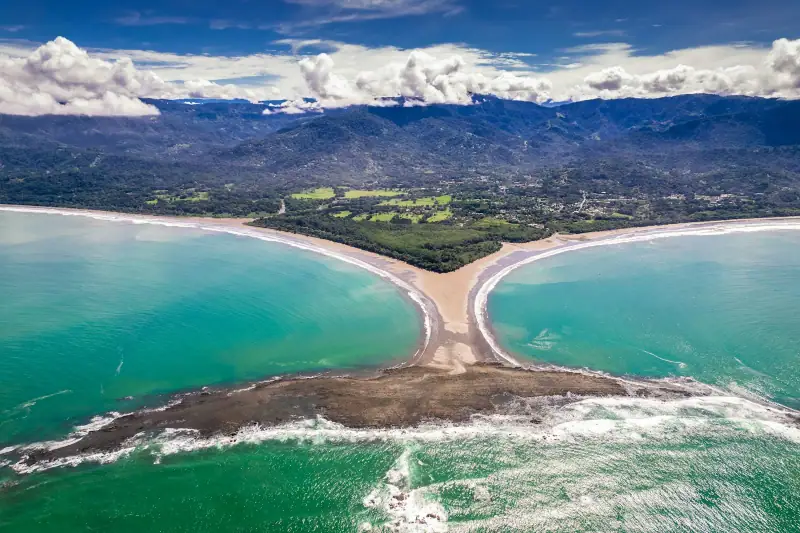
The Pacific coast offers fishing villages and beaches, where lodgings range from surf hostels to small family guesthouses. The mood is relaxed, but the rainy season and humidity change the experience a lot: check the weather before booking, and bring protection from the sun and mosquitoes.
✈️ Find a flight to Ecuador or the Galápagos: fares vary a lot with the season and the number of stops. Compare offers before locking in your dates and lodging.
Galápagos: land-based hotel or cruise
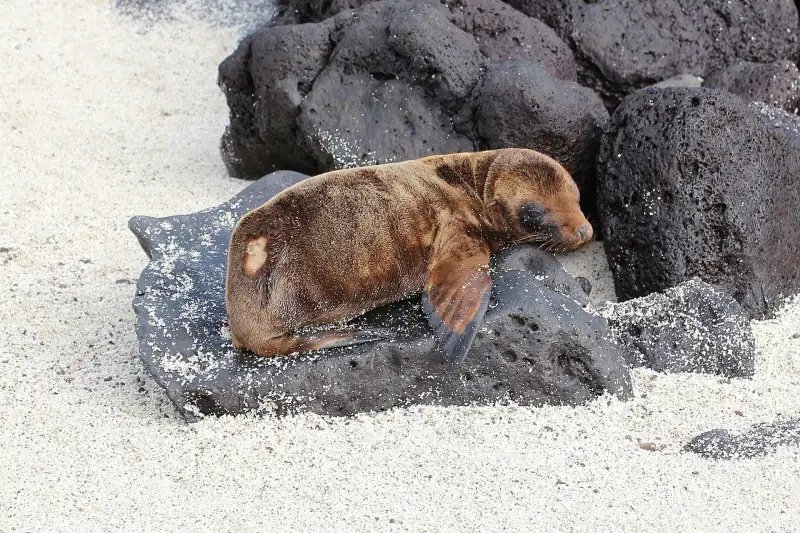
The archipelago offers two main formulas. The first is to sleep on land, on an inhabited island such as Santa Cruz, San Cristóbal or Isabela, and take day excursions. It is generally more flexible and often cheaper: you choose your activities once there and adapt your pace. Puerto Ayora, on Santa Cruz, is the most developed town, with the widest choice of hotels and restaurants.
The second is the cruise, with nights on board and stops on uninhabited islands. It reaches remote sites, but the price is much higher and departures are booked long in advance. The choice depends on your budget, your sensitivity to seasickness and the length of your stay. Our guide to the Galápagos islands to visit helps you compare.
In all cases, plan ahead for the access formalities to the archipelago and the entry fees charged to visitors, and check them with an official source before leaving, as they change. Book early in high season.
The Amazon: lodges and forest stays
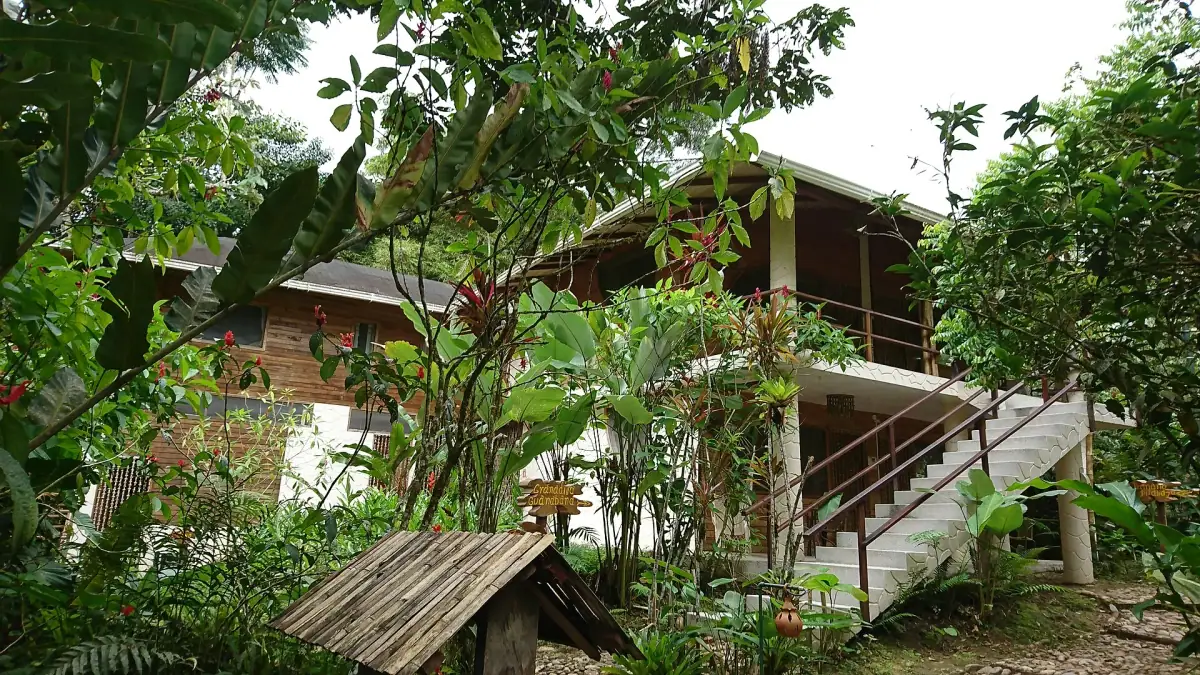
In the Ecuadorian Amazon, you almost always sleep in a lodge, often reached by dugout canoe or after a minibus ride and then a boat. Most formulas are all-inclusive packages of two to five nights, including meals, a guide and forest excursions. Lodgings range from rustic cabins to comfortable lodges with a private bathroom.
Before choosing, ask the operator a few simple questions: how the transfer works, how many visitors per group, what equipment is provided (boots, ponchos), and what the cancellation policy is in case of bad weather. Wildlife-watching outings take place early in the morning or in the evening.
Bring lightweight long-sleeved clothing, a suitable repellent, a headlamp and a waterproof bag. For vaccines and any health precautions, ask your doctor or a travel clinic several weeks before departure, and see the official travel health pages (CDC in the US, TravelHealthPro in the UK). Also consider travel insurance covering assistance and medical costs abroad.
Budget and booking tips
Prices vary by region and season, which is why we give no price table. Generally, hostels and dorms are the most affordable, followed by small guesthouses, mid-range hotels, then Amazon and Galápagos lodges, which sit toward the top of the range.
A few practical tips:
- check whether breakfast and taxes are included in the displayed price;
- read recent reviews rather than the overall score, notably on noise, hot water and heating;
- at altitude, a space heater or good blankets make the difference, as nights are cool;
- ask whether a transfer from the airport or bus station is possible, especially for a late arrival;
- keep a free cancellation option when possible, while you finalize your domestic flights.
Frequently asked questions
Which neighborhood should you choose in Quito?
The historic center suits you if you want to do everything on foot and enjoy the colonial atmosphere. The more modern La Mariscal district is handy for restaurants, agencies and transport, but calls for more caution in the evening.
Do you need to book ahead in Ecuador?
For the Galápagos, Amazon lodges and small properties in high season, it is better to book several weeks ahead. In Andean cities, booking a few days ahead is often enough outside holiday periods.
Where should you stay to visit Cotopaxi and Quilotoa?
Many travelers base themselves in Quito for a day trip, or sleep at a hacienda or lodge near the volcanoes to leave early. Baños is a good base for waterfalls and outdoor activities.
Is sleeping at altitude a problem?
Quito sits at about 2,800 m (9,190 ft). Plan a relaxed arrival and, for any health concern, ask your doctor or a travel clinic, and see the official travel health pages (CDC in the US, TravelHealthPro in the UK).
More Ecuador guides
Keep reading
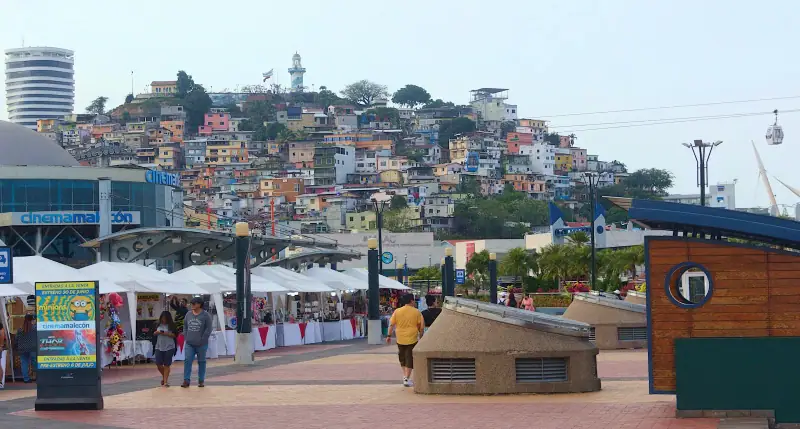
Where to stay in Guayaquil: areas and types of accommodation to help you choose
Where to stay in Guayaquil: downtown and Malecón, Las Peñas, Urdesa, Kennedy, the airport area or Samborondón. Areas, lodging types and tips for choosing.
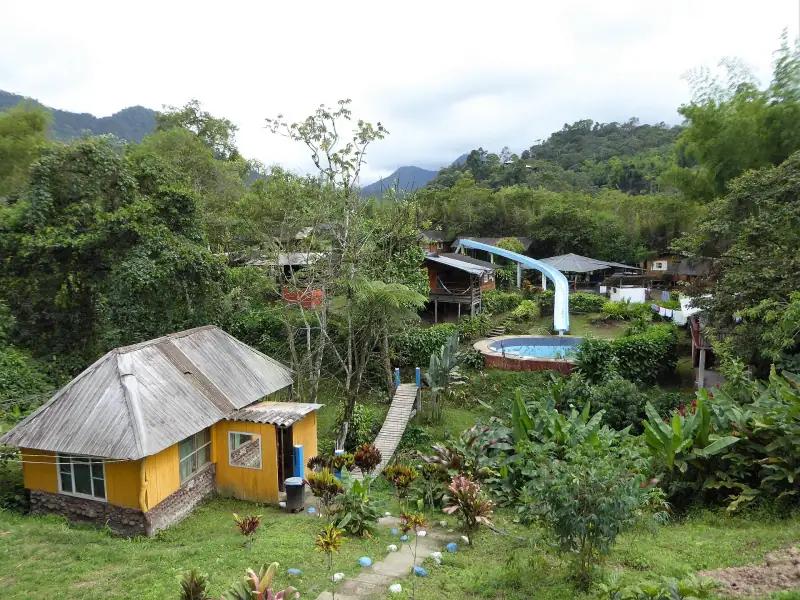
Where to stay in Mindo: areas and types of accommodation to help you choose
Where to stay in Mindo: the village, waterfall roads, river banks, cloud forest lodges. Areas, accommodation types and tips for choosing by trip.

Where to stay in Cuenca: areas and types of accommodation to help you choose
Where to stay in Cuenca: historic center, Tomebamba riverside, San Blas, El Ejido or Turi. Areas, accommodation types and tips for choosing by trip.
Ready-made
Ecuador itineraries
7 days
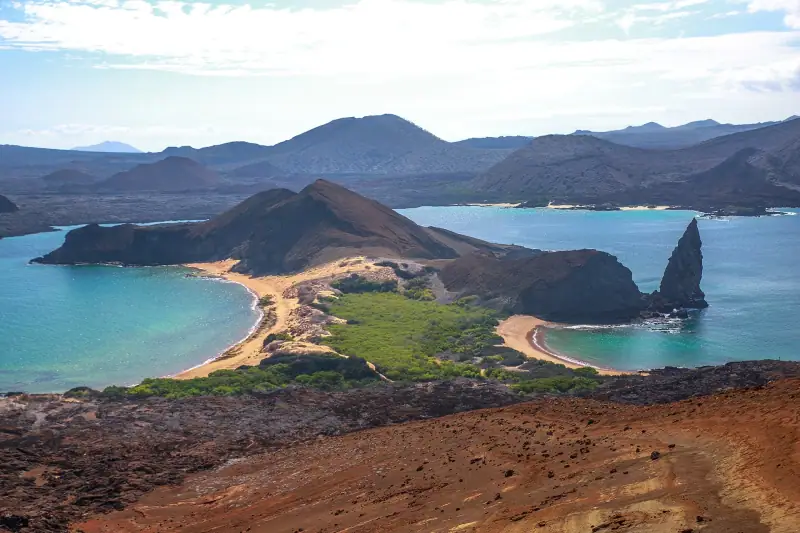
One week in Ecuador: a 7-day itinerary, day by day
QuitoLatacungaBaños
Can be adapted in the planner
5 days
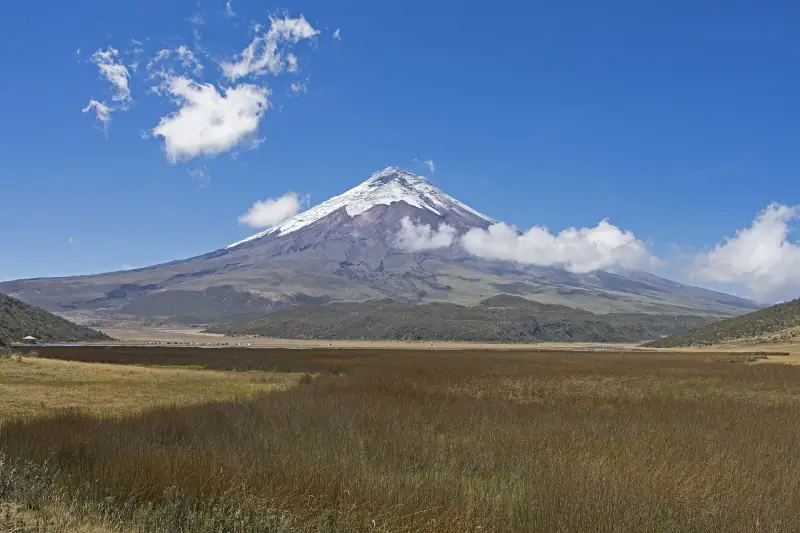
Avenue of the Volcanoes in Ecuador: Cotopaxi, Quilotoa and Baños in 5 days
A 5-day itinerary on the Avenue of the Volcanoes from Quito: Cotopaxi, Quilotoa lagoon, Baños and Chimborazo, with travel times, stops and altitude notes.
3 days
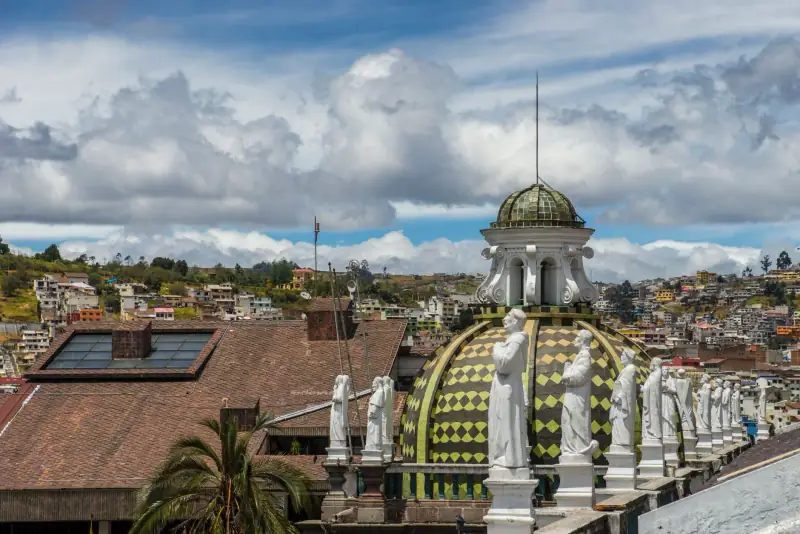
What to do in Quito in 3 days: historic center, volcano views and the Mitad del Mundo
Quito in 3 days: UNESCO-listed historic center, Panecillo, cable car, La Ronda and the Mitad del Mundo. A realistic itinerary that builds up gradually.