Where to stay
Where to stay in Mindo: areas and types of accommodation to help you choose
We may earn a commission when you book through links on this page, at no extra cost to you. We don't visit or try the places we cover: we summarize published sources. How we work
In short
- Without a car, the village is the most practical: restaurants, agencies and bus stops are on foot. For birdwatching and quiet, a lodge at the forest edge is more immersive.
- One night lets you see birds at dawn and do one activity; two nights are a good balance for a waterfall, a cacao plantation visit and some rest.
- Mindo sits at about 1,200 m (3,935 ft), with a mild, humid climate year-round; pack quick-drying clothes and a light rain jacket.
- Weekends and Ecuadorian holidays fill up quickly with visitors from Quito: book a few weeks ahead with free cancellation.
Mindo is a small cloud forest village northwest of Quito, on the western slope of the Andes. A few streets, a square, a river and, all around, dense vegetation hiding hundreds of bird species, butterflies and orchids. Most travelers come for the day from the capital. That is a pity: most of Mindo’s magic happens at dawn, when hummingbirds arrive at the feeders, and at dusk, when the forest changes its sound.
What remains is choosing where to stay. Between the village, the river banks, the roads climbing to the waterfalls and the isolated lodges deep in the forest, the atmospheres are very different. This guide presents the areas, the types of accommodation and a few pointers for choosing according to your length of stay, budget and travel style. We do not name any particular property: staff, prices and quality change quickly, and only recent reviews for your dates count. For an overview of the country, our article on where to stay in Ecuador covers all the regions; here, we focus on Mindo and its surroundings.
Understanding Mindo’s geography before you book
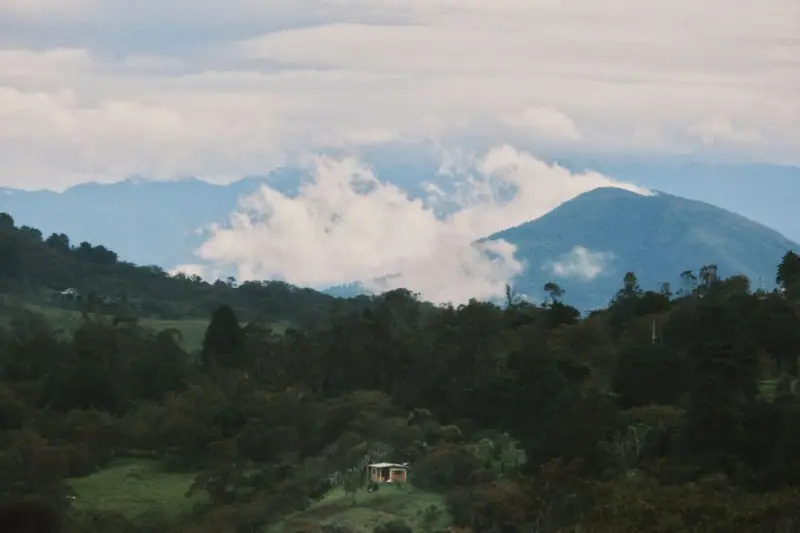
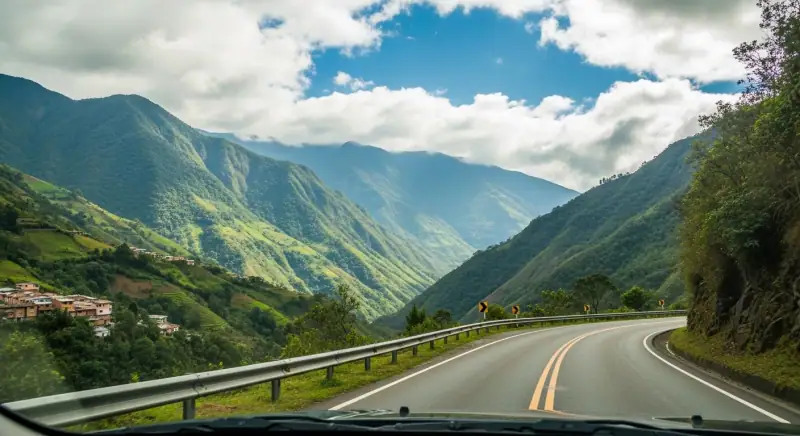
The layout is simple. Mindo village is a compact core, laid out on a grid around a central square. You cross it on foot in a few minutes. Around it, the landscape splits into three main zones: the Mindo river valley, which runs alongside the village, the dirt roads climbing to waterfalls and private reserves, and the main access road, which descends from the Andean heights through a series of bends.
At about 1,200 m (3,935 ft), Mindo is much lower than Quito: the air is milder and more humid. The climate is warm without excess, with lush vegetation all year and frequent showers, especially in the afternoon in the wet season. If you hesitate on the best time for your stay, our guide to when to visit Ecuador details the seasons.
This “village + nearby forest” geography is the key to the choice. The village offers convenience, the forest offers immersion. Between the two, a few kilometers of road or trail are enough, but they matter once night falls or it rains. To better understand what you can do there, see our article on Otavalo and Mindo from Quito.
Humidity not to be underestimated
In the cloud forest, humidity is a lodging factor in its own right. Clothes dry slowly, bed linen can feel slightly damp and shoes stay wet from one day to the next. When you compare rooms, look at the reviews on ventilation, the condition of mosquito nets and whether there is somewhere to dry your things.
Mindo village: the simple solution for one or two nights
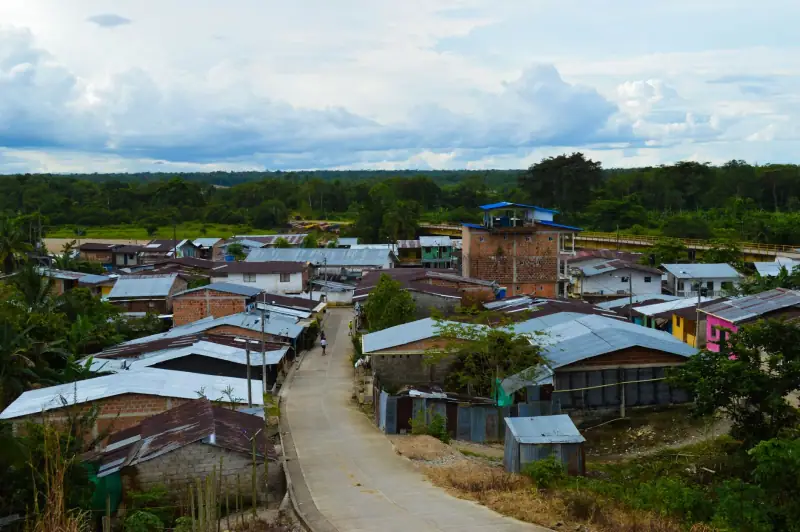
For a first stop or a short stay, the village is the simplest choice. Restaurants, small shops, agencies selling activities (tubing, canopy, guided walks) and the bus stop are all within walking distance. You can return to your lodging at any hour without worrying about transport.
The village’s advantages. Distances are short, which is welcome when it rains. The choice of lodging is wide: hostels, small family hotels, guesthouses and cabins with gardens. You can dine on foot, change plans at the last minute and easily find a room on weekdays.
The drawbacks. On weekends, the village fills with visitors from Quito and the atmosphere becomes noisier, with music in some venues. Birds are less present in the very center than in the reserves: to see them, you will need to walk or take transport to the trails.
Who is it for? Travelers without a car, tight budgets, short stays of one or two nights and those who like having restaurants at hand.
🏨 Compare accommodation in Mindo village: hostels, small hotels and guesthouses, with recent reviews and cancellation conditions for your dates.
The banks of the Mindo river: coolness, the sound of water and rooms in the greenery
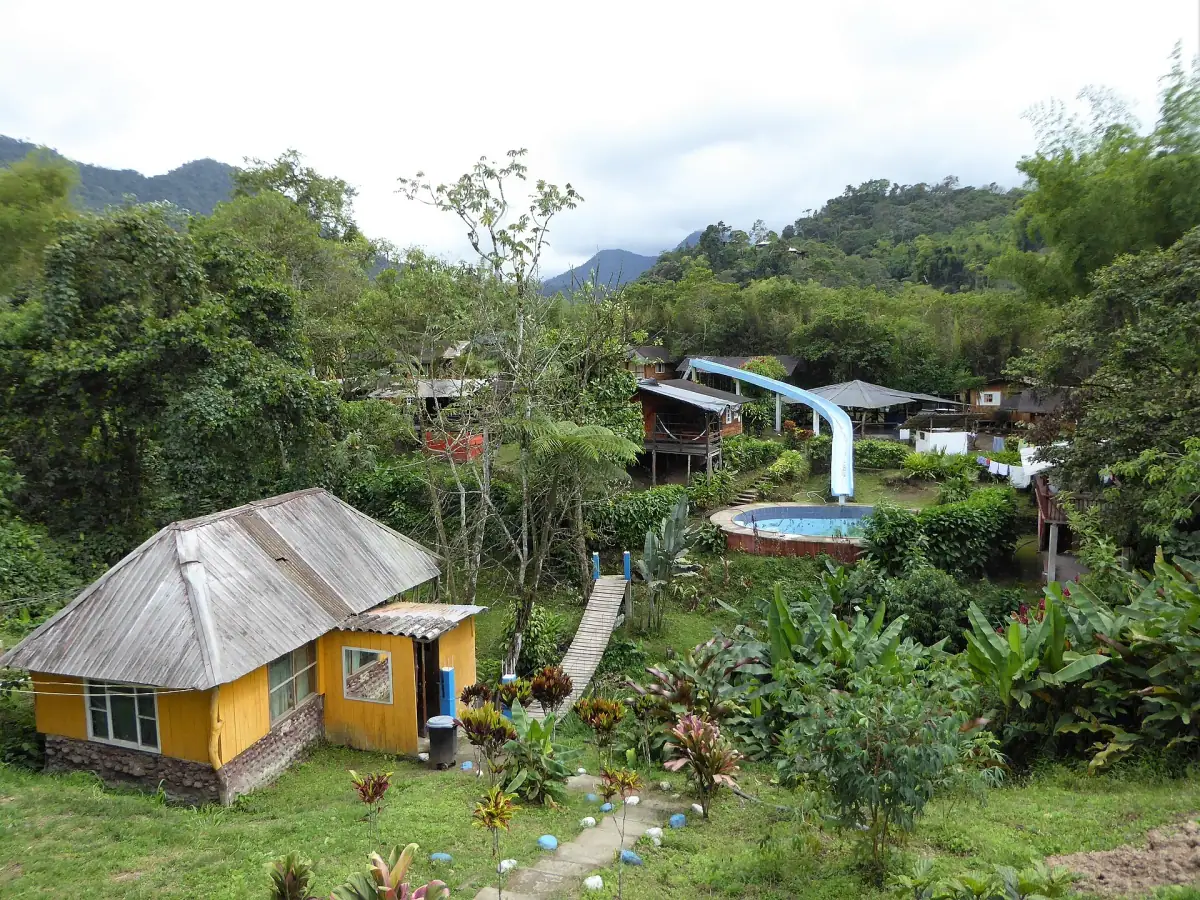
A few lodgings stretch along the river, on both sides of the village. Water flows there constantly and its sound pleasantly masks the noise of the road. Wooden cabins, small lodges and guesthouses with terraces are common, with gardens planted with banana trees, heliconias and tree ferns.
The advantages. The setting is already that of the forest, but the village remains reachable on foot or in a few minutes by taxi. You benefit from the coolness of the water, the vegetation and often birds in the garden, especially in the first hours of the day. It is a good compromise between comfort and immersion.
The drawbacks. Proximity to the river also means more humidity and more mosquitoes in the evening. After heavy rain, access to some properties can be muddy or slower. Check the reviews on these points before booking.
Who is it for? Couples, families who like a natural setting without isolating themselves, and travelers who want to hear the forest from their room while keeping restaurants close.
If you stay near dense vegetation, a suitable repellent helps a lot in enjoying the evenings.
The waterfall and reserve roads: closest to the trails
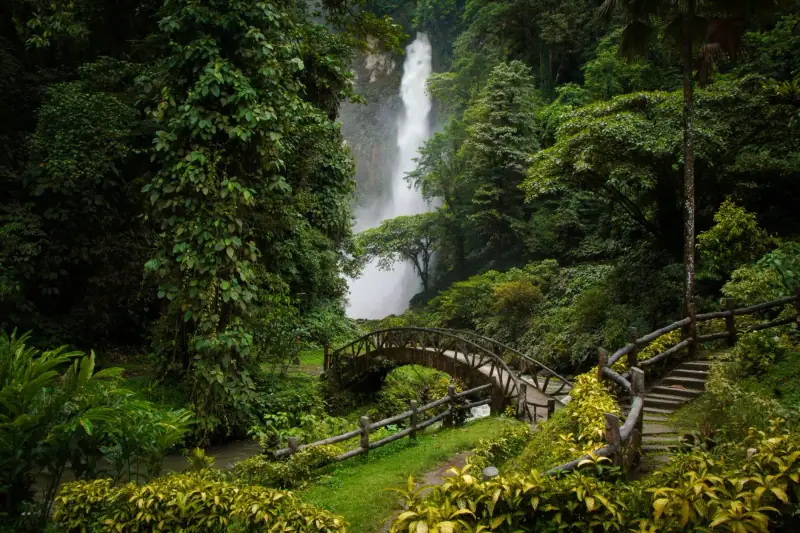
Around the village, several paths climb to waterfalls, private forest reserves, cacao and coffee plantations and bird-watching spots. A few lodgings have settled there: small lodges, treehouses, country guesthouses and fincas. They are generally a few kilometers from the center, sometimes more.
The advantages. You are within immediate reach of the trails: a coffee at sunrise, a few minutes’ walk and you are already in the vegetation. Some properties set up hummingbird feeders and organize guided sunrise outings. It is the best choice for those who come for the fauna and flora.
The drawbacks. Without a car, you need a taxi, a pickup truck or a shuttle organized by the lodging to get back down to the village. Paths are sometimes muddy or in poor condition in the rainy season. Restaurants are rare: you mostly dine at the lodge, sometimes with a half-board formula. Compare rates with and without meals carefully.
Who is it for? Bird enthusiasts, photographers, travelers staying two nights or more who accept planning their trips. Birdwatchers will gain a lot by bringing a good pair of binoculars.
Cloud forest eco-lodges: a night immersed in nature
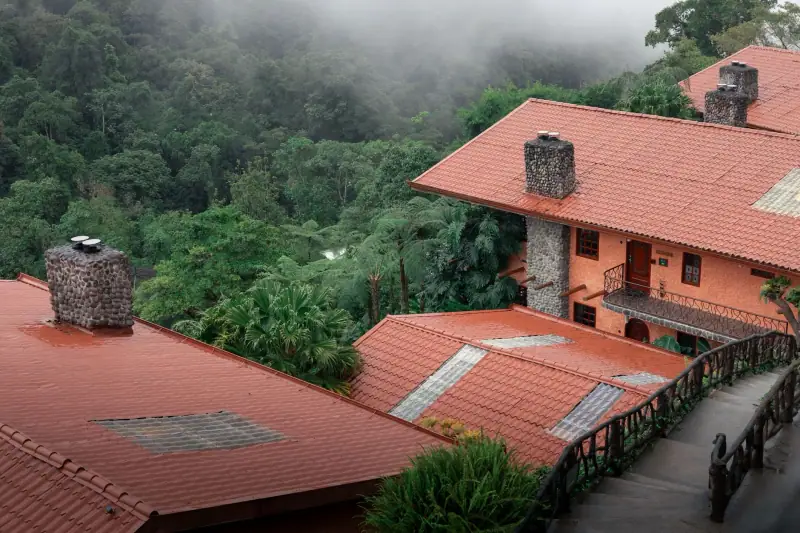
Eco-lodges are the local high end. Set in the middle of a wooded property or at the edge of a reserve, they offer wood or stone rooms open to the canopy, sometimes with a balcony, and often stress sustainability: efficient energy, recycled water, local products. Many work with naturalist guides who know the songs and habits of the birds.
The advantages. The setting is exceptional: you fall asleep to the sound of frogs and wake up with the birds. Formulas often include meals and guided outings, which simplifies organization. For a romantic stay or a quality nature getaway, it is hard to beat.
The drawbacks. The budget is higher than in the village, and you must accept isolation: few alternatives for dining, trips to plan, sometimes limited internet connection. Check what is included before comparing (meals, transfers from the village, activities).
Who is it for? A honeymoon, a birthday, a birdwatching stay or simply a comfortable break between two more active stops. To place this budget relative to the rest of your trip, read our budget in Ecuador.
Hostels, hotels, cabins, lodges: which type of accommodation to choose?
The choice of area goes hand in hand with the type of lodging. The following table compares the main categories, without precise prices since they vary with season and demand.
| Accommodation type | Atmosphere | Usual area | Ideal for |
|---|---|---|---|
| Hostel | Friendly, simple, dorms and private rooms | Village | Solo travelers, small budgets |
| Small family hotel | Simple rooms, local welcome | Village | One or two nights, getting around on foot |
| Guesthouse | Warm, breakfast often included | Village and river banks | Couples, curious travelers |
| Cabin or bungalow | Wood, garden, sound of the forest | Banks, waterfall roads | Nature, families, photography |
| Eco-lodge | Comfortable, immersive, meals often included | Forest, private reserves | Birdwatching, romantic stay |
| Campsite or equipped wild area | Simple, close to nature | Village outskirts | Small budgets, equipped travelers |
A few pointers to refine:
- Hostels: good for meeting other travelers and sharing activity costs. Check the condition of mosquito nets and whether hot water is available.
- Small hotels: good comfort-to-price ratio, often with breakfast. Read recent reviews on noise and ventilation.
- Cabins: very popular for the change of scene, but make sure they are well sealed and fitted with mosquito nets.
- Eco-lodges: book ahead in high season and for weekends, as the number of rooms is generally limited.
Which area for your traveler profile
Here are simple pointers to decide:
- One night, without a car: the village, to dine on foot and reach activities without transport worries.
- Two nights, between nature and comfort: one night in the village then one night in a lodge, or two nights on the river banks.
- Birdwatching: a lodge or guesthouse on the reserve roads, with dawn outings.
- Romantic trip: an eco-lodge with a balcony over the forest and meals included.
- Small budget: a hostel or small family hotel in the village, sharing taxis.
- Family: a cabin with a garden by the river, so kids can enjoy nature safely, with breakfast included.
🎟️ Explore the cloud forest from your accommodation: guided birdwatching tours, waterfalls, cacao plantations and outdoor activities around Mindo, with a guide depending on the formulas offered.
When to stay in Mindo: weekends, seasons and birds
Mindo’s visitor numbers vary mostly by day of the week. On weekdays, the village is calm, the trails almost empty and lodgings easily available. On weekends and holidays, Ecuadorian visitors arrive from Quito in numbers: village rooms fill up, restaurants are full and lodge prices sometimes rise. If your dates are flexible, favor midweek.
As for season, the cloud forest is humid all year. The least rainy period generally matches the driest months in the Andes, roughly June to September, while the wet season brings more frequent showers, often in the afternoon. Birds can be seen in any season, but morning remains the best time: this is the main reason to stay overnight rather than come on an excursion from Quito.
In all cases, give priority to a room with free cancellation. The weather can change quickly, and a strong rain episode can make some secondary roads harder to use.
Staying connected and organizing your trips
Between the village, the waterfalls and the lodges, you get around by taxi, local pickup truck or on foot, and the mobile network helps reach a driver or warn your accommodation of a delay. In the village, wifi is often decent; in the forest, it can be slow or absent, which is part of the charm but worth anticipating.
📱 Stay connected from your arrival in Mindo: Saily offers eSIM plans in more than 150 countries, check the offer for Ecuador before you leave.
To compare connection solutions (eSIM, local SIM card), check your carrier’s international plan; our article on SIM cards and eSIMs in Ecuador details the options. Also consider travel insurance covering medical costs and repatriation.
Getting there from Quito and leaving
From Quito, buses serve Mindo for a trip of about two to two and a half hours depending on traffic. You can also opt for a private driver or an excursion with transfer, more comfortable in a group. The last part of the road is winding: if you are prone to motion sickness, plan accordingly. If you stay in the forest, tell your accommodation your arrival time: some offer to pick you up in the village or know trusted drivers. To choose the right starting point, our guide to where to stay in Quito helps you spot the most practical neighborhood for leaving early toward the west.
Tips for booking well in Mindo
A few habits simplify the choice:
- Read recent reviews: filter by date and traveler type. Points about humidity, mosquitoes and hot water are decisive in the cloud forest.
- Check the real distance to the village: a lodging said to be “in Mindo” can be several kilometers away, on a dirt road. Look at the position on the map and ask the cost of a taxi.
- Favor free cancellation: weather and travel plans change quickly.
- Ask what is included: breakfast, dinner, guided outings, transfers. This greatly affects the real price.
- Warn of a late arrival: in the forest, the welcome can be limited in the evening and roads are poorly lit.
- Keep cash: some small places do not always accept cards, and ATMs are rare. See our article on formalities, health and money.
- Bring the right gear: a light rain jacket, shoes that cope with mud, quick-drying clothes and a headlamp for returns at dusk.
Combining Mindo with the rest of the trip
Mindo fits easily into a circuit in northern Ecuador. It is ideally placed right after Quito, before or after Otavalo, and serves as a gentle transition to the rest of the country before heading down the Avenue of the Volcanoes, as in our guide to the Avenue of the Volcanoes. If you have little time, one night there is enough to taste the forest atmosphere; if you have several days, two or three nights let you slow down, multiply dawn outings and visit a cacao or coffee plantation without rushing.
🏨 A night in the middle of the cloud forest: compare cabins, lodges and guesthouses around Mindo, with cancellation conditions shown before you book.
Key takeaways
Mindo lends itself to several ways of staying. The village suits short stays and travelers without a car; the river banks offer a good compromise between nature and convenience; the waterfall and reserve roads appeal to bird enthusiasts; eco-lodges offer a more comfortable immersion for a refined stopover. In all cases, look at the real distance to the village, the condition of mosquito nets, ventilation and recent reviews, and keep in mind that the forest is humid all year. Well chosen, a night there takes Mindo from a quick excursion to a real nature stop.
Frequently asked questions
What is the best place to stay in Mindo?
For a first visit without a car, the village is the most practical: restaurants, agencies and bus stops are on foot. If your priority is birdwatching and quiet, a lodge at the forest edge, a few kilometers from the village, offers a far more immersive experience, as long as you plan the trips.
How many nights should you plan in Mindo?
One night lets you see birds at dawn and do an activity in the afternoon or the next day. Two nights are a good balance to add a waterfall, a cacao plantation visit and some rest. Keen birders often stay three nights or more.
Do you need to book ahead in Mindo?
On weekdays you can generally find a room on the spot. On weekends and Ecuadorian holidays, visitors from Quito fill lodgings quickly: book a few weeks ahead and preferably choose an option with free cancellation.
Can you stay in Mindo without a car?
Yes. Buses link Quito to the village, the streets are walkable, and local taxis or pickup trucks serve the waterfalls and surrounding lodges. If you stay in the forest, ask your accommodation how to organize your arrival and return, especially in the evening.
Is it warm in Mindo at night?
The climate is mild and humid all year, much more temperate than Quito. Nights are cool without being cold, but humidity is everywhere: bring quick-drying clothes and a light rain jacket. Air conditioning is rarely needed; a fan is generally enough.
Are there mosquitoes in Mindo?
Yes, especially near the river and in the evening. A suitable repellent, covering clothes at dusk and a well-kept mosquito net in the room are generally enough. For health precautions, ask your doctor or a travel clinic, and see the official travel health pages (CDC in the US, TravelHealthPro in the UK).
Mindo or Quito: where to stay to visit the cloud forest?
A day trip from Quito is possible, but it gets you there after the peak of bird activity. Staying overnight lets you be in the forest at dawn and avoids about four to five hours of round-trip driving in the day.
More Ecuador guides
Keep reading

Where to stay in Guayaquil: areas and types of accommodation to help you choose
Where to stay in Guayaquil: downtown and Malecón, Las Peñas, Urdesa, Kennedy, the airport area or Samborondón. Areas, lodging types and tips for choosing.

Where to stay in Cuenca: areas and types of accommodation to help you choose
Where to stay in Cuenca: historic center, Tomebamba riverside, San Blas, El Ejido or Turi. Areas, accommodation types and tips for choosing by trip.
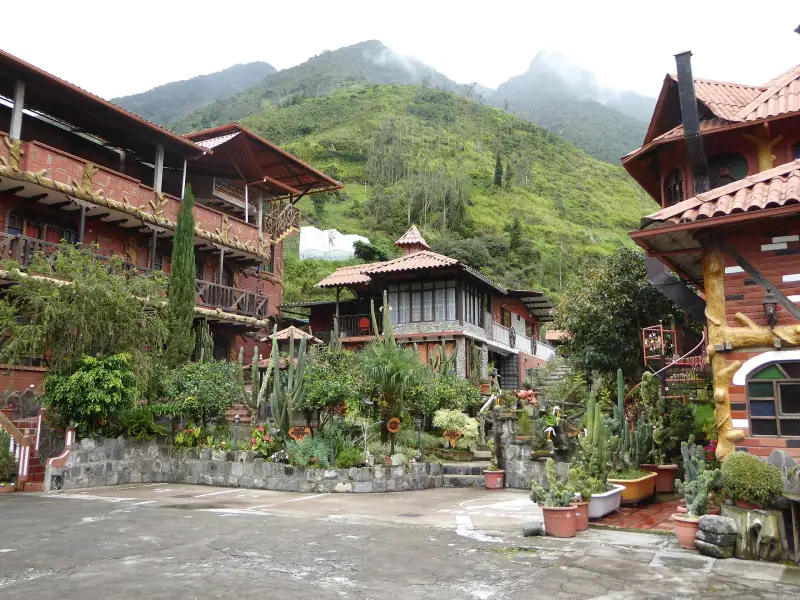
Where to stay in Baños: areas and types of accommodation to help you choose
Where to stay in Baños: town center, hot springs area, hillsides, waterfall road. Areas, accommodation types and tips for choosing by trip.
Ready-made
Ecuador itineraries
7 days
One week in Ecuador: a 7-day itinerary, day by day
QuitoLatacungaBaños
Can be adapted in the planner
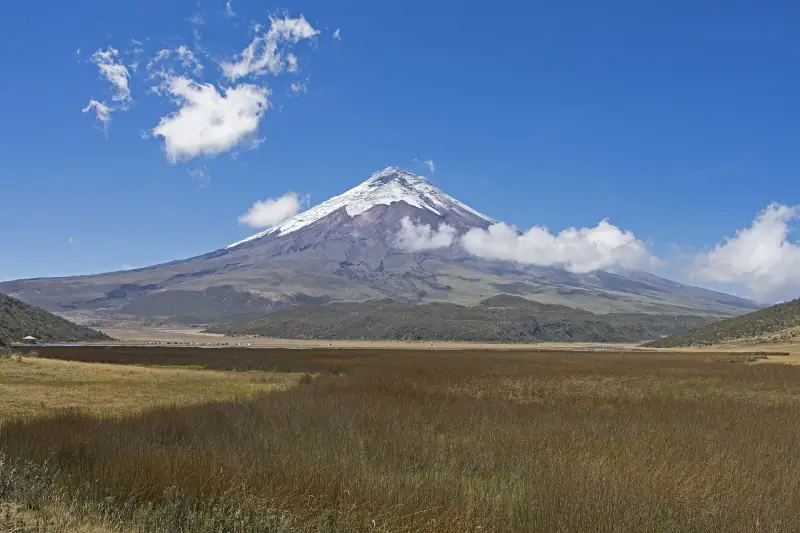
5 days
Avenue of the Volcanoes in Ecuador: Cotopaxi, Quilotoa and Baños in 5 days
A 5-day itinerary on the Avenue of the Volcanoes from Quito: Cotopaxi, Quilotoa lagoon, Baños and Chimborazo, with travel times, stops and altitude notes.
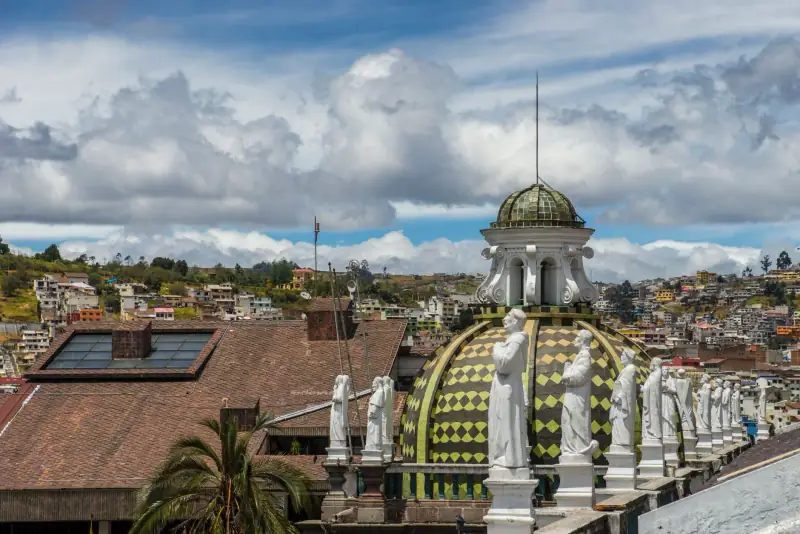
3 days
What to do in Quito in 3 days: historic center, volcano views and the Mitad del Mundo
Quito in 3 days: UNESCO-listed historic center, Panecillo, cable car, La Ronda and the Mitad del Mundo. A realistic itinerary that builds up gradually.