What to see
Visiting Palm Jumeirah: what to see and do on Dubai's palm-shaped island
We may earn a commission when you book through links on this page, at no extra cost to you. We don't visit or try the places we cover: we summarize published sources. How we work
In short
- Choose two or three stops (a beach, The Pointe promenade, a viewpoint or a water park), plan taxi or monorail trips and keep late afternoon for the sunset.
- Half a day covers The Pointe, a beach and a viewpoint; add Atlantis' water park or aquarium and it becomes a full day.
- The island is not made for walking: distances are long, and taxis, ride-hailing or the monorail are the practical options.
- Hotel and residence beaches are for guests only or require a fee; the Palm Tower observation deck is about 240 m (787 ft) up.
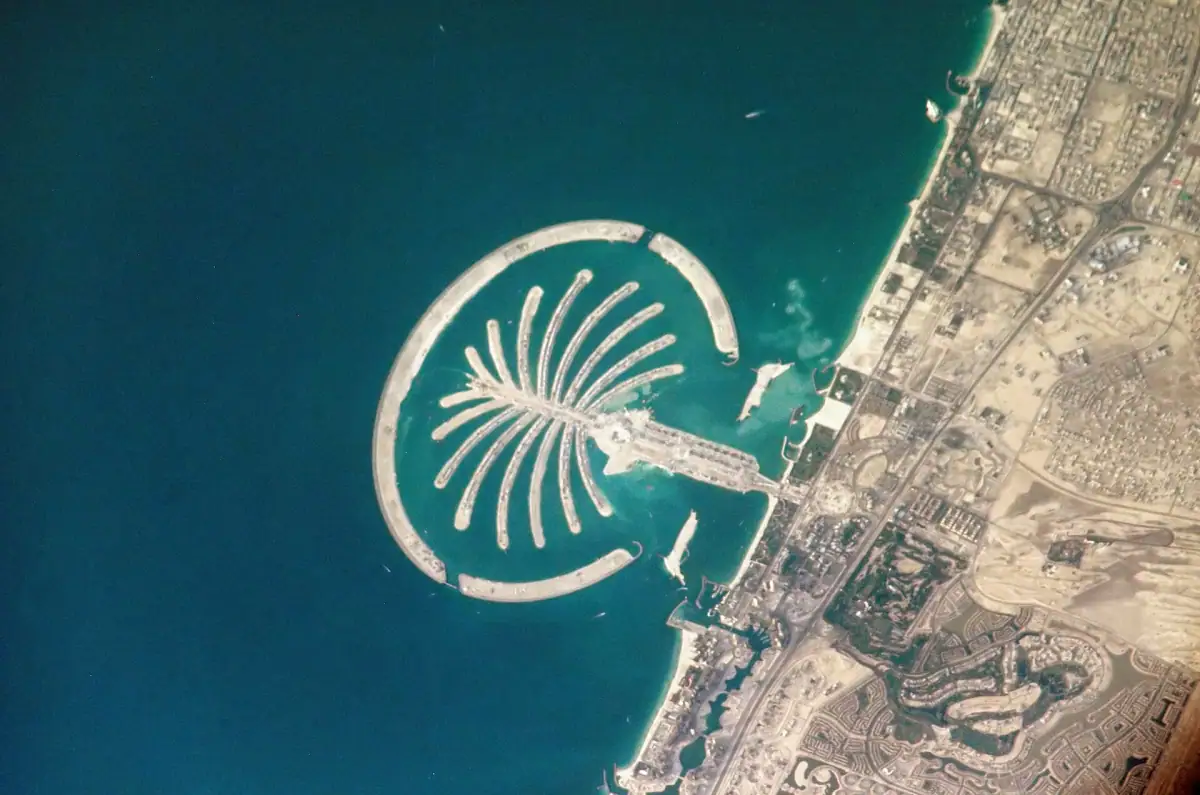
Seen from the sky, Palm Jumeirah is one of the most recognizable patterns on the planet: a palm tree of sand reclaimed from the Persian Gulf, with its trunk, fronds and protective crescent. Seen from the ground, it is a world apart, made up of luxury hotels, seaside residences, promenades facing the skyline and a few genuinely pleasant places for a day out.
In short: the island is best visited with a clear plan. Choose two or three stops (a beach, The Pointe promenade, a viewpoint or a water park), plan the trips by taxi or monorail and keep late afternoon for the sunset. Here is how to put the day together without losing time or money.
Palm Jumeirah in a few words: an island created from scratch
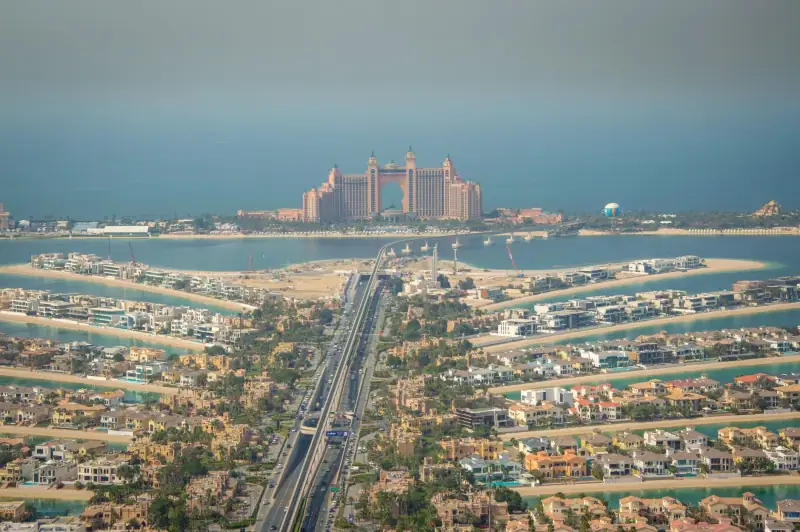
Construction of Palm Jumeirah began in 2001 and stretched over several years. The island was created by dumping sand and rock into the sea, then developed with villas, residences and hotels. Its shape has four parts: a central trunk linked to the coast by a bridge, sixteen fronds covered with villas, an outer crescent that serves as a breakwater and, at the very end, an extension that holds the Atlantis hotel. An underwater tunnel links the crescent to the tip of the island.
Do not confuse it with Jumeirah, the long mainland shoreline, more residential, which we cover in our guide to visiting Jumeirah. Since “Jumeirah” is also the name of a hotel chain, similar names are common: always check the exact location before booking a hotel.
To place the island relative to the rest of the coast and the Marina, keep three points in mind: it lies offshore, just northeast of JBR and the Marina, which are covered in our article on Dubai Marina; it is further out than the Jumeirah coast; and you mostly get around by vehicle or monorail, because distances between sights are large.
Getting to Palm Jumeirah and getting around
The island is not made for walking. Roads are wide, distances between hotels and shopping centers are long, and the heat quickly discourages long strolls between May and September. The options:
- taxi or ride-hailing, the simplest solution from any neighborhood, including for the evening return;
- the Palm monorail, which runs along the island’s trunk and links the entrance area to Atlantis, with intermediate stops; it is handy for avoiding traffic, but does not serve the whole island;
- the Dubai tram, which runs along the Marina and JBR and lets you reach the Palm by connection or a short taxi ride;
- a rental car, useful if you plan several stops in the day, weighed against parking and traffic.
Monorail hours, stations and fares change: check the official information the day you go. Our article getting around Dubai covers tickets and the Nol card. If you opt for a car, you can compare rental companies before your arrival.
The Pointe: the promenade facing the skyline
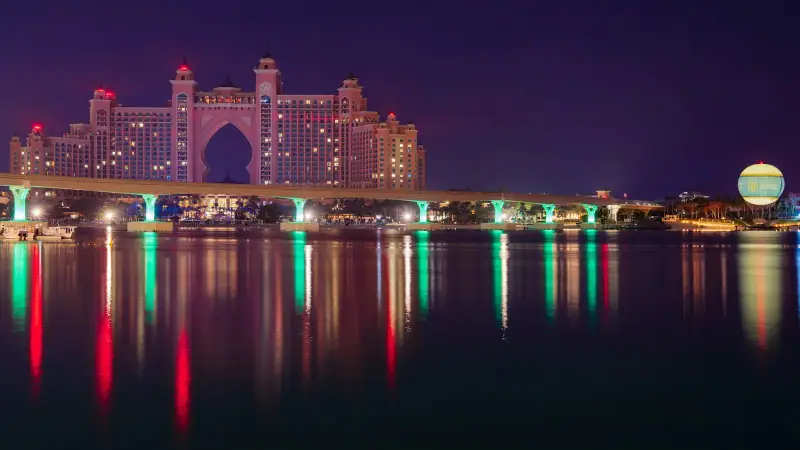
The Pointe is the big promenade at the tip of the island, facing the bay and the Atlantis hotel. It is probably the most pleasant stop for a visitor passing through: a developed waterfront, terraces, restaurants with varied cuisines and, in the evening, a fountain show synchronized with music and lights.
The big asset here is the view. From the promenade, you have an open panorama of the Atlantis hotel on one side and the Marina skyline on the other. Come about an hour before sunset, settle on a terrace and stay for nightfall. The times of the fountain shows, their frequency and access conditions may change: check them the same day.
For food, options range from a casual café to a more upscale restaurant. Prices are those of a tourist site: compare menus before sitting down and choose a terrace lunch if you want to limit the budget. To learn what to try in Dubai, read our article on what to eat in Dubai.
Atlantis The Palm and Aquaventure: the big family classic
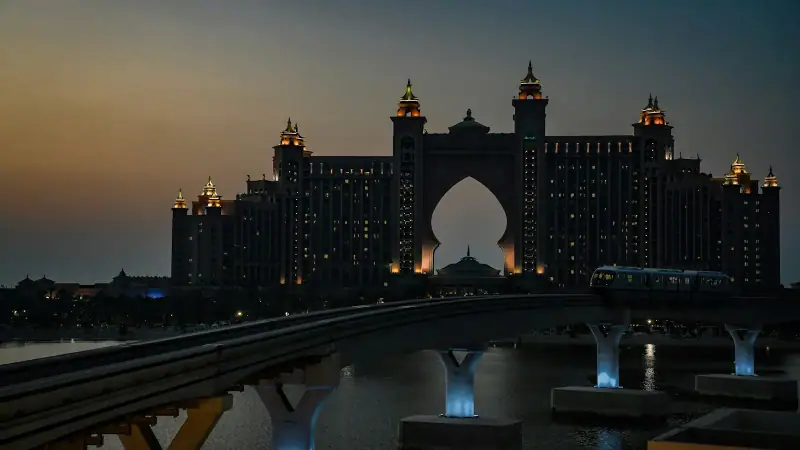
The Atlantis The Palm hotel, opened in 2008, occupies the top of the crescent. Its very recognizable pink gateway has become one of the island’s images. It has a large water park, Aquaventure, and an aquarium, both very popular with families.
The water park is built around thrill slides, tube rivers and beach zones. It suits teenagers seeking adrenaline as much as younger kids, with areas for each age. The aquarium, inside the hotel, is an air-conditioned alternative in the hottest hours.
A few practical tips for this stop:
- book ahead in high season to avoid the queue and compare packages;
- arrive early: attractions are easier to enjoy in the morning, before the crowds;
- allow a full day for the water park, because admission is a significant cost;
- bring sunscreen, sunglasses and a change of clothes for the whole family;
- check the age and height restrictions of the attractions before going.
Water park and Palm attractions
Compare tickets for the water park, the aquarium and other Palm Jumeirah activities, with their cancellation terms.
A stay at Atlantis is a budget in itself. If you simply want a day by the water, a public beach or a promenade is much cheaper. Our guide budget in Dubai helps you fit this cost into your whole trip.
A viewpoint on the Palm from the sky
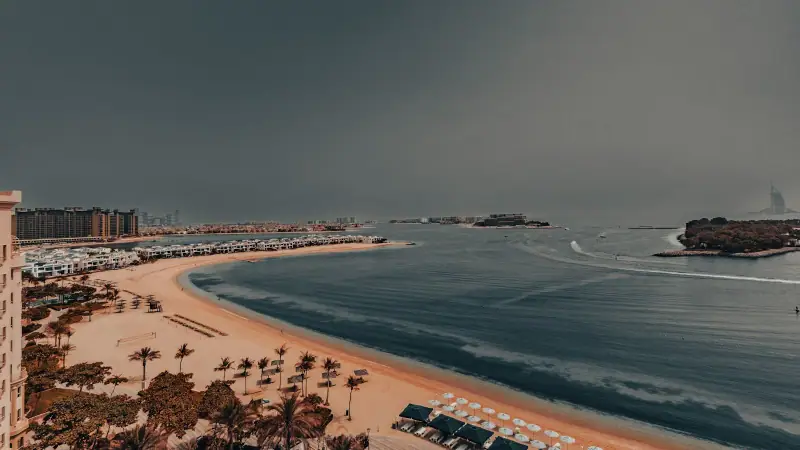
To grasp the island’s shape, you need to gain height. The Palm Tower, at the entrance of the island, has an observation deck about 240 meters (787 ft) up, at the top of the building. You see the palm as a whole, the Dubai coast and, in clear weather, the distant skyline of the city center. The outdoor terrace and the glazed section offer different photo angles.
The best time depends on what you want: afternoon for sharp visibility, sunset for the colors, night for the lights of the Marina. In summer, heat haze sometimes reduces sharpness; in winter, the air is often clearer. Hours, rates and slots change: book through official channels or a reliable reseller, and check the cancellation terms.
For an even more spectacular view, helicopter or seaplane flights are available in Dubai. Availability and conditions vary by season and weather: compare offers, and keep this option for a special-occasion budget.
Palm Jumeirah’s beaches
Palm Jumeirah is lined with sand almost along its whole length, but access depends on the place. Hotel and residence beaches are for their guests only, or accessible for a fee (day pass, private beach). Some stretches of the waterfront are open to the public, with basic services. Ask or check online before going, because rules change from one property to another.
A few pointers for enjoying the sea:
- beaches on the trunk side are often quieter, with a view of the Dubai coast;
- beaches of the crescent hotels have more facilities and services (loungers, dining);
- beach passes let you enter a property without staying there, with varying rates and conditions;
- the water is warm much of the year, but conditions vary with the wind: respect the flags.
For a free beach, simpler and cheaper, go to Jumeirah, especially Kite Beach and Sunset Beach, or to JBR. The Jumeirah guide covers them.
Stay on Palm Jumeirah
Beach hotels, resorts and residences: compare places to stay on the Palm for your dates, budget and type of trip.
Shopping centers and cafés: the island’s daily life
Between beaches, the Palm has a neighborhood life that resembles an upscale residential area. A shopping center on the trunk has shops, restaurants and cafés, with a calmer atmosphere than the big malls of the center. It is a good stop for lunch out of the heat, a bit of shopping or some air conditioning between outings.
Several hotels and residences also have restaurants open to outside customers, sometimes with terraces on the sea. Book ahead for evenings and weekends. Also check each restaurant’s dress code, which may be stricter than on a beach or in a neighborhood café. For the rules of behavior, read our article on rules and customs in Dubai.
Note that alcohol is served only in licensed venues, generally hotels and some restaurants. Prices there are high: a meal in a tourist setting on the island generally costs much more than in Dubai’s residential neighborhoods. Having lunch at the shopping center or off the island is a simple way to cut the bill.
Sea activities around the Palm
Palm Jumeirah can also be seen from the water, and that is often the best way to grasp its shape. Several types of outings leave from the Marina or the coast:
- yacht or panoramic boat cruises, which follow the crescent and pass in front of the Atlantis hotel, with an open view of the skyline;
- jet ski or flyboard outings, for those seeking thrills, with a safety briefing and equipment provided;
- paddleboarding and kayaking, calmer, suitable for beginners in calm seas;
- diving and snorkeling, in some developed zones, with licensed operators.
Before booking, compare duration, departure point, cancellation terms and restrictions (age, weather, level). Late-day outings are more pleasant in summer, as the heat drops. For beginners, a boat ride is a good compromise between comfort and scenery.
Cruises around Palm Jumeirah
Yacht, panoramic boat or sunset outing: compare cruises from the Marina and their cancellation terms.
What to do with kids on Palm Jumeirah
The island is well suited to families, provided you pace the day well. Atlantis’ water park is the star attraction for kids and teenagers, the aquarium suits the youngest, and The Pointe promenade has space to run in the evening. Hotel beaches often have kids’ clubs and supervised swimming areas.
To keep cool and avoid tiring out, alternate outdoor activities and air-conditioned breaks. Bring water, a hat, sunscreen and a change of clothes. A waterproof pouch is also very useful: it lets you take photos in the water and keeps your phone and papers safe from sand.
If you travel with young kids, also read our program Dubai in 5 days with kids, which suggests a realistic pace, and our comparison places to stay for four, apartment or hotel to choose where to stay.
When to come: season, time and crowds
Palm Jumeirah can be visited all year, but comfort varies enormously. From November to April, temperatures are suited to the beach, strolls and terraces during the day. From May to September, heat and humidity mean limiting outings to dawn and evening, and sticking to indoor or water activities. Our article when to go to Dubai covers the weather, busy periods and Ramadan.
Over the course of a day, late afternoon is the most rewarding: golden light, falling heat, lively promenades. On weekends, beaches and restaurants are busier: book ahead or come on a weekday if you can.
Planning your day on Palm Jumeirah: a sample program
Here is a realistic sequence, to adapt to the season and budget:
- Morning: beach or water activity, while the heat is bearable.
- Late morning: Palm Tower observation deck, with the clearest view of the island’s shape.
- Lunch: shopping center or restaurant on the island, out of the heat.
- Early afternoon: break at the hotel, or visit the aquarium if you stay at Atlantis.
- Late afternoon: monorail or taxi to The Pointe, for the promenade.
- Evening: dinner on a terrace facing the skyline, fountain show, then return by taxi.
This program fits easily into our four-day Dubai itinerary, replacing a half day at the beach. If you stay in the Marina, the Palm is a few minutes away by taxi: combining it with the Dubai Marina promenade is natural.
Budget and practical tips
Palm Jumeirah is a rather expensive area: hotel beach access, the water park, restaurants with a view and taxis make up most of the cost. To keep control of the budget:
- alternate paid activities and free strolls (The Pointe, the waterfront);
- have lunch away from the big tourist spots and book dinners with a view;
- compare attraction tickets online before going;
- use the monorail or tram when possible, rather than several taxis;
- bring sunscreen, water and covering clothes for entering shopping centers.
A reliable mobile connection is useful for taxis, bookings and maps. Our article SIM cards and eSIMs in Dubai compares the options.
Stay connected in the Emirates
Saily offers eSIM plans in more than 150 countries: check the offer for the United Arab Emirates before you leave.
Combining the Palm with other visits
Palm Jumeirah is a nice stop for a half day or a beach day, but it does not sum up Dubai. For the vertical side of the city, head to Downtown and the Burj Khalifa; for history, explore old Dubai, the Creek and the souks. For a complete change of landscape, a desert safari is a striking contrast, and the day trip to Abu Dhabi can be done in a day from Dubai.
Before you leave, check the entry requirements. They depend on your passport, so see the official travel advice of your government: travel.state.gov (US), GOV.UK (UK), travel.gc.ca (Canada), Smartraveller (Australia) (checked November 2026). Also consider travel insurance. For an overview of the destination, our complete guide to Dubai helps you place the Palm in your trip.
Frequently asked questions
Where is Palm Jumeirah?
Palm Jumeirah is an artificial island off the coast of Dubai, between the Jumeirah shoreline and Dubai Marina, off the northeast of the Marina and JBR. It is linked to the mainland by a bridge and takes the shape of a palm tree: a trunk, sixteen fronds and an outer crescent that holds the Atlantis hotel.
How do you get to Palm Jumeirah without a car?
A taxi or ride-hailing is the simplest from any neighborhood. The Dubai tram serves the Marina and JBR area, from where you can reach the Palm monorail by connection or a short taxi ride. Check the state of the network before leaving, because services change.
How long does it take to visit Palm Jumeirah?
Half a day is enough for a stroll at The Pointe, a beach and a viewpoint. If you add Atlantis' water park or the aquarium, allow a full day. Distances are longer than you might expect: allow travel time between each stop.
Is Palm Jumeirah worth the detour if you are not staying at a hotel?
Yes, a large part of the site is accessible to passing visitors: The Pointe promenade, shopping centers, some public beaches and the high viewpoint. Hotel and residence beaches, however, are for their guests only or require a fee.
Can you swim on Palm Jumeirah?
Yes, on beaches open to the public as on hotel beaches if you have access. Respect the flags, the lifeguards' instructions and the dress rules away from the sand. Conditions are most pleasant from November to April.
Is it a good idea to stay on Palm Jumeirah?
It is a good choice for a beach stay, mostly suited to travelers who want to enjoy the beach and the hotel. However, you will be far from Downtown and old Dubai: expect regular taxi trips. To compare areas, see our article on where to stay in Dubai.
What is the best time of day to go?
Late afternoon is ideal: the heat drops, the light is beautiful on the Marina skyline and the promenades come alive. Early morning is better for beaches and outdoor activities, especially from May to September.
More Dubai guides
Keep reading
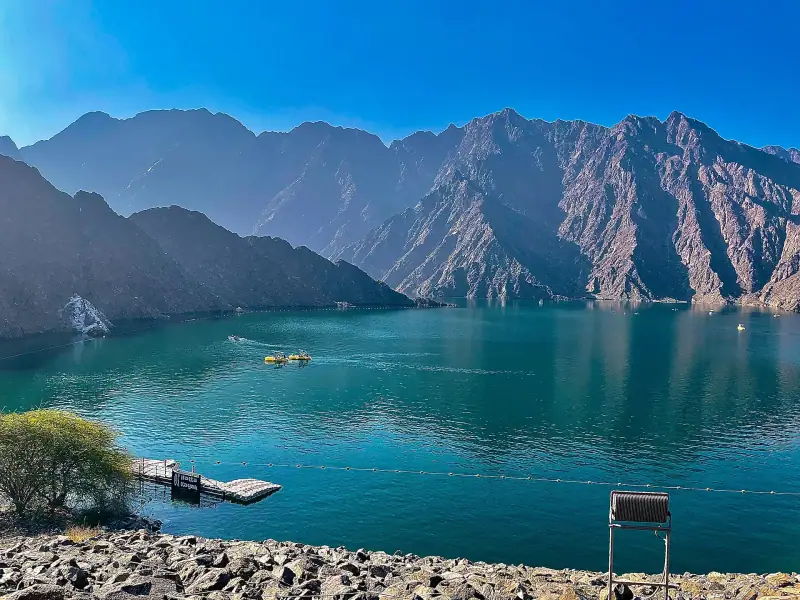
Visiting Hatta: what to see and do from Dubai
Hatta, Dubai's mountain enclave: dam and kayaking, heritage village, Wadi Hub, viewpoints and practical tips for a day trip.
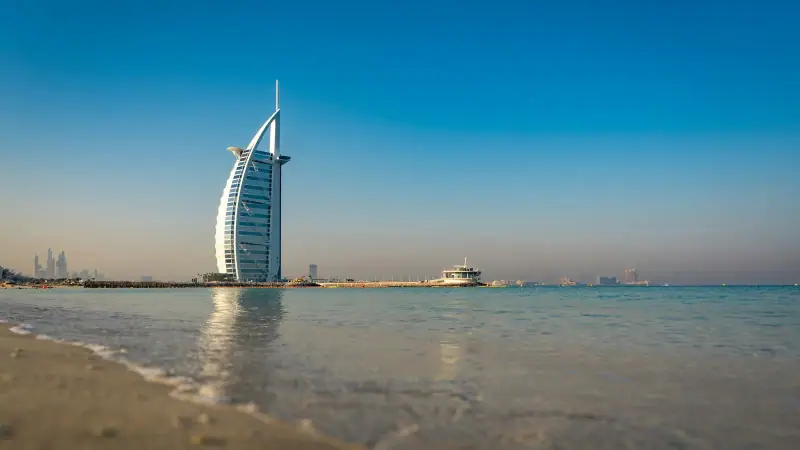
Visiting Jumeirah: what to see and do
Jumeirah, Dubai's residential waterfront: public beaches, mosque, Burj Al Arab, Kite Beach, La Mer. Our guide to planning your visit.
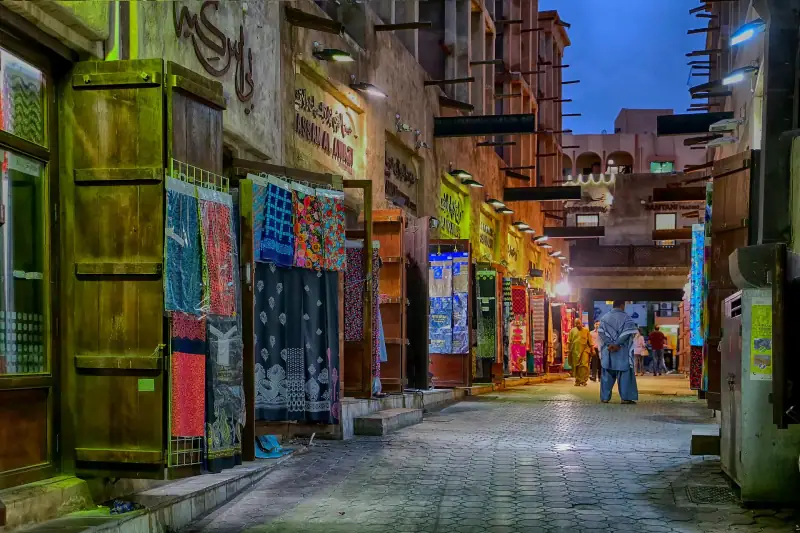
Visiting Deira: what to see and do in Dubai
Deira, the Dubai of the souks: gold and spice souks, abra crossing of the Creek, dhow wharves, Heritage House and practical tips to plan your visit.
Ready-made
Dubai itineraries
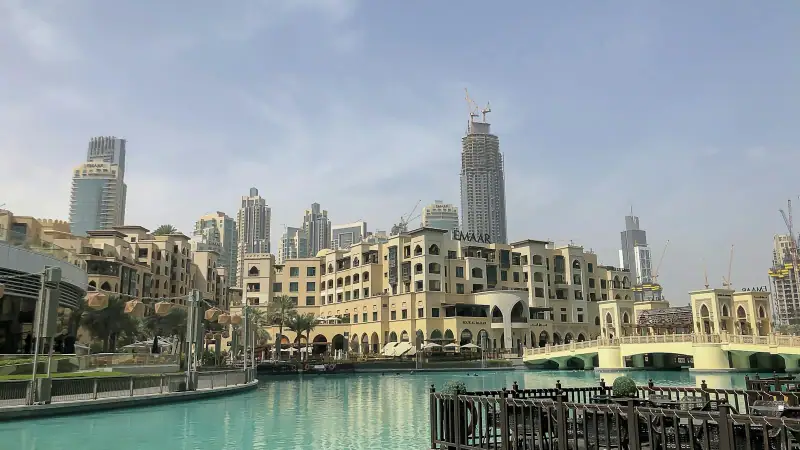
5 days
Dubai in 5 days with kids: stops, travel times and a realistic pace
Dubai in 5 days with children: a plan by area, distances and travel times, hotel breaks and ways to cope with the heat.
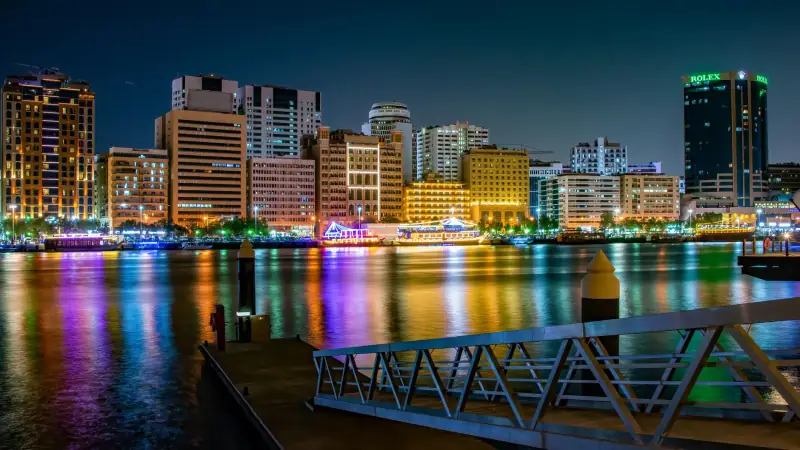
7 days
One week in Dubai: a day-by-day itinerary, from the modern center to the desert
Seven days in Dubai: Downtown, old Dubai, the coast, the desert, day trips to Abu Dhabi and Sharjah or Hatta. A day-by-day plan with transport and tips.
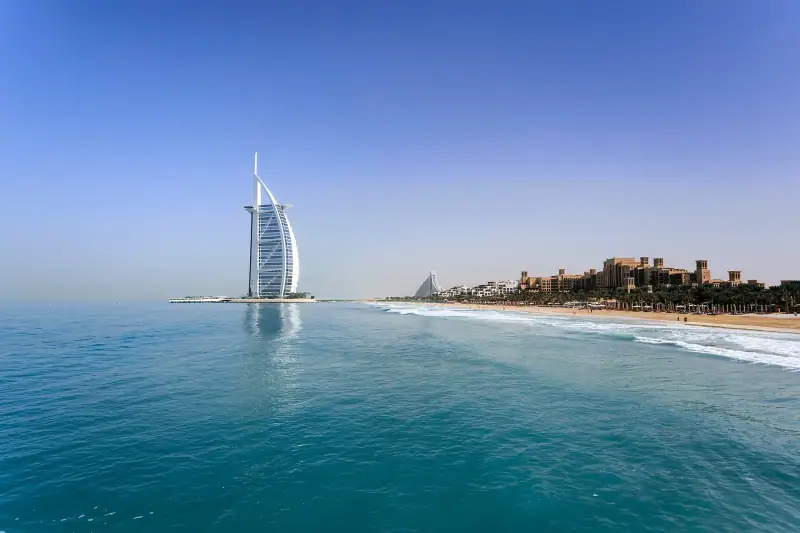
4 days
4 days in Dubai: a day-by-day itinerary for a first stay
A 4-day Dubai plan: Downtown and Burj Khalifa, old Dubai and the souks, Marina and Palm Jumeirah, and the desert. Transport, pacing and tips.