Plan your trip
When to go to Dubai: weather, seasons, Ramadan and the best time

We may earn a commission when you book through links on this page, at no extra cost to you. We don't visit or try the places we cover: we summarize published sources. How we work
In short
- The best time for sightseeing and the beach is November to March: sunny days around 24 to 30 °C (75 to 86 °F).
- April, May and October are a compromise; June to September is extreme, often above 40 °C (104 °F), with lower hotel rates.
- The sea is coolest in January and February (about 21 °C / 70 °F) and warmest in August (about 33 °C / 91 °F).
- Ramadan 2027 is expected to start around February 8 and end around March 8 or 9; dates are confirmed at the last moment.
Dubai can be visited all year, but the climate is so extreme that the choice of month completely changes the trip. In winter, you stroll outside, swim and dine on a terrace. In summer, you move almost exclusively between air-conditioned spaces. This guide details each season to help you set your dates.
In short: aim for November to March for sightseeing and beach time, April and October for a compromise, and keep summer for a trip centered on relaxing at the hotel, with a tighter budget.
November to March: the ideal high season
Dubai has a desert climate. According to common climate records, the January average ranges from about 15 °C (59 °F) at night to 24 °C (75 °F) by day, February from 16 to 25 °C (61 to 77 °F), and March from 18 to 28 °C (64 to 82 °F). Days are sunny, often cloudless, and evenings are cool enough that a light jacket is useful, especially in the desert where the gap between day and night is greater.
It is the ideal period for anything done outdoors: a walk through the lanes of the historic district, an abra crossing of the Creek, a visit to the souks, a beach day, a dune safari or a hike. It is also when crowds are biggest, especially during the end-of-year holidays: hotel prices climb and the best hotels fill up fast.
As for the sea, the water is coolest of the year: around 21 °C (70 °F) in January and February, and about 22 °C (72 °F) in March. Many travelers swim anyway, especially in hotel pools, sometimes heated in winter. If you want a warmer sea without suffering the heatwave, March and November are good in-between choices.
Where to stay in Dubai in winter
In high season, the best hotels go early: compare hotels for your dates and book ahead.
April, May and October: the shoulder seasons
In spring and fall, the heat rises sharply but remains bearable at the start and end of the day. October is often appreciated: the sea is still very warm (the Persian Gulf stays around 30 °C / 86 °F or more in the fall), prices are more reasonable than in December, and the crowds are smaller. Afternoons remain hot, however, and it is better to schedule outdoor visits for early morning or after sunset.
April feels like a pleasant end of the season, with the sea around 25 °C (77 °F), but days are already quite hot. May marks the tipping point: the sea warms up (about 28 °C / 82 °F), and air temperatures settle at a level where outdoor activities become unpleasant in the middle of the day.
For a stay mixing beach, shopping centers, restaurants and a few well-timed visits during the day, these months offer good value for money.
June to September: the extreme summer
From June to September, Dubai is very hot and humid. Climate sources indicate about 31 °C (88 °F) at the lowest and up to 42 °C (108 °F) at the highest in July and August, with often more than 40 °C (104 °F) during the day. The sea reaches about 31 °C (88 °F) in June, 32 °C (90 °F) in July and up to 33 °C (91 °F) in August: it does not really cool you down, but it remains pleasant for short swims.
Travelers who come in this period have a different trip: they favor museums, aquariums, shopping centers, indoor ski slopes and hotel pools, while outdoor outings are limited to the evening. Lodging rates are generally much lower than in winter, which lets you stay at a higher-end property for the same budget.
A few precautions apply: drink regularly, protect yourself from the sun, avoid long walks at midday and never leave anyone, child or pet, in a parked car.
Ramadan: a different kind of trip
Ramadan is the month of fasting in the Muslim calendar. For 2027, it is expected to start around Monday, February 8 and end around March 8 or 9, with Eid al-Fitr following from March 9 or 10 depending on the moon sighting. These dates are forecasts: they are confirmed at the last moment by the authorities.
During this period, the temperature remains pleasant, and tourist sites stay accessible. However, several rules of etiquette apply: avoid eating, drinking or smoking openly in the street during the day, dress modestly and keep music low. The hours of some restaurants, activities and shops change, and the atmosphere becomes quieter by day, then very lively after sunset, when families gather to break the fast.
Many visitors enjoy this atmosphere, and hotels sometimes offer lower rates than during the main holidays. If you come then, check the rules in force before you leave, especially for the restaurants and activities you have planned.
Tours and excursions in Dubai
Desert safari, cruise, tickets for the major sights: compare offers by season.
Which period for your plan?
The right month depends above all on what you want to do:
- Sightseeing, walks and a first stay: November to March, ideally February and March if you want to avoid Christmas prices.
- Beach and swimming: October, November, March and April combine pleasant water and bearable temperatures.
- Desert and outdoor activities: winter is by far the most comfortable. The rest of the year, favor sunrise or sunset.
- Tight budget: summer, June to September, with a stay focused on air-conditioned spaces.
- Family with kids: winter for ease, the shoulder seasons to cut the bill.
Day trips from Dubai, to Abu Dhabi or Sharjah for example, are possible all year, but more pleasant in winter.
Rain, wind and dust: what to know
It rarely rains in Dubai, and mostly in winter, but storms can be violent and cause traffic problems. Check the forecast before an excursion into the desert or the mountains. In addition, sandstorms or dust haze can reduce visibility on some days, especially from the top of skyscrapers: if the view from a tower is your priority, keep some flexibility in your schedule and, if possible, choose a clear day.
Booking tips
- Book early for December and January: flights and hotels are pricier and fill up faster.
- Compare dates: shifting a stay by a few weeks, for example from late December to late January, can change the price noticeably.
- Consider travel insurance: compare policies before you leave.
- Check entry rules before you go, including the validity of your passport. They depend on your passport, so check the official travel advice of your government: travel.state.gov (US), GOV.UK (UK), travel.gc.ca (Canada), Smartraveller (Australia) (checked November 2026).
In practice, November, February and March remain the months that suit most travelers. Choose one, book your hotels first, then build your days around the coolest moments.
Frequently asked questions
What is the best time to visit Dubai?
From November to March. Days are sunny and mild (around 24 to 30 °C / 75 to 86 °F depending on the month), which lets you sightsee on foot, enjoy the beaches and take a desert safari without suffering from the heat.
Can you go to Dubai in summer?
Yes, but the heat is extreme: more than 40 °C (104 °F) in July and August, with high humidity on the coast. You then spend most of your time indoors (shopping centers, museums, air-conditioned hotels), with generally lower lodging rates in return.
Can you swim in Dubai all year?
Yes. The Persian Gulf water drops to about 21 °C (70 °F) in January and February and rises to about 33 °C (91 °F) in August. It feels cool in midwinter to some people, and very warm in summer.
When is Ramadan in 2027?
Ramadan is expected to start around February 8, 2027 and end around March 8 or 9, with Eid al-Fitr following from March 9 or 10. Exact dates depend on moon sighting and are confirmed at the last moment by the authorities.
Is Ramadan a bad time to visit Dubai?
Not necessarily. Tourist sites stay open and the temperature is pleasant. However, you need to be discreet about eating, drinking or smoking in public during the day, and some restaurant and leisure hours change. The evening atmosphere is special, and many travelers enjoy it.
What is the best month for a desert safari?
The winter months, November to March, are the most comfortable. In summer, dune outings are generally scheduled late in the day because of the heat, and conditions can vary by operator.
Does it rain in Dubai?
Very rarely. The rare rainfall comes mostly in winter, briefly, but storms can be intense and disrupt traffic. Check the forecast before a safari or an excursion.
More Dubai guides
Keep reading
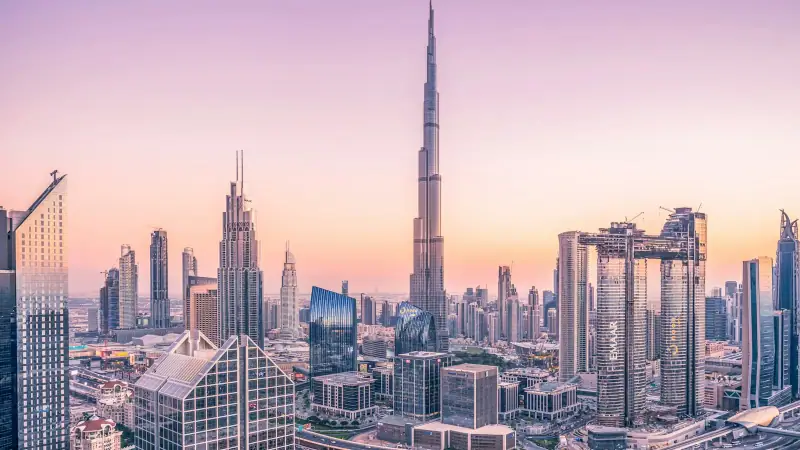
Dubai trip budget: real costs, 3 costed profiles and money-saving tips
How much to budget for Dubai? Costs by item (hotel, transport, meals, activities), three profiles in dirhams with euro and dollar equivalents, and tips.
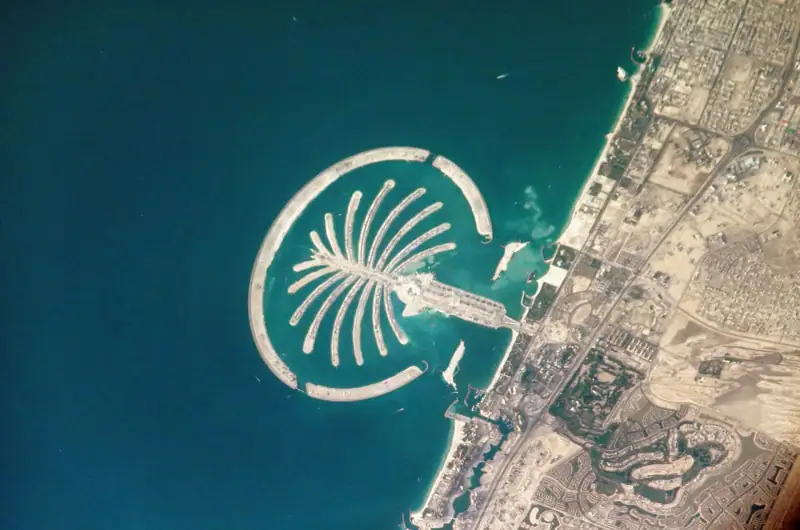
Visiting Palm Jumeirah: what to see and do on Dubai's palm-shaped island
Palm Jumeirah: Atlantis, Aquaventure, The Pointe, monorail, beaches and a viewpoint. Our guide to visiting Dubai's artificial island and planning your day.
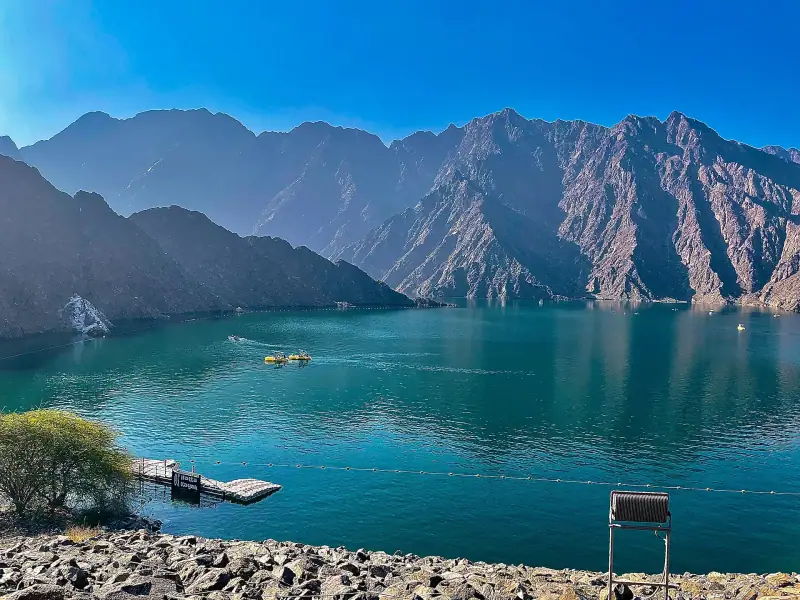
Visiting Hatta: what to see and do from Dubai
Hatta, Dubai's mountain enclave: dam and kayaking, heritage village, Wadi Hub, viewpoints and practical tips for a day trip.
Ready-made
Dubai itineraries
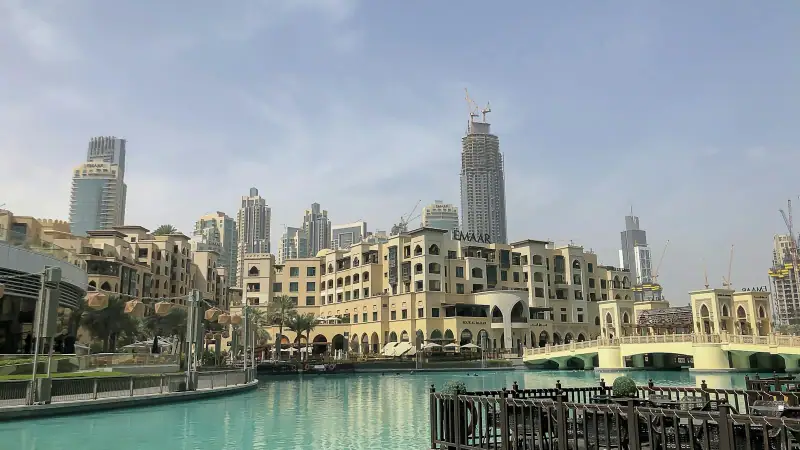
5 days
Dubai in 5 days with kids: stops, travel times and a realistic pace
Dubai in 5 days with children: a plan by area, distances and travel times, hotel breaks and ways to cope with the heat.
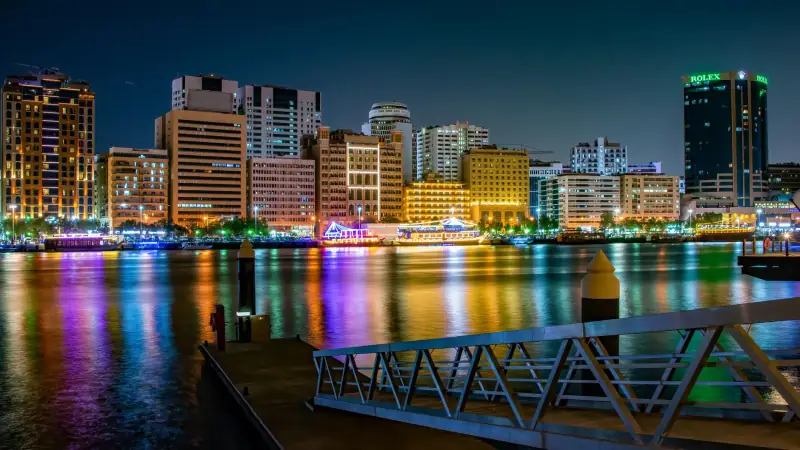
7 days
One week in Dubai: a day-by-day itinerary, from the modern center to the desert
Seven days in Dubai: Downtown, old Dubai, the coast, the desert, day trips to Abu Dhabi and Sharjah or Hatta. A day-by-day plan with transport and tips.
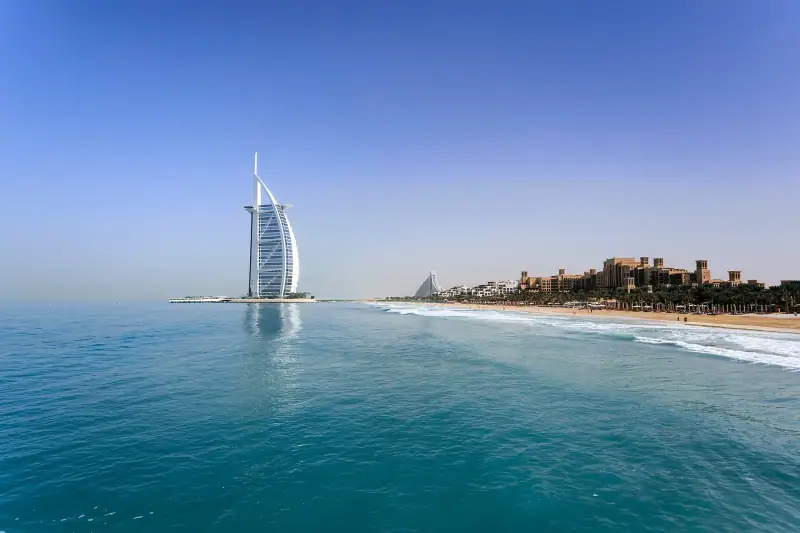
4 days
4 days in Dubai: a day-by-day itinerary for a first stay
A 4-day Dubai plan: Downtown and Burj Khalifa, old Dubai and the souks, Marina and Palm Jumeirah, and the desert. Transport, pacing and tips.