Things to do
Dubai desert safari: formats, how it runs and tips
We may earn a commission when you book through links on this page, at no extra cost to you. We don't visit or try the places we cover: we summarize published sources. How we work
In short
- The late-afternoon 4x4 safari is the classic; sunrise is calmer and cooler; a night at the camp suits those who want to see the starry sky.
- Allow five to seven hours in total, hotel pickup included, for a late-afternoon safari.
- Compare duration, group size and level of dune driving before booking, and check cancellation terms in case of wind or sandstorm.
- Bring light, covering clothes, sunglasses, a scarf against dust and a warm layer for the evening.
The desert is among the most anticipated experiences of a trip to Dubai. Less than an hour by road from the skyscrapers, orange sand dunes offer a setting radically different from the city. But “safari” covers very different formats: a sporty 4x4 outing, a quiet evening with dinner, a sunrise or a night in a tent. This guide helps you choose and get ready.
In short: the late-afternoon safari is the most classic, sunrise is calmer and cooler, and the night at the camp suits those who want to see the starry sky. Always compare duration, group size and level of driving.
Where the safari takes place: the Dubai Desert Conservation Reserve
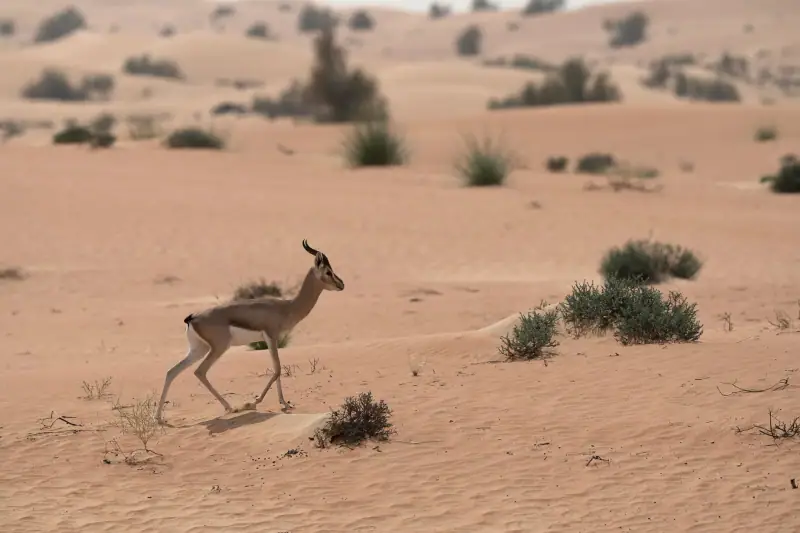
A large part of safaris takes place in the Dubai Desert Conservation Reserve, a reserve of about 225 km² (87 sq mi) created in the early 2000s, which represents about 5% of the emirate’s territory. It is home to Arabian oryx, gazelles and many birds, reptiles and insects. Only a small part of the reserve is open to tourism, under control, with professional guides.
In practice, this means the 4x4s follow defined zones and routes, and you see animals mostly from afar and by luck. Do not count on a guaranteed sighting: wildlife is elusive, especially in the hot hours. Some operators work outside the reserve, in other desert areas of the emirate: the experience is similar, but the protected setting is a plus for travelers who care about the environment.
The late-afternoon 4x4 safari: the classic format
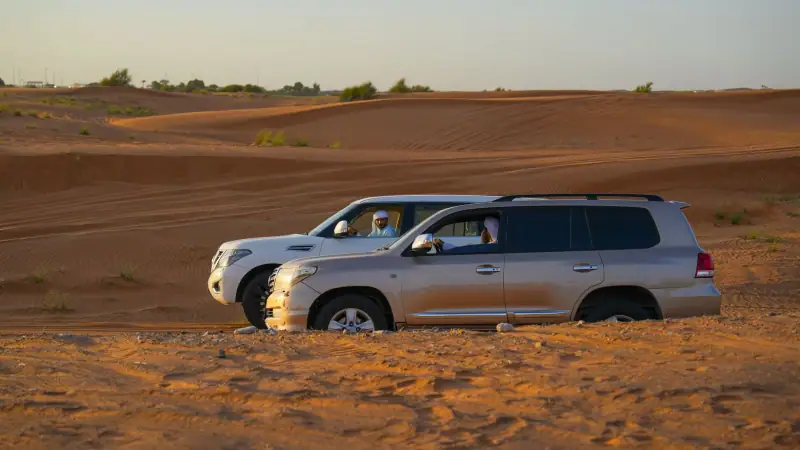
This is the format you find most often. A driver-guide picks you up at the hotel in mid or late afternoon, then you drive to the dunes. The program generally includes:
- driving over the dunes in a 4x4 (“dune bashing”), with climbs, descents and slides;
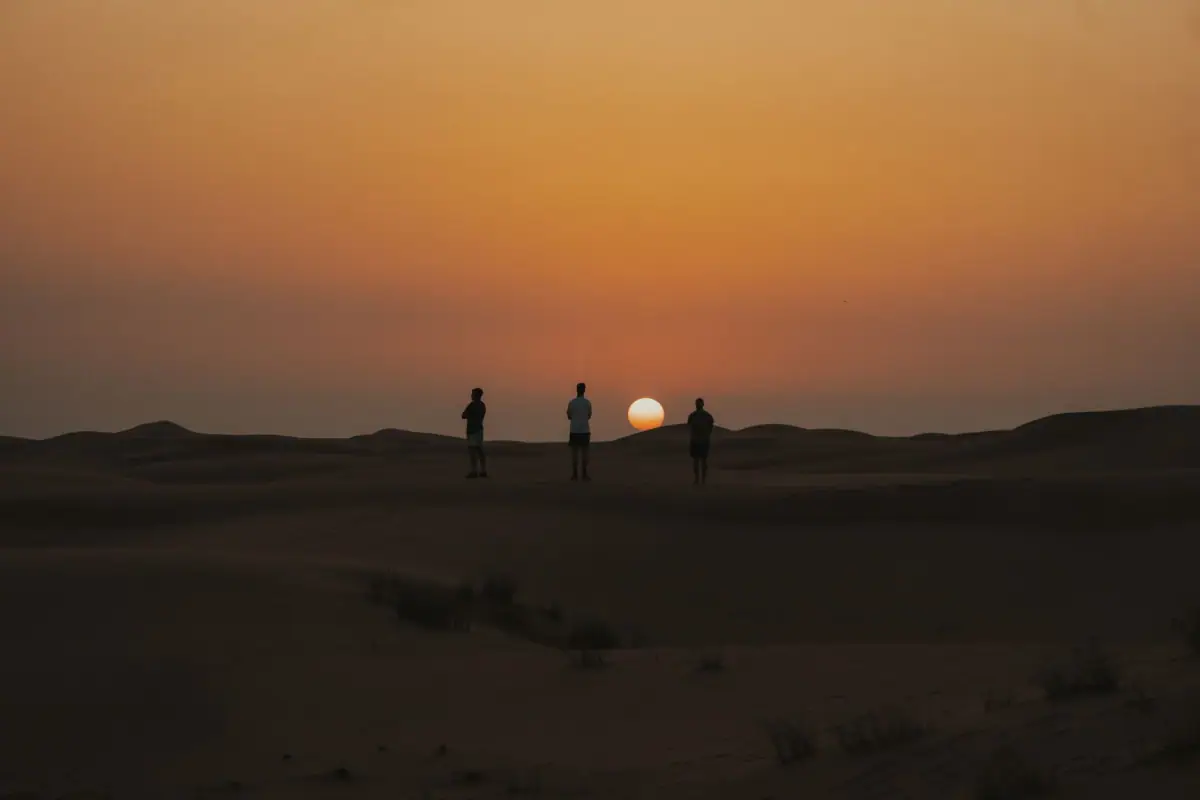
- a stop to admire the sunset and take photos;
- arrival at a Bedouin-style camp, with rugs, cushions and cardamom tea or coffee;
- a barbecue-style dinner and, depending on the camps, dance or music shows;
- the return to the hotel in the evening.
Allow five to seven hours in total, transfers included. The level of driving varies a lot from one operator to another: some favor big thrills, others gentler driving. If you prefer a gentler ride, tell the guide from the start and ask about seating.
Desert safari from Dubai
Dune driving in a 4x4, sunset and camp dinner: compare formats, times and cancellation terms.
Camp activities: camel, sandboarding, henna and falconry
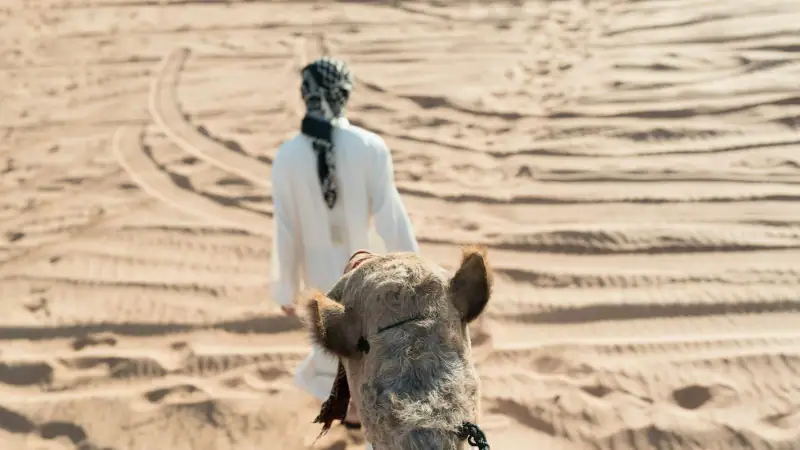
Once at the camp, most formats offer optional activities, sometimes included in the price, sometimes extra:
- Camel ride: short, often a few minutes, more a photo moment than a real trek.
- Sandboarding: you slide down the sand on a board, like a sled. It is fun, but you climb the dune back on foot, under the still-hot sun.
- Henna: artists paint designs on the hands, with a result that lasts a few days.
- Traditional outfits: you can try on a local garment for photos.
- Falconry: some camps present birds of prey, an important cultural symbol in the region.
Dance shows vary by camp. They are designed for visitors: enjoy them as entertainment rather than as an authentic look at Bedouin life.
Other formats: sunrise, quad, hot air balloon and a night at the camp
If the evening safari does not suit you, other options exist:
- Sunrise safari: this is the coolest format, with soft light and fewer people. It suits photographers and families who prefer to avoid late nights.
- Private safari: a 4x4 for your group only, with a more flexible route. Pricier, but practical for families or couples.
- Quad or buggy: to drive yourself over the dunes, generally in a dedicated area and with a safety briefing.
- Hot air balloon flight: offered at dawn over the desert, often with breakfast. Flights depend on the weather and can be canceled if the wind is too strong.
- Night at the camp: dinner, a night in a tent and breakfast, to enjoy the silence and the stars far from the city lights.
On a trip of a few days, the classic late-afternoon safari fits easily into the program, as in our 4-day Dubai itinerary.
Where to stay in Dubai?
Compare hotels for your dates and area. A well-placed hotel simplifies the safari meeting point.
When to go on a desert safari
The ideal season runs from November to March, when temperatures are comfortable and evenings cool. It is also when the camps are busiest: book ahead if you want a specific time. The details by month are in our guide to choosing the best time to go to Dubai.
In summer, the heat is very strong by day. Outings are then late in the day or at dawn, and some activities are adapted or dropped. During Ramadan, formats keep running, but meals and shows may be adjusted: ask the operator.
Getting ready for your safari: dress and respect for the place
A few simple tips make the difference:
- Wear light, covering clothes, with a scarf or shemagh to protect your face from dust.
- Bring sunglasses, sunscreen and a warm layer: the temperature drops noticeably after sunset.
- Choose closed shoes or ones that are easy to remove, because sand gets hot and gets everywhere.
- Protect your phone and camera from dust with a pouch.
- If you are pregnant or have back or neck problems, check the operator’s conditions before booking.
- Do not leave trash in the desert and do not leave the group: landmarks are rare and dunes look alike.
Children can generally take part, with child seats depending on the operator. Compare age conditions before booking.
Booking: prices, what is included and traps to avoid
Prices vary by format, season and number of participants. A group safari is generally the cheapest, while a private safari or a night at the camp costs noticeably more. Before booking, check:
- what is included: hotel transfer, dinner, drinks, camp activities;
- the real duration, and not only the announced departure time;
- the group size and the number of vehicles on the road;
- the cancellation terms, in case of bad weather;
- recent traveler reviews, more useful than the commercial description.
Beware of very cheap offers that rely on purchases or extras once you are there. A serious format clearly states what is included. Some operators also offer transfers from several neighborhoods: check that your hotel is served.
Combining the safari with the rest of your trip
The desert is best visited in the evening, after a day of visits in Downtown or by the sea. If you are undecided about the neighborhood, our guide where to stay in Dubai compares the areas. For a full day outside Dubai, the day trip to Abu Dhabi complements the program well.
If you want to explore the surroundings freely, a rental vehicle can be handy, but dune driving is best left to professionals: for the desert, go with a guide.
Hot air balloon and sunrise experiences
Dawn flight over the desert, morning safari or camel ride: compare offers and cancellation terms.
Practical tips
- Bring water, even if the camp provides some, and drink before you are thirsty.
- Keep small bills for tips, photos and any purchases.
- Tell the operator about dietary needs when booking: dinner is often a barbecue buffet.
- Keep some margin in your schedule: a sandstorm or wind can delay or cancel an outing.
- For travel insurance covering activities, check the coverage before you leave.
A well-chosen safari makes for a lasting memory: the silence of the dunes, the evening light and the contrast with the city. Take the time to compare formats, and choose the one that suits your pace rather than the most spectacular one on paper.
Frequently asked questions
How long does a desert safari from Dubai last?
A late-afternoon safari generally lasts between five and seven hours, hotel transfers included. Morning formats are often a bit shorter, while nights at the camp span two days.
What is the best time of year for a desert safari?
From November to March, temperatures are pleasant, especially in the evening. In summer, the heat is extreme by day: outings remain possible late in the day or at dawn, but some activities are reduced or adapted.
What are the conditions for children and pregnant women on a desert safari?
Children are often accepted, with a gentler format if possible. For pregnant women and people with back or neck problems, check each operator's conditions before booking.
Do you need to book ahead?
It is preferable in high season, from November to March, to choose the time and format. Check the cancellation terms, because an outing can be changed in strong wind or sandstorm.
What should you wear for a desert safari?
Light, covering clothes, sunglasses, a scarf against dust and a warm layer for the evening. Closed shoes are useful for walking in sand.
More Dubai guides
Keep reading
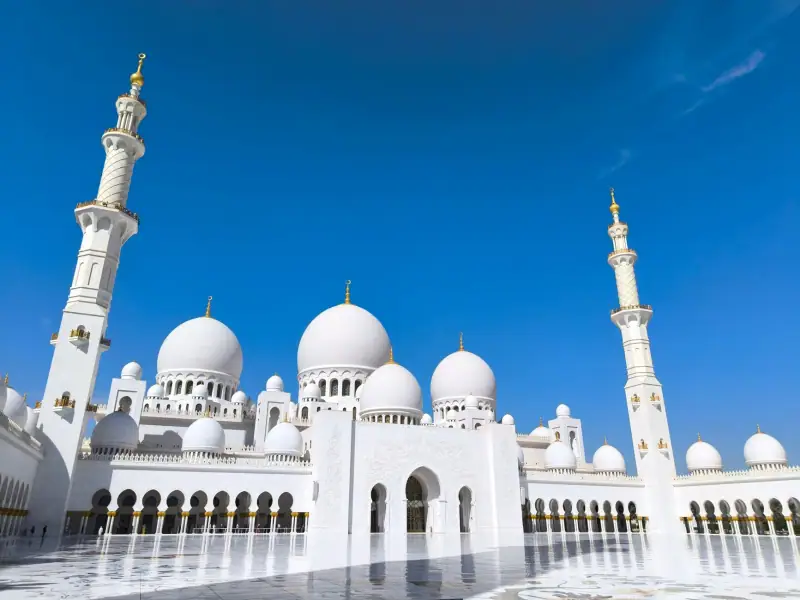
Abu Dhabi day trip from Dubai: mosque, Louvre and logistics
Visit Abu Dhabi in a day from Dubai: the trip, Sheikh Zayed Grand Mosque, Louvre Abu Dhabi, Yas Island, required dress, guided tour or own transport.

Dubai trip budget: real costs, 3 costed profiles and money-saving tips
How much to budget for Dubai? Costs by item (hotel, transport, meals, activities), three profiles in dirhams with euro and dollar equivalents, and tips.
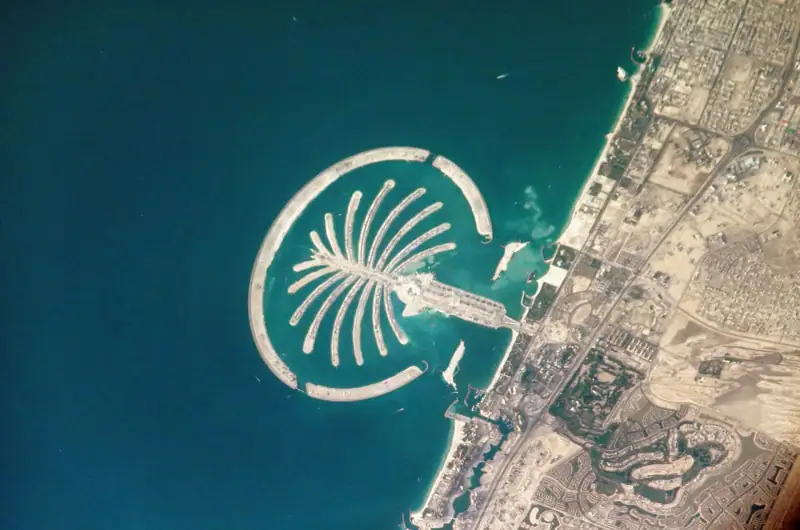
Visiting Palm Jumeirah: what to see and do on Dubai's palm-shaped island
Palm Jumeirah: Atlantis, Aquaventure, The Pointe, monorail, beaches and a viewpoint. Our guide to visiting Dubai's artificial island and planning your day.
Ready-made
Dubai itineraries
5 days
Dubai in 5 days with kids: stops, travel times and a realistic pace
Dubai in 5 days with children: a plan by area, distances and travel times, hotel breaks and ways to cope with the heat.

7 days
One week in Dubai: a day-by-day itinerary, from the modern center to the desert
Seven days in Dubai: Downtown, old Dubai, the coast, the desert, day trips to Abu Dhabi and Sharjah or Hatta. A day-by-day plan with transport and tips.

4 days
4 days in Dubai: a day-by-day itinerary for a first stay
A 4-day Dubai plan: Downtown and Burj Khalifa, old Dubai and the souks, Marina and Palm Jumeirah, and the desert. Transport, pacing and tips.