What to see
Visiting Deira: what to see and do in Dubai
We may earn a commission when you book through links on this page, at no extra cost to you. We don't visit or try the places we cover: we summarize published sources. How we work
In short
- Deira is best visited on foot, early in the morning or late in the day; allow half a day for the souks and the Creek, a full day with museums and a food stop.
- The abra crossing of the Creek costs a nominal fare of about 1 dirham per person and takes a few minutes.
- For gold, the price is the weight times the day's gold rate plus a making charge; negotiation mostly concerns the making charge.
- The green-line metro serves Union, Baniyas Square, Palm Deira and Al Ras; Al Ras is the most convenient for the gold and spice souks.
When you think of Dubai, you first imagine glass towers and giant shopping malls. Yet it is on the northeast bank of the Creek, in Deira, that the city took off commercially. People still come here to buy gold, spices or fabric, cross the inlet by boat and walk in lanes where you hear as much Hindi, Persian or Urdu as Arabic.
In short: Deira is best visited on foot, early in the morning or late in the day. Allow half a day for the souks and the Creek, a full day with museums and a food break, and keep the hottest hours for an air-conditioned place.
Deira, the trading center of Dubai
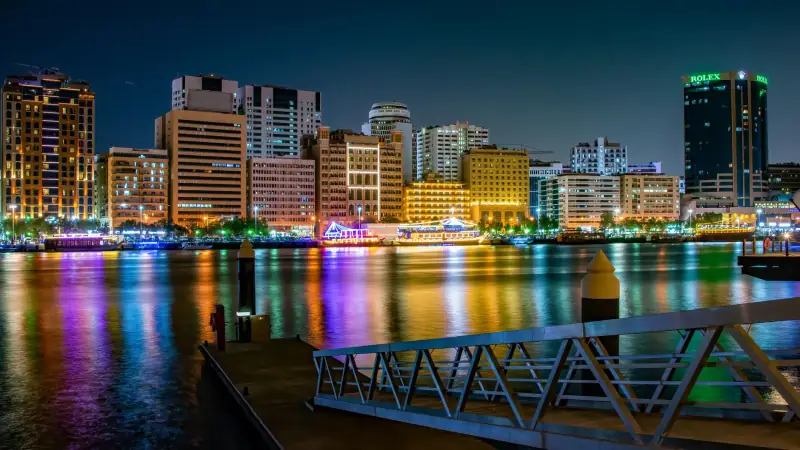
Deira stretches along the northeast bank of Dubai Creek, an inlet that reaches inland from the Persian Gulf. Opposite, on the other bank, is Bur Dubai. For decades, the two banks were linked only by boats, before the arrival of bridges, tunnels and the metro. This past explains the district’s role: Deira is above all a place of exchange, where merchants from all over the region settled to sell gold, spices, textiles and everyday goods.
The district is also more working-class than the postcard version of Dubai. You find buildings from the 1970s to the 1990s, wholesale signs, currency exchange offices, small electronics shops and countless family restaurants. This density is part of its charm, but takes some getting used to: crowded sidewalks, heavy traffic, and a rhythm very different from Downtown’s.
To place Deira in a wider old Dubai route, our article on the Creek, Al Fahidi and the souks also covers the Bur Dubai bank. Here, we focus on what you can do on the Deira side.
The gold souk: a glittering showcase
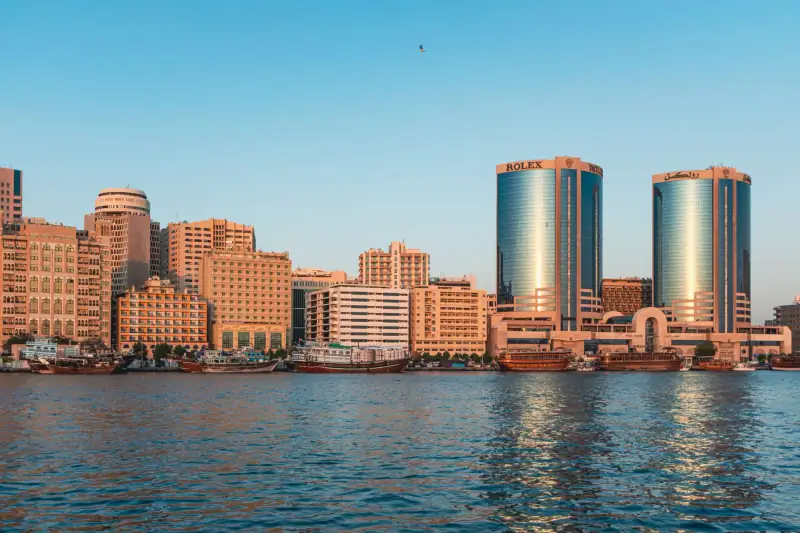
Guided tour of the souks and the Creek
A local guide explains the history of the souks and the gold and spice trade. Compare formats, durations and cancellation terms.
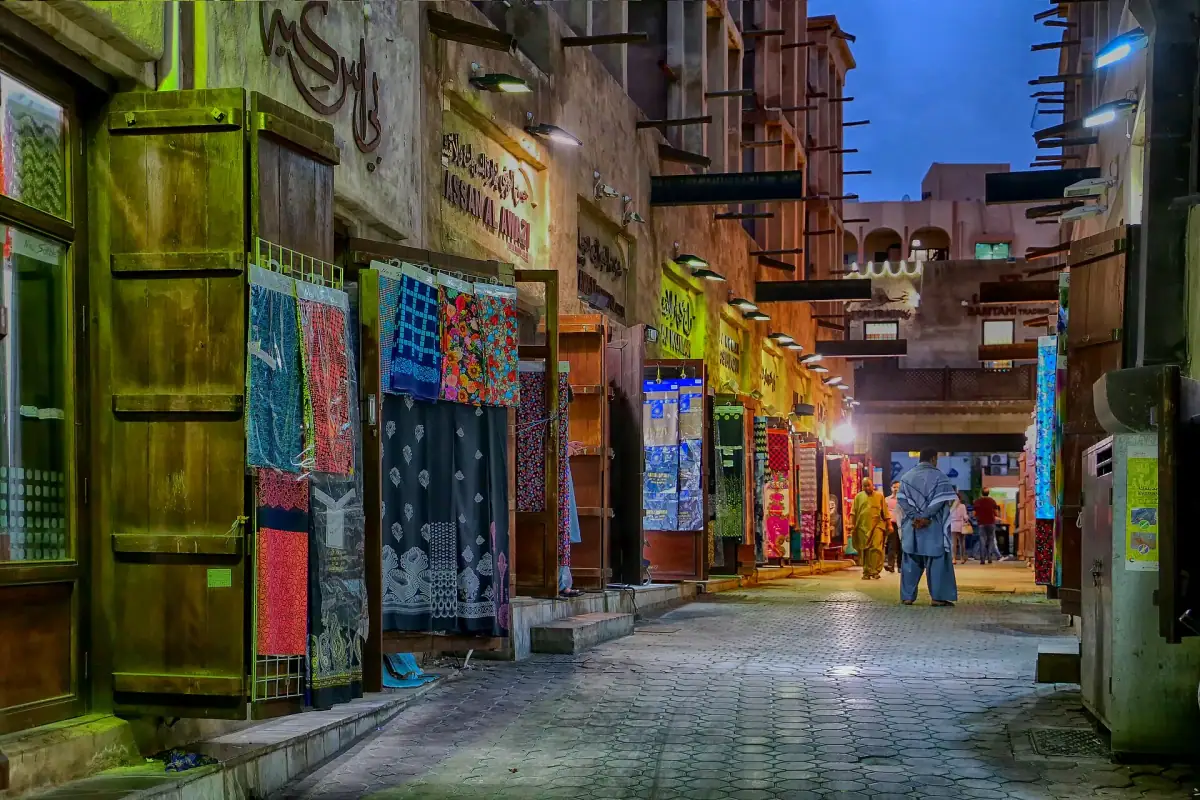
The Deira gold souk is the district’s most famous image. Its covered lanes are lined with windows filled with necklaces, bracelets, rings and wedding sets in yellow gold, but also in white gold and precious stones. Sources vary on the exact number of shops, but people speak of several hundred jewelers grouped in a relatively compact space. Even without buying anything, the walk is worth the detour for the atmosphere and the glitter of the windows.
How does buying a piece of gold work? The price is based on the weight of the piece, multiplied by the day’s gold rate, plus a making charge, that is, the craftsman’s work. The making charge varies with the complexity of the piece. Negotiation mostly concerns this charge, rarely the rate itself. A few simple habits:
- compare at least three shops before deciding;
- ask for the exact weight of the piece, the purity of the gold (the karat) and the price breakdown;
- keep the invoice, useful in case of inspection or resale;
- check the customs rules of your country for bringing back valuable jewelry.
In the evening, when the heat drops and the windows light up, the atmosphere is at its most pleasant. The morning is calmer, and sellers have more time to chat. Do not hesitate to decline politely: most merchants accept a “no, thank you” without insisting.
The spice souk and the Old Souk
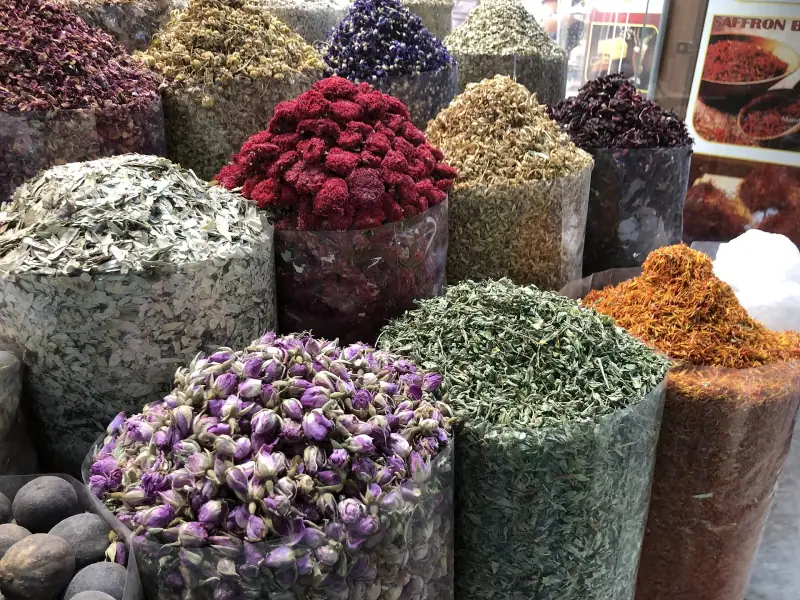
Near the gold souk, the spice souk occupies lanes where the smell reaches you before you even see the stalls. Saffron, cardamom, cinnamon, turmeric, chili, black dried lime, incense and resins pile up in open sacks or jars. You also come across henna, dried herbs and ready-made blends for Gulf dishes.
The souk is a few steps from the Old Souk landing, where you take the abra to reach Bur Dubai, so it is easy to combine the souks and the crossing. When buying:
- taste or smell before choosing, most sellers offer a sample;
- ask for small quantities if you simply want to bring back a few souvenirs;
- check that the bags are properly closed for the trip, and check what can go in luggage depending on your destination;
- beware of “cheap saffron” offers: compare color, scent and threads, and accept that good saffron is expensive.
If you want to understand what you are buying and how these spices are cooked, our article What to eat in Dubai gives pointers on local cuisine and dishes to try.
The abra crossing of the Creek
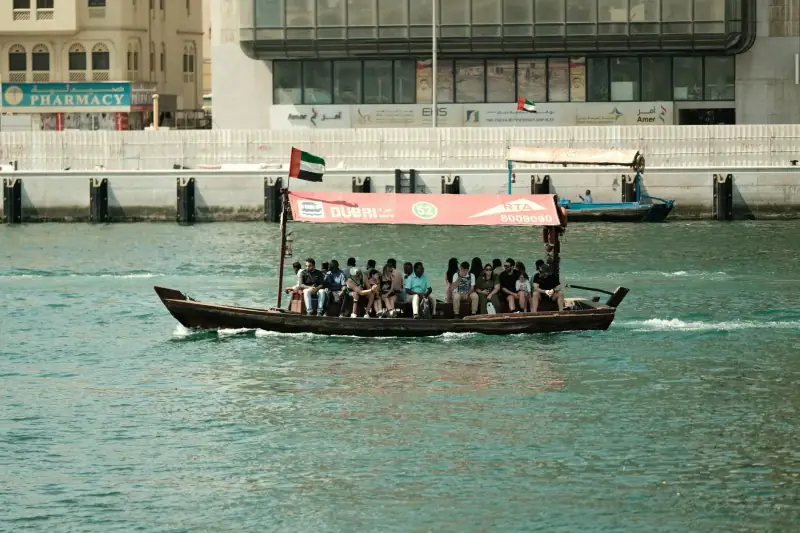
The abra is a motorized wooden boat that carries about twenty passengers at a time across the Creek. In Deira, the Old Souk landing is the most convenient departure point to reach Bur Dubai, on the other side of the water. The crossing takes a few minutes and the fare is nominal, around 1 dirham per person for a standard abra. Always check the posted price, which can change.
It is one of the most authentic and cheapest experiences in Dubai. The boat is no tourist attraction: residents, merchants and visitors rub shoulders on board, and the city goes by at water level. A few tips:
- payment is made on board or at the landing, preferably in small change;
- the boat leaves when full, so expect a short wait in off-peak hours;
- sit down without rushing: the boat is low, so move gently;
- keep your camera handy, but watch out for splashes and direct sunlight.
For exact hours and terms, ask at the landing or the local transport operator, because schedules may change.
The dhow wharves and the waterfront promenade
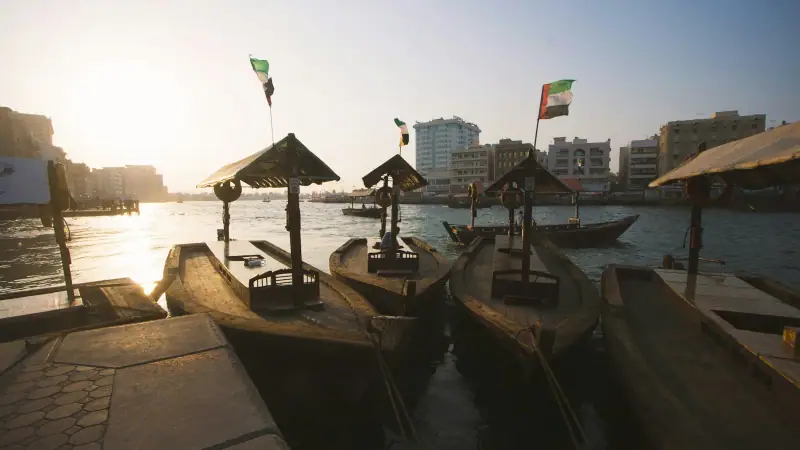
Along the Creek, on the Deira side, wooden dhows are moored side by side. These traditional boats still serve regional trade: all sorts of goods are loaded and unloaded there, from everyday consumer goods to household appliances. A stroll along the wharves lets you see this trade at work, far from air-conditioned shop windows.
This walk is more pleasant in the late afternoon. The light turns golden, the heat drops and the silhouettes of the dhows stand out against the water. Respect the crews’ work: ask before photographing a person, and do not board a boat unless invited. These wharves are workplaces before they are a backdrop.
Dhow cruise on the Creek
To see Deira from the water, compare traditional dhow cruises on the Creek, their times and cancellation terms.
If you want to stay on the water longer than a simple crossing, a dhow cruise on the Creek offers another view of the district, especially at sunset. Formats vary (a simple ride or dinner on board): read the description, departure times and cancellation terms carefully before booking.
Heritage House and Al Ahmadiya School
In the Al Ras district, two heritage sites stand side by side on Al Ahmadiya Street: the Heritage House and the Al Ahmadiya School. The first is a traditional house that shows how a well-off Dubai family lived before the oil boom: inner courtyard, rooms around a central space, simple furniture. The second is considered one of the city’s first schools and shows the importance of education and trade in the society of the time.
These visits are short (one hour is enough for both) and offer a welcome break between two souk sessions. Published sources generally indicate free or very low admission, but hours differ from one site to another, and the school may have been closed for renovation. Check the information on the official Dubai Culture website or on arrival before going.
These places are especially worthwhile if you like traditional Gulf architecture. With their thick walls and inner courtyards, these houses were designed to stay cool without air conditioning, a principle also found in the Al Fahidi district on the other side of the Creek.
Naif and the shopping lanes
North of the gold souk, the Naif district (home to the Baniyas Square station) has markets that are more everyday than touristy: clothing, perfume, accessories, electronics, gifts. The atmosphere is that of a working-class city center, with tight stalls and a dense crowd in the evening. It is a good place to buy souvenirs at low prices, from a scarf to a spare suitcase, and to see everyday life in the district.
Do not expect a polished setting: Naif appeals through its spontaneity. Keep your belongings in front of you in the crowd, as in any busy market, and bargain with a smile. If an offer does not suit you, simply move on. For how to behave and dress, read our rules and customs to know in Dubai.
A food break in Deira
Deira is one of the best places in Dubai to eat well and cheaply. The district has many family restaurants serving Indian, Pakistani, Iranian, Filipino, Lebanese or Emirati food, where you eat on the go or in a dining room, often at prices well below those of the big hotels. Look for places frequented by residents: quick service, a simple menu and high turnover are good signs of freshness.
A few ideas for what to try, without naming a specific restaurant:
- a dish of grilled fish or a biryani in a casual restaurant;
- mezze, hummus and warm bread at a Lebanese restaurant;
- Arabic coffee with cardamom or milk tea (karak);
- pastries and dates, to bring back as gifts.
Food tour in old Dubai
Taste the region's specialties with a guide: compare old Dubai food tours, their durations and cancellation terms.
A food tour is a good way to taste several dishes without having to choose among dozens of restaurants on your own. If you visit during Ramadan, be mindful: many restaurants close during the day and reopen at sunset, and you are asked not to eat or drink in public during fasting hours.
Deira Islands: the future of the district
The name Deira also refers to a large offshore development project, Deira Islands, built off the historic district. It plans artificial islands with hotels, residences, shops and leisure areas. Work is progressing in phases. The Palm Deira metro station takes its name from the project, but it is in historic Deira, between Baniyas Square and Al Ras, and does not serve the islands.
For a visitor, the main thing is not to confuse the two: historic Deira, with its souks, wharves and lanes, is the one that can be visited today. The new islands are mainly for those who want to see how the city keeps expanding. Check progress and access before making them a destination.
Getting to Deira and getting around
Deira is well served. The Dubai metro (green line) has several stations in the district, including Union, Baniyas Square, Palm Deira and Al Ras. The latter is the most convenient for reaching the gold and spice souks on foot. Dubai International Airport is on the Deira side, which makes the district convenient for a late arrival or an early departure.
Taxis remain simple and inexpensive, but beware of traffic at rush hour: central Deira is often jammed in the late afternoon. Once there, you get around on foot, with a few abra crossings. Our guide to getting around Dubai covers the Nol cards, the lines and the alternatives.
A small logistics tip: the best way to combine Deira and Bur Dubai is to start on the Deira side in the morning, cross by abra around midday, then visit Al Fahidi and the souks on the other bank in the afternoon. This way you avoid the strongest heat in uncovered streets.
Where to stay in Deira
Hotels in Deira
Close to the souks, the metro and the airport: compare Deira hotels for your budget and dates.
Staying in Deira is a choice of proximity. You are near the souks, metro stations and the airport, with a range of hotels from budget to more comfortable properties on the Creek. Prices are generally lower than in Downtown or the Marina, which makes it a good option for a short stay or a tight budget.
In return, the district is dense and urban: few green spaces, no beach in the immediate vicinity, and steady traffic. If you want to be by the sea, look instead at our guide to where to stay in Dubai. To gauge the overall cost of the trip, also see our budget for Dubai.
Practical tips for visiting Deira
When to go. From November to March, temperatures are most pleasant for walking. In summer, go in the early morning or evening, and spend midday in an air-conditioned place. Our article on the best time to go to Dubai will help you choose.
What to wear. Light but covering clothing, with shoulders and knees covered, is appropriate in the souks. Add comfortable shoes, a hat and a water bottle.
Money. Keep a little cash for small purchases, the abra and the stalls. Many shops accept cards, but bargaining is easier in cash.
Safety. Dubai has a reputation for being safe, but very busy markets call for the usual vigilance: keep your bag in front of you and your phone secure.
Photos. Photographing a building or a stall is generally fine. Always ask permission before photographing a person, particularly women.
Mobile internet in Dubai
Saily offers eSIM plans in more than 150 countries: check the offer for the United Arab Emirates before you leave.
Staying connected makes everything easier: navigating the lanes, calling a taxi, translating a menu. To compare options, see our guide on SIM cards and eSIMs in Dubai.
A half-day itinerary in Deira
Here is a simple outline, to adapt to the season and your pace:
- Early morning: arrive by metro at Al Ras station, then stroll through the lanes of the gold souk.
- Mid-morning: pass through the spice souk, buy small souvenirs, taste if offered.
- Late morning: abra crossing from the Old Souk landing to Bur Dubai.
- Lunch: a break in a casual restaurant on either bank, ideally one frequented by residents.
- Afternoon: Heritage House and Al Ahmadiya School if you stay in Deira, or Al Fahidi if you crossed.
- End of day: stroll along the dhow wharves, then return by metro or taxi.
This itinerary fits well into a longer trip: you can place it on one of the days of our 4-day Dubai itinerary.
Should you visit Deira?
Yes, if you want to see a Dubai that is not trying to impress. Deira offers neither a height record nor an amusement park, but a succession of everyday scenes: a spice seller letting you smell saffron, merchants chatting in the shade of a porch, an abra crossing the water, a dhow being loaded at nightfall.
It is also an inexpensive visit, which balances out costlier stops on a trip. If you are short of time, focus on the gold souk, the spice souk and the abra crossing: in three or four hours, you will get the spirit of the district. And if you have more time, wander the lanes with no strict program.
Frequently asked questions
Where is Deira and why visit it?
Deira occupies the northeast bank of Dubai Creek, facing Bur Dubai. It is the city's historic trading district: gold and spice souks, wharves where dhows moor and lively lanes. It is a Dubai very different from the Downtown skyscrapers.
How much time should you allow for Deira?
Half a day is enough for the souks, the abra crossing and a lunch break. With the Heritage House and a stroll along the Creek, allow a full day, splitting visits between the morning and the late afternoon.
How do you get to Deira from central Dubai?
The metro (green line) serves several stations in Deira, including Al Ras, Baniyas Square, Palm Deira and Union. Taxis remain a simple option, but traffic can be dense at rush hour. See our getting-around guide to compare options.
Can you bargain in the Deira souks?
Yes, bargaining is customary for souvenirs, fabrics and spices, as long as it is done courteously. For gold, the price depends on the weight and the day's rate, to which the making charge is added: compare several shops before buying.
How much does the abra crossing of the Creek cost?
The fare is nominal, around 1 dirham per person for a standard abra. The crossing takes a few minutes between Deira and Bur Dubai. Check the fare posted at the landing.
Is Deira a good area to stay in?
It is a good choice if you want to stay close to the souks, the metro and the airport, with prices generally lower than in Downtown or the Marina. In return, the atmosphere is urban and dense, with no beach nearby.
What should you wear to visit Deira?
Light but covering clothing, with shoulders and knees covered, is recommended in the souks and residential areas. Bring comfortable walking shoes and a hat or sunglasses outside the covered lanes.
More Dubai guides
Keep reading
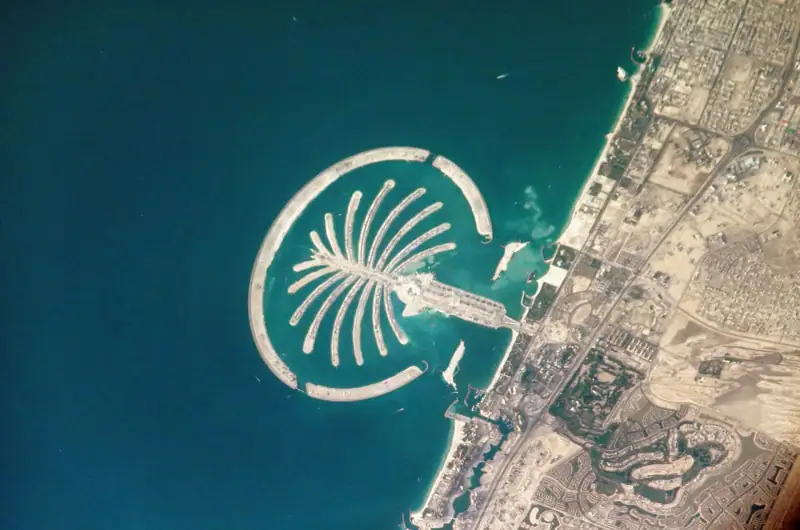
Visiting Palm Jumeirah: what to see and do on Dubai's palm-shaped island
Palm Jumeirah: Atlantis, Aquaventure, The Pointe, monorail, beaches and a viewpoint. Our guide to visiting Dubai's artificial island and planning your day.
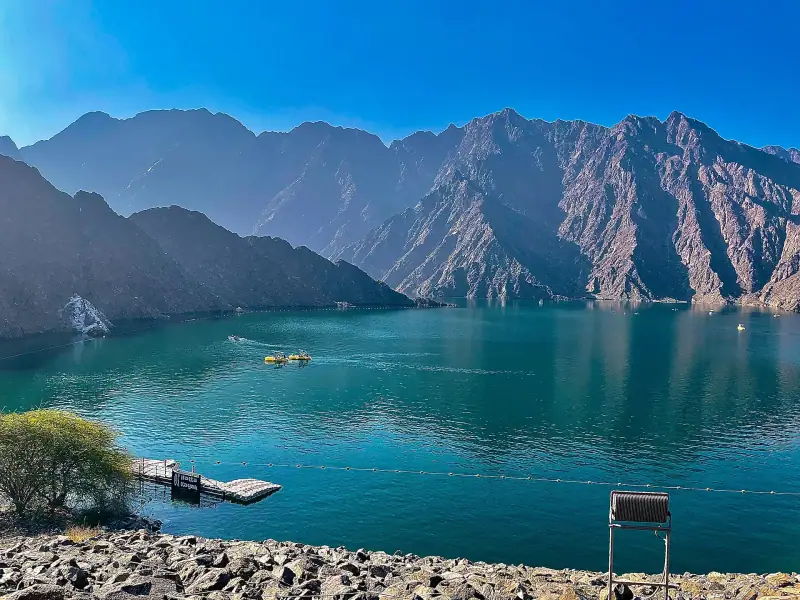
Visiting Hatta: what to see and do from Dubai
Hatta, Dubai's mountain enclave: dam and kayaking, heritage village, Wadi Hub, viewpoints and practical tips for a day trip.
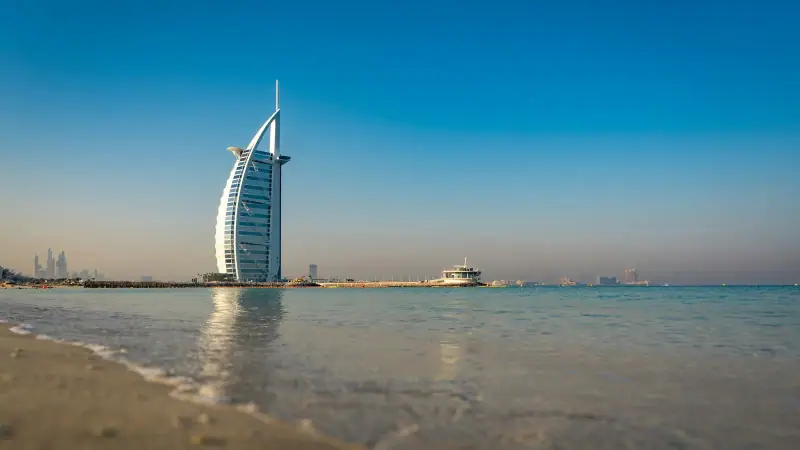
Visiting Jumeirah: what to see and do
Jumeirah, Dubai's residential waterfront: public beaches, mosque, Burj Al Arab, Kite Beach, La Mer. Our guide to planning your visit.
Ready-made
Dubai itineraries
5 days
Dubai in 5 days with kids: stops, travel times and a realistic pace
Dubai in 5 days with children: a plan by area, distances and travel times, hotel breaks and ways to cope with the heat.
7 days
One week in Dubai: a day-by-day itinerary, from the modern center to the desert
Seven days in Dubai: Downtown, old Dubai, the coast, the desert, day trips to Abu Dhabi and Sharjah or Hatta. A day-by-day plan with transport and tips.
4 days
4 days in Dubai: a day-by-day itinerary for a first stay
A 4-day Dubai plan: Downtown and Burj Khalifa, old Dubai and the souks, Marina and Palm Jumeirah, and the desert. Transport, pacing and tips.