What to see
Visiting Jumeirah: what to see and do
We may earn a commission when you book through links on this page, at no extra cost to you. We don't visit or try the places we cover: we summarize published sources. How we work
In short
- Jumeirah is a long coastal strip southwest of central Dubai, not a single neighborhood; do not confuse it with the artificial island Palm Jumeirah.
- Half a day covers the mosque, a beach and the Burj Al Arab in photos; a full day adds La Mer, a museum and a sunset.
- Non-Muslim visitors can enter the Jumeirah Mosque only on guided tours; check slots and wear covering clothes.
- Taxi or ride-hailing is the simplest way to link the sights; the Burj Al Arab itself is for guests and people with a reservation.
When you think of Dubai, you imagine skyscrapers and giant shopping malls. Jumeirah shows another side of the city: a residential shoreline, with long sandy beaches, low villas, neighborhood cafés and, at the end of the coast, the sail-shaped silhouette of the Burj Al Arab. It is where residents come to run, picnic and watch the sun set over the Persian Gulf.
In short: start with the mosque in the morning, enjoy a swim on a public beach, have lunch in a neighborhood café, then end the day facing the Burj Al Arab. Here is how to organize it, with the best places and the mistakes to avoid.
Jumeirah: a coastal strip, not a single neighborhood
The name Jumeirah actually refers to a long coastal ribbon stretching southwest of downtown. It is divided into several numbered areas (Jumeirah 1, 2, 3, then Umm Suqeim), which you travel along a major road parallel to the sea, Jumeirah Beach Road. The further west you go, the closer you get to the Burj Al Arab, the Marina and Palm Jumeirah.
To avoid any confusion: Palm Jumeirah is a palm-shaped artificial island with its luxury hotels, while Jumeirah in the strict sense is the mainland shoreline, calmer and more residential. The word “Jumeirah” is also the name of a local hotel chain, which adds to the confusion (Jumeirah Beach Hotel, Madinat Jumeirah, etc.). If you are looking for a place to stay, check the exact location before booking. Our comparison where to stay in Dubai places Jumeirah relative to the other areas.
What sets Jumeirah apart from Downtown or the Marina is the pace. Here there are few towers: low buildings, villas, tree-lined streets and open beaches. It is an excellent counterpoint to a day spent in shopping centers. For the vertical side of the city, see the Burj Khalifa and Downtown Dubai; for the historic side, old Dubai, the Creek and the souks.
The Jumeirah Mosque: a visit to understand local culture
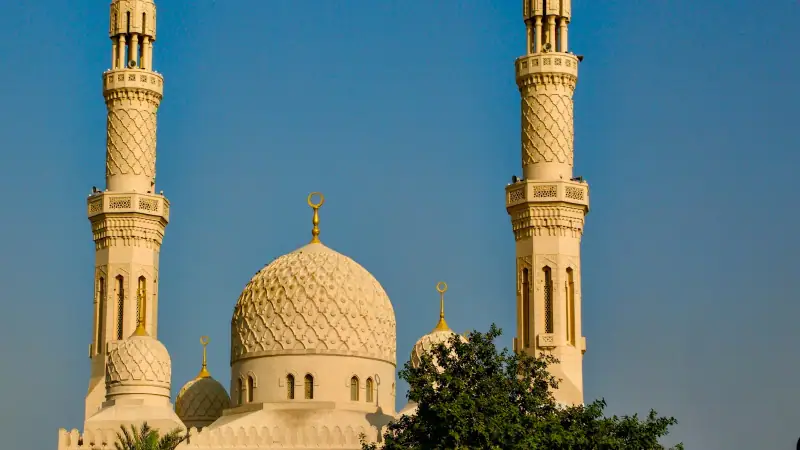
The Jumeirah Mosque is one of the most photographed religious monuments in Dubai. Built in the late 1970s in light stone, in a style inspired by Fatimid architecture, it stands out with its two minarets and its large dome. It is also one of the few mosques in the city where non-Muslim visitors can enter, as part of a guided tour.
These tours are offered by a Dubai cultural center whose mission is to foster understanding between cultures. The guide presents the architecture, explains the gestures of prayer and answers questions, including the most basic ones. It is a valuable chance to learn about Islam from a local guide, in a relaxed atmosphere and without proselytizing.
A few tips to prepare this visit well:
- check the slots before going: visit days and hours can change, especially during Ramadan or religious holidays;
- wear covering clothing: shoulders and legs covered for everyone, and a scarf for women (sometimes lent there);
- take off your shoes at the entrance and speak in a low voice;
- ask before photographing people, and follow the guide’s instructions.
To learn the customs and avoid missteps, read our article on rules and customs to respect in Dubai. This visit combines well with a walk in the neighboring streets, where you find cafés and small shops.
Jumeirah’s public beaches
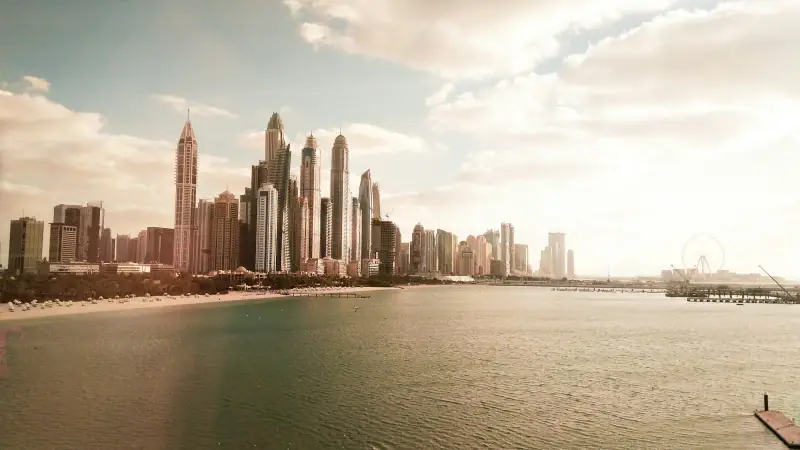
One of Jumeirah’s great assets is its several free public beaches, far from the heavily built-up atmosphere of the Marina. The sand is fine, the sea calm most of the time, and the backdrop (villas, palm trees, sometimes the silhouette of the Burj Al Arab) is typical of Dubai.
Depending on the beach, you will find showers, restrooms, kids’ play areas and zones supervised by lifeguards. A few habits: respect the swimming flags, stay in the marked zones and keep to swimwear suited to the local rules. Away from the beach, cover up before going into a café or a shop.
The main beaches to know:
- the public beaches of Jumeirah 1 and Jumeirah 2, close to the center, convenient for a quick swim and easy for most travelers to reach;
- Sunset Beach, toward Umm Suqeim, popular for its direct view of the Burj Al Arab, especially in the late afternoon;
- Kite Beach, a bit further, which attracts kitesurfers, athletes and food-truck fans.
In summer, the heat makes the beach uncomfortable between late morning and mid-afternoon. Come early in the morning or at the very end of the day, with water, sunscreen and a hat. To choose when to go, see when to go to Dubai.
Kite Beach: sports, food trucks and a relaxed atmosphere
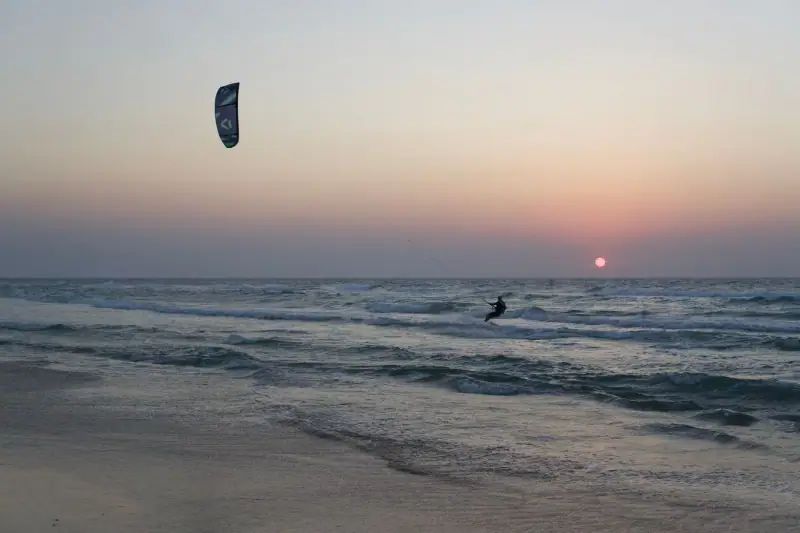
Kite Beach is the coast’s hub of activity. As its name suggests, people kitesurf there, but also paddleboard, play volleyball, run on the promenade and do outdoor workouts. Along the beach, food trucks and small food stands sell cold drinks, burgers, juices and snacks, in an easygoing atmosphere that residents like.
Even if you play no sport, it is a very good place to soak up local life. Come at the end of the day to see the colorful sails in the sky and the Burj Al Arab in the background. Beginners can take introductory lessons with local schools; ask about the minimum age, required level and equipment provided before booking.
Cruises and water activities in Dubai
Boat along the coast, view of the Burj Al Arab, jet ski or paddleboard: compare sea outings and their cancellation terms.
The Burj Al Arab: the sail-shaped hotel
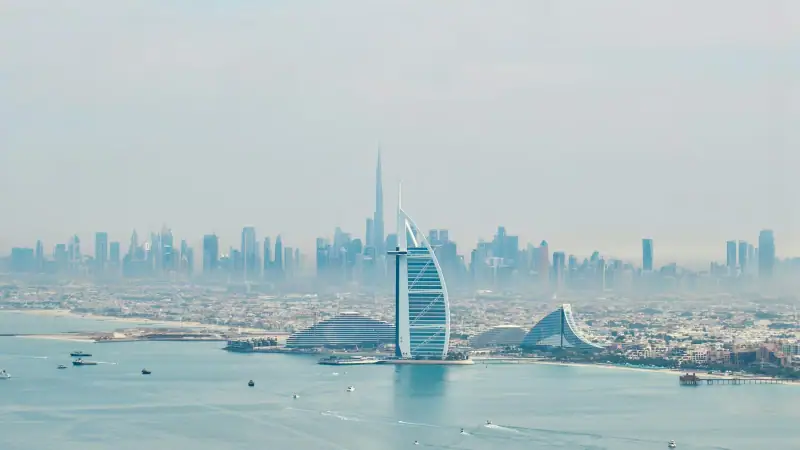
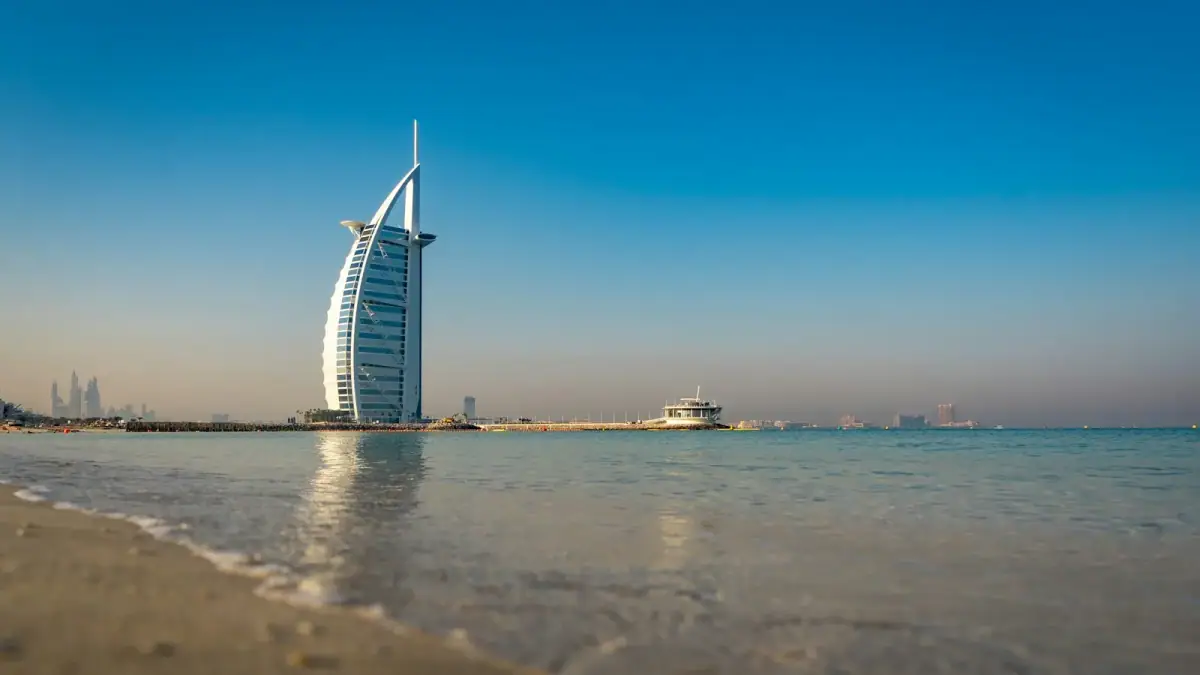
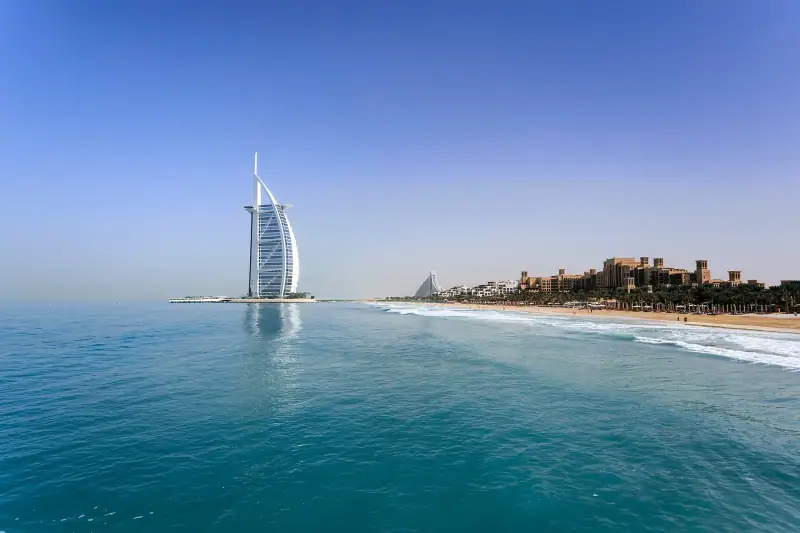
At about 320 meters (1,050 ft) high, the Burj Al Arab is one of the most famous hotels in the world. It is built on an artificial island, a few hundred meters from the shore, and linked to the coast by a private causeway. Its dhow-sail shape has become one of Dubai’s emblems, alongside the Burj Khalifa.
You cannot visit the Burj Al Arab like a museum. It is a private establishment, whose access is in principle limited to guests and people with a reservation (for example at a restaurant or for afternoon tea). The prices of these experiences are high and the access conditions, including the dress code, are set by the hotel: ask the hotel directly if you are tempted.
For most travelers, the best way to enjoy it is to admire its silhouette:
- from the neighboring beach, at sunset, when the hotel lights up;
- from a boat ride, which follows the coast and gives a good distance for photos;
- from one of the area’s restaurants or terraces, with an open view.
Right nearby are a large water park, Wild Wadi, and the Madinat Jumeirah complex, with its traditionally inspired souk, canals and abras. The souk is a modern, tourist version of an old market: it does not replace the real souks of Deira. For a contrast, read our guide to visiting Deira.
La Mer: the seafront promenade
La Mer is a developed seafront in Jumeirah 1, with a beach, restaurants, shops, play areas and relaxation spaces. Unlike the simple beaches of the rest of the coast, the atmosphere there is more festive and very family-oriented. It is a pleasant place for a lunch break, an ice cream or a walk by the water in the late afternoon.
Families like the practical side: restrooms, restaurants at all price levels, shaded areas. However, it is not the most authentic spot in the district, and crowds can be heavy on weekends. If you just want the sea and some calm, choose a neighboring public beach. Check the hours and current attractions before coming, because the offer changes regularly.
The Etihad Museum: understanding the birth of the Emirates
If you want a bit of history, the Etihad Museum, in Jumeirah 1, is a worthwhile stop. It sits on the site of Union House, where the founding agreement of the United Arab Emirates was signed in 1971. The museum traces the birth of the federation, the figures who contributed to it and the country’s rapid evolution.
It is a visit of one to two hours, a good option for the midday heat since it is air-conditioned. The exhibitions are modern and educational, with documents, films and period objects. Check opening hours and rates through official channels before going.
Shopping and cafés: City Walk and Jumeirah’s streets
Between two beaches, Jumeirah also has real neighborhood life. Jumeirah Beach Road is dotted with cafés, bakeries, small restaurants and shops by local designers. It is an excellent place to try everyday food away from the big shopping centers. A few minutes by car from the coast, City Walk offers another style: an open-air pedestrian district, with terraces, shops and entertainment, very popular in the evening.
To try local food near the beaches, head for the Lebanese, Indian and Emirati restaurants of the area: a simple meal there generally costs far less than at the tourist spots by the water. Our article what to eat in Dubai covers the dishes to try and how to choose well.
Stay in Jumeirah
Seafront hotels, residences and apartments: compare Jumeirah places to stay for your budget and dates.
Getting around Jumeirah
Jumeirah’s main challenge is its layout: large distances, a major road and heat that discourages walking from one beach to another. Distances between points of interest are often too long to cover on foot, especially from May to September.
The most practical solutions:
- taxi or ride-hailing, simple and affordable for several people, linking the sights in a few minutes;
- the bus, which serves the coast at lower cost, but takes more time and a bit more planning;
- a rental car, useful if you want to string together several beaches and neighborhoods in the same day, but weigh that against traffic and parking;
- walking, best kept for short strolls around a single site, outside the hot hours.
Our guide getting around Dubai covers tickets and tips. If you opt for a car, you can compare rental companies before you leave.
What to do in Jumeirah with kids
Jumeirah is one of the best areas of Dubai for families. Public beaches suit quiet swims, the La Mer promenade has play areas, and neighborhood parks offer shade and green spaces. For older kids, a water park next to the Burj Al Arab adds a full-day activity.
To beat the heat, plan outings early in the day or after sunset. Bring water, a cap and light clothing that covers the shoulders. If you are looking for a family place to stay, our article on places to stay for four, apartment or hotel helps you compare formats.
Planning your day in Jumeirah: a sample program
Here is a realistic sequence, to adapt to the season and your pace:
- Early morning: guided visit of the Jumeirah Mosque (check the slot in advance).
- Late morning: swim or stroll on a public beach in Jumeirah 1 or 2.
- Lunch: neighborhood café or restaurant on Jumeirah Beach Road, or a break at La Mer.
- Early afternoon: Etihad Museum, sheltered from the heat.
- Late afternoon: head to Kite Beach or Sunset Beach to watch the sun go down behind the Burj Al Arab.
- Evening: dinner in the district, then return by taxi.
This program fits naturally into our four-day Dubai itinerary, where Jumeirah is on the program for the third day. If you stay on the Marina side, our article on visiting Dubai Marina complements this day well.
Budget and practical tips
Jumeirah is one of the most affordable areas of Dubai for visitors: access to public beaches is free, the promenade too, and you can eat in neighborhood cafés at reasonable prices. The main costs are transport (taxis between sights), water activities and meals at high-end restaurants. Our guide budget in Dubai gives rough costs for a trip.
Stay connected in the Emirates
Saily offers eSIM plans in more than 150 countries: check the offer for the United Arab Emirates before you leave.
A few useful habits:
- bring sun protection all year: sunscreen, sunglasses, hat, even in winter;
- carry water, since coastal humidity can be high;
- bring a sarong or a T-shirt to cover up when leaving the beach;
- see our article on SIM cards and eSIMs in Dubai to compare connectivity options;
- check the hours of the mosque and museums before going.
Combining Jumeirah with other visits
Jumeirah combines easily with the rest of Dubai, but also with farther outings. For a full day, Abu Dhabi can be visited as an excursion from Dubai, with an early departure. For a change of landscape, the desert safari is an experience radically different from the beaches.
Before you leave, prepare your documents with our guide to entry requirements for Dubai. They depend on your passport, so check the official travel advice of your government: travel.state.gov (US), GOV.UK (UK), travel.gc.ca (Canada), Smartraveller (Australia) (checked November 2026). Also consider travel insurance. For an overview of the destination, our complete guide to Dubai helps you place Jumeirah in your trip.
Frequently asked questions
Where is Jumeirah in Dubai?
Jumeirah is a long coastal strip stretching southwest of central Dubai, between old Dubai and the Marina. It has residential neighborhoods, large public beaches and the Burj Al Arab. Do not confuse it with Palm Jumeirah, a separate artificial island.
How long does it take to visit Jumeirah?
Half a day is enough to see the mosque, a beach and the Burj Al Arab in photos. With a full day, you can add La Mer, a museum, swimming and a beach sunset. Beach or kitesurfing fans can easily stay longer.
Can you visit the Jumeirah Mosque if you are not Muslim?
Yes, the mosque welcomes non-Muslim visitors on guided tours organized by a cultural center. Slots and conditions can change: check them before going, and bring covering clothing (shoulders and legs, a scarf for women).
Are Jumeirah's beaches free?
Several public beaches are free to enter, with basic facilities such as showers and restrooms. Hotels' private beaches are for their guests only or require a fee. Respect the flags and lifeguards' instructions.
Can you go inside the Burj Al Arab?
The hotel is a private establishment: access is in principle limited to hotel guests and people with a reservation, for example at one of its restaurants. Most visitors admire it from the neighboring beach or from a boat ride.
How do you get around Jumeirah?
The coast is long and not suited to walking from one sight to another, especially in summer. A taxi or ride-hailing is the simplest way to link the different points. Buses also run: see our guide on getting around Dubai to compare.
What is the best time to enjoy Jumeirah's beaches?
From November to April, temperatures are pleasant for the beach and walks. In summer, heat and humidity make daytime outings difficult: go early in the morning or in the evening.
More Dubai guides
Keep reading
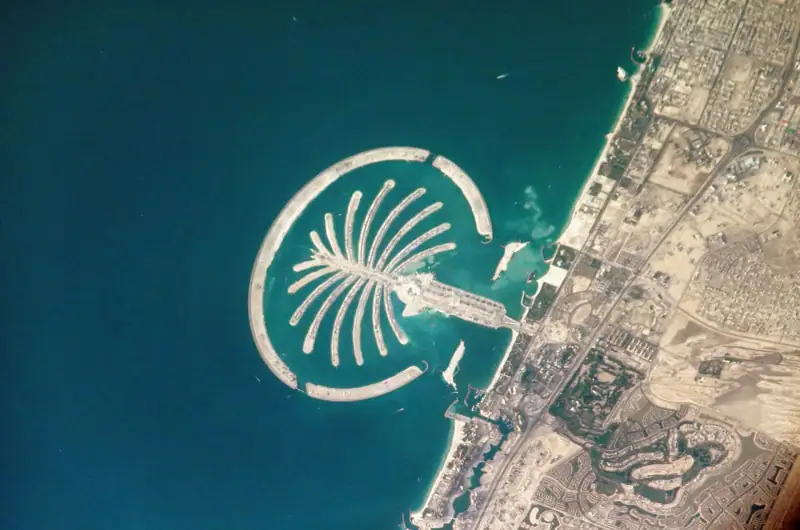
Visiting Palm Jumeirah: what to see and do on Dubai's palm-shaped island
Palm Jumeirah: Atlantis, Aquaventure, The Pointe, monorail, beaches and a viewpoint. Our guide to visiting Dubai's artificial island and planning your day.
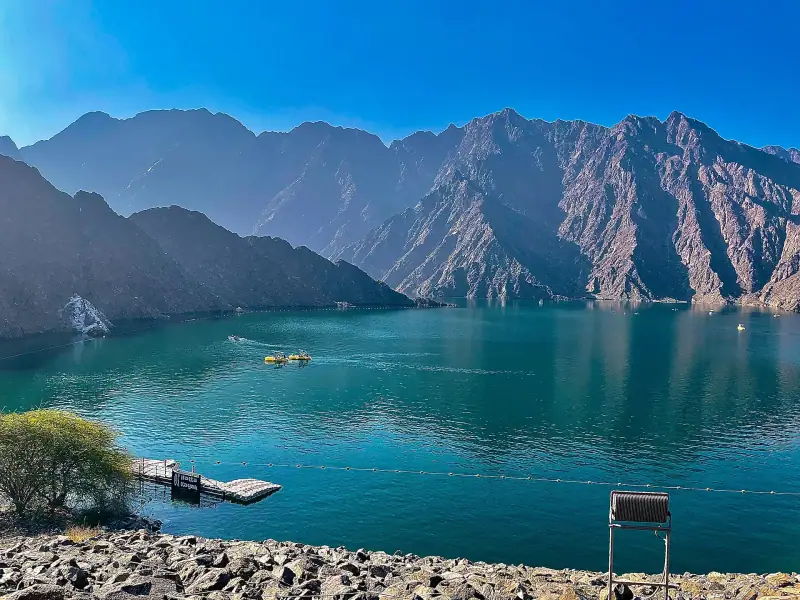
Visiting Hatta: what to see and do from Dubai
Hatta, Dubai's mountain enclave: dam and kayaking, heritage village, Wadi Hub, viewpoints and practical tips for a day trip.
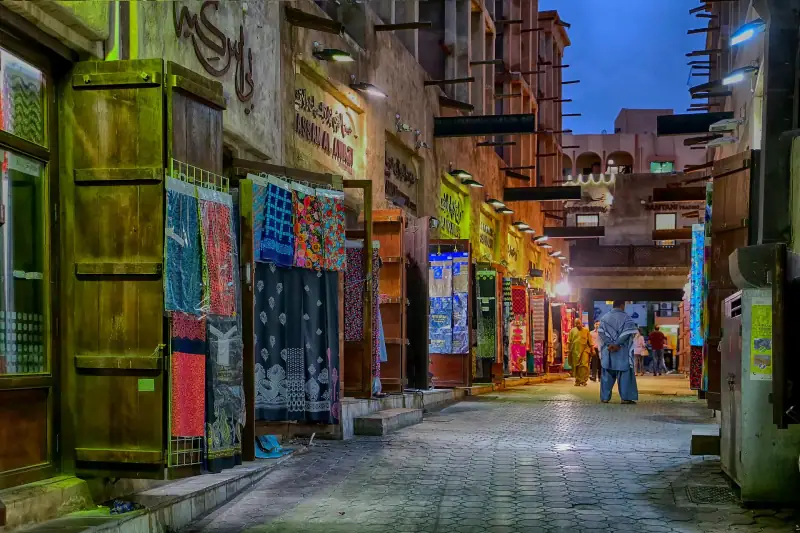
Visiting Deira: what to see and do in Dubai
Deira, the Dubai of the souks: gold and spice souks, abra crossing of the Creek, dhow wharves, Heritage House and practical tips to plan your visit.
Ready-made
Dubai itineraries
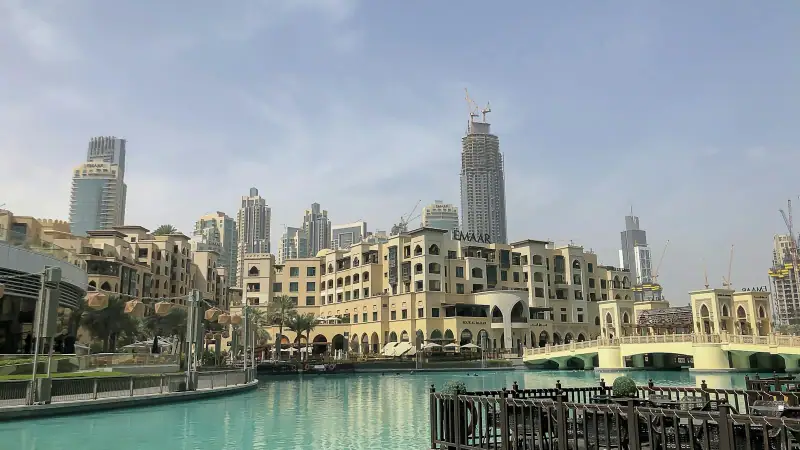
5 days
Dubai in 5 days with kids: stops, travel times and a realistic pace
Dubai in 5 days with children: a plan by area, distances and travel times, hotel breaks and ways to cope with the heat.
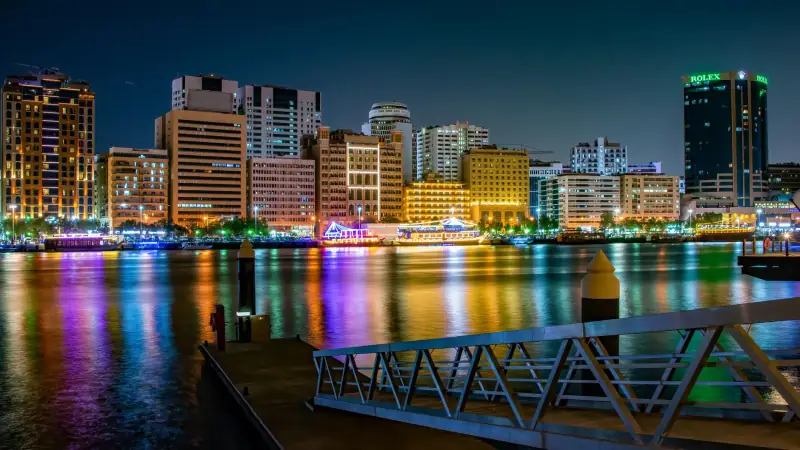
7 days
One week in Dubai: a day-by-day itinerary, from the modern center to the desert
Seven days in Dubai: Downtown, old Dubai, the coast, the desert, day trips to Abu Dhabi and Sharjah or Hatta. A day-by-day plan with transport and tips.
4 days
4 days in Dubai: a day-by-day itinerary for a first stay
A 4-day Dubai plan: Downtown and Burj Khalifa, old Dubai and the souks, Marina and Palm Jumeirah, and the desert. Transport, pacing and tips.