Plan your trip
Dubai trip budget: real costs, 3 costed profiles and money-saving tips

We may earn a commission when you book through links on this page, at no extra cost to you. We don't visit or try the places we cover: we summarize published sources. How we work
In short
- Excluding flights, plan on about 180 to 340 AED per person per day on a budget (€45-80 / $52-93), 550 to 925 AED for comfort (€125-215 / $145-250) and 1,350 to 3,000 AED for premium (€310-700 / $360-810).
- Lodging is the biggest expense, often half the budget or more; hotels also charge a Tourism Dirham fee of about 7 to 20 AED per room per night.
- The metro costs 3 to 7.5 AED per trip in standard class and an abra crossing about 1 AED; public beaches and the fountains are free.
- Online ticket prices are often lower than at the box office; summer (June to September) is the cheapest season for lodging.
Dubai has a reputation as an overpriced city, and it partly deserves it: a room in a beachfront hotel, a brunch in a big hotel or an experience at the top of a tower cost a lot. Yet the same city also lets you eat cheaply, sunbathe for free on a public beach and cross the Creek for about one dirham. It all depends on where you choose to spend.
This guide breaks down the real costs item by item, offers three costed budget profiles for a five-night trip and ends with the tips that really help you spend less. Prices are given in dirhams (AED) then in euros, with an approximate conversion of about 4.3 AED to €1, and dollar equivalents added. They come from searches carried out in October 2026 on public sources and booking platforms: they change with the season and promotions, so treat them as benchmarks, not guaranteed rates. Flights are not included.
Lodging: the biggest expense
Lodging generally makes up half the budget, or more. The ranges seen per night and per room are:
- Hostel: a dorm bed starts around 80 to 120 AED (about €19 to 28 / $22-32).
- Simple hotel, 2 to 3 stars: around 150 to 400 AED (about €35 to 95 / $41-110) in areas like Deira, Bur Dubai or Al Barsha.
- 4-star hotel: often 350 to 750 AED (about €80 to 175 / $93-205) in normal season.
- 5-star hotel, beach resort: from 900 AED to more than 3,000 AED (about €210 to 700 and more / $245-810), with the highest rates on Palm Jumeirah, in Jumeirah and in Downtown.
These figures are ranges of starting prices. Some platforms publish much higher averages for a weekend in peak season, because prices climb fast when an event or the holidays fill the city. The best habit is to run a search on your exact dates rather than rely on an average.
Also factor in extra fees. Hotels charge a tourist tax, the “Tourism Dirham fee”, of about 7 to 20 AED per room per night depending on the category. Some properties also add service or “resort” fees on arrival. Check on the booking page whether the displayed price is final.
To choose a neighborhood based on your travel style and budget, see our guide where to stay in Dubai. As a general rule, old Dubai (Deira, Bur Dubai) is the most affordable, the Marina and Downtown fall in the mid-range and high end, and the resorts of the Palm and Jumeirah at the top.
Compare hotel prices in Dubai
From a dorm to a 5-star: run a search on your dates to see real rates and check added fees.
Transport: the metro lowers the bill

Getting around Dubai can cost very little or a lot depending on whether you take the metro or a taxi for every trip. The details of the modes of transport are in our guide to getting around Dubai. Here are the useful orders of magnitude for your budget.
Metro, tram and bus with the Nol card. The Silver card costs about 25 AED, including 19 AED of credit, so the card itself costs 6 AED. A standard-class trip costs 3 AED for one zone, 5 AED for two zones and 7.5 AED for three zones or more. The Gold card, more comfortable, costs roughly double. A trip from the airport to Downtown or the Marina therefore stays cheap.
Taxi. On the street, the flag-fall is about 5 AED during the day, then the per-kilometer rate is around 2 AED. From the airport, the flag-fall starts at about 25 AED. A booking through an official app starts from a higher base of about 12 AED. A trip of a few kilometers thus often costs 20 to 40 AED, and more in traffic or on a long trip to the Marina or the Palm.
Abra. The Creek crossing between Bur Dubai and Deira costs about 1 AED, paid in cash.
A visitor who uses the metro and tram for the main routes, and a taxi only for evenings and short final stretches, spends about 15 to 40 AED per day, that is €3.5 to 9 ($4-10). One who travels only by taxi or ride-hailing can easily reach 100 to 200 AED per day.
Meals: from 10 AED to more than 500 AED
This is the item that varies most. Our guide what to eat in Dubai presents the specialties; here is what each level costs.
- Street food and casual restaurants: a chicken shawarma is around 8 to 15 AED, often about 10 AED, in the Karama, Deira and Bur Dubai areas. A dish in a simple Indian, Pakistani or Lebanese restaurant is generally between 20 and 40 AED.
- Mid-range restaurant: a lunch averages about €11 ($13) per person according to online price surveys, close to 50 AED. A dinner with a drink in a shopping center or on the waterfront quickly rises to 100 to 200 AED per person.
- Coffee: a cappuccino costs about €5 ($6), or about 23 AED, according to 2026 surveys, more in a hotel or a Downtown café.
- Alcohol: it is served only in hotels, some restaurants and licensed bars, at a significant markup. A draft beer costs about €12 ($14) according to a price survey, a little over 50 AED. It is a cost to watch closely if you plan to go out in the evening. For the rules to know, see our article on rules and customs in Dubai.
- Brunch and panoramic restaurants: the packages of big hotels run into hundreds of dirhams per person. They are appealing but far above the price of an ordinary meal.
Bottled water, fruit and snacks bought at a supermarket cost very little and let you limit purchases at kiosks, which are often pricier. Always carry water, even in winter.
Foodie tour in Dubai
Tastings, food tours and cooking classes: a way to eat local with a single booking and the price known in advance.
Activities and sightseeing: what is free, what is paid

Many Dubai attractions cost money, but several of the best experiences are free.
Free or nearly free:
- Public beaches, such as Jumeirah Open Beach, Kite Beach or JBR beach, are free to enter, with showers and changing rooms on the busiest ones. Sun loungers and umbrellas, however, cost extra.
- The Dubai Fountain show from the promenade at the foot of the tower, in Downtown, is free.
- The historic districts, the souks and the abra crossing of the Creek can be visited for almost nothing. See our article on old Dubai.
Paid, with price benchmarks:
- Burj Khalifa “At The Top”, levels 124 and 125: from about 199 AED for an adult booked in advance, more for the most popular slots (sunset) and for a package with a coffee. Details are in our guide to the Burj Khalifa and Downtown.
- Dubai Frame: from about 50 AED for an adult bought online, about 20 AED for a child, and about 75 AED at the ticket office, according to surveys.
- Dubai Aquarium and Underwater Zoo: from about 120 AED online and up to 200 AED at the ticket office, with pricier packages for guided visits.
- Desert safari: a morning safari starts around 100 AED, a shared evening safari is more like 210 to 500 AED per person, and a night in the desert starts at more than 700 AED. Rates are higher from November to March. See our desert safari guide.
- Day trip to Abu Dhabi: budget for transport, or an organized tour, and entry to a few sights. See our article on the day trip to Abu Dhabi from Dubai.
Online prices are often lower than box-office prices: booking ahead is one of the easiest ways to save.
Tickets and activities in Dubai
Burj Khalifa, aquarium, safari: compare online rates and book ahead to avoid box-office prices.
Three budget profiles for 5 nights
The profiles below assume two travelers sharing a room. Amounts are given per person per day, excluding flights, then totaled over five nights. They serve to compare comfort levels; they do not replace a price search on your dates.
Budget profile
- Lodging: simple room at 150-300 AED shared by two, so 75 to 150 AED per person.
- Meals: shawarma, casual restaurants, supermarket, so 60 to 100 AED.
- Transport: metro, tram, abra, so 15 to 30 AED.
- Activities: beaches, old neighborhoods, one or two paid attractions during the trip, so about 30 to 60 AED per day on average.
Total: about 180 to 340 AED per person per day. That is about €45 to 80 ($52-93) per day and close to €225 to 400 ($260-465) for five days, excluding flights.
Comfort profile
- Lodging: 4-star hotel at 350-750 AED, so 175 to 375 AED per person.
- Meals: a mix of shopping-center restaurants and local food, so 180 to 250 AED.
- Transport: metro and taxis for evenings, so 40 to 80 AED.
- Activities: Burj Khalifa, aquarium or Frame, one safari during the trip, so 150 to 220 AED per day on average.
Total: about 550 to 925 AED per person per day, that is €125 to 215 ($145-250) per day and about €630 to 1,075 ($730-1,245) for five days, excluding flights.
Premium profile
- Lodging: 5-star or beach resort at 900-3,000 AED, so 450 to 1,500 AED per person.
- Meals: hotel restaurants, brunch, dinners with drinks, so 500 to 800 AED.
- Transport: taxis or ride-hailing, private transfers, so 100 to 200 AED.
- Activities: private safari, cruise, panoramic experiences, so 300 to 500 AED per day on average.
Total: about 1,350 to 3,000 AED per person per day, or more depending on the hotel. That is about €310 to 700 ($360-810) per day, or about €1,550 to 3,500 ($1,800-4,060) for five days, excluding flights.
These three profiles show the essentials: in Dubai, the gap comes almost entirely from the hotel and meals. Transport and attractions represent a smaller share, unless you systematically take a taxi.
Flights to Dubai
Flights are the big missing item in the budgets above: compare dates and airlines before setting your envelope.
Tips to spend less
A few habits are enough to cut the bill noticeably without spoiling the trip.
- Choose the right season. Hotel prices drop sharply in summer, but the heat limits daytime outings. The in-between months, such as October or April, often offer a compromise. Our article on when to go to Dubai covers the weather month by month.
- Stay near a metro station. A slightly cheaper room far from the network will cost you in taxis what you saved. Choose a hotel a few minutes’ walk from a station.
- Take the metro and tram. A Nol Silver card quickly pays for itself. The taxi remains useful at night or for short trips.
- Eat local at lunch. Casual restaurants in Deira, Bur Dubai or Karama serve hearty dishes for a fraction of the price of a shopping-center restaurant. Save the upscale restaurant for an evening. For an inexpensive evening outing in the cool season, Global Village charges 25 to 30 AED for admission.
- Book activities online. Box-office prices are often much higher, as the aquarium and the Frame show.
- Enjoy the free things. Public beaches, fountains, souks, the Creek: a good part of what makes Dubai appealing costs nothing.
- Limit alcohol. If you plan to drink, the budget can climb fast. An evening without alcohol, or a single glass at sunset, makes a big difference to the bill.
- Avoid event and holiday periods. End-of-year nights and big events push up the prices of hotels, taxis and restaurants.
- Check hidden fees. Tourist tax, service charges, exchange and withdrawal fees: compare the final price, not the starting price. Our guide on money in Dubai: card, cash and ATM withdrawals covers these fees.
To tie your spending to a concrete plan, see our 4-day Dubai itinerary, which balances free and paid activities.
Money, cards and insurance
The dirham is the local currency. Bank cards are accepted almost everywhere, including for small amounts, and ATMs are plentiful in shopping centers and stations. Cash remains useful for the abra, small shops and some souks. Ask your bank about the cost of foreign transactions and, if possible, choose to pay in dirhams rather than your home currency when the terminal offers you the choice, because the conversion offered by the merchant is often less favorable.
Also build in a safety margin of 10 to 15% on the whole budget for the unexpected: an extra taxi, a souvenir, an improvised meal. Finally, travel insurance can cover medical costs, cancellation and luggage; compare policies before you leave.
How much to plan in practice
For a first five-night trip, here is how to decide:
- If your budget is tight, aim for the budget profile and save your activity money for the Burj Khalifa or a safari, two experiences that are hard to replace.
- If you have a mid-range budget, the comfort profile lets you combine a good, well-located hotel, varied restaurants and most of the highlights.
- If you want luxury, concentrate spending on a beachfront hotel and a few memorable meals, and keep the metro for the other trips.
In all cases, first set the lodging amount, then estimate meals and transport from the benchmarks in this article, and finally add the activities you do not want to miss. This method avoids a bad surprise at the end of the trip, and it works as well for an extended weekend as for a full week.
Sources
- Roads & Transport Authority (RTA): figures checked November 2026
- Roads & Transport Authority (RTA): figures checked November 2026
- Roads & Transport Authority (RTA): figures checked November 2026
- Dubai Frame (Dubai Municipality): figures checked November 2026
Frequently asked questions
What budget should you plan per day in Dubai?
Excluding flights, expect about €45 to 80 ($52-93) per person per day on a budget (simple hotel shared by two, casual food, metro), €125 to 215 ($145-250) for comfort (4-star hotel, restaurants, a few outings) and from about €310 ($360) for premium (5-star, upscale restaurants, high-end activities). These are rough figures, to adjust by season.
Is Dubai really an expensive destination?
It depends on your choices. Lodging and hotel restaurants weigh heavily, but public beaches are free, the metro is cheap, an abra crossing of the Creek costs about 1 AED and a shawarma is around 10 AED. You can therefore have a very cheap or a very expensive trip in the same city.
What is the currency and is it better to pay by card?
The currency is the UAE dirham (AED). Bank cards are accepted almost everywhere (hotels, shopping centers, taxis, restaurants). Keep a little cash for the abra, small shops and souks. Check with your bank about foreign payment and withdrawal fees.
What is the Tourism Dirham fee?
It is a tourist tax billed by the hotel, per room per night, ranging from about 7 to 20 AED depending on the category of the property. It is sometimes included in the displayed price and sometimes added at reception: check before you book.
When should you go to pay less?
Summer, June to September, is the cheapest period for lodging, but the heat is very strong. From November to April, the climate is pleasant and hotel rates rise noticeably. The end-of-year holidays are generally the most expensive.
Should you include a tip in the budget?
Service is sometimes already added to the restaurant bill. If not, a tip of around 10% is common but not mandatory. Also allow a few dirhams for porters and transfer drivers.
More Dubai guides
Keep reading

When to go to Dubai: weather, seasons, Ramadan and the best time
What is the best time to visit Dubai? Temperatures, sea, summer heat, Ramadan and prices: a month-by-month guide to choosing your dates.
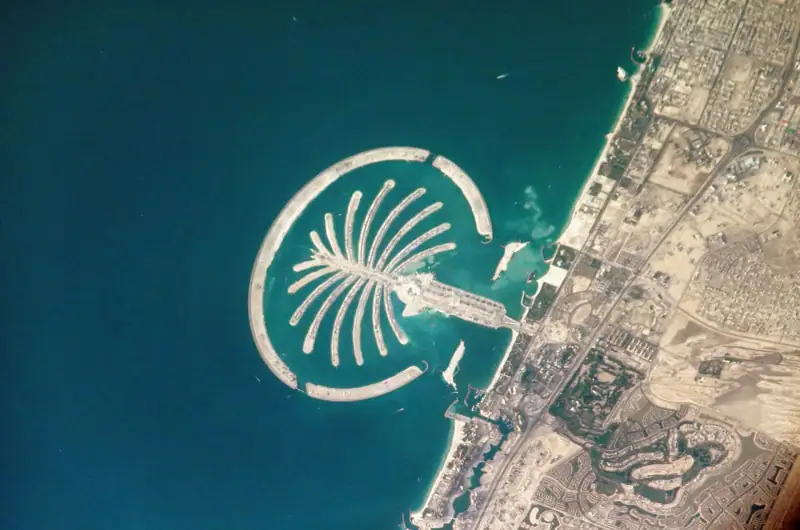
Visiting Palm Jumeirah: what to see and do on Dubai's palm-shaped island
Palm Jumeirah: Atlantis, Aquaventure, The Pointe, monorail, beaches and a viewpoint. Our guide to visiting Dubai's artificial island and planning your day.

Visiting Hatta: what to see and do from Dubai
Hatta, Dubai's mountain enclave: dam and kayaking, heritage village, Wadi Hub, viewpoints and practical tips for a day trip.
Ready-made
Dubai itineraries
5 days
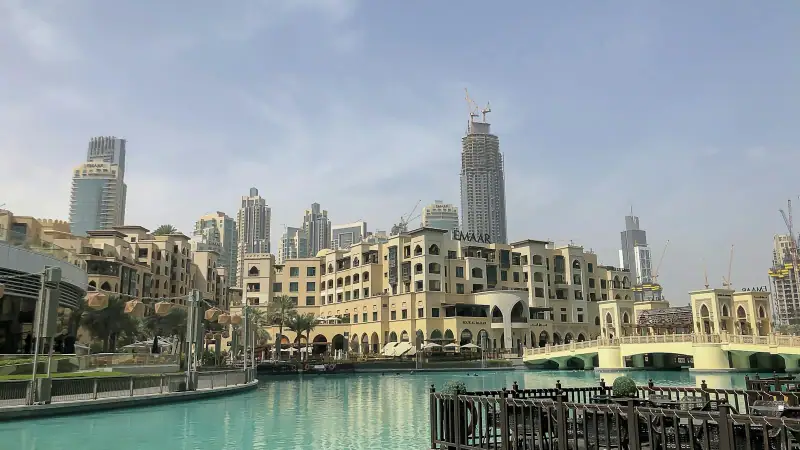
Dubai in 5 days with kids: stops, travel times and a realistic pace
Dubai in 5 days with children: a plan by area, distances and travel times, hotel breaks and ways to cope with the heat.
7 days
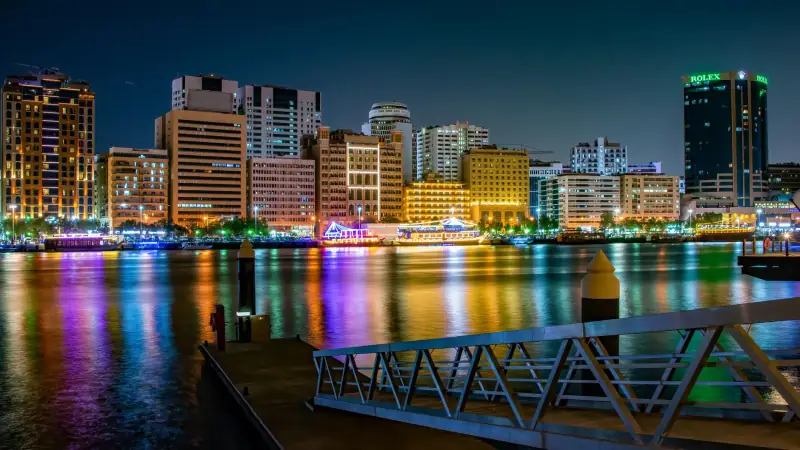
One week in Dubai: a day-by-day itinerary, from the modern center to the desert
Seven days in Dubai: Downtown, old Dubai, the coast, the desert, day trips to Abu Dhabi and Sharjah or Hatta. A day-by-day plan with transport and tips.
4 days
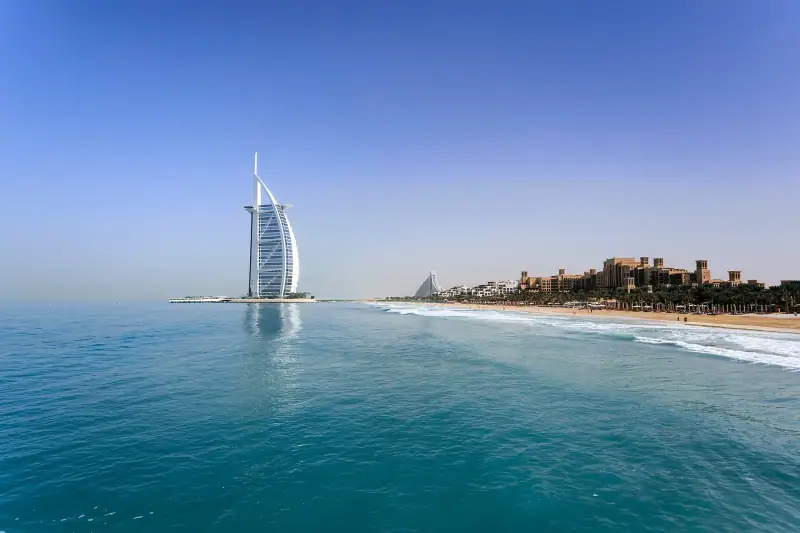
4 days in Dubai: a day-by-day itinerary for a first stay
A 4-day Dubai plan: Downtown and Burj Khalifa, old Dubai and the souks, Marina and Palm Jumeirah, and the desert. Transport, pacing and tips.