Itineraries
One week in Dubai: a day-by-day itinerary, from the modern center to the desert
We may earn a commission when you book through links on this page, at no extra cost to you. We don't visit or try the places we cover: we summarize published sources. How we work
Day by day
- Day 1Easy arrival, first walk in Downtown and the fountains
- Day 2Burj Khalifa, Museum of the Future, Dubai Mall
- Day 3Old Dubai: Al Fahidi, abra across the Creek, souks
- Day 4Jumeirah coast, Palm Jumeirah, Dubai Marina and JBR
- Day 5Free day, then desert safari in the evening
- Day 6Day trip to Abu Dhabi: Sheikh Zayed Mosque, Louvre
- Day 7Sharjah or Hatta option, then departure
In short
- Seven days allow two day trips (Abu Dhabi, then Sharjah or Hatta), half days at the beach and a pace that avoids rushing in the heat.
- A single base is the simplest: Downtown for the major sights, or Dubai Marina or Jumeirah if the beach matters more.
- Book ahead the Burj Khalifa observation decks, the Museum of the Future, the desert safari and, depending on the season, your day trips.
- From November to March you can walk by day; in summer reverse the rhythm: indoor visits in the afternoon, outings early morning and evening.
A week in Dubai lets you go beyond the list of must-sees and visit the city at a comfortable pace. Dubai is spread along the coast of the Persian Gulf, and the major sights are separated by large highways: without a plan, a good part of the days is lost in transit. This itinerary therefore groups visits by area, includes half days of rest and sets aside two days for excursions outside the city.
If you only have four days, our 4-day Dubai itinerary covers the essentials. Here, we cover a full week, with a light arrival day, a day in the desert, a day trip to Abu Dhabi and a last day to choose between Sharjah and Hatta.
Before you go: season, neighborhood and getting around
The season completely changes how the days unfold. From November to March, it is pleasant to walk by day; from June to September, heat and humidity mean keeping outdoor activities for early morning and evening. Our guide to the best time to go to Dubai explains these differences. If you travel in summer, keep afternoons for museums, shopping centers and the pool.
For getting around, the metro serves several key areas (Downtown, Dubai Marina, old Dubai), the tram runs along the Marina and taxis remain the most flexible solution for trips between two neighborhoods. Hours and the network are shown on the website of Dubai’s transport authority, listed at the end of the article, and our article on getting around Dubai compares the options. For entry requirements, see our page on entry requirements for Dubai. They depend on your passport, so check the official travel advice of your government before you book: travel.state.gov (US), GOV.UK (UK), travel.gc.ca (Canada), Smartraveller (Australia) (checked November 2026).
For where to stay, a single base is enough: Downtown to be near the major sights, Dubai Marina or Jumeirah if the beach matters more. Compare the areas in our article where to stay in Dubai.
Choose your hotel for the week
Compare Dubai hotels for your dates and neighborhood, and check the cancellation terms before booking.
Day 1: an easy arrival and a first tour of Downtown
The first day is devoted to settling in and discovering the neighborhood of your hotel. The flight, the wait at the airport and the sudden switch from cold air conditioning to outdoor heat can be tiring. There is no need to fill the day.
Depending on your arrival time, drop your bags, rest, then head to the Downtown area in the late afternoon, around the Burj Khalifa and the Dubai Mall. Stroll by the artificial lake: you will see the tower up close, with no set plan. The Dubai fountains put on a free water and light show after nightfall; times vary, so check them there on the same day.
Dine near the lake or head back to your hotel for a simple meal. Our article on what to eat in Dubai helps you choose between Emirati, Lebanese and Indian food, all very present in the city.
Also remember to bring what you need to charge your devices: the type G outlets used in the Emirates (as in the UK) need an adapter for plugs from most other countries.
Day 2: Burj Khalifa, Dubai Mall and the Museum of the Future

The second day is the futuristic Dubai day. The Burj Khalifa, at 828 meters (2,717 ft), is the tallest tower in the world. The observation platforms require a reservation: choose a late-afternoon slot, to see the city by day and then the lights at dusk. Ticket options are covered in our article on the Burj Khalifa and Downtown Dubai.
In the morning, visit an air-conditioned museum. The Museum of the Future, in the Downtown area, requires a ticket and is best booked ahead. Its building, whose facade is covered in Arabic calligraphy, is one of the most recognizable silhouettes of the city.
Early afternoon is a good time for a break at the hotel or at the Dubai Mall, one of the largest shopping centers in the world. It has a large aquarium, visible for free from outside the gallery (the full visit is paid), as well as many shops and restaurants. End with the Burj Khalifa at sunset, then the fountains.
This is the most urban day of the program: in winter, it can be swapped for a half day at the beach in good weather and moved to the next day.
Day 3: old Dubai, the Creek and the souks
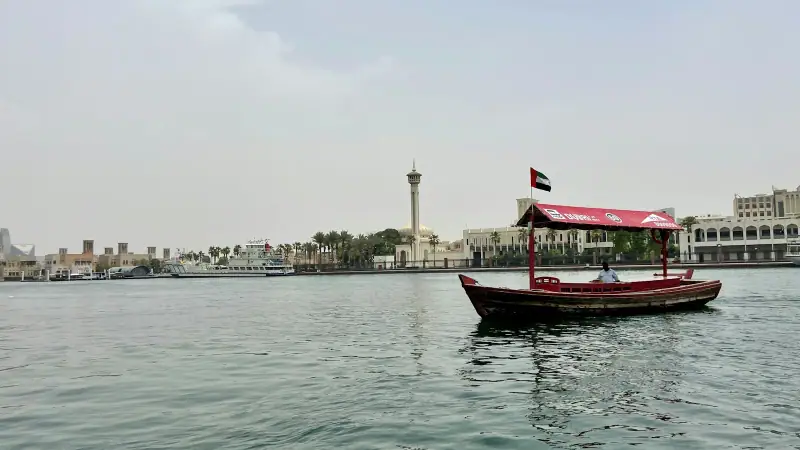
Change of scene: the third day takes you to the historic part of the city, on both sides of Dubai Creek, the inlet from which the city grew. Set off early, because you cover the lanes on foot and the heat rises fast.
In the morning, wander through the historic Al Fahidi district, also called Bastakiya: narrow lanes, traditional houses with wind towers, galleries and small museums. It is the best place to understand what Dubai was before the skyscrapers. Then cross the Creek aboard an abra, the traditional wooden boat, for a very low fare.
On the Deira bank, visit the gold souk, known for its shop windows, and the spice souk, where people buy saffron, spices and incense. Bargaining is customary in the souks; keep it friendly and not excessive. Have lunch in a traditional restaurant in the area, often at low prices. Our article on old Dubai, the Creek, the souks and Al Fahidi covers the route, and the one on Deira extends the visit on the east side.
In the late afternoon, a cruise on the Creek aboard a traditional dhow gives another view of the two banks, with the evening lights.
Guided tours and cruises in Dubai
Old Dubai tour, dhow cruise or tower tickets: compare offers and their cancellation terms.
Day 4: Jumeirah, Palm Jumeirah and Dubai Marina
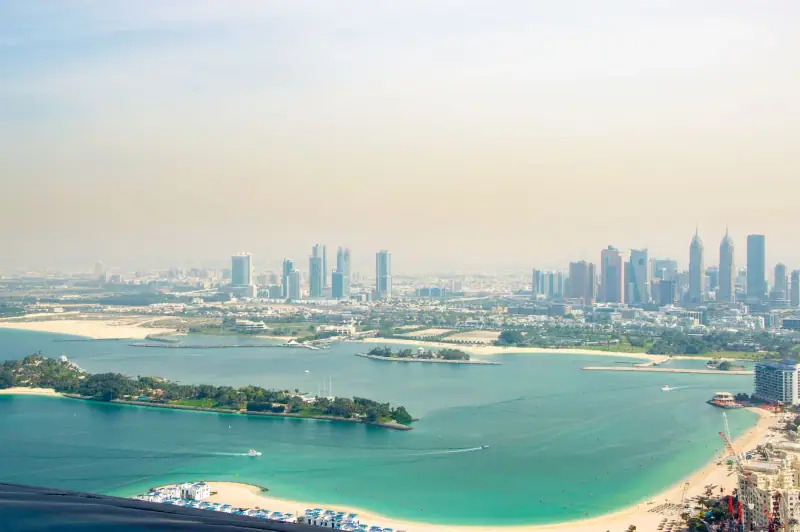
The fourth day is the coast day. In the morning, follow the Jumeirah shoreline, a residential area with public beaches and a view of the sail of the Burj Al Arab hotel. The hotel is usually visible from the beach; access inside is limited to guests and people with a reservation. Our article visiting Jumeirah offers ideas for breaks.
Then head to Palm Jumeirah, the palm-shaped artificial island, home to hotels and residences, including the Atlantis resort. Even without staying there, a walk lets you gauge the scale of the project, and the monorail serves the island for a view from above. To prepare the stop, see visiting Palm Jumeirah.
In the late afternoon, head to Dubai Marina and JBR, where a long promenade lined with restaurants runs along the beach and the glass towers. Sunset over the Marina is one of the best moments of a trip, and the promenade comes alive at nightfall. Details of the area are in our article visiting Dubai Marina.
Bring a change of clothes and something to cover up: some beaches and public spaces have dress rules, detailed in our rules and customs in Dubai.
Day 5: a free day, then a desert safari
After four full days, the fifth is deliberately calmer. Enjoy a lie-in, some time at the pool or one last beach: the desert outing takes up the end of the day.
Safaris, offered by many operators, usually leave from the hotel in the late afternoon and most often include a 4x4 ride over the dunes, a sunset and a barbecue-style dinner in a camp. Other formats offer a camel ride or a quieter sunrise. Compare duration, transport, meals and group size carefully, as they vary from one offer to another.
If you prefer a gentler ride or are traveling with a young child, choose a gentle format and tell the guide. Bring a warm layer for the evening and sunglasses, because sand and dust are common. Our guide to the Dubai desert safari compares the formats.
Desert safari from Dubai
Dune driving in a 4x4, sunset and camp dinner: compare the formats, from the gentlest to the most adventurous.
Day 6: day trip to Abu Dhabi
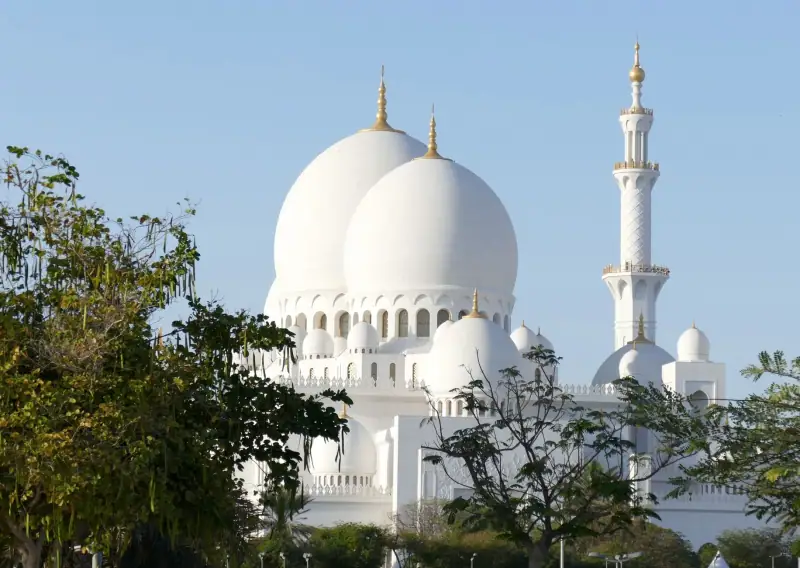
Abu Dhabi, the capital of the Emirates, can be visited in a day from Dubai, about an hour and a half by road depending on traffic. Two sights dominate the visit: the white-domed Sheikh Zayed Grand Mosque and the Louvre Abu Dhabi, a museum under a vast latticed dome.
For the mosque, modest dress is required: shoulders, arms and legs covered, and a scarf for women. Also follow the rules there, because access can be limited during certain prayers. The Louvre Abu Dhabi requires a ticket, and is best booked ahead in high season.
You have two options: a guided excursion, which takes care of transport and organization, or independent transport, more flexible but requiring you to manage getting around once there. All the details are in our guide to the day trip to Abu Dhabi from Dubai. If you prefer to stay overnight there, also read staying in Abu Dhabi or going back to Dubai.
Head back at the end of the day: the return road can be busy at rush hour.
Day 7: Sharjah or Hatta, then departure
The last day depends on your flight time. If you leave in the evening, you can fit in one last light excursion; otherwise keep the morning for last purchases and the transfer to the airport.
Option 1: Sharjah. The neighboring emirate, more traditional, is known for its museums, historic district and corniche. It can be visited in half a day from Dubai, outside rush hour: traffic between the two cities can be dense on weekdays. Our article visiting Sharjah covers the museums and the hours to check. Sharjah follows stricter rules on alcohol and dress than Dubai.
Option 2: Hatta. This small mountain enclave, east of Dubai and about an hour and a half by road, offers a completely different landscape: the Hajar Mountains, a dam and outdoor activities. It is a good choice if you like nature, and works best as a full day. For details, see visiting Hatta.
If you want to extend your trip in the region, neighboring Oman deserves a trip of its own rather than shortening the week in Dubai.
Adapting the itinerary to your profile
- With kids: only one main activity per half day, breaks at the hotel and a short-format safari. Our article on Dubai in 5 days with kids suggests a suitable pace.
- In summer: keep outdoor visits to early morning or evening, and keep afternoons for museums, the Dubai Mall aquarium and the pool.
- Tight budget: the metro, abras, souks and fountains are free or very cheap. Book only the Burj Khalifa, the safari and, depending on your plans, a day trip. See our article on the budget in Dubai.
- For beach lovers: replace day 2 with a second day on the coast, and keep the Burj Khalifa for the late afternoon.
- Romantic trip: favor dhow cruises, rooftop restaurants at sunset and sunrise in the desert.
Practical tips for the week
- Dress: shopping malls, souks and religious sites call for modest dress, with shoulders and knees covered. Bring a small light jacket, because air-conditioned spaces can be very cold.
- Reservations: book ahead the Burj Khalifa, the Museum of the Future, the safari and, in high season, the day trips.
- Water and sun: carry a water bottle, sunscreen and a hat, even in winter.
- Mobile internet: see our article on SIM cards and eSIMs in Dubai to compare solutions.
- Travel insurance: compare policies before you leave.
- Safety: the regional situation can change. Check your government’s official travel advice before departure and during your trip.
With this program, you see in seven days the two faces of Dubai: the futuristic city of Downtown and the Marina, and the old city of the Creek, with the desert, Abu Dhabi and a neighboring emirate as extensions.
Sources
Frequently asked questions
Is one week in Dubai too long?
No, if you alternate visits and breaks. Four days are enough for the essentials, but seven days let you add two day trips (Abu Dhabi, then Sharjah or Hatta), keep half days at the beach and avoid rushing in the heat.
Should you stay in the same place all week?
It is the simplest, because the city is well linked by the metro, tram and taxis. If you want to enjoy the beach, you can also split the trip in two: three nights in Downtown or near the Creek, then four nights in Dubai Marina or Jumeirah.
What budget should you plan for seven days?
The budget depends mainly on where you stay, day trips and meals. Hotels are the biggest cost; public transport, the souks, abras and fountains remain inexpensive. Our budget article breaks down the costs.
What is the best time to follow this itinerary?
From November to March, temperatures are comfortable for walking by day and for the desert. In summer, the heat means reversing the rhythm: indoor visits in the afternoon, outings early in the morning and in the evening.
Can you do without a car?
Yes, for most stops. The metro, tram, taxis and ride-hailing cover the areas listed, and safaris generally include transport. For Abu Dhabi and Hatta, an organized excursion or intercity transport avoids driving.
Can you combine Dubai with Oman?
Yes, but Oman deserves its own trip. It is better to plan at least a few extra days there rather than cut short the week in Dubai.
Do you need to book ahead?
Book ahead the Burj Khalifa observation platforms, the safari and, depending on the season, your day trips. The rest can be decided more freely once you are there, depending on the weather and your energy.
More Dubai guides
Keep reading
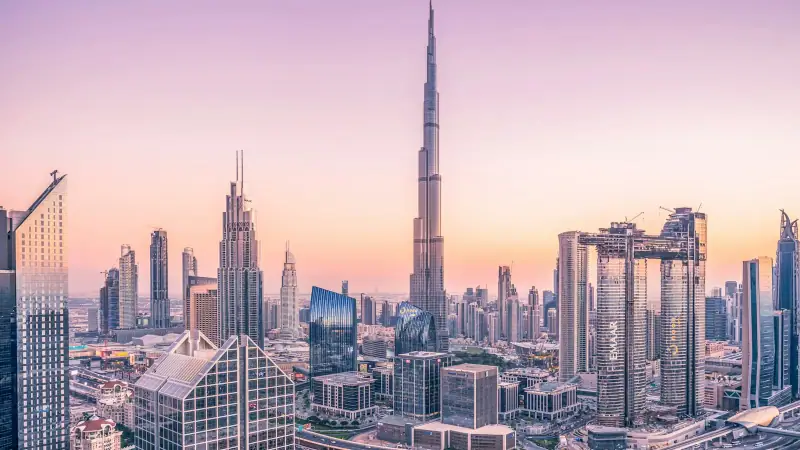
Dubai trip budget: real costs, 3 costed profiles and money-saving tips
How much to budget for Dubai? Costs by item (hotel, transport, meals, activities), three profiles in dirhams with euro and dollar equivalents, and tips.
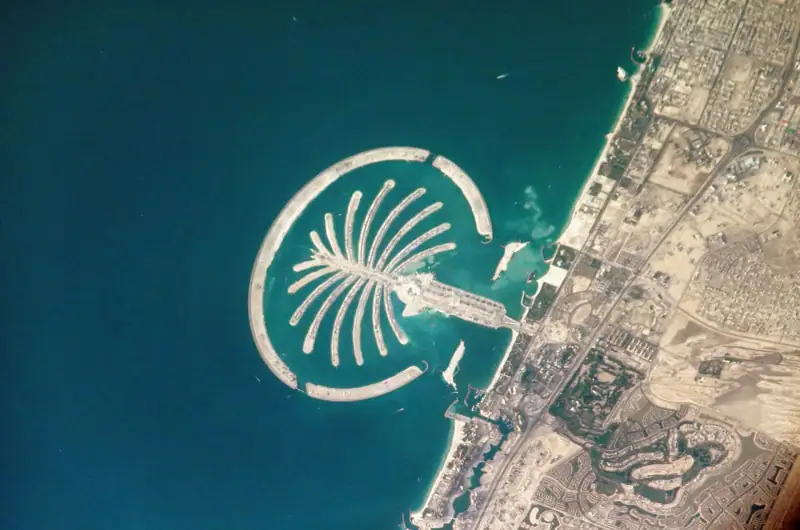
Visiting Palm Jumeirah: what to see and do on Dubai's palm-shaped island
Palm Jumeirah: Atlantis, Aquaventure, The Pointe, monorail, beaches and a viewpoint. Our guide to visiting Dubai's artificial island and planning your day.
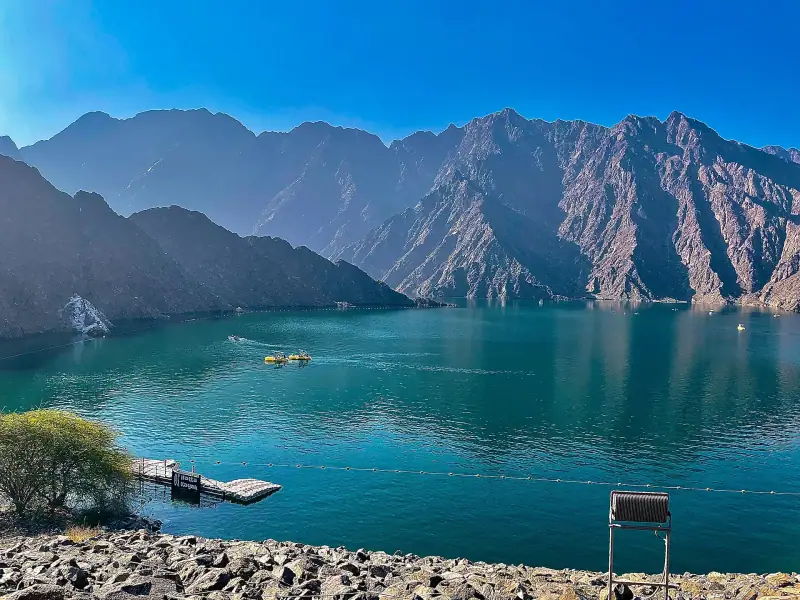
Visiting Hatta: what to see and do from Dubai
Hatta, Dubai's mountain enclave: dam and kayaking, heritage village, Wadi Hub, viewpoints and practical tips for a day trip.
Ready-made
Dubai itineraries
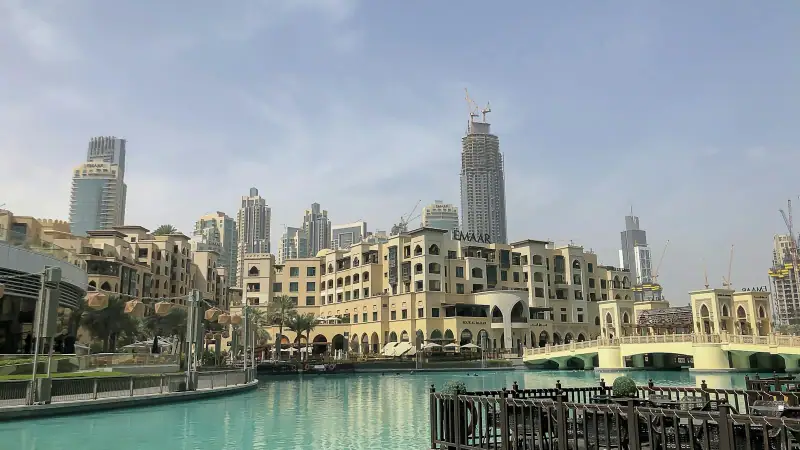
5 days
Dubai in 5 days with kids: stops, travel times and a realistic pace
Dubai in 5 days with children: a plan by area, distances and travel times, hotel breaks and ways to cope with the heat.
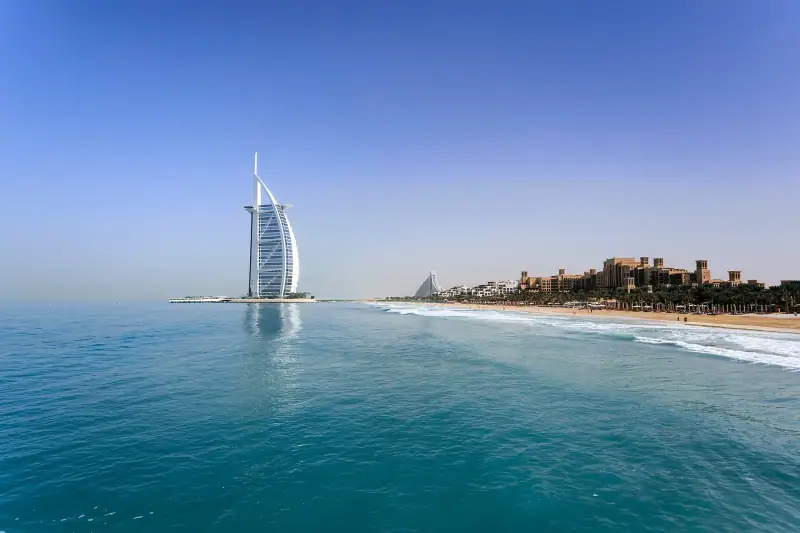
4 days
4 days in Dubai: a day-by-day itinerary for a first stay
A 4-day Dubai plan: Downtown and Burj Khalifa, old Dubai and the souks, Marina and Palm Jumeirah, and the desert. Transport, pacing and tips.