What to see
What to See in Punta Cana and Eastern Dominican Republic: Beaches, Cenote, Higüey and Altos de Chavón
We may earn a commission when you book through links on this page, at no extra cost to you. We don't visit or try the places we cover: we summarize published sources. How we work
In short
- Beyond the resort beaches of Bávaro, most sights are under two hours by road: Macao, the Hoyo Azul cenote, Higüey basilica, Altos de Chavón and Bayahibe.
- Higüey is about 40 to 60 km (25 to 37 mi) from the Bávaro beaches, usually under an hour by road; La Romana is about 40 km (25 mi) from Higüey.
- Four days give a first look, a week lets you alternate beach days and excursions, and ten days allow another stop elsewhere in the country.
- The dry season, roughly December to April, is the most pleasant; the hurricane season later in the year needs flexibility.
When people talk about Punta Cana, they first think of long beaches, coconut palms and all-inclusive hotels. That is true, but the east of the Dominican Republic is not just its developed shoreline. Within a few dozen kilometers, you go from a wild beach battered by Atlantic waves to a turquoise-water cenote, from a major pilgrimage site to an artists’ village inspired by the Mediterranean, then to a small fishing port open to the Caribbean Sea.
This guide helps you organize your visits in the Punta Cana and east region: what is really worth the trip, how to combine places, and what precautions to take. If you are looking instead to choose your lodging, read our article on where to stay in Punta Cana first. To place the east within the whole country, our complete guide to the Dominican Republic compares all the major regions.
The Dominican east at a glance: geography and atmosphere
The region in practice groups two neighboring tourist zones. In the northeast, the Atlantic coast of Punta Cana, Bávaro, Cap Cana and Macao, with its large hotel complexes and pale sand beaches. In the southeast, toward La Romana and Bayahibe, the coast faces the calmer Caribbean Sea and serves as the starting point to Saona Island. Between the two, the city of Higüey acts as the regional capital and road junction.
Punta Cana International Airport, very busy with international flights, is the main gateway. Many travelers arrive there and spend their stay in the same area without ever seeing the rest of the country. Yet most sites in this guide are reachable in under two hours by road from the hotels of Bávaro, which lets you build day excursions without changing accommodation.
A few landmarks to get your bearings:
- Punta Cana and Bávaro: the heart of the tourist zone, with most hotels and developed beaches;
- Cap Cana: a more residential and upscale enclave, with a marina and privatized beaches;
- Macao and Uvero Alto: farther north, less built-up beaches, often wilder;
- Higüey: inland city, home to a famous basilica;
- La Romana, Altos de Chavón and Bayahibe: Caribbean coast, culture, diving and departure to Saona Island.
The beaches of Bávaro and Punta Cana
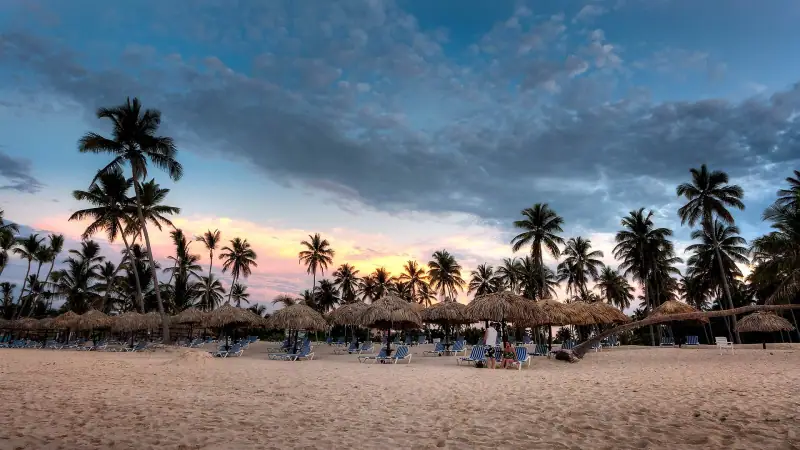
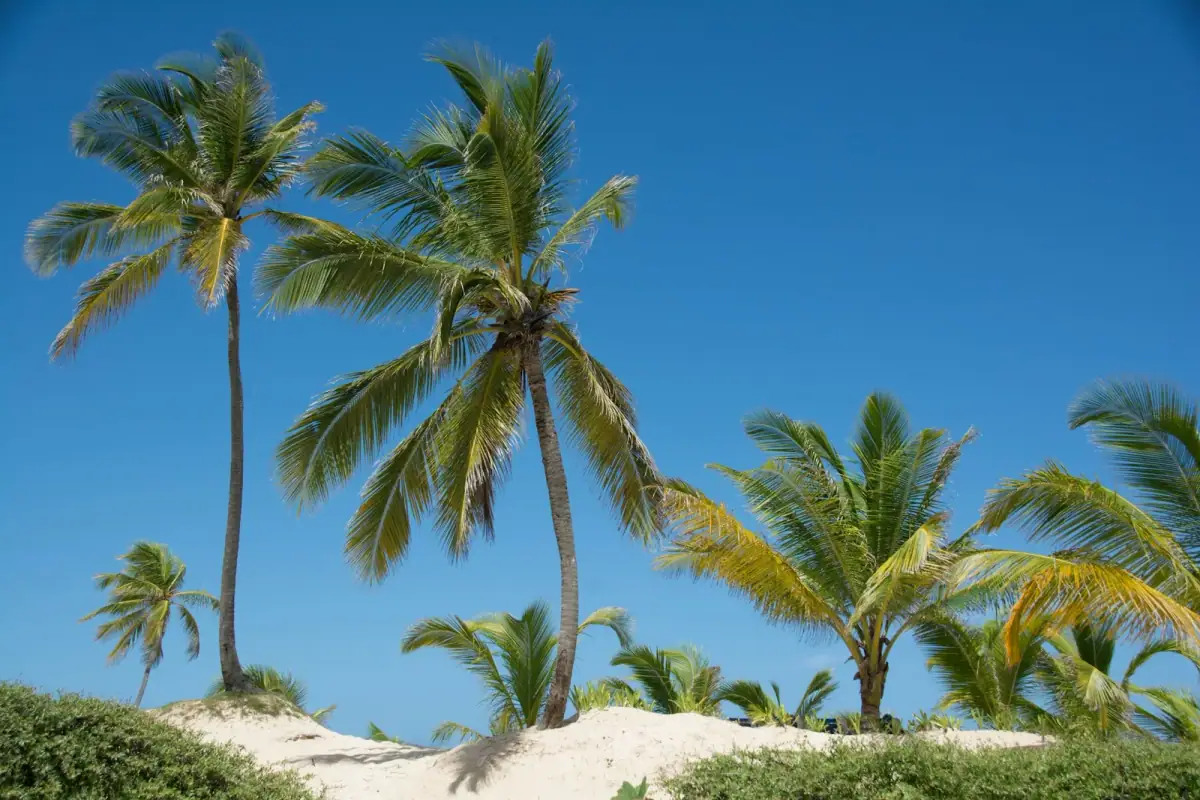
This is the great classic of the region. The Bávaro coast stretches for many kilometers of pale sand, backed by palm groves, with a sea that is generally shallow near the shore. Hotels line up almost without a break, but beaches remain public in the Dominican Republic: you can therefore stroll beyond your own property, as long as you don’t settle in the area reserved for guests.
A few tips to enjoy them:
- Walk in the morning: the light is softer, the heat less strong, and you meet fewer street vendors;
- Watch for seaweed: at certain times, sargassum washes up on the Atlantic coast, which varies strongly by year and area; ask your accommodation about the state of the beach before planning a lazy day;
- Respect the sea: even on a beach known as calm, currents can surprise you; follow the flags and instructions;
- Protect yourself from the sun: the UV index is high all year.
Beach vendors offer massages, excursions, souvenirs and fruit. A polite, smiling “no thank you” is generally enough. For any purchase, agree on the price before starting.
Macao and the wilder beaches of the north
A short drive north of Bávaro, Macao beach offers a different face. The sand is golden, the beach more natural, with limestone rock formations and Atlantic waves that attract surfers. Facilities are limited: a few beach huts and canteens, but nothing like the organization of hotel beaches.
It is a good goal for a half-day of discovery, provided you bring water, sunscreen and a little cash in Dominican pesos. Swimming requires more caution than in Bávaro, because the swell can be marked. Go by taxi with a driver or on an organized excursion, rather than going on your own without checking it out first.
Farther north still, the Uvero Alto area is known for its all-inclusive complexes set along a wilder coast. If you are looking for almost deserted beaches, you will find more calm there than in the heart of Bávaro.
Cap Cana, Juanillo and the Hoyo Azul cenote
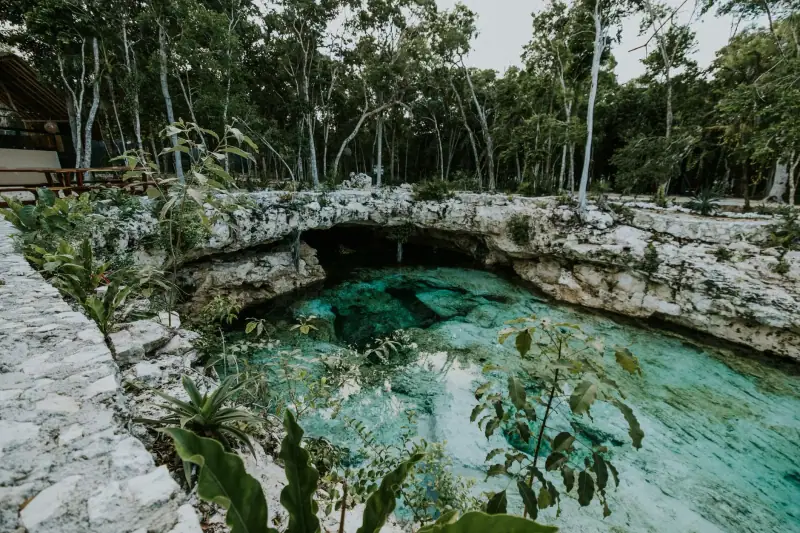
South of Punta Cana, Cap Cana is a large upscale residential and tourist area, with a marina, golf courses and villas. It is also home to one of the region’s most beautiful beaches, Juanillo, known for its white sand and turquoise water. Access has long depended on the area’s hotels and residences: check the entry conditions before going, as they can change.
The other curiosity is the Hoyo Azul cenote, located inside Scape Park. It is a natural pool surrounded by tropical vegetation and a limestone cliff, whose color comes from the layering of waters of different salinity: fresh water from underground and salt water from the sea. You swim in it after a walk along a groomed trail through the park, which requires an entry ticket. Prices and options change regularly: check the park’s official site or an agency before you come.
In Punta Cana, other natural sites also exist, such as the Ojos Indígenas ecological reserve, which has trails through tropical forest and several lagoons. It is a good option for those who want to see something other than the sea while staying close to the hotels.
Excursions around Punta Cana
Nature parks, boat trips, cultural visits: compare excursions with transfer from your hotel.
Higüey and its Basilica of Our Lady of Altagracia
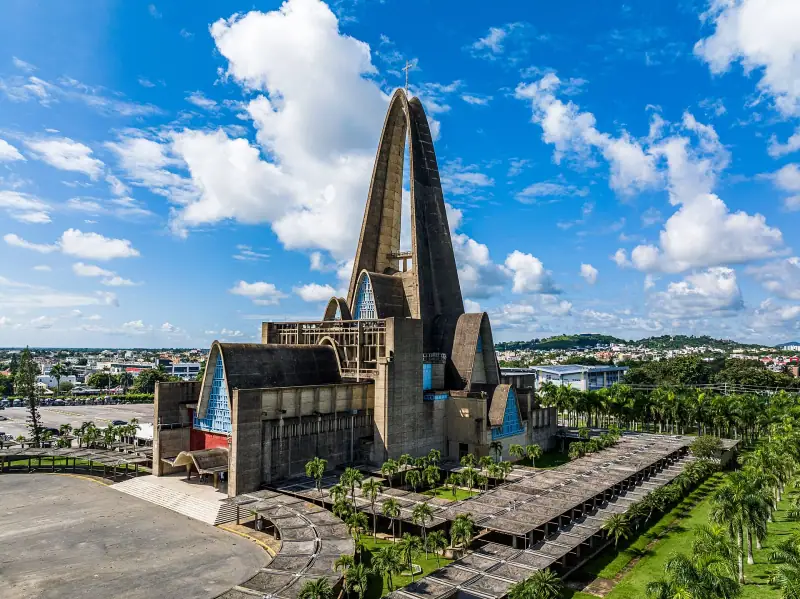
Higüey is about 40 to 60 kilometers (25 to 37 mi) from the Bávaro beaches depending on the starting point, generally under an hour by road on the modern route linking the coast to the city. It is an inland city, livelier and less touristy than Punta Cana, and the commercial and administrative center of the region.
Its great attraction is the Basilica of Our Lady of Altagracia, the country’s most important Marian shrine. The Virgin of Altagracia is the patron of the Dominican Republic, and the basilica is a pilgrimage site visited by believers from all over the country, especially around the feast in late January. Its modern architecture, with its large, very recognizable arch, contrasts strongly with the colonial churches of Santo Domingo.
A few visiting tips:
- Dress: favor clothes covering shoulders and knees;
- Respect for the place: people pray there, speak quietly and avoid photos during services;
- Hours: they may vary with celebrations, ask your accommodation or a guide;
- Combination: many excursions pair Higüey with a visit to a plantation, a cigar factory or a local market.
To understand the country beyond the coast, this outing is one of the most useful. It shows ordinary Dominican life, far from the world of hotel complexes.
La Romana and Altos de Chavón
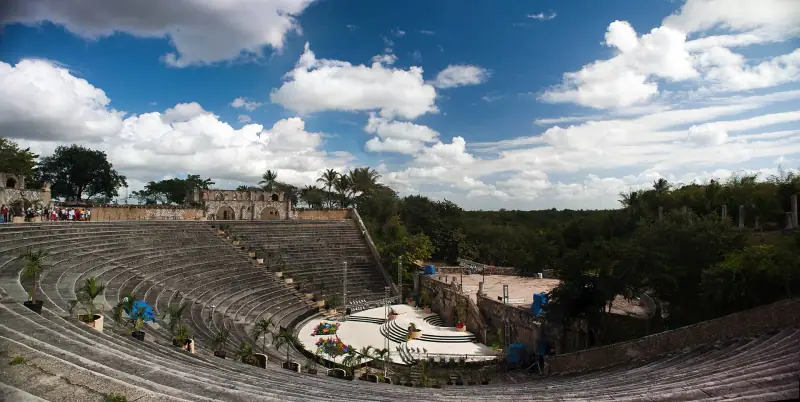
Higüey sits about halfway between Punta Cana and La Romana, each roughly forty kilometers (25 mi) away. This lets you link the two coasts in a single day or make a loop between the northeast and the southeast.
La Romana is a port and industrial city, known for its sugar past and its vast tourist complexes. Its main interest for the traveler is Altos de Chavón, an artists’ village built from the 1970s in the style of a 16th-century Mediterranean town. Stones, cobbled lanes, small squares and a small amphitheater overlook the Chavón River valley. Even though it is a recent creation and not an authentic historic site, the whole is very photogenic and houses galleries, crafts shops, a church and restaurants.
Ideally, come in the late afternoon: the heat drops, the light turns golden, and you can have dinner there before leaving. If you are looking for local crafts, compare prices and quality before buying. For a broader panorama of the country’s historic sites, our article on the Colonial Zone of Santo Domingo offers a useful counterpoint.
Bayahibe, the Eastern National Park and the Caribbean coast
To the south, Bayahibe is a former fishing village that has become a diving base and the starting point for outings to Saona Island and the Eastern National Park. The atmosphere is more relaxed than in Bávaro: a waterfront, colorful boats, a few fish restaurants, dive centers and small hotels. Farther on, the big resorts of the Caribbean coast line the shore.
The Eastern National Park, which protects part of the coast and Saona Island, is a precious natural zone: dry forests, mangroves, caves, reefs and birds. Access is generally part of an organized excursion or with a guide, notably for the caves. Natural areas are regulated: follow the rules, do not pick up corals or shells and leave no waste.
To organize the famous day at sea to Saona Island, find all the details in our article on the Saona Island excursion. And if you prefer to sleep near the Caribbean coast, read where to stay in Bayahibe.
Diving, snorkeling and marine life
The southeast coast is known for its diving and snorkeling sites: coral reefs, wrecks, drop-offs and often clear water. Dive centers in Bayahibe and the region offer introductory dives, exploration dives and courses. Depending on the season and weather, visibility and sea conditions vary: ask the center the day before about the conditions.
For snorkeling, choose an operator that limits the number of people per boat, provides vests and respects wildlife. Avoid touching corals and starfish, and prefer a reef-friendly sunscreen. Catamaran outings, very popular, often combine music, open bar and a swimming stop: pleasant, but more festive than contemplative.
How to organize your visits: three day ideas
The advantage of the east is the proximity of the sites. Here are three realistic combinations, to adjust to your pace:
- Nature and swimming day: morning at the Hoyo Azul cenote and Scape Park, a simple lunch, then afternoon on a beach in Cap Cana or Macao;
- Culture and heritage day: leave Bávaro, visit the Higüey basilica in late morning, lunch in Higüey or La Romana, then Altos de Chavón in the late afternoon;
- Sea day: early start for Bayahibe, boat trip to Saona Island or the Eastern National Park, back in the late afternoon.
Avoid trying to do everything in a single day: travel, waiting times and heat tire you more than you think. With a week-long stay, three outings spaced out with beach days make a good balance. For a wider trip combining the east, the capital and the Samaná Peninsula, see our 10-day itinerary.
Stay in Punta Cana
Hotels, residences and apartments: compare accommodation, reviews and cancellation terms.
Getting around the east: taxis, transfers and car
Distances are short, but transport requires a bit of organization. The main options:
- Organized excursions: the simplest, with hotel transfer, guide and sometimes meals included;
- Taxis and private drivers: practical for a tailor-made day; agree on the fare before leaving and specify whether waiting time is included;
- Public transport: buses and minibuses link the region’s towns, useful for small budgets but less comfortable and slower;
- Rental car: it gives real freedom between Punta Cana, Higüey and La Romana. Driving is fast-paced, though, with many two-wheelers and sometimes inconsistent signage. Avoid driving at night if you are not comfortable.
For a stay without a car, our article on 7 days in the Dominican Republic without a car shows how to get organized with buses and transfers.
Rent a car
To explore the east of the country freely, compare rental companies.
When to go and how long to stay
The dry season, from about December to April, is the most popular: clearer skies, more bearable heat and generally more pleasant sea. The rest of the year, rain is more frequent and the hurricane period, which spans several months, calls for attention to forecasts. Rates are often lower outside high season. Our guide to when to go to the Dominican Republic details these nuances month by month.
For duration, four days are enough for a first look, a week lets you vary the pleasures, and ten days allow adding a stop in another corner of the country. If you like whales, note that they are seen in Samaná Bay, not in the east: read whale watching in Samaná to combine the two.
Budget and practical tips
The Dominican east can suit very different budgets. All-inclusive plans simplify spending, while excursions, transport and some restaurants add to the price. To estimate your costs, see our Dominican Republic budget guide.
- Money: keep Dominican pesos for taxis, markets and small shops; details are in our article on formalities, health and money;
- Health: sunscreen, mosquito repellent and bottled water are recommended; see the official travel health pages (CDC in the US, TravelHealthPro in the UK);
- Safety: as everywhere, avoid displaying valuables and do not leave anything unattended on the beach;
- Excursions: compare content (duration, meals, number of participants) rather than price alone;
- Environment: leave no waste behind, especially in protected areas.
For travel insurance, consider a policy suited to trips abroad, covering medical assistance and cancellation.
Check your carrier’s international plan before you go, or use a travel eSIM, because roaming charges outside your home country can be high. Our article on SIM cards and eSIMs details the options, and useful accessories are listed in essential accessories for the Dominican Republic.
Mobile internet during your trip
Saily offers eSIM data plans in more than 150 countries: check the offer for the Dominican Republic.
Who is the east for?
The Dominican east suits families, couples and groups of friends who want long beaches, reliable infrastructure and the chance to vary with easy-to-organize excursions. It appeals less to those looking for an authentic village atmosphere, more present in Las Terrenas: see our guide to visiting Las Terrenas.
The best advice: don’t stay confined to your hotel. A day in Higüey and Altos de Chavón, another at the cenote or at sea toward Bayahibe, and your stay will gain another dimension. The region is compact, the sites varied, and that is precisely what makes it an excellent gateway to discovering the Dominican Republic.
Frequently asked questions
What is there to see in Punta Cana outside the hotel?
Besides the Bávaro and Macao beaches, you can visit the Hoyo Azul cenote in Cap Cana, the Higüey basilica, the crafts village of Altos de Chavón near La Romana, or Bayahibe and the Eastern National Park. Most of these sites are visited as day trips.
How many days do you need to discover the Punta Cana region and the east?
A week lets you alternate relaxation and outings: two or three beach days, then one or two day excursions. With only four days, focus on one wild beach, the Higüey basilica and a boat outing.
Do you need to rent a car to visit the east?
It is not required: taxis, transfers and organized excursions cover the main sites. A car gives freedom between Punta Cana, Higüey and La Romana, but driving is sometimes aggressive and you need to stay careful, especially at night.
Are all Punta Cana beaches developed?
No. Beaches in front of the large hotel complexes are maintained, while others, like Macao, keep a more natural look, with few facilities and sometimes swell. Check sea conditions before swimming.
Can you visit the Higüey basilica in beachwear?
It is better to dress appropriately (shoulders and knees covered), as in most places of worship. This basilica is an important pilgrimage site for Dominicans.
What is the best time to visit the Dominican east?
The dry season, from about December to April, is the most pleasant: less rain and milder temperatures. The rainy and hurricane season, later in the year, calls for more flexibility.
Is a stay in Punta Cana possible without an all-inclusive plan?
Yes. There are hotels with breakfast only, apartments and small properties, notably around Bávaro and Bayahibe. Local restaurants and markets then let you eat at lower cost.
More Dominican Republic guides
Keep reading
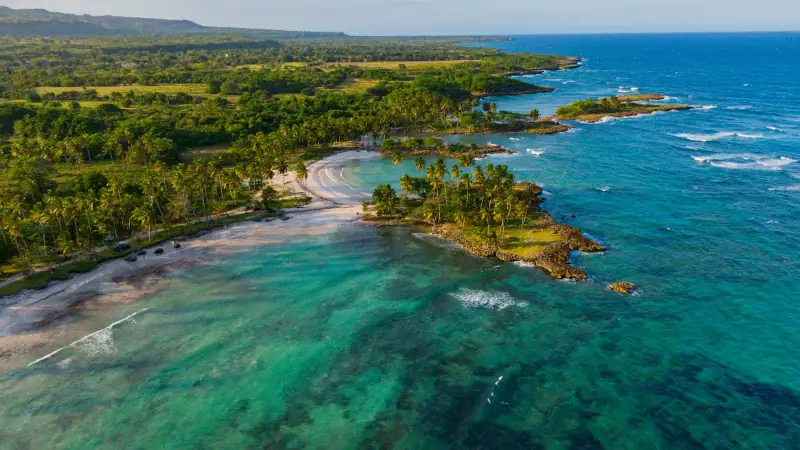
Complete Guide to Visiting the Dominican Republic: Regions, Highlights and Tips
Regions, cities, highlights, when to go, flights, transport, lodging and budget: the complete guide to planning a trip to the Dominican Republic.
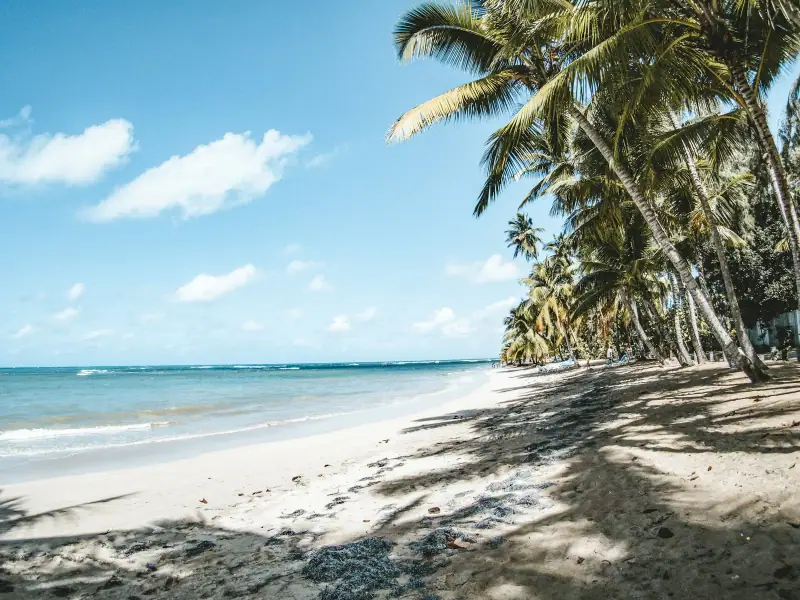
Visiting Las Terrenas: What to See and Do on the Samaná Coast
Coconut-palm beaches, fishing village, El Limón waterfall, whales and a French-speaking community: a guide to visiting Las Terrenas.
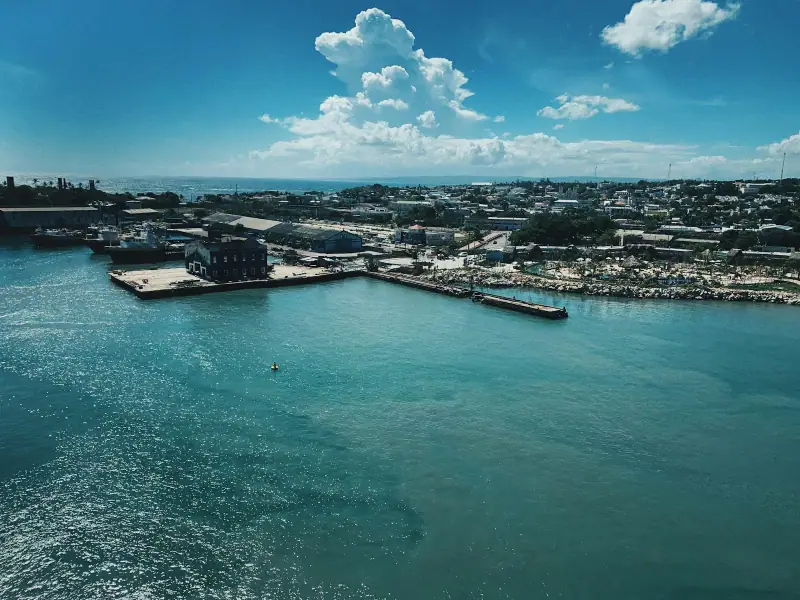
What to See on the Dominican Republic's North Coast: Puerto Plata, Sosúa, Cabarete and Río San Juan
Puerto Plata, Sosúa, Cabarete, Río San Juan and the Damajagua waterfalls: places to see on the Dominican Republic's Atlantic north coast.
Ready-made
Dominican Republic itineraries
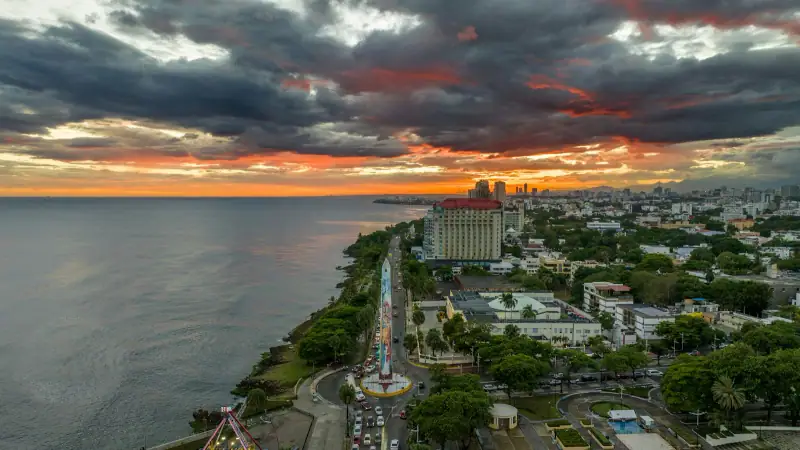
10 days
10-Day Dominican Republic Itinerary: Santo Domingo, Samaná and the East Coast
Santo DomingoSamaná PeninsulaBayahibePunta Cana
7 days
One Week in the Dominican Republic by Car: A Day-by-Day Road Trip from Santo Domingo to Punta Cana
Santo DomingoBayahibePunta Cana
Can be adapted in the planner
7 days
7 Days in the Dominican Republic Without a Car: A Realistic Itinerary by Bus and Transfer
Santo DomingoLas TerrenasBayahibe