Where to stay
Where to Stay in Punta Cana: Neighborhoods and Types of Accommodation
We may earn a commission when you book through links on this page, at no extra cost to you. We don't visit or try the places we cover: we summarize published sources. How we work
In short
- Punta Cana is a commercial name for the whole east coast: choose a precise area, because Cap Cana and Uvero Alto offer very different stays.
- Bávaro is the most versatile area, with the most resorts, restaurants and shops; Cap Cana is upscale; Macao and Uvero Alto are calmer and more remote.
- High season runs roughly December to April, with the highest rates at Christmas and in February.
- The airport is close to most areas, about 15 to 30 minutes to Cap Cana, Bávaro or Cabeza de Toro, and longer to Uvero Alto and Macao.
Punta Cana is not a city: it is a commercial name for the whole east coast of the Dominican Republic, across several dozen kilometers of beaches, lagoons and hotel complexes. Choosing where to stay therefore means choosing a precise area, with its atmosphere, prices and access to restaurants and excursions. A hotel in Cap Cana and a hotel in Uvero Alto carry the same destination name, but offer very different stays.
This guide details the main Punta Cana neighborhoods, the types of accommodation available and a few guidelines for booking without bad surprises. To compare this coast with the other regions of the country, see our guide to where to stay in the Dominican Republic.
Understanding Punta Cana’s geography
The east coast stretches from south to north along the Caribbean Sea and the Atlantic Ocean. The international airport sits roughly in the middle of the tourist zone, which explains why transfers stay short for most hotels. Going from south to north, you roughly meet Cap Cana, Punta Cana Village (around the airport), Cabeza de Toro, Bávaro and its sub-areas, then Macao and Uvero Alto, more remote.
Distances between areas are larger than you might imagine. It is easy to be misled by the name “Punta Cana” alone in a listing: always look at the real location on the map and the travel time to the beach, restaurants and airport. A hotel presented as “in Punta Cana” can be a good half hour’s drive from another.
Another useful point: the east coast is mostly lined with large beaches open to the sea, partly protected by a reef barrier in some areas. Swimming is often pleasant, but sea conditions and the presence of seaweed vary with the season. Our weather advice is in the article on when to go to the Dominican Republic.
Bávaro: the most versatile neighborhood
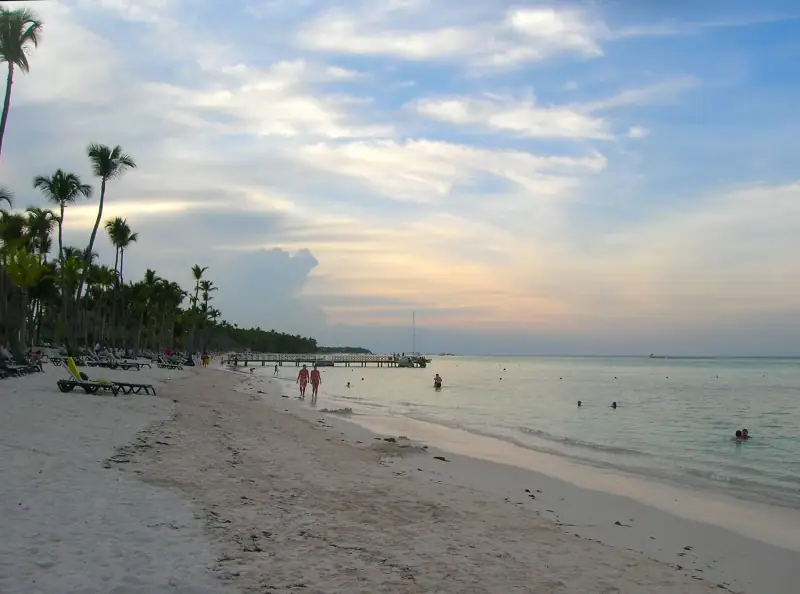
Bávaro is the tourist heart of the east coast. It has the highest concentration of resorts, along with shopping centers, restaurants, bars, supermarkets and excursion agencies. It is the best choice if you want to leave your hotel on foot or by taxi without organizing an expedition.
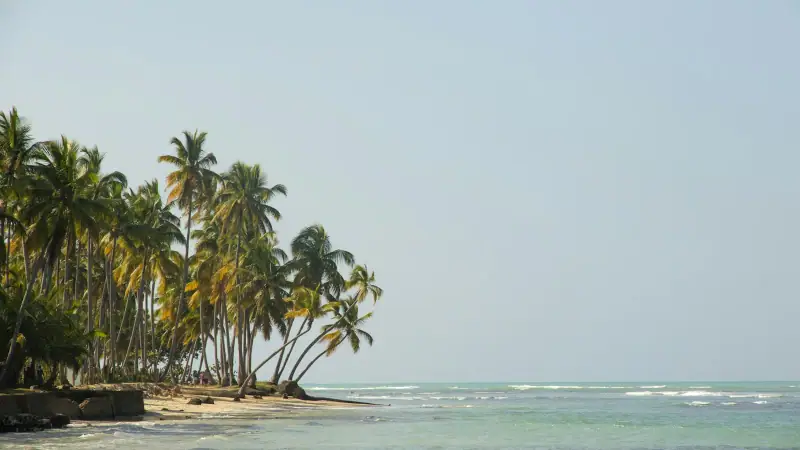
Bávaro beach is a long stretch of pale sand lined with coconut palms. Hotels line up on the sea side, and some areas are calmer than others. Beachfront properties offer direct beach access, while those inland have lower prices but need a shuttle or a walk.
Bávaro includes several sub-areas, among them Los Corales and Arena Gorda. Los Corales, more urban, concentrates restaurants and shops; Arena Gorda, farther north, has many large all-inclusive resorts. In practice, the farther you are from the center, the more the atmosphere becomes “closed resort.”
Hotels in Bávaro
Compare Bávaro resorts and hotels by your dates and budget.
Who is it for? Families, couples on a first stay, groups of friends and anyone who wants a balance between beach and activity.
Good to know. It is also the busiest area in high season. Beaches can be lively, with street vendors and water activities. If you want silence, look at the areas to the north or an adults-only hotel.
Cap Cana: the upscale area
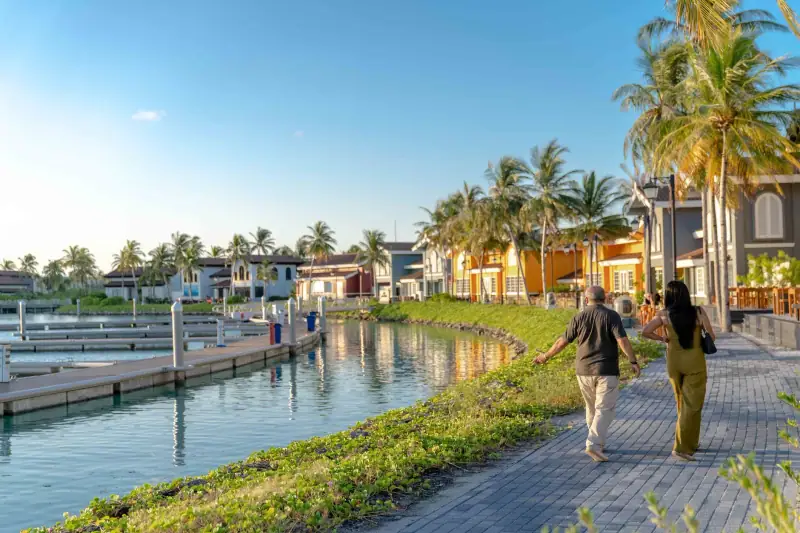
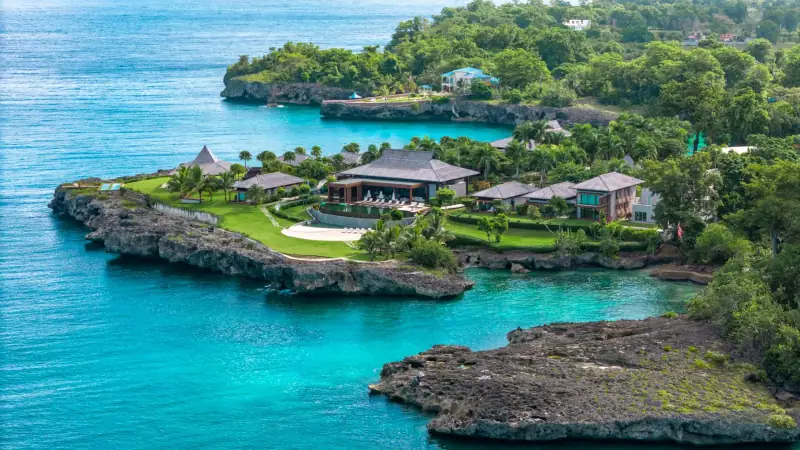
Cap Cana is a developed residential and tourist zone in the south of the coast, organized around a marina, golf courses and luxury complexes. The atmosphere is more hushed than in Bávaro: spaces are wider, traffic calmer, services more upscale.
You mostly sleep in higher-category hotels, residences and villas. The budget is generally higher than elsewhere on the coast, and low prices are rare. In return, the setting is polished, the beach of some hotels is protected and the marina has restaurants and boat trips.
Cap Cana is a sensible choice for a honeymoon, a romantic stay or a golf trip. However, it is an impractical area if you want to live at the local pace or multiply small restaurants on foot: you will depend on a vehicle or the hotel’s services.
Punta Cana Village and the airport area
Around the airport, an area called Punta Cana Village has developed, with hotels, residences, shops and services. It is practical for late arrivals or early departures, because the transfer is very short.
This area suits a short stay, a one-night stopover or a business trip. For a week at the beach, check the real distance between the hotel and the sea: some lodgings are far from it, even if a shuttle is offered.
Cabeza de Toro, Macao and Uvero Alto: the calmer areas
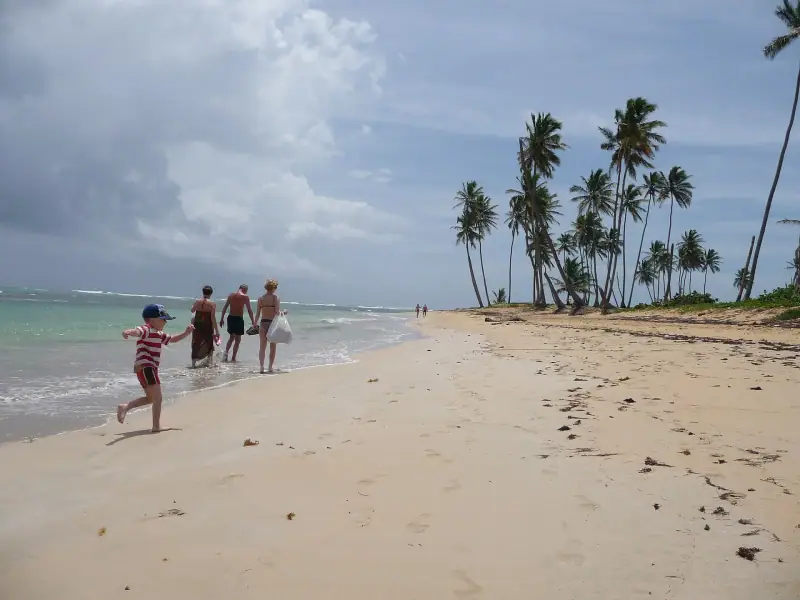
Outside the center of Bávaro, the coast becomes quieter. Cabeza de Toro, between the airport area and Bávaro, is a more discreet area with a more relaxed atmosphere. North of Bávaro, Macao is known for its waves and less touristy feel, and Uvero Alto is a long beach with a wilder character, where you find a few good-sized resorts.
The advantage is obvious: more space, fewer people, more natural scenery. So is the drawback: few shops and restaurants outside the hotels, and longer trips to the airport and excursion points. A car or transfers booked in advance are recommended.
Excursions from Punta Cana
Catamaran, Saona Island, caves, buggy outings: compare the activities offered from the east coast.
Types of accommodation in Punta Cana
The all-inclusive resort
This is the dominant format. The price includes lodging, meals, drinks and often activities (pools, entertainment, non-motorized water sports, shows). Large resorts have several restaurants, bars and sometimes kids’ clubs.
The appeal is a controlled budget. The trap is assuming everything is included: read the listing to find out whether à la carte restaurants require a reservation, whether brand-name drinks are included, and whether excursions cost extra.
The adults-only hotel
Several properties on the east coast are adults-only. They suit couples and travelers who want to avoid family entertainment. The atmosphere is generally calmer, with quiet pools and more refined dining.
The hotel with breakfast or half board
In Bávaro and Los Corales, some mid-sized hotels offer breakfast only. It is a good option if you like eating out and trying local food, described in our article on Dominican Republic culinary specialties.
The apartment and villa
Apartments, residences and villas are found mostly in Cap Cana, Bávaro and Los Corales. They suit large families, groups or long stays, with a kitchen and space. Check beach access, the residence’s security and the host’s terms.
The boutique hotel and small address
Rarer, small properties offer a more personal experience. They are often in less developed areas, and their range of services is more limited. Read recent reviews carefully.
How to choose by profile
- Family with children: Bávaro, for the beach, kids’ clubs and easy transfers.
- Couple on a honeymoon: Cap Cana or an adults-only hotel, for privacy and a polished setting.
- Active traveler: Bávaro or Punta Cana Village, for easy access to excursions and activities.
- Calm seeker: Cabeza de Toro, Macao or Uvero Alto.
- Small budget: an inland hotel in Bávaro or Los Corales, with breakfast, or a rental.
- Short stay: Punta Cana Village, to limit travel.
If you plan to discover other regions, combine the east coast with Bayahibe for Saona Island, as explained in our article on the Saona Island excursion, or with Santo Domingo for heritage.
Booking at the right time
Prices vary strongly with the season. High season, from December to April, has the highest rates, especially at Christmas and in February. Low season, with lower rates, exposes you to more changeable weather and to the hurricane season, which generally runs from summer to fall.
Book early for school vacations. Look at the cancellation terms, which can make the difference in case of the unexpected. Then compare plans: a discount on all-inclusive is only worth it if the services match your expectations.
To estimate your whole stay, our article on the Dominican Republic budget details the main spending items.
Transfers, car and getting around
Many hotels offer an airport transfer, sometimes for a fee. Book it in advance to avoid negotiating on arrival. Once there, taxis are frequent but fares must be agreed before getting in.
A car can be useful for exploring the coast or leaving the tourist trails. To compare rental companies, you can compare rental companies. Local driving requires caution, especially at night.
To stay connected without excessive roaming fees, check your carrier’s international plan or use a travel eSIM, and read our guide to SIM cards and eSIMs in the Dominican Republic. Also think about entry requirements: see our article on formalities, health and money.
Tips for choosing your hotel
- Check the real location on a map, not just the area name.
- Read the reviews of the last two months for construction work, the state of the beach and the quality of meals.
- Check what is included: à la carte restaurants, drinks, activities.
- Find out about seaweed on the beach during your stay period.
- Plan on travel insurance with medical assistance and cancellation.
With these guidelines, the choice becomes simpler: Bávaro for versatility, Cap Cana for the upscale, Cabeza de Toro, Macao and Uvero Alto for calm, and Punta Cana Village for proximity to the airport. The right neighborhood is the one that matches your vacation pace.
Frequently asked questions
What is the best neighborhood to stay in Punta Cana?
It depends on the trip. Bávaro is the most versatile: beach, restaurants, shops and a wide choice of hotels. Cap Cana suits an upscale clientele, Uvero Alto and Macao those looking for calm and wilder beaches.
Should you choose an all-inclusive hotel in Punta Cana?
It is the most common option and often the simplest, because many resorts are isolated from shops. If you like going out to dinner, a rate with breakfast in Bávaro or Los Corales leaves more freedom.
How long does it take between the airport and the hotels?
Punta Cana airport is on the east coast, fairly close to the main areas. Allow around 15 to 30 minutes to Cap Cana, Bávaro or Cabeza de Toro, more for Uvero Alto and Macao. Check on a map according to your hotel's exact address.
Can you stay in Punta Cana without a resort?
Yes. There are apartments, villas, small hotels and private rentals, especially around Bávaro, Los Corales and Cap Cana. Without a car, favor lodging close to a beach and shops.
What is the best time to book?
High season generally runs from December to April. Book several months ahead for Christmas and February. Low season offers lower prices, with less predictable weather.
Can you swim at all the beaches?
Most east coast beaches are large sandy beaches, but sea conditions vary by day and by area. Sargassum can wash ashore at certain times: check recent traveler reviews before booking.
More Dominican Republic guides
Keep reading
Where to Stay in Bayahibe: Neighborhoods and Types of Accommodation
Bayahibe village, Dominicus beach, all-inclusive resorts or guesthouses: compare the areas and lodging types to choose where to stay in Bayahibe.
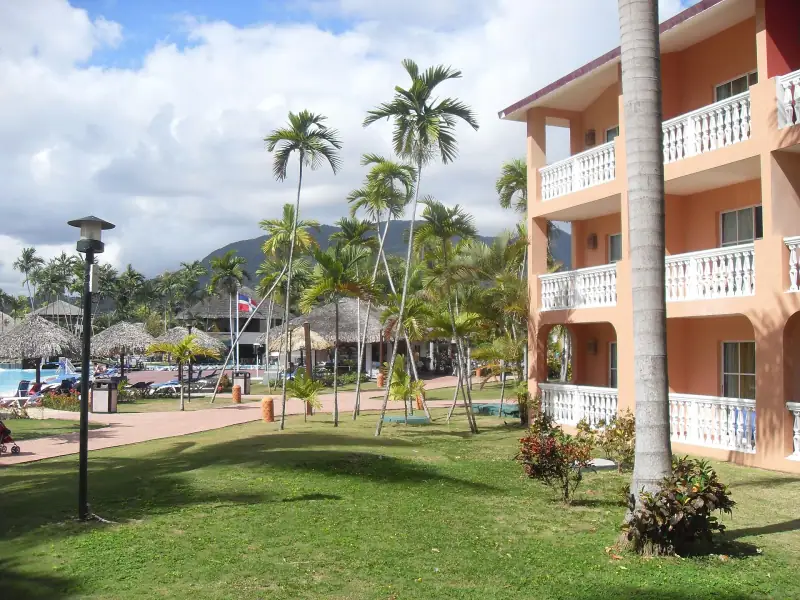
Where to Stay in Puerto Plata: Neighborhoods and Types of Accommodation
Historic center, Playa Dorada, Costambar, Cofresí or Sosúa: compare the areas and lodging types to choose where to stay in Puerto Plata.
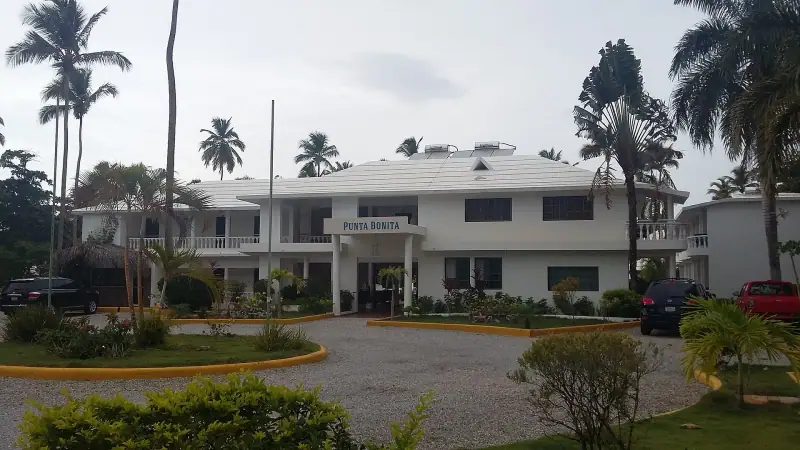
Where to Stay in Las Terrenas: Neighborhoods and Types of Accommodation
Town center, Playa Las Ballenas, Punta Popy, Playa Bonita, Cosón or El Portillo: compare Las Terrenas neighborhoods and lodging to choose well.
Ready-made
Dominican Republic itineraries
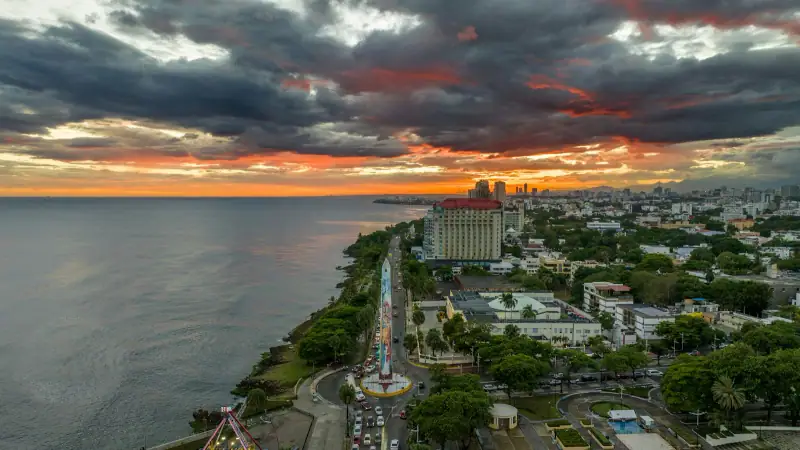
10 days
10-Day Dominican Republic Itinerary: Santo Domingo, Samaná and the East Coast
Santo DomingoSamaná PeninsulaBayahibePunta Cana
7 days
One Week in the Dominican Republic by Car: A Day-by-Day Road Trip from Santo Domingo to Punta Cana
Santo DomingoBayahibePunta Cana
Can be adapted in the planner
7 days
7 Days in the Dominican Republic Without a Car: A Realistic Itinerary by Bus and Transfer
Santo DomingoLas TerrenasBayahibe