Itineraries
Naxos and Paros in 7 days: a detailed itinerary for two
We may earn a commission when you book through links on this page, at no extra cost to you. We don't visit or try the places we cover: we summarize published sources. How we work
Day by day
- Day 1Arrive on Naxos: Portara, old town and Kastro
- Day 2Southwest beaches: Agios Georgios to Plaka, Mikri Vigla
- Day 3Tragea valley, Halki, Filoti and Apeiranthos
- Day 4Free day: north coast, museum or beach
- Day 5Ferry to Paros, Parikia and its Byzantine church
- Day 6Naoussa, Lefkes and the east coast
- Day 7Antiparos or a beach day, then departure
Where to sleep
- Naxos Chora4 nights
- Paros2 nights
In short
- Four nights on Naxos, then a ferry of about 40 minutes to an hour to Paros for two nights, leaving on day 7, with a day trip to Antiparos.
- A car is a big plus on Naxos, where distances are larger; on Paros, buses and a scooter or quad are enough.
- Keep day 4 as a flexible day: if wind disrupts the ferries the next day, you have a day of slack.
- May, June, September and early October offer a good balance of sea, crowds and regular ferries.
Naxos and Paros are neighbors, linked by a short crossing, yet they do not have the same character. Naxos is the largest island in the Cyclades: a generous land with mountains, interior villages, long sandy beaches and a historic town dominated by a marble gateway. Paros is more compact and livelier, with its white lanes, colorful harbors and its small neighbor Antiparos.
Combining them in a week is one of the best ratios of pleasure to simplicity in the Cyclades. You change atmosphere without spending your days in transit, and you avoid the “island-hopping race” effect of a longer trip. If you are still hesitating between the two, our comparison Naxos or Paros details their differences. For a wider trip, also look at the 10-day itinerary in the Cyclades.
This itinerary suggests four nights on Naxos then two on Paros, leaving on day 7. Travel times are approximate: island roads are winding and traffic varies a lot between June and August.
Overview of the week
- Days 1 to 4: Naxos, with Chora, the southwest beaches, the interior villages and a free day.
- Day 5: ferry to Paros, settling in and a first evening in Parikia.
- Day 6: Naoussa, the mountain villages and the beaches of the east coast.
- Day 7: Antiparos or a beach day, then the return.
The order can be reversed without difficulty. Just keep in mind that the last day should stay flexible if you have a plane or a long ferry to catch.
Day 1: arrival on Naxos and Chora
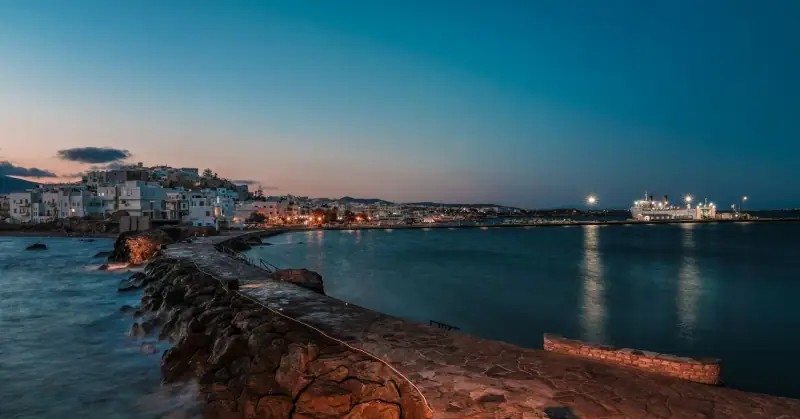
Settle in the island’s capital, simply called Chora. It is a practical base: the port, restaurants, buses and vehicle rental agencies are all concentrated there, and many beaches are a few minutes away by road. To compare neighborhoods and options, see our guide where to stay in Naxos.
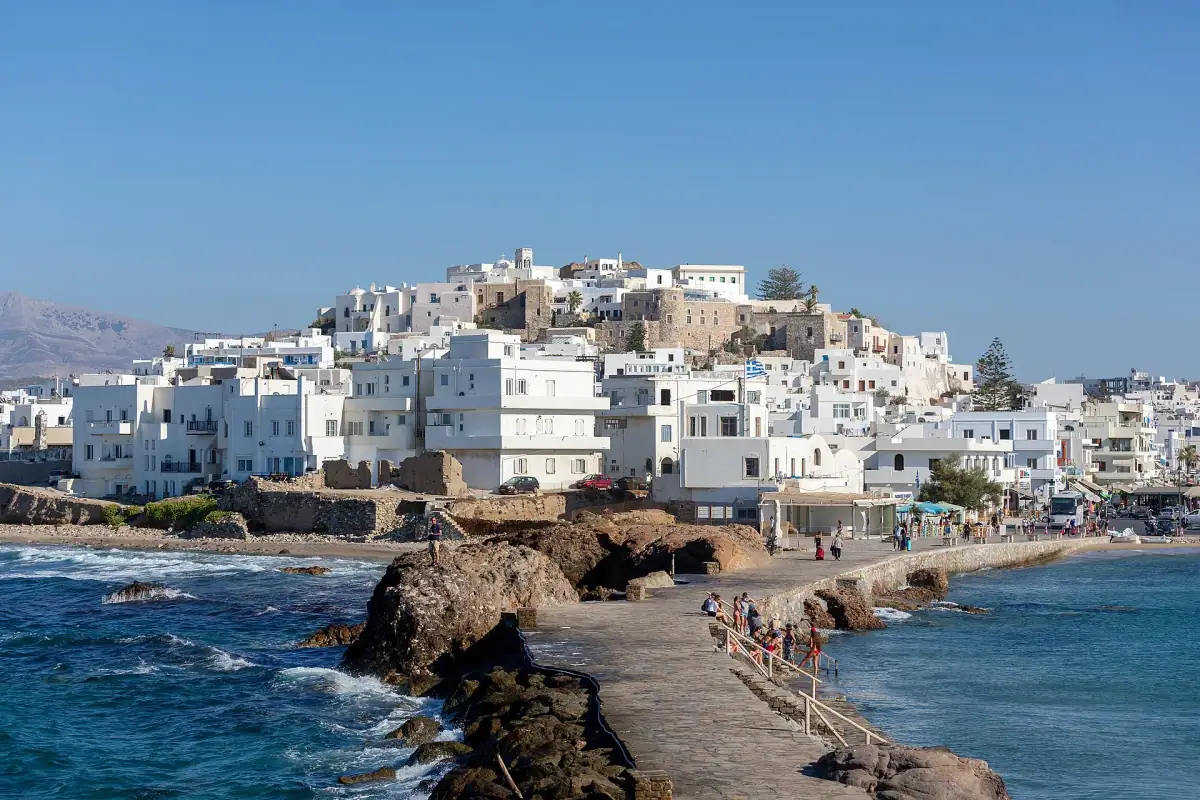
For a first walk, reach the islet of Palatia along the causeway that starts at the port. It holds the Portara, the huge marble doorway of an unfinished temple from the Archaic period. It is visible from the whole waterfront, and it is the favorite spot of locals and visitors to watch the sunset. The site is free to enter.
Then let yourself get lost in the old town. The Kastro district, at the top of the hill, has kept its stone houses, its doors decorated with old coats of arms and its medieval atmosphere inherited from the Venetian period. The lanes are narrow and look alike: that is the point. Bring good shoes, as the paving is uneven.
Compare hotels and studios in Chora and near the beaches, with free cancellation on some offers.
Day 2: the beaches of southwest Naxos
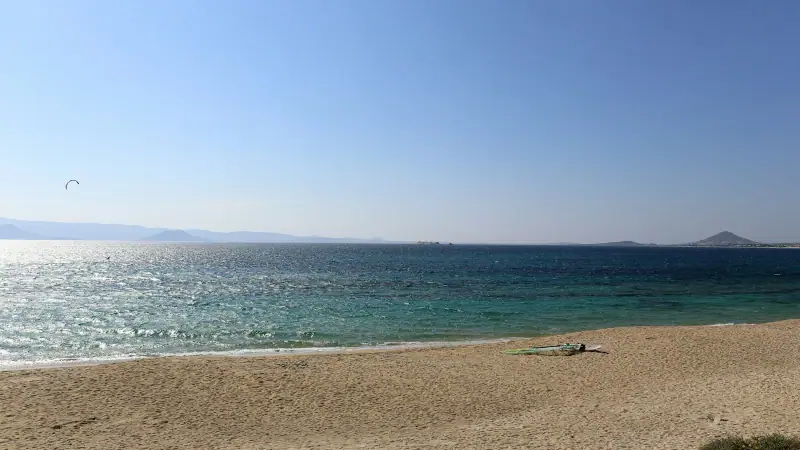
Naxos is known for its fine sandy beaches strung along the west coast. This is the relaxation day of the week, and it suits families as well as couples.
Head south from Chora. Agios Georgios, the town beach, is the closest but also the busiest, with shallow water. A little farther, Agios Prokopios and Agia Anna form a long ribbon of sand and seaside tavernas. Plaka, even farther south, is wilder: a wide stretch of golden sand, dunes, and undeveloped areas where you can walk for a long time.
If you have energy in the late afternoon, continue to Mikri Vigla, very popular with kitesurfers and windsurfers. When the meltem picks up, the bay becomes a playground, and it is a pleasant show to watch from the sand. To learn more about these activities, read our guide to water sports in the Cyclades.
A few tips for the day:
- Plan for shade: on some beaches, umbrellas are paid and scarce outside the developed areas.
- Bring water and something to snack on if you head to the wilder beaches.
- In summer, arrive early: the best spots fill up by mid-morning.
Day 3: mountain villages and the interior of Naxos
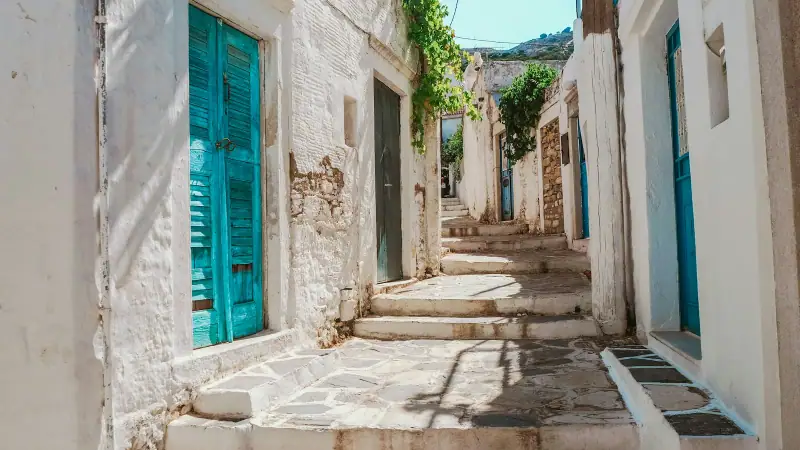
The third day shows the other face of the island. Naxos has a mountainous interior, with stone villages, olive groves and cultivated valleys, very different from the usual image of the Cyclades.
The road crosses the Tragea valley, a vast stretch of olive trees dotted with Byzantine chapels. Several villages follow one another, including Halki, the island’s former center, which has kept fine mansions and old churches. It is a pleasant stop for walking the lanes, having a coffee on a shaded square and tasting local produce. Naxos is also known for its products: cheeses, potatoes, and kitron, a liqueur made from a local citron tree. Our article on Cyclades specialties will help you choose what to taste.
Then continue to Filoti, one of the largest mountain villages, tiered on the flank of Mount Zas, the highest point in the Cyclades. Hikers can reach the start of a trail to the summit from there, which requires good fitness and an early start. For an overview of walking routes in the archipelago, read our guide to hiking in the Cyclades.
Finish at Apeiranthos, a village of stone and marble with paved lanes, often cited as one of the most beautiful on the island. The village has several small museums, and its inhabitants maintain a strong local tradition. Allow a good half day for the whole loop, taking time to stop along the way.
Discover guided excursions in Naxos: mountain villages, local producers and workshops around the island's cuisine.
Day 4: free day on Naxos
The fourth day is deliberately flexible. Depending on the weather and your wishes, several options are open to you:
- Return to your favorite beach for a last day of swimming, choosing a calmer beach such as Plaka or a less developed cove.
- Explore the north coast, with quieter fishing villages such as Apollonas, known for its large unfinished kouros lying in an old marble quarry.
- Visit the archaeological museum in Chora, housed in an old building, to better understand the island’s Cycladic past.
- Take your time to stroll through Chora, buy local products and prepare for the next day’s departure.
This day also serves as a safety margin. If wind disrupts the ferries the next day, you will at least have a day of flexibility in your schedule.
Day 5: ferry from Naxos to Paros
The crossing between the two islands is one of the simplest in the archipelago. It takes about an hour or less depending on the boat, and several daily sailings exist in season. Book your tickets in advance in summer, especially if you travel with a vehicle. Timetables and arrival ports vary: some boats dock at Parikia, others at Naoussa. To understand how the companies, fast boats and possible delays work, see our guide to ferries in the Cyclades.
Once in Parikia, the island’s capital, drop your bags and set off to explore. The Kastro district preserves elements of an old fortress, including marble columns reused in the walls. Farther on, the church of Panagia Ekatontapyliani, one of the oldest in Greece, is well worth a visit, with its quiet courtyard and Byzantine architecture.
The end of the day is spent by the water. The restaurants on the promenade and the port offer a pleasant view of boats coming in, and the lively old town lends itself well to an evening stroll.
Parikia, Naoussa or a seaside village: compare accommodation and choose your base for the two nights.
Day 6: Naoussa, Lefkes and the east coast of Paros
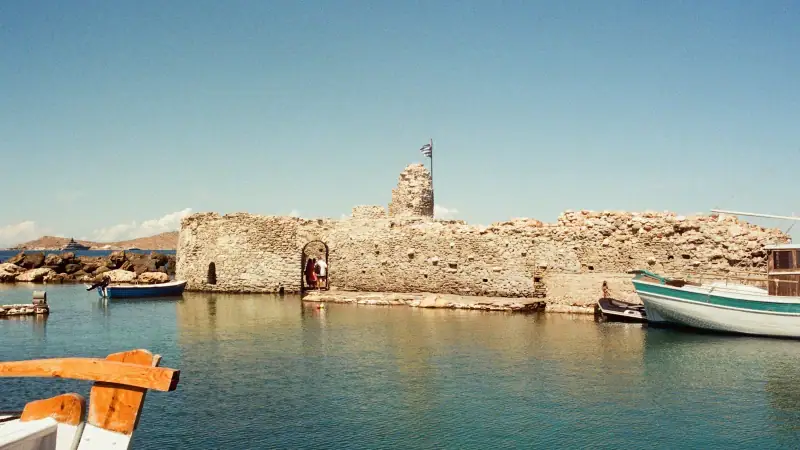
For the sixth day, set off to discover the rest of the island. Paros is small enough that a scooter, a quad or the buses are enough to link the main sites.
Start with Naoussa, on the north coast. It is one of the most beautiful harbors in the Cyclades, with its colorful fishing boats, the remains of a Venetian fortress in the water and white lanes decked with bougainvillea. The town is lively in the evening, with many bars and restaurants, but it stays pleasant by day for a quiet stroll.
Then head inland. Lefkes is a mountain village overlooking the region, with its white houses, churches and marble-paved lanes. An old paved path links Lefkes to Prodromos, and it makes a lovely walk of about an hour for those who like walking in a preserved farming landscape.
Finally, go down to the east coast, with Marpissa and the small port of Piso Livadi, calmer than the west coast. The atmosphere is more authentic, with fish tavernas and sandy beaches nearby. This day gives a fuller picture of Paros than touring the main towns alone.
Day 7: Antiparos or a beach, then departure
For the last day, two options are open to you, depending on your departure time.
Antiparos for half a day. The small neighboring island is reached by a short boat ride from Paros. Its main village, with white lanes and a relaxed atmosphere, can be visited on foot in a short time. A stalactite cave, in the south of the island, is one of the few developed natural sites in the archipelago; check the visiting conditions before going, as access depends on the season.
A last beach day. Paros has fine stretches of sand, such as Golden Beach on the southeast coast, very popular with windsurfers, or the calm bays near Naoussa. Choose according to the wind direction: sheltered beaches are more pleasant when the meltem blows hard.
If you leave the same day, keep a wide margin. Sea links can be delayed, and a flight out of Athens means not cutting connections too fine.
Day cruises, sailing trips and boats to Antiparos: compare the options and timetables available.
Getting around the two islands
Each island calls for a different approach.
- On Naxos, a car is a big plus. Distances between Chora, the beaches and the interior villages are greater, and buses do not serve all the mountain villages very frequently. Book your vehicle in advance in high season.
- On Paros, buses link the main villages and beaches, and a scooter or quad suits short trips well. Be careful on winding roads and on loose gravel.
- Between the two islands, the ferry is the only real option. If you rent a vehicle on each island, you will not have to take it on board.
A rental on a single island is often enough: take it on Naxos if you plan to do the village loop, or on Paros if you want to hop between small beaches. For other means of transport, our guide to the budget in the Cyclades gives cost benchmarks.
Practical tips for this trip
When to go. May, June, September and early October are the most pleasant periods. For a month-by-month analysis, read our article on when to go to the Cyclades.
Bookings. In July and August, book accommodation and ferries as early as possible. Off-season, some businesses close, and sea links are less frequent.
Wind. The meltem can cancel or delay crossings. Never plan an international flight on the same day as a ferry, and keep a day of margin.
Luggage. Travel light: the lanes are often paved and full of steps, and a wheeled suitcase quickly becomes a nuisance. A soft bag is more practical.
Insurance. Remember to check your health coverage and your repatriation assistance before leaving, especially if you hike or do water sports.
Going further. If you want to continue to a wilder island, Folegandros or Milos are good extensions, described in our guides to Folegandros and the beaches of Milos.
Itinerary recap
- Day 1: arrival on Naxos, Portara, old town and Kastro.
- Day 2: southwest beaches, from Agios Georgios to Plaka and Mikri Vigla.
- Day 3: Tragea valley, Halki, Filoti and Apeiranthos.
- Day 4: free day, north coast or museum.
- Day 5: ferry to Paros, Parikia and its Byzantine church.
- Day 6: Naoussa, Lefkes and the east coast.
- Day 7: Antiparos or a beach, then departure.
At this pace, you enjoy both islands without skimming over them. If you have a few more days, add a night on Naxos for hiking, or an excursion to the Small Cyclades from one of the two islands.
Frequently asked questions
Is one week enough to combine Naxos and Paros?
Yes, it is even a very comfortable format. Four nights on Naxos and two on Paros (leaving on day 7) let you see the main towns, a mountain village, several beaches and an excursion to Antiparos without rushing. The only real dead time is the ferry transfer day, which you can keep for the morning.
How long is the ferry between Naxos and Paros?
The crossing is short: roughly forty minutes to an hour, depending on whether it is a fast boat or a conventional ferry. Timetables change with the season, and there are more sailings in summer. Check them with the operators before booking your accommodation for the next day.
Do you need to rent a car on Naxos and Paros?
It is useful on Naxos, where distances are larger and the interior villages are poorly served. On Paros, buses link the main villages and beaches, and a scooter or quad is enough to explore. Many travelers rent a vehicle on only one of the two islands.
Which way should you do the itinerary, Naxos then Paros or the reverse?
Both work. Starting with Naxos lets you begin on the larger island and finish on livelier Paros, with a last evening in Naoussa. If you start from Paros airport or from Athens by ferry, choose mainly according to the timetables and fares of your connections.
What is the best time for this trip?
May, June, September and early October offer a good balance between a pleasant sea, reasonable crowds and regular sea links. In July and August the north wind, the meltem, can disrupt ferries and make some exposed beaches less pleasant.
Can you do this itinerary without a car?
Yes, with a bit of organization. Both islands have buses and taxis, and distances between the main beaches stay reasonable. You will lose some freedom for Naxos's mountain villages, which can also be reached on an organized excursion.
More Cyclades guides
Keep reading

Hiking in the Cyclades: the best trails, island by island
Where to hike in the Cyclades? Santorini caldera, Paros Byzantine road, Mount Zas on Naxos, Folegandros, Amorgos: trails, seasons and tips.
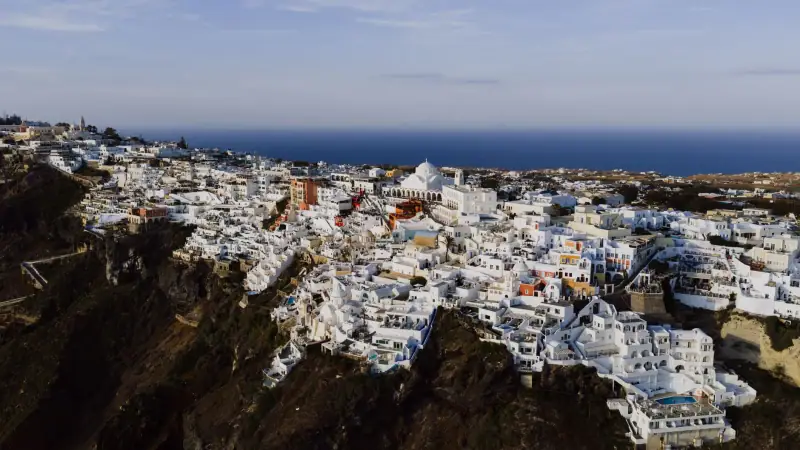
Cyclades budget: what a trip costs, item by item (3 profiles)
Cyclades budget: costs for accommodation, ferries, meals and activities, three priced profiles (smart, standard, comfort) and tips to spend less.
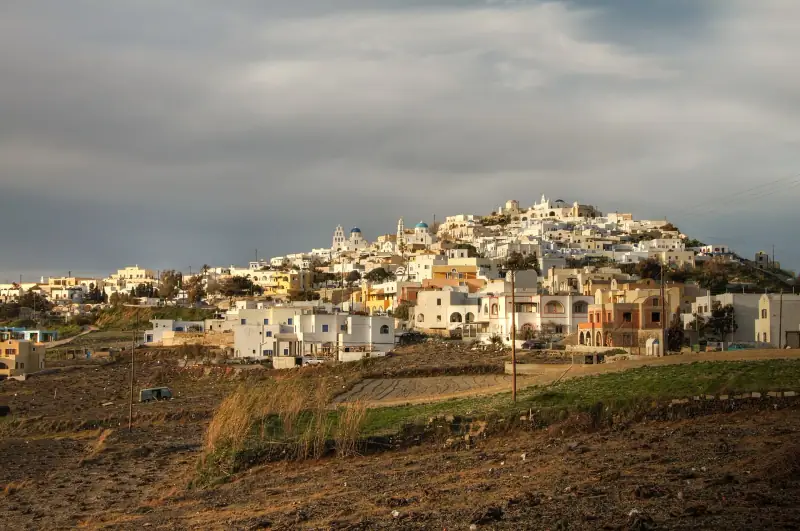
Pyrgos in Santorini: is it worth the detour without a car?
Pyrgos Kallistis without a car: bus from Fira, kasteli, lanes, tavernas, sunset and tips for a half-day visit or an overnight stay.
Ready-made
Cyclades itineraries
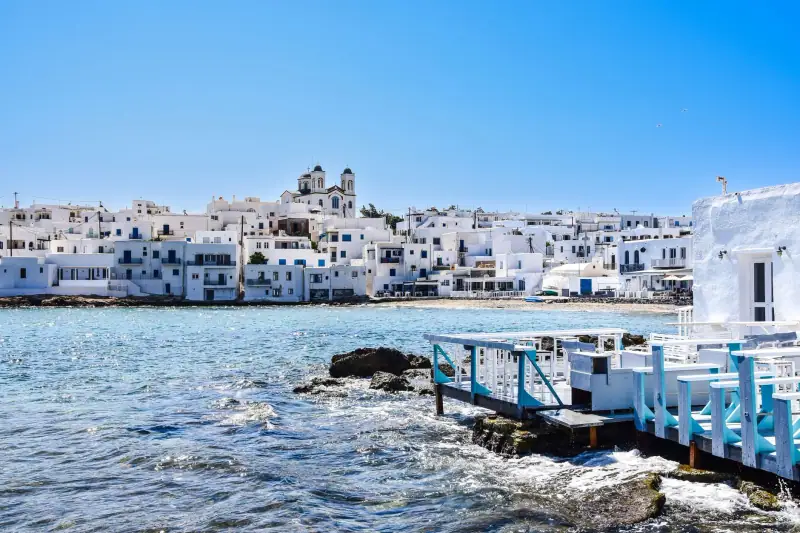
10 days
10 days in the Cyclades: Paros, Naxos and Santorini, island by island
ParosNaxosSantorini

3 days
Santorini in 3 days: a complete itinerary through the caldera, ancient sites and beaches
What to do in Santorini in 3 days? Day-by-day itinerary: Fira, Oia, Akrotiri, the volcano, black beaches and vineyards, with transport and planning tips.