Plan your trip
When to go to the Cyclades: weather, meltem and crowds month by month
We may earn a commission when you book through links on this page, at no extra cost to you. We don't visit or try the places we cover: we summarize published sources. How we work
In short
- Late May, June and September are generally the best compromise: warm and sunny weather, well-developed ferries, and fewer crowds and lower rates than July-August.
- The meltem, a north wind, blows mainly in July and August; it cools the air but can disturb exposed beaches and some ferry crossings.
- September is often the best month for swimming; August is the busiest and most expensive, around August 15.
- From November to March it is low season: many businesses closed and reduced ferry timetables.
The Cyclades have a very marked Mediterranean climate: hot, dry, bright summers and mild but wet and windy winters. Between these two extremes, the choice of month changes everything: sea temperature, wind, number of visitors, restaurant openings, ferry frequency and accommodation prices.
This guide goes month by month to help you choose. Temperatures and opening dates vary from year to year and island to island: these are orders of magnitude, not guarantees.
The short answer: May, June and September
If you can choose, aim for late May, June and September. Days are hot and very sunny, the tourist season is under way (hotels, tavernas, boats and ferries are running), but the most famous sites are more pleasant to visit than in midsummer. Accommodation rates are generally lower than in July-August.
Early October remains an interesting option for those who like the mildness and golden light of the late season, provided you accept a risk of more changeable weather and a few closures.
The meltem: the wind to know about before you go
Every summer, a north wind blows over the Aegean Sea: the meltem. It is mainly present in July and August, with episodes that can last several days. Its effects:
- It cools the air: without it, the heat of midsummer would be much heavier.
- It stirs the sea: some beaches exposed to the north become unpleasant, while their sheltered neighbors stay calm. There, it is often enough to change sides of the island.
- It can disrupt crossings: in strong wind, ferries can be delayed or canceled. Keep some margin in your schedule, especially before a return flight.
Windsurfing and kitesurfing fans, on the other hand, appreciate these conditions, notably on the islands where the spots are renowned.
Month by month
April. Nature is green and in flower, but the water is cold and days are still cool or unsettled. Many businesses gradually reopen. It is a period for hiking and villages more than for the beach.
May. The month when you start to enjoy summer without the crowd. The weather is often fine, swimming is possible for the brave, and prices stay moderate. The islands are calm and hiking trails are pleasant.
June. One of the best months: long days, settled heat, a warming sea and still reasonable crowds before school vacations begin.
July. Peak season. It is very hot, the meltem strengthens, ferries and accommodation are in high demand and prices rise. Book well in advance.
August. The busiest month, notably around August 15, a major religious holiday in Greece. The best-known islands are saturated and rates are at their maximum. It is also the month when the sea is warmest.
September. Often the best month for swimming: the water has stored the summer’s heat, the wind generally weakens, crowds thin out and prices come back down. It is a favorite time for combining beaches and sightseeing.
October. The mood becomes calmer. The first rains can arrive, the sea cools and some shops close from the middle or end of the month.
November to March. This is low season: cooler weather, frequent wind and rain, many businesses closed and reduced ferry timetables. The larger islands, such as Naxos, Paros or Syros, keep a local life all year round, which makes them more accessible than the small islands in winter.
Compare hotels, studios and guesthouses by your dates, your budget and the chosen island.
Choosing according to your plan
For the beach and swimming, favor June and September. You will enjoy the water without the peaks of heat and crowds of July-August. If you want the warmest sea, the end of summer is ideal.
For hiking and villages, aim for April, May and October. Temperatures are more bearable for walking, and the light is lovely for photography. On the paths of Naxos, Milos or Amorgos, setting off early in the morning remains advisable in every season, for example for the climb to the Hozoviotissa monastery on Amorgos.
For Santorini, it all depends on your tolerance for crowds: the sunset in Oia is very busy in summer, and the crowds are partly linked to cruise ship calls. May, June, September and early October offer a better balance. To choose the village to stay in, see our comparison Where to stay in Santorini.
For partying and nightlife, notably in Mykonos or Ios, high season, from July to early September, is when the atmosphere is liveliest.
For a tight budget, avoid August and look for the shoulder weeks. Differences in accommodation prices between high season and the start or end of the season are often very marked.
Ferries and seasonality
This is a point that often surprises: links between the islands depend on the season. In summer, frequency is high between the main islands, and fast boats complement the conventional lines. Off-season, timetables are reduced, some secondary links disappear and crossings are more sensitive to the weather.
A few practical tips:
- Book ahead your tickets for July and August, especially for crossings to Santorini, Mykonos or the most sought-after islands.
- Check the timetables a few days before departure: they can change.
- Allow a margin of one day before an international flight, especially in case of strong meltem.
- Limit island changes: each transfer costs time. Two or three islands is a good pace for ten days.
Compare flights to Athens or directly to an island, depending on the season.
Budget and booking by season
Season is the first factor of budget variation, ahead of the choice of island. In high season, accommodation, vehicle rentals and some excursions are more expensive and fill quickly. In May, June, September or October, you find more choice and often lower rates.
A few guidelines for planning:
- July-August: book accommodation and ferries several months ahead.
- May-June and September: book a few weeks ahead, more for very sought-after addresses.
- October and low season: check that the hotel, restaurants and transport you are interested in are open.
For activities at sea, such as cruises, diving or sailboat trips, the weather is decisive: plan a spare day so you can move a trip in case of wind.
Day cruises, catamaran or sailboat trips: compare excursions by island and season.
What to pack depending on the season
- Summer: light clothing, hat, sunglasses, high-protection sunscreen and light walking shoes. A thin windbreaker is useful in the evening and on the boat.
- Spring and fall: add a warm layer and a light waterproof garment. Evenings are cool, especially by the sea.
- Winter: plan for warm, windproof clothing. The wind is often more bothersome than the temperature.
- All year round: good shoes are essential. Villages are made of paved lanes, stairs and slopes, and coastal paths are sometimes stony.
In short
- Best compromise: late May, June and September.
- Warmest sea: end of summer and early fall.
- Hottest, windiest and most expensive: July and August.
- Calmest: April, October and winter, with reduced services.
Before leaving, cross-check your dates with ferry timetables and accommodation availability: that is what most often makes the difference between a smooth stay and one full of constraints.
Frequently asked questions
What is the best time to go to the Cyclades?
May-June and September are generally the best compromise: warm and sunny weather, well-developed ferries, and crowds and rates lower than in July-August. Early October remains possible, but the sea cools and some businesses begin to close.
Can you swim in the Cyclades in May?
Yes, but the water is still cool at the start of the season. Many travelers swim from late May, others prefer to wait for June. The sea is warmest at the end of summer and the start of fall.
What is the meltem?
The meltem is a north wind that blows over the Aegean Sea in summer, mainly in July and August. It cools the air, but it can raise swell, bother exposed beaches and disrupt some ferry crossings.
Are the Cyclades pleasant in winter?
It is the quiet season: cooler and less stable weather, many hotels, restaurants and developed beaches closed, and reduced ferry service. It suits travelers looking for tranquility rather than swimming.
When should you book flights and accommodation for the Cyclades?
For July and August, book several months ahead, especially for Santorini and Mykonos. For May, June and September, a few weeks ahead is often enough, but rooms with a caldera view go early.
More Cyclades guides
Keep reading
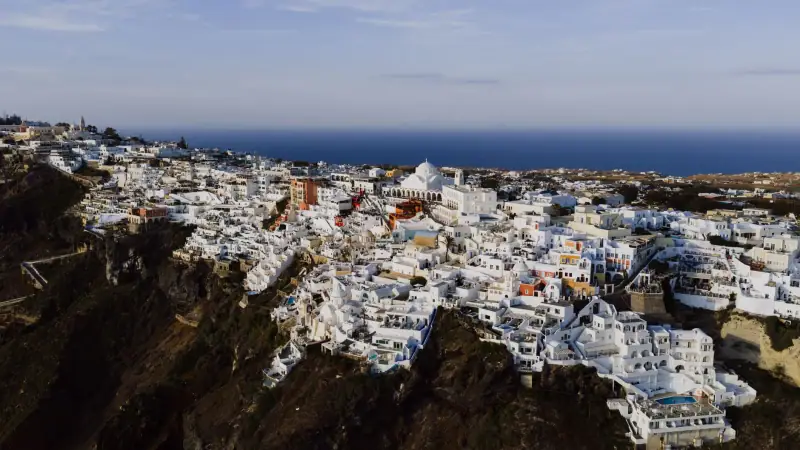
Cyclades budget: what a trip costs, item by item (3 profiles)
Cyclades budget: costs for accommodation, ferries, meals and activities, three priced profiles (smart, standard, comfort) and tips to spend less.
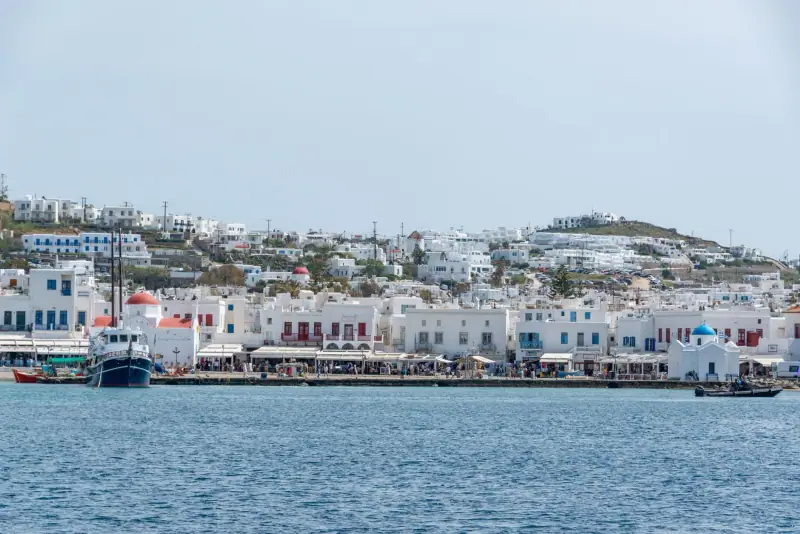
Ferries in the Cyclades: how to get from island to island without mistakes
Conventional or fast ferries, Athens ports, hub islands, booking, meltem and seasickness: how to organize your crossings between the Cyclades.

Hiking in the Cyclades: the best trails, island by island
Where to hike in the Cyclades? Santorini caldera, Paros Byzantine road, Mount Zas on Naxos, Folegandros, Amorgos: trails, seasons and tips.
Ready-made
Cyclades itineraries
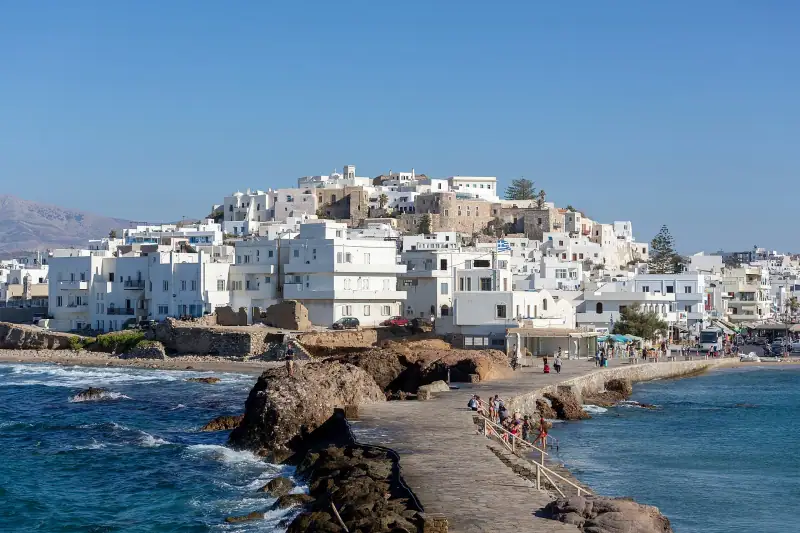
7 days
Naxos and Paros in 7 days: a detailed itinerary for two
Naxos ChoraParos
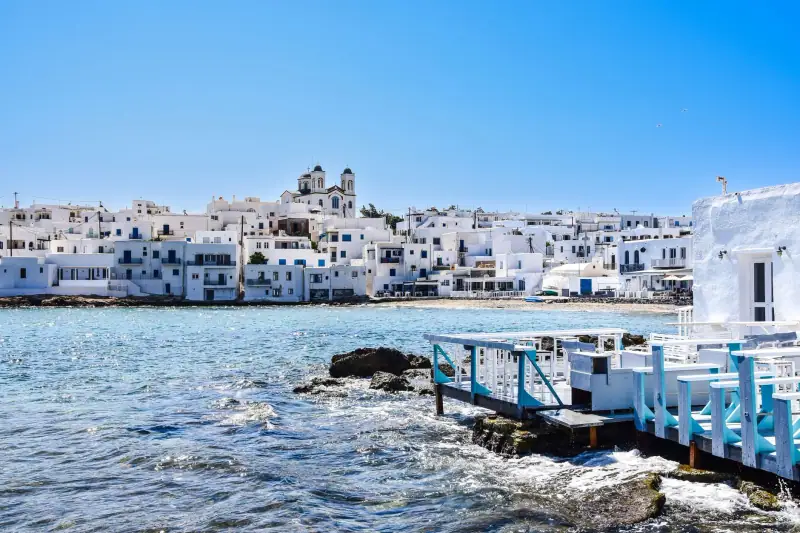
10 days
10 days in the Cyclades: Paros, Naxos and Santorini, island by island
ParosNaxosSantorini
3 days
Santorini in 3 days: a complete itinerary through the caldera, ancient sites and beaches
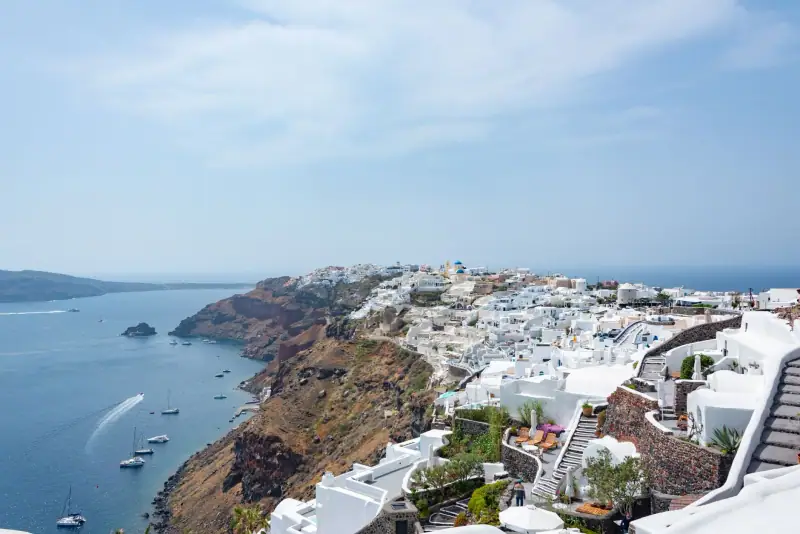
What to do in Santorini in 3 days? Day-by-day itinerary: Fira, Oia, Akrotiri, the volcano, black beaches and vineyards, with transport and planning tips.