What to see
Naxos or Paros: which Cyclades island should you choose for your stay?
We may earn a commission when you book through links on this page, at no extra cost to you. We don't visit or try the places we cover: we summarize published sources. How we work
In short
- Naxos is the largest Cyclades island: long sandy beaches, mountain villages, hiking and often lower prices; allow at least four or five days.
- Paros is more compact and livelier around Parikia and Naoussa, ideal for three or four days, and a hub of the ferry network.
- A car or scooter is mainly useful on Naxos, where distances are greater; buses cover the main beaches on both islands.
- The two islands combine easily by ferry; the meltem blows mainly in July and August.
Naxos and Paros are neighbors, similar in size in travelers’ minds, and yet they do not offer the same stay. One is the largest island in the Cyclades, with mountains, interior villages and long sandy beaches. The other is more compact, livelier around its two ports and easier to cover in a few days.
If you are hesitating between the two, this comparison helps you decide according to what you are looking for: beaches, hiking, nightlife, authenticity or logistical simplicity. If you plan to visit several islands, start with our guide to ferries in the Cyclades to understand how to move between them.
Naxos: the big, generous island
Naxos is the largest island in the Cyclades, and you feel it from the moment you arrive. It combines a west coast lined with beaches, a mountainous interior and stone villages where local life seems to have changed little. Its relief is the most pronounced in the archipelago: Mount Zas, which overlooks the island, is the highest point in the Cyclades.
The island is also known for its agriculture. Potatoes, cheeses, fruit and vegetables are produced in quantity, which shows in the plates of the tavernas, often simpler and more affordable than on the most touristy islands. For a traveler who likes to eat local, it is a big plus.
Naxos needs a little more time than Paros: distances between the town, the beaches and the interior villages are longer. Allow at least four or five days so as not to rush.
Naxos Chora and the Portara
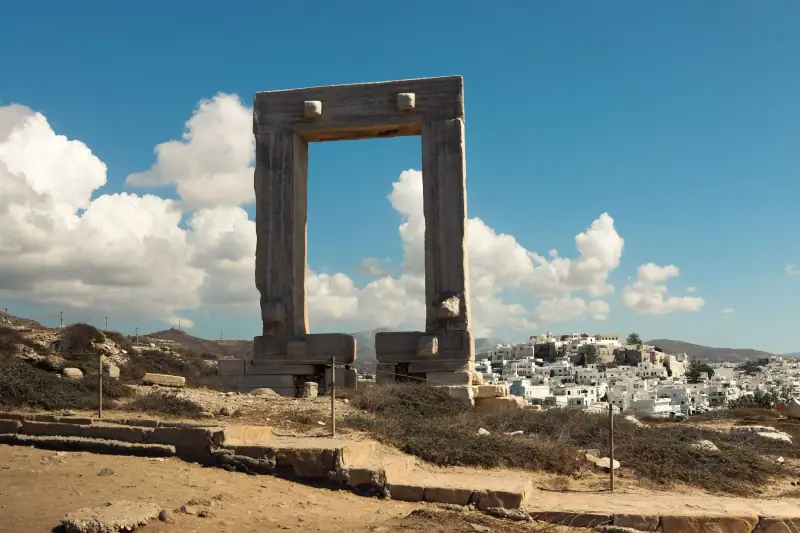
The capital, called Chora or Naxos Town, is organized around its port. The island’s symbol is the Portara, an immense marble gateway standing on a small islet linked to the land by a causeway: it is the remnant of an ancient temple that was left unfinished. You walk there from the port in a few minutes, and it is a popular spot at sunset.
Behind the waterfront, the Kastro district and the old town form a labyrinth of white lanes, old houses and small shops. It is best to wander without a precise plan, preferably in the late afternoon when the heat drops.
Chora is also the best base for a stay without a car: the port, restaurants, shops and bus station are all close, and the beaches of the neighboring coast are reachable on foot or by bus.
Compare hotels and apartments in Naxos Town or near the beaches: location, guest rating and budget.
The beaches of Naxos
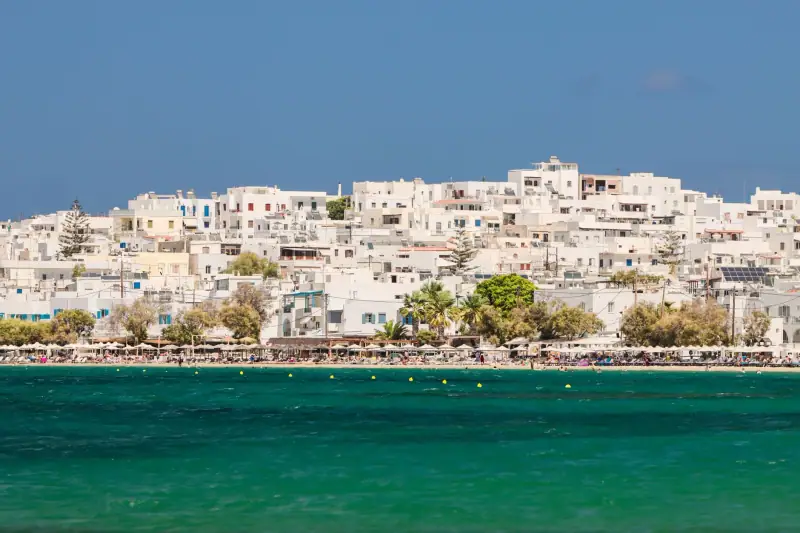
The southwest coast of Naxos is one of the most beautiful in all of Greece for those who like sand. Agios Georgios, very close to town, is practical and very accessible for families. Farther south, Agios Prokopios and Plaka line up long strips of golden sand, with clear water and a bottom that deepens gradually.
The advantage of Naxos is that even in peak season, you find space. By walking a little along the coast, you move away from the developed areas and find quieter stretches. The most distant beaches, such as those in the south of the island, need a vehicle.
The meltem wind blows mainly in July and August. It cools the air, but can make some exposed beaches unpleasant: check the weather and choose the sheltered side of the island. Our guide when to go to the Cyclades details this phenomenon.
Interior villages and hiking on Naxos
This is what really sets Naxos apart from Paros. In the Tragea valley, olive groves, Byzantine chapels and villages like Halki follow one another away from the tourist roads. Apeiranthos, a mountain village of stone and marble, is known for its paved lanes and small museums.
Walking enthusiasts will find plenty to do here: trails between villages, mule paths and the climb of Mount Zas for the most motivated. Set off early in the morning, carry plenty of water and avoid the hottest hours in summer.
Discover the guided tours, hikes and boat trips offered on the island.
Paros: the compact, lively island
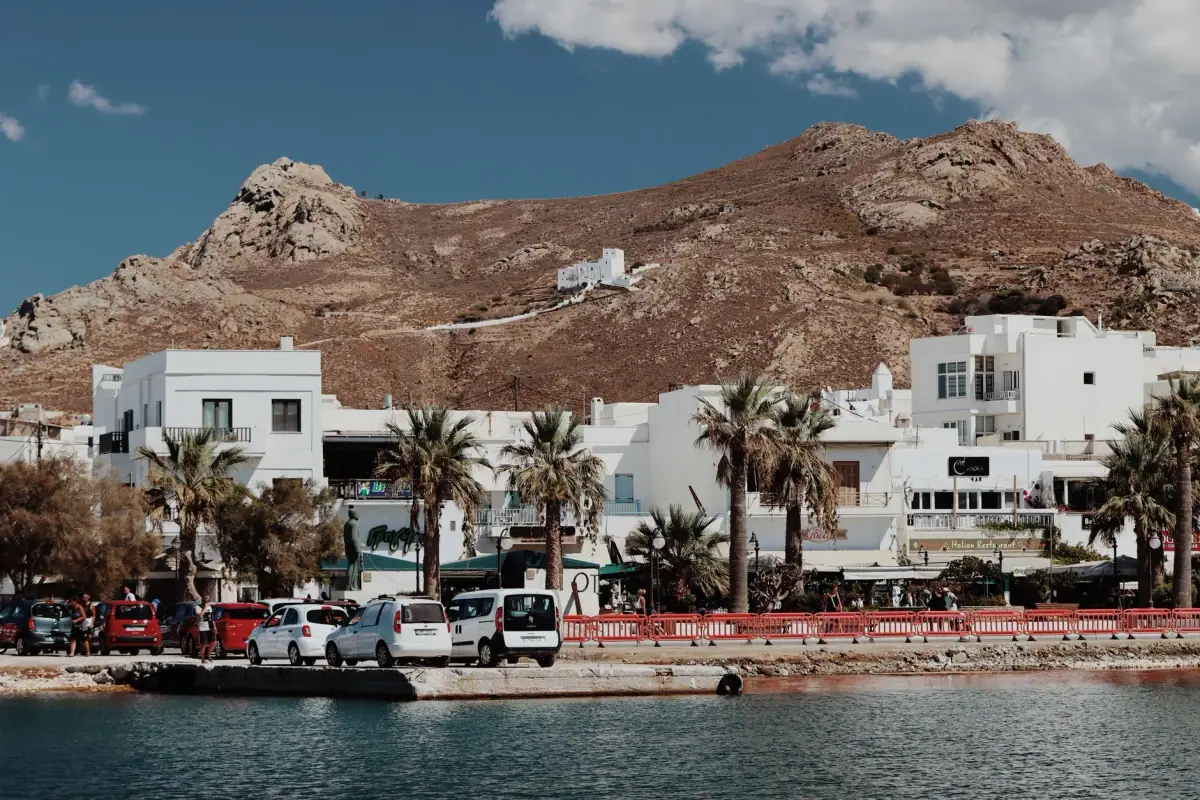
Paros is smaller and easier to grasp. Its two poles, Parikia (the main port) and Naoussa (a former fishing village turned lively resort), are only a few kilometers apart. You go from one to the other by bus or car in a short time, which makes the island ideal for a stay of three or four days.
The mood is more geared toward going out: bars, waterfront restaurants, designer boutiques. It is an island that suits couples and groups of friends who want activity without the excess of other, more famous islands.
Paros also serves as a crossroads in the Cyclades ferry network. That is an advantage if you chain several islands: there are many connections in season.
Parikia, Naoussa and the villages of Paros
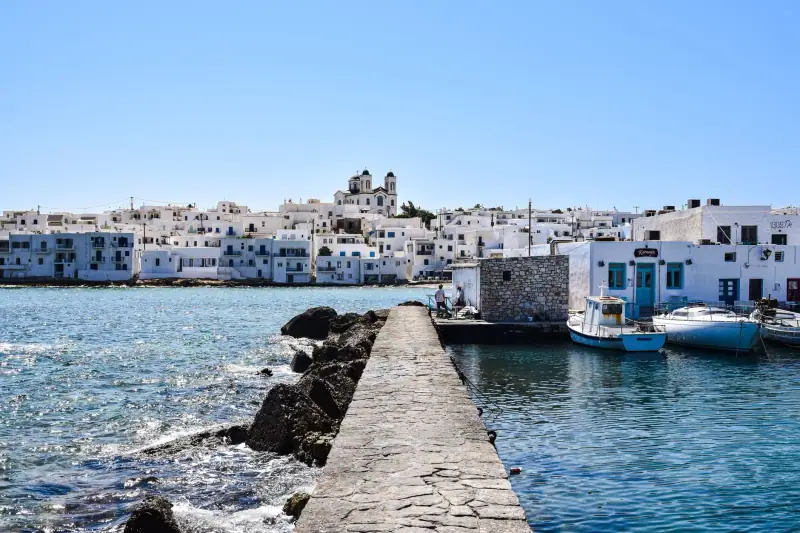
Parikia combines a busy port, a white old town and a remarkable church, the Panagia Ekatontapyliani, one of the oldest Byzantine monuments in the region. The Kastro district, built with ancient marble elements, deserves a walk.
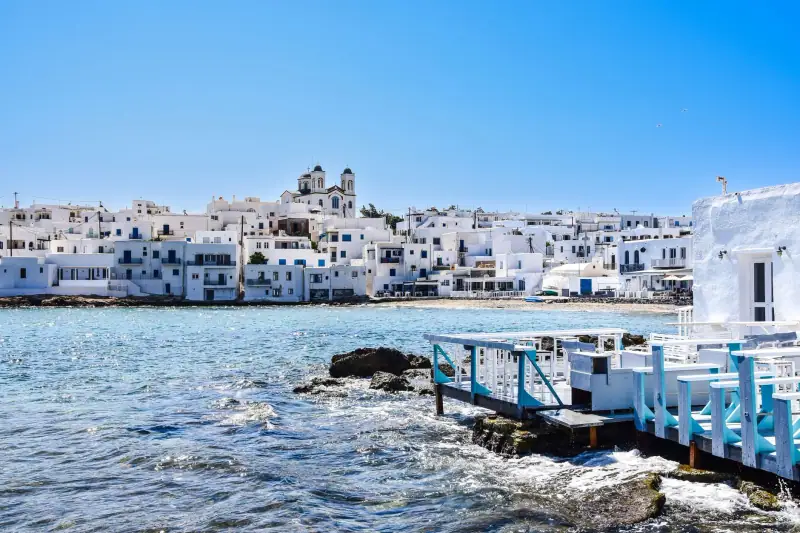
Naoussa, to the north, is the most photogenic village: a small fishing port, flowered lanes and fish tavernas. In the interior of the island, Lefkes, the former capital, is a peaceful village whose lanes climb gently to a white church. An old Byzantine road links Lefkes to Prodromos and is easily walked.
Compare hotels and apartments in Parikia, Naoussa or near the island's beaches.
Paros’s beaches and the island of Antiparos
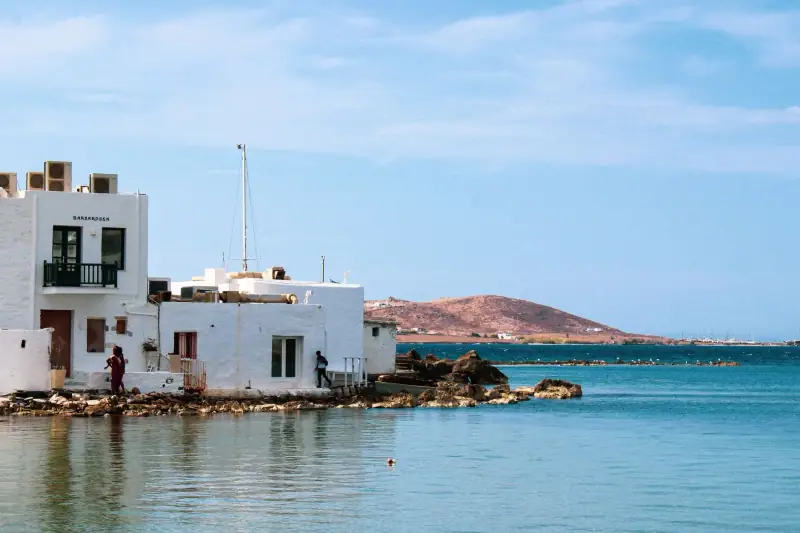
Paros has fine beaches, including Golden Beach and Santa Maria, popular with windsurfers and kitesurfers thanks to the wind. The bays of Kolymbithres, near Naoussa, are famous for their rocks sculpted by erosion. They are photogenic but can be very busy.
Paros is also the departure point for Antiparos, a small neighboring island reached by a short boat crossing. Its relaxed mood and calm beaches make it a pleasant day trip, or an option to extend the stay.
Naxos or Paros: the verdict by profile
Here is how to decide simply:
- For families and lovers of sandy beaches: Naxos, with its long beaches and often lower prices.
- For hiking and authentic villages: Naxos, whose interior is much richer.
- For atmosphere, evenings and ease: Paros, more compact and livelier.
- For a short stay, three or four days: Paros, simpler to cover.
- For wind and water sports: Paros, notably around Golden Beach.
- For a tight budget: Naxos, where you generally find more affordable rates, outside high season.
If you have a week or more, combine the two: ferry links between the two islands are practical in season. To complete a wider itinerary, you can add Santorini at the end of your stay with our three-day itinerary.
Practical tips for organizing your stay
Book your accommodation and crossings in advance if you travel in July or August. Off-season, ferry timetables are reduced and some businesses close: check the links before building your program.
On either island, the bus is enough for the main beaches, but a car or scooter gives freedom, especially on Naxos. Rent it in advance in high season. Bring sunscreen, water and a windbreaker for the evenings, when the wind can cool the air.
Discover cruises and trips at sea with swimming in the coves of the area.
Frequently asked questions
Naxos or Paros: which to choose for a family vacation?
Naxos is often preferred by families: its big sandy beaches, like those on the southwest coast, are shallow in places and the island offers room to breathe. Paros also suits very well, with sheltered bays like Naoussa, but the mood is a bit livelier in the evening.
Can you visit Naxos and Paros during the same stay?
Yes, it is one of the simplest combinations in the Cyclades. The two islands are neighbors and linked by ferries, whose frequency is generally good in season. Check the timetables with the companies, as they change from year to year.
Which island is best for hiking?
Naxos, the largest island in the archipelago, offers more relief and interior villages to link on foot. Paros offers pleasant trails, notably the old Byzantine road linking Lefkes to Prodromos, shorter and easier.
Do you need to rent a car on Naxos and Paros?
It is not mandatory, as buses link the main localities and beaches. A car or scooter is mainly useful on Naxos, where distances are greater, to explore the interior and the distant beaches.
What is the best time to go?
June to September for swimming, but May, June and September are often calmer. In July and August, the meltem wind can blow hard on exposed beaches, notably on Paros.
More Cyclades guides
Keep reading
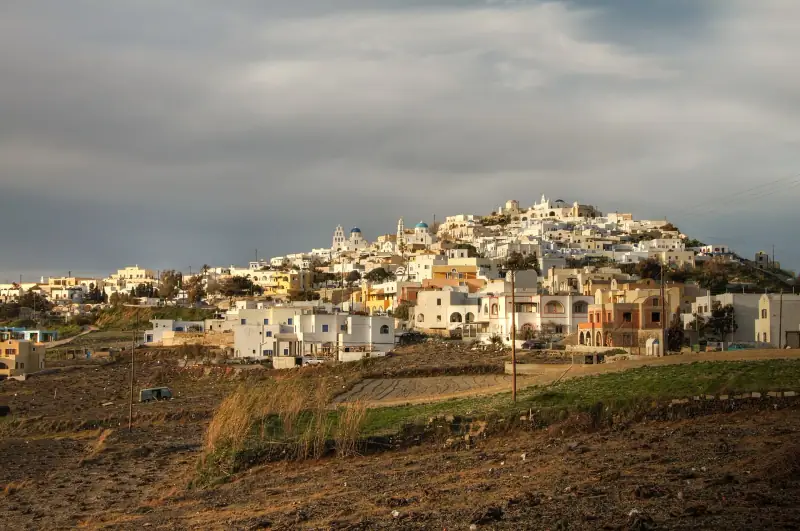
Pyrgos in Santorini: is it worth the detour without a car?
Pyrgos Kallistis without a car: bus from Fira, kasteli, lanes, tavernas, sunset and tips for a half-day visit or an overnight stay.
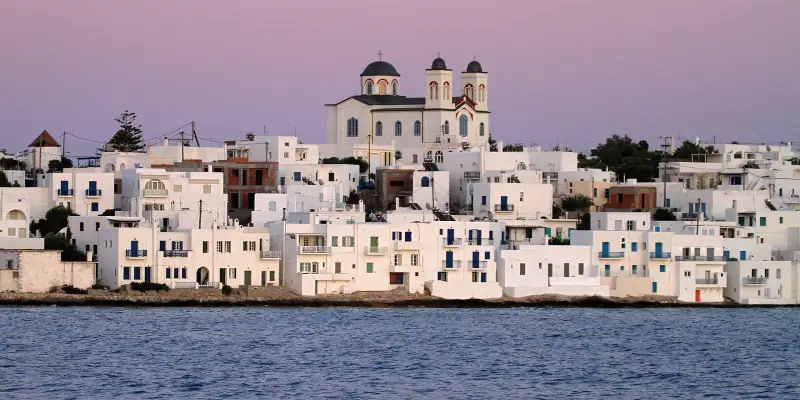
Complete guide to visiting the Cyclades: islands, itineraries, budget and tips
Visiting the Cyclades: which islands to pick, when to go, how to get there and ferry around, where to stay and what budget to plan.
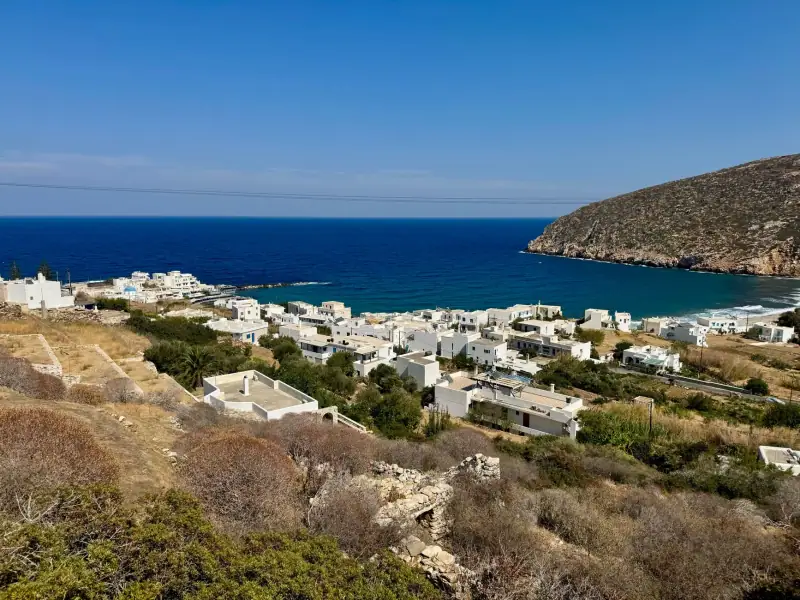
Folegandros: guide to the unspoiled Cyclades island, Chora, beaches and hikes
What to do on Folegandros? Chora on its cliff, Katergo and Agali beaches, hikes, Ano Meria and tips for the ferry and getting around the island.
Ready-made
Cyclades itineraries
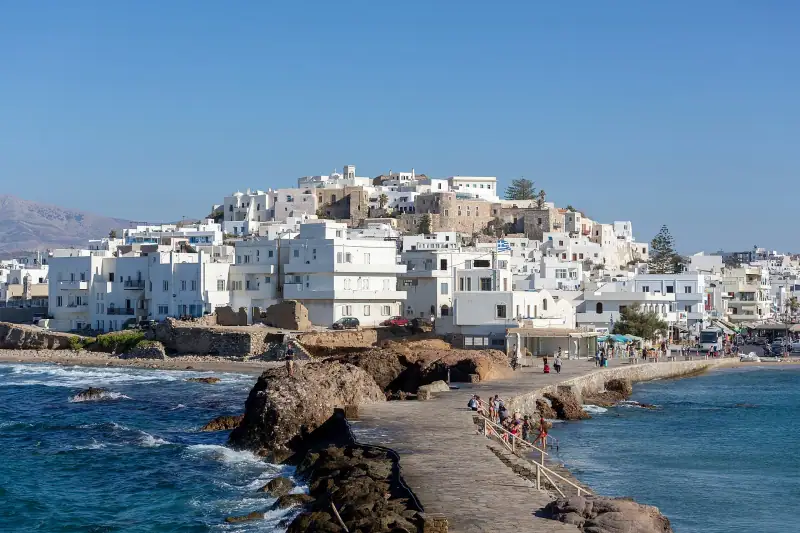
7 days
Naxos and Paros in 7 days: a detailed itinerary for two
Naxos ChoraParos
10 days
10 days in the Cyclades: Paros, Naxos and Santorini, island by island
ParosNaxosSantorini

3 days
Santorini in 3 days: a complete itinerary through the caldera, ancient sites and beaches
What to do in Santorini in 3 days? Day-by-day itinerary: Fira, Oia, Akrotiri, the volcano, black beaches and vineyards, with transport and planning tips.