Things to do
Water sports in the Cyclades: kitesurfing, windsurfing, diving and kayaking island by island
We may earn a commission when you book through links on this page, at no extra cost to you. We don't visit or try the places we cover: we summarize published sources. How we work
In short
- Paros (around Pounda) and Naxos (Mikri Vigla, Glyfada) are the two kitesurfing references; Milos is the Cyclades island most cited for diving.
- The meltem blows mainly from June to September with a peak in July and August: ideal for kitesurfing and windsurfing, but you will need sheltered beaches for swimming and diving.
- June and September are a good compromise for several activities: warm sea, wind present but less violent, fewer people.
- Check the daily marine forecast and keep a spare day for boat trips and dives, which can be canceled in strong wind.
The Cyclades are known first for their white villages, but the Aegean Sea is also a remarkable playground there. The wind blows steadily in summer, the coasts are indented, the waters are clear and the sea temperature becomes pleasant from early summer. The result: you can kitesurf, windsurf, dive, sea kayak or simply snorkel, sometimes on the same island a few hours apart.
This guide helps you choose. We cover the main water activities, the islands where they are best practiced, and the precautions to take, especially because of the meltem. To decide when to travel, see also our guide when to go to the Cyclades.
Understanding the meltem before choosing your activity
It all starts with the wind. The meltem is a north wind that blows over the Aegean Sea during summer, mainly from June to September, with a peak generally in July and August. It is dry, cools the air, and can reach considerable strength. For kitesurfers and windsurfers, it is a blessing. For divers, kayakers and families, it is a constraint to factor in.
In practice, the wind determines the coast you will go to. Beaches exposed to the north can be rough, with chop and waves, while the south coasts or those sheltered by relief stay calmer. On each island, there is almost always a fallback beach or cove. Local schools know these rules by heart: do not hesitate to ask for their advice that same morning.
A few simple rules apply to all activities:
- Check the marine forecast every day, not just the day before. The wind can change quickly.
- Plan a spare day if a boat trip or dive is your priority: departures can be canceled in strong wind.
- Never go out alone in a kayak or on a paddleboard when the wind picks up: it pushes you out to sea.
- Favor mornings, often calmer, for wind-sensitive activities.
Kitesurfing on Paros: Pounda and flat water
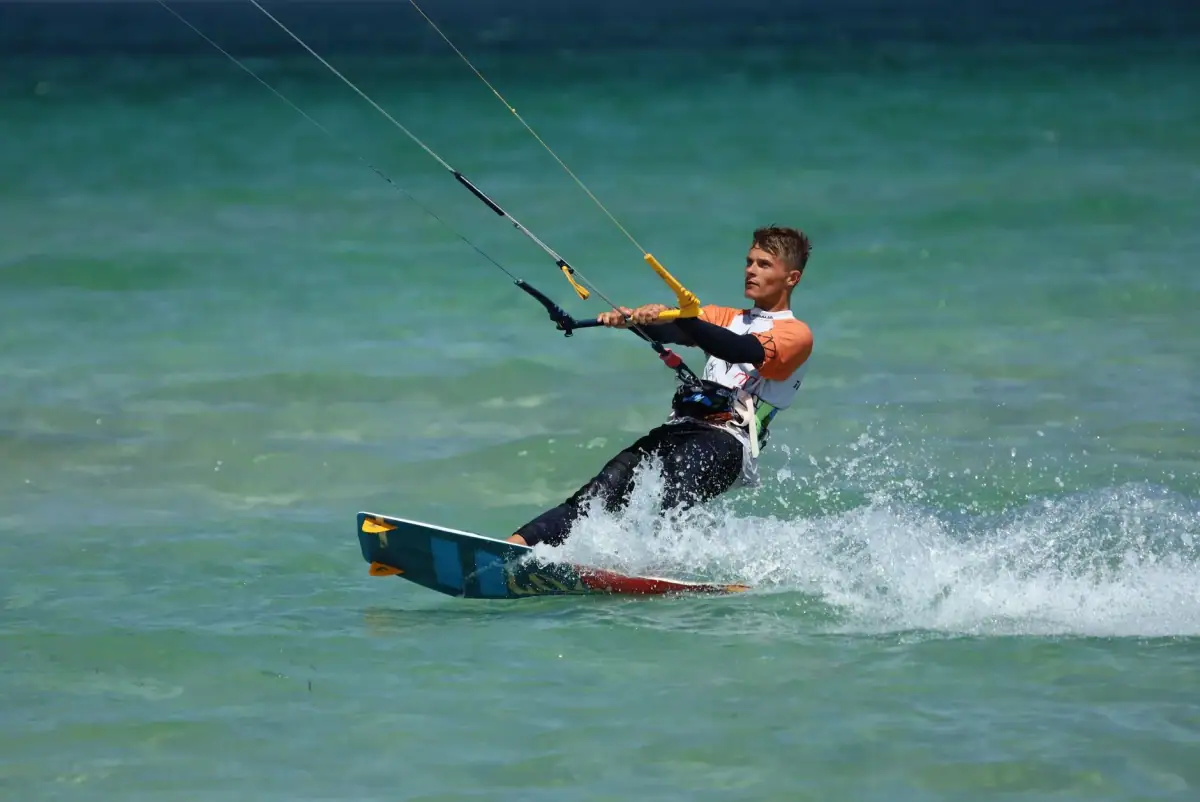
Paros is one of the references for kitesurfing in Greece. The best-known spot is at Pounda, on the west coast of Paros facing Antiparos: a very busy area in season, with schools and rental centers. The wind there is generally well established in summer, and the layout offers both flat-water zones and windier zones, enough to suit a range of riders.
For a beginner, the right strategy is to book a few lessons with a certified instructor rather than starting alone. Kiting requires understanding the wind, kite safety and right-of-way rules. Schools supply the equipment and teach you to handle launching, flying, then your first runs on the board. Allow several sessions before riding independently: progress varies a lot from person to person.
For experienced riders, Paros is also good for exploring several beaches along the east coast, where windsurfing is also widely practiced. Out of the water, the island is ideal for rest days: villages, the lanes of Naoussa, quiet beaches. Our comparison Naxos or Paros helps you choose between the two islands depending on what you are after.
Compare hotels and apartments on Paros: location, guest rating and budget, for accommodation near the sea.
Naxos: windsurfing, kite and big beaches
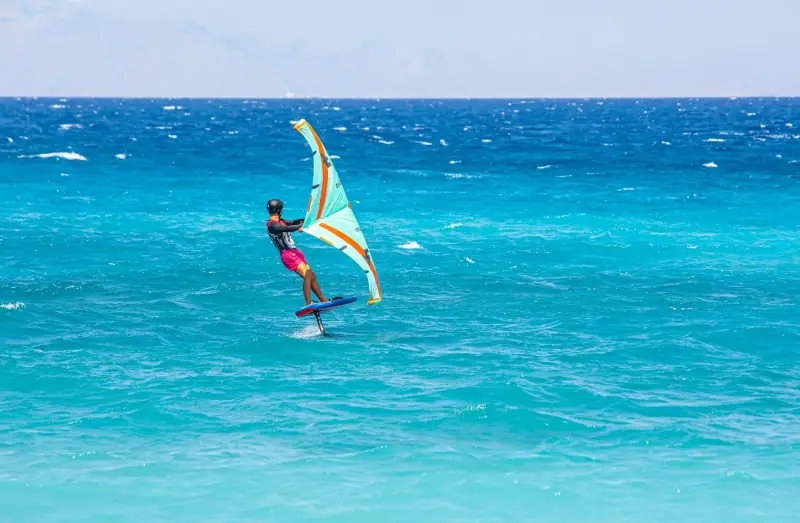
Naxos is known for its long sandy beaches and for a wind that generally blows reliably in summer, which makes it an excellent place for board sports. On the west coast, beaches like Mikri Vigla, Glyfada or Pyrgaki are associated with kitesurfing and windsurfing. Mikri Vigla is one of the most cited spots, with centers offering rental and lessons.
The beaches closer to Chora, such as Agios Georgios, are often used for learning to windsurf, thanks to more accessible conditions when the wind is moderate. Schools there offer courses, hourly rentals and group lessons.
The advantage of Naxos is its versatility: it is one of the largest islands in the archipelago, and you can combine half a day of riding with hiking in the interior or a visit to Chora and the Portara. If you want to walk between two sessions, see our guide to hiking in the Cyclades. For where to sleep, we describe the neighborhoods in where to stay in Naxos.
A tip: on these windy beaches, the meltem lifts sand and makes relaxing less pleasant in midsummer. If you travel as a family, choose a sheltered beach for swimming and keep the west coast for riding sessions.
Diving and snorkeling in Milos
Milos is the island most frequently cited for diving in the Cyclades. Its volcanic origin created underwater cliffs, arches, tunnels and cavities that offer a spectacular setting beneath the water. The sites around Kleftiko and Papafragas are among the most renowned, with generally very good visibility and Mediterranean wildlife: octopus, schools of fish, groupers depending on the area.
Several dive centers are based on the island, notably around Pollonia. They offer introductory dives for beginners, outings for certified divers and exploration dives. What you will see depends on the weather, the season and the site: outings are adapted each day according to wind and swell.
If you do not dive, snorkeling is an excellent alternative. Many boat excursions to Kleftiko include swimming stops with mask and snorkel. Before booking, check what is supplied: equipment, vest, snack, duration and the possibility of cancellation in bad weather. To complete the program, our article on the beaches and coves of Milos describes each site.
Compare introductory dives, snorkeling trips and cruises to Kleftiko with guest reviews.
Sea kayaking: exploring caves and coves
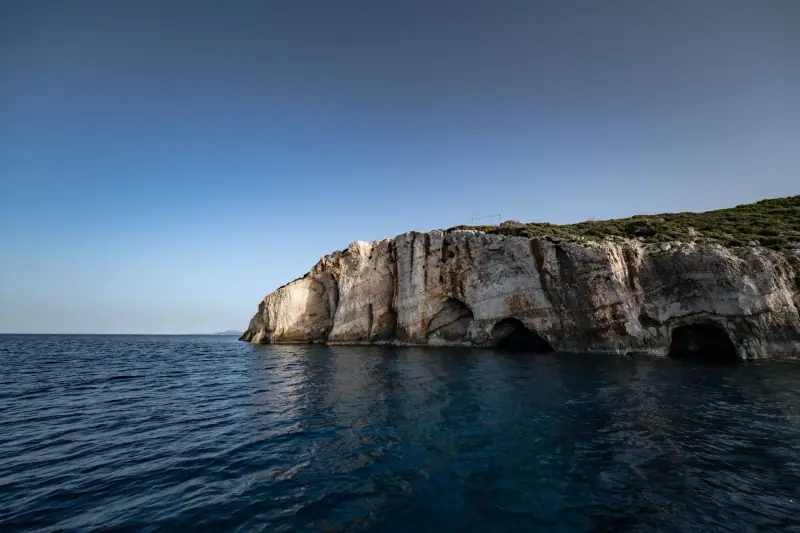
Kayaking is probably the gentlest way to discover the coasts of the Cyclades. On Milos, guided sea-kayak outings let you approach caves, arches and coves inaccessible from land, at a leisurely pace. These excursions generally last a few hours and are suitable for anyone in reasonable physical shape, with no particular level required.
Elsewhere, kayak and paddleboard rentals are found on many busy beaches, notably on Naxos, Paros or Mykonos. Rental shops will point out the safe areas, but the basic rule stays the same: stay close to shore, wear a vest and avoid going out when the north wind picks up.
Guided kayaking has another advantage: an instructor knows the currents, the shelters and the times when the sea is calmest. For a first experience, it is safer than an independent rental on an exposed coast.
To prepare for outings at sea, a few accessories are useful: water shoes, a light wetsuit early in the season, a waterproof case for your phone. Our article on accessories for the Cyclades lists the essentials to bring.
Other islands and activities: Santorini, Mykonos, the Small Cyclades
The other islands have their assets too. On Santorini, boat trips around the caldera, with swims in waters of volcanic origin, are among the most popular activities. They showcase the caldera landscape seen from the sea, away from the crowds on the terraces. On Mykonos, the wind season livens up several beaches on the south and north coasts, with board-sports schools and equipment rentals.
In the Small Cyclades, such as Koufonissia, the coves and calm waters are particularly suited to snorkeling, paddleboarding and swimming. Distances are short, the mood is peaceful and it is easy to spend a few days there without a car. To reach these islands, see our guide to ferries in the Cyclades: connections vary with the season and can be disrupted by wind.
If you like supervised excursions, trips by catamaran, sailboat or motorboat generally combine swimming, lunch on board and stops in coves. They are a good compromise for those who do no particular sport but want to enjoy the sea.
Catamaran, sailboat or motorboat: compare day trips with swimming and snorkeling.
Which period to choose by activity
Each sport has its ideal window. For kitesurfing and windsurfing, summer is the most regular season, with frequent wind from June to September. Beginners will prefer the months when the wind is less violent, often the start and end of the season. For diving, kayaking and snorkeling, the sea is pleasant from late spring, and the day’s weather matters more than the month.
Here is a simple guide:
- May and early June: fewer people, sea still cool, variable wind. Consider a light wetsuit for diving.
- June and September: the best compromise for most activities, with a warm sea and schools open.
- July and August: stronger wind and heavy crowds. Ideal for kitesurfing, more complicated for kayaking and boat trips.
- October: the sea stays mild, but the offer shrinks, and many centers close.
School hours and opening dates change from one year to the next: confirm them directly with the centers before your trip, particularly at the start and end of the season.
How to organize your stay around the sea
Depending on your priority, here are three ways to organize your trip:
- Board-sports stay: settle on Paros or Naxos for a week, with lessons in the morning, beach in the afternoon and excursions at the end of the stay.
- Diving and coves stay: concentrate on Milos, with a boat day, a diving day and a day of beaches reachable by car.
- Mixed stay: combine two islands, for example Naxos then Milos or Santorini, allowing time for ferries. Our 10-day itinerary in the Cyclades offers a good starting point.
For logistics, a rental vehicle is often useful on Milos and Naxos, where the beaches are scattered. Book it early in July and August.
Budget and booking
The budget varies a lot with the activity. An introductory dive, a kitesurfing lesson or a day excursion represent different expenses, and rates change from one season and one school to another. Always ask what is included: equipment, insurance, transport, photo, meals. To build your overall budget, see our guide to the budget in the Cyclades.
A few simple habits help avoid disappointment:
- Book lessons and outings in high season in advance, especially for kite and diving.
- Check that the organizer is professional, insured and that the instructor is qualified.
- Read the weather cancellation conditions before paying.
- Consider travel insurance that covers water activities: check your policy’s exclusions.
Safety and respect for the marine environment
The Aegean Sea is welcoming, but it calls for caution. Currents and wind can be deceptive near capes and straits. Do not go far from shore with inflatable equipment, respect the marked swimming areas and always tell someone your plans if you go kayaking.
On the environmental side, avoid touching the bottom, picking up shells or feeding the fish. Take your trash with you, use a reef-friendly sunscreen if possible, and do not walk on Posidonia seagrass meadows when launching a kayak or board: they protect the seabed and the beaches.
Finally, water shoes help you avoid many problems on rocky bottoms, especially sea urchins.
Frequently asked questions
Which Cyclades island should you choose for kitesurfing?
Paros (around Pounda, on the west coast facing Antiparos) and Naxos (Mikri Vigla, Glyfada) are the two references. Paros attracts an international community of kiters, while Naxos offers long, open beaches, well suited to learning when the wind is steady.
When is the wind strongest in the Cyclades?
The meltem, a north wind, blows mainly from June to September and generally peaks in July and August. It is the ideal season for kite and windsurf, but it means choosing sheltered beaches for swimming and diving.
Can you dive as a beginner?
Yes. Several centers offer supervised introductory dives, notably in Milos and Naxos. For an introductory dive, no certification is needed, though centers usually ask you to fill in a health questionnaire. Always check that the center is professional and insured.
Should you bring your own gear or rent locally?
For kitesurfing and windsurfing, renting locally is the simplest solution: schools rent equipment with lessons. For diving, you can bring your own mask and snorkel; the centers supply the rest. Bring water shoes if you are worried about sea urchins.
Is it suitable for kids and families?
Snorkeling, sea kayaking in calm water and paddleboarding suit many children, provided they have a suitable vest and constant supervision. Kitesurfing and diving have minimum ages and conditions that vary by school: find out before booking.
What is the best period for doing several activities?
June and September offer a good compromise: sea already warm, wind present but less violent than in midsummer, and fewer people. Kitesurfing is practiced mainly from June to September; diving and kayaking are more comfortable in a calm sea.
More Cyclades guides
Keep reading

Hiking in the Cyclades: the best trails, island by island
Where to hike in the Cyclades? Santorini caldera, Paros Byzantine road, Mount Zas on Naxos, Folegandros, Amorgos: trails, seasons and tips.
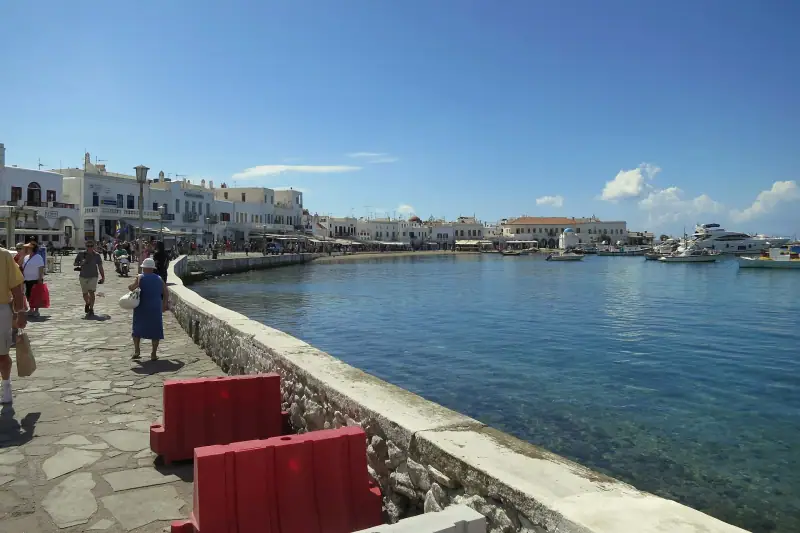
Delos excursion from Mykonos: book ahead or on site?
Delos from Mykonos: should you book the boat ahead or on site? Prices, timetables, entry ticket, wind and season to choose the right option.
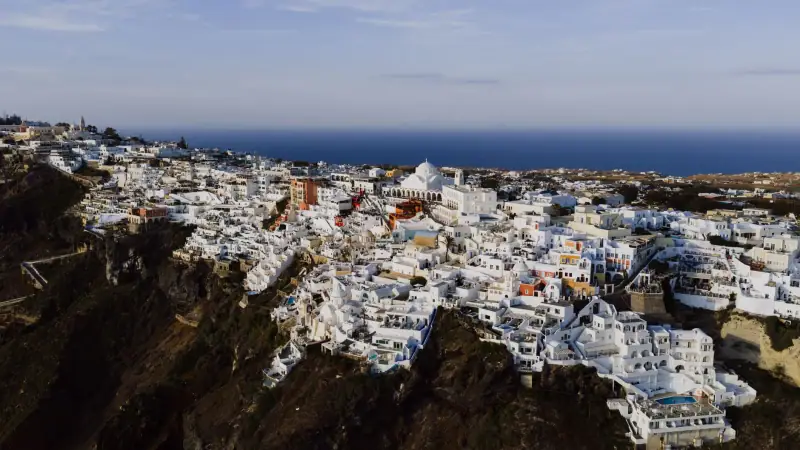
Cyclades budget: what a trip costs, item by item (3 profiles)
Cyclades budget: costs for accommodation, ferries, meals and activities, three priced profiles (smart, standard, comfort) and tips to spend less.
Ready-made
Cyclades itineraries
7 days
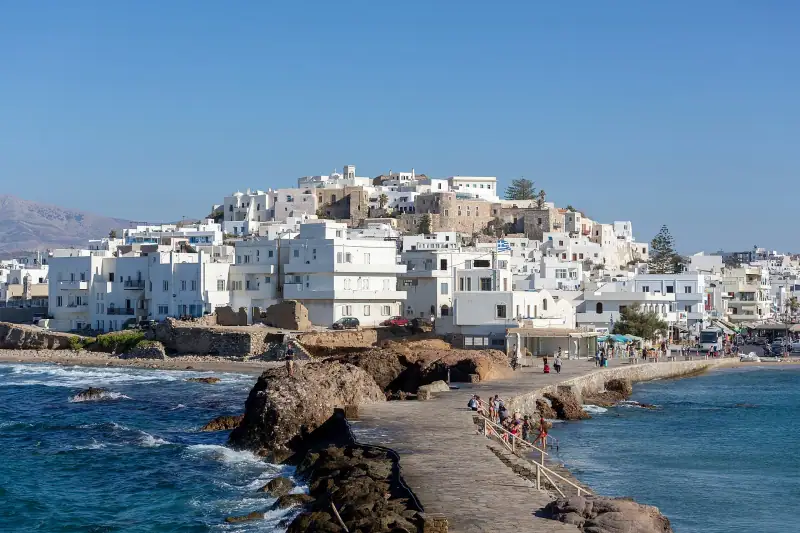
Naxos and Paros in 7 days: a detailed itinerary for two
Naxos ChoraParos
10 days
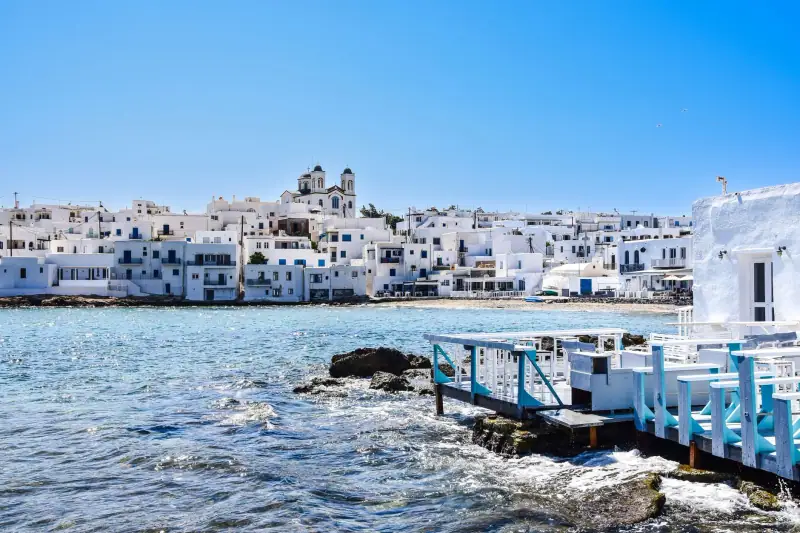
10 days in the Cyclades: Paros, Naxos and Santorini, island by island
ParosNaxosSantorini
3 days
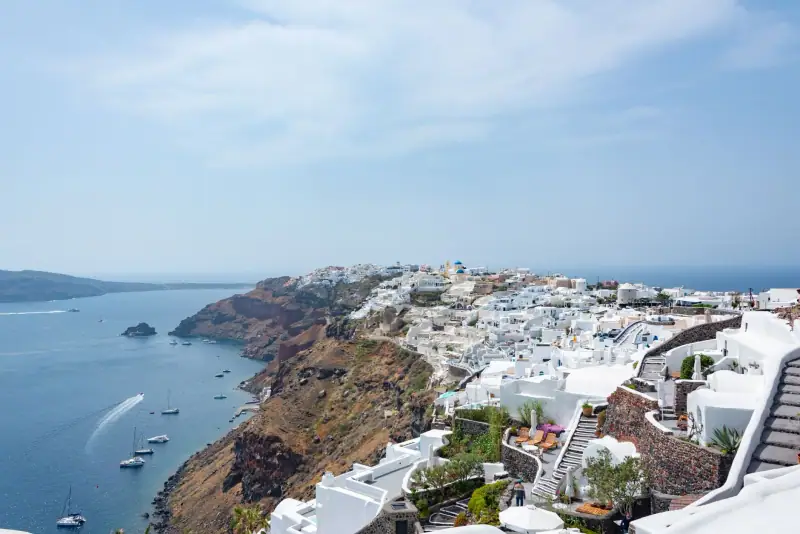
Santorini in 3 days: a complete itinerary through the caldera, ancient sites and beaches
What to do in Santorini in 3 days? Day-by-day itinerary: Fira, Oia, Akrotiri, the volcano, black beaches and vineyards, with transport and planning tips.