Plan your trip
Ferries in the Cyclades: how to get from island to island without mistakes
We may earn a commission when you book through links on this page, at no extra cost to you. We don't visit or try the places we cover: we summarize published sources. How we work
In short
- Piraeus is the main port for the Cyclades; Rafina and Lavrio, farther east, serve mostly the northern and eastern islands.
- In July and August book ahead, especially fast boats and crossings to Santorini or Mykonos; in May, June and September a few days before is generally enough.
- Fast boats save a lot of time but cost more and handle rough seas less well; conventional ferries are slower, steadier and take vehicles.
- The meltem can delay or cancel departures: keep at least one day of margin before any international flight.
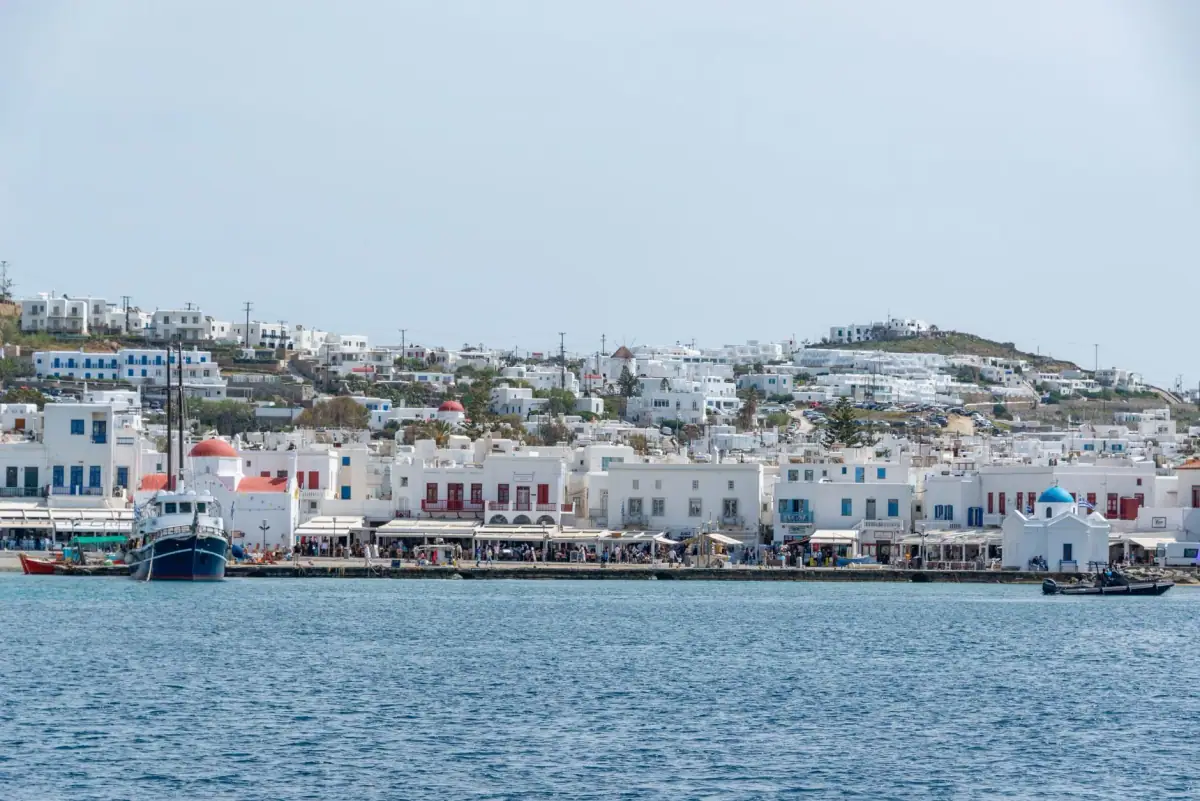
In the Cyclades, the boat is not a mere excursion: it is the main means of transport. Each island has its port, each port has its lines, and the quality of a trip often depends on how you chain the crossings. Well prepared, they are part of the pleasure: you leave a lively port, sail past arid islets and arrive in a white village at the end of the day.
This guide explains how the network works, how to choose between a conventional ferry and a fast boat, when to book and how to handle the wind. To choose your dates, first see our guide when to go to the Cyclades.
How the ferry network works
The archipelago is served by several companies, which operate ships of very different sizes. There are two main families of links:
- Links from the mainland, which connect Athens to the main islands. They leave mostly from Piraeus, and also from Rafina or Lavrio depending on the line.
- Inter-island links, which connect the Cyclades to each other. They are more numerous between nearby islands, and much more irregular with the small islands.
One point to remember: there is no single, permanent timetable. Lines, departure days and frequencies change from one season to the next, and from one year to the next. That is why no article, including this one, can replace a check of the timetables a few days before departure.
The islands that serve as crossroads, such as Paros, Naxos, Syros or Mykonos, are the best connected. Small islands, like those of the Small Cyclades, depend on only a few links, often from Naxos.
Conventional ferry or fast boat
The choice between the two types of ship changes the experience a lot.
The conventional ferry is a large ship with outdoor decks, lounges, a snack bar and room for vehicles. It is slower, generally cheaper and steadier in rough seas. It is a good option for travelers who enjoy the journey, those who are prone to seasickness or those who take a car on board.
The fast boat (catamaran or hydrofoil depending on the line) clearly cuts crossing times. It is more expensive, seats are assigned, deck access is limited and it handles heavy seas less well. It suits when time matters, notably over a long distance from Athens.
As a guide, the crossing between Athens and the farthest islands such as Santorini takes several hours, with a very marked difference between the two types of boat. Between neighboring islands, like Paros and Naxos, trips are short. Always check the duration shown by the company when booking.
Compare flights to Athens or to an island of the archipelago, depending on your departure date.
When and how to book your tickets
The right time to book depends on the season and the type of crossing.
- July and August: book as soon as your dates are fixed, especially for fast boats and links to Santorini and Mykonos. The most convenient departures fill first.
- May, June, September: boats are less full, but it is better not to wait until the last minute if you travel with a vehicle or a fixed schedule.
- October and off-season: timetables are reduced. The main risk is no longer the available space, but the absence of a departure on the day you want.
Tickets are bought on the companies’ websites, at the port agencies or on ferry comparison sites such as Ferryhopper, which we mention for information. Tickets are generally electronic: keep them on your phone, along with a photo ID, as it may be requested at boarding.
A few useful precautions:
- Arrive at the port early. One hour before departure is a prudent rule, more if you are taking a vehicle on board.
- Locate your gate. In a large port like Piraeus, the boarding gates are far from each other: find out about the gate before leaving.
- Keep a plan B. A canceled crossing should be transferable to the next departure or the next day, without making you miss a flight.
The meltem and the sea: what to know
The meltem is a north wind that blows mainly in summer, with peaks in July and August. It cools the air, but it also stirs up the sea between the islands. On a conventional ferry, this mostly means rolling. On a fast boat, it can lead to delays or cancellations when conditions are difficult.
To limit the risks:
- Allow a margin of at least one day between your last crossing and your international flight.
- Favor the conventional ferry if the sea worries you or if a cancellation would be costly for you.
- Avoid tight connections. If you chain two islands on the same day, leave yourself time between the two boats.
- Think about seasickness. A light meal and fresh air on deck help a lot. If you are prone to it, ask your doctor or a travel clinic, and see the official travel health pages (CDC in the US, TravelHealthPro in the UK).
Organizing an island-hopping itinerary
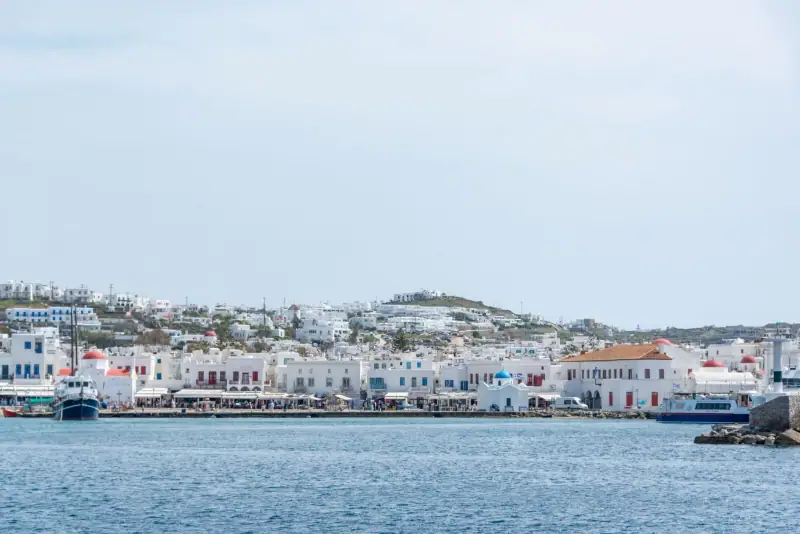
The most useful rule is to limit island changes. Each transfer takes a good part of the day: getting to the port, waiting, the crossing, then arriving at the hotel. Ten days reasonably allow you to visit two or three islands without rushing.
A few common ways of chaining islands:
- Paros and Naxos: neighboring islands, very well linked, which complement each other well. One offers a lively port and beaches, the other interior villages and long sandy beaches.
- Mykonos and Paros or Naxos: a classic combination pairing a festive mood with quieter villages.
- Santorini at the end of the stay: the island is farther from Athens than the other islands of the archipelago, which suggests placing it at the start or the end of the trip. Our three-day itinerary in Santorini helps you organize this leg.
- Milos and Folegandros: more unspoiled islands, to combine if you have time and like wild landscapes.
Some combinations are less practical than they look on the map: two islands close together geographically may have no direct link. Check the actual link before booking your accommodation.
Compare hotels and studios by island and arrival date, so you do not sleep far from the next day's ferry.
With or without a car on the ferry
Taking a vehicle on a ferry is possible on conventional ferries, but it is rarely the best option. The ticket is more expensive, booking has to be done early, and the roads on many islands are narrow and winding. In most cases, it is simpler to rent there, at the port or airport, when you need one.
On islands well served by buses and taxis, like Paros or Naxos, renting a car or scooter is mainly useful for reaching distant beaches and villages. On very small islands, you often get around on foot.
Beyond the crossing: excursions at sea
Boats are not only for changing islands. Several day excursions let you discover the archipelago differently: a tour of the Santorini caldera, a sailboat trip, a cruise to islets or a visit to the ancient site of Delos from Mykonos. These trips depend a lot on the weather and the season, and are less frequent in October. If your route goes through Amorgos, our guide to the Hozoviotissa monastery helps you organize the visit.
Compare sailboat and catamaran trips and day excursions, with cancellation depending on the conditions of each offer.
Practical tips on board
- Luggage: large suitcases travel in a hold or dedicated area on ferries, and in a more limited space on fast boats. Traveling light simplifies transfers a lot.
- Seating: on a conventional ferry, seats are sometimes unassigned, but lounge seats go fast. On a fast boat, the seat is assigned.
- Food and drink: a snack bar is generally available on board, but the offer is limited and more expensive than on land. Bring a bottle of water and something to eat.
- Clothing: the deck is exposed to the wind. Even in summer, a light jacket is useful.
- Arriving at the port: ports are sometimes a few kilometers from the main village. Ask your hotel about the best way to reach your accommodation: bus, taxi or transfer.
In short
Ferries are the common thread of a trip to the Cyclades. Choose the boat according to your budget and your tolerance for the sea, book early in summer, keep a margin before your return flight and limit island changes so you really enjoy each stop. With these simple rules, crossings become a pleasant part of the trip rather than a constraint.
Frequently asked questions
Which port should you choose in Athens to go to the Cyclades?
Piraeus is the main port and offers the widest choice of links to the Cyclades. Rafina and Lavrio, farther east, serve mostly the islands in the north and east of the archipelago. The choice depends on the target island and your lodging in Athens: check the departure port shown on the ticket.
Do you need to book ferries in advance?
In July and August it is better to book ahead, especially for fast boats and crossings to Santorini or Mykonos. In May, June and September, booking a few days before departure is generally enough, unless you are taking a vehicle on board.
Conventional ferry or fast boat: which to choose?
The fast boat saves a lot of time but costs more and handles rough seas less well. The conventional ferry is slower, steadier, and lets you stay out on deck. For a long crossing from Athens, the difference in duration is significant.
Do ferries always run with the meltem?
Not always. When the wind is very strong, departures can be delayed or canceled, especially for fast boats and small exposed ports. Keep a margin of one day before any international flight.
Can you link several islands without going back through Athens?
Yes, many islands are linked to each other, notably around Paros and Naxos. Links depend on the season, however, and some islands are linked by only a few departures a week outside summer. Check up-to-date timetables before locking in your itinerary.
More Cyclades guides
Keep reading

Cyclades budget: what a trip costs, item by item (3 profiles)
Cyclades budget: costs for accommodation, ferries, meals and activities, three priced profiles (smart, standard, comfort) and tips to spend less.
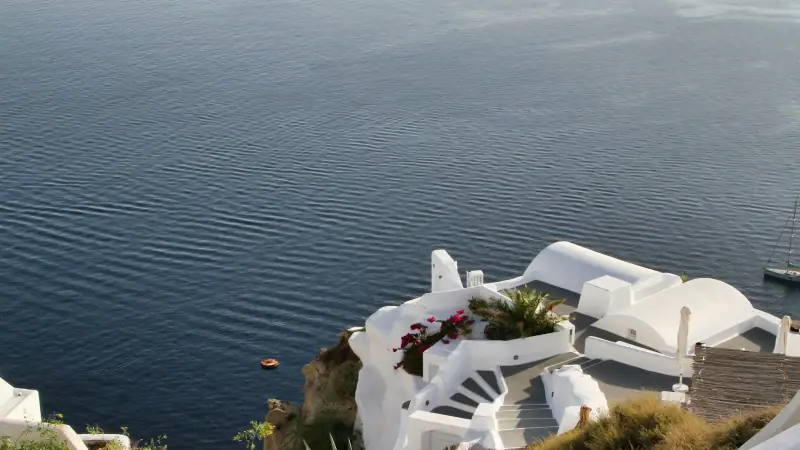
When to go to the Cyclades: weather, meltem and crowds month by month
When to go to the Cyclades? Weather, meltem wind, sea temperature, crowds and budget month by month to pick the best time for Santorini, Naxos or Milos.

Hiking in the Cyclades: the best trails, island by island
Where to hike in the Cyclades? Santorini caldera, Paros Byzantine road, Mount Zas on Naxos, Folegandros, Amorgos: trails, seasons and tips.
Ready-made
Cyclades itineraries
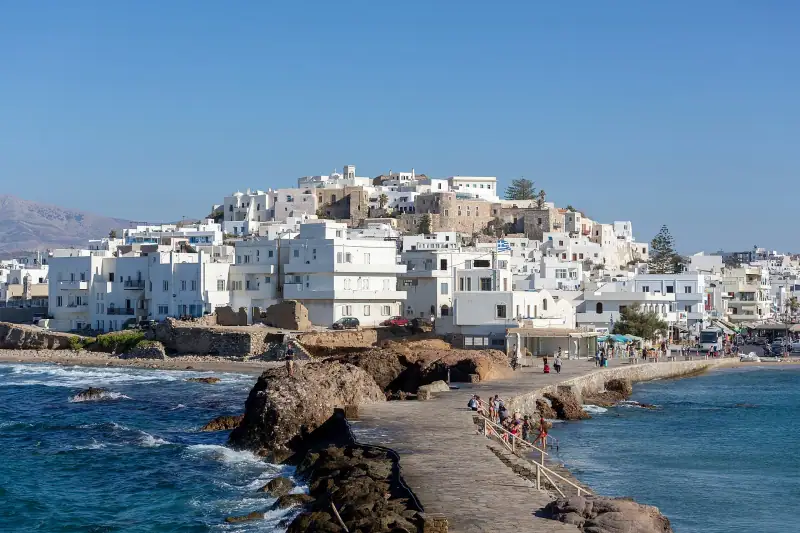
7 days
Naxos and Paros in 7 days: a detailed itinerary for two
Naxos ChoraParos
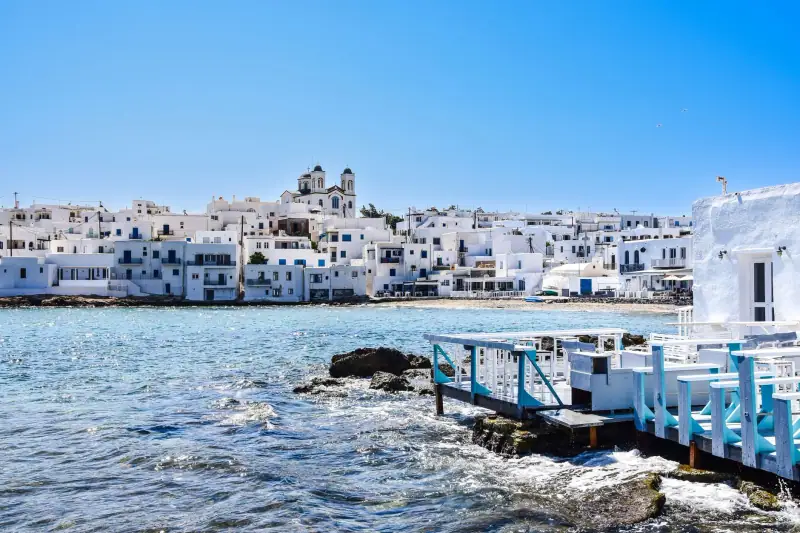
10 days
10 days in the Cyclades: Paros, Naxos and Santorini, island by island
ParosNaxosSantorini
3 days
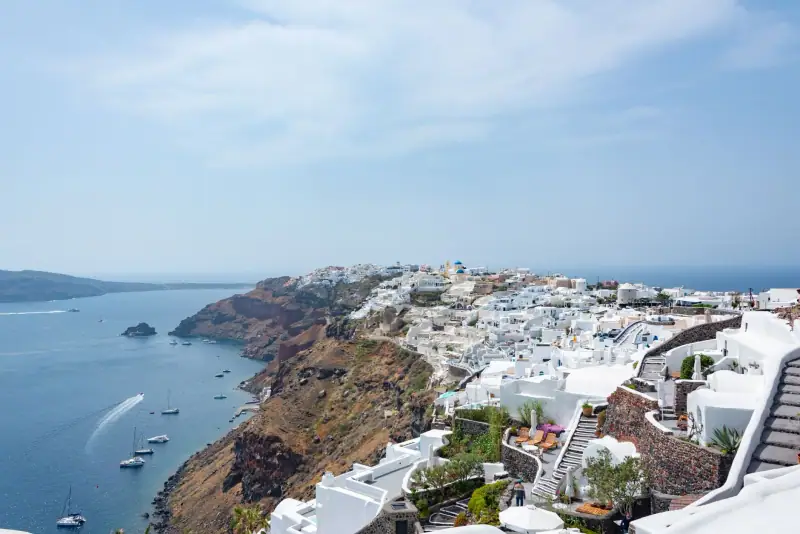
Santorini in 3 days: a complete itinerary through the caldera, ancient sites and beaches
What to do in Santorini in 3 days? Day-by-day itinerary: Fira, Oia, Akrotiri, the volcano, black beaches and vineyards, with transport and planning tips.