What to see
Folegandros: guide to the unspoiled Cyclades island, Chora, beaches and hikes
We may earn a commission when you book through links on this page, at no extra cost to you. We don't visit or try the places we cover: we summarize published sources. How we work
In short
- Folegandros has no airport: you arrive only by ferry, at the small port of Karavostasi; sailings are far more frequent in summer than between October and May.
- Two to three nights cover Chora, a few beaches, Ano Meria and a hike; four if you like walking and quiet.
- Chora is the best base for a first stay without a car; accommodation is limited, so book early in high season.
- May, June and September are generally the most balanced months; the meltem can disrupt crossings and some beaches in July and August.
Folegandros is one of the most endearing islands in the Cyclades for those looking for a quieter alternative to Santorini or Mykonos. Small, rocky and without an airport, it has kept a slow pace of life: a white Chora perched on the cliff edge, mule paths, cultivated terraces and a few beaches reached on foot or by boat.
It is also an island you have to earn a little. The ferry is the only way to get there, roads are few and accommodation remains limited. This guide presents the places to see, the beaches, the hikes and the practical organization, to decide whether Folegandros has a place in your island-hopping itinerary.
How to get to Folegandros
Folegandros has no airport. All travelers arrive by sea, at the small port of Karavostasi, on the island’s southeast coast. The island is linked to Athens (Piraeus) as well as several neighboring islands, notably Santorini, Milos, Sifnos, Paros, Naxos and Ios, depending on the companies and the season.
The big difference between summer and the low season is frequency: in summer, departures are many, whereas between October and May sailings become much rarer. If you travel off-season, check the timetables before booking your accommodation and allow a margin, as rough seas can delay or cancel crossings.
To understand the different types of boats, durations and booking tips, see our guide to ferries in the Cyclades. Folegandros combines very well with Milos, whose seascapes are detailed in our article on the beaches and coves of Milos, or with Santorini for a striking contrast.
On arrival, a bus and taxis generally wait for the ferries to take you to Chora, which is a few kilometers from the port, up on the heights.
Chora, the village perched on the cliff
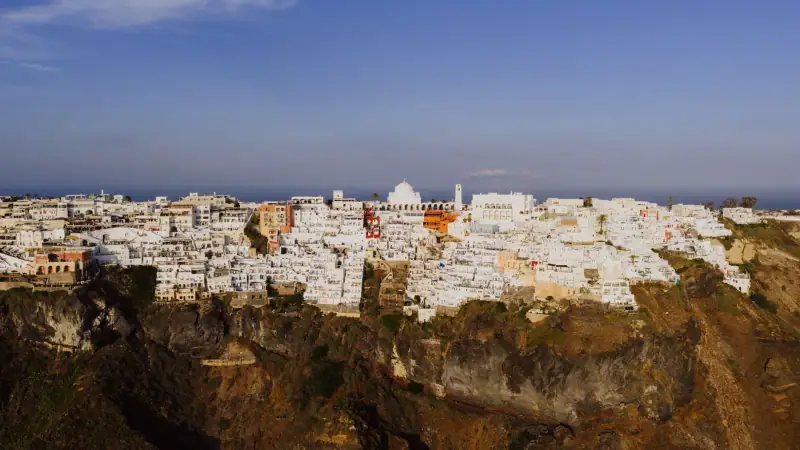
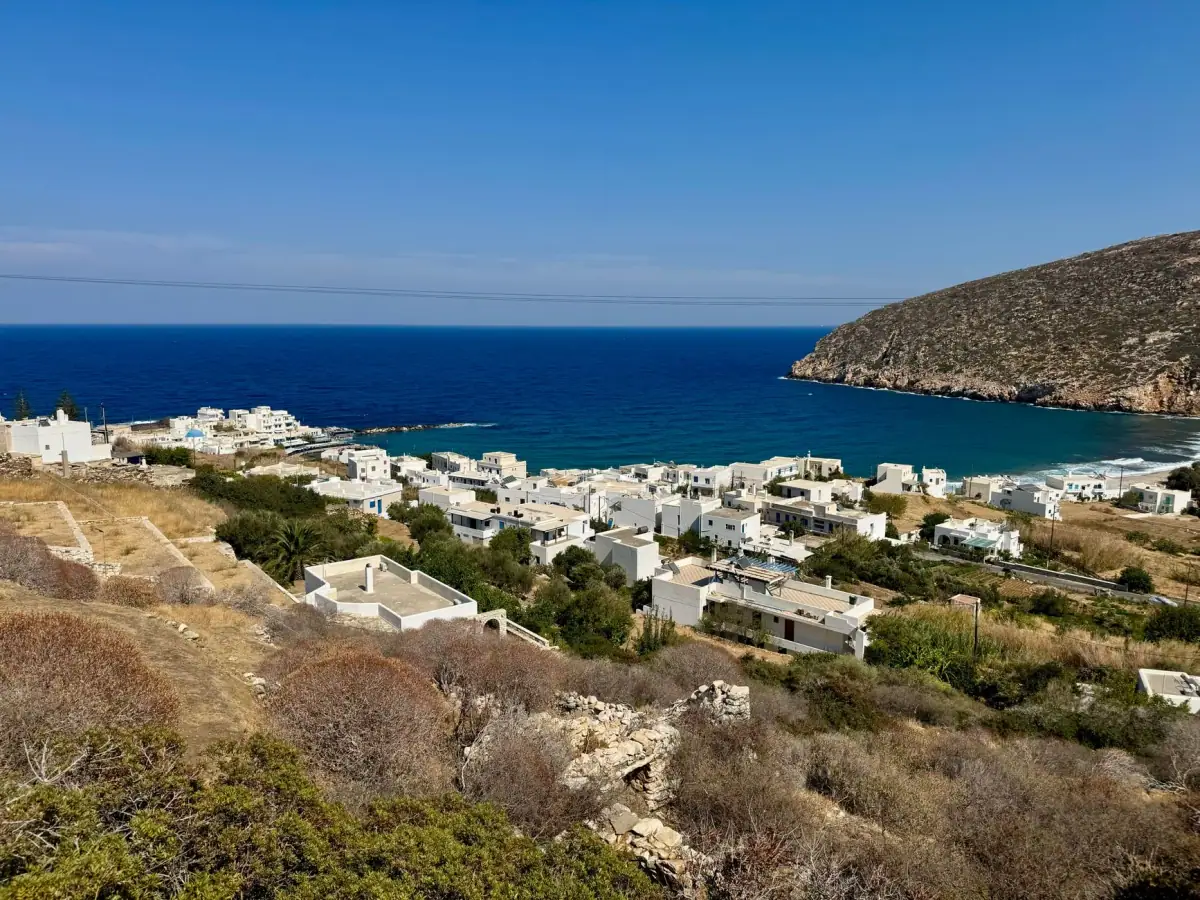
Chora is the heart of the island, and its main attraction. The village stands at the edge of a cliff that drops straight into the Aegean Sea, with white houses, colorful shutters and bougainvillea spilling over the walls. Unlike those in Santorini, its lanes stay peaceful, and most streets are pedestrian.
The historic heart is the kastro, a medieval district whose houses touch each other to form a kind of rampart. The lanes there are narrow and shaded, and the small squares have outdoor tables where you dine in the evening. It is a village you cover on foot in an hour or two, but one worth lingering in for the evening atmosphere.
The most pleasant moment is the end of the day, when the light gilds the facades and the terraces fill up. Nightlife remains measured: a few bars and restaurants, but nothing comparable to the nights of Mykonos.
The church of the Panagia
Above Chora, the church of the Panagia overlooks the village from a hill. You reach it on foot by a zigzag path starting from the village: the climb is short but can be hot, so it is better to do it in the late afternoon. From up there, the view extends over Chora, the coast and the sea, and it is an excellent place to watch the sunset.
Compare hotels and studios in Chora, Karavostasi or near the beaches: location, guest rating and budget.
The best beaches on Folegandros
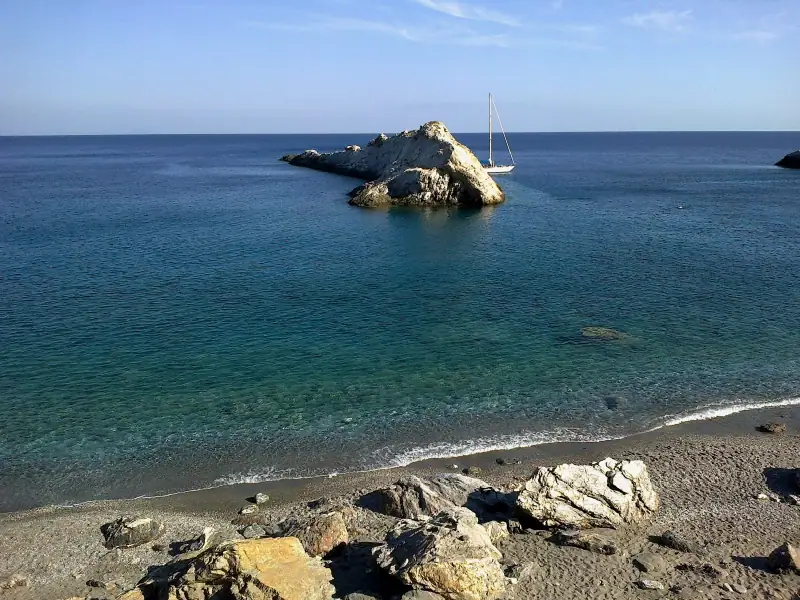
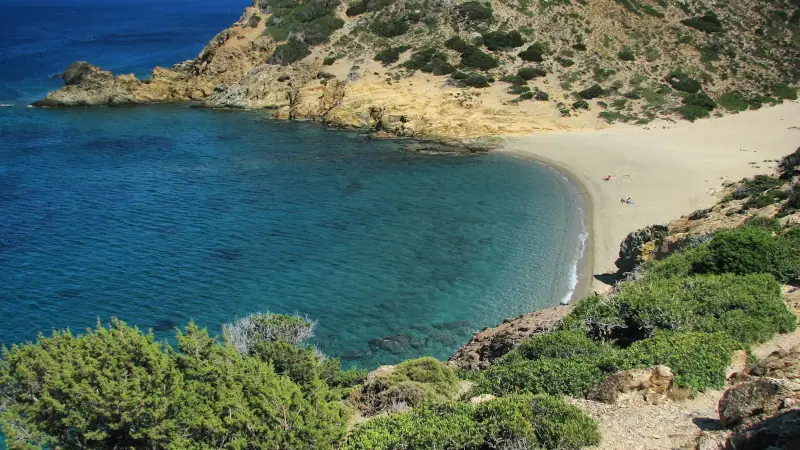
The beaches of Folegandros are not developed stretches of sand: they are mostly pebble beaches, sometimes with few facilities, and several take a little effort to reach. That is what protects them from the crowds.
- Agali: a sheltered beach, reached from the southwest coast, often chosen for its quiet and its few tavernas nearby.
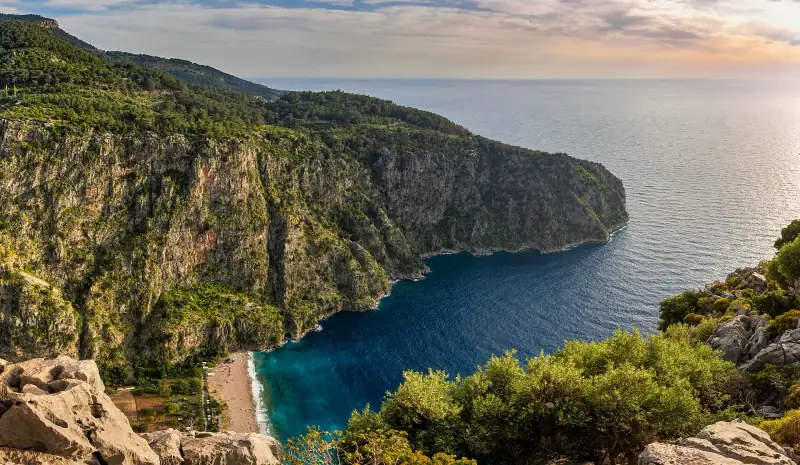
- Katergo: one of the island’s most spectacular beaches, overlooked by cliffs. You reach it by hiking from the coast, or by boat depending on conditions, and it has almost no facilities: bring water and something to protect you from the sun.
- Livadi: the longest and most practical beach, close to Chora and Karavostasi, ideal if you want services nearby.
- Agios Nikolaos: on the north coast, a calm beach, reached on foot or by boat.
Before heading out, look at the wind direction: the meltem, which blows mainly in summer, can make some exposed beaches unpleasant, even dangerous for swimming. In strong wind, the beaches on the sheltered coast are preferable. Boat links to the isolated beaches can also be canceled depending on the sea.
To compare with more spectacular and better-known seascapes, our guide to the beaches of Milos is a good complement.
Hikes and trails
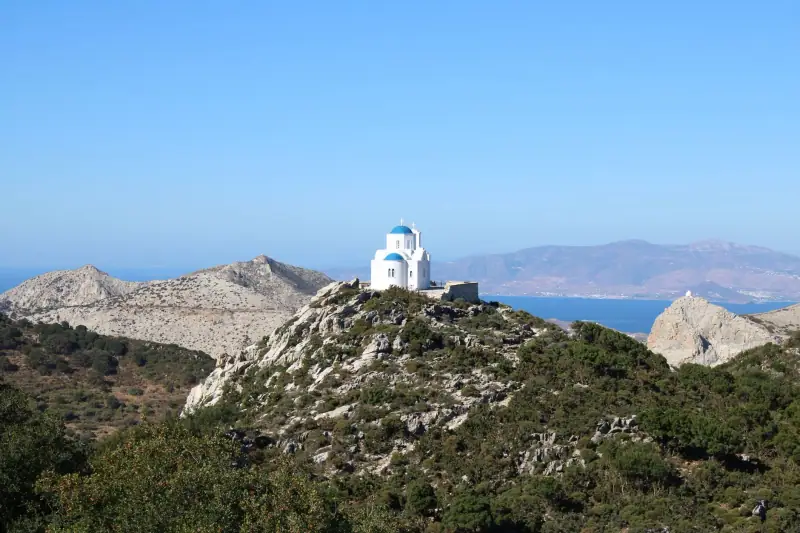
Folegandros is a small paradise for walking. The island is crossed by old paths, some lined with dry-stone walls, that link the villages, isolated churches and beaches. Distances are modest, but the sun and lack of shade make outings demanding in summer.
A few tips for organizing your hikes:
- Set off early in the morning, especially in July and August.
- Carry plenty of water: refill points are rare on the trails.
- Wear good shoes, as the trails are stony.
- Ask locally about the state of the trails and the waymarking before leaving.
- Avoid the hottest hours of the day.
Among the most appreciated walks are the stroll between Chora and Ano Meria, which crosses a landscape of farming terraces, as well as the walking access to the beaches of Katergo and Agios Nikolaos.
Discover the activities offered on the island: boat rides, guided hikes and local visits.
Ano Meria, rural Folegandros
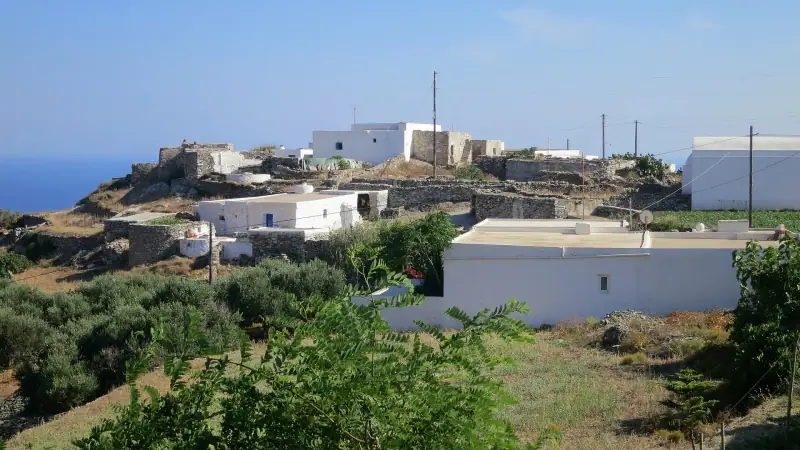
At the other end of the island, Ano Meria is a set of hamlets strung along the road. This is where you measure what traditional life on Folegandros is: low houses, terraced fields, small chapels and farms. There is also a small museum devoted to local traditions, which presents everyday life of the past.
The village is a good place for lunch in a country taverna, far from the bustle of Chora. You will taste the island’s cooking, which relies on simple products: cheeses, vegetables, local meats and fresh pasta. Cyclades cuisine as a whole is presented in our article on Cyclades specialties.
Ano Meria is also the starting point for several trails toward the north coast. The road leading there from Chora offers lovely views of the cliffs and terraces, and is easily covered by car, scooter or bus in season.
Getting around the island
Folegandros is small: the main road links Karavostasi, Chora and Ano Meria, and distances stay short. In season, buses link the port, Chora, the main beaches and Ano Meria, but timetables are adapted to the ferries and can change from one year to the next.
For those who want more independence, renting a scooter, quad or car is possible on the island. Book ahead in high season, as the fleet is limited. Drive carefully: roads are narrow and parking is restricted near Chora, where the center is pedestrian.
If you do not drive, you can perfectly well make do with walking, buses and taxis by staying in Chora, which concentrates most of the restaurants and activity.
Where to stay on Folegandros
The offer is limited but varied, which means booking early in high season:
- Chora: the best choice for atmosphere, restaurants and sunset. It is the best base for a first stay without a car.
- Karavostasi: practical for ferry arrivals and departures, but quieter in the evening.
- Near the beaches: Livadi or Agali suit you if you put the sea first.
- Ano Meria: for a rural experience, but some means of transport is useful.
Accommodations are often small: studios, family guesthouses and small hotels. The luxury establishments of the Santorini caldera have no equivalent here, and that is precisely what gives the island its charm. For a comparison with the most famous of the Cyclades, see our guide where to stay in Santorini.
Book early: the island's accommodations are few and fill quickly in summer.
Practical tips
Folegandros requires a minimum of forethought, but it rewards those who take their time:
- When to go: May, June and September are generally the most balanced months. See our guide when to go to the Cyclades for details on climate and wind.
- Ideal length: two to three nights for the essentials, four if you like walking.
- Money: bring cash, as not all small businesses accept cards, and ATMs are rare.
- Reservations: accommodation, boats and evening restaurants fill quickly in high season.
- Off-season: many shops close, and sea links are reduced.
- Preservation: take your trash with you and stay on the trails, as the terraces and stone walls are fragile.
Folegandros is an island for those who like calm, walking and authentic villages. If you prefer big sandy beaches and a broader tourist offer, Naxos or Paros will be more suitable: our comparison Naxos or Paros will help you choose.
Frequently asked questions
How do you get to Folegandros?
Only by ferry: the island has no airport and its only port is Karavostasi. There are sailings from Athens for the longest ones, and from neighboring islands such as Santorini, Milos, Paros or Naxos. Frequency is much higher in summer than in winter, so check the timetables before locking in your nights.
How long do you need to visit Folegandros?
Two to three nights are enough to see the essentials: Chora, a few beaches, Ano Meria and a hike. If you like walking and quiet, four nights let you slow the pace.
Do you need to rent a car on Folegandros?
It is not mandatory. The island is small, and buses and taxis link the port, Chora and the main villages in season. A scooter or car does give more freedom to reach isolated areas.
Is Folegandros less touristy than Santorini?
Yes, clearly. The island is small, with no airport, and the mood is calmer and more authentic. It appeals to those who want villages without crowds and hiking rather than lively nightlife.
What is the best time to go?
May-June and September generally offer a good compromise between pleasant weather, a decent sea and moderate crowds. In July-August, the meltem wind can disrupt crossings and some beaches.
More Cyclades guides
Keep reading
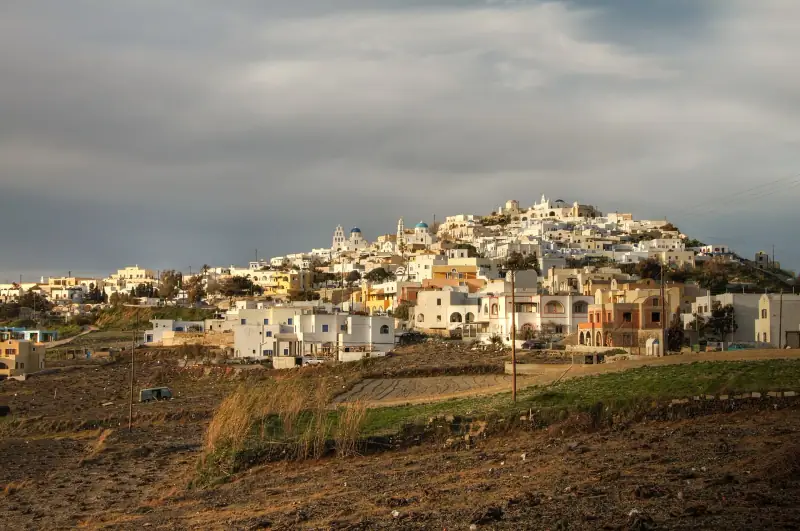
Pyrgos in Santorini: is it worth the detour without a car?
Pyrgos Kallistis without a car: bus from Fira, kasteli, lanes, tavernas, sunset and tips for a half-day visit or an overnight stay.
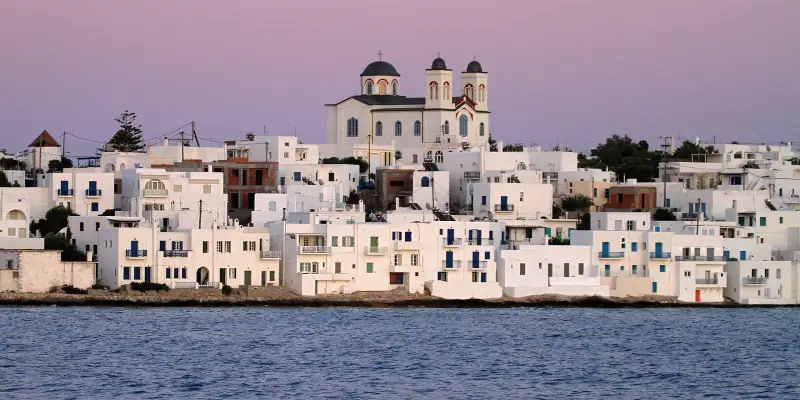
Complete guide to visiting the Cyclades: islands, itineraries, budget and tips
Visiting the Cyclades: which islands to pick, when to go, how to get there and ferry around, where to stay and what budget to plan.
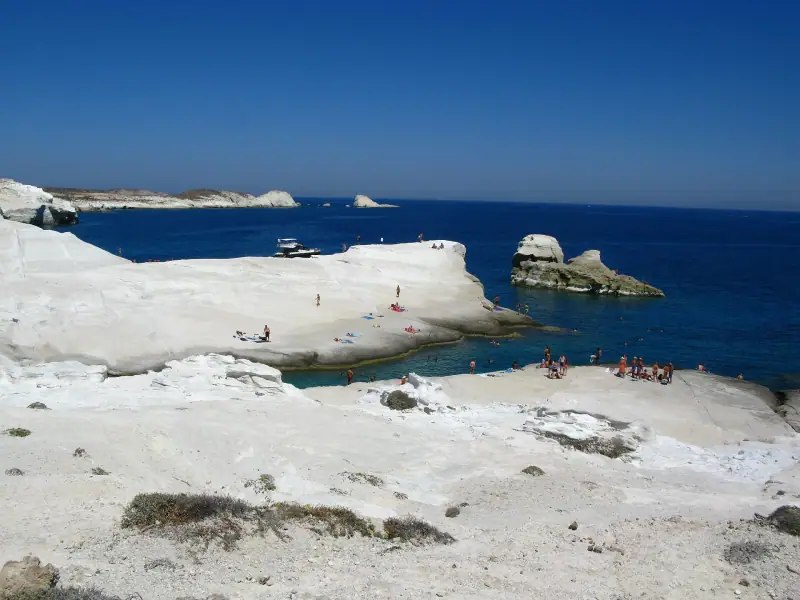
Milos: the best beaches and coves on the island, from Sarakiniko to Kleftiko
Sarakiniko, Kleftiko, Firiplaka, Papafragas: a selection of the best beaches and coves on Milos, with tips on access, season and organization.
Ready-made
Cyclades itineraries
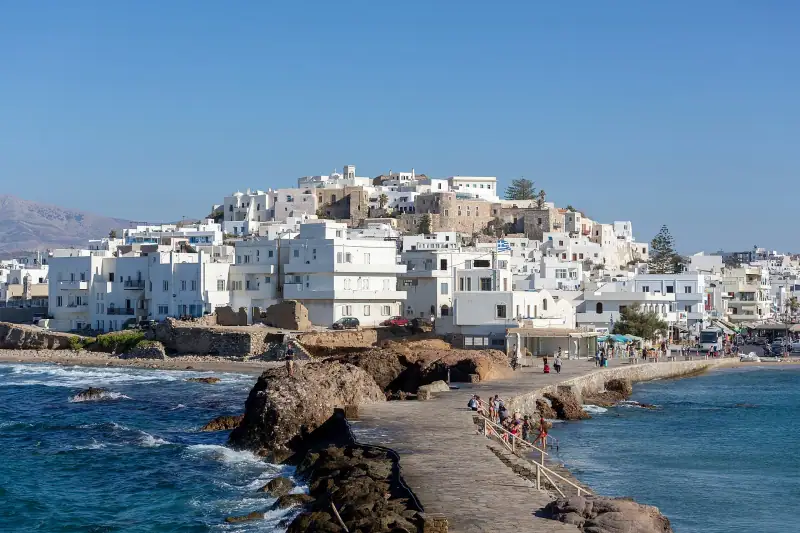
7 days
Naxos and Paros in 7 days: a detailed itinerary for two
Naxos ChoraParos
10 days
10 days in the Cyclades: Paros, Naxos and Santorini, island by island
ParosNaxosSantorini
3 days
Santorini in 3 days: a complete itinerary through the caldera, ancient sites and beaches
What to do in Santorini in 3 days? Day-by-day itinerary: Fira, Oia, Akrotiri, the volcano, black beaches and vineyards, with transport and planning tips.