What to see
Milos: the best beaches and coves on the island, from Sarakiniko to Kleftiko
We may earn a commission when you book through links on this page, at no extra cost to you. We don't visit or try the places we cover: we summarize published sources. How we work
In short
- Sarakiniko is the most spectacular landscape but not a classic swimming beach; Firiplaka and Tsigrado are favorites for swimming.
- Kleftiko is generally reachable only by sea: book a day boat trip from Adamas or elsewhere, and keep a spare day in case of wind.
- A rental car is strongly recommended: beaches are scattered around the island and buses do not serve every cove.
- Late May to September for swimming; June and September are often the best compromise.
Milos looks like no other island in the Cyclades. Born of ancient volcanic activity, it inherited coasts with improbable colors: white rocks, ocher cliffs, sea caves and coves with clear water. It is often said to have some of the most beautiful coastline in Greece, and a few days there are enough to understand why.
The island is also quieter than Santorini or Mykonos, which makes it an ideal destination if you want to spend your days by the sea. This guide presents the main sites, those that need a boat, and how to organize your days. To find out how to reach the island and combine several destinations, see our guide to ferries in the Cyclades.
Sarakiniko: the lunar landscape
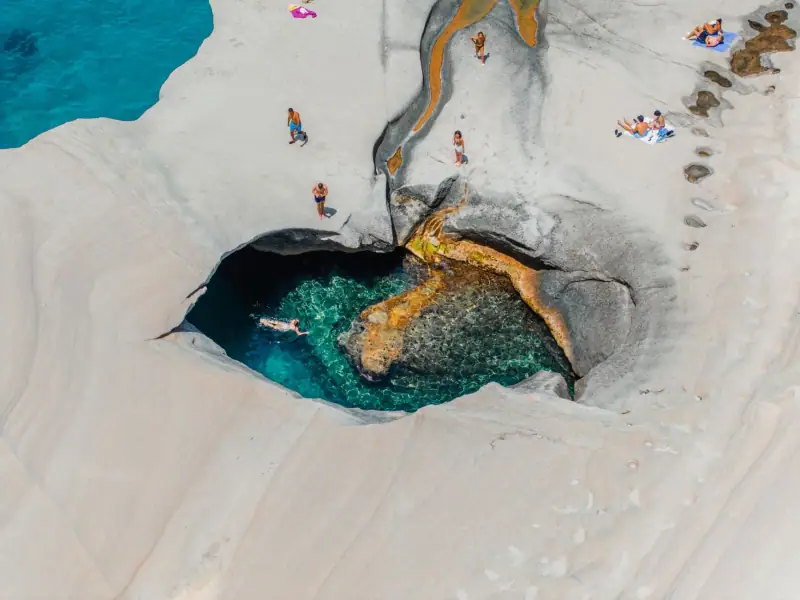
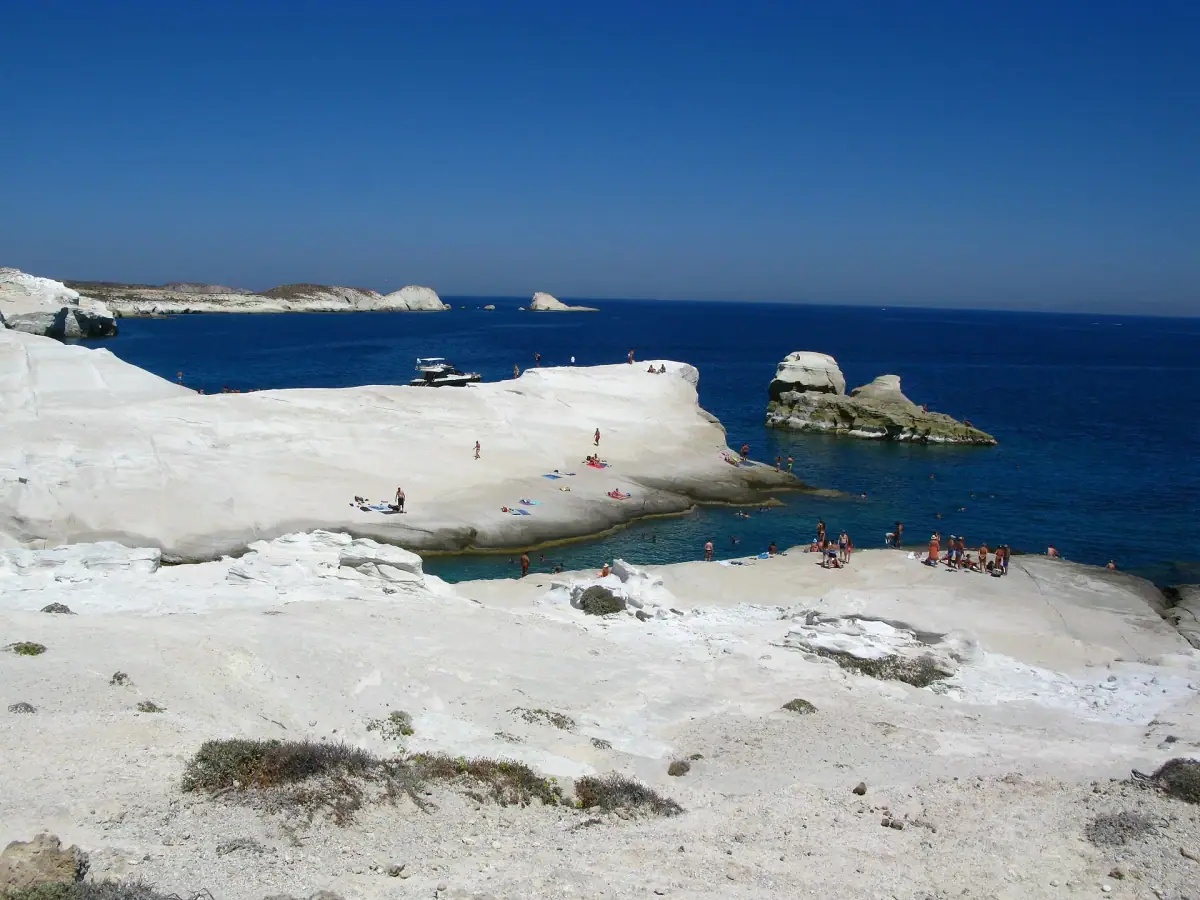
Sarakiniko is the Milos photo everyone has already seen. On the north coast, wind and sea have sculpted white volcanic rock into smooth waves, terraces and small coves where the water takes on very vivid turquoise tones. The contrast with the deep blue of the sea gives the impression of walking on the moon.
It is not a beach in the classic sense: there is little sand, and you swim by climbing down from the rocks. The place lends itself above all to walking, photography and a swim in the clear water, provided the sea is calm. When the north wind blows hard, the swell makes getting into the water dangerous: stay careful and avoid jumping from the rocks.
The site is very busy during the day. To enjoy the light and the quiet, come early in the morning, or in the late afternoon when the groups have left. There is little shade: bring water and a hat.
Compare hotels and apartments in Adamas, Plaka or near the beaches: location, guest rating and budget.
Kleftiko: caves and arches reached by boat
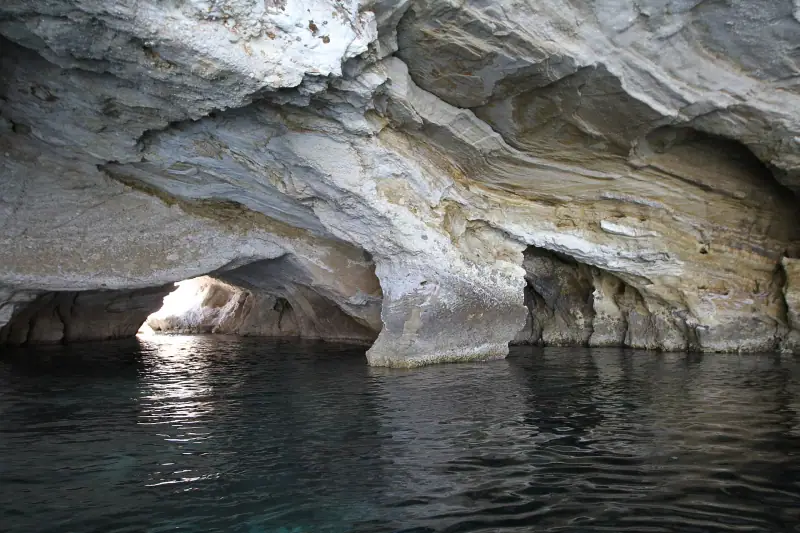
Kleftiko, in the southwest of the island, is Milos’s most spectacular site, and it is generally reachable only by sea. The name evokes the pirates and thieves who, according to local tradition, hid there. The coast is dotted with arches, sea caves and pale cliffs at whose foot the water is remarkably clear.
The simplest way to discover it is to join a day boat trip, with swims in several coves, mask and snorkel. Trips depend on the weather: in strong wind, departures may be changed or canceled. If Kleftiko is your priority, do not book at the very end of your stay, so you keep a spare day.
Bring sunscreen, a towel and something to protect you from the sun: at sea, shade is limited. Mask and snorkel are often provided by the organizers, but check before booking.
Compare day cruises to Kleftiko and the coves of the southwest coast, with swimming and snorkeling.
Firiplaka, Tsigrado and the south coast
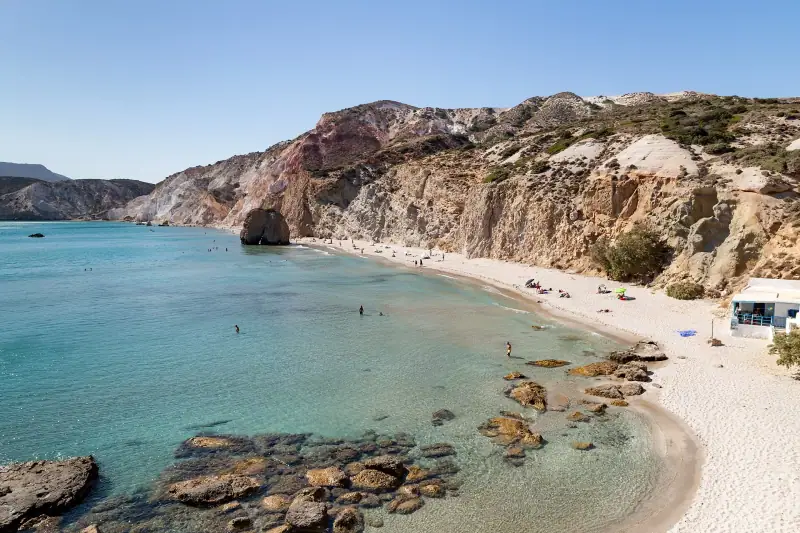
The south coast has some of the best beaches for swimming. Firiplaka is a wide crescent of fine pebbles and sand at the foot of cliffs in shades of brown and ocher, with clear water and facilities in season. It is a beach popular with those who want a little comfort without leaving the natural setting.
Very close, Tsigrado is more secret. It is a small cove tucked between two rock walls, reached by a narrow and somewhat athletic passage: you have to go down with good shoes and without your hands full. The effort is rewarded with very calm water, but this access is not recommended for young children or people with mobility difficulties.
In the same area, Paleochori is known for its colored soils and its end-of-the-road atmosphere. All these sites are reached by car or quad on secondary roads: allow a little time for the trips, and favor the morning to avoid the heat and the crowd.
Papafragas: a cove between two cliffs
On the north coast, Papafragas is a narrow sea inlet tucked between two high rock walls. You reach it on foot by a short path, and discover a small lagoon where you can swim in very calm water, sheltered from the wind. Sea caves and natural passages open at the foot of the cliffs.
It is an ideal stop in the morning or late in the day, when the light brings out the colors of the rock. Walking shoes are advised: the terrain is uneven and the rocks can be slippery.
Before or after swimming, the north coast lends itself well to walks. From Papafragas, you can continue to Sarakiniko in a few minutes by road: the two sites complement each other well in half a day.
Klima, Mandrakia and the fishing villages
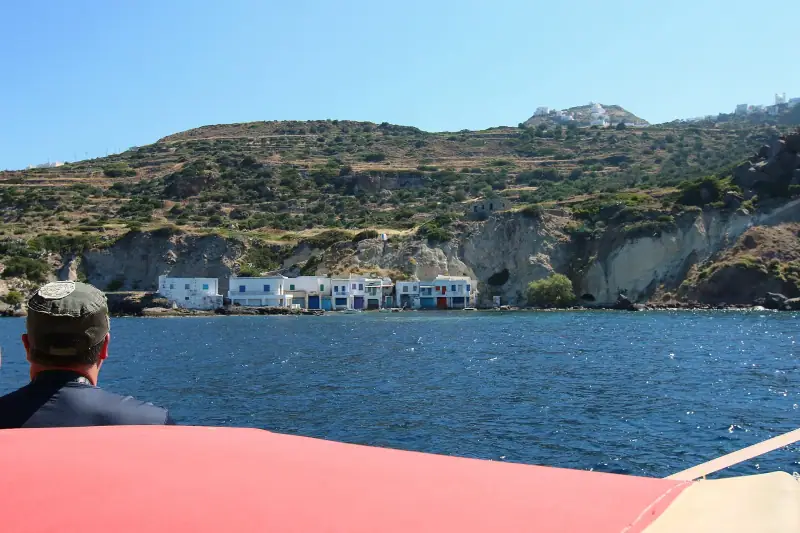
Milos is not only about its beaches. Klima is a fishing village overlooking Adamas bay. Its houses have colorful doors opening onto the sea: on the ground floor, the old boat shelters (the syrmata); upstairs, the dwellings. The whole is one of the most photogenic on the island, especially at sunrise or sunset.
Mandrakia, on the north coast, is another small fishing port. It offers a peaceful atmosphere, with a few tavernas almost at the water’s edge. It is a good place for a fish lunch after a swim, although which businesses are open varies with the season.
For culture, the island also holds the early Christian catacombs, used as a burial place from the first centuries AD. And it was on Milos that the famous Venus de Milo was discovered, in 1820, now kept in the Louvre museum in Paris. A visit to the village of Plaka, the island’s perched capital, rounds out a beach day well.
Discover the guided tours, boat trips and activities offered on the island.
Getting around to string the beaches together
Milos’s sites are scattered across the island, and this is the main logistical challenge. A few buses link the main localities, such as the port of Adamas, Plaka and some beaches, but they do not serve every cove and their frequency varies with the season.
To be free, the car is the most comfortable solution. A quad or scooter is a common option, but some secondary roads are dusty or poorly surfaced: drive carefully, wear a helmet and do not ride on tracks you do not know. Book your vehicle ahead in July and August, as the supply is limited.
A simple organization is to group the beaches by area: one day for the north coast (Sarakiniko, Papafragas, Mandrakia), one day for the south coast (Firiplaka, Tsigrado, Paleochori), and one day by boat for Kleftiko.
Practical tips for your stay
Milos is the ideal island for those who love the sea, but it takes a little forethought. Here are a few tips to prepare your trip well:
- Choose the beach according to the wind: the meltem blows mainly in summer. If the north coast is rough, look for a sheltered beach in the south, and vice versa.
- Protect yourself from the sun: natural shade is rare. Umbrella, hat, sunscreen and plenty of water are essential.
- Prepare your shoes: for Tsigrado, Papafragas or Sarakiniko, closed shoes or good sandals are safer than flip-flops.
- Respect the places: take your trash with you and do not take rocks or shells. The site is fragile.
- Book early: accommodation, vehicles and boat trips fill up quickly in high season.
To choose the best period, our guide when to go to the Cyclades details the climate and wind season by season. If you are hesitating between several islands, our comparison Naxos or Paros will help you complete your itinerary.
Frequently asked questions
What is the most beautiful beach on Milos?
It depends on what you are looking for. Sarakiniko is the most spectacular landscape, with its smooth white rocks, but it is not a classic swimming beach. For swimming and lying out, Firiplaka and Tsigrado are among the favorites, while Kleftiko, reached by boat, offers the most impressive caves and waters.
Can you go to Kleftiko without a boat?
Kleftiko is generally described as reachable only by sea. The simplest is to book a boat trip from Adamas or another locality on the island. Departures depend on the weather and wind, so it is better to allow a margin in your stay.
Do you need to rent a car on Milos?
It is strongly advised. Beaches are scattered all around the island and buses do not serve every cove. A small vehicle or a quad works, but some tracks are dusty: drive carefully and book ahead in high season.
What is the best time to enjoy the beaches of Milos?
Late May to September for swimming. In July and August, the meltem wind can make some exposed coasts uncomfortable, but there is almost always a sheltered beach on the other side of the island. June and September are often the best compromise.
Is Milos suitable for families with kids?
Yes, with some precautions. Some beaches have easy access and gradually deepening water, but others require walking on stony paths or climbing down rocks. Find out about the access to each site before leaving with young children.
More Cyclades guides
Keep reading
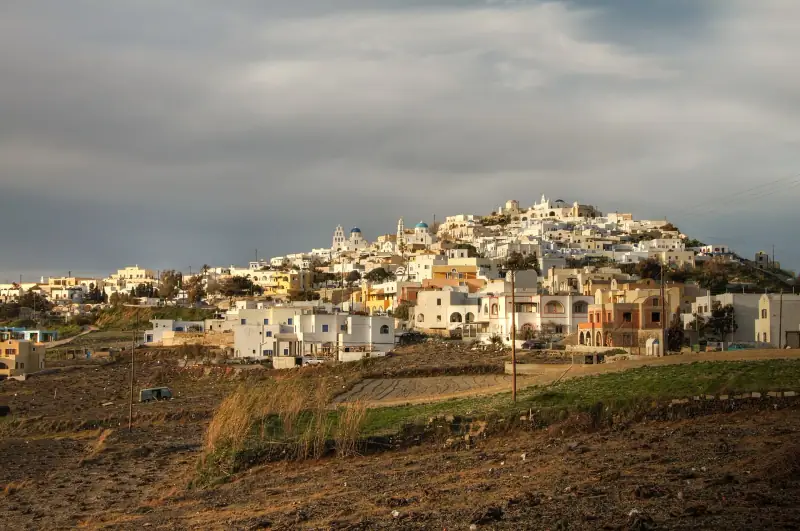
Pyrgos in Santorini: is it worth the detour without a car?
Pyrgos Kallistis without a car: bus from Fira, kasteli, lanes, tavernas, sunset and tips for a half-day visit or an overnight stay.
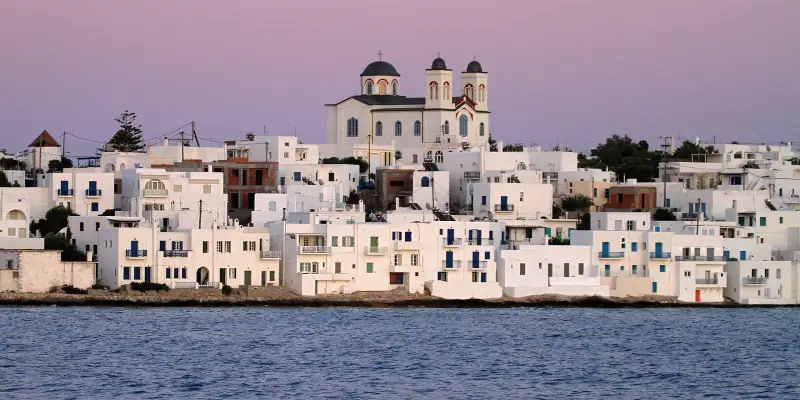
Complete guide to visiting the Cyclades: islands, itineraries, budget and tips
Visiting the Cyclades: which islands to pick, when to go, how to get there and ferry around, where to stay and what budget to plan.
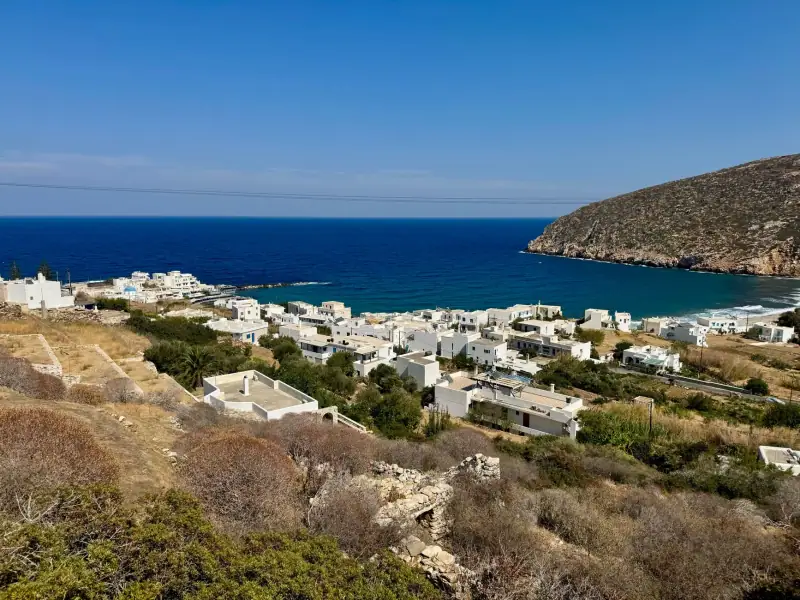
Folegandros: guide to the unspoiled Cyclades island, Chora, beaches and hikes
What to do on Folegandros? Chora on its cliff, Katergo and Agali beaches, hikes, Ano Meria and tips for the ferry and getting around the island.
Ready-made
Cyclades itineraries
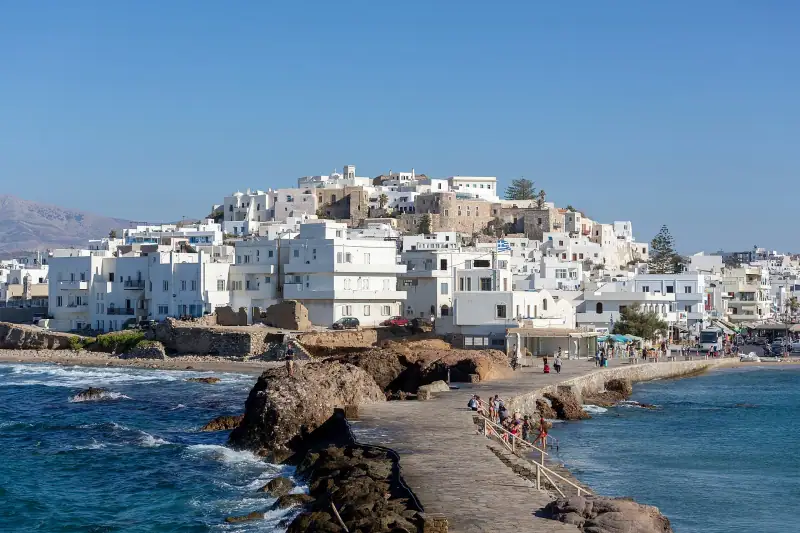
7 days
Naxos and Paros in 7 days: a detailed itinerary for two
Naxos ChoraParos
10 days
10 days in the Cyclades: Paros, Naxos and Santorini, island by island
ParosNaxosSantorini

3 days
Santorini in 3 days: a complete itinerary through the caldera, ancient sites and beaches
What to do in Santorini in 3 days? Day-by-day itinerary: Fira, Oia, Akrotiri, the volcano, black beaches and vineyards, with transport and planning tips.