What to see
Mykonos and Delos: what to see, where to swim and how to plan your stay
We may earn a commission when you book through links on this page, at no extra cost to you. We don't visit or try the places we cover: we summarize published sources. How we work
In short
- Three to four days cover Mykonos Town, a few beaches and the Delos trip; Delos takes about half a day.
- Boats to Delos leave from Mykonos's old port and take about half an hour; take the first morning departure, and do not schedule Delos the day before you leave.
- Mykonos Town (Chora) is the best base without a car; buses and water taxis serve the southern beaches.
- May, June, September and early October are often more pleasant and cheaper; July and August are hot, expensive and very busy.
Mykonos is one of the most famous islands in the Cyclades, and one of the most caricatured: beachside cocktails, yachts, luxury boutiques. That image is not false, but it hides an arid, luminous island, with a labyrinthine white town, windmills facing the sea and very varied beaches. A few minutes away by boat lies Delos, one of the most important archaeological sites in Greece, a UNESCO World Heritage site.
This guide helps you organize a balanced stay: what to see in Mykonos Town, how to choose your beaches, how to prepare the visit to Delos, where to stay and when to come. For logistics between the islands, also see our guide to ferries in the Cyclades, and to choose your season, our article on the best time to go to the Cyclades.
Mykonos Town (Chora): white lanes and old port
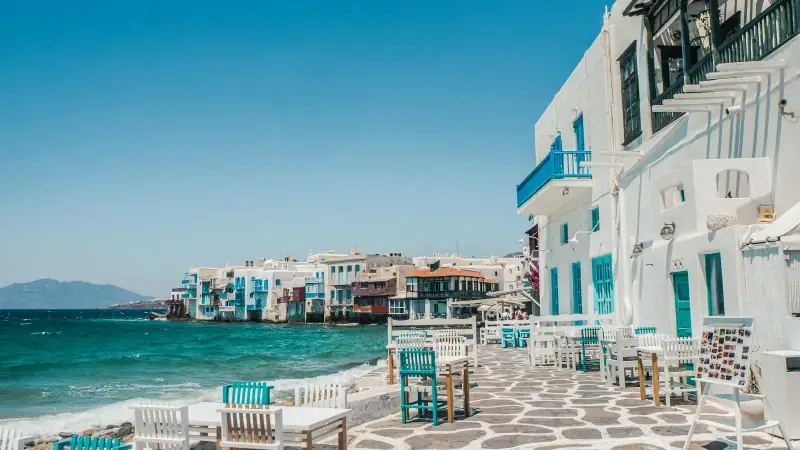
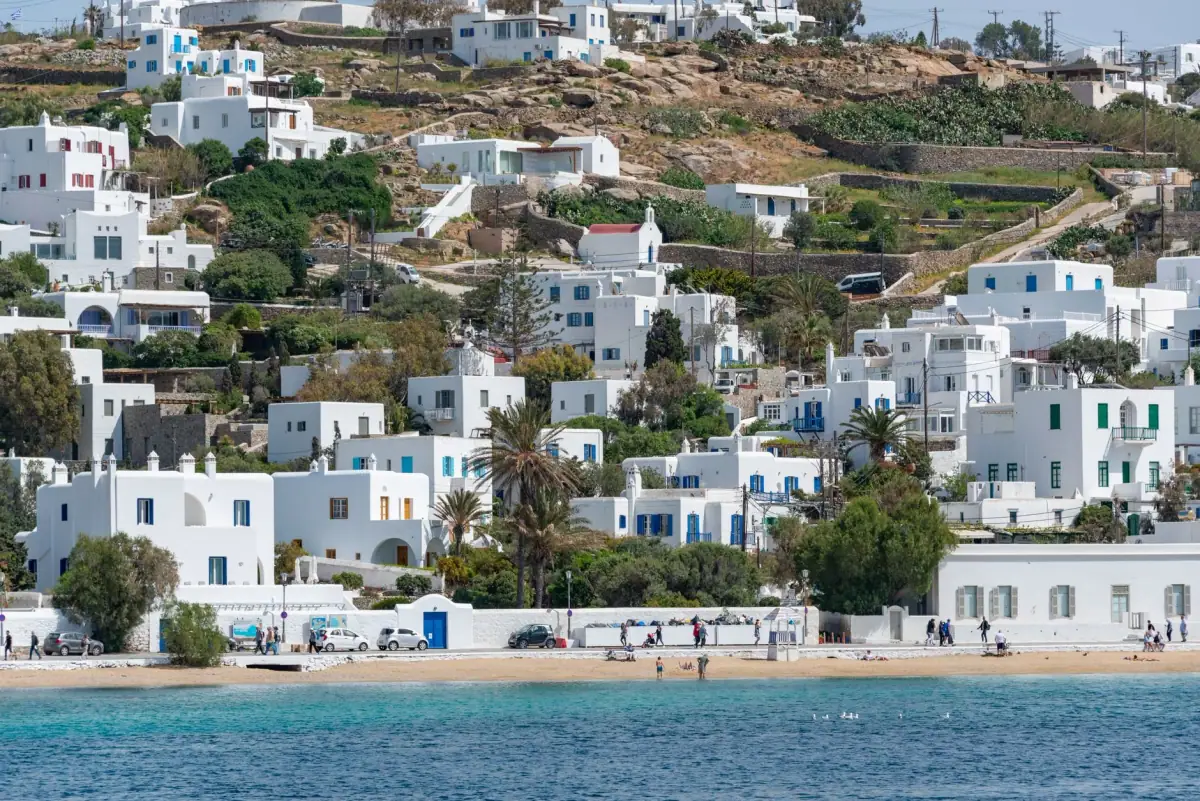
Mykonos Town, called Chora by the locals, is the heart of the island. Its narrow, paved lanes, whitewashed with lime, were laid out as a maze, it is said, to confuse pirates and break the force of the wind. The result is charming: you get lost happily, among bougainvillea, stairways, churches with colorful domes and small craft shops.
Plan half a day to stroll with no agenda. Early morning is the best time: the light is beautiful, the lanes almost empty and the heat bearable. In the late afternoon, the town comes alive and the terraces fill up. The old port, where you can still see fishing boats, is a good landmark for finding your way, as is the town beach, very close.
A few useful tips for the visit:
- The lanes are hard to navigate with a wheeled suitcase: choose accommodation reachable by taxi or near a road access point.
- Parking in the center is very limited, which makes the bus or taxi more practical than a car.
- Shops and restaurants close or cut their hours off-season: check before coming in November or March.
Mykonos Town is also the best base for a stay without a car: the port, bus station, restaurants and the Delos dock are there.
Compare hotels and apartments in Mykonos Town or near the beaches: location, guest rating and budget by season.
Little Venice and the windmills
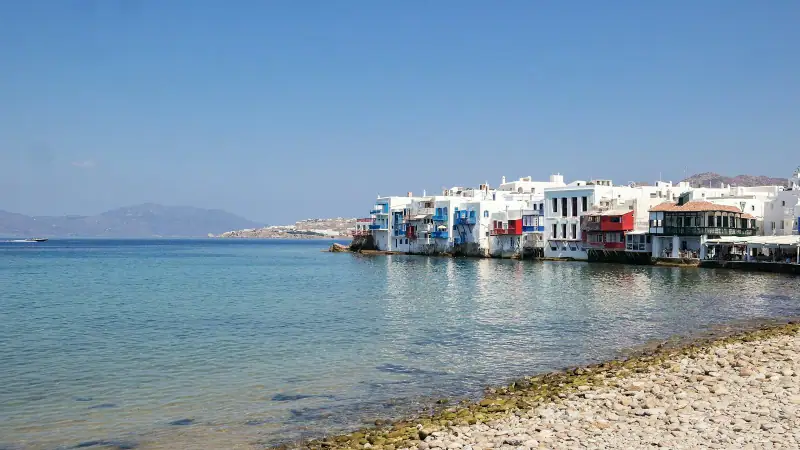
At the southwest end of the old town, Little Venice (Mikri Venetia) is a district of colorful houses whose wooden balconies hang directly over the sea. Once home to shipowners and captains, these houses now hold bars and restaurants. It is one of the most photographed places on the island, especially at sunset; waves can splash the tables on windy days.
Just above, a line of windmills overlooks the town. Originally built to grind wheat, they symbolize Mykonos and offer an open view over the bay and the white houses. To walk there from the center, allow a leisurely quarter of an hour. The place is very busy at sunset: if you want more calm, come in the early morning or late afternoon, before the crowd.
There are many domes and churches in town, and the island has a great many more, often small white family chapels with blue or red roofs. Do not expect grand monuments: the pleasure of Mykonos lies in the whole landscape, the light and the Cycladic architecture, more than in formal visits.
The beaches of Mykonos: how to choose
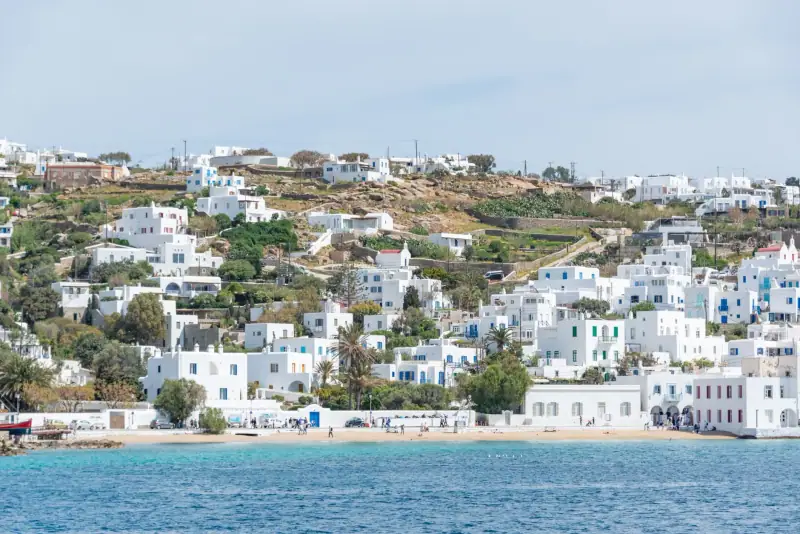
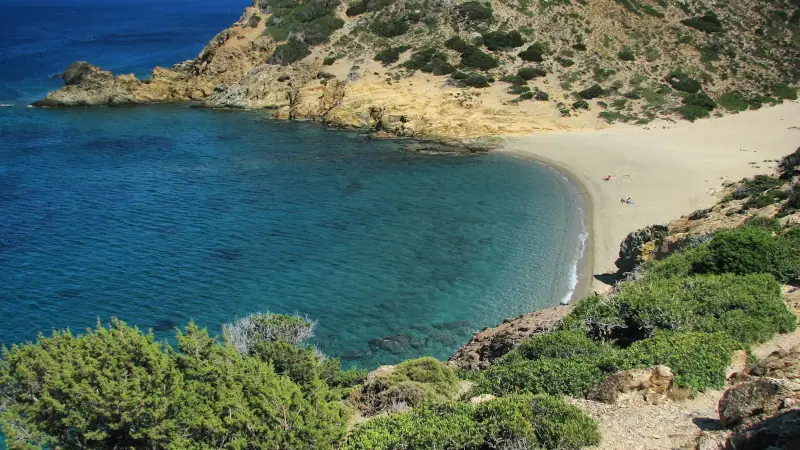
Mykonos has many beaches, and it is more useful to choose them by mood than by name. The south coast, more sheltered from the north wind, concentrates the best-known beaches, often equipped with sun loungers, restaurants and bars. Some are known for their party atmosphere, with music and entertainment; others, calmer, suit families and those who simply want to swim.
Here is a simple way to find your bearings:
- Lively southern beaches: ideal if you like atmosphere, music and services. They are also the most expensive and the busiest in summer.
- Family beaches: several sheltered bays in the southwest have calm, shallow water, with tavernas nearby.
- Northern beaches: wilder and more exposed to the meltem. They are beautiful in calm weather, but the sea can be rough in July and August.
- Town beach: practical if you stay in Chora, no transport needed, but not spectacular.
A few common-sense rules: check the weather and wind direction before leaving, bring water and sunscreen (natural shade is rare), and know that sun loungers are generally paid. Many beaches also have a free area, set back from the organized beds. In high season, arrive early to find a spot and parking.
Buses and water taxis let you reach several southern beaches without a car. If you rent a vehicle, be careful on the narrow, windy roads, and plan where to park without blocking access.
Boat cruises, guided tours and trips at sea: compare the activities available in Mykonos and Delos.
Delos: Apollo’s sacred island
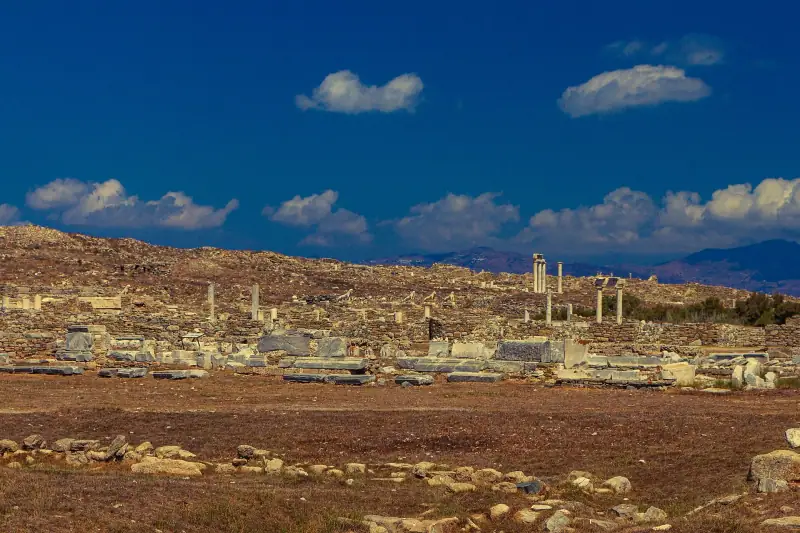
Delos is a small, rocky, uninhabited island, but its importance in antiquity was immense. According to mythology, Apollo and Artemis were born there. The island became a great religious sanctuary, then an important trading center of the Aegean. Today it is a vast archaeological site, a UNESCO World Heritage site, and one of the highlights of the Cyclades.
Among the remains, you can see in particular:
- The Terrace of the Lions, where marble lion statues faced the sacred lake; the originals are kept in the site museum, and those visible outdoors are copies.
- The Hellenistic houses, some of which keep fine mosaics, such as the House of the Dolphins or the House of the Dionysian Mask.
- The ancient theater and its district, with cisterns that recall the importance of water on a dry island.
- The Sanctuary of Apollo and the remains of temples dedicated to various gods.
- Mount Kynthos, a small hill with an extensive view over the neighboring islands, reached by a stone path.
The site is largely open-air, without shade, and very hot in summer. Bring a hat, water, good shoes and sunscreen. Allow two to three hours for a basic visit, more if you want to climb Mount Kynthos and visit the museum. Access conditions, opening days and fares can change: check them before leaving, all the more so as the site may close on some days or in unfavorable weather.
Organizing the Delos excursion
Boats to Delos leave from Mykonos Town and the crossing takes about half an hour. You can book ahead or buy your ticket on the quay. In high season, booking ahead avoids queues and guarantees a place on the slot you want. Two options exist:
- The crossing only: you visit the site independently, with a paper or audio guide. It is the most economical and flexible option, provided you have prepared the visit.
- The guided tour: a guide places the remains in their historical context (check the language of the tour when booking). On a site where the ruins are plentiful but sparsely explained, it is useful, especially if you do not know antiquity well.
Whichever option you choose, pick the first departure of the morning: the air is cooler, the site less crowded and you are back in Mykonos for lunch and a beach in the afternoon. Also check sea conditions: in strong wind, crossings are sometimes canceled or delayed, which can upset the plan if you have a boat or plane to catch the next day. So do not place the Delos excursion the day before your departure.
Eating and going out in Mykonos
Mykonos offers a wide range: traditional tavernas in the hinterland, refined restaurants in Chora, bars and clubs on the beaches. Prices are generally higher than on the other Cyclades islands, especially in July and August, and near the port or Little Venice. To eat more simply and at a better price, move away from the most photographed spots and look at where the locals eat.
Among the products to taste: local cheeses, Greek salad with ripe vegetables, grilled fish, specialties based on cheese and pastry, and honey desserts. Have a drink at sunset, then dine a little later: restaurants often run late in summer. Book if you are aiming for a specific place on a weekend evening or in high season.
Nightlife is one of the island’s strong points, or one of its drawbacks, depending on your taste. If you are looking for calm, avoid staying above the bars of Chora or near the most festive beaches, and favor areas slightly out of the way or the north of the island.
A 3 to 4 day stay: sample program
Here is a realistic pace, suited to a first visit:
- Day 1: arrival, settling in, strolling Chora, Little Venice and the windmills at sunset.
- Day 2: morning excursion to Delos, lunch in Mykonos, afternoon at a south-coast beach.
- Day 3: exploring the island by bus, taxi or rented vehicle: different beaches, interior villages, stops in tavernas.
- Day 4 (optional): rest day or boat trip, or transfer to another island.
Mykonos combines easily with Paros, Naxos or Santorini by ferry. To compare two large nearby islands, read our comparison Naxos or Paros, and if your trip continues to Santorini, our 3-day itinerary in Santorini will help you organize what follows.
A guide to help you understand the archaeological site: compare tours from Mykonos, and check the tour language.
Where to stay in Mykonos
The choice of accommodation depends on how you travel:
- Mykonos Town: the most practical without a car, with the port, restaurants and buses. A bit noisy in the evening, but very lively.
- South coast: near the beaches, with hotels and apartments; the mood varies a lot from one bay to the next.
- Interior and north: calmer, more authentic and often cheaper, but a car or scooter becomes useful.
Book early for July and August: the best addresses fill several months ahead and prices rise sharply. In May, June and September, you will find more choice and more reasonable rates. Always check the cancellation conditions and access on foot or by car. To get an idea of the neighborhood logic on another island, our guide where to stay in Santorini asks the same questions.
Chora, south coast or north of the island: compare accommodation by dates and budget.
Practical tips before you go
- Period: May, June, September and early October are often more pleasant and cheaper. July and August are hot, expensive and very busy.
- Getting there: the island is served by an airport and by ferries from Athens and several islands. Ferry timetables change every year; see our ferry guide.
- Getting around: buses, taxis, water taxis, quads and rental cars. Parking and narrow roads call for caution.
- Wind: the meltem can disrupt the northern beaches and, sometimes, boat crossings. Keep a margin in your schedule.
- Budget: Mykonos is one of the most expensive islands in the Cyclades. Eat in simple tavernas, avoid the luxury beaches and travel off-season to save.
- Respect for the places: on Delos, it is forbidden to touch the remains and to leave the marked paths; do not pick up stones or fragments.
To decide between several islands, remember that Mykonos offers above all an atmosphere, a light and a remarkable archaeological excursion, whereas Naxos, Paros or Milos suit better those who want calm, hiking or wild coves. For the latter, see our article on the beaches and coves of Milos.
In short
Three or four days is a good amount of time for Mykonos: half a day in Chora and Little Venice, a morning on Delos, and the rest of the time for beaches and walks. Choose the season and accommodation carefully, book ahead if you come in summer, and stay flexible about the wind. You will discover an island much more varied than its reputation, and an ancient site that ranks among the most beautiful in Greece.
Frequently asked questions
How many days do you need to visit Mykonos and Delos?
Three to four days are enough to see Mykonos Town, a few beaches and take the Delos excursion. With only one day for Delos, allow half a day there. For a slower stay, five days let you alternate beaches and walks.
How do you get to Delos from Mykonos?
Excursion boats leave from Mykonos Town's old port and reach Delos in about thirty minutes. Departures are generally in the morning, with a return in the early or mid afternoon. Check the timetables and service days with the companies, as they vary with the season.
Can you sleep on Delos?
No. The island is a protected, uninhabited archaeological site: you visit it only as a day trip, from Mykonos.
Is Mykonos only for partygoers and big budgets?
The island has a festive and expensive reputation, especially in July and August, but it also offers calm beaches, quiet villages and simple tavernas. Traveling in May, June or September and staying away from the liveliest beaches clearly helps reduce the budget.
Do you need to rent a car in Mykonos?
It is not essential: buses link Mykonos Town to the main beaches and water taxis serve some southern coves. A car or quad becomes useful for exploring the north and the isolated beaches, but parking is difficult in town in high season.
What wind blows in Mykonos in summer?
The meltem, a north wind, often blows in summer and especially in July and August. It cools the air but can stir up the northern beaches: you then pick the sheltered beaches of the south coast.
More Cyclades guides
Keep reading
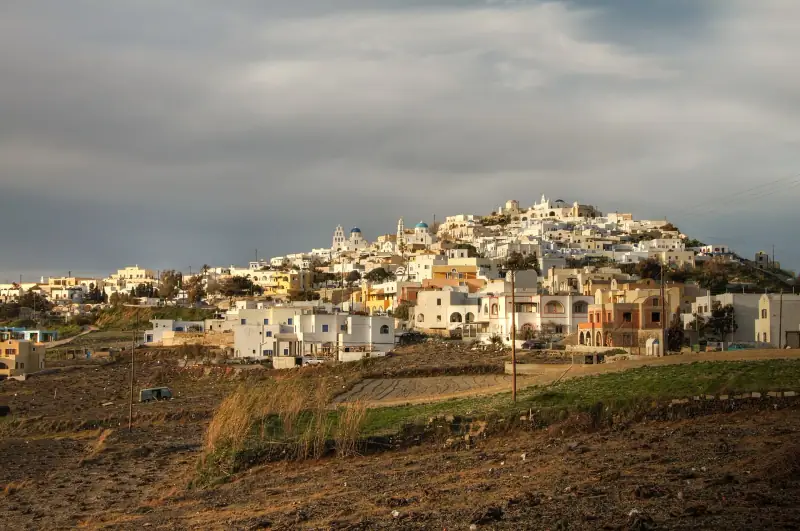
Pyrgos in Santorini: is it worth the detour without a car?
Pyrgos Kallistis without a car: bus from Fira, kasteli, lanes, tavernas, sunset and tips for a half-day visit or an overnight stay.
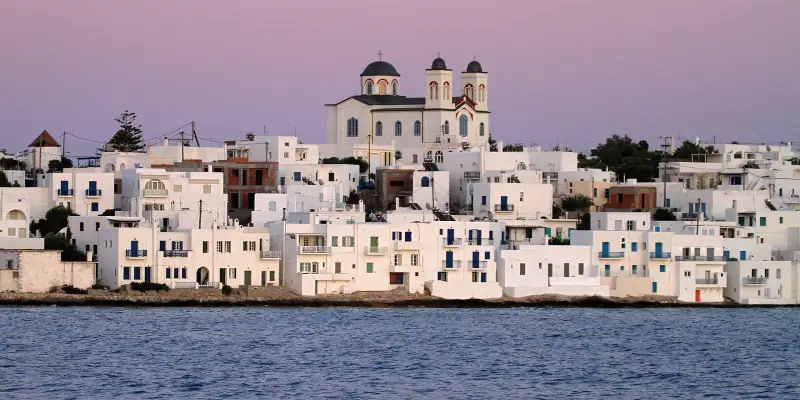
Complete guide to visiting the Cyclades: islands, itineraries, budget and tips
Visiting the Cyclades: which islands to pick, when to go, how to get there and ferry around, where to stay and what budget to plan.
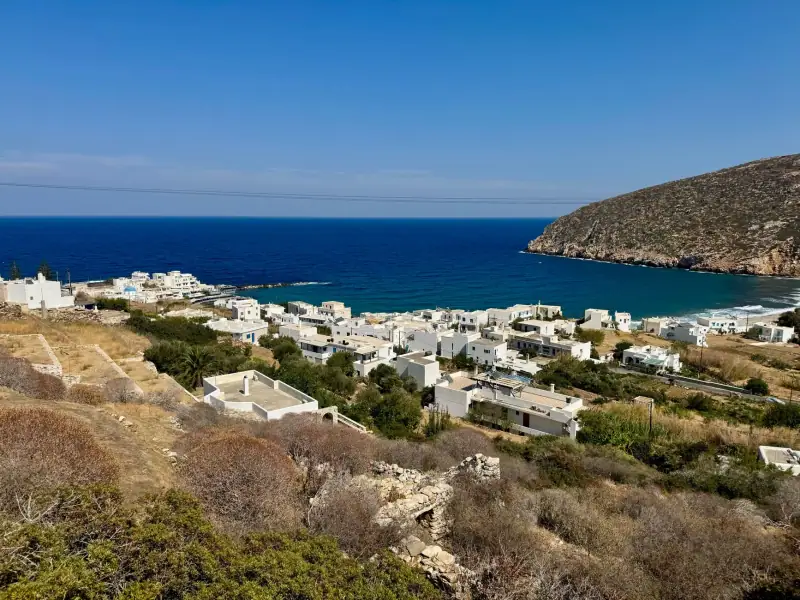
Folegandros: guide to the unspoiled Cyclades island, Chora, beaches and hikes
What to do on Folegandros? Chora on its cliff, Katergo and Agali beaches, hikes, Ano Meria and tips for the ferry and getting around the island.
Ready-made
Cyclades itineraries
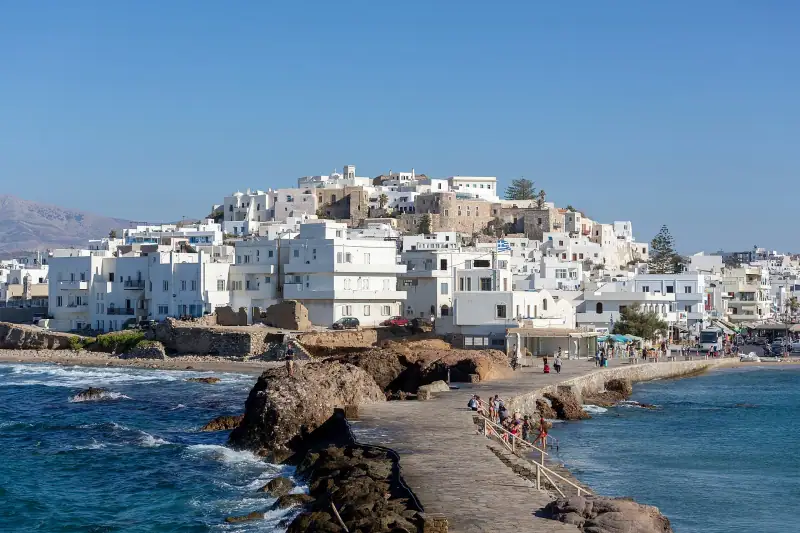
7 days
Naxos and Paros in 7 days: a detailed itinerary for two
Naxos ChoraParos
10 days
10 days in the Cyclades: Paros, Naxos and Santorini, island by island
ParosNaxosSantorini
3 days
Santorini in 3 days: a complete itinerary through the caldera, ancient sites and beaches
What to do in Santorini in 3 days? Day-by-day itinerary: Fira, Oia, Akrotiri, the volcano, black beaches and vineyards, with transport and planning tips.